

Reseña de Shipstation: ventajas, desventajas, características y precios
Shipstation es un software de envíos diseñado para pequeñas empresas y operadores de comercio electrónico. Se integra con Amazon, Shopify y mercados en línea para agilizar el procesamiento de pedidos, ahorrar tiempo y reducir los costos de envío.

Revisamos las herramientas de forma independiente y las comisiones ayudan a financiar nuestras pruebas. Consulta nuestra política de transparencia, nuestra metodología o sugiere una herramienta.
Shipstation is an ecommerce shipping software built for operators who know the grind of packing slips, mismatched shipping rates, and customer emails asking “where’s my order?”
It’s designed to help small businesses and ecommerce teams tame the chaos of multichannel fulfillment—whether you’re juggling Shopify, Amazon, eBay, or your own checkout.
The real value is time. Instead of manually printing labels, reconciling USPS vs FedEx rates, or trying to make sense of scattered workflows, you use Shipstation to centralize and automate.
In this review, I’ll cover Shipstation’s features, pricing, pros and cons, and where it fits best (and worst) in a retail operation.
ShipStation Evaluation Summary
4.6/5
- From $14.99/month
- 30-day free trial
Por qué confiar en nuestras recomendaciones de software
6,700+
Reviews
20
Industry experts
16+
Evaluation factors
14
Years
Nuestro equipo lleva probando y evaluando software desde 2012. Como líderes del sector retail, sabemos lo difícil —y lo importante— que es elegir el software adecuado.
Para esta guía, evaluamos las herramientas mediante pruebas prácticas e investigación independiente, puntuando las herramientas según nuestros criterios de selección.
Nuestras reseñas reflejan nuestro criterio independiente, no un discurso de ventas.
ShipStation Overview
In my opinion, Shipstation is one of those tools that quietly does the heavy lifting for ecommerce operators without much fanfare.
It’s not the flashiest shipping software on the market, but it integrates with just about every sales channel that matters—Shopify, Amazon, eBay, Etsy, WooCommerce—and gives small businesses the ability to ship orders at scale without hiring an army.
Pros
- Smooth integrations. Works seamlessly with platforms like Shopify, Amazon, eBay, and Etsy so you can manage all orders in one place.
- Time-saving automation. Cuts down repetitive shipping tasks, letting you focus on fulfillment instead of button-clicking.
- Solid tracking and reporting. Gives you visibility into shipments and performance without pulling manual spreadsheets.
Cons
- Clunky interface. The navigation isn’t intuitive, which can slow down teams until they get comfortable.
- Slow onboarding. Setup and training take longer than they should, especially for less technical users.
- Inconsistent support. Help is available, but responses can be delayed when you’re under pressure.


Is ShipStation Right For Your Needs?
Who Would be a Good Fit for ShipStation?
Small to medium-sized ecommerce businesses—fashion, electronics, home goods—will get the most value from Shipstation.
If you’re processing daily orders across multiple sales channels like Shopify, Amazon, or eBay, the automation and reporting features cut down the grunt work.
Teams that need to streamline workflows and appreciate plug-and-play integrations will find it especially useful.
- Small retailersManage fulfillment without needing a large back-office team.
- Online boutiquesTrack and report on shipments to keep customers informed.
- Electronics storesHandle high-volume orders thanks to strong platform integrations.
- Home goods sellersStreamline complex product ranges with comprehensive shipping tools.
- Logistics teamsAutomate repetitive tasks so staff can focus on higher-value work.
- Customer service departmentsShare accurate shipping updates to improve the customer experience.
Who Would be a Bad Fit for ShipStation?
Large enterprises with complex shipping requirements will likely outgrow Shipstation. If you need heavy customization, advanced analytics, or a highly intuitive interface with fast onboarding, this isn’t the tool.
High-volume international shippers may also run into limitations, since Shipstation isn’t built to cover every nuance of global logistics.
- Large enterprisesThe platform struggles with enterprise-level complexity and volume.
- Highly customized shippingStandard features won’t cover unusual or tailored workflows.
- Advanced analytics teamsReporting tools lack the depth power users expect.
- Tech-savvy teamsThe interface and features feel basic compared to cutting-edge tools.
- Fast-paced startupsThe learning curve slows down teams that need instant onboarding.
- Heavy international shippersGlobal options are limited for businesses shipping worldwide at scale.
Nuestra Metodología de Revisión
Cómo Probamos y Puntamos Herramientas
Hemos pasado años construyendo, perfeccionando y mejorando nuestro sistema de pruebas y puntuación de software. La rúbrica está diseñada para captar los matices de la selección de software y lo que hace que una herramienta sea eficaz, enfocándose en los aspectos críticos del proceso de toma de decisiones. A continuación, puedes ver exactamente cómo funcionan nuestras pruebas y puntuaciones en siete criterios. Esto nos permite brindar una evaluación imparcial del software según la funcionalidad principal, características destacadas, facilidad de uso, incorporación, soporte al cliente, integraciones, reseñas de usuarios y relación calidad-precio.
Funcionalidad Principal (25% de la puntuación final)
El punto de partida de nuestra evaluación siempre es la funcionalidad principal de la herramienta. ¿Cuenta con las características y funciones básicas que un usuario esperaría ver? ¿Alguna de esas funcionalidades está limitada a planes de precios superiores? En esencia, esperamos que una herramienta se compare favorablemente con las capacidades básicas de sus competidores.
Características Destacadas (25% de la puntuación final)
A continuación, evaluamos las características sobresalientes poco comunes que van más allá de la funcionalidad principal que normalmente se encuentra en herramientas similares. Una alta puntuación refleja funcionalidades especializadas o únicas que hacen que el producto sea más rápido, eficiente o aporte un valor extra al usuario. También evaluamos qué tan fácil es integrar la herramienta con otras comúnmente usadas en el entorno tecnológico para ampliar la funcionalidad y utilidad del software. Las herramientas que ofrecen numerosas integraciones nativas, conexiones de terceros y acceso a API para crear integraciones personalizadas obtienen la mejor puntuación.
Facilidad de Uso (10% de la puntuación final)
Consideramos qué tan rápido y fácil es realizar las tareas definidas en la funcionalidad principal usando la herramienta. El software de alta puntuación está bien diseñado, es intuitivo, ofrece aplicaciones móviles, proporciona plantillas y hace que tareas relativamente complejas parezcan simples.
Incorporación (10% de la puntuación final)
Sabemos lo importante que es que un equipo adopte rápidamente una nueva plataforma, así que evaluamos qué tan fácil es aprender y usar la herramienta con mínima capacitación. Analizamos cuánto tiempo tarda un miembro del equipo en prepararse y comenzar a usar la herramienta sin experiencia previa. Las soluciones con alta puntuación requieren poco o ningún soporte.
Soporte al Cliente (10% de la puntuación final)
Revisamos qué tan rápido y fácil es obtener ayuda por teléfono, chat en vivo o base de conocimientos. Las herramientas y empresas que ofrecen soporte en tiempo real obtienen la mejor puntuación, mientras que los chatbots obtienen la peor.
Reseñas de Clientes (10% de la puntuación final)
Además de nuestras pruebas y evaluaciones, consideramos el puntaje neto de promotores de clientes actuales y pasados. Revisamos la probabilidad de que elijan de nuevo la herramienta para la funcionalidad principal. Un software con alta puntuación refleja un alto NPS de clientes actuales o pasados.
Relación Calidad-Precio (10% de la puntuación final)
Por último, considerando todos los demás criterios, revisamos el precio promedio de los planes de nivel básico frente a las características principales y consideramos el valor de los otros criterios de evaluación. El software que ofrece más por menos, tendrá una puntuación más alta.
Core Features
Order management
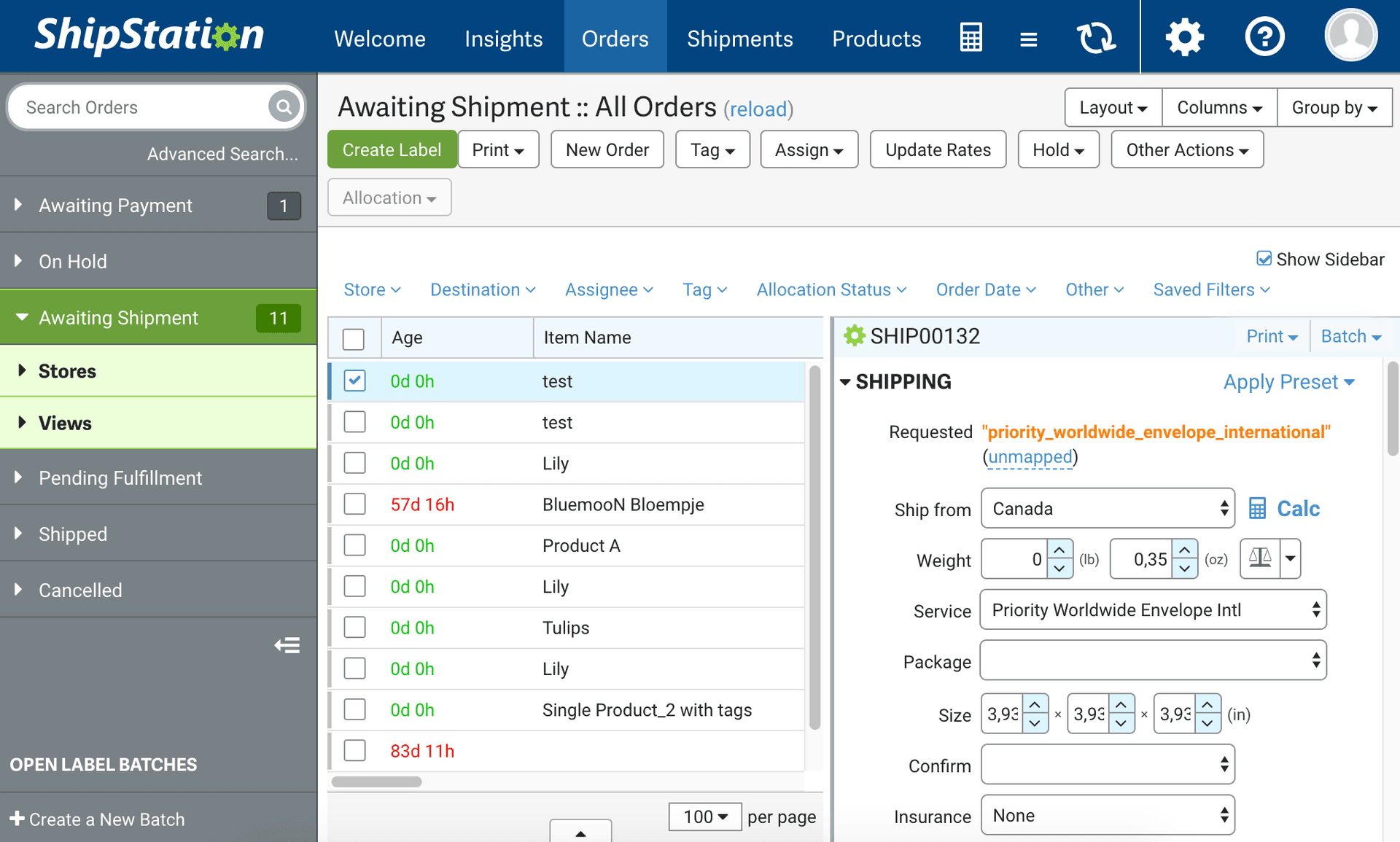
Consolidates orders from multiple sales channels—Shopify, Amazon, eBay, WooCommerce, and Etsy—into one dashboard. This streamlines your workflow and simplifies order fulfillment.
Shipping labels
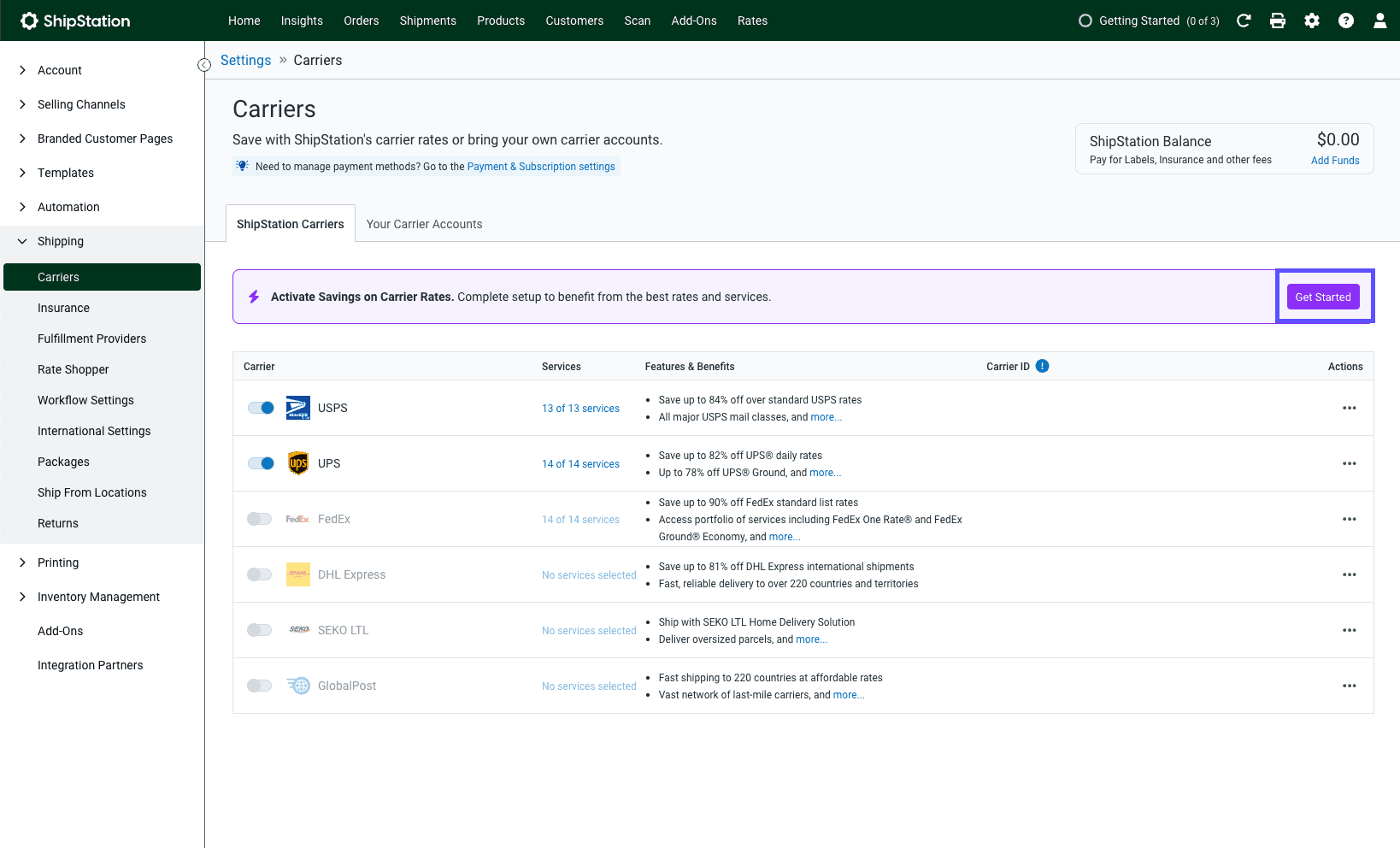
Create and print labels for USPS, FedEx, DHL, and other carriers directly in Shipstation. Fewer errors, faster processing, and less wasted time at checkout.
Automation rules
Use Shipstation’s automation to assign carriers, apply shipping services, or notify customers without manual steps. It’s a huge time-saving win for small businesses.
Reporting tools
Track shipping costs, carrier performance, and delivery times. These reports help optimize your shipping management strategy and reduce unnecessary spend.
Return management
Generate return labels and packing slips with minimal effort. This keeps returns painless for both customers and your customer service team.
Batch processing
Process hundreds of orders and print labels at once. Perfect for ecommerce operators who need to ship products quickly without bogging down workflows.
Ease of Use
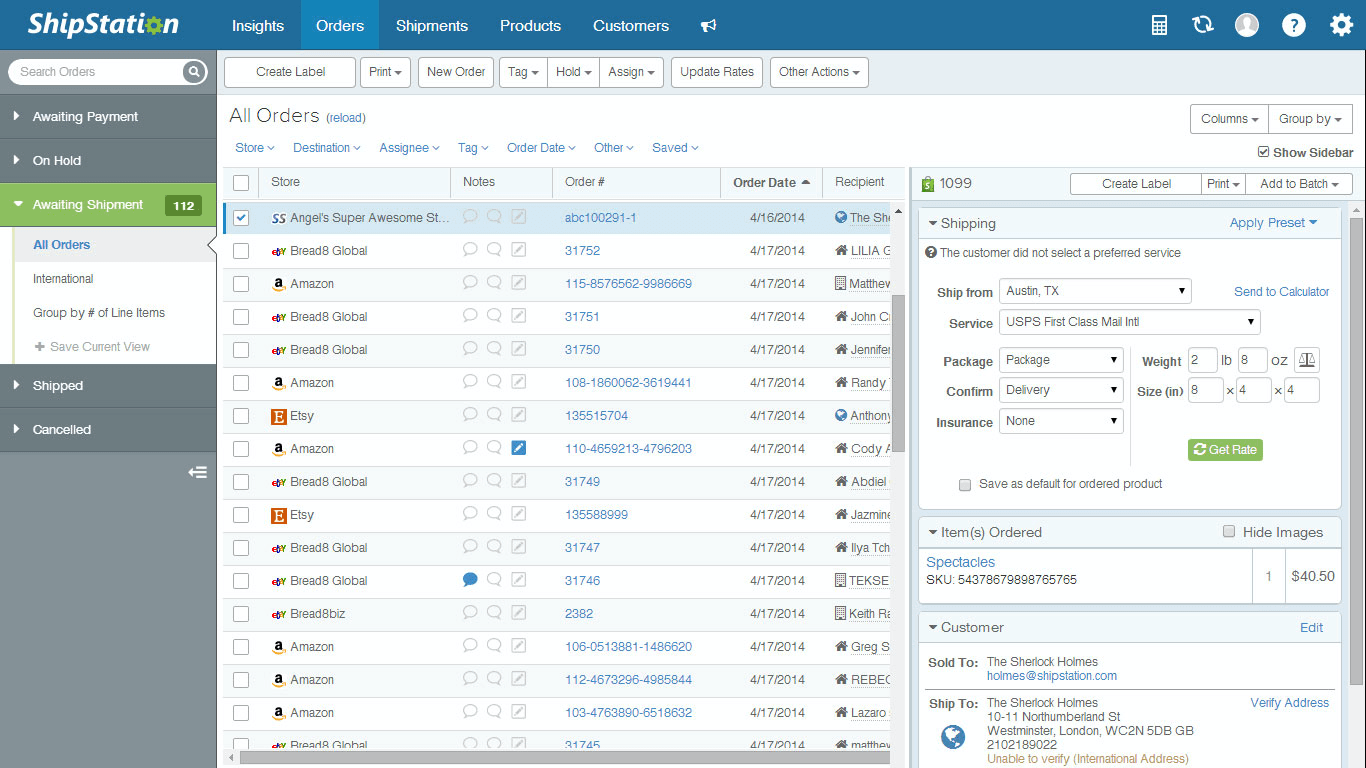
Shipstation isn’t the most user-friendly shipping software out of the gate. The interface feels dated and navigating between workflows takes some trial and error, especially for small businesses new to shipping management.
Onboarding can be a bit of a slog, which isn’t ideal for fast-paced dropshipping teams that need to ship products quickly.
That said, once you’ve invested the time in setup and optimization, the automation rules, batch processing, and label printing features save hours each week.
For ecommerce operators running Shopify, Amazon, or eBay stores, the time-saving payoff eventually outweighs the initial learning curve.
ShipStation Specs
- 2-Factor Authentication: No
- A/B Testing: Yes
- Analytics: No
- API: Yes
- BitCoin: No
- Conversion Tracking: Yes
- Dashboard: Yes
- Data Export: Yes
- Data Import: Yes
- Data Visualization: Yes
- Design Templates: No
- External Integrations: Yes
- Inventory Tracking: Yes
- Keyword Tracking: No
- Marketing Automation: Yes
- Multi-User: Yes
- Notifications: Yes
- Order Management: Yes
- Payment Gateway Integration: No
- Payment Processor: No
- PayPal: Yes
- Product Catalog: Yes
- Review Monitoring: No
- SAP Integration: No
- Scheduling: Yes
- Stripe: Yes
- Third-Party Plugins/Add-Ons: Yes
Alternatives to ShipStation


ShipStation FAQs
¿Qué sigue?
El comercio minorista nunca se detiene, y tú tampoco deberías hacerlo. Suscríbete a nuestro boletín para conocer las últimas perspectivas, estrategias y recursos profesionales de los principales líderes del comercio minorista que están dando forma a la industria.