

10 mejores alternativas a Hotjar para la grabación de sesiones en 2026

Lista de alternativas a Hotjar


Una alternativa sólida a Hotjar te ofrece análisis detallados del comportamiento, grabaciones de sesiones, mapas de calor e información valiosa para comprender cómo interactúan los usuarios con tu sitio o aplicación. Si estás buscando alternativas a Hotjar —o comparando Hotjar con otras plataformas—, probablemente buscas herramientas que ofrezcan funciones similares o ampliadas, como análisis más avanzados, acceso a API, mejores integraciones o un modelo de precios diferente. Con tantas opciones disponibles, es fundamental comparar las principales plataformas. Esta lista te ayudará a identificar rápidamente las soluciones más adecuadas para los objetivos de análisis, optimización y experiencia de usuario de tu equipo.
¿Qué es Hotjar?
Hotjar es una herramienta de análisis del comportamiento fácil de usar que registra y visualiza cómo interactúan los usuarios con sitios web y aplicaciones web. Combina potentes funciones de análisis, como mapas de calor, grabaciones de sesiones y encuestas de opinión, para ayudar a los equipos a comprender los recorridos de los usuarios e identificar los puntos de fricción. Gracias a una interfaz de usuario intuitiva, Hotjar ayuda a los equipos de desarrollo de productos, comercio electrónico y marketing a optimizar el diseño del sitio, mejorar las tasas de conversión y potenciar la experiencia general del usuario.
Por qué confiar en nuestras recomendaciones de software
Nuestro equipo lleva probando y evaluando software desde 2012. Como líderes del sector retail, sabemos lo difícil —y lo importante— que es elegir el software adecuado.
Para esta guía, evaluamos las herramientas mediante pruebas prácticas e investigación independiente, puntuando las herramientas según nuestros criterios de selección.
Nuestras reseñas reflejan nuestro criterio independiente, no un discurso de ventas.
Resumen de las mejores alternativas a Hotjar
Esta tabla comparativa resume los detalles de precios de mis principales alternativas a Hotjar para ayudarte a encontrar la opción que mejor se adapte a tu presupuesto y a las necesidades de tu empresa.
| Tool | Best For | Trial Info | Price | ||
|---|---|---|---|---|---|
| 1 | Ideal para analizar embudos y mejorar las conversiones | Prueba gratuita de 14 días + plan gratuito + demostración gratuita disponible | Desde $25/mes (facturado anualmente) | Website | |
| 2 | Ideal para análisis de productos en tiempo real | Plan gratuito disponible | Precios bajo petición | Website | |
| 3 | Ideal para descubrir problemas en la experiencia digital | Plan gratuito + demostración gratuita disponibles | Precios bajo petición | Website | |
| 4 | Ideal para análisis de aplicaciones móviles con seguimiento del flujo de gestos | Plan gratuito disponible | Precios bajo solicitud | Website | |
| 5 | Ideal para la interacción y el análisis de retención de usuarios móviles | Prueba gratuita de 30 días + demostración gratuita disponible | Desde $75/mes | Website | |
| 6 | Ideal para pruebas de usabilidad remotas con comentarios de usuarios basados en video | Demostración gratuita disponible | Desde $699/mes (facturado anualmente) | Website | |
| 7 | Ideal para combinar la orientación dentro de la aplicación con el análisis del uso del producto | Plan gratuito + prueba gratuita de 30 días + demostración gratuita disponible | Precios disponibles previa solicitud | Website | |
| 8 | Ideal para realizar pruebas A/B sencillas para optimizar sitios web | Prueba gratuita de 30 días disponible | Desde $29/mes | Website | |
| 9 | Ideal para obtener información basada en IA sobre los recorridos de los clientes | Prueba gratuita de 15 días + plan gratuito + demostración gratuita disponibles | Desde $39/mes (facturado anualmente) | Website | |
| 10 | Ideal para recorridos de producto sin código y flujos de incorporación de usuarios | Prueba gratuita de 14 días + demostración gratuita disponible | Desde $174/mes (facturado anualmente) | Website |
Reseñas de alternativas a Hotjar
A continuación se muestran mis resúmenes detallados de las alternativas a Hotjar que han entrado en mi lista de preselección. Mis reseñas ofrecen un análisis detallado de las funciones, capacidades e integraciones de cada plataforma para ayudarte a encontrar la mejor opción para ti.

Ideal para analizar embudos y mejorar las conversiones
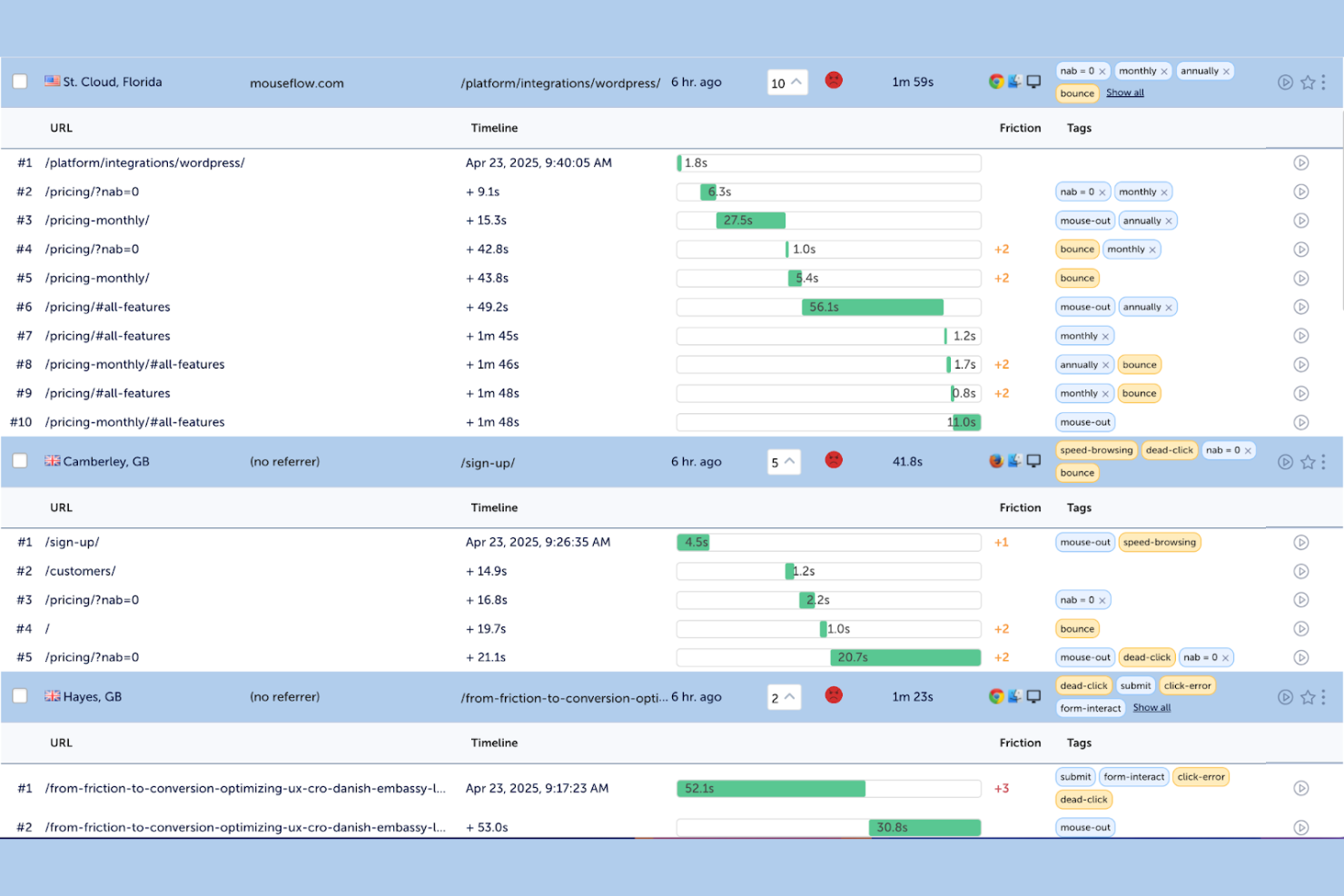
Para los equipos de comercio electrónico y digitales centrados en la optimización de conversiones, Mouseflow ofrece herramientas de reproducción de sesiones y análisis de fricción diseñadas para descubrir dónde tienen dificultades los usuarios. Es especialmente útil para profesionales del marketing, especialistas en UX, profesionales de CRO y pequeñas empresas que necesitan un análisis claro del comportamiento de los usuarios sin una configuración compleja. Como herramienta integral de mapas de calor, Mouseflow combina reproducciones de sesiones con detección automatizada de fricción, filtrado detallado de sesiones y funciones de comentarios de los clientes para ayudarte a identificar los abandonos y cuellos de botella en el recorrido del cliente. A diferencia de Hotjar, pone un mayor énfasis en los análisis automatizados que te ayudan a priorizar las mejoras que generan resultados medibles.
Por qué Mouseflow es una buena alternativa a Hotjar
Si buscas una herramienta que vaya más allá de los mapas de calor básicos, Mouseflow destaca por sus capacidades de reproducción de sesiones y análisis de fricción. Me gusta cómo Mouseflow detecta automáticamente eventos de fricción, como clics repetidos por frustración, abandono de formularios y cambios de sentido, para que puedas identificar rápidamente dónde se atascan los usuarios. La función de reproducción de sesiones te permite observar recorridos reales de los usuarios y filtrar las grabaciones por comportamientos o problemas específicos. Para los equipos centrados en la optimización de conversiones, Mouseflow ofrece una visión más detallada de las dificultades de los usuarios que Hotjar.
Características clave de Mouseflow
Algunas otras características de Mouseflow que los compradores de herramientas de análisis del comportamiento pueden querer conocer incluyen:
- Mapas de calor: Visualiza los clics, desplazamientos y patrones de movimiento en tus páginas.
- Embudos: Haz un seguimiento del abandono de usuarios en cada paso de tus rutas de conversión.
- Análisis de formularios: Analiza cómo interactúan los usuarios con los formularios, incluido el abandono de campos y las tasas de finalización.
- Comentarios de los usuarios: Lanza encuestas en el sitio y widgets de comentarios para recopilar opiniones directas de los visitantes.
Integraciones de Mouseflow
Las integraciones incluyen Adobe Analytics, Google Analytics, AB Tasty, Shopify, Google Ads, Salesforce, Slack, Microsoft Teams, WooCommerce y más.
Pros and Cons
Pros:
- El análisis de formularios registra las tasas de abandono
- Los mapas de calor muestran los patrones de clics y desplazamiento
- Los widgets en el sitio recopilan comentarios de los usuarios
Cons:
- Las grabaciones pueden no incluir contenido dinámico
- El muestreo de datos limita las sesiones de mucho tráfico

Mixpanel
Ideal para análisis de productos en tiempo real
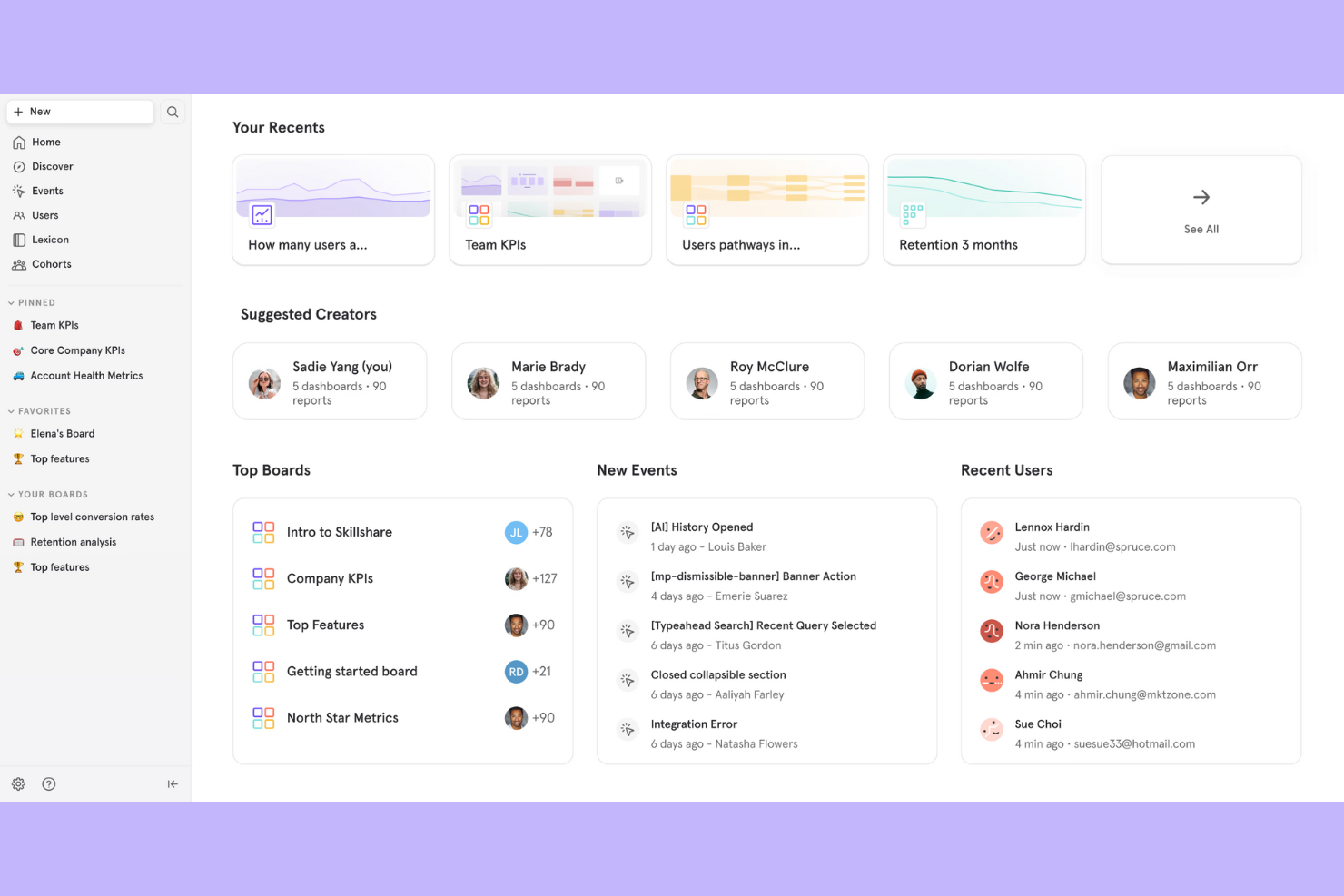
Mixpanel es una plataforma de análisis de productos diseñada para equipos que necesitan información detallada y en tiempo real sobre el comportamiento de los usuarios en aplicaciones web y móviles. Es una opción excelente para equipos de comercio electrónico, SaaS y productos digitales que desean realizar un seguimiento granular de las acciones de los usuarios y crear informes personalizados sin programar. Mixpanel se diferencia de Hotjar por ofrecer un seguimiento avanzado de eventos, análisis de cohortes y potentes herramientas de segmentación para tomar decisiones basadas en datos.
Por qué Mixpanel es una buena alternativa a Hotjar
Mixpanel destaca por sus análisis avanzados de productos y el seguimiento de datos en tiempo real, que van más allá de las reproducciones de sesiones y los mapas de calor que ofrece Hotjar. Elegí Mixpanel porque permite definir y realizar un seguimiento de eventos personalizados, para que puedas analizar acciones específicas de los usuarios que son importantes para tu negocio. Su función de análisis de cohortes te ayuda a segmentar a los usuarios según su comportamiento a lo largo del tiempo, lo que facilita la identificación de tendencias y factores de retención. Si necesitas información granular y significativa sobre cómo interactúan los usuarios con tu producto, Mixpanel es una opción excelente.
Características principales de Mixpanel
Otras características de Mixpanel que pueden resultar útiles para quienes buscan herramientas de análisis del comportamiento incluyen:
- Seguimiento de pruebas A/B: Realiza un seguimiento y compara el comportamiento de los usuarios en distintos experimentos de producto para ver qué cambios impulsan la interacción.
- Paneles de visualización de datos: Crea paneles personalizados con gráficos y diagramas para visualizar métricas clave en tiempo real.
- Análisis del flujo de usuarios: Traza las rutas que siguen los usuarios en tu sitio o aplicación para identificar los puntos de abandono y optimizar sus recorridos.
- Alertas e informes automatizados: Configura alertas para detectar cambios significativos en el comportamiento de los usuarios y programa informes automatizados para tu equipo.
Integraciones de Mixpanel
Entre las integraciones se incluyen Iterable, Netmera, Fivetran, Userflow, Apptimize, Kochava, Intercom, Freshpaint, AWS, Rivery, Eppo, Hightouch y más.
Pros and Cons
Pros:
- El análisis de cohortes muestra las tendencias de retención
- Los paneles personalizables adaptan las vistas de datos
- El seguimiento A/B permite realizar experimentos de producto
Cons:
- No incluye mapas de calor ni reproducciones de sesiones
- La configuración avanzada requiere recursos técnicos

Ideal para descubrir problemas en la experiencia digital
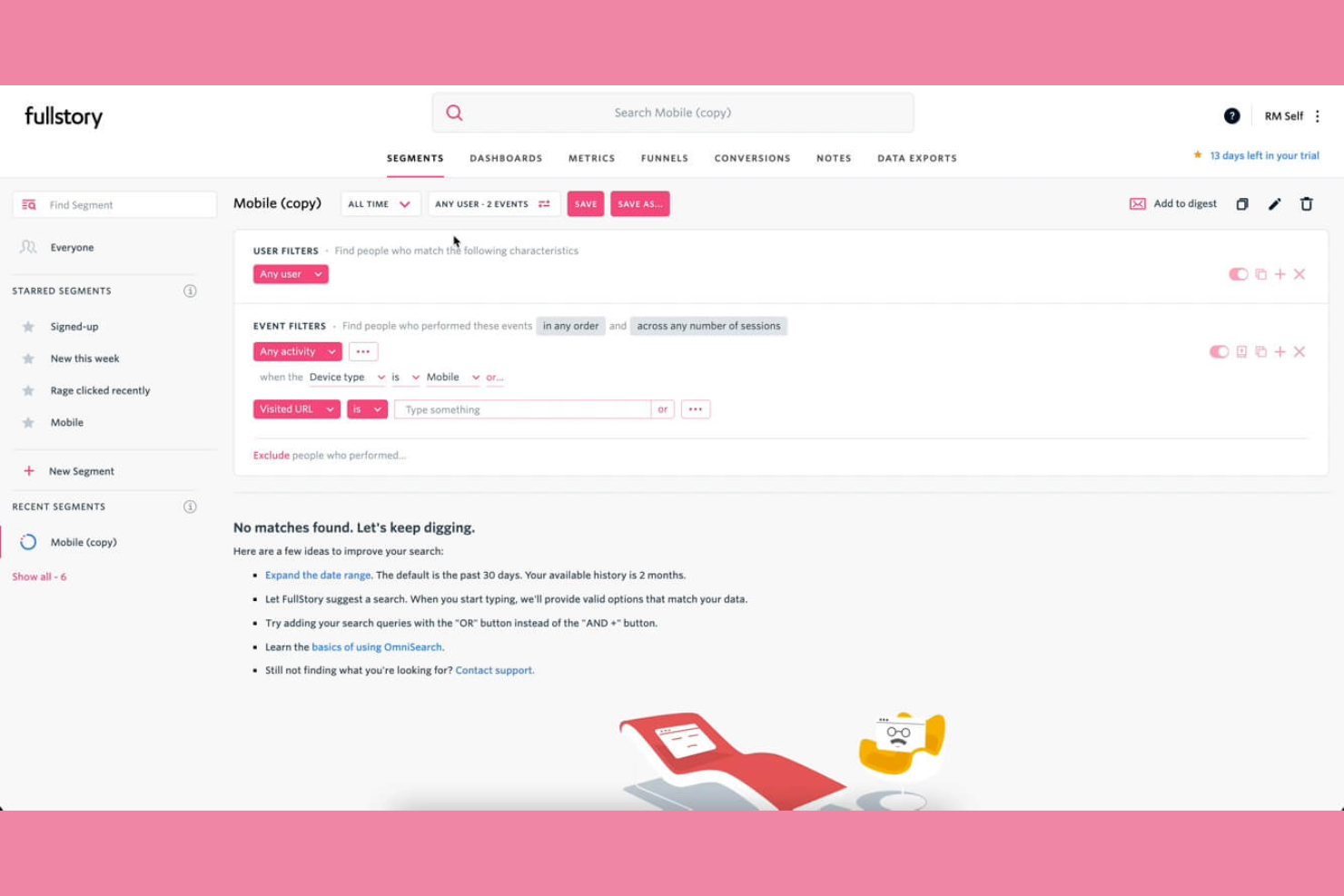
Si buscas una herramienta de análisis del comportamiento especializada en la reproducción de sesiones y el análisis de la experiencia digital, vale la pena considerar Fullstory. Está diseñada para equipos de comercio electrónico, producto y UX que necesitan comprender exactamente cómo interactúan los usuarios con las experiencias web y móviles. Fullstory se diferencia de Hotjar porque captura automáticamente cada interacción del usuario, lo que facilita identificar puntos de fricción, errores y oportunidades de optimización.
Por qué Fullstory es una buena alternativa a Hotjar
Lo que distingue a Fullstory como alternativa a Hotjar es su enfoque en la reproducción de sesiones y el análisis de la experiencia digital tanto para web como para dispositivos móviles. Me gusta que Fullstory capture automáticamente cada interacción del usuario, por lo que no es necesario predefinir eventos ni adivinar qué se debe rastrear. Su función de reproducción de sesiones permite observar en detalle los recorridos reales de los usuarios, ayudándote a detectar puntos de fricción y errores que afectan a las conversiones. Para los equipos que quieren un registro completo y consultable del comportamiento de los usuarios, Fullstory ofrece un nivel de visibilidad que va más allá de lo que proporciona Hotjar.
Características principales de Fullstory
Otras características de Fullstory que pueden interesar a quienes compran herramientas de análisis del comportamiento incluyen:
- Embudo de conversión: Realiza un seguimiento y visualiza el progreso de los usuarios a través de procesos de varios pasos para identificar dónde abandonan.
- Detección de clics repetitivos: Marca automáticamente los clics repetidos y rápidos que indican frustración del usuario o elementos defectuosos.
- Seguimiento de eventos personalizados: Define y supervisa acciones específicas de los usuarios que son importantes para los objetivos de tu negocio.
- Controles de privacidad: Oculta datos confidenciales y configura los ajustes de privacidad para proteger la información de los usuarios durante la captura de sesiones.
Integraciones de Fullstory
Entre las integraciones se incluyen AB Tasty, Adobe, BigCommerce, Fivetran, Google Cloud, Google Analytics, Hightouch, Intercom, Formsort y otras.
Pros and Cons
Pros:
- Las señales de frustración detectan clics repetitivos
- El seguimiento de embudos muestra los abandonos en varios pasos
- Filtros de datos consultables para las sesiones de los usuarios
Cons:
- Impacto en el rendimiento de los sitios con mucho tráfico
- Las exportaciones de datos sin procesar son limitadas o complejas

UXCam
Ideal para análisis de aplicaciones móviles con seguimiento del flujo de gestos
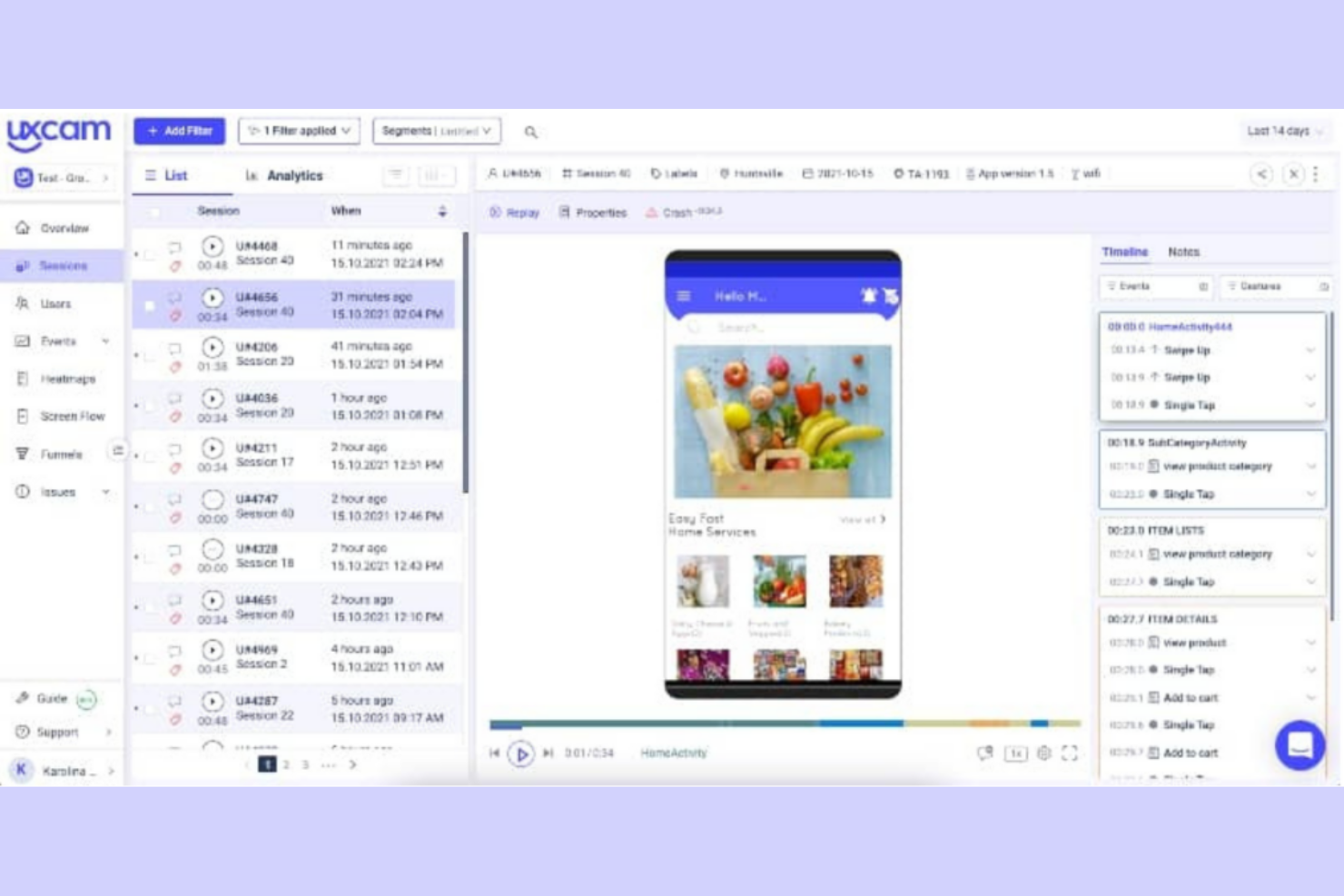
Si te centras en optimizar las experiencias de las aplicaciones móviles, UXCam ofrece análisis especializados diseñados para equipos de productos móviles e investigadores de UX. La plataforma captura reproducciones de sesiones, grabaciones de pantalla, mapas de calor táctiles, mapas de desplazamiento y mapas de clics para ayudarte a comprender exactamente cómo interactúan los usuarios con tu aplicación. A diferencia de Hotjar, UXCam está diseñado específicamente para dispositivos móviles, lo que lo convierte en una opción sólida para las empresas que necesitan información detallada sobre el comportamiento en aplicaciones para iOS y Android.
Por qué UXCam es una buena alternativa a Hotjar
Para los equipos que necesitan una visibilidad profunda del comportamiento de los usuarios de aplicaciones móviles, UXCam ofrece análisis que van más allá de lo que Hotjar proporciona para dispositivos móviles. Elegí UXCam porque ofrece reproducción de sesiones, mapas de calor táctiles y seguimiento de gestos específicamente para aplicaciones de iOS y Android. Estas funciones te permiten ver exactamente dónde tocan, deslizan el dedo o se quedan atascados los usuarios, lo que te ayuda a identificar los puntos de fricción propios de las experiencias móviles. Si tu negocio depende de las aplicaciones móviles, el enfoque de UXCam en el análisis móvil la convierte en una sólida alternativa al enfoque centrado primero en la web de Hotjar.
Funciones principales de UXCam
Algunas otras funciones de UXCam que los compradores de soluciones de análisis del comportamiento pueden querer conocer incluyen:
- Análisis del flujo de usuarios: Traza los recorridos que siguen los usuarios en tu aplicación para identificar los trayectos habituales y los puntos de abandono.
- Análisis de fallos y problemas: Detecta automáticamente fallos y problemas técnicos, y luego vincúlalos a sesiones de usuario específicas para resolverlos.
- Análisis de eventos: Realiza un seguimiento de eventos personalizados y acciones de los usuarios para medir la interacción con funciones o pantallas específicas.
- Segmentación de usuarios: Filtra y analiza los datos por propiedades de los usuarios, comportamientos o tipos de dispositivos para descubrir tendencias en distintos segmentos de audiencia.
Integraciones de UXCam
Las integraciones no están disponibles públicamente.
Pros and Cons
Pros:
- La reproducción de sesiones captura gestos y pantallas
- Los mapas de calor táctiles muestran el comportamiento de los toques
- Los análisis de fallos vinculan los problemas con las sesiones
Cons:
- La configuración de eventos requiere recursos técnicos
- No incluye herramientas integradas para encuestas dentro de la aplicación

Ideal para la interacción y el análisis de retención de usuarios móviles
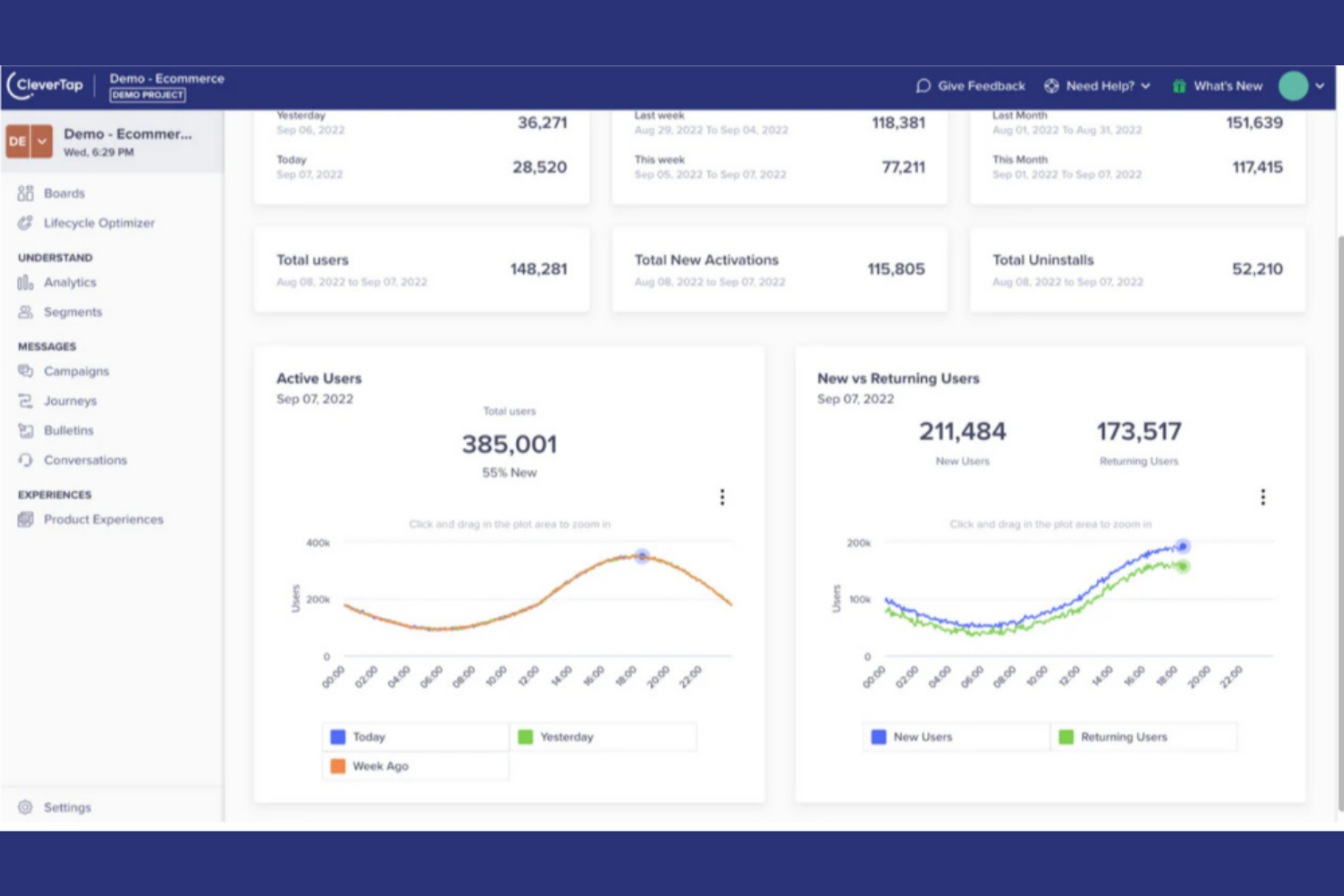
Las marcas que priorizan los dispositivos móviles y buscan combinar el análisis del comportamiento con la interacción automatizada suelen recurrir a CleverTap. Esta plataforma está diseñada para equipos de crecimiento y retención de empresas de comercio electrónico, medios y aplicaciones móviles que desean analizar las acciones de los usuarios, realizar un seguimiento de las páginas vistas y activar campañas personalizadas en tiempo real. A diferencia de Hotjar, CleverTap utiliza IA para segmentar audiencias y enviar notificaciones push, mensajes dentro de la aplicación y correos electrónicos dirigidos en función de datos de comportamiento en tiempo real. Aunque no es una solución de código abierto, ofrece sólidas funciones empresariales para equipos centrados en una interacción escalable con los clientes.
Por qué CleverTap es una buena alternativa a Hotjar
CleverTap destaca por su análisis del comportamiento basado en IA y sus capacidades de interacción en tiempo real, que van más allá de lo que Hotjar ofrece para aplicaciones móviles. Elegí CleverTap porque permite segmentar automáticamente a los usuarios en función de sus acciones dentro de la aplicación y activar notificaciones push, correos electrónicos o mensajes dentro de la aplicación personalizados a medida que ocurren los comportamientos. Los modelos de IA de la plataforma ayudan a predecir la pérdida de clientes e identificar segmentos de alto valor, para que puedas actuar de inmediato a partir de los datos obtenidos. Esto convierte a CleverTap en una opción sólida para equipos que desean conectar el análisis con una interacción automatizada y dirigida en dispositivos móviles.
Funciones principales de CleverTap
Otras funciones de CleverTap que quienes buscan análisis del comportamiento pueden querer conocer incluyen:
- Análisis de embudos y cohortes: Visualiza los recorridos de los usuarios y compara la retención entre diferentes grupos de usuarios.
- Pruebas A/B: Prueba varias versiones de mensajes o experiencias de la aplicación para optimizar la interacción.
- Enriquecimiento de perfiles de usuario: Crea perfiles detallados de los usuarios agregando datos de comportamiento, demográficos y del dispositivo.
- Automatización de campañas: Configura campañas multicanal que se activen en función de las acciones del usuario o de la etapa de su ciclo de vida.
Integraciones de CleverTap
Las integraciones no aparecen listadas públicamente.
Pros and Cons
Pros:
- La mensajería multicanal es compatible con notificaciones push y SMS
- El análisis de cohortes realiza un seguimiento de la retención y la conversión
- Los modelos predictivos identifican los riesgos de pérdida de clientes
Cons:
- Integraciones limitadas con comercio electrónico y herramientas de análisis
- El análisis web es menos avanzado que el análisis móvil

Ideal para pruebas de usabilidad remotas con comentarios de usuarios basados en video
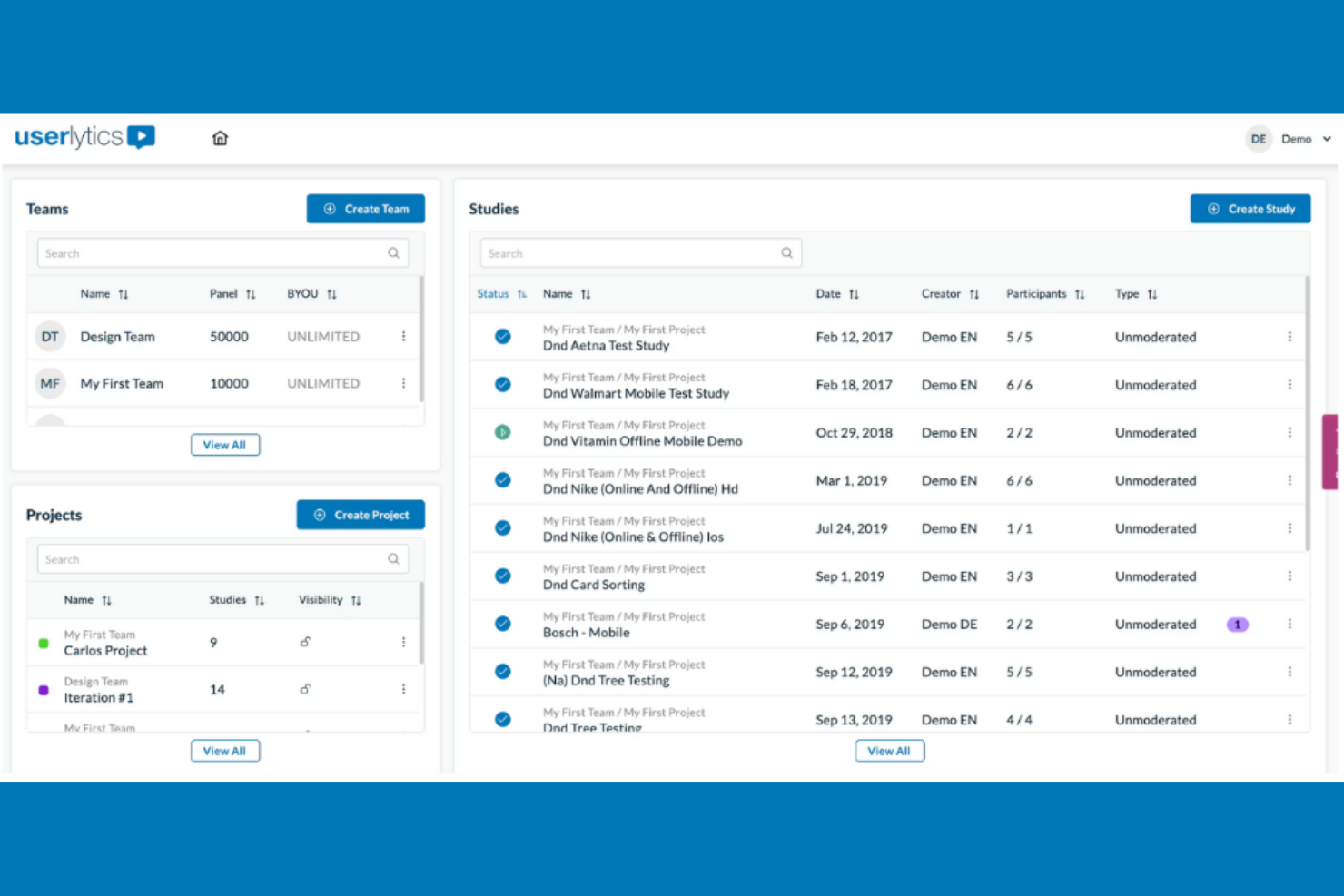
Si necesitas realizar pruebas de usabilidad remotas con usuarios reales, Userlytics ofrece una plataforma flexible para capturar videos, encuestas y datos de comportamiento. Esta herramienta es especialmente útil para investigadores de UX, equipos de producto y empresas de comercio electrónico que desean observar cómo interactúan los participantes con productos digitales en sus propios entornos. A diferencia de Hotjar, Userlytics te permite dirigirte a grupos demográficos específicos, grabar las pantallas y los rostros de los participantes, y combinar los comentarios cualitativos con análisis cuantitativos.
Por qué Userlytics es una buena alternativa a Hotjar
Lo que distingue a Userlytics es su enfoque en las pruebas de usabilidad remotas con videos, encuestas y segmentación avanzada de participantes. Elegí Userlytics porque te permite observar a usuarios reales mientras interactúan con tu sitio web o aplicación, capturando tanto su pantalla como sus expresiones faciales para obtener información más profunda sobre su comportamiento. La segmentación avanzada de participantes de la plataforma te permite reclutar evaluadores según datos demográficos específicos o criterios de usuario, algo que Hotjar no ofrece. También puedes combinar los comentarios en video con las respuestas de las encuestas para obtener una visión más completa de la experiencia del usuario y la toma de decisiones.
Funciones principales de Userlytics
Otras funciones de Userlytics que los compradores de herramientas de análisis del comportamiento quizá quieran conocer incluyen:
- Pruebas de árbol: Evalúa cómo navegan los usuarios por la arquitectura de información de tu sitio mediante pruebas de las estructuras y etiquetas de los menús.
- Clasificación de tarjetas: Permite que los participantes organicen temas en categorías para ayudar a optimizar la navegación y la estructura de contenido de tu sitio.
- Lógica de ramificación en las encuestas: Personaliza las preguntas de la encuesta según las respuestas anteriores para recopilar comentarios más relevantes.
- Transcripciones automatizadas: Genera transcripciones consultables de las sesiones de los usuarios para facilitar el análisis y la elaboración de informes.
Integraciones de Userlytics
Las integraciones no aparecen listadas públicamente.
Pros and Cons
Pros:
- Segmentación demográfica avanzada de los participantes
- Se incluyen la clasificación de tarjetas y las pruebas de árbol
- Las transcripciones automatizadas simplifican la revisión
Cons:
- La configuración de las pruebas y el reclutamiento requieren mucho tiempo
- Los informes carecen de visualizaciones avanzadas

Pendo
Ideal para combinar la orientación dentro de la aplicación con el análisis del uso del producto
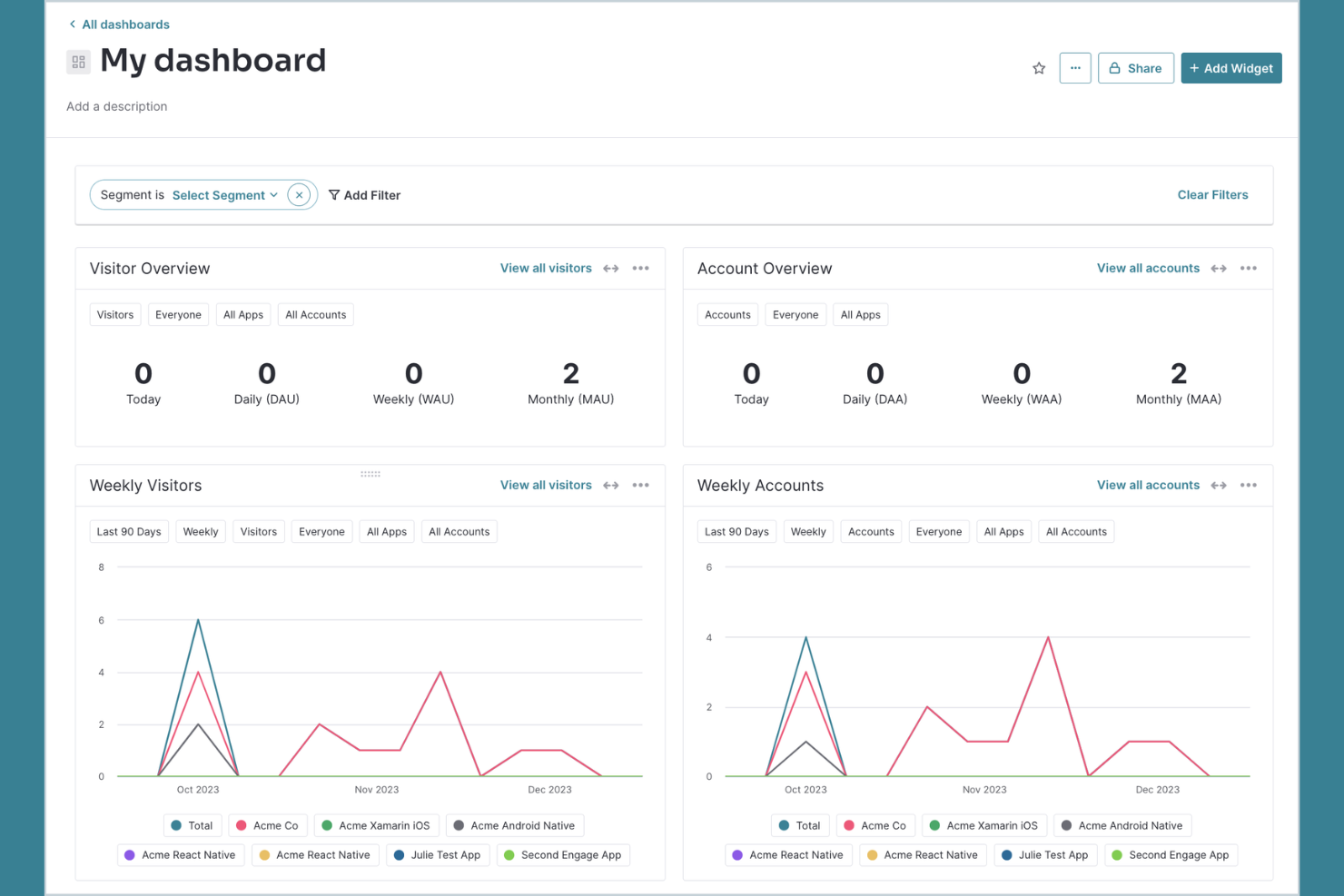
Para los equipos que quieren combinar el análisis de productos con la orientación de usuarios dentro de la aplicación, Pendo ofrece ambas capacidades en una sola plataforma. Los responsables de producto, los líderes de UX y las empresas SaaS utilizan Pendo para realizar un seguimiento de la adopción de funciones, recopilar comentarios de los usuarios y ofrecer incorporaciones o anuncios segmentados directamente dentro de sus aplicaciones. A diferencia de Hotjar, Pendo ofrece herramientas integradas para crear recorridos guiados y encuestas dentro de la aplicación, junto con análisis detallados para productos web y móviles.
Por qué Pendo es una buena alternativa a Hotjar
Pendo destaca por su capacidad para combinar el análisis de productos con la orientación dentro de la aplicación, tanto para aplicaciones web como móviles. Elegí Pendo porque permite realizar un seguimiento del comportamiento de los usuarios y de la adopción de funciones, y después actuar de inmediato sobre esos datos mediante el lanzamiento de recorridos guiados, información sobre herramientas o encuestas dentro de la aplicación. Este enfoque ayuda a los equipos de producto y UX no solo a comprender lo que hacen los usuarios, sino también a guiarlos hacia acciones clave o recopilar sus comentarios en tiempo real. A diferencia de Hotjar, las herramientas de mensajería y de incorporación de usuarios dentro de la aplicación de Pendo están integradas directamente en la plataforma de análisis, lo que facilita cerrar el ciclo entre la información y la acción.
Funciones principales de Pendo
Algunas otras funciones de Pendo que los compradores de análisis del comportamiento pueden querer conocer incluyen:
- Análisis de rutas: Visualiza los recorridos de usuario más comunes por tu producto para identificar los puntos de abandono y los patrones de interacción.
- NPS y encuestas: Lanza encuestas de Net Promoter Score y encuestas personalizadas directamente dentro de tu aplicación para conocer la opinión de los usuarios.
- Centro de recursos: Crea un centro de ayuda dentro de la aplicación donde los usuarios puedan acceder a guías, anuncios y recursos de asistencia.
- Análisis de aplicaciones móviles: Realiza un seguimiento del comportamiento de los usuarios, el uso de las funciones y los comentarios en aplicaciones nativas para iOS y Android.
Integraciones de Pendo
Las integraciones incluyen Jira, Intercom, Marketo, Okta, Salesforce, Zendesk, Segment y otras.
Pros and Cons
Pros:
- Herramientas integradas de NPS y comentarios
- El Centro de recursos facilita la incorporación dentro de la aplicación
- El análisis de rutas muestra los recorridos y los abandonos
Cons:
- No ofrece reproducción de sesiones ni mapas de calor
- Los informes avanzados requieren planes de nivel superior

Ideal para realizar pruebas A/B sencillas para optimizar sitios web
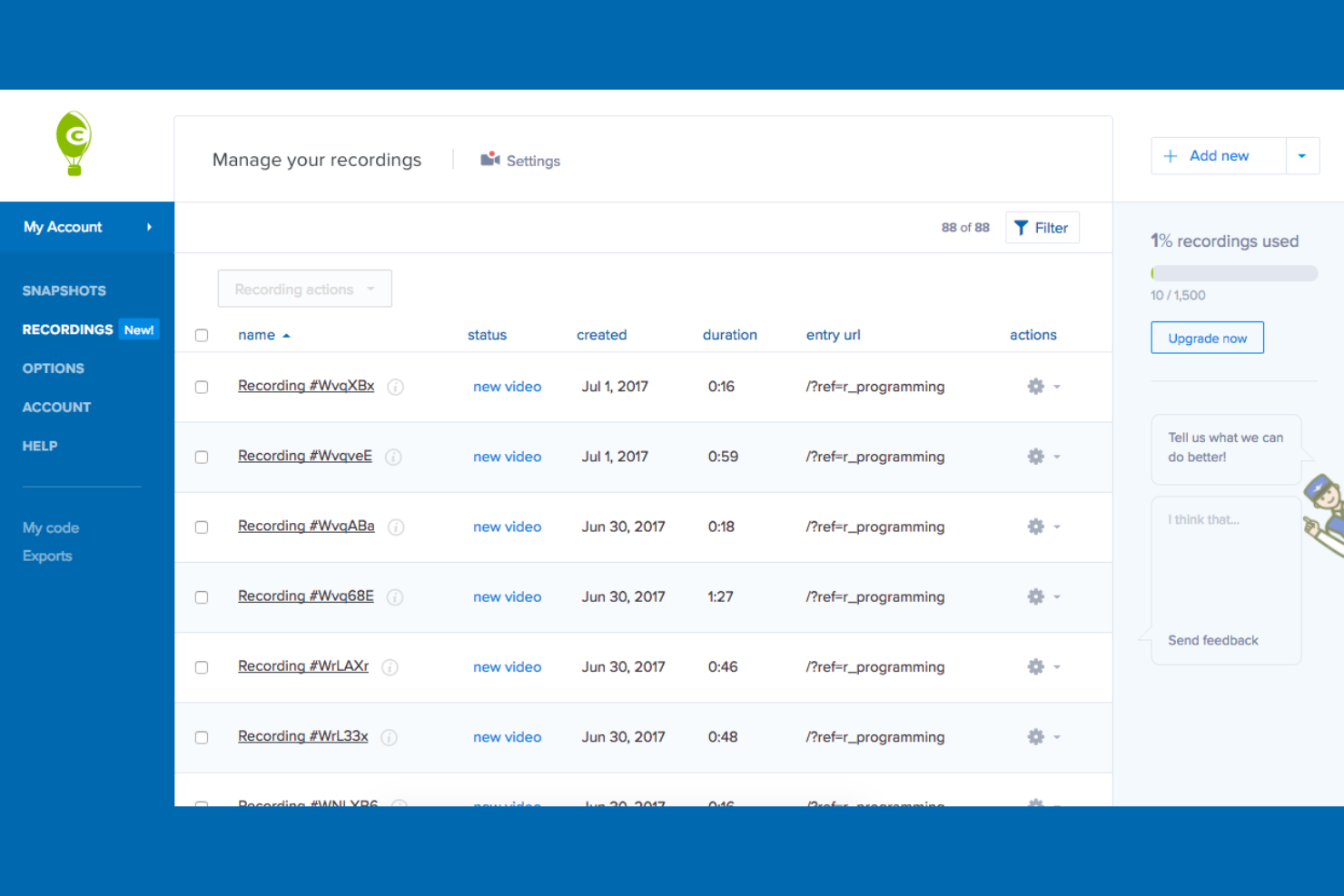
Si buscas una herramienta de análisis del comportamiento todo en uno con un gran enfoque en los informes visuales, Crazy Egg ofrece mapas de calor detallados y pruebas A/B en una sola plataforma. Es una buena opción para responsables de comercio electrónico, especialistas en marketing y equipos de UX que quieren obtener información clara de los usuarios y analizar su comportamiento para ver rápidamente cómo interactúan los visitantes con los elementos del sitio y probar cambios sin ayuda de desarrolladores. A diferencia de Hotjar, Crazy Egg pone el énfasis en el seguimiento visual de clics y las herramientas de experimentación integradas para ayudarte a generar información valiosa y optimizar las páginas web más rápidamente.
Por qué Crazy Egg es una buena alternativa a Hotjar
Para los equipos que quieren combinar el análisis visual con la experimentación, Crazy Egg reúne mapas de calor y pruebas A/B en una sola plataforma. Me gusta que puedas usar sus mapas de calor de clics, desplazamiento y confeti para identificar exactamente dónde interactúan los usuarios o abandonan tu sitio. La herramienta integrada de pruebas A/B te permite lanzar y medir variaciones de páginas sin necesidad de un desarrollador. Si buscas una alternativa a Hotjar que dé importancia tanto a la información visual como a la optimización rápida, vale la pena considerar Crazy Egg.
Características principales de Crazy Egg
Algunas otras características de Crazy Egg que los compradores de herramientas de análisis del comportamiento pueden querer conocer incluyen:
- Grabaciones de usuarios: Observa sesiones reales de visitantes para ver cómo navegan los usuarios por tu sitio.
- Informes de superposición: Consulta datos detallados de clics de cada elemento en el que se puede hacer clic de una página.
- Informes de lista: Accede a una lista ordenable de todos los elementos con los que interactúan los usuarios en cada página.
- Análisis del tráfico: Desglosa el comportamiento de los usuarios por fuente de tráfico, dispositivo o campaña.
Integraciones de Crazy Egg
Las integraciones incluyen WordPress, AWeber, Shopify, Wix y más.
Pros and Cons
Pros:
- Pruebas A/B integradas para experimentar con las páginas
- Las grabaciones de usuarios reproducen las sesiones de los visitantes
- Los informes de superposición desglosan los clics en los elementos
Cons:
- Las grabaciones pueden omitir interacciones dinámicas
- Mapas de calor limitados en páginas con poco tráfico

Ideal para obtener información basada en IA sobre los recorridos de los clientes
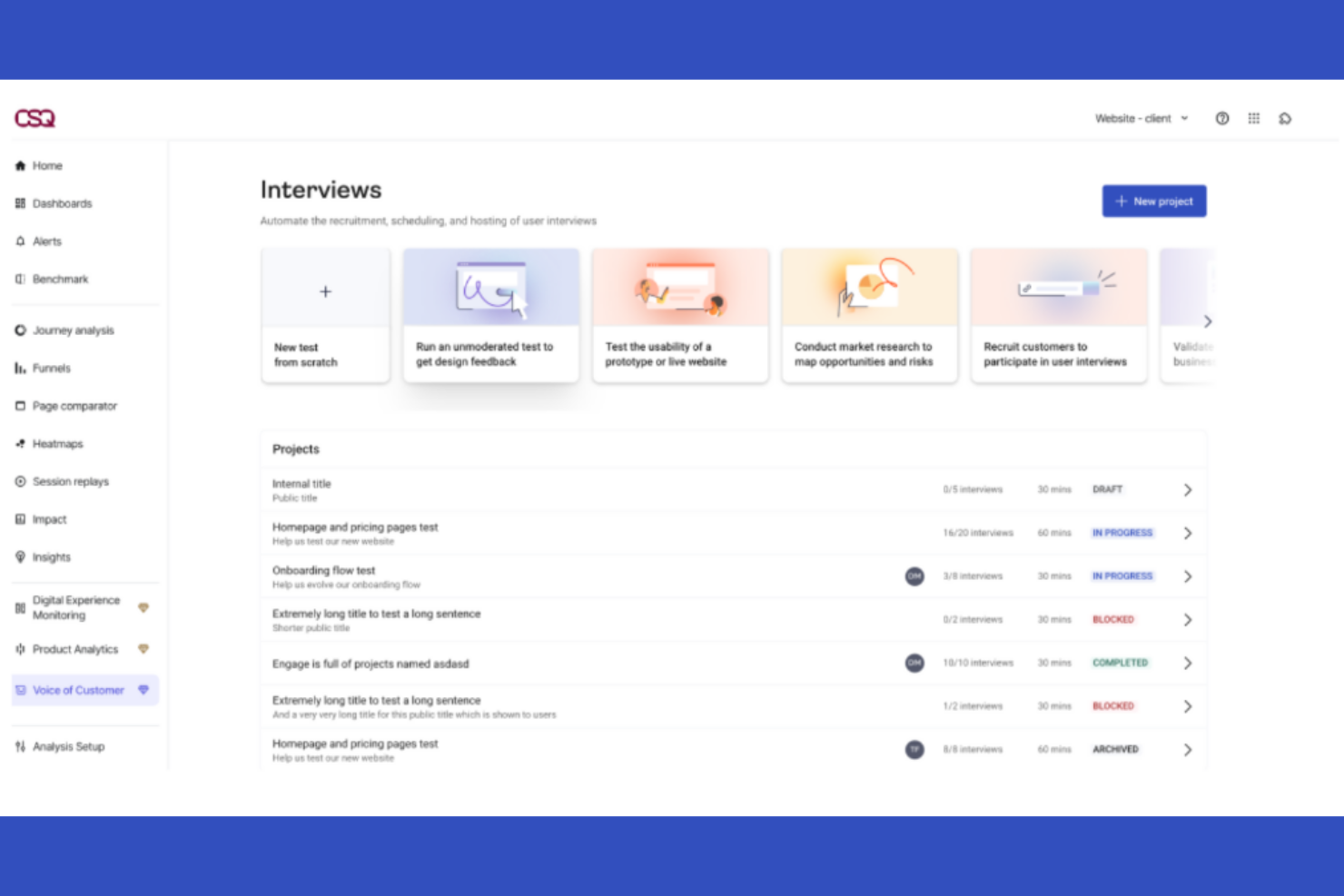
Para los equipos digitales que buscan análisis avanzados de recorridos y mapas de calor, Contentsquare ofrece un enfoque único para el análisis del comportamiento. Es especialmente útil para equipos de comercio electrónico, UX y producto que desean visualizar la interacción de los usuarios con un nivel granular y basado en zonas. A diferencia de Hotjar, Contentsquare utiliza IA para descubrir información práctica a partir de recorridos e interacciones de usuarios complejos en todo el sitio.
Por qué Contentsquare es una buena alternativa a Hotjar
A diferencia de muchas herramientas de análisis del comportamiento, Contentsquare destaca por su análisis de recorridos basado en IA y sus mapas de calor por zonas. Me gusta cómo su análisis de recorridos registra cada paso que dan los usuarios, lo que ayuda a descubrir puntos de abandono ocultos y optimizar las rutas de conversión. Los mapas de calor por zonas permiten ver exactamente qué partes de una página generan interacción, en lugar de limitarse a registrar clics o desplazamientos genéricos. Para los equipos que desean obtener información más profunda y práctica sobre el comportamiento de los usuarios, más allá de lo que ofrece Hotjar, los análisis avanzados de Contentsquare la convierten en una alternativa sólida.
Funciones principales de Contentsquare
Otras funciones de Contentsquare que los compradores de herramientas de análisis del comportamiento pueden querer conocer incluyen:
- Reproducción de sesiones: Vea grabaciones anonimizadas de sesiones reales de usuarios para comprender comportamientos individuales.
- Análisis de errores: Identifique y cuantifique los errores técnicos que afectan a la experiencia del usuario y las conversiones.
- Cuantificación del impacto: Mida el impacto empresarial de comportamientos específicos de los usuarios o de cambios en el sitio.
- Herramientas de segmentación: Filtre y analice los datos de los usuarios por segmentos de audiencia, tipos de dispositivos o fuentes de tráfico.
Integraciones de Contentsquare
Las integraciones incluyen Shopify, AWS, Microsoft Azure, Snowflake y más.
Pros and Cons
Pros:
- Los mapas de calor por zonas muestran la interacción con los elementos
- La reproducción de sesiones incluye controles de privacidad
- El análisis de errores destaca los problemas técnicos
Cons:
- Implementación compleja para equipos pequeños
- Opciones limitadas de personalización del panel

UserGuiding
Ideal para recorridos de producto sin código y flujos de incorporación de usuarios
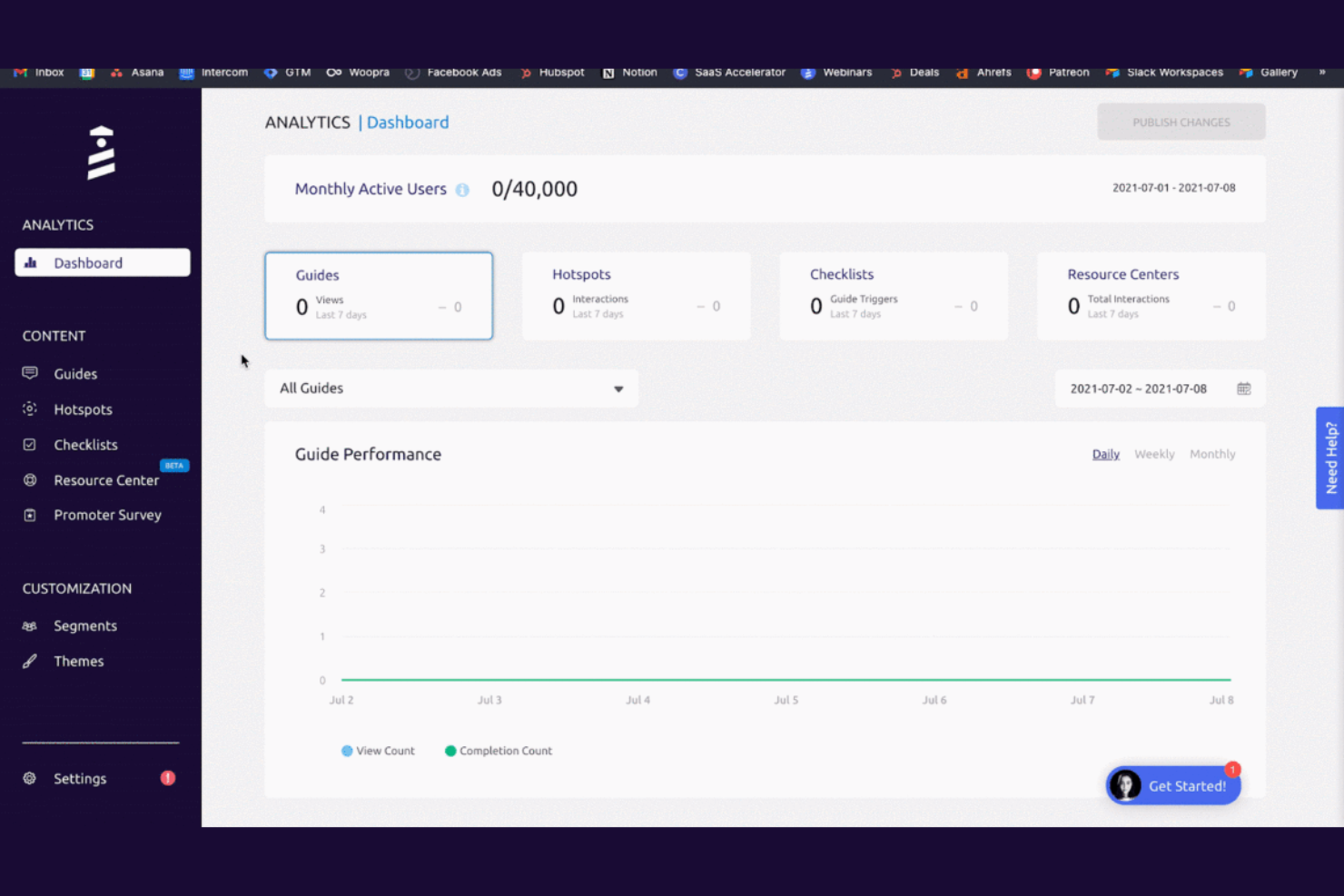
Si buscas una forma sin código de analizar y mejorar la incorporación de usuarios, UserGuiding ofrece orientación dentro de la aplicación y seguimiento del comportamiento diseñados para equipos de producto y crecimiento. Esta herramienta es especialmente útil para empresas SaaS y plataformas de comercio electrónico que quieren crear recorridos interactivos y medir la participación de los usuarios sin recursos de desarrollo. A diferencia de Hotjar, UserGuiding te permite diseñar flujos de incorporación y mensajes emergentes directamente en tu producto, y luego hacer un seguimiento de cómo interactúan los usuarios con cada paso.
Por qué UserGuiding es una buena alternativa a Hotjar
A diferencia de las herramientas de análisis tradicionales, UserGuiding se centra en flujos de incorporación sin código y en la orientación dentro de la aplicación, lo que te ayuda a comprender e influir en el comportamiento de los usuarios en tiempo real. Elegí UserGuiding porque permite crear recorridos interactivos del producto, listas de comprobación y mensajes emergentes sin necesitar el apoyo de desarrolladores. Puedes hacer un seguimiento de cómo interactúan los usuarios con cada elemento de incorporación y ver dónde abandonan o tienen éxito. Este enfoque proporciona a los equipos de producto y crecimiento un control directo tanto sobre la experiencia del usuario como sobre los análisis que la respaldan, lo que convierte a UserGuiding en una sólida alternativa a Hotjar para el análisis del comportamiento centrado en la incorporación.
Características principales de UserGuiding
Algunas otras características de UserGuiding que quienes buscan herramientas de análisis del comportamiento pueden querer conocer incluyen:
- Segmentación: Dirige el contenido de incorporación y los análisis a grupos de usuarios o perfiles específicos.
- Encuestas NPS: Recopila comentarios sobre la puntuación neta del promotor directamente dentro de tu producto.
- Centros de recursos: Añade un widget de ayuda persistente con guías, preguntas frecuentes y anuncios.
- Panel de análisis: Consulta las métricas de participación de los usuarios y el rendimiento de la incorporación en un panel centralizado.
Integraciones
Entre las integraciones se incluyen Mixpanel, Salesforce, Webhook, Amplitude, Intercom, Segment, Slack, Google Analytics, Woopra, HubSpot, Google Tag Manager y muchas más.
Pros and Cons
Pros:
- La segmentación se dirige a cohortes de usuarios específicas
- El centro de recursos ofrece ayuda persistente
- Los análisis realizan un seguimiento de la participación en la incorporación
Cons:
- La configuración multilingüe requiere trabajo manual
- Los informes son menos detallados que los de la competencia
Otras alternativas a Hotjar
Estas son algunas alternativas adicionales a Hotjar que no han entrado en mi lista de preselección, pero que aun así merece la pena consultar:


Cómo evalúo las alternativas a Hotjar
Evalúo estas herramientas en dos niveles: una base esencial —mapas de calor, reproducción de sesiones y análisis de embudos— y elementos diferenciadores, como la segmentación de compradores y las integraciones de comercio electrónico.
Funcionalidad esencial (requisitos básicos para esta lista)
Al seleccionar herramientas para mi lista, califico cada una en una escala de 0 (no ofrece la funcionalidad) a 5 (sobresale en esta área) para cada funcionalidad esencial que se indica a continuación. Después, calculo la puntuación total de la herramienta como porcentaje. Cada herramienta debe alcanzar una puntuación total mínima del 65 % para ser considerada para su inclusión.
- Visualización de mapas de calor: Busco mapas de calor de clics, desplazamiento y movimiento que permitan ver exactamente dónde interactúan los compradores en las páginas de productos, las cuadrículas de colecciones y los banners promocionales.
- Grabación y reproducción de sesiones: Cada herramienta debería capturar las sesiones completas de los compradores para que puedas ver cómo un usuario real navega desde una página de categoría hasta el proceso de pago y detectar posibles fricciones.
- Análisis del embudo de conversión: Evalúo si puedes crear embudos de varios pasos —como visualización del producto, adición al carrito y pago— y ver claramente dónde se producen los abandonos.
- Encuestas y comentarios en el sitio: Las herramientas deberían permitir activar encuestas o microencuestas en función del comportamiento, por ejemplo, preguntando a un comprador por qué está abandonando un carrito.
- Análisis de formularios y procesos de pago: Compruebo si existe un seguimiento a nivel de campo que muestre qué campos del proceso de pago provocan dudas, errores o abandonos tanto en ordenadores como en dispositivos móviles.
- Integraciones con plataformas de comercio electrónico: Son importantes los conectores nativos con plataformas como Shopify, Magento, BigCommerce y WooCommerce, además de la compatibilidad con GA4 y los gestores de etiquetas.
Una vez que tengo una lista de herramientas que cumplen estos criterios, considero qué diferencia a cada plataforma.
Factores diferenciadores (qué distingue a los proveedores)
Así es como comparo y contrasto los distintos proveedores:
Funciones destacadas
La información basada en IA marca una gran diferencia al revisar miles de sesiones; las herramientas que detectan automáticamente los clics de frustración o los clics sin efecto ahorran horas de revisión manual. También busco análisis a nivel de producto que vinculen el comportamiento con SKU o colecciones específicos, lo que ayuda a los equipos de comercialización a decidir qué destacar o cambiar de posición. La segmentación por cohorte de compradores también es importante; filtrar por visitantes nuevos o recurrentes, o por valor del carrito, centra tu atención en los comportamientos de mayor impacto. La integración integrada con pruebas A/B permite validar los cambios sin tener que alternar entre plataformas.
Más allá de las funciones
La escalabilidad de los precios es algo que siempre evalúo: el tráfico minorista puede aumentar durante las promociones de temporada, y los cargos por exceso se acumulan rápidamente si el plan no está diseñado para ello. La privacidad de los datos es igualmente importante; compruebo la aplicación automática de enmascaramiento de información de identificación personal y el cumplimiento del RGPD y la CCPA, especialmente cuando las grabaciones de sesiones capturan campos del proceso de pago. La velocidad de implementación también es importante. Una herramienta que requiere un trabajo de desarrollo mínimo y viene con paneles de comercio electrónico prediseñados permite que tu equipo obtenga información útil mucho antes.
¿Por qué buscar una alternativa a Hotjar?
Aunque Hotjar es una buena opción como herramienta de análisis del comportamiento, hay varias razones por las que algunos usuarios buscan soluciones alternativas. Es posible que estés buscando una alternativa a Hotjar porque…
- Necesitas análisis avanzados del comportamiento de los empleados o usuarios internos
- Quieres controles más detallados de privacidad y cumplimiento de datos
- Necesitas integraciones con herramientas empresariales o de productividad específicas
- Necesitas análisis para aplicaciones móviles que vayan más allá del seguimiento basado en la web
- Quieres funciones de supervisión y alertas en tiempo real
Si alguna de estas situaciones te resulta familiar, has llegado al lugar adecuado. Mi lista incluye varias opciones de herramientas de análisis del comportamiento más adecuadas para los equipos que se enfrentan a estos desafíos con Hotjar y buscan soluciones alternativas.
Funciones principales de Hotjar
Estas son algunas de las funciones principales de Hotjar, para ayudarte a contrastar y comparar lo que ofrecen las soluciones alternativas:
- Grabaciones de sesiones de interacciones de usuarios reales en tu sitio
- Mapas de calor de clics, movimientos y desplazamientos para el análisis visual del comportamiento
- Encuestas en el sitio y sondeos de opinión para obtener comentarios directos de los usuarios
- Análisis del embudo para identificar los puntos de abandono en los recorridos de los usuarios
- Segmentación y filtrado de usuarios para realizar análisis específicos
- Widget de comentarios entrantes para recibir comentarios de los usuarios en tiempo real
- Seguimiento de eventos para supervisar acciones o conversiones específicas
- Destacados y notas para que el equipo colabore en el análisis de la información
- Panel con informes y visualizaciones personalizables
Lo siguiente:
Si estás investigando alternativas a Hotjar, ponte en contacto con un asesor de SoftwareSelect para recibir recomendaciones gratuitas.
Rellenas un formulario y mantienes una breve conversación en la que profundizan en los detalles de tus necesidades. Después, recibirás una lista de opciones de software para revisar. Incluso te ayudarán durante todo el proceso de compra, incluidas las negociaciones de precios.