

IBM Sterling Order Management Review: Pros, Cons, Features & Pricing
IBM Sterling Order Management suits large enterprises managing complex, high-volume orders. It offers robust integration, real-time visibility, advanced workflows, and customization to optimize order fulfillment and customer experience.

We review tools independently, and commissions help fund our testing. See our transparency policy, our methodology, or suggest a tool.
IBM Sterling Order Management is an order management system software built for large retailers and distributors managing complex, high-volume fulfillment across multiple channels and locations. I'd consider it when you need granular order routing logic, real-time inventory visibility across many fulfillment nodes, and deep ERP integration. If you're weighing it against Manhattan Associates Active Omni, IBM Sterling gives you more flexibility in customizing order orchestration workflows—particularly if your existing tech stack already runs on IBM infrastructure.
IBM Sterling Order Management Evaluation Summary
0/5
- Pricing available upon request
- Free demo available
Why Trust Our Software Recommendations
6,700+
Reviews
20
Industry experts
16+
Evaluation factors
14
Years
Our team has been testing and reviewing software since 2012. As retail leaders ourselves, we know how difficult—and important—it is to choose the right software.
For this guide, we evaluated tools using hands-on testing and independent research, scoring tools using our selection criteria.
Our reviews reflect our independent judgment—not a sales pitch.
IBM Sterling Order Management Overview
In my opinion, IBM Sterling Order Management is the kind of system you choose when you're done messing around with lightweight tools that can’t handle scale.
It’s robust, deeply customizable, and built to wrestle complex order workflows into something predictable.
That said, it’s not for the faint of heart—or small teams hoping for quick wins. The onboarding is heavy, the learning curve is real, and you'll want experienced people running it.
But for large enterprises with real operational complexity, it delivers the integration and control you actually need to keep customers happy and orders moving without chaos.
Pros
- Handles complex order workflows efficiently.
- Strong customization options to fit your unique needs.
- Robust reporting tools that provide valuable insights.
Cons
- Interface can be overwhelming for new users.
- Requires significant time investment for onboarding.
- Support response time could be improved.
Is IBM Sterling Order Management Right For Your Needs?
Who Would be a Good Fit for IBM Sterling Order Management?
Large enterprises in retail, manufacturing, and distribution that deal with high-volume, complex transactions will actually benefit from IBM Sterling Order Management.
If you need deep customization to match your real operational workflows, robust reporting to make better decisions, and have the resources to handle a detailed onboarding process, this system is worth considering.
It’s for teams serious about getting order complexity under control without cutting corners.
- RETAIL GIANTSNeed to manage numerous SKUs and complex supply chains without losing control.
- MANUFACTURERSRely on customization and reporting to handle intricate production and distribution workflows.
- DISTRIBUTION CENTERSFocused on processing high-volume transactions smoothly.
- LOGISTICS TEAMSUse robust integrations to streamline order processing and fulfillment.
- ECOMMERCE PLATFORMSWant detailed customer insights and reliable order tracking.
- SUPPLY CHAIN MANAGERSNeed end-to-end visibility and control over the entire order lifecycle.
Who Would be a Bad Fit for IBM Sterling Order Management?
Small businesses or startups looking for a plug-and-play solution should steer clear.
If your team wants a quick setup, minimal training, and doesn’t have the transaction volume to justify heavy features, you’ll end up frustrated. This isn’t built for companies that need simplicity over depth, or those that want to minimize IT and support overhead at all costs.
- SMALL STARTUPSNeed something simple and affordable without the learning curve.
- LOCAL RETAILERSHave straightforward operations that don’t require advanced capabilities.
- FREELANCERSManage their own orders and won’t use enterprise-level features.
- NON-PROFIT ORGANIZATIONSHave basic order needs that don’t justify the cost or complexity.
- SINGLE-PERSON TEAMSDon’t have the bandwidth to deal with setup and configuration.
- SMALL ECOMMERCE SHOPSHave low transaction volumes that won’t get full value from the system.
Core Features
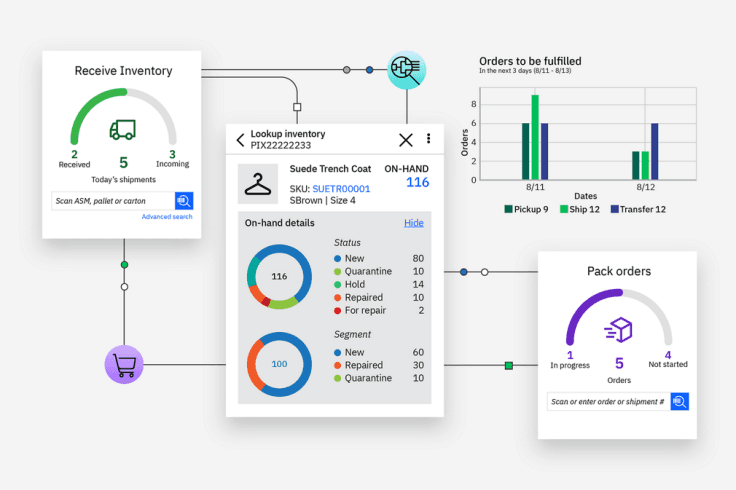
- Order processing. Manage complex order orchestration from creation to fulfillment with automation that reduces manual errors and keeps your team moving.
- Inventory management. Get real-time inventory visibility across locations to meet customer demand without overstocking or stockouts.
- Customer management. Maintain detailed customer records to personalize service and improve the overall customer experience.
- Reporting and analytics. Produce meaningful reports that let you optimize workflows, track KPIs, and make decisions based on actual data.
- Customization options. Adapt modules, business rules, and workflows to match your unique operations instead of fighting rigid templates.
- Workflow automation. Automate repetitive tasks to streamline order fulfillment processes and free up staff for higher-value work.
Standout Features
- Advanced fulfillment options. Supports multiple methods like ship-from-store and drop shipping to optimize your order fulfillment processes.
- Omnichannel capabilities. Manage orders across ecommerce, in-store, call center, and other channels for a single view of all transactions.
Ease of Use
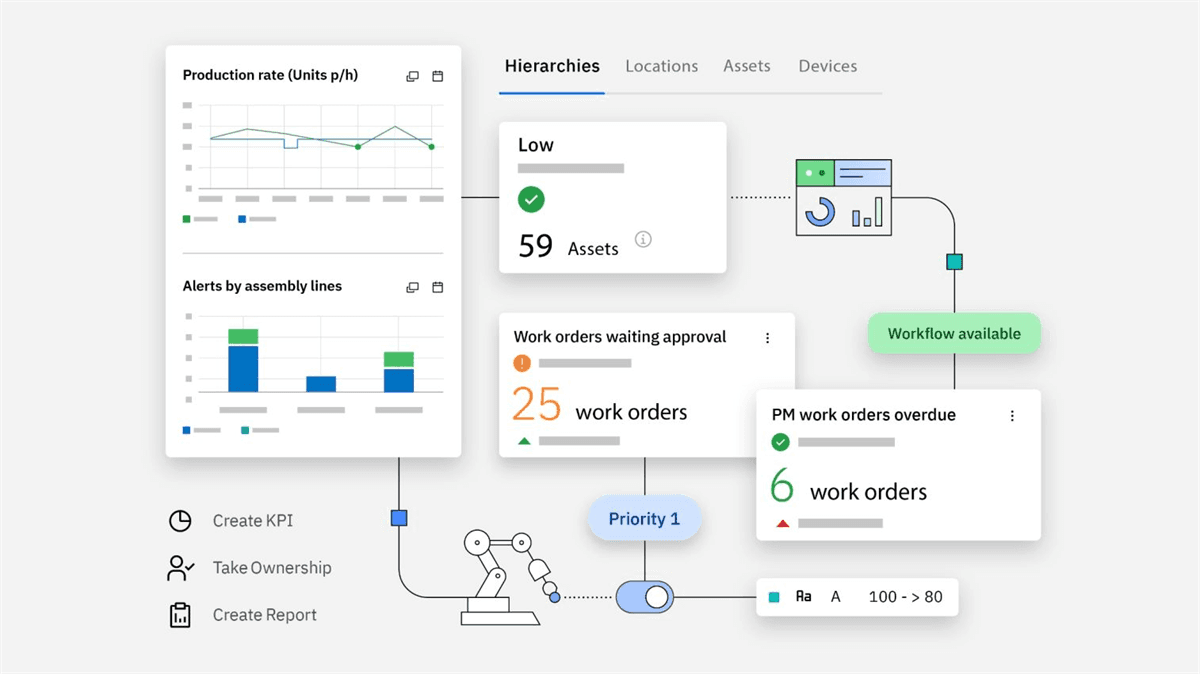
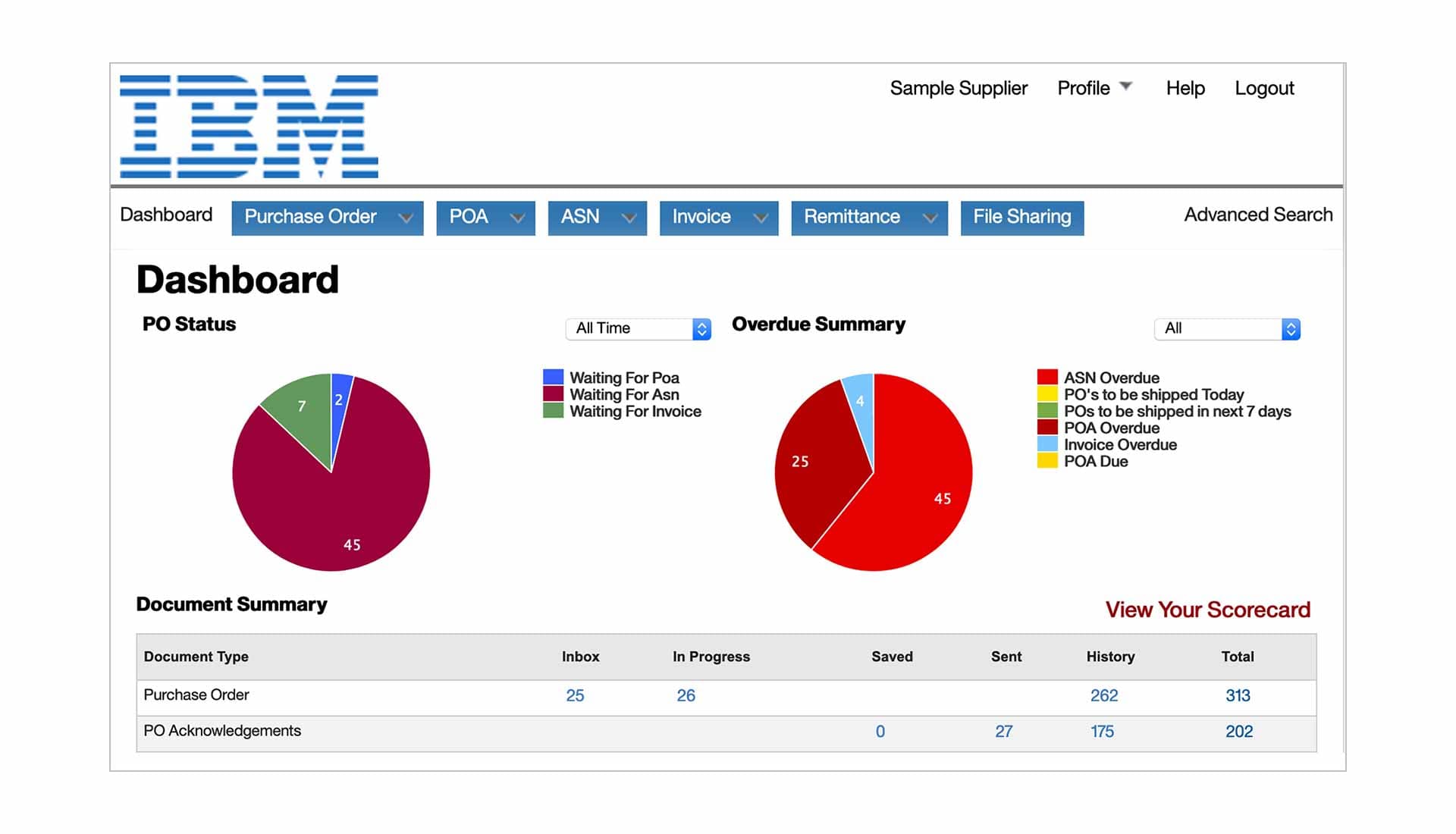
IBM Sterling Order Management isn’t built for anyone looking for a friendly, beginner-level order management system. The interface can feel like overkill at first—especially for teams new to complex order orchestration.
Expect a real learning curve.
But once your team gets through onboarding, you'll have the tools to automate workflows, improve real-time visibility, and actually control large-scale ecommerce and omnichannel orders the way you want.
Onboarding
IBM Sterling Order Management doesn’t pretend onboarding is simple.
You’re dealing with complex order workflows, custom business rules, and integrations with ERP and ecommerce systems—it’s going to take time. Expect a detailed setup with training requirements your team actually needs to take seriously.
The upside? Once configured, you’ll have a system that matches your real operations instead of forcing you into someone else’s template.
Customer Support
IBM Sterling Order Management offers plenty of support options—just don’t expect them to hold your hand on demand.
Documentation is detailed, and the team knows the system inside out, but response times can drag when you need help fast.
For a complex SaaS order management system with integrations all over your supply chain, you’ll want dedicated internal resources ready to work with support instead of waiting for miracles.
Value for Money
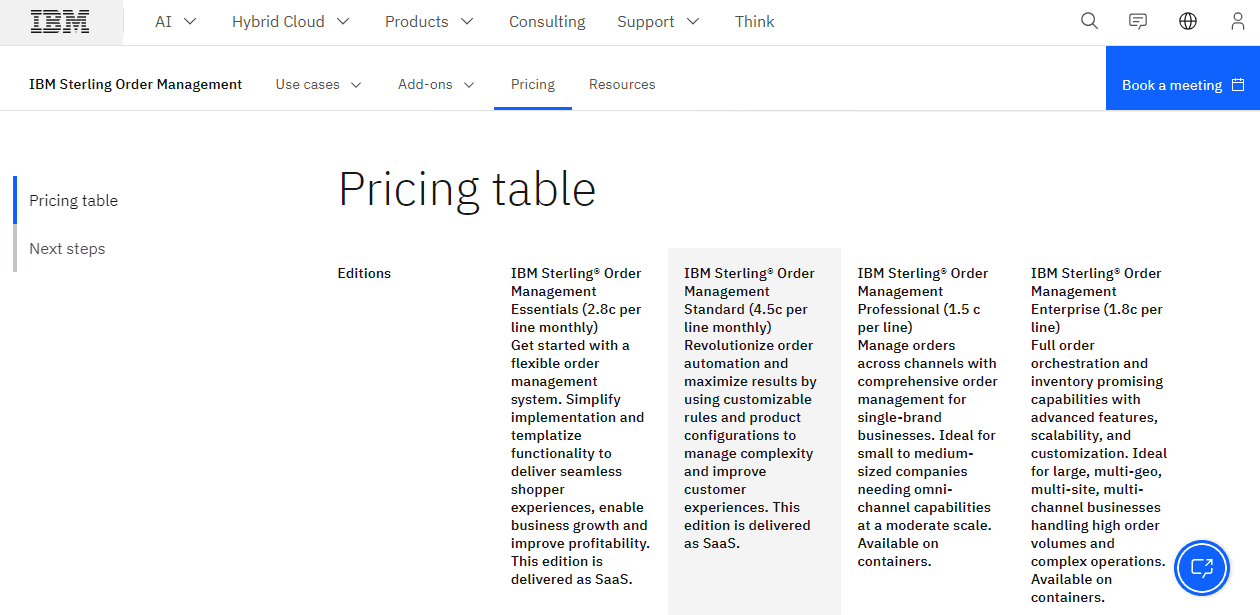
IBM Sterling Order Management isn’t cheap, but that’s the point. It’s priced for enterprises that actually need an order management system capable of handling complex order orchestration, real-time inventory visibility, and serious integrations.
Smaller teams will find the cost hard to justify. But for large organizations managing omnichannel fulfillment and wanting customization without compromise, it can pay off—if you're ready to invest the time and budget to do it right.
- Standard Plan. Basic order management functionalities.
- Professional Plan. Advanced features like detailed analytics.
- Enterprise Plan. Full customization and dedicated support.
IBM Sterling Order Management Specs
- API: No
- Budgeting: No
- Calendar Management: No
- Dashboard: No
- Data Export: No
- Data Import: No
- Data Visualization: No
- Employee Database: No
- Employee Incentive Management: No
- Employee Onboarding: No
- Expense Tracking: No
- External Integrations: No
- Feedback Management: No
- Forecasting: No
- Multi-Currency: No
- Multi-User: No
- Notifications: No
- Payroll: No
- Scheduling: No
- Tax Management: No
- Timesheets: No
- Travel Management: No
- Vacation & Absence Calendar: No
IBM Sterling Order Management FAQs
IBM Sterling Order Management Company Overview & History
IBM Sterling Order Management is part of IBM’s suite of cloud-based SaaS solutions aimed at improving supply chain and order management system efficiency.
Headquartered in Armonk, New York, IBM acquired Sterling Commerce in 2010 to expand its ecommerce and omnichannel capabilities.
The platform has evolved with features like Kubernetes-based deployment, robust security, and real-time inventory visibility to serve large enterprises across retail, manufacturing, and distribution.
It's designed to handle complex order orchestration while integrating with ERP systems and other back-end tools to streamline fulfillment processes.
IBM Sterling Order Management major milestones
- 2010: IBM acquires Sterling Commerce to strengthen its order management system and ecommerce integration capabilities.
- 2014: Released as part of IBM’s portfolio to support omnichannel retail, complex order workflows, and enterprise supply chain needs.
- 2020: Launches cloud-based deployment with IBM Cloud Kubernetes for scalable, flexible implementation across back-end systems.
- 2023: Recognized for robust security, compliance, and real-time inventory visibility, staying competitive for large enterprises managing complex order orchestration.
Is IBM Sterling Order Management Right for You?
If you’re running a large operation with complex order workflows, multiple channels, and real-time inventory needs, IBM Sterling Order Management delivers the control and integration you actually need.
It’s not for teams looking for quick wins or easy setups. But for enterprises ready to invest in getting it right, it can be the backbone of a truly scalable order management system.
Retail never stands still—and neither should you. Subscribe to our newsletter for the latest insights, strategies, and career resources from top retail leaders shaping the industry.