

Strong Airwallex alternatives handle global business payments, currency management, and retail integrations as well as, or better than, Airwallex itself. If you want more control over cross-border payments, better FX rates, or tighter connections with your ERP and ecommerce platforms, you need a platform that keeps up with the pace of modern retail.
In this guide, you’ll find retail-focused payment solutions that give you transparency, cost control, and the flexibility your team needs to manage supplier payouts, marketplace collections, and multi-channel sales. Use this list to compare the best Airwallex alternatives and find the right fit for your business.
What Is Airwallex?
Airwallex is a business payment platform for managing international and domestic transactions, currency exchange, and treasury operations. Retail finance teams use Airwallex to send and receive funds globally, pay suppliers, collect marketplace payments, and access multi-currency accounts. The platform connects with ecommerce, ERP, and accounting systems, supporting businesses that need flexible, scalable financial tools for cross-border selling, supplier payouts, and integrated treasury management.
Airwallex Alternatives Comparison Table
This comparison table summarizes pricing details for my top Airwallex alternative selections:
| Tool | Best For | Trial Info | Price | ||
|---|---|---|---|---|---|
| 1 | Best for omnichannel acquiring at enterprise scale | Free demo available | Pricing upon request | Website | |
| 2 | Best for local acquiring in emerging markets | Free demo available | Pricing upon request | Website | |
| 3 | Best for stablecoin treasury and global payouts | Not available | Pricing upon request | Website | |
| 4 | Best for FX hedging on cross-border payables | Free plan + free trial available | From $75/month | Website | |
| 5 | Best for mid-market FX and accounting sync | Free demo available | Pricing upon request | Website | |
| 6 | Best for omnichannel checkout and ecommerce reach | Not available | From $620/month | Website | |
| 7 | Best for marketplace seller payouts globally | Free demo available | From $19/user/month | Website | |
| 8 | Best for 900+ local payment methods globally | Free demo available | Pricing upon request | Website | |
| 9 | Best for in-person and online payments in one account | Free plan available | From $9.99/month | Website | |
| 10 | Best for Asian marketplace seller payouts | Not available | Pricing upon request | Website |


Why Trust Our Software Recommendations
6,700+
Reviews
20
Industry experts
16+
Evaluation factors
14
Years
Our team has been testing and reviewing software since 2012. As retail leaders ourselves, we know how difficult—and important—it is to choose the right software.
For this guide, we evaluated tools using hands-on testing and independent research, scoring tools using our selection criteria.
Our reviews reflect our independent judgment—not a sales pitch.
Airwallex Alternatives Reviews
Below are my detailed summaries of the best Airwallex alternatives that made it onto my shortlist. My reviews offer a detailed look at the features, integrations, and best use cases of each platform to help you find the best one for you.
 Best for omnichannel acquiring at enterprise scale
- Free demo available
- Pricing upon request
Visit WebsiteCustomer Rating:3.8/5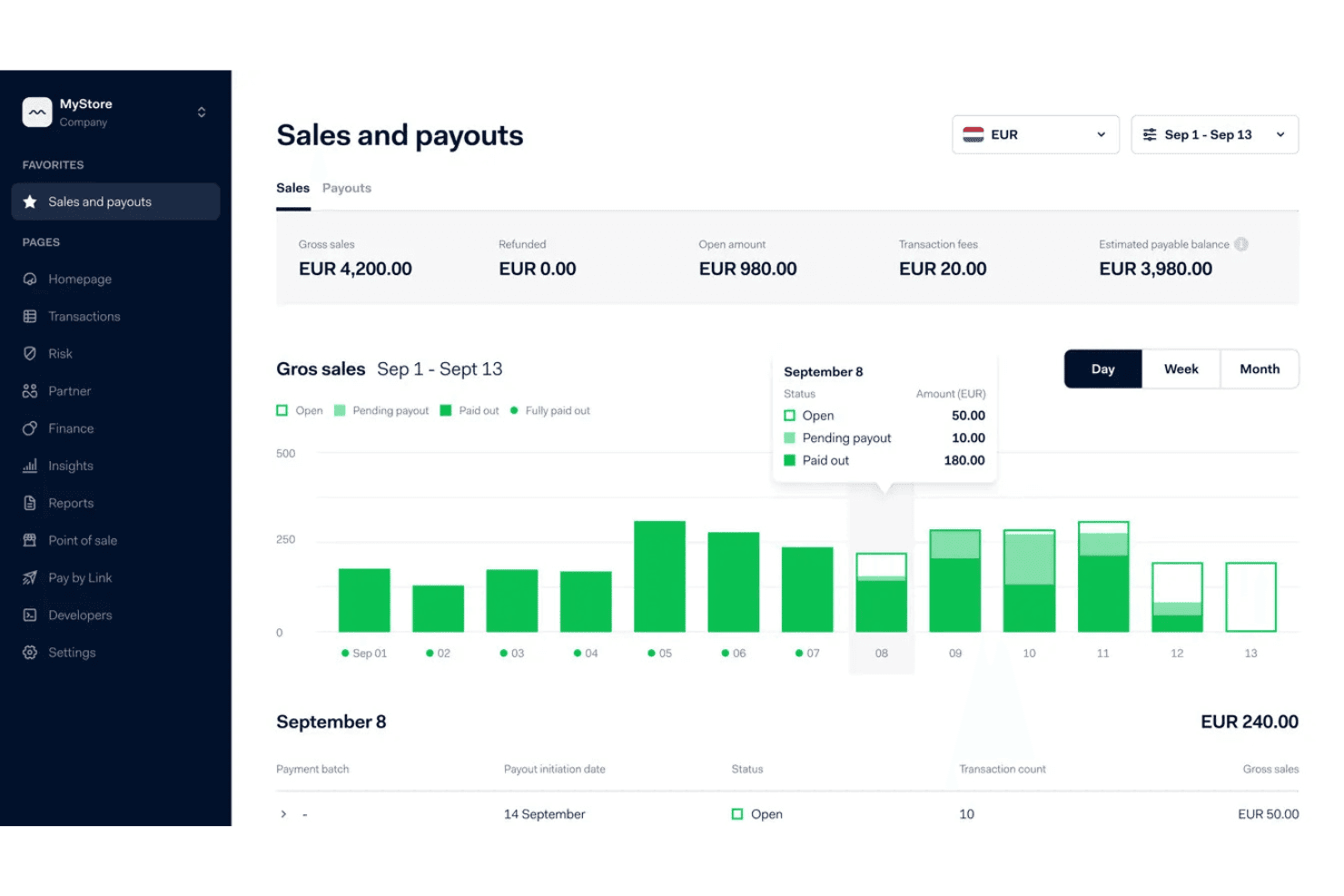
Adyen lets users track gross sales, payouts, and fees in one dashboard. Adyen is a global payment processing platform built for businesses that want to unify payments across in-store, online, and mobile channels without juggling separate providers or systems.
Who Is Adyen Best For?
Adyen is a solid choice for large retailers and enterprise ecommerce teams who need to manage payments across multiple channels and regions.
Why Adyen Is a Good Airwallex Alternative
I picked Adyen for my shortlist because it gives my team enterprise-grade control when handling payments across brick-and-mortar, ecommerce, and mobile. I can centralize transaction management, support regional payment methods globally, and analyze omnichannel performance—all with a single integration. That flexibility is key for scaling unified payment experiences.
Adyen Key Features
- Risk management tools: Use built-in fraud detection and risk management features to protect transactions.
- Global payment method support: Accept payments from a wide range of regional and international payment methods.
- Developer-friendly APIs: Access well-documented APIs and SDKs for custom payment integrations.
- Real-time reporting dashboard: Monitor transactions and settlement data with live analytics and insights.
Adyen Integrations
Adyen offers native integrations with Shopify, Magento, Salesforce Commerce Cloud, BigCommerce, WooCommerce, Oracle, SAP, PrestaShop, and Microsoft Dynamics 365. An API is available for custom integrations.
Pros and Cons
Pros:
- Real-time reporting on global transaction activity
- Advanced fraud detection with built-in risk tools
- Supports unified payments across all sales channels
Cons:
- Some features require technical integration expertise
- Onboarding process can be time-consuming
Learn more about Adyen: Best for local acquiring in emerging markets
- Free demo available
- Pricing upon request
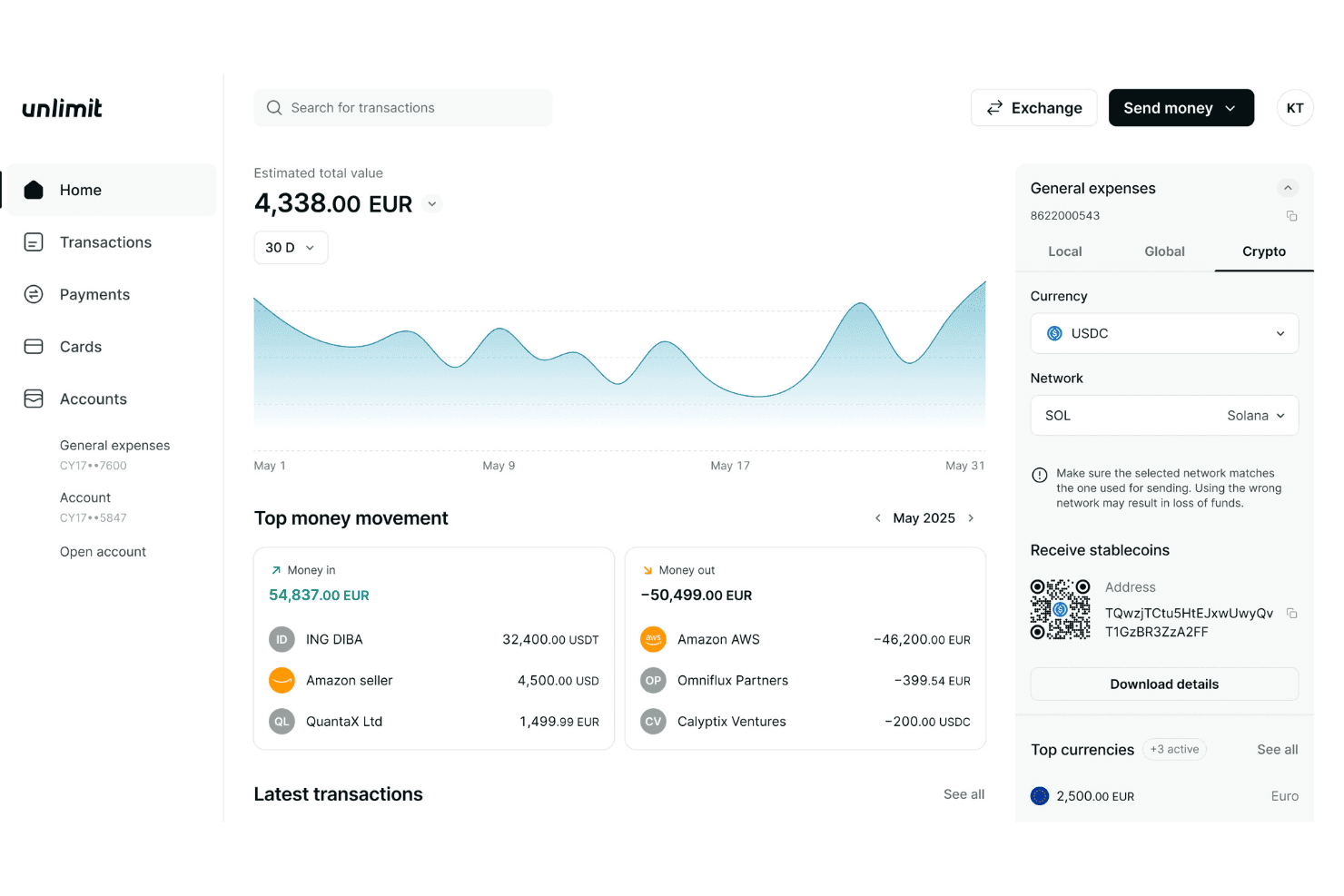
Unlimit lets users manage crypto and fiat accounts in one dashboard. Unlimit is a global payment processing platform designed for ecommerce retailers and digital businesses looking to expand into emerging markets, offering access to a wide variety of local payment methods and support for cross-border transactions.
Who Is Unlimit Best For?
Unlimit is a strong fit for ecommerce businesses and digital companies that need to accept local payment methods in emerging markets.
Why Unlimit Is a Good Airwallex Alternative
I picked Unlimit as one of the best because I can access a wide range of local payment methods in emerging markets, making it easier to grow cross-border ecommerce. My team is able to offer country-specific payment options that local customers trust, helping us boost conversions in new regions.
Unlimit Key Features
- Virtual and physical cards: Issue and manage both types of payment cards for business expenses or customer payouts.
- Multi-currency support: Accept and settle payments in various global currencies for cross-border commerce.
- API integration: Integrate Unlimit payment solutions directly into your ecommerce platform or custom website with developer-friendly APIs.
- Real-time transaction monitoring: Track, review, and analyze payment activity as it happens through a unified dashboard.
Unlimit Integrations
Native integrations are not clearly documented. Unlimit supports integrations via its API for custom solutions.
Pros and Cons
Pros:
- Real-time transaction monitoring through unified dashboard
- Enables issuing of virtual and physical cards
- Supports local payment methods in emerging markets
Cons:
- Pricing details only available upon request
- Native integrations not clearly documented
Learn more about Unlimit:
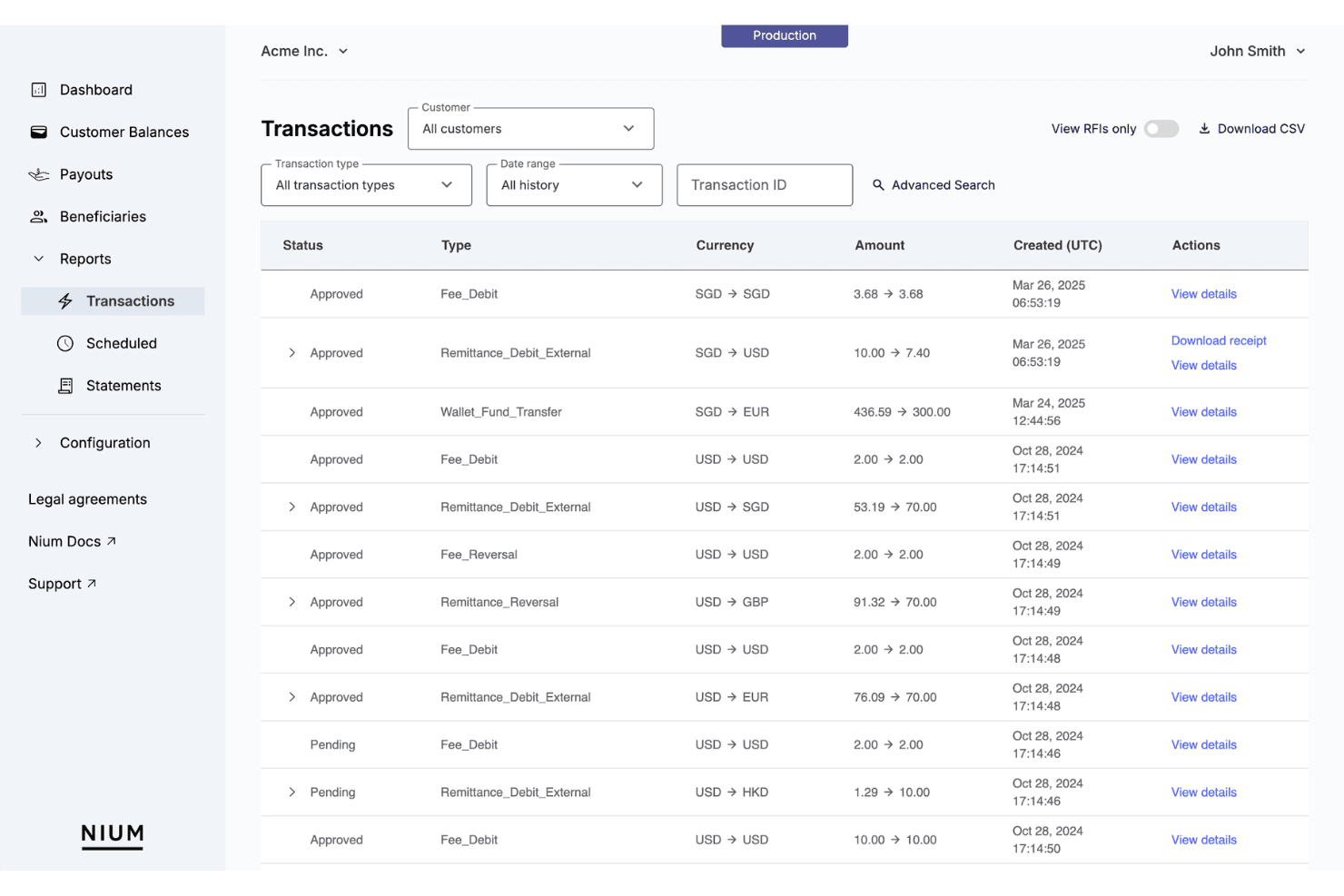
Nium lets users track and filter transaction history across currencies. Nium is a payment processing platform designed for ecommerce, retail, and global businesses that want fast international payouts, flexible treasury management, and support for multiple currencies and payment methods.
Who Is Nium Best For?
Nium is a good fit for retail and ecommerce businesses that need fast, multi-currency global payouts and treasury management.
Why Nium Is a Good Airwallex Alternative
I picked Nium as one of the best because I can manage stablecoin treasuries and schedule fast global payouts for suppliers or partners right from the dashboard. Nium supports multi-currency transactions and integrates different payment rails, so my team can move and convert funds across dozens of countries without waiting for slow, legacy bank processes.
Nium Key Features
- API-driven payments: Automate payouts and onboard partners or vendors using a suite of developer APIs.
- Card issuance platform: Create branded prepaid, debit, or credit cards for business use or end customers.
- Regulatory compliance tools: Access built-in tools to help you meet local and international compliance requirements.
- Real-time transaction tracking: Monitor payment status and fund movements instantly through the platform dashboard.
Nium Integrations
Native integrations are not clearly documented. Nium provides an API for custom integrations.
Pros and Cons
Pros:
- Offers API-driven payments and card issuance
- Enables fast multi-currency global payouts
- Supports stablecoin treasury management directly
Cons:
- Pricing details require direct inquiry
- Native integrations are not clearly documented
Learn more about Nium:
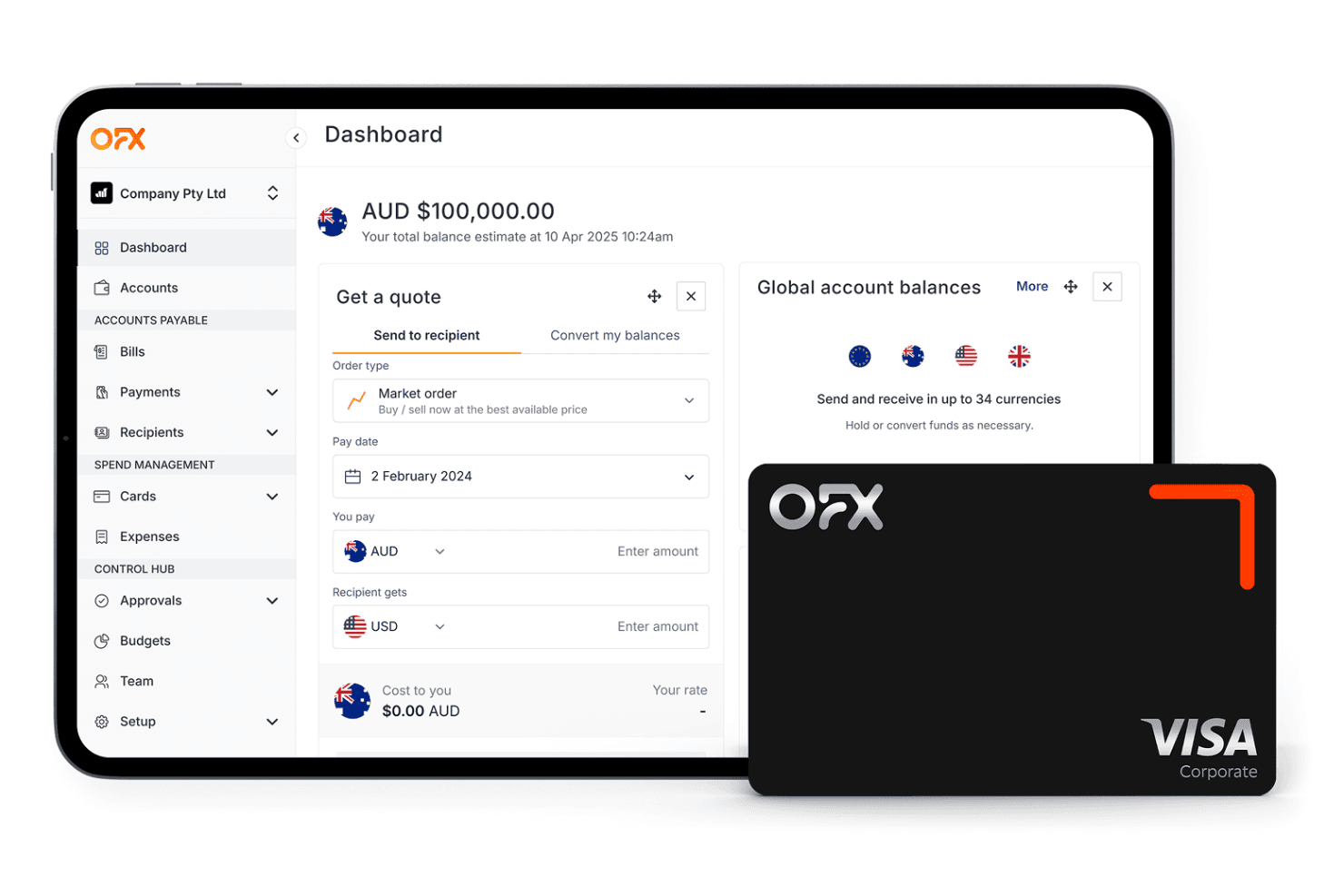
OFX lets users send money globally and manage multi-currency accounts. OFX is a cross-border payment platform designed for ecommerce, retail, and businesses with global operations that need to manage international transactions and currency risk.
Who Is OFX Best For?
OFX is a good fit for ecommerce and retail businesses with global operations that need to manage frequent international payments and currency risk.
Why OFX Is a Good Airwallex Alternative
I picked OFX as a strong Airwallex alternative because I rely on its advanced FX hedging tools for cross-border payables. I can lock in exchange rates on international transactions and set up forward contracts, which helps my business reduce currency risk and manage global supplier payments with confidence. OFX's dedicated support for global operations sets it apart.
OFX Key Features
- Multi-currency accounts: Let your business hold and manage balances in multiple currencies from a single dashboard.
- Batch payment processing: Upload and process multiple international payments at once to save time.
- Real-time payment tracking: Monitor the status of your cross-border payments from initiation to completion.
- User permissions management: Control access and set roles for different team members within your OFX business account.
OFX Integrations
Native integrations are not clearly documented. OFX provides an API for custom integrations.
Pros and Cons
Pros:
- Real-time tracking of international payments
- Multi-currency accounts for global operations
- Advanced FX hedging tools for payables
Cons:
- API requires technical resources to implement
- Advanced hedging may be unnecessary for some
Learn more about OFX: Best for mid-market FX and accounting sync
- Free demo available
- Pricing upon request
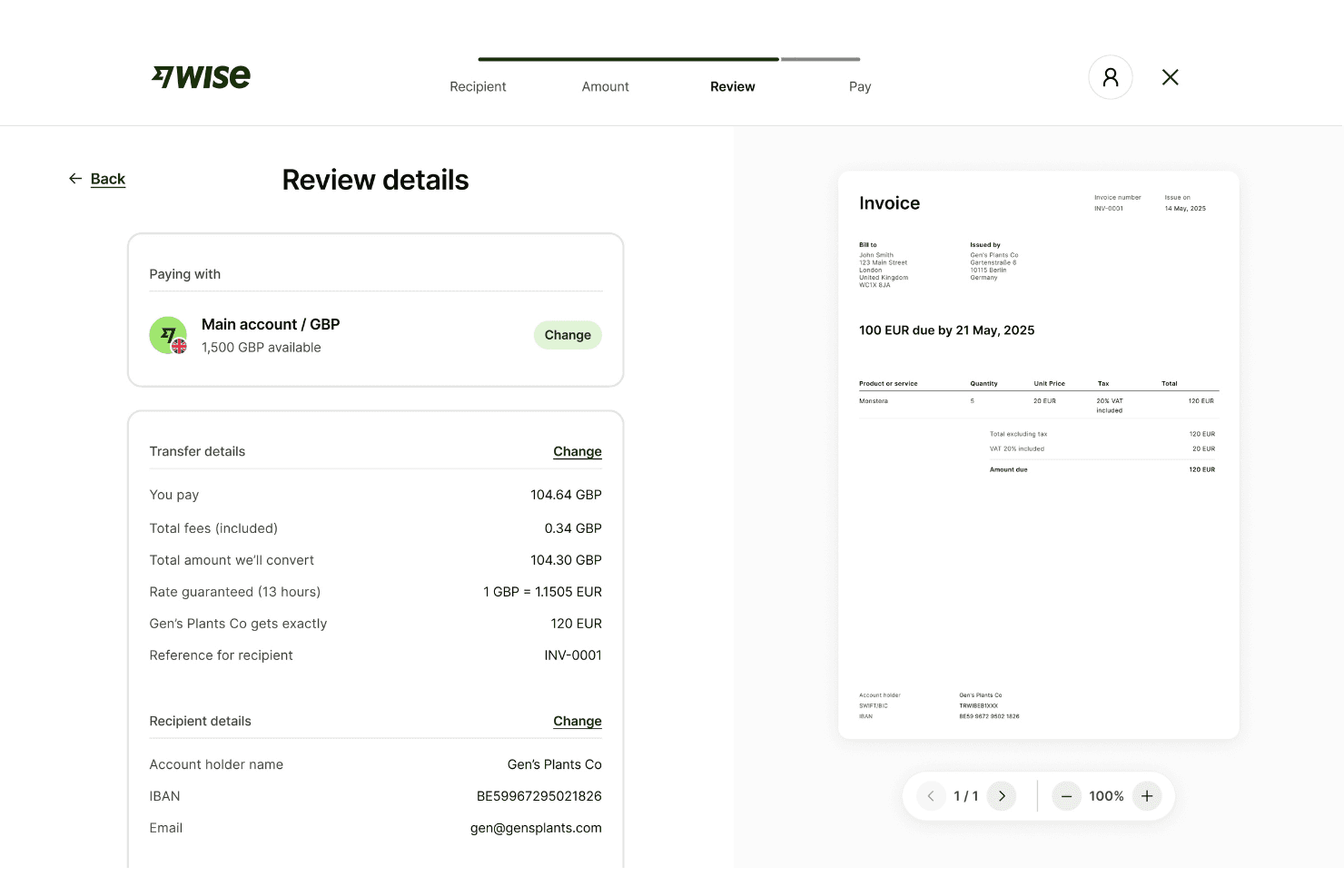
Wise Business lets users review transfer details before paying invoices. Wise Business is a payment processing platform designed for finance and operations teams in retail and ecommerce who need to handle cross-border payments, control FX costs, and connect payouts with accounting workflows.
Who Is Wise Business Best For?
Wise Business suits mid-market retail and ecommerce teams managing frequent cross-border payments and looking to simplify FX handling alongside accounting integration.
Why Wise Business Is a Good Airwallex Alternative
I picked Wise Business as one of the best airwallex alternatives because I rely on its real-time FX cost controls and automated accounting sync. My team is able to process cross-border payments and connect transactions directly with our accounting system, which solves operational headaches for ecommerce payouts.
Wise Business Key Features
- Batch payments: Send payouts to multiple suppliers or contractors at once using a single file upload.
- Multi-currency accounts: Hold, manage, and convert between 40+ currencies inside one Wise account.
- User permissions: Assign roles and access levels for team members to control who can view, send, or approve payments.
- Expense cards: Issue Wise Business debit cards to team members for company spending and expense tracking.
Wise Business Integrations
Wise Business offers native integrations with Xero, QuickBooks, and NetSuite for accounting automation. An API is available for custom integrations.
Pros and Cons
Pros:
- Automated accounting sync across multiple platforms
- Multi-currency accounts with batch payout support
- Real-time FX rates for cross-border payments
Cons:
- Cannot automate bulk recurring payments
- No in-person cash deposit options
Learn more about Wise Business: Best for omnichannel checkout and ecommerce reach
- Not available
- From $620/month
Visit WebsiteCustomer Rating:4.6/5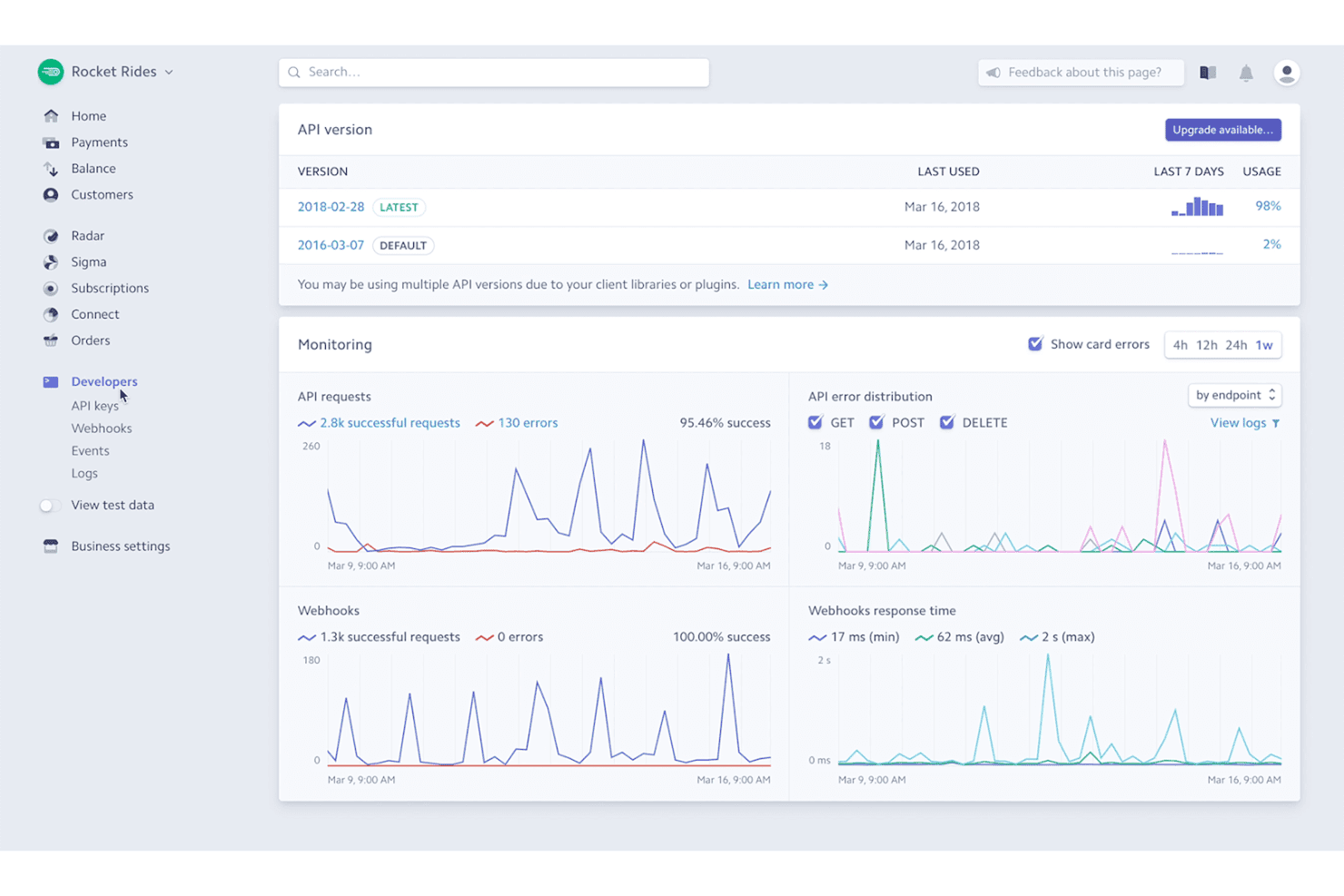
Stripe lets developers monitor API requests, errors, and webhook activity in real time. Stripe is a modular payment platform designed for businesses that want to accept and send payments online, in-store, or across mobile channels while automating complex payment workflows and compliance tasks.
Who Is Stripe Best For?
Stripe suits retail and ecommerce businesses of any size that want to unify payments across online, in-store, and mobile channels.
Why Stripe Is a Good Airwallex Alternative
I picked Stripe as one of the best because my team can unify in-store, online, and mobile payments across markets. I appreciate Stripe’s advanced checkout flows and modular APIs that help us automate recurring billing, marketplace payouts, and global compliance in one platform. Stripe’s omnichannel reach lets us keep our payment experience consistent everywhere we sell.
Stripe Key Features
- Payment links: Create shareable, no-code payment links for selling online without needing a website.
- Advanced fraud detection: Built-in machine learning tools analyze transactions in real time to help reduce chargebacks.
- Support for multiple payment methods: Accept cards, wallets, bank debits, buy now pay later, and local payment methods from one dashboard.
- Developer-friendly APIs: Access flexible APIs that let your team build custom integrations and automate payment flows.
Stripe Integrations
Stripe offers native integrations with Shopify, WooCommerce, BigCommerce, Magento, Salesforce Commerce Cloud, Xero, QuickBooks, NetSuite, Squarespace, and Wix. An API is available for custom integrations.
Pros and Cons
Pros:
- Modular APIs for custom payment automation
- Advanced fraud detection with real-time analytics
- Consistent omni-channel experience across online and in-store
Cons:
- Hardware support limited compared to legacy providers
- Account approval process can delay onboarding
 Best for marketplace seller payouts globally
- Free demo available
- From $19/user/month
Visit WebsiteCustomer Rating:3.2/5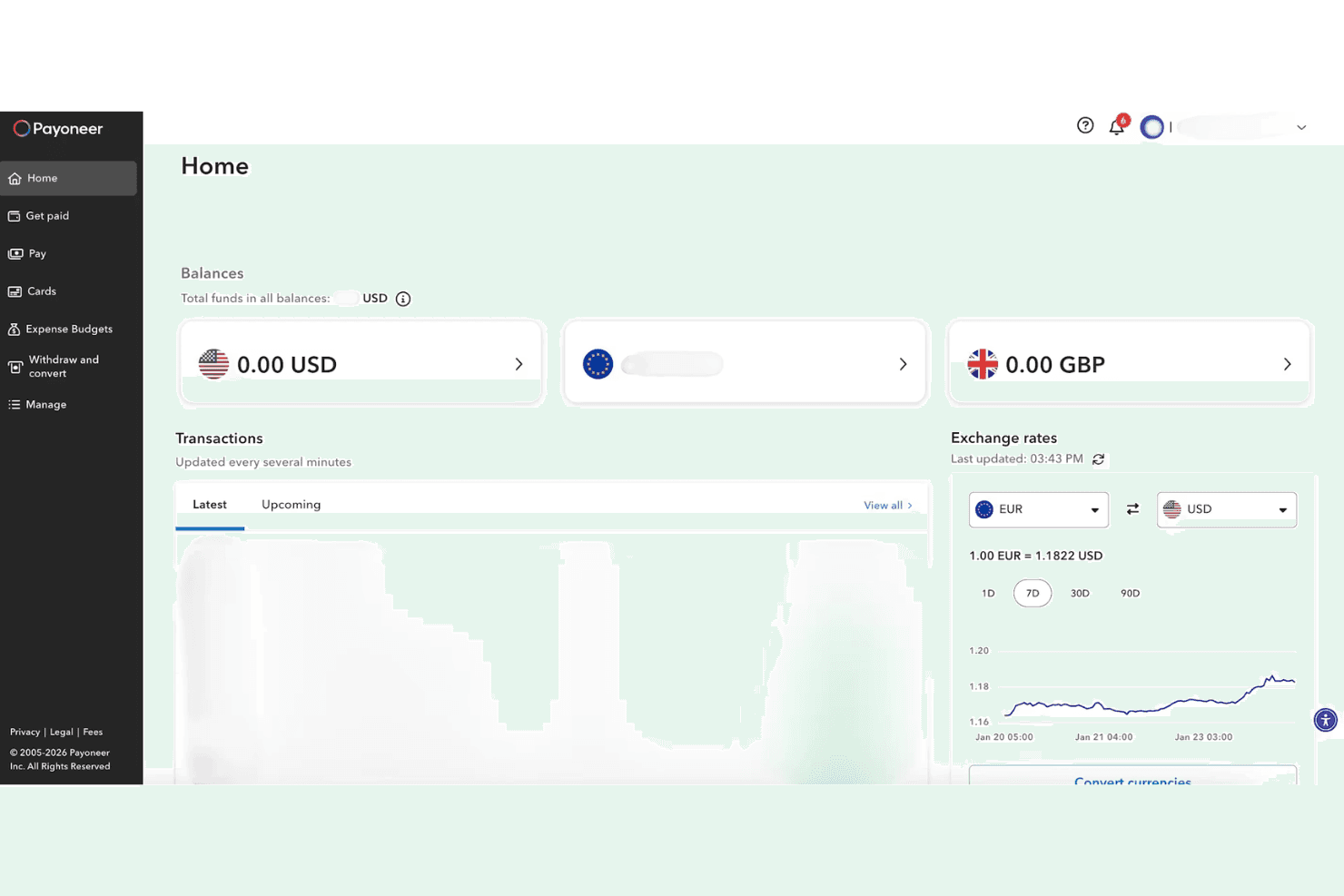
Payoneer displays multi-currency balances and live exchange rates in one dashboard. Payoneer simplifies international payments for ecommerce businesses, marketplaces, and professionals who need to pay and get paid across borders, handling complex currencies, compliance, and payout demands in one platform.
Who Is Payoneer Best For?
Payoneer is a strong choice for global ecommerce businesses and online marketplace sellers who need to manage cross-border payments and payouts.
Why Payoneer Is a Good Airwallex Alternative
I picked Payoneer as one of the best because it handles payouts for marketplace sellers operating globally, supporting multi-currency transactions and automating compliance across different regions. My team can receive funds from top marketplaces and pay international vendors without the usual banking friction.
Payoneer Key Features
- Virtual receiving accounts: Get local bank details in multiple currencies to receive payments from global clients as if you have a local bank account.
- Mass payout services: Send bulk payments to multiple recipients across different countries directly from your Payoneer account.
- Prepaid Mastercard access: Order a Payoneer-branded prepaid card to access your funds for purchases or ATM withdrawals worldwide.
- Integrated tax compliance tools: Manage required tax forms and document submissions for cross-border payments through built-in compliance features.
Payoneer Integrations
Native integrations are not clearly documented. Payoneer offers an API for custom integrations.
Pros and Cons
Pros:
- Offers built-in tax compliance management
- Supports local bank receiving accounts worldwide
- Handles mass payouts for global marketplace sellers
Cons:
- Account approval process can be slow
- No free trial available for new users
 Best for 900+ local payment methods globally
- Free demo available
- Pricing upon request
Visit WebsiteCustomer Rating:3.5/5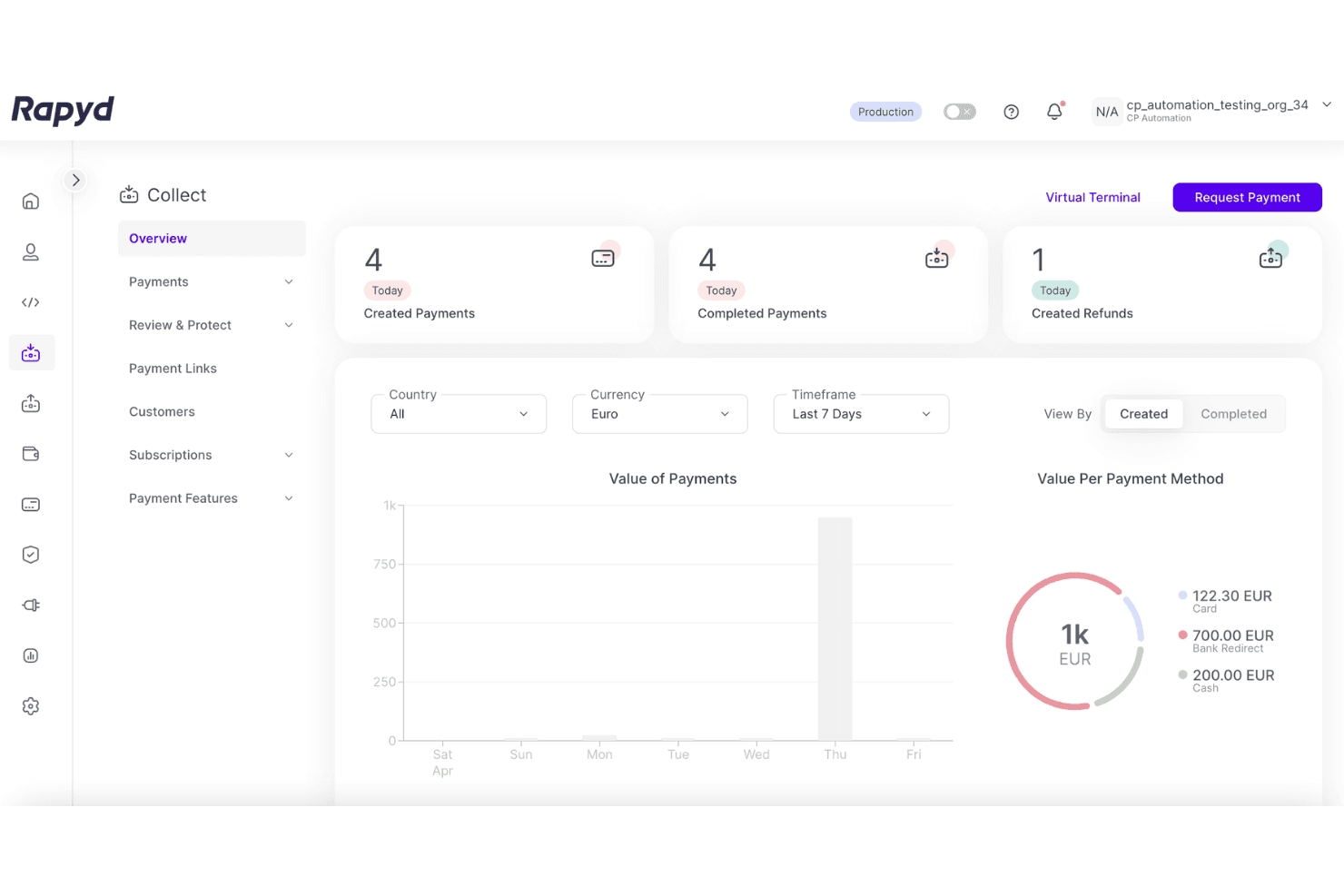
Rapyd's Collect dashboard tracks payments, refunds, and revenue by method. Rapyd is a global payment processing platform built for ecommerce businesses and retailers who need to accept and settle transactions in multiple countries and currencies without juggling separate payment systems.
Who Is Rapyd Best For?
Global ecommerce businesses and retailers needing to accept local payment methods in multiple countries.
Why Rapyd Is a Good Airwallex Alternative
I picked Rapyd because my team can support over 900 local payment methods worldwide, including popular wallets and bank transfers in regions like LATAM and Asia. I appreciate being able to settle in multiple currencies without needing separate systems for each country. That flexibility is essential for global ecommerce operations.
Rapyd Key Features
- Hosted checkout pages: Let your team use customizable, PCI-compliant checkout pages for rapid payment acceptance.
- Real-time fraud monitoring: Access automated tools to catch and prevent fraudulent transactions as they happen.
- Developer-friendly APIs: Integrate Rapyd’s payment services into your ecommerce platform using APIs with thorough documentation.
- Multi-currency settlements: Settle payments in your preferred currencies, regardless of where transactions originate.
Rapyd Integrations
Native integrations are not clearly documented. Rapyd provides an API for custom integrations.
Pros and Cons
Pros:
- Offers hosted PCI-compliant checkout pages
- Multi-currency settlements simplify cross-border operations
- Supports 900+ local payment methods worldwide
Cons:
- Pricing information is not transparently displayed
- Native integrations are not clearly documented
Learn more about Rapyd: Best for in-person and online payments in one account
- Free plan available
- From $9.99/month
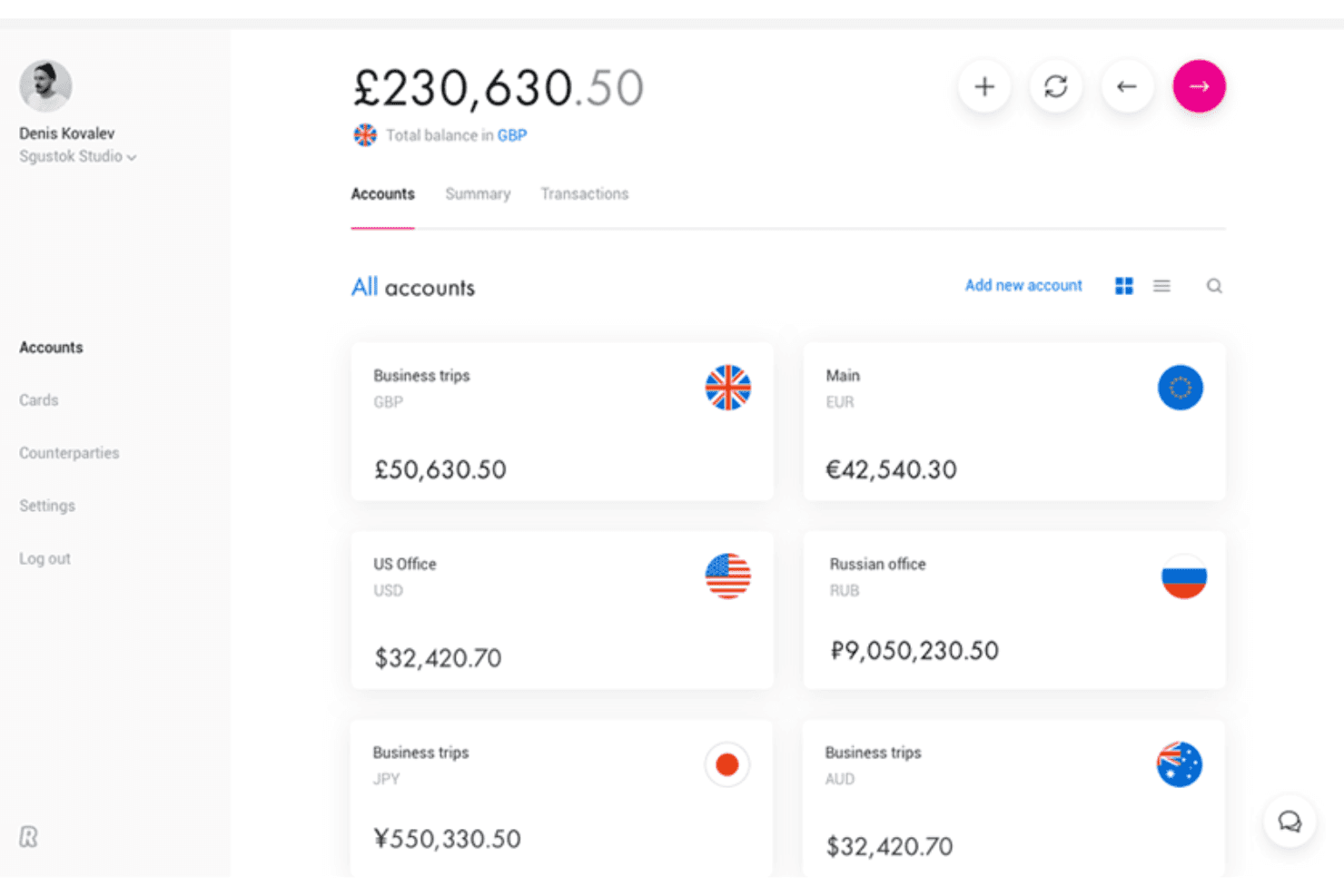
Revolut Business lets users manage multi-currency accounts in one dashboard. Revolut Business gives retailers, ecommerce shops, and service providers a unified platform for managing business accounts, taking payments online or in person, and handling expenses—especially useful if you want integrated international payment features.
Who Is Revolut Business Best For?
Retail and ecommerce businesses that want to manage payments, accounts, and spending across multiple sales channels and markets.
Why Revolut Business Is a Good Airwallex Alternative
I picked Revolut Business because I can manage both in-person and online payments in one place, switch effortlessly between sales channels, and handle multi-currency transactions without juggling separate accounts. In practice, that means I get unified control for teams selling across storefronts and ecommerce sites.
Revolut Business Key Features
- Bulk payments: Send multiple transfers to suppliers or vendors in a single transaction batch.
- Built-in expense management: Track, categorize, and approve team spending directly from your business account.
- Virtual and physical cards: Issue unique payment cards for team members, with custom limits and controls.
- Integration with accounting tools: Connect accounts to platforms like Xero and QuickBooks for automatic reconciliation.
Revolut Business Integrations
Revolut Business offers native integrations with Xero and QuickBooks. An API is available for custom integrations.
Pros and Cons
Pros:
- Supports easy issuing of virtual debit cards
- Includes built-in expense controls and approvals
- Unified in-person and online payment management
Cons:
- Limited support for non-European currencies
- Some accounts require manual business verification
Learn more about Revolut Business:
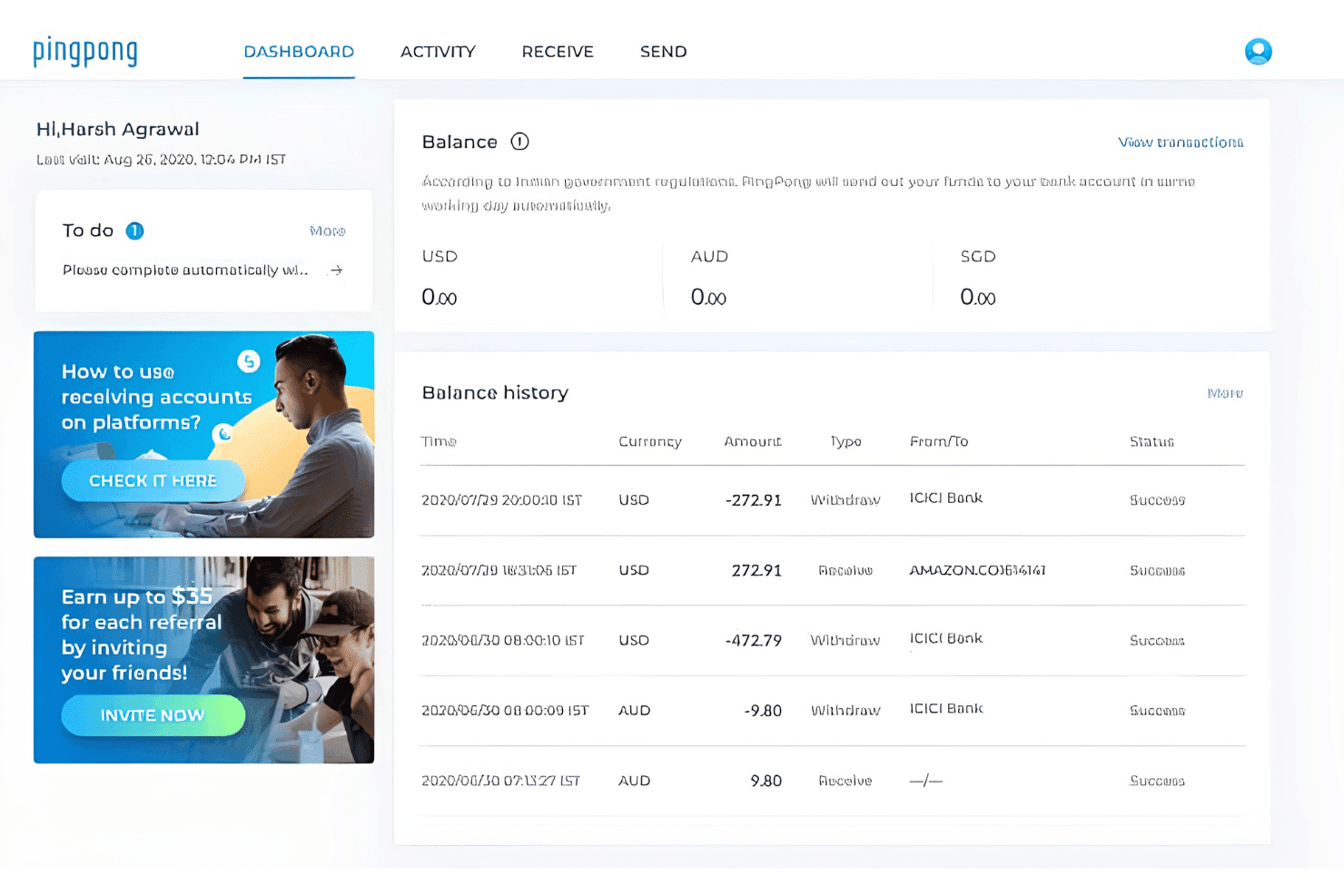
PingPong displays multi-currency balances and transaction history in one dashboard. PingPong provides a payment processing solution designed for ecommerce sellers, digital brands, and marketplace merchants who need to manage cross-border payouts and global supplier payments without unnecessary complexity or hidden costs.
Who Is PingPong Best For?
PingPong is a fit for ecommerce businesses and marketplace sellers managing cross-border payments, especially those selling into or out of Asian markets.
Why PingPong Is a Good Airwallex Alternative
I picked PingPong for my shortlist because it’s built for ecommerce sellers who need dependable cross-border payouts, especially in Asian marketplaces. I can quickly manage multi-currency payments and supplier transfers without any complexity, which is a major advantage when selling into or out of Asia.
PingPong Key Features
- Virtual receiving accounts: Open virtual accounts in multiple currencies to get paid globally.
- Supplier payment management: Organize, schedule, and track supplier payments from one dashboard.
- Bulk payout capabilities: Send multiple payments to vendors or contractors in a single transaction.
- Automated compliance checks: The platform screens payments to support regulatory and risk requirements automatically.
PingPong Integrations
Native integrations are not clearly documented. PingPong provides an API for custom integrations.
Pros and Cons
Pros:
- Bulk supplier payments from single dashboard
- Virtual multi-currency accounts included
- Tailored for Asian marketplace payouts
Cons:
- Pricing is not transparently available
- Native integrations lack clear documentation
Learn more about PingPong:
Other Airwallex Alternatives
Here are some additional airwallex alternatives options that didn’t make it onto my shortlist, but are still worth checking out:
- 11WorldFirstBest for FX forwards on marketplace collections
- 12PayhawkBest for ERP-connected spend and AP controls
- 13PayPalBest for checkout conversion via consumer network
- 14RampBest for US-based AP automation and card spend
- 15CorpayBest for enterprise AP automation and global payouts
- 16SolidgateBest for subscription billing and authorization rates
- 17Equals MoneyBest for human FX dealers and bulk payouts
How I Evaluate Airwallex Alternatives
I split evaluation into two layers: core functionality every tool must cover—multi-currency accounts, cross-border FX, payment acceptance, card issuing, and AP automation—and differentiators like local acquiring depth or embedded finance APIs that separate one platform from another.
Core Functionality (Table Stakes For This List)
When I'm selecting tools for my list, I rank each one on a scale from 0 (does not offer the functionality) to 5 (excels in this area) for each core functionality listed below. I then calculate the tool's total score into a percentage, using 65% as a benchmark to help assess its overall fit for the list.
- Multi-currency accounts: I check how many currencies each platform supports and whether it provides local account details in major markets for collecting payments without conversion delays.
- Cross-border payments and FX: Transparent FX markups and country coverage matter here. I look at how close rates land to interbank and whether wire fees eat into margins on supplier payments.
- Online payment acceptance: I evaluate gateway support for cards, wallets, and local payment methods across regions. A retailer selling into new markets needs checkout options that match local buyer preferences.
- Corporate card issuing: Spend controls, multi-currency support, and virtual card creation all factor in. I look for tools that let finance teams set per-card limits and approval rules for distributed retail operations.
- Ecommerce and accounting integrations: I check for native connections to platforms like Shopify, WooCommerce, Amazon, Xero, and QuickBooks. API quality and documentation also matter for teams building custom workflows.
- Global payouts and AP automation: Bulk payout reach, approval workflows, and invoice capture are what I evaluate. Retailers paying hundreds of suppliers across multiple countries need more than one-off manual transfers.
Once I have a list of tools that meet the criteria, I consider what sets each platform apart.
Differentiating Factors (What Sets Vendors Apart)
Here's how I compare and contrast different vendors:
Standout Features
I look for local acquiring coverage because processing cards through in-country acquirers cuts cross-border decline rates and lowers interchange fees. For a retailer selling into multiple regions, that difference in authorization rates directly protects revenue. I also evaluate fraud and chargeback tooling—specifically 3DS2 support, network tokenization, and AI-based fraud scoring—since high-volume cross-border transactions are magnets for disputes that erode margins. Revenue reconciliation automation matters too. Auto-matching marketplace payouts from Amazon or Shopify to bank deposits saves finance teams hours of manual work each week.
Beyond Features
I check each vendor's regulatory licensing in the markets where you actually operate. A platform holding its own e-money or banking license can safeguard your funds in segregated accounts, while one relying on partner banks adds a layer of counterparty risk. Pricing transparency matters just as much—some vendors advertise low FX markups but tack on chargeback fees, card issuance charges, or inactivity penalties that quietly erode margins. I also evaluate ecosystem fit with retail platforms like Shopify, Amazon Seller Central, and NetSuite, since a missing integration means manual reconciliation across channels.
Why Look For an Airwallex Alternative?
While Airwallex is a good choice of payment processing software, there are a number of reasons why some users seek out alternative solutions. You might be looking for an Airwallex alternative because…
- Needing deeper integration with your specific ERP platform
- Wanting lower FX markups for high-volume transactions
- Requiring support for certain local payment methods
- Needing a wider selection of regulatory licenses in more countries
- Facing limitations with payout speed or settlement options
- Wanting more advanced fraud detection features
If any of these sound like you, you’ve come to the right place. My list contains several payment processing software options that are better suited for teams facing these challenges with Airwallex and looking for alternative solutions.
Airwallex Key Features
Here are some of the key features of Airwallex, to help you contrast and compare what alternative solutions offer:
- Multi-currency accounts: Airwallex lets you open and manage accounts in multiple currencies, so you can hold, send, and receive global payments without forced FX conversions. This supports faster settlement and lets you pay suppliers and get paid by customers in their preferred currency.
- Cross-border payments and FX: The platform enables you to make international supplier payments and manage FX at competitive rates. You get access to real-time rates, can lock in quotes, and avoid hefty markups, supporting margin protection for high-volume global transactions.
- Online payment acceptance: Airwallex offers payment gateway services for cards, mobile wallets, and local methods, letting you accept payments via your website or ecommerce store. This expands your reach in new markets and aligns checkout options with buyer preferences.
- Virtual and physical card issuing: Use Airwallex to create virtual or physical cards for your team’s expenses. You can issue cards in multiple currencies, control spend, and set custom limits, offering granular oversight of company purchasing activity.
- Ecommerce and ERP integrations: Airwallex integrates natively with platforms like Shopify, WooCommerce, Xero, QuickBooks, and NetSuite. This helps you automate payment reconciliations, manage books, and build workflows that match your existing retail stack.
- Global payouts and AP automation: You can upload invoices in bulk, approve payment runs, and schedule cross-border supplier and freelancer payouts. The system supports payment tracking and reduces manual entry for large payout volumes.
- Automated reconciliation: Match incoming payments and payouts to invoices or orders automatically. This saves your finance team hours of work and reduces risk of errors in multi-channel retail environments.
- Regulatory compliance and security: Airwallex is licensed and regulated in all its operating regions, with client funds stored in segregated accounts. KYC processes, transaction monitoring, and security controls are built in to support compliance needs.
- Expense management tools: The platform stores receipts, categorizes spend, and enables policy rules. You can set card controls and approval workflows, allowing for accurate expense tracking and team accountability.
- Developer APIs and automation: Airwallex offers APIs for payments, transfers, account creation, and reporting. This lets advanced teams embed financial operations into custom apps or automate high-volume transaction processes.
Costs and Pricing
Selecting Airwallex alternatives requires an understanding of the various pricing models and plans available. Costs vary based on features, team size, add-ons, and more. The table below summarizes common plans, their average prices, and typical features included in Airwallex alternatives solutions:
Plan Comparison Table for Airwallex Alternatives
| Plan Type | Average Price | Common Features |
|---|---|---|
| Plan TypeFree Plan | Average Price$0 | Common FeaturesBasic multi-currency accounts, limited payment acceptance, standard FX rates, and simple reporting. |
| Plan TypePersonal Plan | Average Price$10–$30/month | Common FeaturesMulti-currency wallet, basic cross-border payments, simple card issuing, and email support. |
| Plan TypeBusiness Plan | Average Price$30–$100/month | Common FeaturesAdvanced payment acceptance, full multi-currency accounts, card controls, integrations, and batch payouts. |
| Plan TypeEnterprise Plan | Average Price$100–$400/month | Common FeaturesCustom integrations, API access, advanced security, dedicated support, and tailored compliance tools. |