

Gerir uma loja online não é fácil — e escolher a plataforma de comércio eletrónico certa pode determinar o sucesso ou o fracasso do seu crescimento. Se o Ecwid não está a corresponder às suas necessidades, provavelmente está cansado de lidar com personalização limitada, integrações pouco práticas ou funcionalidades que simplesmente não se adequam às necessidades da sua marca.
Ao trabalhar com equipas do Shopify, Magento e WooCommerce, percebi em primeira mão que não há duas empresas de comércio eletrónico que procurem exatamente a mesma coisa.
Algumas plataformas destacam-se para startups que estão a começar, outras foram concebidas para catálogos com muitos SKUs e algumas simplesmente… não compensam o esforço. Escolher mal custa-lhe tempo e dinheiro reais.
Este guia vai além do discurso comercial. Comparei lado a lado as principais alternativas ao Ecwid — analisando preços, opções de pagamento, integrações, funcionalidades de SEO, automatização, gestão de inventário e a experiência real do utilizador.
A minha seleção não favorece nenhuma plataforma. Se uma plataforma for pouco prática, cara ou apenas “tudo em um” na brochura, ficará a sabê-lo antes de desperdiçar um mês a testá-la.
Ficará com uma visão clara das melhores alternativas ao Ecwid para as suas necessidades — quer esteja a expandir o negócio, à procura de integrações mais inteligentes ou simplesmente queira um criador de lojas que não o faça praguejar todas as sextas-feiras à tarde.
Why Trust Our Software Recommendations
6,700+
Reviews
20
Industry experts
16+
Evaluation factors
14
Years
Our team has been testing and reviewing software since 2012. As retail leaders ourselves, we know how difficult—and important—it is to choose the right software.
For this guide, we evaluated tools using hands-on testing and independent research, scoring tools using our selection criteria.
Our reviews reflect our independent judgment—not a sales pitch.
Tabela comparativa: alternativas ao Ecwid
Esta tabela comparativa resume os detalhes dos preços das minhas principais alternativas ao Ecwid.
| Tool | Best For | Trial Info | Price | ||
|---|---|---|---|---|---|
| 1 | Best for order fulfillment solutions | 7-day free trial available | Pricing upon request | Website | |
| 2 | Best for agency support | Free plan + 14-day free trial + free demo available | From $8/month | Website | |
| 3 | Best for open-source customization | Free plan + 14-day trial available | From $99/month | Website | |
| 4 | Best for mobile app access | Free plan available | From $16/month | Website | |
| 5 | Best for quick website creation | Free plan available | From $8/month (billed annually) | Website | |
| 6 | Best for selling digital products | 14-day free trial | From $29/month | Website | |
| 7 | Best for fraud protection | Not available | From $41/month | Website | |
| 8 | Best for built-in SEO management | 14-day free trial available | From $35/month | Website | |
| 9 | Best for no commission fees | Free plan available | Pricing upon request | Website | |
| 10 | Best for non-technical users | Free plan + free trial available | From $6/month | Website |


As 10 melhores alternativas ao Ecwid, analisadas
Abaixo, explico o que torna cada alternativa ao Ecwid merecedora do seu tempo — ou não. Conheça rapidamente os pontos fortes, os pontos fracos e o tipo de utilizador a que cada plataforma realmente se destina.
 Best for order fulfillment solutions
- 7-day free trial available
- Pricing upon request
Visit WebsiteCustomer Rating:4.7/5
Jumpseller lets users view and manage detailed order info and fulfillment. Jumpseller is an all-in-one ecommerce platform built for small and growing businesses that want to launch an online store, sell across social channels and marketplaces, and manage fulfillment without juggling multiple tools.
Who Is Jumpseller Best For?
Jumpseller is a strong fit for small and growing businesses that want to sell across social channels and marketplaces without paying transaction fees on every sale.
Why I Picked Jumpseller
I picked Jumpseller as one of the best because its order fulfillment workflow is genuinely built for merchants who want to pick, pack, and ship from a single screen, without bouncing between tools. I appreciate how the fulfillment tracking covers every stage, from "In preparation" through "In transit" to "Delivered," with webhook-triggered shipping integrations that automatically update fulfillment status as orders move. The mobile app extends this further, letting me manage orders, track stock, and message buyers on the go.
Jumpseller Key Features
- AI store generation: Jumpseller AI builds a full storefront—layout, pages, navigation, products, copy, and images—from a brief business description.
- Multichannel sales integrations: Native connections to Facebook, Instagram, Google Commerce, TikTok, WhatsApp, and Mercado Libre let you list and sell across channels from one admin.
- Abandoned-cart recovery emails: Automatically emails customers who leave checkout without buying, with configurable timers and customizable email content.
- 30+ payment gateway integrations: Supports global and local providers including Stripe, PayPal, Klarna, Mercado Pago, and Revolut, plus manual bank transfer and cash-on-delivery options.
Jumpseller Integrations
Jumpseller offers native integrations with Facebook & Instagram, Google Commerce, WhatsApp Commerce, TikTok, Mercado Libre, Falabella, DHL, and UPS, plus 30+ payment gateways. Its HTTP/JSON API, OAuth 2.0, webhooks, and SDK support custom integrations.
Pros and Cons
Pros:
- Reviewers praise quick product and order setup
- Clear fulfillment stages track shipments
- Single-screen pick-pack-ship workflow
Cons:
- No documented Ecwid-specific migration path
- No embedded catalog or cart widget
Learn more about Jumpseller: 2Best for agency support
Duda
- Free plan + 14-day free trial + free demo available
- From $8/month
Visit WebsiteCustomer Rating:4.6/5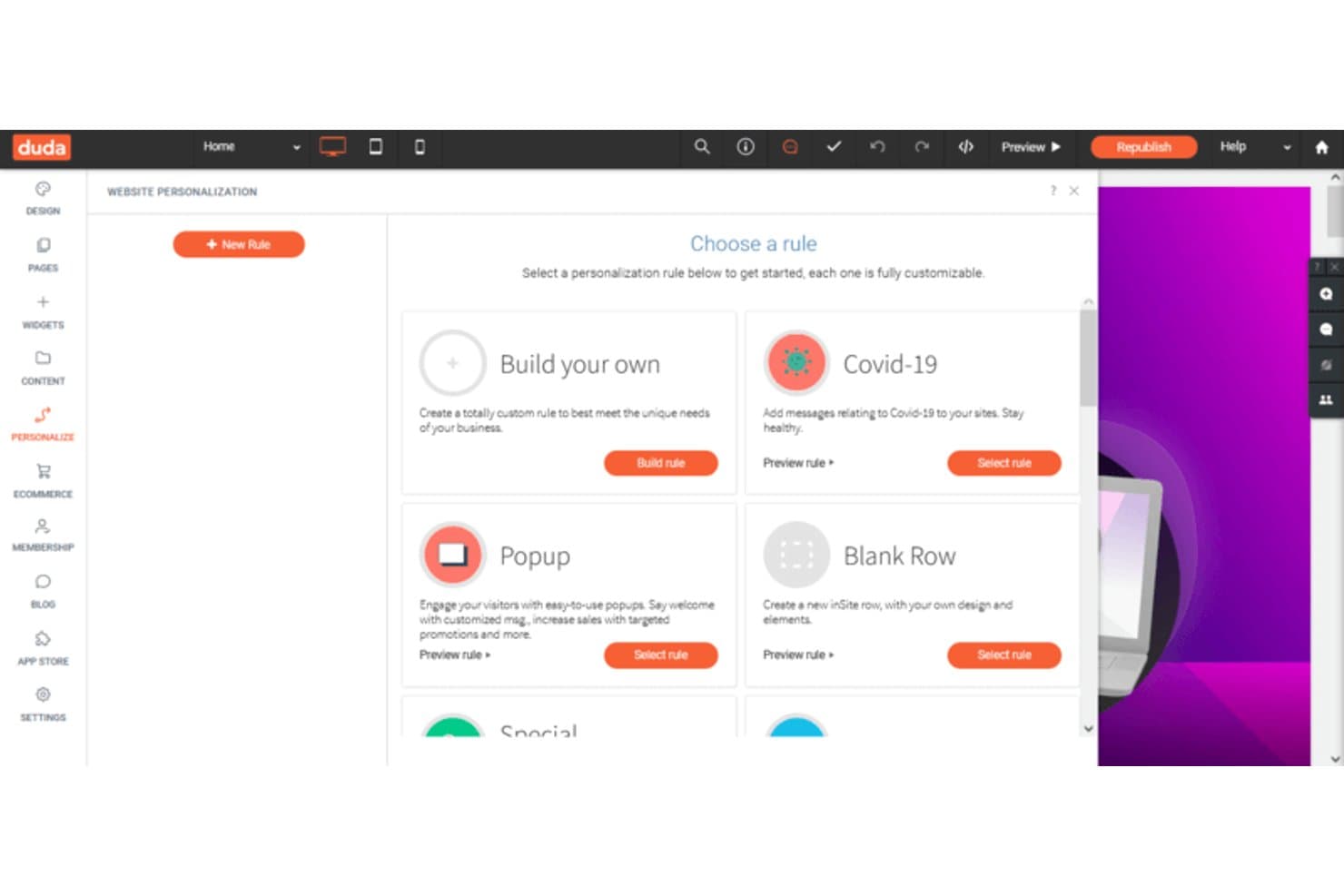
Duda lets users apply personalization rules to tailor site content. Duda is a website builder with built-in ecommerce that lets you sell physical products, digital downloads, services, and subscriptions—making it a practical fit for small businesses and agencies that want to manage client storefronts without juggling separate platforms.
Who Is Duda Best For?
Duda fits agencies and freelancers who build and manage multiple client sites and want ecommerce included without switching platforms.
Why I Picked Duda
I've included Duda in my top picks because it's purpose-built for agencies managing multiple client storefronts, with features like white-label commerce and client-permission controls that let you give each client access to their own store dashboard without exposing the full site editor. I love that you can duplicate templated sites with ecommerce already baked in, so spinning up a new client store doesn't mean rebuilding from scratch. The built-in team workflows, combined with a native store that handles physical products, digital downloads, services, and subscriptions, mean agencies aren't juggling separate platforms per client.
Duda Key Features
- Product type flexibility: Sell physical goods, digital downloads, services, subscriptions, and customizable items from a single native store.
- CSV product import: Import product catalogs and categories from Shopify or WooCommerce exports using a structured CSV file.
- Google Merchant Center feed: List native-store products on Google Shopping through an auto-generated feed that Google crawls multiple times daily.
- Checkout customization: Adjust checkout branding, layout, form fields, and store policies directly within the store editor.
Duda Integrations
Duda offers native integrations with Stripe, PayPal, Square, Authorize.Net, Mollie, Avalara, and Easyship, plus marketplace integrations through its App Store. It supports REST APIs, webhooks, JavaScript APIs, and Zapier for custom connectivity.
Pros and Cons
Pros:
- Catalog supports physical, digital, and service sales
- Reusable templates speed new store launches
- Agency workflows simplify managing client storefronts
Cons:
- Store widgets remain confined to Duda sites
- Channel updates lack real-time synchronization
Learn more about Duda: Best for open-source customization
- Free plan + 14-day trial available
- From $99/month
Visit WebsiteCustomer Rating:4.3/5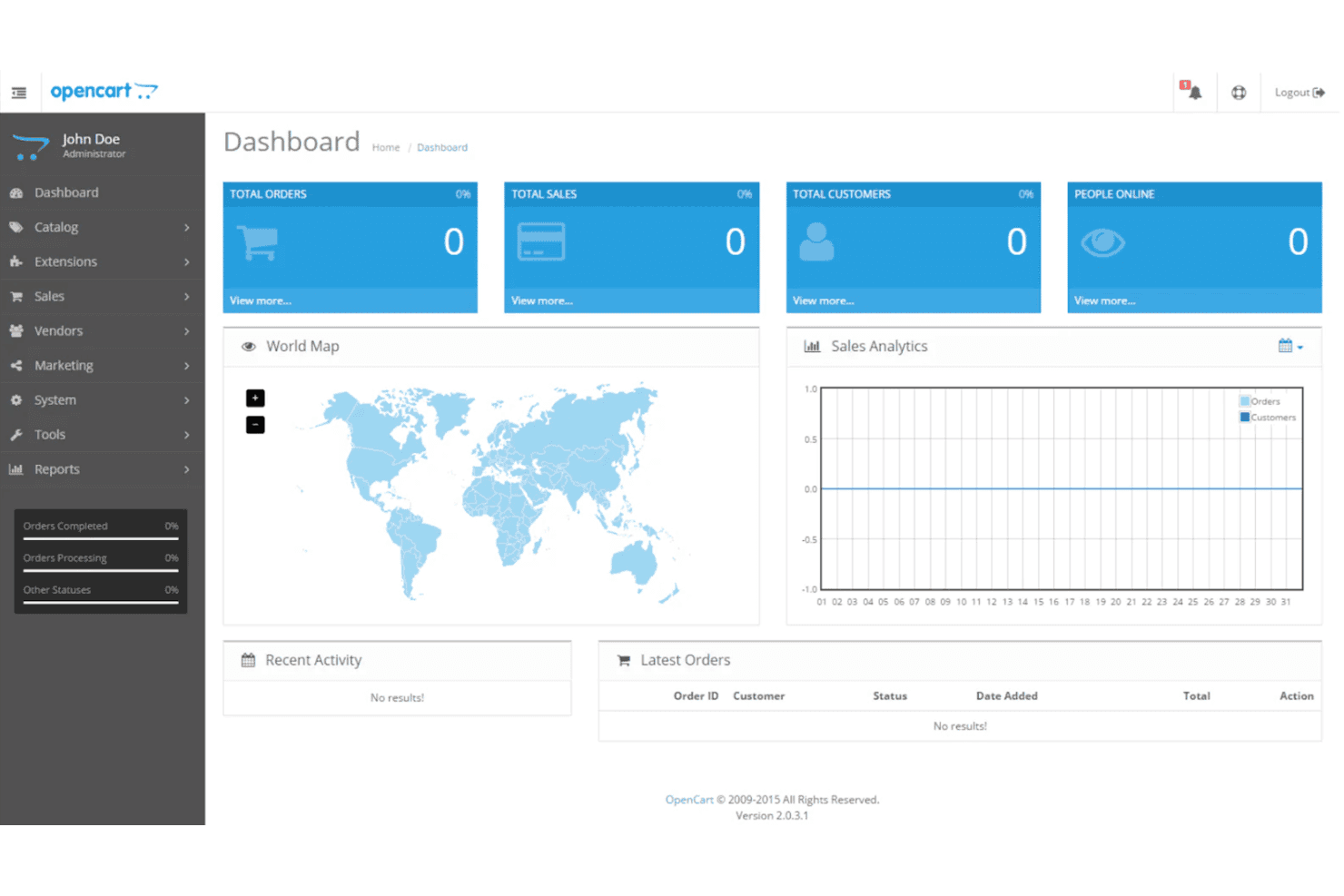
OpenCart's dashboard gives store admins a real-time sales overview. OpenCart is a free, open-source ecommerce platform that gives small business owners and developers full control over their store's code, design, and functionality.
Who Is OpenCart Best For?
OpenCart is a strong fit for small business owners and developers who want full control over their store's code and don't want to pay monthly platform fees.
Why I Picked OpenCart
I picked OpenCart as one of the best Ecwid alternatives because it gives you full access to the source code, meaning you can modify the platform itself, not just configure it within preset limits. I love that its marketplace has over 13,000 modules and themes, so you can extend store functionality across payments, shipping, and order management without being locked into what the platform natively offers. The multi-store management feature also lets you run several storefronts from one admin panel, which is genuinely useful if your business has grown beyond a single channel.
OpenCart Key Features
- Built-in SEO tools: Each product record includes dedicated SEO fields to help you manage meta titles, descriptions, and URLs directly from the admin panel.
- Multi-language product listings: Product names and descriptions can be entered separately for each enabled language, letting you serve shoppers in their preferred language.
- Recurring payments: You can configure subscription and installment payment options natively, without needing a third-party billing tool.
- Advanced user privileges: You can set role-specific access levels for staff members, controlling what each team member can view or manage in the admin area.
OpenCart Integrations
Marketplace integrations include PayPal Checkout, Google Shopping, MyParcel.com, and Facebook for OpenCart. OpenCart also lists Google Analytics and Google Search Console integrations and provides an API for custom connections.
Pros and Cons
Pros:
- One admin manages multiple OpenCart storefronts
- Reviewers value its catalog and order controls
- OpenCart’s source code enables deep customization
Cons:
- No documented embeddable catalog or buy buttons
- External marketplace syncing needs third-party tools
Learn more about OpenCart:
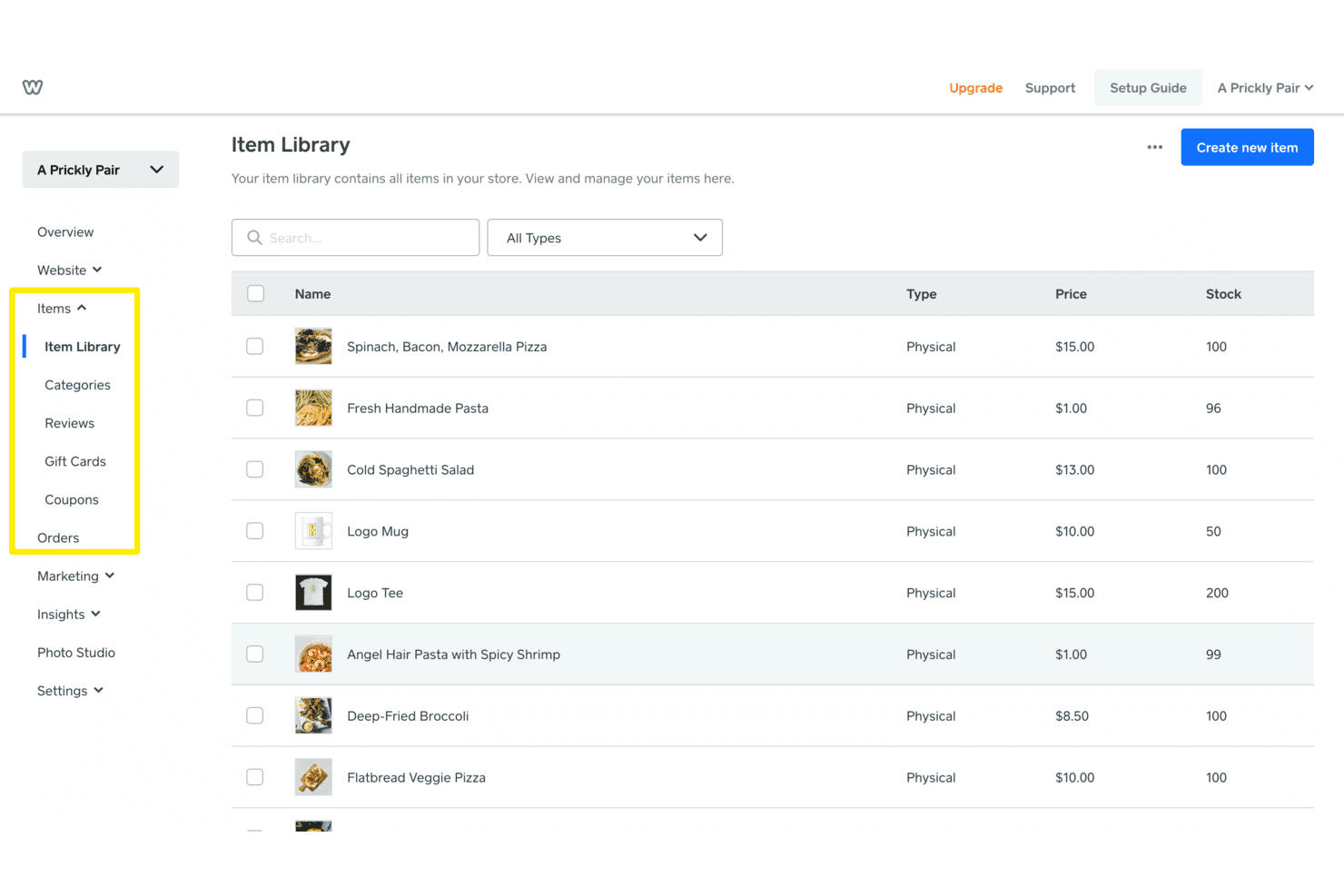
Weebly lets users manage their entire product catalog in one place. Weebly is an all-in-one website builder with built-in ecommerce tools that suits small businesses and solo sellers who want to launch an online store without piecing together separate platforms.
Who Is Weebly Best For?
Weebly suits nontechnical small business owners who want to build a website and sell online from a single platform, without managing separate tools.
Why I Picked Weebly
I picked Weebly for its mobile app access, which lets you manage your store from your phone without being tethered to a desktop. The iOS and Android apps support site edits, product updates, and order management on the go, so if you run a small shop and step away from your desk often, you can still keep things moving. Weebly also pairs its mobile tools with a built-in drag-and-drop storefront, meaning you're not stitching together separate platforms to sell online.
Weebly Key Features
- Drag-and-drop storefront builder: Build and customize your online store pages visually, without writing any code.
- CSV bulk import and export: Add or update product listings in bulk by uploading a formatted CSV file.
- Abandoned cart emails: Automatically send reminder emails to shoppers who leave items in their cart without checking out (Performance plan).
- Built-in email marketing: Create and send product and promotional email campaigns to segmented contact lists directly from your Weebly dashboard.
Weebly Integrations
Weebly offers native integrations with Square, Stripe, PayPal, and Authorize.net. Its App Center lists 355 marketplace apps, including Ecwid, XPS Ship, and Automate.io; API availability is not clearly documented.
Pros and Cons
Pros:
- Bulk-edit product listings through CSV tools
- Build a website and store together
- Manage site edits and orders on mobile
Cons:
- No documented real-time cross-channel inventory sync
- No native cart widget for existing websites
Learn more about Weebly: Best for quick website creation
- Free plan available
- From $8/month (billed annually)
Visit WebsiteCustomer Rating:4/5
Strikingly tracks weekly site visits, traffic sources, and country data. Strikingly is a website builder with built-in store functionality, designed for small business owners who want to launch a site and sell products without technical know-how.
Who Is Strikingly Best For?
Strikingly suits early-stage small business owners who want to get a simple site and store live fast, without touching code.
Why I Picked Strikingly
I picked Strikingly as one of the best because its AI Site Builder and no-code editor let you go from blank slate to published site and store in a single session. The built-in Simple Store adds a product section directly to your site, so you can list physical or digital goods, configure shipping, and connect Stripe, PayPal, or Square without touching a separate platform. I also like that the Pro plan includes abandoned-cart emails and store product reviews, giving early-stage sellers real selling tools without needing third-party apps.
Strikingly Key Features
- AI Site Builder: Generates a full website from a business name and description, so you can skip manual layout setup entirely.
- Multi-language checkout: The store editor and checkout are translated into 15 languages, including French, German, Spanish, Japanese, and Arabic.
- Coupon support: You can create and apply discount coupons directly within the Simple Store without a third-party app.
- CSV order export: Order data can be exported as a CSV file for reporting or fulfillment workflows outside the platform.
Strikingly Integrations
Strikingly offers native integrations with Stripe, PayPal, Square, Facebook, Twitter, and Instagram. Its App Store also supports the Ecwid marketplace integration, but no public API or integration count is documented.
Pros and Cons
Pros:
- Templates support visual product showcases
- Straightforward editing helps beginners publish
- Launch a site and store quickly
Cons:
- Store embeds only on Strikingly pages
- No documented marketplace inventory synchronization
Learn more about Strikingly:
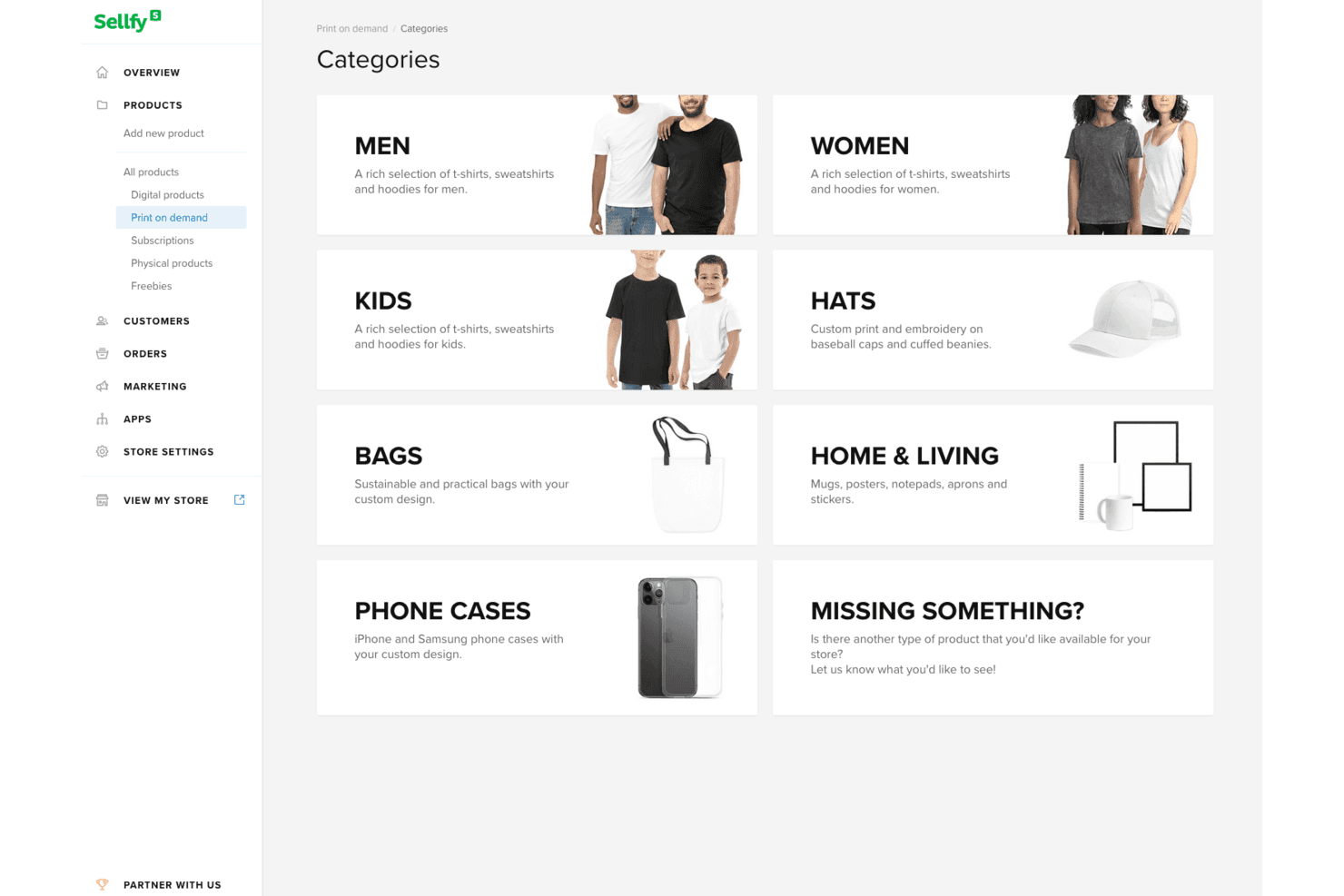
Sellfy offers print-on-demand product categories for custom merchandise. Sellfy is an online store builder designed for creators who want to sell digital products, subscriptions, and print-on-demand merchandise without needing a separate website or technical setup.
Who Is Sellfy Best For?
Sellfy is a strong fit for independent creators and solopreneurs who want to sell digital downloads, subscriptions, or print-on-demand products without managing a complex storefront.
Why I Picked Sellfy
I picked Sellfy as one of the best because it's purpose-built for selling digital products in a way most ecommerce platforms simply aren't. I love that it handles automatic file delivery, PDF stamping (which embeds a buyer's email on every page to deter sharing), and video streaming natively, so creators selling ebooks, audio, or courses don't need third-party tools. You can also embed a full product catalog directly into an existing WordPress or Wix site, keeping your audience on your own domain at checkout.
Sellfy Key Features
- Print-on-demand merchandise: Sell branded merchandise that Sellfy automatically prints and ships to customers through its fulfillment network, with no inventory required.
- Affiliate marketing program: Run a built-in affiliate program that pays commissions to affiliates who refer sales to your store.
- Cart-abandonment emails: Automatically send follow-up emails to customers who add items to their cart but don't complete checkout.
- Custom domain connection: Connect your own domain to your Sellfy storefront so customers stay on your branded URL at checkout.
Sellfy Integrations
Sellfy lists native integrations with Wix, PayPal, Stripe, Google Analytics, Facebook Pixel, and Google Merchant Center. It also supports webhooks, a License API, an MCP server, and Zapier.
Pros and Cons
Pros:
- Website embeds let buyers shop in place
- Quick setup gets storefronts live fast
- Automatic delivery simplifies digital fulfillment
Cons:
- Manual inventory updates limit stock control
- No marketplace listings or channel synchronization
Learn more about Sellfy:
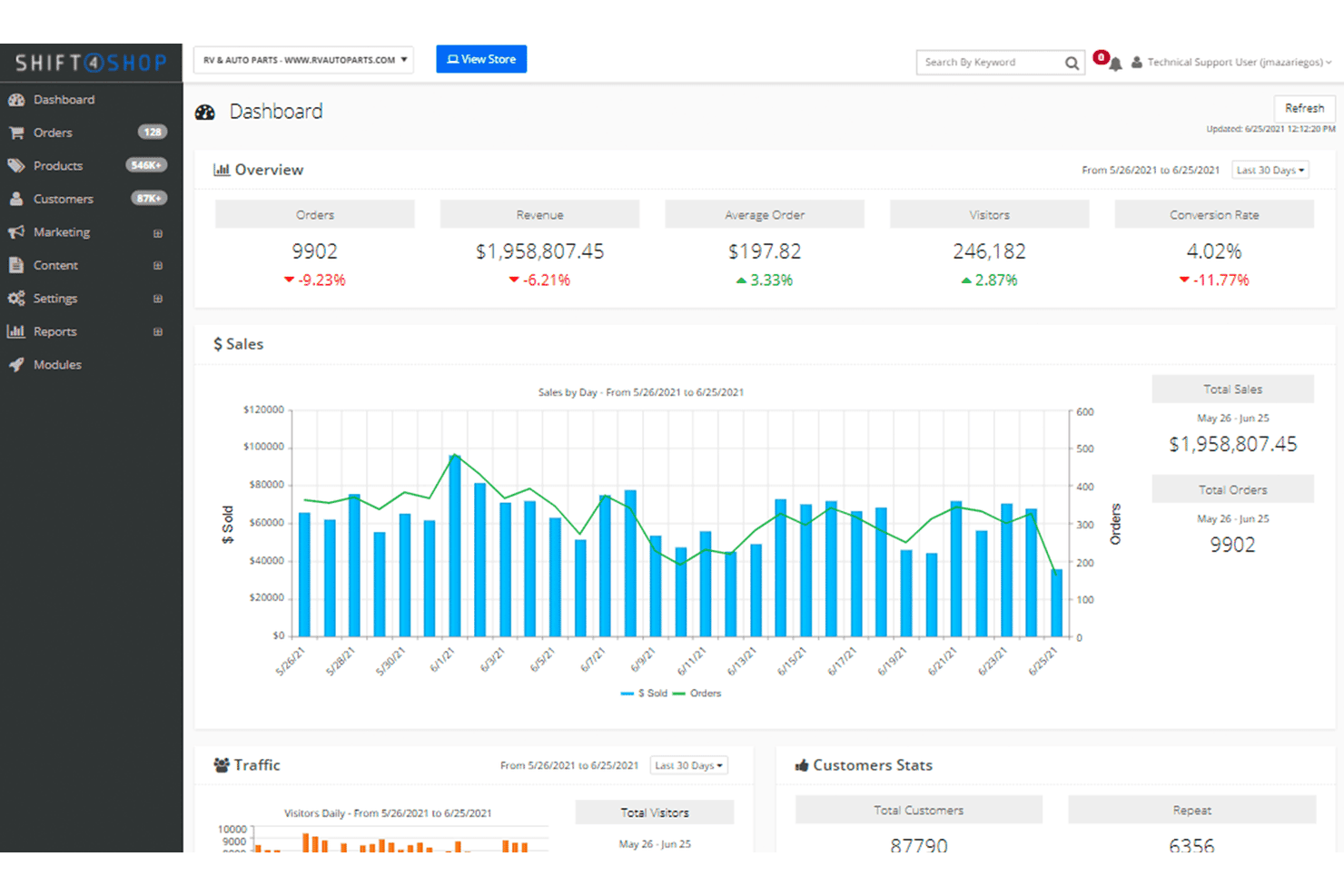
Shift4Shop's dashboard gives merchants a real-time sales and traffic overview. Shift4Shop is a hosted ecommerce platform that gives small and mid-sized businesses a full store setup—product catalog, order management, marketing tools, and payment processing—without piecing together a stack of third-party apps.
Who Is Shift4Shop Best For?
Shift4Shop suits small to mid-sized online retailers who want a full-featured store with built-in fraud protection and payment processing under one flat monthly fee.
Why I Picked Shift4Shop
I picked Shift4Shop as one of the best because its built-in fraud protection, powered by Kount's AI-driven engine, is baked directly into the platform rather than bolted on as a paid add-on. That means every transaction is screened automatically, so you're not manually reviewing orders or absorbing chargeback losses after the fact. I also appreciate that this pairs with PCI DSS-compliant hosting and a no-stored-cardholder-data policy, giving you a genuinely layered security setup from day one.
Shift4Shop Key Features
- Buy Button widget: Embed a configurable product widget on any external site that supports HTML and JavaScript editing, with options to display product name, thumbnail, price, and stock status.
- Abandoned cart saver: Automatically send a timed sequence of recovery emails to logged-in shoppers who leave items in their cart without completing checkout.
- Amazon and eBay order integration: Pull processed marketplace orders directly into the Shift4Shop dashboard to manage fulfillment, inventory deduction, and shipment updates from one place.
- Built-in email marketing newsletters: Send email newsletters to up to 25,000 recipients using Shift4Shop's native email marketing tools, with MailChimp and AWeber integrations available as extensions.
Shift4Shop Integrations
Shift4Shop offers native integrations with Shift4 Payments, PayPal, Square, Amazon, eBay, MailChimp, AWeber, QuickBooks, and Google Customer Reviews. It also provides REST and front-end APIs for custom integrations.
Pros and Cons
Pros:
- Built-in tools reduce paid add-on dependence
- Flexible catalog supports varied product options
- Kount-backed fraud screening protects checkout
Cons:
- Support and uptime reports are inconsistent
- Setup and storefront editing can feel dated
- Embedded buy button requires site scripting
Learn more about Shift4Shop: Best for built-in SEO management
- 14-day free trial available
- From $35/month
Visit WebsiteCustomer Rating:3.5/5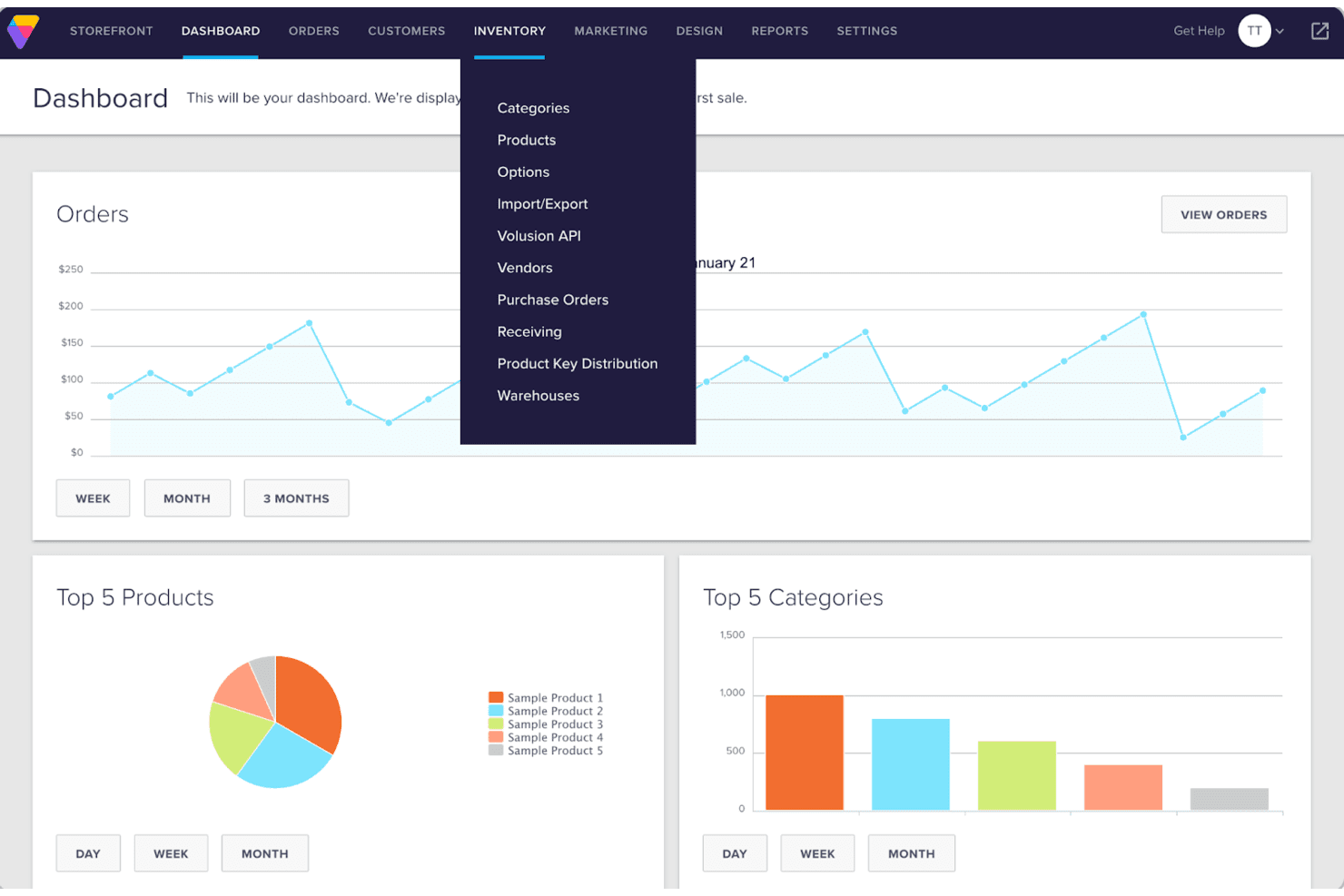
Volusion's inventory menu lets users manage products, vendors, and warehouses. Volusion is a hosted ecommerce platform built for small businesses that want to launch a standalone online store with built-in tools for payments, order management, inventory tracking, and SEO.
Who Is Volusion Best For?
Volusion suits small business owners who want a standalone online store with built-in SEO controls and no need to embed commerce into an existing site.
Why I Picked Volusion
I picked Volusion as one of the best because its built-in SEO management goes deeper than most standalone store builders. I particularly like that you can configure metadata at the product, category, and page level, edit robots.txt directly, and control sitemap indexing, so a small store launching from scratch can get crawled and indexed without relying on third-party plugins. The automatic XML sitemap updates daily, which means new products surface in search without any manual intervention.
Volusion Key Features
- Volusion Payments Powered by Stripe: Accepts payments in 135+ currencies with support for Apple Pay, Google Pay, Affirm, Afterpay/Clearpay, and Klarna built in.
- Premium Checkout: A mobile-first checkout flow with one-step purchasing for returning customers, guest checkout, and custom fields for collecting shopper information.
- Inventory Control Grid: Lets you create and manage child products for variant combinations, tracking stock values, product codes, and reorder thresholds.
- ShipStation integration: Imports your Volusion orders into ShipStation so you can manage shipping labels and fulfillment workflows from one place.
Volusion Integrations
Volusion’s marketplace lists 84 integrations, including ShipStation, Avalara AvaTax, Authorize.net, and NMI. It also offers native Volusion Payments, PayPal Checkout, and Amazon Pay, plus an administrative API for custom integrations.
Pros and Cons
Pros:
- Straightforward product, category, and order workflows
- Reviewers praise practical inventory tracking
- Detailed product and category SEO controls
Cons:
- Limited marketplace selling and channel synchronization
- No storefront widgets for existing websites
Learn more about Volusion: Best for no commission fees
- Free plan available
- Pricing upon request
Visit WebsiteCustomer Rating:3.5/5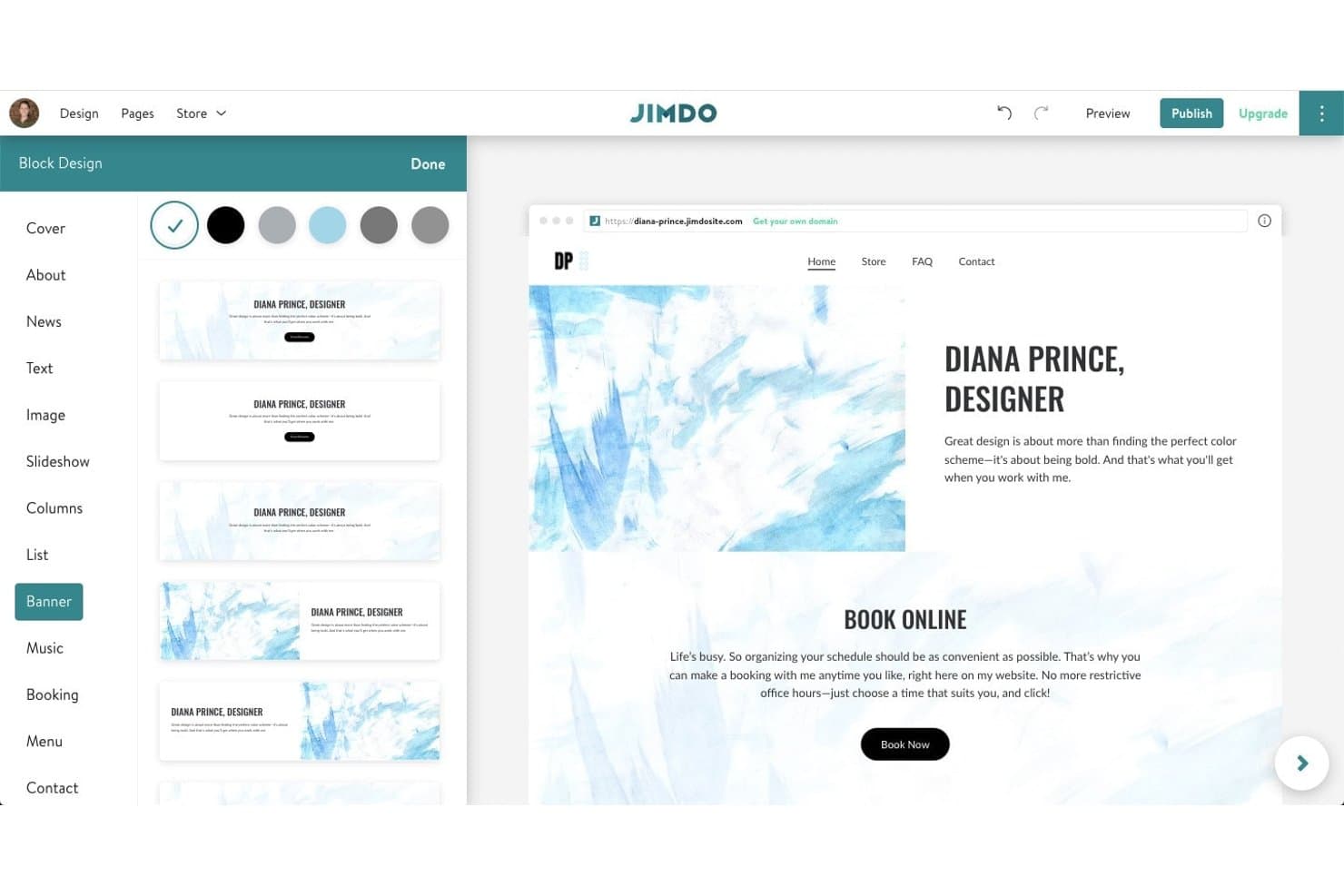
Jimdo lets users customize block designs and background styles visually. Jimdo is a website builder with a built-in online store that appeals to small business owners who want to launch and sell products online without dealing with complex platform setup.
Who Is Jimdo Best For?
Jimdo suits early-stage small business owners who want to build a website and sell products in one place without paying sales commission on every transaction.
Why I Picked Jimdo
I picked Jimdo as one of the best because it charges zero commission on every sale you make, which means your margins stay intact no matter how much revenue you generate. I appreciate that this extends across its built-in store features, including discount code creation with controls over value, duration, and minimum spend, plus local pickup so customers can order and pay online before collecting in person. The free plan makes it easy to get started without upfront cost.
Jimdo Key Features
- Stock tracking: Enable inventory tracking per product and variant, with quantities managed directly from the store dashboard.
- Order management dashboard: View, fulfill, archive, and export orders in CSV format, including addresses, products ordered, and payment status.
- Multiple payment methods: Accept cards, Apple Pay, Google Pay, Klarna, PayPal, and regional options like iDEAL, SEPA Direct Debit, and Bancontact.
- Facebook and Instagram selling: Sync your product catalog to Facebook and Instagram shops and sell through shoppable posts and stories.
Jimdo Integrations
Jimdo offers native integrations with Facebook and Instagram for product catalog sync and social storefronts. Other documented connections include Google Business Profile, Google Analytics, Google Ads, and Meta, but API availability and integration counts aren’t stated.
Pros and Cons
Pros:
- Order dashboard tracks fulfillment and exports records
- Responsive templates keep storefronts usable on phones
- Simple product setup suits first-time sellers
Cons:
- Catalog migration is difficult without product exports
- No storefront widgets for existing websites
Learn more about Jimdo:

Webnode lets users manage multiple website projects from one dashboard. Webnode is an all-in-one website builder with built-in store functionality that appeals to small business owners who want to sell online without touching a line of code.
Who Is Webnode Best For?
Webnode suits solo founders and small business owners who want to launch a site with a basic store without any technical setup.
Why I Picked Webnode
I picked Webnode as one of the best because it removes every technical barrier between a small business owner and a live online store. I love that you can build your site and add a store in the same drag-and-drop editor, with no separate setup required. Product variants, CSV catalog imports, and multilingual storefronts with shared inventory are all built in, so a local shop owner can launch, stock, and manage a store without touching a line of code or hiring a developer.
Webnode Key Features
- Multilingual storefront: Manage multiple language versions of your site and store from one admin area, with shared inventory across all languages.
- CSV product import: Bulk-upload your product catalog using a CSV file, with column mapping to match your existing data structure.
- Discount vouchers and free-shipping promotions: Create promotional codes, percentage discounts, and free-shipping campaigns directly within the store settings.
- Google Merchant Center integration: Connect your store to Google Merchant Center to display products across Google Search, Shopping, and YouTube.
Webnode Integrations
Webnode offers integrations with Stripe, PayPal, Facebook Commerce, and Google Merchant Center for payments and product distribution. An API is available for custom integrations, but full documentation requires contacting Webnode.
Pros and Cons
Pros:
- CSV imports ease product catalog migration
- Shared inventory supports multilingual storefronts
- Beginner-friendly editor supports quick store setup
Cons:
- No documented cross-channel inventory synchronization
- Store cannot be embedded on third-party sites
Learn more about Webnode:
Outras alternativas ao Ecwid
Eis algumas alternativas adicionais ao Ecwid que não entraram na minha seleção, mas que vale a pena conhecer:
- 11Big CartelBest for artists and small businesses
- 12ShopifyBest for global selling
- 13SquarespaceBest for creative professionals
- 14LightspeedBest for retail businesses
- 15nopCommerceBest for scalability
- 16Zoho CommerceBest for Zoho ecosystem users
- 17WebflowBest for custom design control
- 18Hostinger ReachBest for AI-powered building
- 19WooCommerceBest for WordPress users
- 20Drupal CommerceBest for Drupal users
- 21BigCommerceBest for enterprise solutions
- 22GoDaddy Online StoreBest for quick setup
- 23ShopWiredBest for SEO features
- 24Wix eCommerceBest for design flexibility
- 25Square OnlineBest for brick-and-mortar integration
- 26MivaBest for complex catalogs
- 27CS-CartBest for multi-vendor setups
- 28FoxyCartBest for digital content sales
- 29PrestaShopBest for open-source enthusiasts
How I Evaluate Ecwid Alternatives
I split my evaluation into two layers—whether a platform handles real multi-channel retail needs like synced inventory and checkout, and what sets it apart for growing merchants.
Core Functionality (Table Stakes For This List)
When I'm selecting tools for my list, I rank each one on a scale from 0 (does not offer the functionality) to 5 (excels in this area) for each core functionality listed below. Then, I calculate the tool's total score into a percentage. Each tool needs to achieve a minimum total score of 65% to be considered for inclusion.
- Online Storefront Builder: I check whether you can stand up a mobile-responsive store with customizable templates, since many merchants switching from Ecwid want more design control.
- Product & Inventory Management: Catalog tools need to handle variants, bulk edits, and stock updates—think a clothing shop tracking sizes and colors across dozens of SKUs.
- Multi-Channel Selling: I look for native connections to Amazon, eBay, Instagram, Facebook, and TikTok so you can list products and pull orders back into one dashboard.
- Integrated Payment Processing: Each platform should support multiple gateways and methods like digital wallets, with clear transaction fee structures across plan tiers.
- Order & Shipping Management: Real-time carrier rates, label generation, and fulfillment tracking matter here—especially for merchants shipping across multiple regions daily.
- POS Integration: For retailers with physical locations, I evaluate whether the platform syncs in-store and online inventory, customers, and sales data in real time.
Once I have a list of tools that meet this criteria, I consider what sets each platform apart.
Differentiating Factors (What Sets Vendors Apart)
Here's how I compare and contrast different vendors:
Standout Features
Built-in marketing tools like abandoned cart recovery and discount engines save you from bolting on extra apps just to run a basic promotion. I also evaluate whether a platform offers headless commerce APIs, which matter if you want to keep your existing WordPress or custom site and use the platform purely as a backend. B2B/wholesale capabilities—like tiered pricing and dedicated portals—are worth checking if you sell to both consumers and trade buyers.
Beyond Features
Ease of migration is a big one—I check whether a platform offers import tools or partner services that preserve your product data, customer records, and URL structure. Pricing transparency matters just as much, especially hidden transaction fees that eat into margins as order volume grows. I also evaluate scalability, because a merchant doing 50 orders a week today may need multi-location inventory and multi-currency checkout within a year.
O que é o Ecwid?
O Ecwid é uma plataforma de comércio eletrónico que lhe permite adicionar uma loja online totalmente funcional ao seu site existente ou às redes sociais.
É popular entre pequenas empresas, freelancers e empreendedores que procuram uma forma fácil de vender online sem terem de reconstruir tudo de raiz.
Tem acesso a design de arrastar e largar, tarifas de envio em tempo real, vários gateways de pagamento e gestão de inventário — tudo com o mínimo de complicações. O Ecwid é simples, mas essa simplicidade tem limitações.
Por que motivo procurar uma alternativa ao Ecwid?
Até uma solução de comércio eletrónico razoável pode ficar aquém do esperado — especialmente à medida que a sua empresa cresce ou as suas necessidades mudam. Eis algumas das razões concretas que levam os operadores a procurar outras opções:
- Precisa de mais personalização. As opções prontas a utilizar da Ecwid parecem rígidas quando quer uma loja verdadeiramente sua.
- Faltam análises e relatórios avançados. Se está a tentar otimizar o marketing ou o inventário, as estatísticas superficiais não são suficientes.
- Quer melhores integrações. Quando o seu CRM, sistema de contabilidade ou ferramentas de automatização não sincronizam corretamente, os fluxos de trabalho ficam comprometidos.
- A escalabilidade é uma preocupação. A Ecwid pode parecer limitada quando começa a gerir catálogos grandes ou vários canais de venda.
- O suporte para pagamentos ou regiões é insuficiente. O seu processador de pagamentos preferido, as plataformas de pagamento locais ou as opções multimoeda não são suportados.
- As funcionalidades da aplicação móvel e do POS ficam aquém do esperado. Gere uma operação de retalho híbrida? Precisa de ferramentas móveis e presenciais mais robustas.
- Está cansado de soluções alternativas. Se a sua plataforma “simples” se transformou numa rede de extensões e processos manuais, está na altura de optar por algo melhor.
Se alguma destas situações lhe é familiar, as alternativas desta lista oferecem soluções mais adequadas para um crescimento real, flexibilidade e facilidade de utilização.
Principais funcionalidades a procurar nas alternativas à Ecwid
Se está a ponderar mudar, eis o que realmente importa ao avaliar uma plataforma de comércio eletrónico. Ignore as promessas genéricas — estas são as funcionalidades que distinguem as melhores alternativas à Ecwid das restantes.
- Venda multicanal. Ligue facilmente a sua loja de comércio eletrónico a mercados online, redes sociais e ao seu site principal. O verdadeiro multicanal significa menos introdução duplicada de dados e um maior alcance.
- Gestão flexível do inventário. Acompanhe os SKUs em todos os canais, defina alertas de stock reduzido e atualize os dados em tempo real — sem limpezas manuais de folhas de cálculo.
- Ferramentas de SEO e marketing integradas. Otimize a sua loja, automatize campanhas de email e crie promoções sem uma coleção de extensões ou aplicações adicionais.
- Lojas e modelos personalizáveis. Escolha uma plataforma que lhe permita aplicar a sua marca ao site à sua maneira — sem contratar um programador sempre que quiser fazer um ajuste.
- Suporte robusto para plataformas de pagamento. Aceite Stripe, PayPal e os seus processadores locais preferidos. Procure opções flexíveis de finalização da compra, subscrições e produtos digitais.
- Design intuitivo e construtor de arrastar e largar. Coloque a loja online rapidamente — mesmo que nunca tenha escrito uma linha de código.
- Automatização e fluxos de trabalho em tempo real. Poupe horas com cálculos automáticos de impostos, ferramentas de tarifas de envio e notificações de encomendas que mantêm o seu dia a decorrer sem interrupções.
- Integração com POS e aplicações móveis. Se vende numa loja física e online, um único sistema para ambos significa menos dores de cabeça e melhores dados.
- Suporte para API e extensões. As melhores plataformas de comércio eletrónico integram-se facilmente com o restante da sua infraestrutura tecnológica — incluindo CRM, marketing por email e contabilidade.
- Escalabilidade e transparência de custos. Certifique-se de que o seu fornecedor cresce consigo, sem taxas de transação inesperadas ou suplementos dispendiosos no futuro.
Tenha estas funcionalidades em mente ao comparar alternativas à Ecwid — porque, no comércio eletrónico, uma solução única nunca serve para todos.