

Beoordeling van SAP Orderbeheer: voor- en nadelen, functies & prijzen
SAP Orderbeheer is ontwikkeld voor grote ondernemingen die te maken hebben met complex, omnichannel orderbeheer. Wat maakt het onderscheidend? Automatisering van begin tot eind, diepe integratie en de capaciteit om grote ordervolumes te verwerken—als u de onboarding kunt verdragen.

We review tools independently, and commissions help fund our testing. See our transparency policy, our methodology, or suggest a tool.
SAP Order Management is order management system software built for enterprise retailers and B2B distributors managing high-volume, multi-channel order flows across complex fulfillment networks. I'd consider it specifically if your business already runs on SAP—the native integration with SAP S/4HANA and SAP Commerce Cloud gives you order orchestration depth that a standalone tool like Manhattan Active Omni can't replicate without significant middleware and custom configuration.
SAP Order Management Evaluation Summary

0/5
- From block-based pricing per 10,000 transactions per year
- Free demo available
Waarom u onze softwareaanbevelingen kunt vertrouwen
6,700+
Reviews
20
Industry experts
16+
Evaluation factors
14
Years
Ons team test en beoordeelt software sinds 2012. Als retailleiders weten we zelf hoe moeilijk — en belangrijk — het is om de juiste software te kiezen.
Voor deze gids hebben we tools geëvalueerd met behulp van praktijktests en onafhankelijk onderzoek, waarbij we tools beoordeelden aan de hand van onze selectiecriteria.
Onze reviews weerspiegelen ons onafhankelijke oordeel — geen verkooppraatje.
SAP Order Management Overview
SAP Order Management is the order management system that operators turn to when their ecommerce or retail business has moved past basic order management and quick fixes.
If you’re running into backorders, inventory mismatches, or too much manual work just to fulfill customer orders, you know the stakes: real operational headaches, not just abstract process “challenges.”
For retailers, order management is about aligning your supply chain, inventory, and fulfillment teams so customers aren’t left waiting—and neither are your margins.
In this review, you’ll find a clear-eyed look at SAP Order Management’s functionality, key features, pros and cons, and which types of operations it actually serves best.
If you’re weighing robust, enterprise-grade automation against usability and cost, this guide will help you make an informed decision.
Pros
- Scalable for large enterprises, handling high order volumes and complex supply chains.
- Automated workflows reduce manual tasks and improve order fulfillment speed.
- Customizable processes allow you to tailor workflows to your business needs.
Cons
- Outdated user interface can slow your team down and isn’t always intuitive.
- Onboarding is challenging and requires significant time and guidance.
- Steep learning curve means your team will need time to fully adapt.
Is SAP Order Management Right For Your Needs?
Who Would be a Good Fit for SAP Order Management?
SAP Order Management is a strong fit for large retail or ecommerce operations dealing with complex supply chains and high order volumes.
Enterprises that need scalable solutions and automated workflows to efficiently manage order management processes will see the most value.
If your business requires customizable workflows that align with specific operational needs—and you have the resources for implementation and training—SAP Order Management makes sense.
- LARGE ENTERPRISESBuilt to manage high order volumes and complex operations without breaking a sweat.
- RETAIL INDUSTRYStreamlines order processing and fulfillment, improving customer satisfaction across channels.
- MANUFACTURING SECTORRobust inventory management and integration with supply chain processes.
- SUPPLY CHAIN TEAMSAutomation features reduce manual errors and improve operational efficiency.
- OPERATIONS DEPARTMENTSCustomizable workflows let teams align order management with company objectives.
- LOGISTICS MANAGERSComprehensive tracking features provide better visibility and control over shipments.
Who Would be a Bad Fit for SAP Order Management?
Small businesses or startups with straightforward order processes and limited resources will likely find SAP Order Management too complex and resource-intensive.
Teams looking for a quick, plug-and-play solution without extensive onboarding or training should look elsewhere. If your company is focused on low cost and simplicity over advanced functionality, this system isn’t the right choice.
- SMALL BUSINESSESComplexity and depth are overkill for simple or lower-volume operations.
- STARTUPSSteep learning curve and resource demands can hinder fast-moving, lean teams.
- SIMPLE RETAILERSStraightforward processes don’t need SAP’s advanced capabilities.
- SOLO ENTREPRENEURSEnterprise-level features offer little value to one-person operations.
- NON-TECHNICAL TEAMSComplex interface can be difficult to navigate without technical support.
- COST-CONSCIOUS COMPANIESHigh cost and extensive features may not justify the investment.
Core Features
- Order tracking. Real-time order management lets your team follow customer orders from placement to delivery, so nothing falls through the cracks.
- Inventory management. End-to-end inventory visibility helps optimize stock levels, reduce overselling, and maintain accurate real-time inventory across channels.
- Automated workflows. Automation handles repetitive tasks and streamlines order management processes, improving order fulfillment speed and accuracy.
- Customer management. Consolidate customer data to personalize the customer experience and drive higher customer satisfaction in ecommerce and retail.
- Reporting and analytics. SAP Analytics Cloud integration provides deep insights into sales order trends, profitability, and performance across your business.
- Multichannel support. Manage orders from all your sales channels—including ecommerce, retail, and omnichannel—in one backend system.
Ease of Use
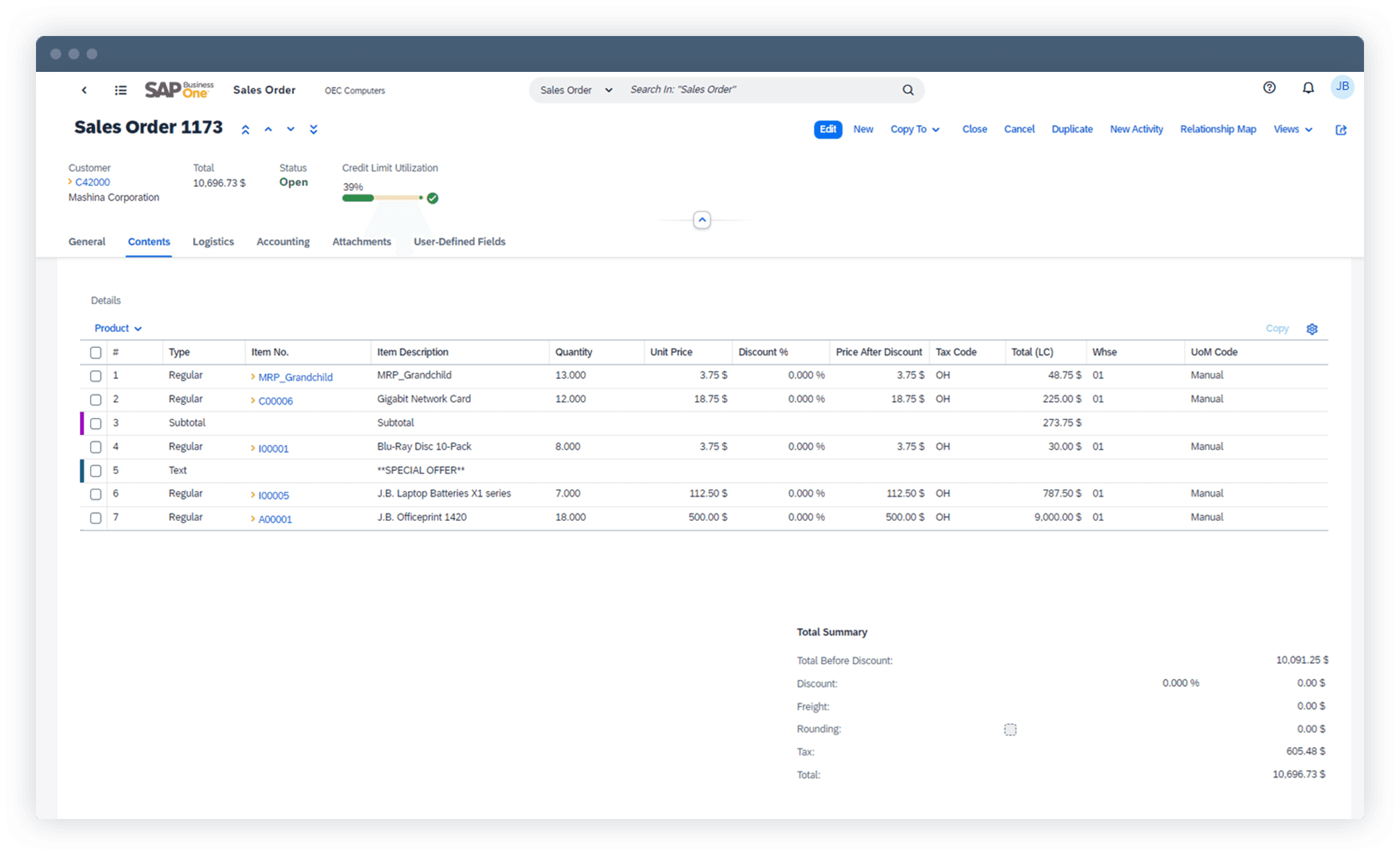
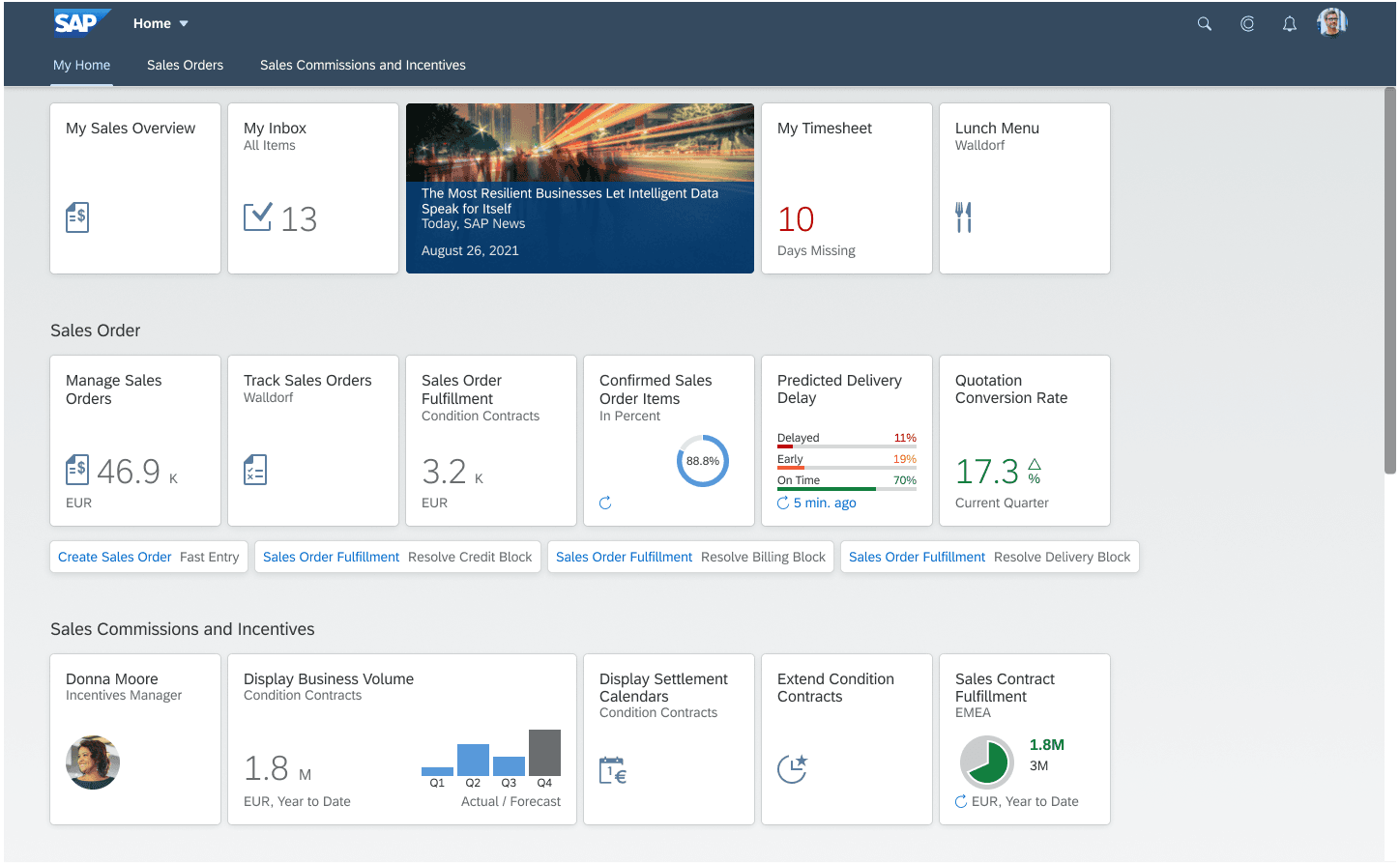
SAP Order Management isn’t winning any awards for user experience. The interface feels stuck in another decade, and first-time users—especially those without SAP background—will hit a learning curve.
If your team is used to modern, intuitive cloud platforms, expect some grumbling. The payoff? Once you’re past the friction, the system’s real-time capabilities and automation can genuinely streamline even the messiest order management processes.
SAP Order Management Specs
- API: No
- BitCoin: No
- Contact Management: No
- Customer Management: No
- Data Export: No
- Data Import: No
- External Integrations: No
- Inventory Tracking: No
- Lead Management: No
- Lead Scoring: No
- Multi-User: No
- Notifications: No
- Order Management: No
- Route Optimization: No
- SAP Integration: No
- Shipping Management: No
- Supplier Management: No
SAP Order Management FAQs
Wat is de volgende stap?
Als je e-commerce- of retailbedrijf eindelijk tegen de grenzen van eenvoudig orderbeheer aanloopt — en de kosten van operationele problemen oplopen — onderscheidt SAP Order Management zich als een enterprise-oplossing.
Het is niet het eenvoudigste systeem om te leren of het snelst op te zetten, maar voor teams die end-to-endautomatisering, realtime-inzicht in voorraad en de slagkracht nodig hebben om wereldwijde omnichannelverkoop te ondersteunen, levert het resultaat.
Voor bedrijfsleiders die iets lichts, snels en goedkoops willen — kijk verder.
Maar als je een bedrijf met hoge volumes runt en bereid bent te investeren in robuuste functionaliteit, is SAP Order Management een van de weinige platforms die voor jouw schaalgrootte zijn gebouwd.
Retail staat nooit stil — en jij zou dat ook niet moeten doen. Abonneer je op onze nieuwsbrief voor de nieuwste inzichten, strategieën en carrièremiddelen van toonaangevende retailleiders die de sector vormgeven.