



Local Express versus Instacart Storefront: vergelijking en deskundige beoordelingen voor 2026


Selling groceries online means balancing convenience for customers with control over your brand, operations, and margins. The right platform should make that easier without forcing your business into a one-size-fits-all model.
If you’re struggling to choose between Local Express and Instacart Storefront, you’re not alone. Finding a grocery ecommerce platform that fits your store’s needs—whether you want control over branding, easier integrations, or a better customer experience—can feel overwhelming. Each platform takes a different approach to online grocery sales and fulfillment.
In this article, you’ll get a clear comparison with expert insights into each tool’s pros and cons, top use cases, pricing, security, and usability. By the end, you’ll know which option is a better fit for your business and what to expect if you’re pivoting to a grocery ecommerce platform.
Local Express vs. Instacart Storefront: An Overview
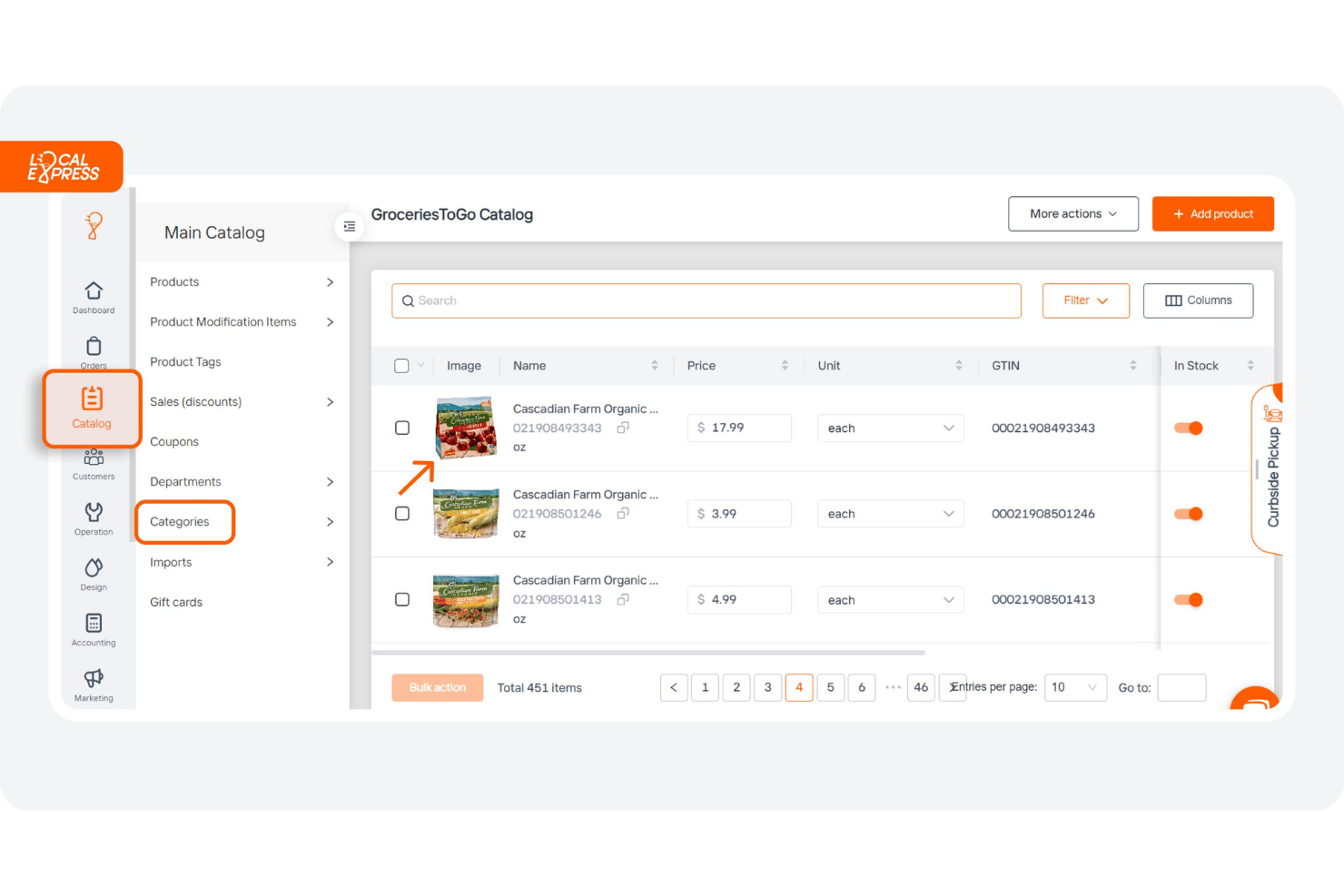
Local Express
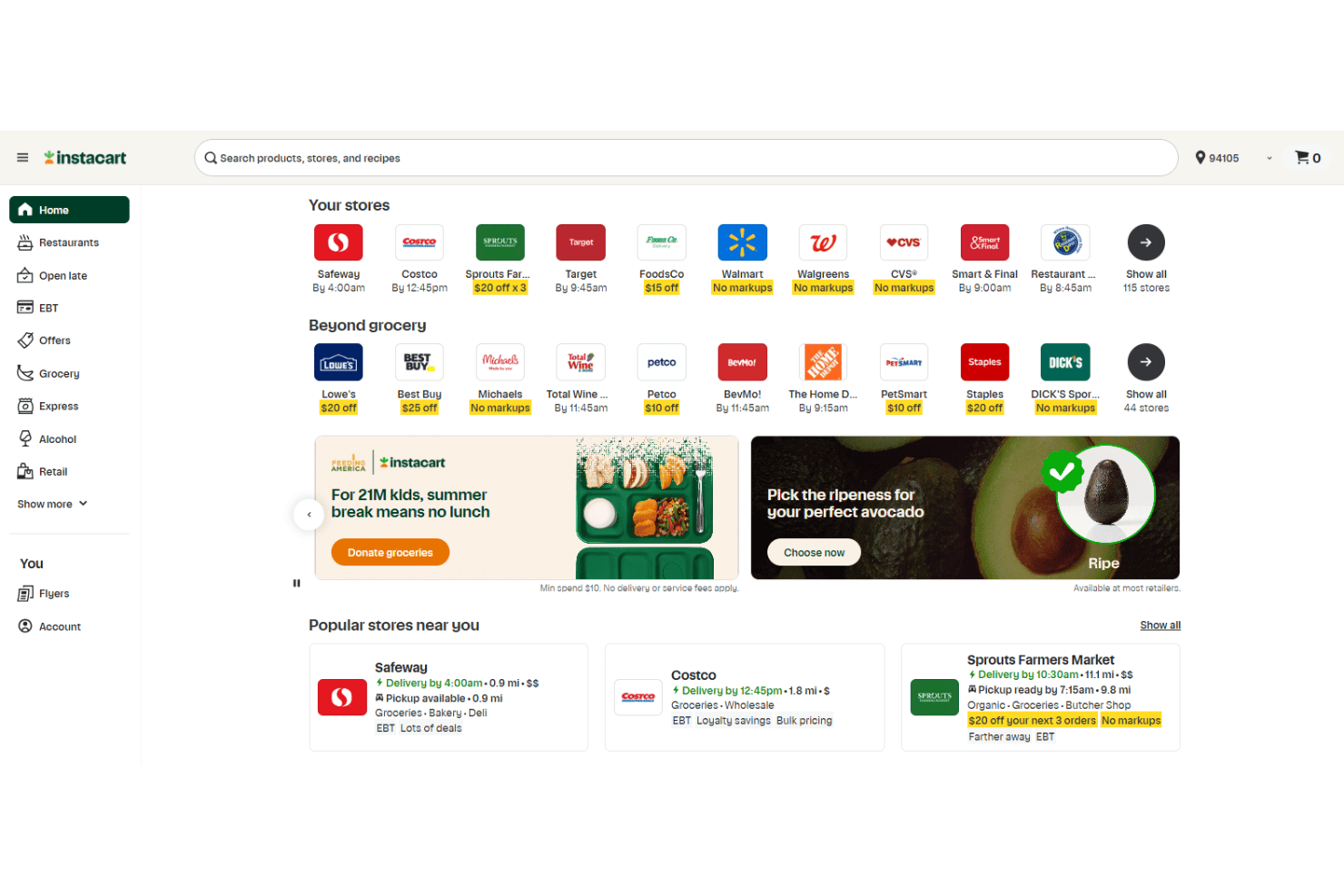
Instacart Storefront
Waarom u onze softwareaanbevelingen kunt vertrouwen
Ons team test en beoordeelt software sinds 2012. Als retailleiders weten we zelf hoe moeilijk — en belangrijk — het is om de juiste software te kiezen.
Voor deze gids hebben we tools geëvalueerd met behulp van praktijktests en onafhankelijk onderzoek, waarbij we tools beoordeelden aan de hand van onze selectiecriteria.
Onze reviews weerspiegelen ons onafhankelijke oordeel — geen verkooppraatje.
Local Express vs. Instacart Storefront Pricing Comparison
| Local Express | Instacart Storefront | |
|---|---|---|
| Free Trial | Free demo available | Free demo available |
| Pricing | Pricing upon request | Pricing upon request |
Prijzen en verborgen kosten van Local Express versus Instacart Storefront
Geen van beide bedrijven publiceert tarieven, dus beide gesprekken beginnen met een offerte. Local Express stelt een pakket samen op basis van de functies, integraties en diensten die je organisatie nodig heeft. Daardoor verandert het bedrag afhankelijk van hoeveel onderdelen van het pakket je inschakelt. Storefront Pro werkt anders: de platformkosten zijn bedoeld om te worden gecompenseerd door retailmedia, en Instacart zegt dat Carrot Ads gemiddeld meer dan 65% van de maandelijkse platformkosten voor retailers dekt. Dat plaatst de vergelijking in een ander perspectief, omdat een deel van wat je betaalt bedoeld is om terug te komen als advertentie-inkomsten in plaats van uit je marge te komen.
Om de juiste keuze te maken, moet je verder kijken dan de prijs op het eerste gezicht en de details van elke overeenkomst grondig bekijken. Ik raad aan om scenario’s met verschillende ordervolumes door te rekenen en te bekijken hoe de kosten veranderen tijdens je drukste en rustigste periodes. Vraag naar implementatie-, ondersteunings- en integratiekosten. Dring bij Storefront Pro bovendien sterk aan op een realistisch beeld van wat het te gelde maken van advertenties op jouw verkeersniveau oplevert, want die 65% is een gemiddelde over verschillende retailers en geen minimum waarop je kunt rekenen.
Local Express vs. Instacart Storefront Feature Comparison
| Local Express | Instacart Storefront | |
|---|---|---|
| 2-Factor Authentication | ||
| A/B Testing | ||
| API | ||
| Analytics | ||
| BitCoin | ||
| Conversion Tracking | ||
| Dashboard | ||
| Data Export | ||
| Data Import | ||
| Data Visualization | ||
| Design Templates | ||
| External Integrations | ||
| Inventory Tracking | ||
| Keyword Tracking | ||
| Marketing Automation | ||
| Multi-User | ||
| Notifications | ||
| Order Management | ||
| PayPal | ||
| Payment Gateway Integration | ||
| Payment Processor | ||
| Product Catalog | ||
| Review Monitoring | ||
| SAP Integration | ||
| Scheduling | ||
| Stripe | ||
| Third-Party Plugins/Add-Ons |
Integraties van Local Express versus Instacart Storefront
| Integratie | Local Express | Instacart Storefront |
|---|---|---|
| Square POS | ✅ | ✅ |
| Clover POS | ✅ | ✅ |
| Stripe | ✅ | ✅ |
| Google Analytics | ✅ | ❌ |
| PayPal | ✅ | ❌ |
| DoorDash | ✅ | ❌ |
| API | ❌ | ✅ |
| Zapier | ❌ | ❌ |
Local Express en Instacart Storefront bieden vergelijkbare ondersteuning voor POS-integraties, waardoor beide een geschikte optie zijn om essentiële detailhandelsystemen te koppelen. Local Express loopt voorop wat betreft de algehele breedte van de integraties, met extra verbindingen met diensten zoals DoorDash en PayPal. Daardoor krijgen boodschappenwinkels meer flexibiliteit op het gebied van betalingen, bezorging en bedrijfsvoering.
Beveiliging, naleving en betrouwbaarheid van Local Express versus Instacart Storefront
| Factor | Local Express | Instacart Storefront Pro |
|---|---|---|
| Klantgegevens | Opgeslagen in de administratie van uw eigen winkel | Gepartitioneerd op basis van tenant-ID, zodat alleen uw site er toegang toe heeft, uitsluitend op het Pro-abonnement |
| Certificeringen | SOC 2, met ondersteuning voor GDPR | Geen gepubliceerd |
| Betalingsbeveiliging | Versleuteling op bankniveau en PCI-conforme verwerking | Kaartbetalingen worden verwerkt door Stripe, Venmo-betalingen door Braintree |
| Genoemde regelgeving | GDPR | CCPA, CPRA, VCDPA, CPA, CTDPA, UCPA |
Hier zijn de abonnementsniveaus het belangrijkst. Op het standaardniveau van Storefront zijn uw shoppers Instacart-accounthouders die met de marktplaats worden gedeeld, en Instacart behandelt hun privacyverzoeken. Pro partitioneert die gegevens achter een tenant-ID en legt de verantwoordelijkheid voor compliance bij u terug voor CCPA en de nieuwere staatswetten, met een API voor verwijderingsverzoeken. Local Express beschikt over SOC 2 en ondersteunt GDPR met versleuteling op bankniveau. Geen van beide bedrijven publiceert een uptime- of support-SLA.
Gebruiksgemak van Local Express versus Instacart Storefront
| Factor | Local Express | Instacart Storefront Pro |
|---|---|---|
| Beheerinterface | Dashboard met slepen en neerzetten, ontwikkeld voor winkelmedewerkers | Instacart Platform Portal, voor catalogus, bestellingen, winkels, merchandising en rapportage |
| Installatieproces | Vier stappen: bedrijfsanalyse, catalogus- en POS-integratie, ontwerp van de storefront, lancering | Het standaardniveau gebruikt een intakeformulier; voor Pro is een vertegenwoordiger en meer configuratie nodig |
| Zelfbedieningsmogelijkheden | De meeste configuratie wordt bij de lancering voor u uitgevoerd | Branding, collecties, campagnes en flyers kunt u zelf beheren; voor het inschakelen van mogelijkheden is een vertegenwoordiger nodig |
| Doorlopend gegevensbeheer | Catalogus wordt tijdens de onboarding opgeschoond en gekoppeld | Dagelijkse uploads van inventarisbestanden via SFTP |
| Ondersteuning | Livechat, telefoon en e-mail, plus een helpcentrum | Technische ondersteuning voor ondernemingen en een statuspagina, zonder gepubliceerde reactietijden |
Op beide platforms wordt veel aan een vertegenwoordiger overgelaten. Met Instacart’s Platform Portal kunt u branding, collecties, campagnes, flyers en rapportage zelf beheren, maar voor het inschakelen van de meeste mogelijkheden, van advertenties tot partnerafhalen en loyaliteit, is contact met Instacart nodig. Local Express werkt met een lancering in vier stappen, die begint met een bedrijfsanalyse en eindigt met een voltooide storefront. Geen van beide verwacht dat u zelf een ontwikkelaar inschakelt.
Local Express vs Instacart Storefront: Pros & Cons
Local Express
- Keeps customer relationships, revenue, and margin in-house
- Bundles AI upselling, price checks, and product imagery
- Syncs with any POS and unifies in-store with online data
- Feature breadth can overwhelm teams at first
- Full value needs a staged rollout, not one switch-on
- Product data cleanup has to happen before launch
Instacart Storefront
- Fast setup with branded storefronts for grocers
- Direct integration with Instacart’s fulfillment and delivery network
- Built-in merchandising and digital marketing tools
- Limited ability to manage multiple store banners under one login
- Some fees and commissions can reduce overall margins
- Advanced analytics are less granular than competing platforms
Best Use Cases for Local Express and Instacart Storefront
Local Express
- Independent Grocers Easy onboarding, hands-on support, and grocery-specific integrations make it ideal for local stores moving online.
- Specialty Food Shops Niche product catalogs, complex pricing, and custom fulfillment options are supported out of the box.
- Regional Grocery Chains Multi-store management and branded customer experiences scale to operators running hundreds or even a couple thousand locations.
- Small eCommerce Teams Accessible setup and guided onboarding help small, resource-limited teams launch fast.
- In-House Delivery Teams Built-in delivery integrations and outsourcing only the final leg simplify running delivery operations at a lower cost per order.
- Community Marketplaces Multiple vendors and inventory sources can be unified for local delivery or pickup.
Instacart Storefront
- Independent Grocers Instacart Storefront provides turnkey ecommerce, rapid launch, and support for single-location retailers without in-house developers.
- Regional Grocery Chains Pre-built omnichannel functions, centralized reporting, and marketing tools support expanded reach and brand control across locations.
- Digital Marketers Merchandising levers, promotions, email integrations, and analytics tailored for grocery ecommerce campaigns are available.
- Operations Managers Real-time inventory sync, order management, and built-in fulfillment workflows help manage day-to-day grocery operations with less manual work.
- Enterprise Retailers Custom integration options, premium analytics, and dedicated account management scale for complex corporate needs.
- Meal Planning Apps Native integration support and food catalog data enable digital meal planners or recipe providers to connect users with real-time availability and delivery.
Wie moet Local Express gebruiken en wie Instacart Storefront?
Local Express is geschikt voor kruideniers die één systeem willen voor kiosken, scan-and-go, hun eigen bezorgers en vermeldingen op marktplaatsen, met AI-agenten die prijzen, cataloguswerk en analyses afhandelen. Storefront Pro is geschikt voor retailers die al actief zijn op Instacart Marketplace, omdat een Storefront-site op die relatie is gebouwd en de catalogus ervan deelt. Als u personalisatie en retailmedia aanschaft, biedt Instacart van beide meer. Als u wilt dat de klantrelatie structureel gescheiden blijft van Instacart, houd er dan rekening mee dat alleen het Pro-niveau uw shoppergegevens isoleert en het standaardniveau dat niet doet.
Differences Between Local Express and Instacart Storefront
| Local Express | Instacart Storefront | |
|---|---|---|
| Cost Structure | Fixed subscription alongside integration, per-location, and percentage-based transaction fees in the contract | Platform fees intended to be offset by Carrot Ads retail media, which is switched off by default on Pro sites |
| Demand Source | You drive your own traffic, with optional one-click listing onto DoorDash, Uber Eats, and Grubhub | Personalization runs on Instacart shopper data, and the site requires an existing Marketplace relationship |
| Fulfillment | Your own pickers and drivers, or third-party couriers reached through DoorDash, Uber, Nash, and Burq | Four models, from Instacart shoppers picking and delivering to your associates handling both ends |
| In-Store Surfaces | Self-service kiosks, Scan Pay and Go, and a kitchen display system for prepared foods | Caper Carts and FoodStorm, both Instacart-owned, with in-store shopping context gated to the Pro tier |
| Read Local Express ReviewOpens new window | Read Instacart Storefront ReviewOpens new window |
Similarities Between Local Express and Instacart Storefront
| AI Personalization | Both lead with machine learning for discovery and recommendations, though Local Express packages it as named agents you configure yourself. |
|---|---|
| Branded Storefront | Both put your brand on the web store and native apps rather than the platform’s, though Instacart builds and submits your apps for you. |
| Pickup and Delivery | Each covers in-store pickup, curbside, and local delivery, with picking workflows and driver handoff sitting behind them. |
| Quote-Based Pricing | Neither publishes rates, so both begin with a sales conversation and a contract rather than a signup page. |
| SNAP and EBT | Each accepts EBT at checkout alongside mainstream cards and wallets, with eligibility flagged at the item level. |
| Read Local Express ReviewOpens new window Read Instacart Storefront ReviewOpens new window | |