

Beoordeling van Ecwid by Lightspeed: voordelen, nadelen, functies en prijzen
Ecwid by Lightspeed helpt bedrijven bij het opzetten van online winkels, het beheren van producten, het verwerken van betalingen en het verkopen via websites, marktplaatsen, sociale media en fysieke verkoopkanalen.

We review tools independently, and commissions help fund our testing. See our transparency policy, our methodology, or suggest a tool.
Ecwid is an ecommerce platform built for adding a store to an existing website without rebuilding it from scratch. It's worth considering if you already have a site on WordPress, Wix, or a similar platform and want to start selling without migrating everything to a new storefront. If you've been weighing it against Shopify, Ecwid is the stronger choice when your website is already established—you embed the store into your existing site rather than rebuilding your entire web presence around a commerce platform.
Ecwid Evaluation Summary
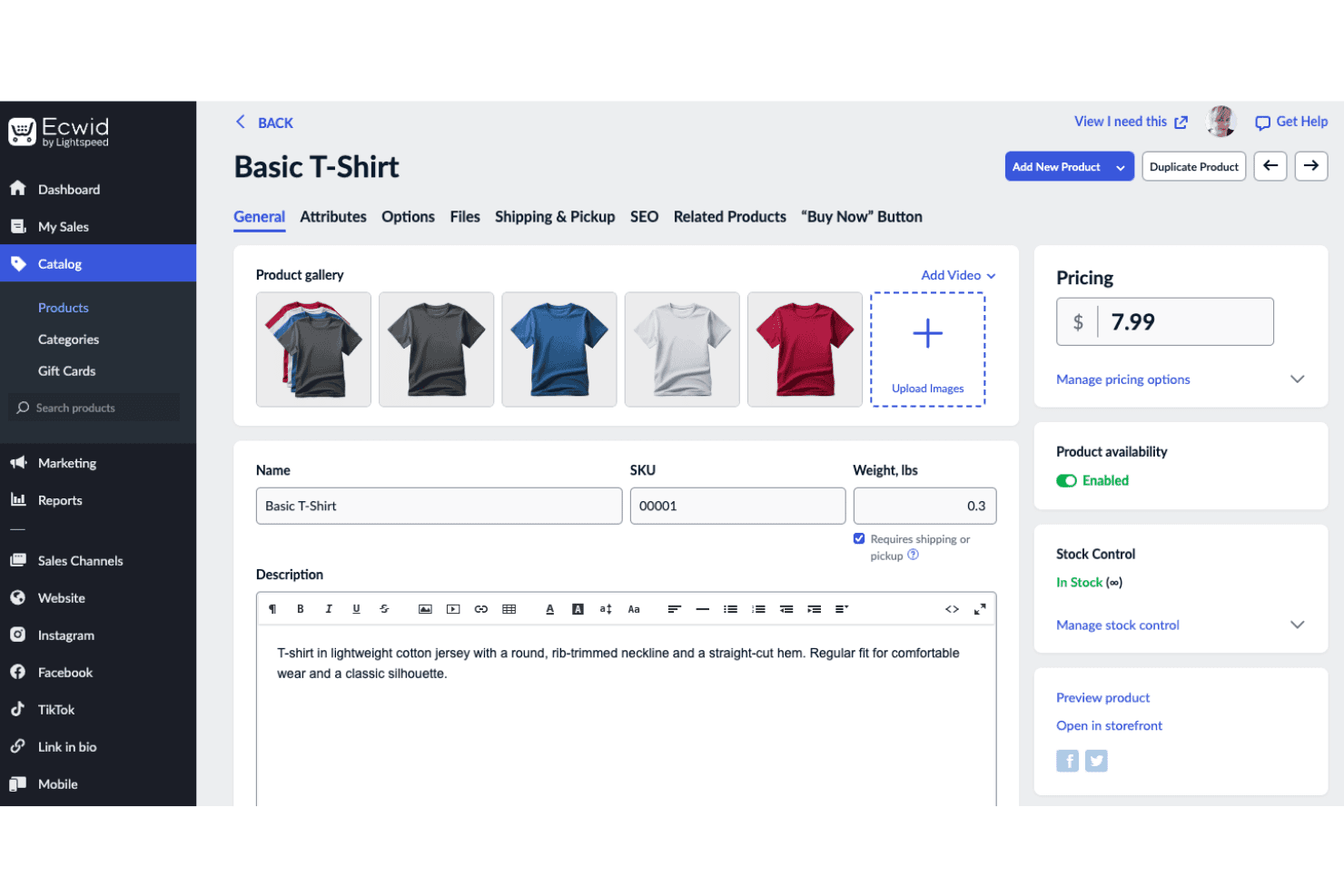
4.6/5
- From $5/month (billed annually)
- Free account available
Waarom u onze softwareaanbevelingen kunt vertrouwen
6,700+
Reviews
20
Industry experts
16+
Evaluation factors
14
Years
Ons team test en beoordeelt software sinds 2012. Als retailleiders weten we zelf hoe moeilijk — en belangrijk — het is om de juiste software te kiezen.
Voor deze gids hebben we tools geëvalueerd met behulp van praktijktests en onafhankelijk onderzoek, waarbij we tools beoordeelden aan de hand van onze selectiecriteria.
Onze reviews weerspiegelen ons onafhankelijke oordeel — geen verkooppraatje.
Ecwid Overview
When I judge Ecwid against other ecommerce platforms, it’s a top pick for small businesses that want fast onboarding and easy multichannel sales. Its intuitive interface, built-in POS integrations, and fair pricing make it appealing to retailers looking to add online sales to their existing stores.
Ecwid can feel limiting if you need deep customization or complex catalog management, but when you’re choosing a solution for quick launches, basic marketing, and unified inventory, I’d rate Ecwid by Lightspeed among the best options for lean retail teams or growing omnichannel shops.
Pros
- Connects to in-person POS for unified inventory management.
- Free plan supports real sales with few restrictions.
- Multichannel sales include Facebook, Instagram, and marketplaces.
Cons
- Lacks advanced product filtering and merchandising options.
- Limited built-in SEO features for larger catalogs.
- No native abandoned cart recovery on the free plan.
Is Ecwid Right For Your Needs?
Who Would be a Good Fit for Ecwid?
Ecwid makes sense for small businesses, side hustlers, and retail locations looking to unify their online and in-person selling without complexity. It provides quick setup, flexible storefront widgets, and easy inventory sync that stand out for teams needing speed.
It’s especially good if you want to add ecommerce to an existing website, reach customers across social and marketplaces, or try ecommerce risk-free thanks to the full-featured free plan.
- Small Retail ShopsEcwid is easy to connect with in-person POS, syncing inventory across online and brick-and-mortar sales from one dashboard.
- Social SellersEcwid’s built-in Facebook and Instagram shopping tools make it simple to reach buyers directly on social channels.
- Service ProvidersYou can sell digital goods, bookings, or paid consultations without complicated setup or plugins through Ecwid’s digital product support.
- Craft or Handmade SellersThe Starter tier, app integrations, and marketplace options let makers start small and scale as their business grows.
- Freelancers or Side HustlesEcwid’s instant site builder and straightforward tools take pressure off part-timers or those just starting out with ecommerce.
- Food Trucks or Pop-UpsMobile-friendly management and fast setup make Ecwid a strong fit for mobile businesses needing reliable, simple sales tools.
Who Would be a Bad Fit for Ecwid?
Ecwid's simplicity means power users or large, complex operations may run into limitations around merchandising, bulk management, and design flexibility. Specialized B2B workflows or strict compliance requirements are also outside Ecwid’s sweet spot.
If you need highly advanced catalogs, deep mobile customization, or want a massive app ecosystem, you’ll likely find Ecwid too basic for your needs.
- Large EnterprisesEcwid lacks bulk catalog tools, enterprise-grade security, and advanced permissions needed for very large businesses.
- Wholesalers or B2BThere’s limited support for complex wholesale pricing, purchase order flows, or restricted customer groups.
- High-Volume Fashion BrandsEcwid’s product filtering and merchandising options aren’t enough for brands needing dynamic sorting or custom lookbooks.
- International MarketplacesSophisticated multi-currency, multi-language, or international taxing features are restricted compared to some advanced platforms.
- Web Development AgenciesDesign controls, extensibility, and white-label options are minimal, which limits custom client projects.
- Regulated IndustriesEcwid doesn’t provide robust compliance or audit tools required by industries with strict data and reporting requirements.
Our Review Methodology
How We Test & Score Tools
We’ve spent years building, refining, and improving our software testing and scoring system. The rubric is designed to capture the nuances of software selection and what makes a tool effective, focusing on critical aspects of the decision-making process.
Below, you can see exactly how our testing and scoring works across seven criteria. It allows us to provide an unbiased evaluation of the software based on core functionality, standout features, ease of use, onboarding, customer support, integrations, customer reviews, and value for money.
Core Functionality (25% of final scoring)
The starting point of our evaluation is always the core functionality of the tool. Does it have the basic features and functions that a user would expect to see? Are any of those core features locked to higher-tiered pricing plans? At its core, we expect a tool to stand up against the baseline capabilities of its competitors.
Standout Features (25% of final scoring)
Next, we evaluate uncommon standout features that go above and beyond the core functionality typically found in tools of its kind. A high score reflects specialized or unique features that make the product faster, more efficient, or offer additional value to the user.
We also evaluate how easy it is to integrate with other tools typically found in the tech stack to expand the functionality and utility of the software. Tools offering plentiful native integrations, 3rd party connections, and API access to build custom integrations score best.
Ease of Use (10% of final scoring)
We consider how quick and easy it is to execute the tasks defined in the core functionality using the tool. High scoring software is well designed, intuitive to use, offers mobile apps, provides templates, and makes relatively complex tasks seem simple.
Onboarding (10% of final scoring)
We know how important rapid team adoption is for a new platform, so we evaluate how easy it is to learn and use a tool with minimal training. We evaluate how quickly a team member can get set up and start using the tool with no experience. High scoring solutions indicate little or no support is required.
Customer Support (10% of final scoring)
We review how quick and easy it is to get unstuck and find help by phone, live chat, or knowledge base. Tools and companies that provide real-time support score best, while chatbots score worst.
Customer Reviews (10% of final scoring)
Beyond our own testing and evaluation, we consider the net promoter score from current and past customers. We review their likelihood, given the option, to choose the tool again for the core functionality. A high scoring software reflects a high net promoter score from current or past customers.
Value for Money (10% of final scoring)
Lastly, in consideration of all the other criteria, we review the average price of entry level plans against the core features and consider the value of the other evaluation criteria. Software that delivers more, for less, will score higher.
Core Features
Unified Inventory Management
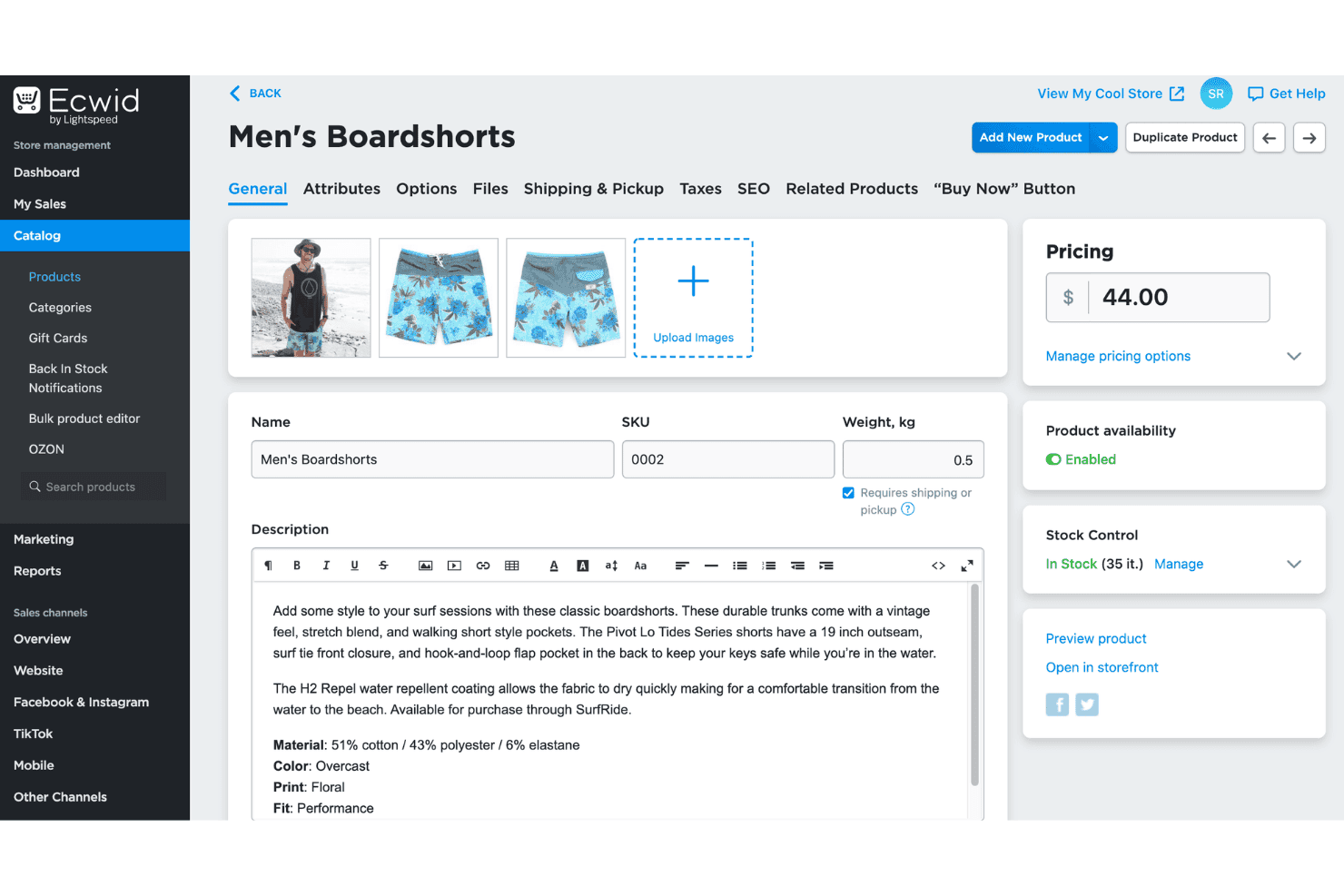
Ecwid syncs inventory across web, social, and in-person sales. This prevents overselling and lets you handle product updates from a single dashboard.
Customizable Storefront Widgets
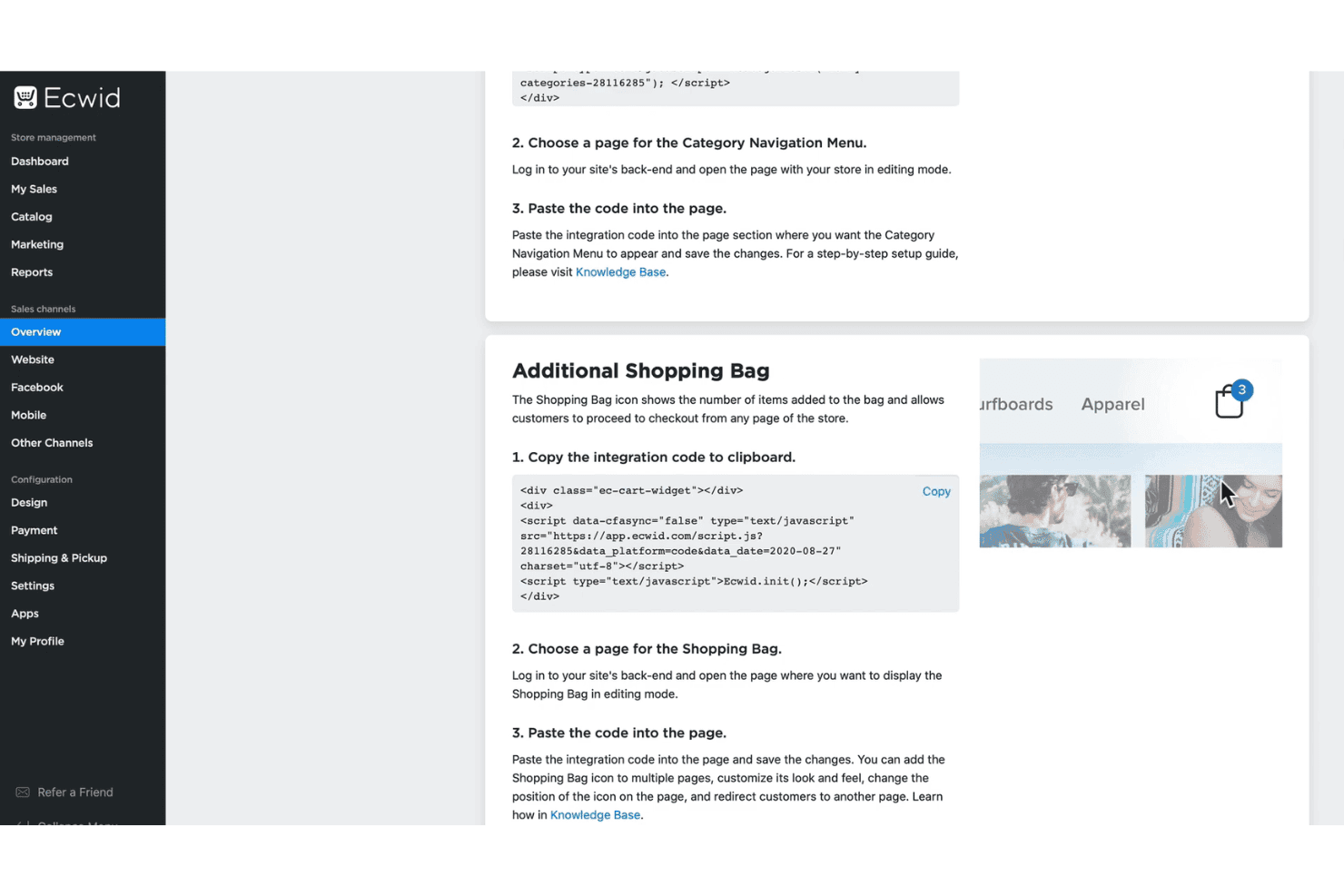
You can add Ecwid’s storefront widgets to any website or blog. This gives you simple, code-free ways to embed stores on existing sites.
Mobile Store Management
Ecwid’s mobile app lets you track orders, update products, and get notifications. You can manage your business from anywhere in real time.
Digital and Physical Product Support
Sell downloadable products, recurring subscriptions, or physical items side-by-side. Ecwid handles digital delivery and shipping configuration from one place.
Multichannel Sales Tools
List products on Facebook, Instagram, Amazon, and more with Ecwid’s built-in channels. Reach new audiences and manage all channels from one admin view.
Automated Tax Calculations
Ecwid by Lightspeed applies region-specific tax rates automatically at checkout. You can avoid manual setup and reduce errors for domestic and international sales.
Ease of Use
Ecwid is one of the most user-friendly ecommerce platforms I’ve tested, with guided onboarding, drag-and-drop customization, and a dashboard that keeps day-to-day management simple.
Most users say setup is quick, and features like mobile store management and instant storefront widgets mean you can start selling in under an hour.
Integrations
Ecwid by Lightspeed integrates with Stripe, PayPal, Square, Apple Pay, Facebook Shops, Instagram Shopping, Google Shopping, Mailchimp, ShipStation, and Zapier, among others.
Ecwid also offers a REST API and connects with third-party integration tools for expanded functionality.

Ecwid Specs
- API: Yes
- BitCoin: No
- Customer Management: Yes
- Data Export: Yes
- Data Import: Yes
- External Integrations: Yes
- Inventory Tracking: Yes
- Marketing Automation: Yes
- Multi-User: Yes
- Notifications: Yes
- Order Management: Yes
- PayPal: Yes
- SAP Integration: No
- Shipping Management: Yes
- Stripe: Yes
- Supplier Management: No