

Recensione di SkuVault Core: vantaggi, svantaggi, funzionalità e prezzi spiegati
SkuVault Core si distingue per l'equilibrio tra funzionalità avanzate e design intuitivo: la soluzione ideale se desideri una gestione dell'inventario semplificata senza i consueti problemi dei software.

Recensiamo gli strumenti in modo indipendente, e le commissioni aiutano a finanziare i nostri test. Consulta la nostra politica sulla trasparenza, la nostra metodologia o suggerisci uno strumento.
SkuVault is an inventory management software built for multichannel ecommerce sellers who need warehouse-level control across multiple selling channels and fulfillment locations. I'd consider it over something like Cin7 if your priority is warehouse operations—barcode scanning, pick and pack workflows, and real-time stock accuracy—rather than a broader system that bundles in manufacturing or accounting modules you don't need.
SkuVault Evaluation Summary
4.1/5
- Pricing upon request
- Free demo available
Perché fidarsi dei nostri consigli sui software
6,700+
Reviews
20
Industry experts
16+
Evaluation factors
14
Years
Il nostro team testa e recensisce software dal 2012. In quanto leader del retail noi stessi, sappiamo quanto sia difficile — e importante — scegliere il software giusto.
Per questa guida, abbiamo valutato gli strumenti attraverso test pratici e ricerche indipendenti, assegnando un punteggio agli strumenti in base ai nostri criteri di selezione.
Le nostre recensioni riflettono il nostro giudizio indipendente, non un discorso di vendita.
SkuVault Overview
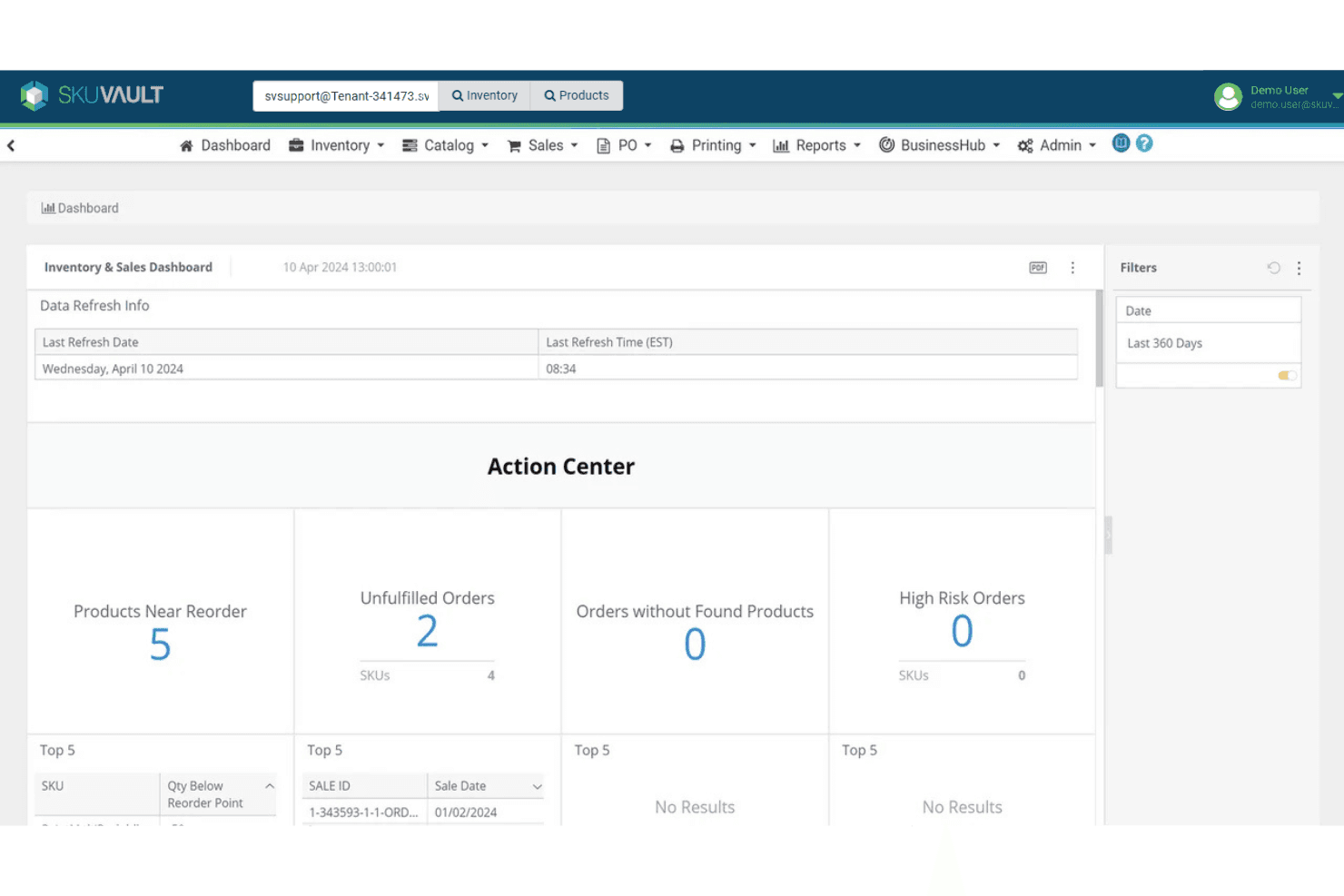
I think SkuVault Core is a strong choice if you want inventory management software that’s easy to set up, has a clean interface, and offers deep integrations with ecommerce platforms. Its barcode scanning, real-time inventory sync, and customizable reporting make it a good fit for fast-moving retail and omnichannel sellers. Pricing is competitive for the feature set, and support is responsive, though advanced automation and analytics aren’t as deep as some alternatives.
If you’re judging by onboarding speed and day-to-day usability, SkuVault Core stands out for teams who need reliable, straightforward inventory control.
Pros
- Real-time inventory tracking keeps you updated instantly.
- Detailed reporting helps your team make data-driven decisions.
- User-friendly interface simplifies your daily tasks.
Cons
- Onboarding might take longer than you'd expect.
- Some users find advanced features a bit overwhelming.
- Occasional system glitches can disrupt your workflow.
Is SkuVault Right For Your Needs?
Who Would be a Good Fit for SkuVault?
SkuVault is perfect for e-commerce retailers, warehouses, and logistics teams that need accurate inventory control. If your business deals with high stock volumes and requires real-time tracking, SkuVault’s detailed reporting and user-friendly interface can significantly enhance your operations. Fashion and electronics industries, where precise inventory management is crucial, will benefit from SkuVault’s ability to reduce errors and improve efficiency.
- E-commerce RetailersSkuVault’s real-time tracking and detailed reporting make it ideal for managing complex inventory levels in online stores.
- WarehousesIts user-friendly interface simplifies stock management for your team, even in large-scale operations.
- Logistics TeamsWith its robust tracking capabilities, SkuVault helps your team maintain accuracy in shipments and deliveries.
- Fashion IndustrySkuVault’s detailed reporting aids in managing seasonal stock fluctuations and varied inventory.
- Electronics IndustryReal-time insights and error reduction make it a strong choice for handling high-value stock.
- Small to Medium BusinessesSkuVault’s ease of use and comprehensive features help streamline your inventory processes efficiently.
Who Would be a Bad Fit for SkuVault?
SkuVault might not be the best choice for small businesses with minimal inventory needs or those that require simple, straightforward solutions. If your team doesn’t need the robust features that come with real-time tracking and detailed reporting, you might find SkuVault’s advanced capabilities unnecessary. Additionally, businesses with limited technical expertise might struggle with the system’s complexity during onboarding.
- Small Retail ShopsWith minimal inventory needs, the advanced features of SkuVault might be overkill for your operations.
- Low-Tech TeamsIf your team isn’t tech-savvy, the complexity of SkuVault’s setup and features could pose challenges.
- Single Product LinesFor businesses focusing on a single product, SkuVault’s extensive capabilities might be more than you need.
- Craft BusinessesArtisan and craft businesses, which often have unique inventory requirements, may not align well with SkuVault’s standardized processes.
- Service-Based CompaniesWithout physical inventory to manage, a service-focused business won’t gain much from SkuVault’s features.
- FreelancersFreelancers or solo entrepreneurs with small-scale operations may find SkuVault’s comprehensive system unnecessary.
La Nostra Metodologia di Recensione
Come Testiamo e Valutiamo gli Strumenti
Abbiamo trascorso anni a costruire, perfezionare e migliorare il nostro sistema di test e valutazione dei software. Il nostro schema di valutazione è progettato per cogliere le sfumature della selezione dei software e per comprendere cosa rende uno strumento efficace, concentrandosi su aspetti critici del processo decisionale. Qui sotto puoi vedere esattamente come funzionano i nostri test e valutazioni attraverso sette criteri. Questo ci permette di fornire una valutazione imparziale del software basata su funzionalità principali, caratteristiche distintive, facilità d’uso, onboarding, supporto clienti, integrazioni, recensioni dei clienti e rapporto qualità-prezzo.
Funzionalità di base (25% della valutazione finale)
Il punto di partenza della nostra valutazione è sempre la funzionalità principale dello strumento. Ha le funzioni e le caratteristiche di base che un utente si aspetterebbe? Alcune di queste funzionalità sono bloccate a piani tariffari di livello superiore? Alla base, ci aspettiamo che uno strumento regga il confronto con le capacità minime dei suoi concorrenti.
Caratteristiche distintive (25% della valutazione finale)
Successivamente valutiamo caratteristiche distintive e non comuni che vadano oltre la normale funzionalità presente in strumenti simili. Un punteggio alto riflette funzionalità specializzate o uniche che rendono il prodotto più veloce, efficiente o che offrano valore aggiunto all’utente. Valutiamo anche quanto sia facile integrare il software con altri strumenti della consueta infrastruttura tecnologica per espanderne la funzionalità e l’utilità. Gli strumenti che offrono molte integrazioni native, connessioni di terze parti e accesso API per costruire integrazioni personalizzate ottengono il punteggio più alto.
Facilità d’uso (10% della valutazione finale)
Consideriamo quanto sia rapido e semplice eseguire le attività definite nelle funzionalità di base utilizzando lo strumento. I software che ottengono un punteggio alto sono ben progettati, intuitivi, offrono app mobili, modelli pronti e rendono compiti complessi relativamente semplici.
Onboarding (10% della valutazione finale)
Sappiamo quanto sia importante una rapida adozione da parte del team per una nuova piattaforma, quindi valutiamo quanto sia facile imparare a usare uno strumento con una formazione minima. Esaminiamo quanto tempo impiega un membro del team a configurarsi e iniziare a utilizzare lo strumento senza esperienza. Le soluzioni con punteggi elevati richiedono poco o nessun supporto.
Supporto clienti (10% della valutazione finale)
Valutiamo quanto sia rapido e facile ricevere assistenza e trovare aiuto tramite telefono, live chat o base di conoscenza. Gli strumenti e le aziende che forniscono un supporto in tempo reale ottengono i punteggi migliori, mentre i chatbot hanno i punteggi più bassi.
Recensioni dei clienti (10% della valutazione finale)
Oltre ai nostri test e valutazioni, consideriamo il net promoter score dei clienti attuali e passati. Esaminiamo la loro propensione, data la possibilità, a scegliere nuovamente lo strumento per le sue funzionalità di base. Un punteggio elevato riflette un alto net promoter score da clienti attuali o passati.
Rapporto qualità-prezzo (10% della valutazione finale)
Infine, considerando tutti gli altri criteri, valutiamo il prezzo medio dei piani base rispetto alle funzionalità fondamentali e teniamo in considerazione il valore degli altri criteri di valutazione. Il software che offre di più, a meno, ottiene punteggi più alti.
Core Features
Real-Time Inventory Sync
Automatically updates stock levels across all sales channels, reducing overselling. This keeps inventory accurate whether you sell online, in-store, or both.
Barcode Scanning
Enables fast, accurate picking and shipping by scanning items at every stage. This reduces manual errors and speeds up order fulfillment.
Kitting and Bundling
Lets you group products into kits or bundles for easy selling and tracking. This is ideal for businesses offering multi-item packages or subscription boxes.
Order Management
Centralizes order processing from multiple channels in one dashboard. You can view, edit, and track orders from start to finish.
Location Management
Tracks inventory across multiple warehouses, stores, or bins. This helps you know exactly where every item is at any time.
Customizable Reporting
Generates reports on sales, inventory, and fulfillment performance. You can use these insights to spot trends and make better stock decisions.
Ease of Use
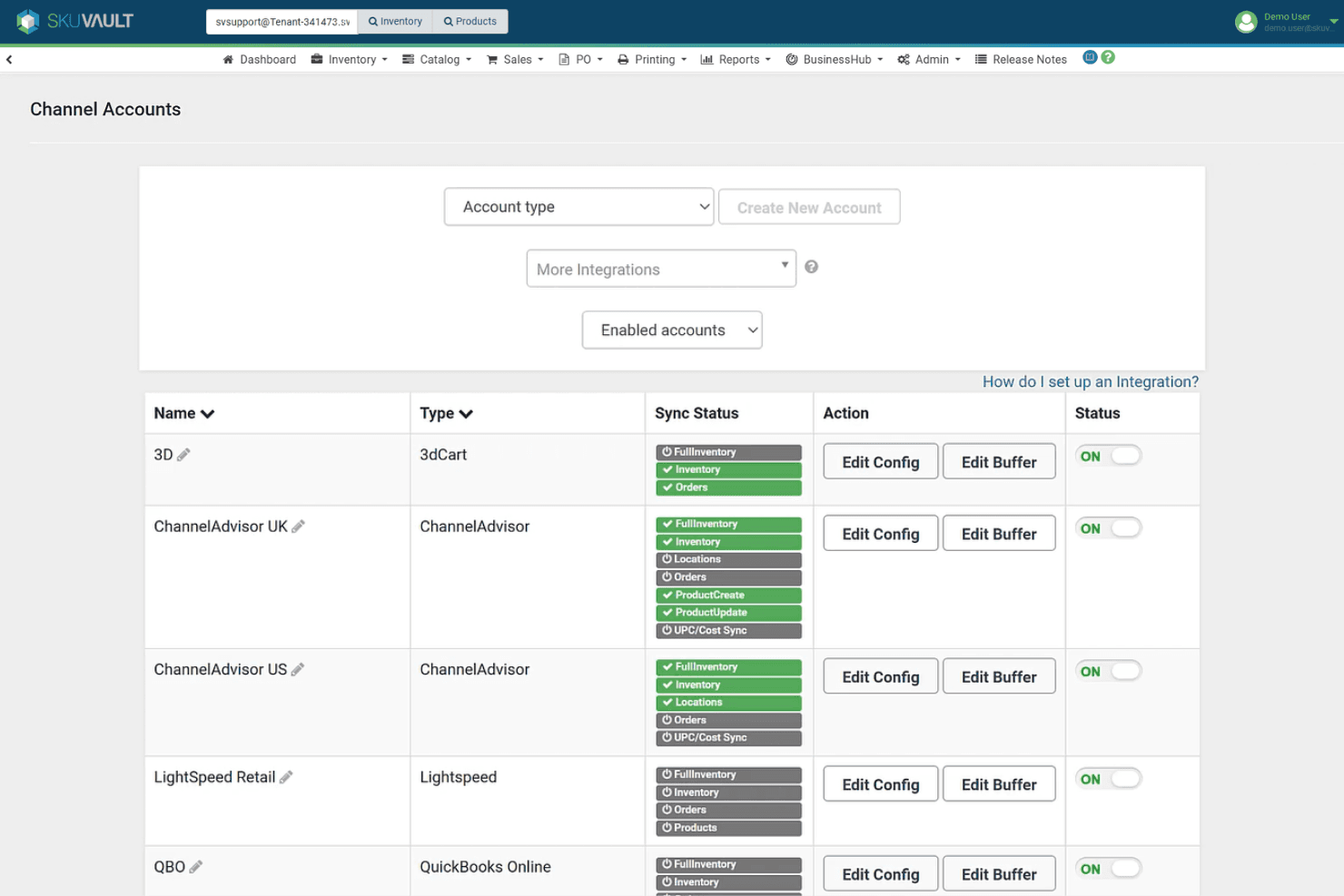
SkuVault Core is user-friendly, with a clean interface and intuitive navigation that makes onboarding quick for most teams. I think the barcode scanning and guided workflows help reduce training time and daily errors. Users often mention that the dashboard is easy to customize and that finding key inventory data takes just a few clicks.
While some advanced features require setup, most users find day-to-day tasks straightforward and accessible, even for staff with limited tech experience.
Integrations
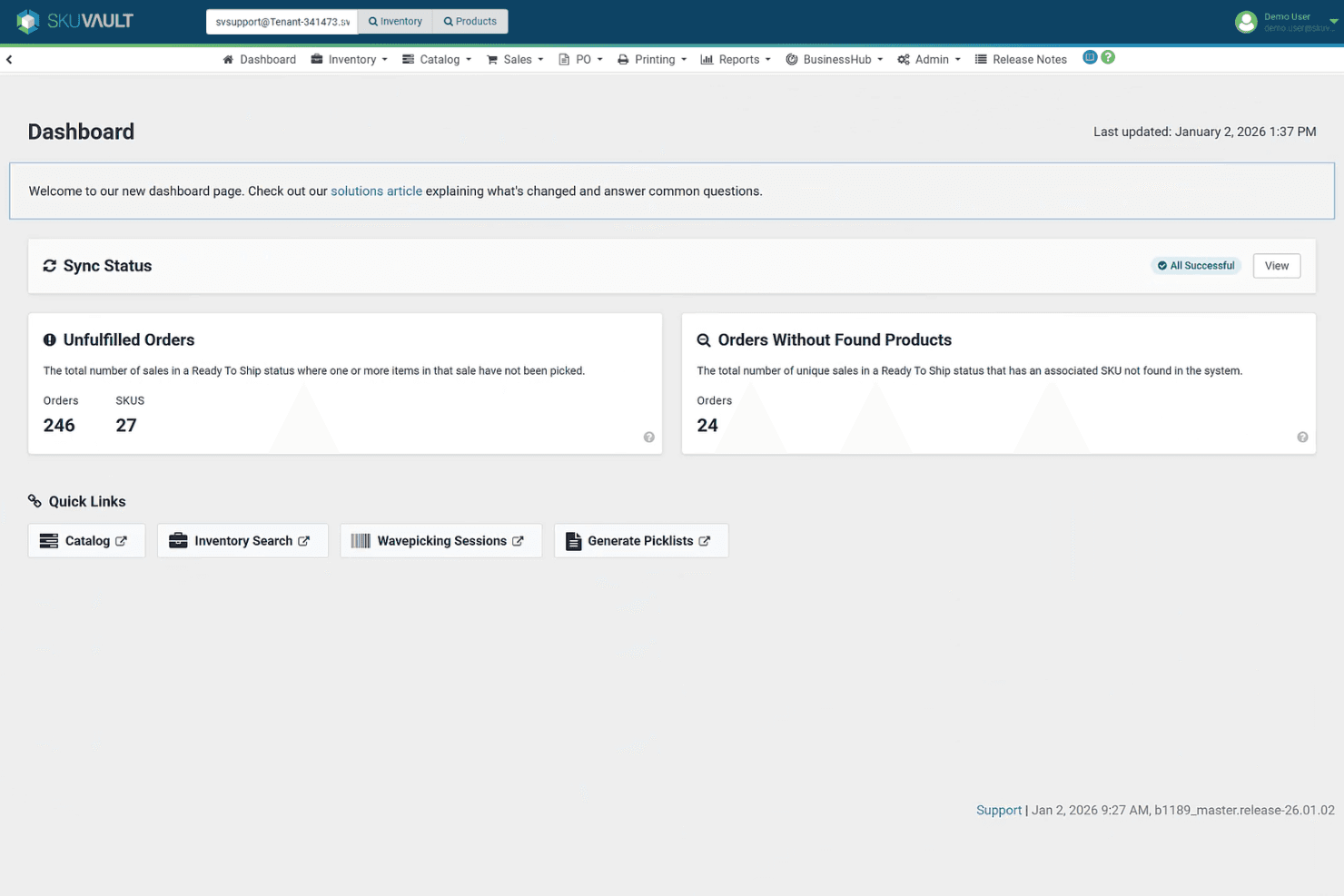
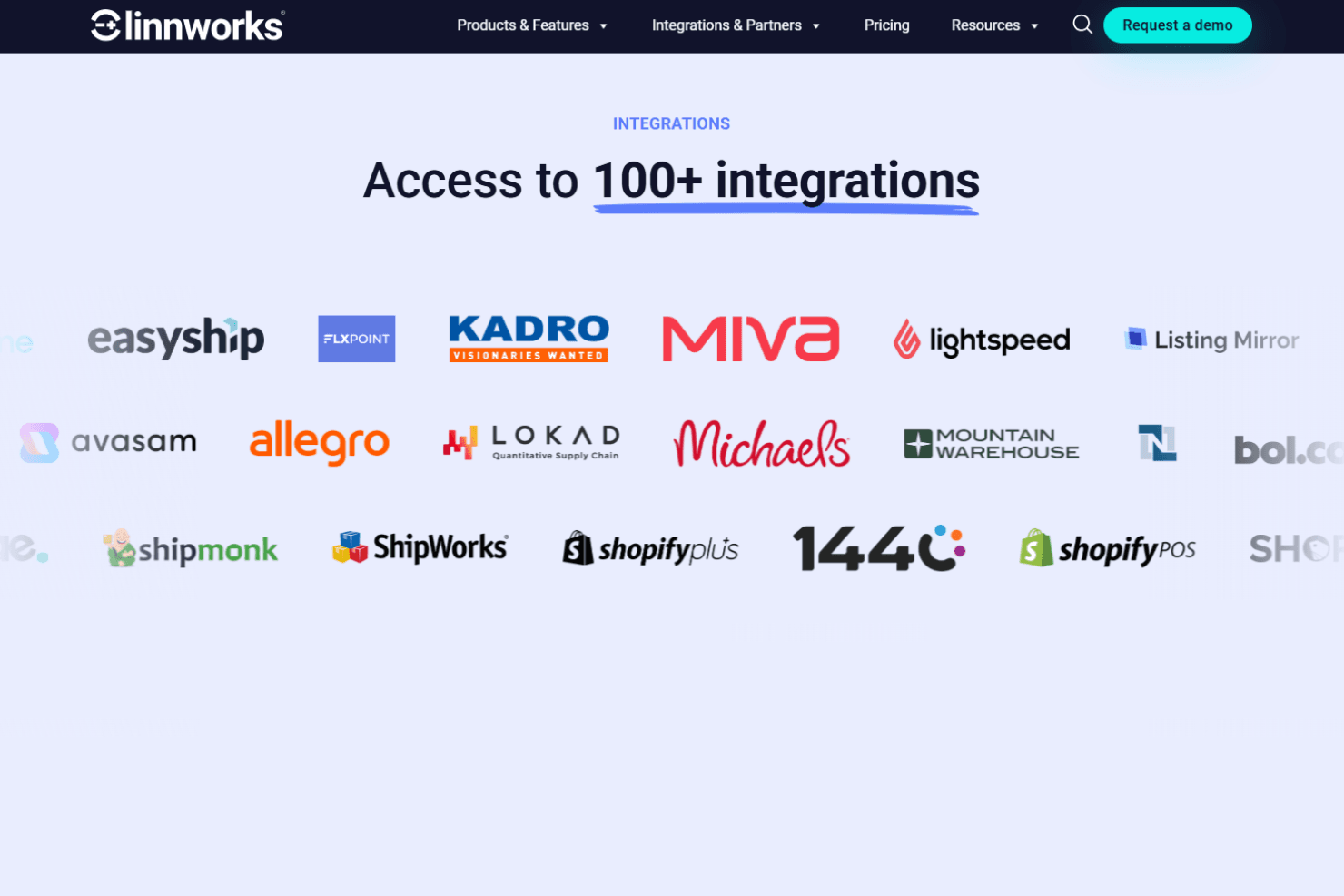
SkuVault Core integrates with Amazon, eBay, Shopify, BigCommerce, WooCommerce, Walmart Marketplace, QuickBooks, ShipStation, FedEx, and UPS, among others.
SkuVault Core also offers an API and connects with third-party integration tools for custom workflows and additional connectivity.
SkuVault Specs
- API: Yes
- Barcode Scanning: Yes
- Budgeting: No
- Calendar Management: No
- Customer Management: No
- Dashboard: Yes
- Data Export: Yes
- Data Import: Yes
- Data Visualization: Yes
- External Integrations: Yes
- Forecasting: Yes
- Inventory Tracking: Yes
- Multi-User: Yes
- Notifications: Yes
- Order Management: Yes
- POS Integration: Yes
- Product Catalog: Yes
- Purchase Orders: Yes
- Reorder Automation: Yes
- SAP Integration: No
- Scheduling: No
- Shipping Management: Yes
- Status Notifications: No
- Stock Level Monitoring: Yes
- Supplier Management: Yes
- Third-Party Plugins/Add-Ons: Yes
- Warehouse Management: Yes


