

Recensione di Sana Commerce Cloud: vantaggi, svantaggi, funzionalità e prezzi
Se cerchi un'integrazione ERP fluida e desideri una reale flessibilità B2B, Sana Commerce Cloud dimostra perché è molto più di un'altra piattaforma di commercio elettronico: ecco cosa la distingue.

Recensiamo gli strumenti in modo indipendente, e le commissioni aiutano a finanziare i nostri test. Consulta la nostra politica sulla trasparenza, la nostra metodologia o suggerisci uno strumento.
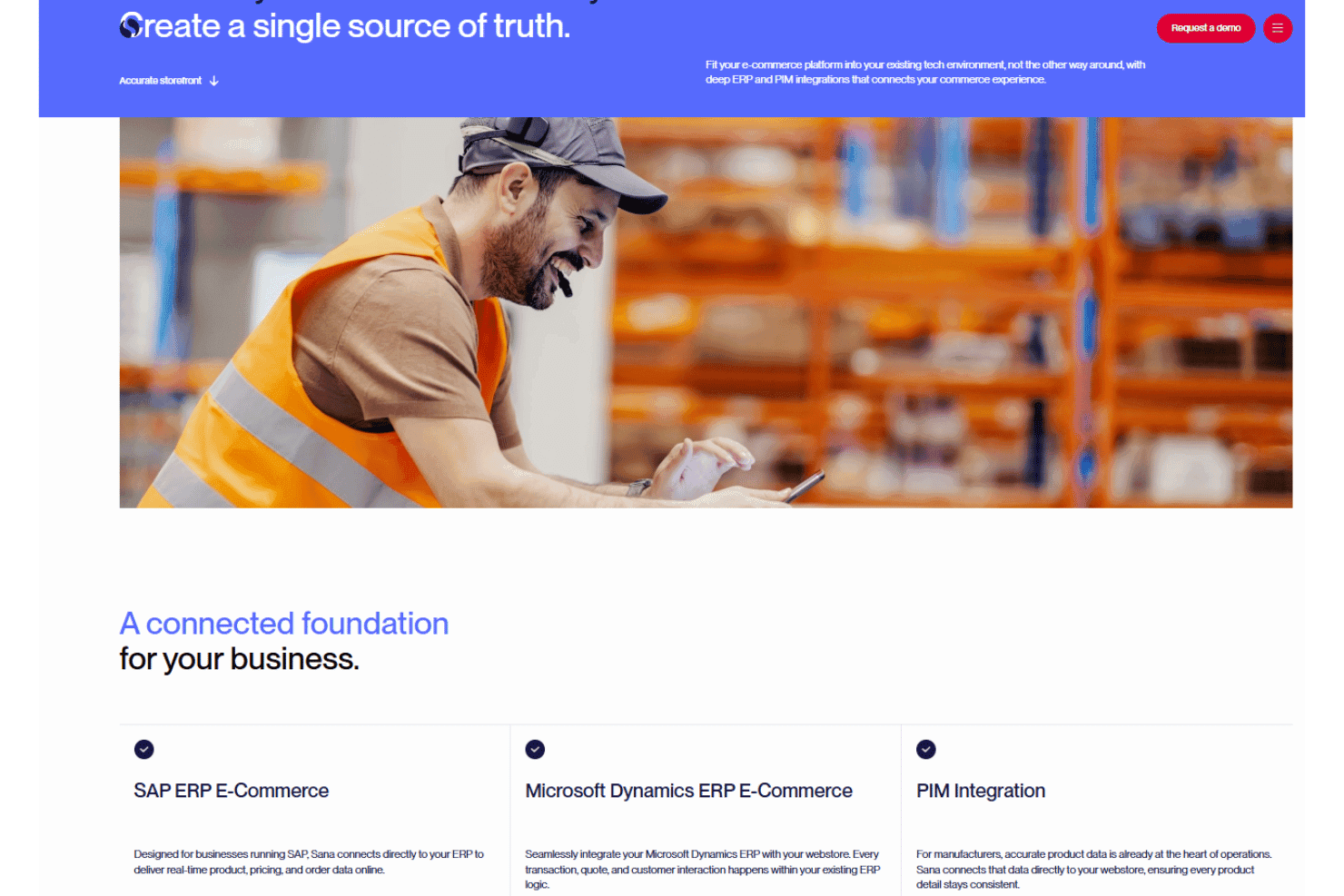
Sana Commerce Cloud is a b2b ecommerce platform built around native ERP integration. It's a strong fit for manufacturers, distributors, and wholesalers running SAP or Microsoft Dynamics as their system of record. When your ERP holds your pricing, inventory, and account data, Sana keeps that in sync with your storefront automatically. I'd consider it over OroCommerce if ERP connectivity matters more to you than customization flexibility. Sana Commerce Cloud trades some configurability for a tighter sync between your back-end systems and your buyer-facing storefront.
Sana Commerce Cloud Evaluation Summary
4.4/5
- Pricing upon request
- Free demo available
Perché fidarsi dei nostri consigli sui software
6,700+
Reviews
20
Industry experts
16+
Evaluation factors
14
Years
Il nostro team testa e recensisce software dal 2012. In quanto leader del retail noi stessi, sappiamo quanto sia difficile — e importante — scegliere il software giusto.
Per questa guida, abbiamo valutato gli strumenti attraverso test pratici e ricerche indipendenti, assegnando un punteggio agli strumenti in base ai nostri criteri di selezione.
Le nostre recensioni riflettono il nostro giudizio indipendente, non un discorso di vendita.
Sana Commerce Cloud Overview
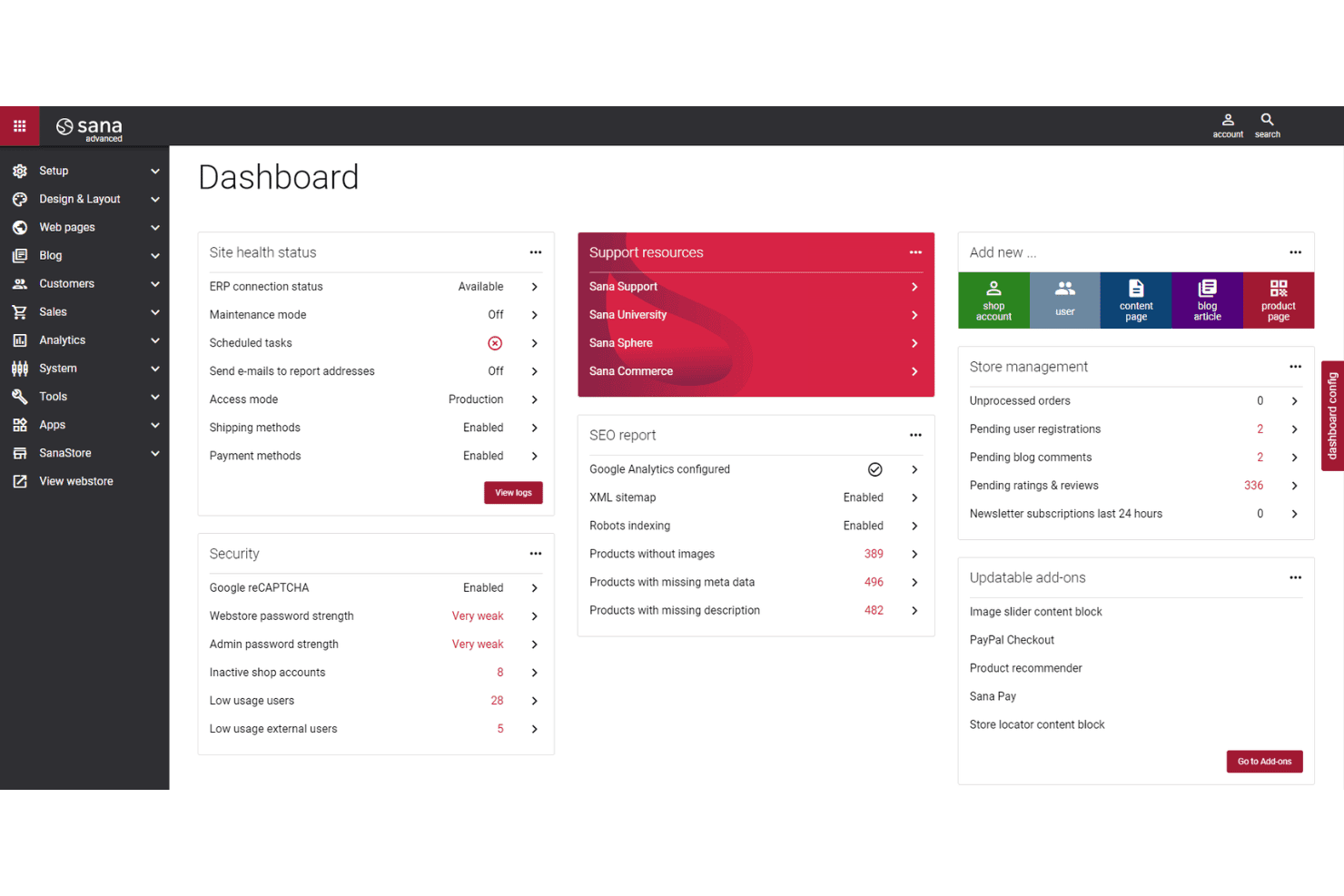
In my view, Sana Commerce Cloud stands out for ERP-driven automation and its deep order management features, though its pricing may feel steep if you’re running smaller catalogs. I judge its onboarding and support as above average, while its interface offers the clarity you’d want—especially when handling complex B2B transactions.
I recommend it most when tight ERP integration and real-time data matter more than fancy front-end tools. If your team depends on up-to-date inventory or contract pricing straight from your ERP, Sana Commerce Cloud is hard to beat.
Pros
- Real-time ERP synchronization minimizes manual entry errors.
- Advanced customer-specific pricing and catalog options.
- Strong multi-store management for complex B2B structures.
Cons
- Limited out-of-the-box analytics and reporting features.
- Fewer third-party plugins than some competitors.
- Initial setup can require significant involvement from IT.
Is Sana Commerce Cloud Right For Your Needs?
Who Would be a Good Fit for Sana Commerce Cloud?
Sana Commerce Cloud is a strong choice for businesses with complex B2B needs, especially those relying on ERP-driven workflows, multiple customer segments, and tailored catalogs. Manufacturers, distributors, and wholesalers who need to automate contract pricing, handle bulk ordering, and run several branded storefronts will find its real-time ERP integrations add unique value.
Teams that require granular customer control or integration with SAP or Microsoft Dynamics will appreciate the platform’s depth and reliability.
- Industrial ManufacturingComplex product catalogs and configurable assemblies benefit from ERP-driven order rules and dynamic bill of materials.
- Electrical DistributorsMultiple price lists, customer contracts, and fast bulk entry tools suit the demanding purchase cycles in this sector.
- Mid-Large EnterprisesSupports thousands of users, custom pricing agreements, and intricate workflows that require deep ERP synchronization.
- Multi-Brand RetailersCentralized backend allows operation of many storefronts for separate regions or brands without duplicating data.
- Automotive WholesaleHandles large, frequent repeat orders with real-time inventory checks and self-service order management.
- Procurement TeamsBenefit from accurate live pricing, account status, and purchase approval flows straight from the ERP.
Who Would be a Bad Fit for Sana Commerce Cloud?
Sana Commerce Cloud isn’t best for small, price-sensitive companies or retailers with simple catalogs and workflows. Businesses that don’t use Microsoft Dynamics or SAP, have minimal digital requirements, or focus on B2C will find the platform’s advanced ERP features excessive and setup efforts too high. High custom development needs or focus on rapid, low-touch onboarding may also pose challenges.
- Small StartupsSetup, cost, and complexity outweigh the platform’s benefits for businesses with limited products and smaller budgets.
- Simple B2C RetailLacks built-in tools and templates designed for direct-to-consumer ecommerce and rapid catalog changes.
- Non-ERP UsersValue is lost without integrations to supported ERPs like Microsoft Dynamics or SAP as manual management isn’t a fit.
- Digital AgenciesNo-code customization is limited, so agencies seeking design freedom or heavy custom storefronts will run into barriers.
- Specialty Food ShopsReal-time bulk ordering and contract pricing may be overkill for simple, product-driven storefronts.
- Fast Fashion BrandsThe B2B workflow focus doesn’t fit teams who prioritize visual merchandising and rapid seasonal product turnover.
La Nostra Metodologia di Recensione
Come Testiamo e Valutiamo gli Strumenti
Abbiamo trascorso anni a costruire, perfezionare e migliorare il nostro sistema di test e valutazione dei software. Il nostro schema di valutazione è progettato per cogliere le sfumature della selezione dei software e per comprendere cosa rende uno strumento efficace, concentrandosi su aspetti critici del processo decisionale. Qui sotto puoi vedere esattamente come funzionano i nostri test e valutazioni attraverso sette criteri. Questo ci permette di fornire una valutazione imparziale del software basata su funzionalità principali, caratteristiche distintive, facilità d’uso, onboarding, supporto clienti, integrazioni, recensioni dei clienti e rapporto qualità-prezzo.
Funzionalità di base (25% della valutazione finale)
Il punto di partenza della nostra valutazione è sempre la funzionalità principale dello strumento. Ha le funzioni e le caratteristiche di base che un utente si aspetterebbe? Alcune di queste funzionalità sono bloccate a piani tariffari di livello superiore? Alla base, ci aspettiamo che uno strumento regga il confronto con le capacità minime dei suoi concorrenti.
Caratteristiche distintive (25% della valutazione finale)
Successivamente valutiamo caratteristiche distintive e non comuni che vadano oltre la normale funzionalità presente in strumenti simili. Un punteggio alto riflette funzionalità specializzate o uniche che rendono il prodotto più veloce, efficiente o che offrano valore aggiunto all’utente. Valutiamo anche quanto sia facile integrare il software con altri strumenti della consueta infrastruttura tecnologica per espanderne la funzionalità e l’utilità. Gli strumenti che offrono molte integrazioni native, connessioni di terze parti e accesso API per costruire integrazioni personalizzate ottengono il punteggio più alto.
Facilità d’uso (10% della valutazione finale)
Consideriamo quanto sia rapido e semplice eseguire le attività definite nelle funzionalità di base utilizzando lo strumento. I software che ottengono un punteggio alto sono ben progettati, intuitivi, offrono app mobili, modelli pronti e rendono compiti complessi relativamente semplici.
Onboarding (10% della valutazione finale)
Sappiamo quanto sia importante una rapida adozione da parte del team per una nuova piattaforma, quindi valutiamo quanto sia facile imparare a usare uno strumento con una formazione minima. Esaminiamo quanto tempo impiega un membro del team a configurarsi e iniziare a utilizzare lo strumento senza esperienza. Le soluzioni con punteggi elevati richiedono poco o nessun supporto.
Supporto clienti (10% della valutazione finale)
Valutiamo quanto sia rapido e facile ricevere assistenza e trovare aiuto tramite telefono, live chat o base di conoscenza. Gli strumenti e le aziende che forniscono un supporto in tempo reale ottengono i punteggi migliori, mentre i chatbot hanno i punteggi più bassi.
Recensioni dei clienti (10% della valutazione finale)
Oltre ai nostri test e valutazioni, consideriamo il net promoter score dei clienti attuali e passati. Esaminiamo la loro propensione, data la possibilità, a scegliere nuovamente lo strumento per le sue funzionalità di base. Un punteggio elevato riflette un alto net promoter score da clienti attuali o passati.
Rapporto qualità-prezzo (10% della valutazione finale)
Infine, considerando tutti gli altri criteri, valutiamo il prezzo medio dei piani base rispetto alle funzionalità fondamentali e teniamo in considerazione il valore degli altri criteri di valutazione. Il software che offre di più, a meno, ottiene punteggi più alti.
Core Features
Real-Time ERP Integration
Sync your ecommerce site directly with ERP data for instant product, pricing, and inventory updates. This enables complex ordering, accurate contract pricing, and live account details.
Customer-Specific Catalogs and Pricing
Set personalized product assortments and custom pricing for each account. Users can provide negotiated rates and unique product access for every business partner.
Advanced Order Management
Automate quote-to-order and repeat ordering processes with rules tied directly to ERP workflows. Buyers can place, edit, or reorder complex bulk orders in minutes.
Multi-Store Management
Operate multiple branded storefronts from a single backend. Manage region, channel, or brand-specific stores without duplicating core data or processes.
Quick Order Entry and Bulk Purchasing
Support customers who already know product codes and quantities with fast input grids. This feature saves time and fits industrial or wholesale buying workflows.
B2B Self-Service Portal
Give buyers access to order history, invoices, returns, and shipment tracking. Your customers get full visibility into all transactions and live account status.
Ease of Use
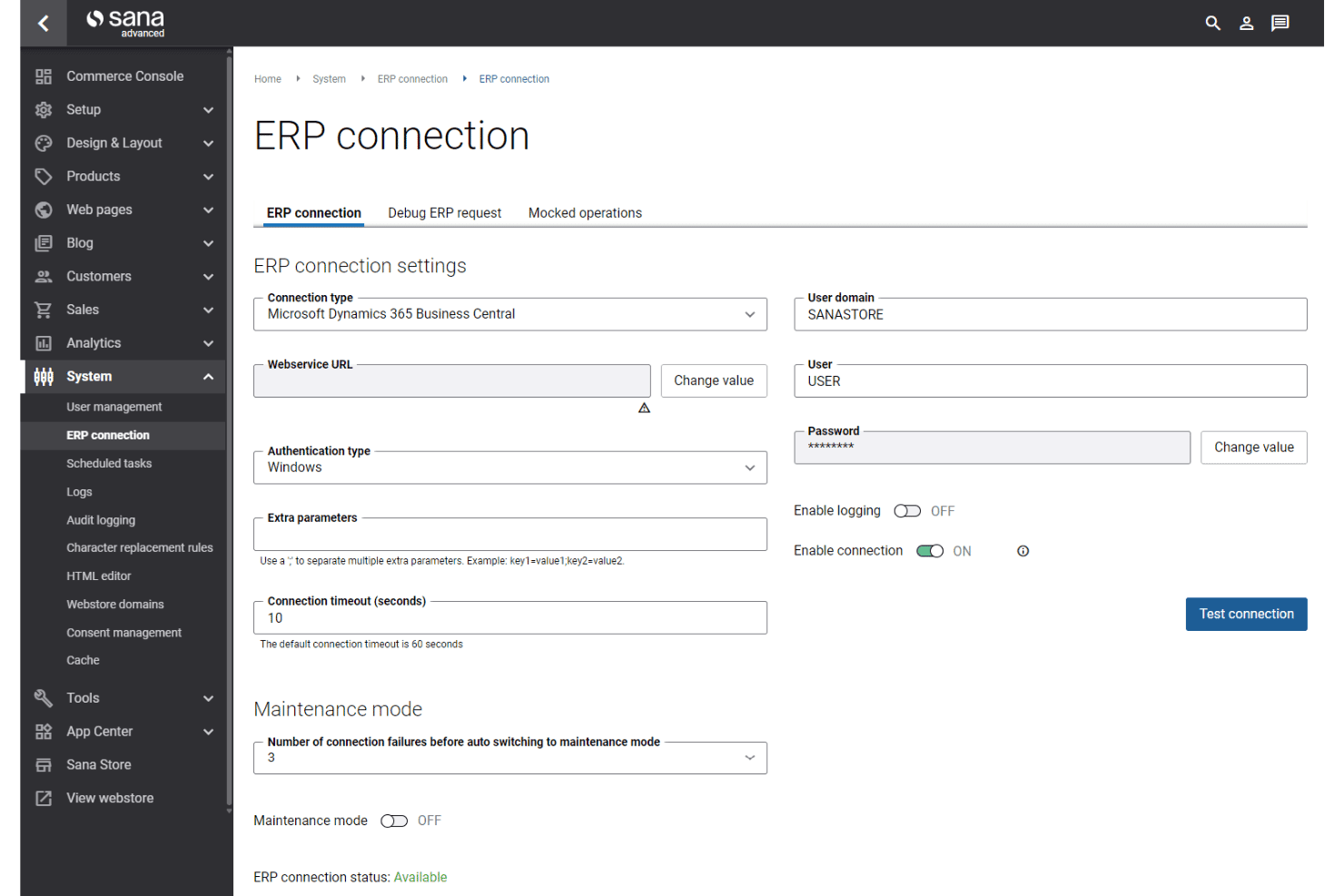
Sana Commerce Cloud delivers a user experience tailored for B2B complexity—navigation is crisp, and all key actions are anchored in real-time ERP logic, so users access accurate inventory, pricing, and order status with minimal clicks.
I’ve seen praise for its customer-specific storefronts and self-service dashboards, which help teams avoid confusion and speed up large, repeat orders.
Integrations
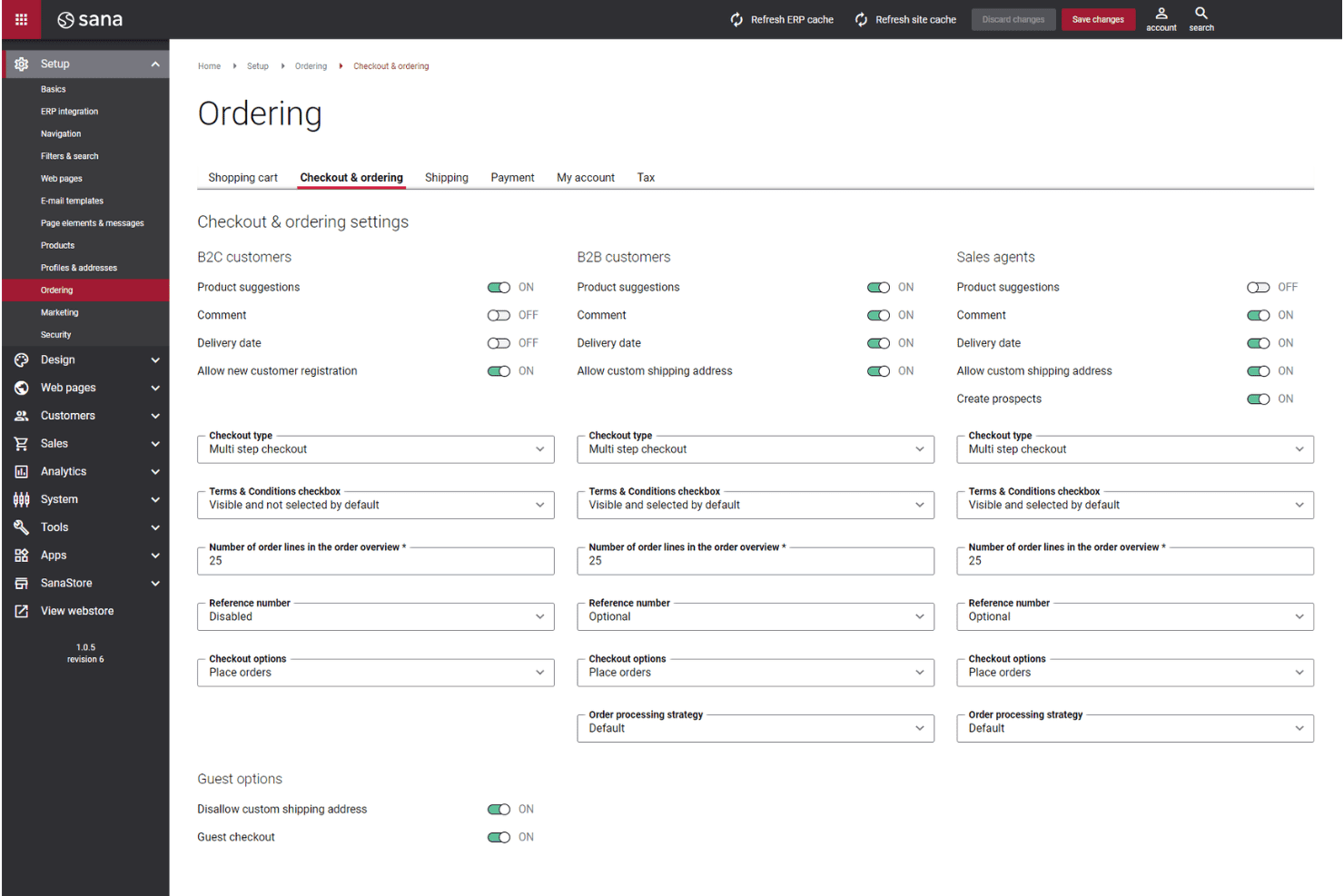
Sana Commerce Cloud integrates with Microsoft Dynamics 365 Finance & Operations, Microsoft Dynamics 365 Business Central, Microsoft Dynamics AX, Microsoft Dynamics NAV, SAP ECC, SAP S/4HANA, SAP Business One, FedEx, UPS, and Avalara, among others.
Sana Commerce Cloud also offers a robust API and supports connections with various third-party tools.
Sana Commerce Cloud Specs
- 2-Factor Authentication: Yes
- A/B Testing: No
- Analytics: Yes
- API: Yes
- BitCoin: No
- Conversion Tracking: Yes
- Dashboard: Yes
- Data Export: Yes
- Data Import: Yes
- Data Visualization: Yes
- Design Templates: Yes
- External Integrations: Yes
- Inventory Tracking: Yes
- Keyword Tracking: No
- Marketing Automation: Yes
- Multi-User: Yes
- Notifications: Yes
- Order Management: Yes
- Payment Gateway Integration: Yes
- Payment Processor: Yes
- PayPal: Yes
- Product Catalog: Yes
- Review Monitoring: No
- SAP Integration: Yes
- Scheduling: No
- Stripe: No
- Third-Party Plugins/Add-Ons: Yes


