
Recensione di Bottle POS: vantaggi, svantaggi, funzionalità e prezzi spiegati



Bottle POS is a POS system built specifically for liquor stores, bottle shops, and wine retailers. If you're running a beverage alcohol business, you need features like age verification, case break pricing, and bottle deposit tracking built in—not bolted on. I'd reach for Bottle POS over a general retail tool like Lightspeed if your operation depends on those liquor-specific workflows rather than configuring workarounds to get there.
Bottle POS Evaluation Summary
- From $59/month
- Free demo available
Perché fidarsi dei nostri consigli sui software
Il nostro team testa e recensisce software dal 2012. In quanto leader del retail noi stessi, sappiamo quanto sia difficile — e importante — scegliere il software giusto.
Per questa guida, abbiamo valutato gli strumenti attraverso test pratici e ricerche indipendenti, assegnando un punteggio agli strumenti in base ai nostri criteri di selezione.
Le nostre recensioni riflettono il nostro giudizio indipendente, non un discorso di vendita.
Bottle POS Overview
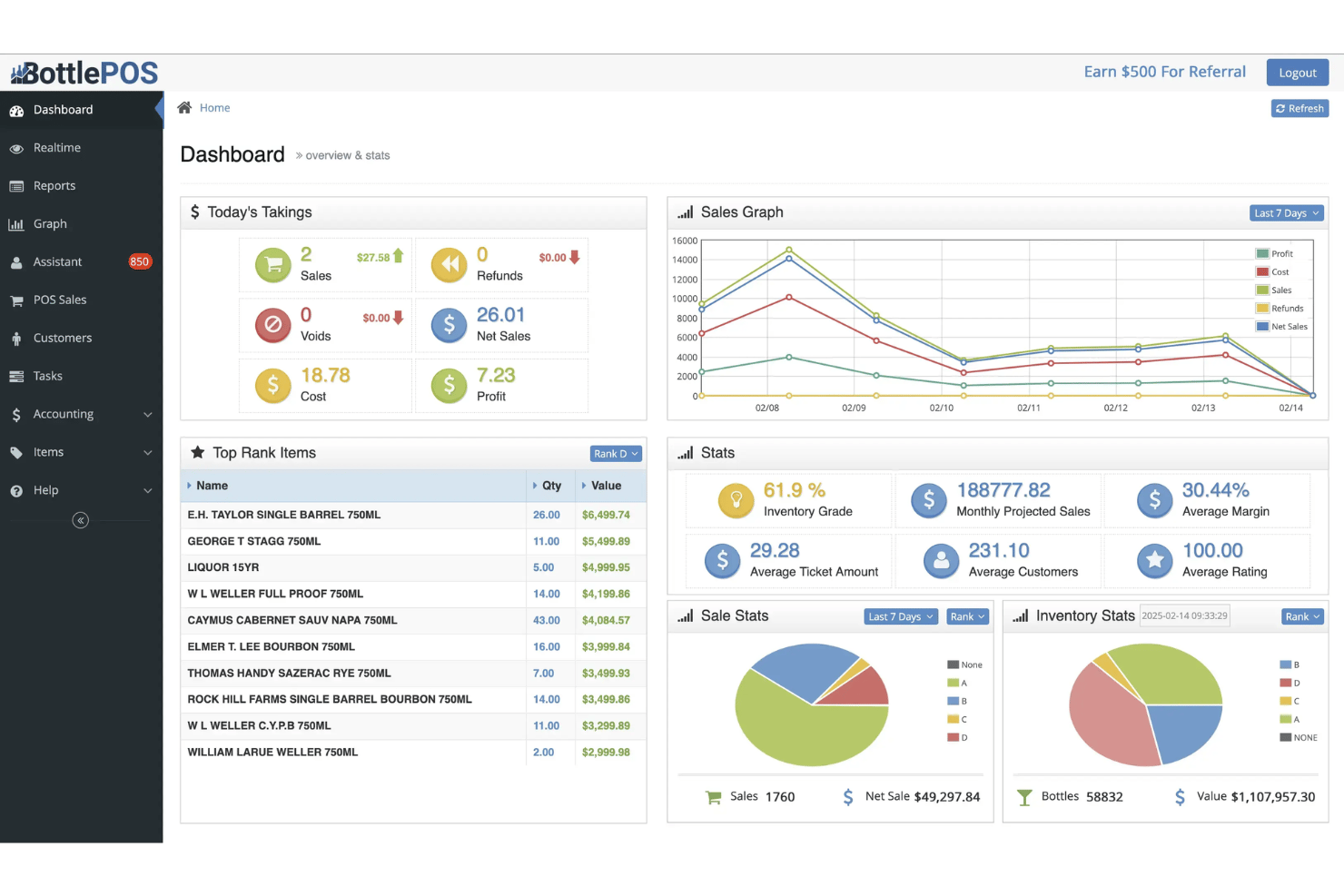
Bottle POS stands out for its liquor-specific features, including automated state reporting, AI invoice processing, case-break inventory management, and integrated age verification. It also offers real-time inventory tracking, mix-and-match promotions, and multi-store management tailored for alcohol retailers. The platform pairs with purpose-built hardware like ID scanners and bottle-optimized barcode scanners to streamline compliance, checkout, and inventory workflows.
If you’re choosing a POS system for a busy liquor store where inventory accuracy, compliance, barcode scanning, and alcohol-specific workflows matter most, Bottle POS is a highly specialized option built around those operational needs.
pros
-
Compliance features help stores manage age verification and regulatory requirements.
-
Real-time inventory sync across multiple registers.
-
Liquor store barcode catalog matches common brews and spirits.
cons
-
Fewer third-party app integrations than most competitors.
-
Mandatory payment processing agreements limit flexibility for merchant payment provider choices.
-
Hardware compatibility options are somewhat restrictive.
La Nostra Metodologia di Recensione
Come Testiamo e Valutiamo gli Strumenti
Abbiamo trascorso anni a costruire, perfezionare e migliorare il nostro sistema di test e valutazione dei software. Il nostro schema di valutazione è progettato per cogliere le sfumature della selezione dei software e per comprendere cosa rende uno strumento efficace, concentrandosi su aspetti critici del processo decisionale. Qui sotto puoi vedere esattamente come funzionano i nostri test e valutazioni attraverso sette criteri. Questo ci permette di fornire una valutazione imparziale del software basata su funzionalità principali, caratteristiche distintive, facilità d’uso, onboarding, supporto clienti, integrazioni, recensioni dei clienti e rapporto qualità-prezzo.
Funzionalità di base (25% della valutazione finale)
Il punto di partenza della nostra valutazione è sempre la funzionalità principale dello strumento. Ha le funzioni e le caratteristiche di base che un utente si aspetterebbe? Alcune di queste funzionalità sono bloccate a piani tariffari di livello superiore? Alla base, ci aspettiamo che uno strumento regga il confronto con le capacità minime dei suoi concorrenti.
Caratteristiche distintive (25% della valutazione finale)
Successivamente valutiamo caratteristiche distintive e non comuni che vadano oltre la normale funzionalità presente in strumenti simili. Un punteggio alto riflette funzionalità specializzate o uniche che rendono il prodotto più veloce, efficiente o che offrano valore aggiunto all’utente. Valutiamo anche quanto sia facile integrare il software con altri strumenti della consueta infrastruttura tecnologica per espanderne la funzionalità e l’utilità. Gli strumenti che offrono molte integrazioni native, connessioni di terze parti e accesso API per costruire integrazioni personalizzate ottengono il punteggio più alto.
Facilità d’uso (10% della valutazione finale)
Consideriamo quanto sia rapido e semplice eseguire le attività definite nelle funzionalità di base utilizzando lo strumento. I software che ottengono un punteggio alto sono ben progettati, intuitivi, offrono app mobili, modelli pronti e rendono compiti complessi relativamente semplici.
Onboarding (10% della valutazione finale)
Sappiamo quanto sia importante una rapida adozione da parte del team per una nuova piattaforma, quindi valutiamo quanto sia facile imparare a usare uno strumento con una formazione minima. Esaminiamo quanto tempo impiega un membro del team a configurarsi e iniziare a utilizzare lo strumento senza esperienza. Le soluzioni con punteggi elevati richiedono poco o nessun supporto.
Supporto clienti (10% della valutazione finale)
Valutiamo quanto sia rapido e facile ricevere assistenza e trovare aiuto tramite telefono, live chat o base di conoscenza. Gli strumenti e le aziende che forniscono un supporto in tempo reale ottengono i punteggi migliori, mentre i chatbot hanno i punteggi più bassi.
Recensioni dei clienti (10% della valutazione finale)
Oltre ai nostri test e valutazioni, consideriamo il net promoter score dei clienti attuali e passati. Esaminiamo la loro propensione, data la possibilità, a scegliere nuovamente lo strumento per le sue funzionalità di base. Un punteggio elevato riflette un alto net promoter score da clienti attuali o passati.
Rapporto qualità-prezzo (10% della valutazione finale)
Infine, considerando tutti gli altri criteri, valutiamo il prezzo medio dei piani base rispetto alle funzionalità fondamentali e teniamo in considerazione il valore degli altri criteri di valutazione. Il software che offre di più, a meno, ottiene punteggi più alti.
Core Features
Smart Barcode Catalog
Bottle POS auto-recognizes thousands of beer, wine, and liquor barcodes. Cashiers scan items and see instant product info for fast checkout.
Age Verification at Checkout
The system prompts for ID when required by law. Operators can’t process restricted sales without a valid scan or entry.
Real-Time Inventory Tracking
Inventory adjustments sync instantly as items sell or restock. Staff always see current stock, even across multiple registers.
Custom Mix-and-Match Promotions
Set case discounts, BOGO deals, or multi-pack pricing. Promotions auto-apply based on cart combinations at checkout.
Shelf Tag and Label Printing
Print product tags and labels directly from the dashboard. Tags include names, pricing, and scannable barcodes for shelf accuracy.
Multi-Store Management
Manage multiple locations from a single login. View sales, transfer inventory, and update prices across all stores at once.
Ease of Use
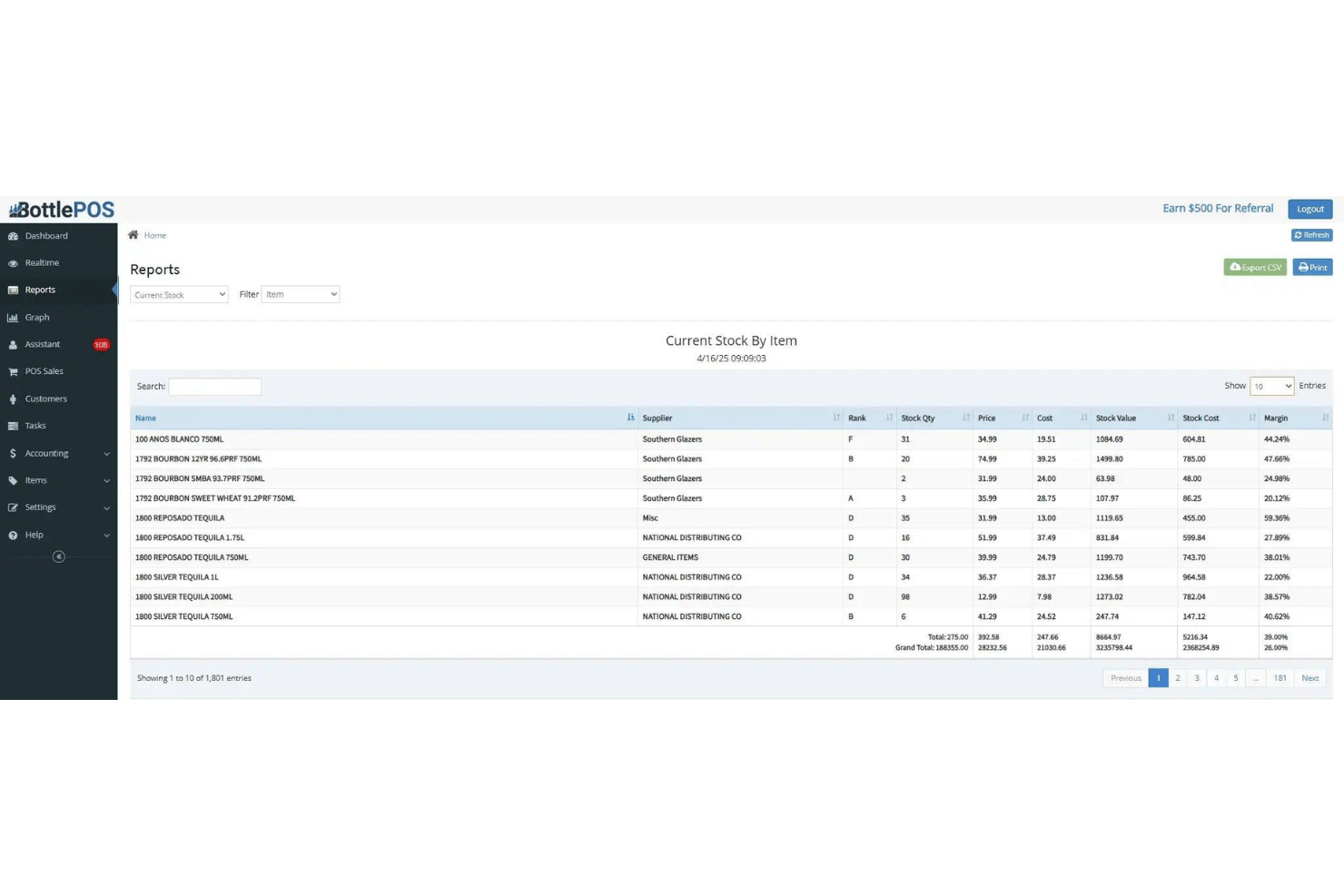
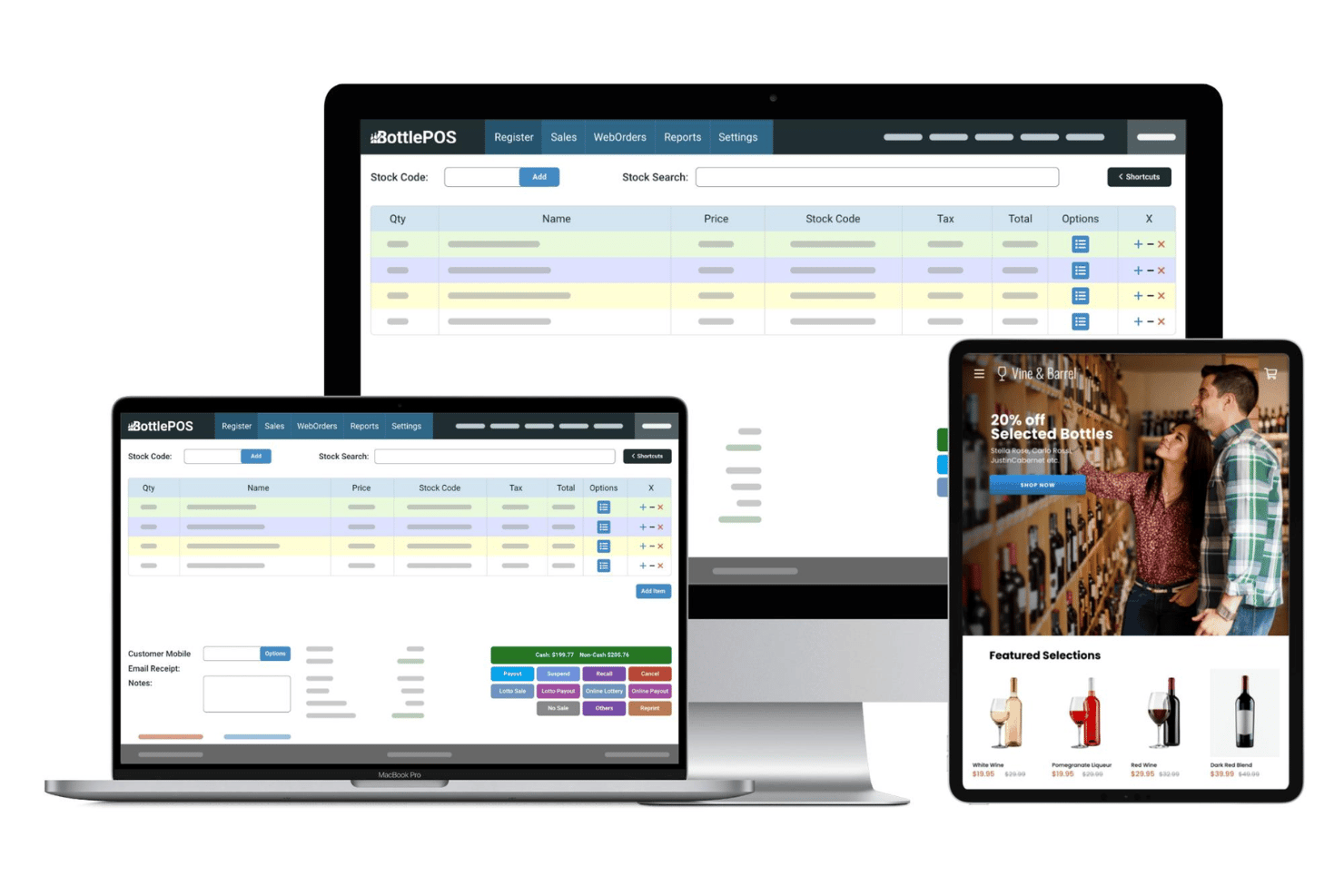
Bottle POS feels purpose-built for liquor retail, with workflows designed around age checks, barcode scanning, and fast-moving inventory. I think the interface is uncluttered and direct—cashiers scan bottles and get instant results, and the touchpoints for setting discounts or printing labels are simple, not buried in menus. Users consistently mention that staff learn it in one shift.
Integrations
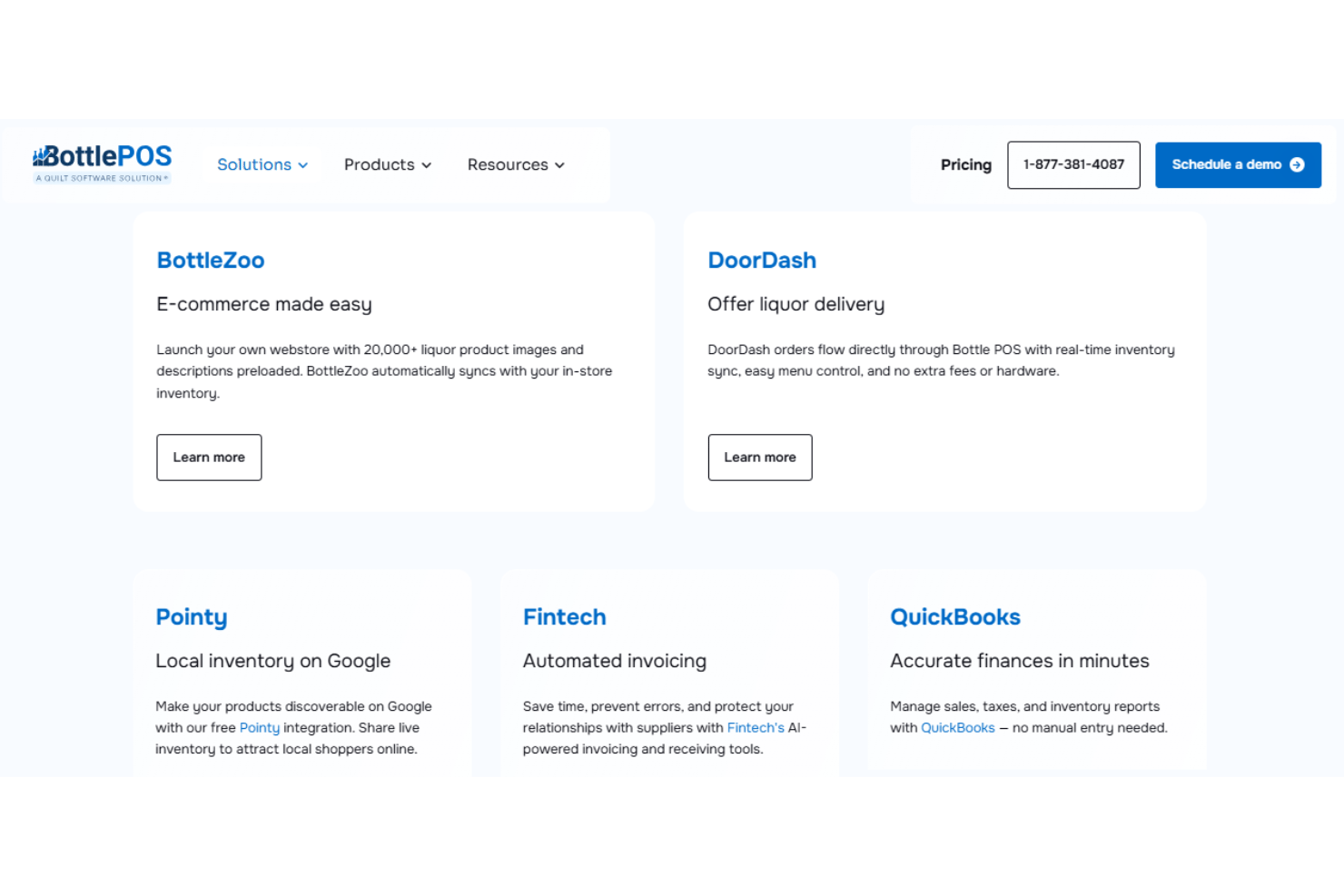
Bottle POS integrates with QuickBooks, Fintech, Pointy, BottleZoo, DoorDash, CityHive, BottleCapps, Google, and Monroe Package, among others.
Bottle POS does not advertise an open API, and its integrations are built-in rather than relying on third-party integration tools.
Bottle POS Specs
- 2-Factor Authentication
- API
- Barcode Scanning
- BitCoin
- Budgeting
- Contact Management
- Custom Reports
- Customer Management
- Customer Rewards
- Dashboard
- Data Export
- Data Import
- Data Visualization
- External Integrations
- Forecasting
- Fraud Detection
- Inventory Tracking
- Multi-Currency
- Multi-User
- Notifications
- Offline Access
- Order Management
- Payment Processor
- PayPal
- Stripe
- Supplier Management
- Tax Management
- Third-Party Plugins/Add-Ons
- Workflow Management