

Avis sur la gestion des commandes SAP : avantages, inconvénients, fonctionnalités et tarifs
La gestion des commandes SAP est conçue pour les grandes entreprises qui gèrent des commandes complexes et omnicanales. Qu'est-ce qui la distingue ? Une automatisation de bout en bout, une intégration approfondie et la capacité à traiter d'importants volumes de commandes — à condition de pouvoir supporter l'intégration initiale.

Nous évaluons les outils de façon indépendante, et les commissions contribuent à financer nos tests. Consultez notre politique de transparence, notre méthodologie, ou suggérez un outil.
SAP Order Management is order management system software built for enterprise retailers and B2B distributors managing high-volume, multi-channel order flows across complex fulfillment networks. I'd consider it specifically if your business already runs on SAP—the native integration with SAP S/4HANA and SAP Commerce Cloud gives you order orchestration depth that a standalone tool like Manhattan Active Omni can't replicate without significant middleware and custom configuration.
SAP Order Management Evaluation Summary

0/5
- From block-based pricing per 10,000 transactions per year
- Free demo available
Pourquoi faire confiance à nos recommandations de logiciels
6,700+
Reviews
20
Industry experts
16+
Evaluation factors
14
Years
Notre équipe teste et évalue des logiciels depuis 2012. En tant que dirigeants du commerce de détail nous-mêmes, nous savons à quel point il est difficile — et important — de choisir le bon logiciel.
Pour ce guide, nous avons évalué les outils grâce à des tests pratiques et une recherche indépendante, en notant les outils selon nos critères de sélection.
Nos avis reflètent notre jugement indépendant — et non un argumentaire de vente.
SAP Order Management Overview
SAP Order Management is the order management system that operators turn to when their ecommerce or retail business has moved past basic order management and quick fixes.
If you’re running into backorders, inventory mismatches, or too much manual work just to fulfill customer orders, you know the stakes: real operational headaches, not just abstract process “challenges.”
For retailers, order management is about aligning your supply chain, inventory, and fulfillment teams so customers aren’t left waiting—and neither are your margins.
In this review, you’ll find a clear-eyed look at SAP Order Management’s functionality, key features, pros and cons, and which types of operations it actually serves best.
If you’re weighing robust, enterprise-grade automation against usability and cost, this guide will help you make an informed decision.
Pros
- Scalable for large enterprises, handling high order volumes and complex supply chains.
- Automated workflows reduce manual tasks and improve order fulfillment speed.
- Customizable processes allow you to tailor workflows to your business needs.
Cons
- Outdated user interface can slow your team down and isn’t always intuitive.
- Onboarding is challenging and requires significant time and guidance.
- Steep learning curve means your team will need time to fully adapt.
Is SAP Order Management Right For Your Needs?
Who Would be a Good Fit for SAP Order Management?
SAP Order Management is a strong fit for large retail or ecommerce operations dealing with complex supply chains and high order volumes.
Enterprises that need scalable solutions and automated workflows to efficiently manage order management processes will see the most value.
If your business requires customizable workflows that align with specific operational needs—and you have the resources for implementation and training—SAP Order Management makes sense.
- LARGE ENTERPRISESBuilt to manage high order volumes and complex operations without breaking a sweat.
- RETAIL INDUSTRYStreamlines order processing and fulfillment, improving customer satisfaction across channels.
- MANUFACTURING SECTORRobust inventory management and integration with supply chain processes.
- SUPPLY CHAIN TEAMSAutomation features reduce manual errors and improve operational efficiency.
- OPERATIONS DEPARTMENTSCustomizable workflows let teams align order management with company objectives.
- LOGISTICS MANAGERSComprehensive tracking features provide better visibility and control over shipments.
Who Would be a Bad Fit for SAP Order Management?
Small businesses or startups with straightforward order processes and limited resources will likely find SAP Order Management too complex and resource-intensive.
Teams looking for a quick, plug-and-play solution without extensive onboarding or training should look elsewhere. If your company is focused on low cost and simplicity over advanced functionality, this system isn’t the right choice.
- SMALL BUSINESSESComplexity and depth are overkill for simple or lower-volume operations.
- STARTUPSSteep learning curve and resource demands can hinder fast-moving, lean teams.
- SIMPLE RETAILERSStraightforward processes don’t need SAP’s advanced capabilities.
- SOLO ENTREPRENEURSEnterprise-level features offer little value to one-person operations.
- NON-TECHNICAL TEAMSComplex interface can be difficult to navigate without technical support.
- COST-CONSCIOUS COMPANIESHigh cost and extensive features may not justify the investment.
Core Features
- Order tracking. Real-time order management lets your team follow customer orders from placement to delivery, so nothing falls through the cracks.
- Inventory management. End-to-end inventory visibility helps optimize stock levels, reduce overselling, and maintain accurate real-time inventory across channels.
- Automated workflows. Automation handles repetitive tasks and streamlines order management processes, improving order fulfillment speed and accuracy.
- Customer management. Consolidate customer data to personalize the customer experience and drive higher customer satisfaction in ecommerce and retail.
- Reporting and analytics. SAP Analytics Cloud integration provides deep insights into sales order trends, profitability, and performance across your business.
- Multichannel support. Manage orders from all your sales channels—including ecommerce, retail, and omnichannel—in one backend system.
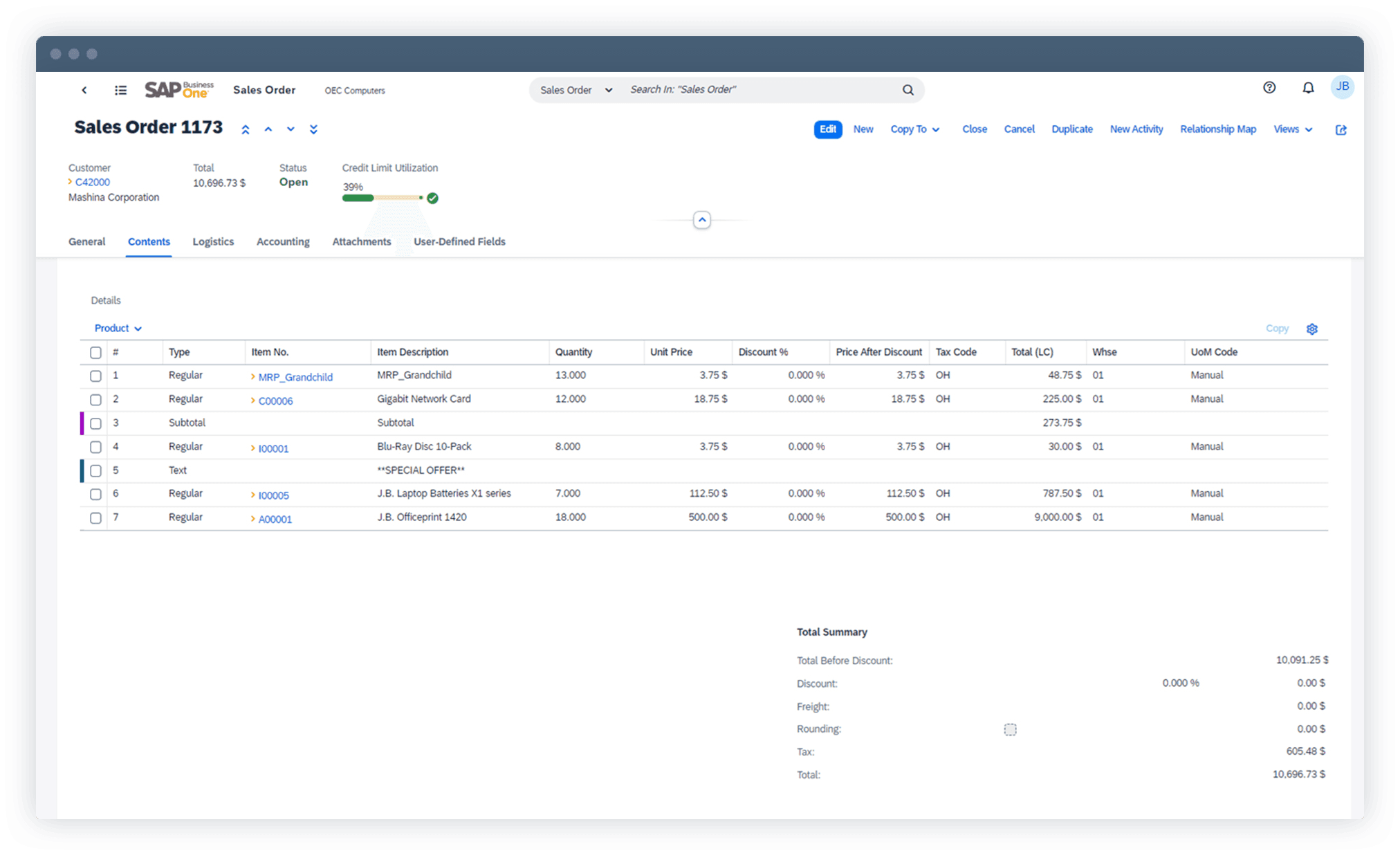
Ease of Use
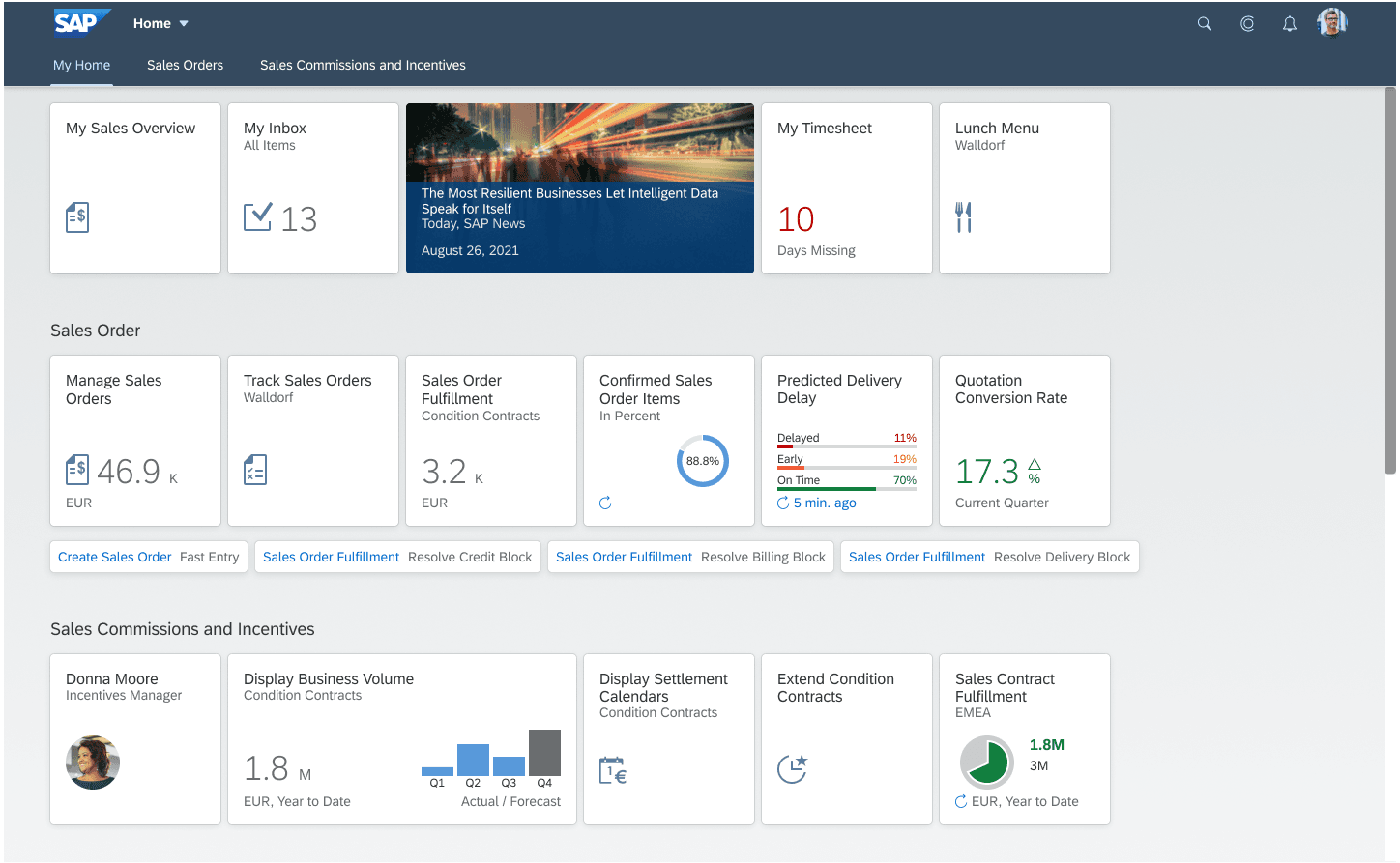
SAP Order Management isn’t winning any awards for user experience. The interface feels stuck in another decade, and first-time users—especially those without SAP background—will hit a learning curve.
If your team is used to modern, intuitive cloud platforms, expect some grumbling. The payoff? Once you’re past the friction, the system’s real-time capabilities and automation can genuinely streamline even the messiest order management processes.
SAP Order Management Specs
- API: No
- BitCoin: No
- Contact Management: No
- Customer Management: No
- Data Export: No
- Data Import: No
- External Integrations: No
- Inventory Tracking: No
- Lead Management: No
- Lead Scoring: No
- Multi-User: No
- Notifications: No
- Order Management: No
- Route Optimization: No
- SAP Integration: No
- Shipping Management: No
- Supplier Management: No
SAP Order Management FAQs
Et maintenant ?
Si votre activité de commerce électronique ou de commerce de détail se heurte enfin aux limites d’une gestion basique des commandes — et que le coût des problèmes opérationnels augmente — SAP Order Management s’impose comme une solution de niveau entreprise.
Ce n’est pas le système le plus facile à apprendre ni le plus rapide à mettre en place, mais pour les équipes qui ont besoin d’une automatisation de bout en bout, d’une visibilité en temps réel sur les stocks et de la puissance nécessaire pour soutenir des ventes mondiales et omnicanales, il tient ses promesses.
Pour les responsables qui recherchent une solution légère, rapide et peu coûteuse, mieux vaut regarder ailleurs.
Mais si vous dirigez une entreprise à fort volume et êtes prêt à investir dans des fonctionnalités robustes, SAP Order Management est l’une des rares plateformes conçues pour accompagner votre envergure.
Le commerce de détail ne s’arrête jamais — et vous ne devriez pas rester immobile non plus. Abonnez-vous à notre newsletter pour découvrir les dernières analyses, stratégies et ressources professionnelles proposées par les principaux dirigeants du commerce de détail qui façonnent le secteur.