

Avis sur Sana Commerce Cloud : avantages, inconvénients, fonctionnalités et tarifs
Si vous recherchez une intégration fluide à votre ERP et souhaitez bénéficier d’une véritable flexibilité B2B, Sana Commerce Cloud montre pourquoi il s’agit de bien plus qu’une simple plateforme de commerce électronique — voici ce qui la distingue.

Nous évaluons les outils de façon indépendante, et les commissions contribuent à financer nos tests. Consultez notre politique de transparence, notre méthodologie, ou suggérez un outil.
Sana Commerce Cloud is a b2b ecommerce platform built around native ERP integration. It's a strong fit for manufacturers, distributors, and wholesalers running SAP or Microsoft Dynamics as their system of record. When your ERP holds your pricing, inventory, and account data, Sana keeps that in sync with your storefront automatically. I'd consider it over OroCommerce if ERP connectivity matters more to you than customization flexibility. Sana Commerce Cloud trades some configurability for a tighter sync between your back-end systems and your buyer-facing storefront.
Sana Commerce Cloud Evaluation Summary
4.4/5
- Pricing upon request
- Free demo available
Pourquoi faire confiance à nos recommandations de logiciels
6,700+
Reviews
20
Industry experts
16+
Evaluation factors
14
Years
Notre équipe teste et évalue des logiciels depuis 2012. En tant que dirigeants du commerce de détail nous-mêmes, nous savons à quel point il est difficile — et important — de choisir le bon logiciel.
Pour ce guide, nous avons évalué les outils grâce à des tests pratiques et une recherche indépendante, en notant les outils selon nos critères de sélection.
Nos avis reflètent notre jugement indépendant — et non un argumentaire de vente.
Sana Commerce Cloud Overview
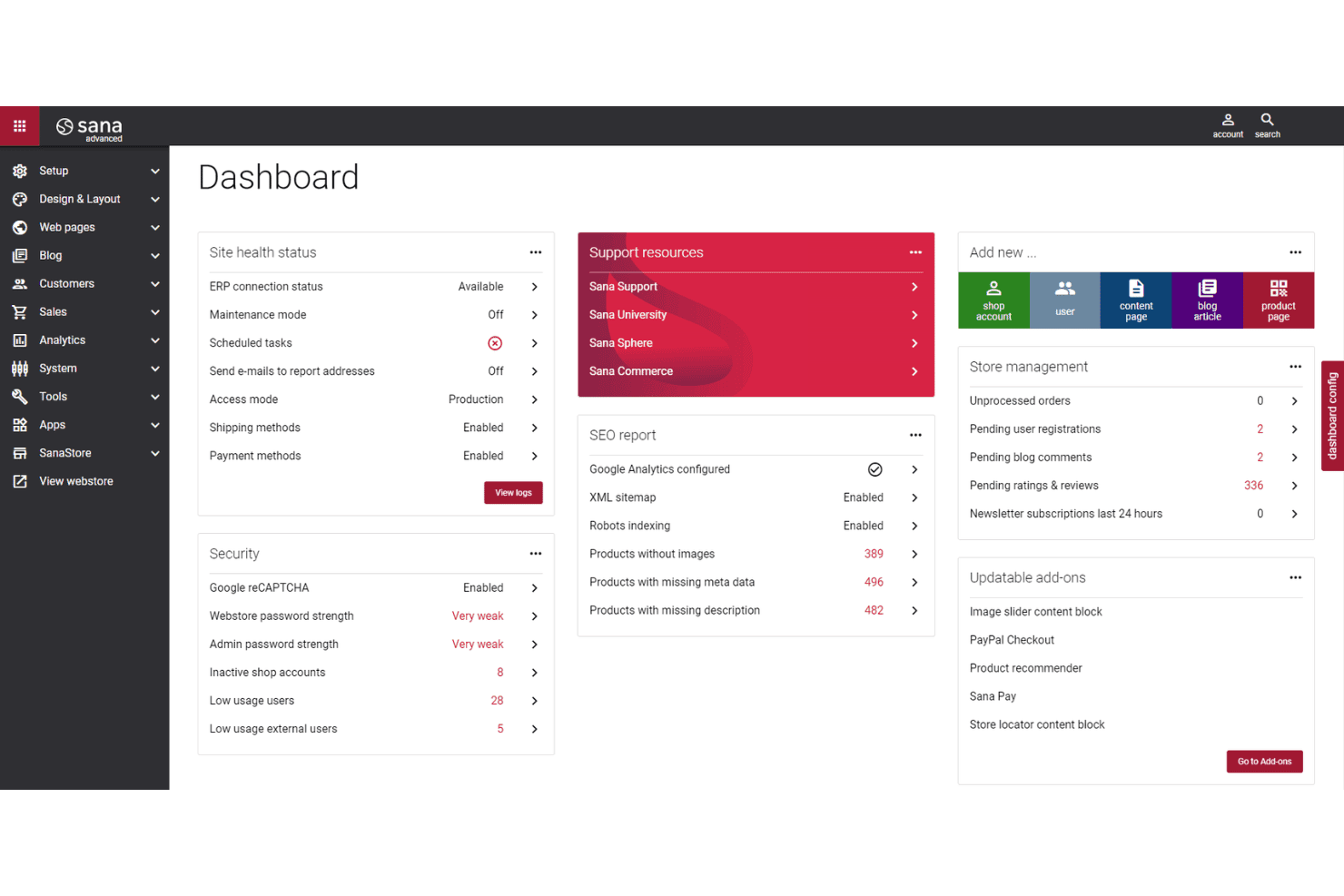
In my view, Sana Commerce Cloud stands out for ERP-driven automation and its deep order management features, though its pricing may feel steep if you’re running smaller catalogs. I judge its onboarding and support as above average, while its interface offers the clarity you’d want—especially when handling complex B2B transactions.
I recommend it most when tight ERP integration and real-time data matter more than fancy front-end tools. If your team depends on up-to-date inventory or contract pricing straight from your ERP, Sana Commerce Cloud is hard to beat.
Pros
- Real-time ERP synchronization minimizes manual entry errors.
- Advanced customer-specific pricing and catalog options.
- Strong multi-store management for complex B2B structures.
Cons
- Limited out-of-the-box analytics and reporting features.
- Fewer third-party plugins than some competitors.
- Initial setup can require significant involvement from IT.
Is Sana Commerce Cloud Right For Your Needs?
Who Would be a Good Fit for Sana Commerce Cloud?
Sana Commerce Cloud is a strong choice for businesses with complex B2B needs, especially those relying on ERP-driven workflows, multiple customer segments, and tailored catalogs. Manufacturers, distributors, and wholesalers who need to automate contract pricing, handle bulk ordering, and run several branded storefronts will find its real-time ERP integrations add unique value.
Teams that require granular customer control or integration with SAP or Microsoft Dynamics will appreciate the platform’s depth and reliability.
- Industrial ManufacturingComplex product catalogs and configurable assemblies benefit from ERP-driven order rules and dynamic bill of materials.
- Electrical DistributorsMultiple price lists, customer contracts, and fast bulk entry tools suit the demanding purchase cycles in this sector.
- Mid-Large EnterprisesSupports thousands of users, custom pricing agreements, and intricate workflows that require deep ERP synchronization.
- Multi-Brand RetailersCentralized backend allows operation of many storefronts for separate regions or brands without duplicating data.
- Automotive WholesaleHandles large, frequent repeat orders with real-time inventory checks and self-service order management.
- Procurement TeamsBenefit from accurate live pricing, account status, and purchase approval flows straight from the ERP.
Who Would be a Bad Fit for Sana Commerce Cloud?
Sana Commerce Cloud isn’t best for small, price-sensitive companies or retailers with simple catalogs and workflows. Businesses that don’t use Microsoft Dynamics or SAP, have minimal digital requirements, or focus on B2C will find the platform’s advanced ERP features excessive and setup efforts too high. High custom development needs or focus on rapid, low-touch onboarding may also pose challenges.
- Small StartupsSetup, cost, and complexity outweigh the platform’s benefits for businesses with limited products and smaller budgets.
- Simple B2C RetailLacks built-in tools and templates designed for direct-to-consumer ecommerce and rapid catalog changes.
- Non-ERP UsersValue is lost without integrations to supported ERPs like Microsoft Dynamics or SAP as manual management isn’t a fit.
- Digital AgenciesNo-code customization is limited, so agencies seeking design freedom or heavy custom storefronts will run into barriers.
- Specialty Food ShopsReal-time bulk ordering and contract pricing may be overkill for simple, product-driven storefronts.
- Fast Fashion BrandsThe B2B workflow focus doesn’t fit teams who prioritize visual merchandising and rapid seasonal product turnover.
Notre méthodologie d'évaluation
Comment nous testons et notons les outils
Nous avons passé des années à construire, affiner et améliorer notre système de test et de notation des logiciels. Notre grille d’évaluation est conçue pour prendre en compte toutes les subtilités du choix d’un logiciel et identifier ce qui rend un outil efficace, en se concentrant sur les aspects essentiels du processus de décision. Vous pouvez voir ci-dessous comment fonctionne notre système de test et de notation selon sept critères. Il nous permet de fournir une évaluation impartiale des logiciels selon leur fonctionnalité principale, leurs caractéristiques remarquables, la facilité d’utilisation, l’intégration, l’onboarding, le service client, les avis clients et le rapport qualité-prix.
Fonctionnalité principale (25% de la note finale)
Le point de départ de notre évaluation est toujours la fonctionnalité de base de l’outil. Possède-t-il les fonctions et caractéristiques attendues par un utilisateur ? Certaines de ces fonctionnalités essentielles sont-elles réservées à des plans tarifaires supérieurs ? Nous attendons d’un outil qu’il se mesure aux capacités minimales proposées par ses concurrents.
Caractéristiques remarquables (25% de la note finale)
Ensuite, nous évaluons les caractéristiques remarquables et uniques qui vont au-delà des fonctionnalités de base normalement attendues d’un outil similaire. Une note élevée reflète des fonctionnalités spécialisées qui rendent le produit plus rapide, plus efficace, ou apportent une valeur ajoutée pour l’utilisateur. Nous évaluons également la facilité d’intégration avec d’autres outils généralement présents dans l’écosystème technique afin d’étendre la fonctionnalité et l’utilité du logiciel. Les outils qui proposent de nombreuses intégrations natives, des connexions avec des solutions tierces, et un accès API pour des intégrations personnalisées obtiennent la meilleure note.
Facilité d’utilisation (10% de la note finale)
Nous analysons la rapidité et la simplicité d’exécution des tâches affectées aux fonctionnalités principales via l’outil. Les logiciels les mieux notés sont bien conçus, intuitifs, offrent des applications mobiles, incluent des modèles prêts à l’emploi et simplifient les opérations complexes.
Onboarding (10% de la note finale)
Nous savons à quel point l’adoption rapide d’une nouvelle plateforme est cruciale pour une équipe. Nous évaluons donc la facilité d’apprentissage et de prise en main d’un outil avec un minimum de formation. Nous examinons la rapidité à laquelle un membre d’équipe peut s’installer et commencer à utiliser l’outil sans expérience préalable. Les solutions les mieux notées montrent qu’elles nécessitent peu ou pas d’assistance.
Service client (10% de la note finale)
Nous évaluons la vitesse et la simplicité pour obtenir de l’aide ou se débloquer par téléphone, chat en direct, ou base de connaissances. Les outils et sociétés qui offrent une assistance en temps réel obtiennent la meilleure note, tandis que les chatbots sont moins bien évalués.
Avis clients (10% de la note finale)
Au-delà de nos propres tests et évaluations, nous tenons compte du score de recommandation (NPS) des clients actuels et passés. Nous examinons leur probabilité de choisir à nouveau l’outil pour sa fonctionnalité principale. Un logiciel bien noté reflète un NPS élevé de la part des clients actuels ou passés.
Rapport qualité-prix (10% de la note finale)
Enfin, au regard de tous les autres critères, nous évaluons le prix moyen des offres de départ au regard des fonctionnalités clés, et tenons compte de la valeur ajoutée selon les autres critères. Les logiciels qui offrent plus pour moins obtiennent une meilleure note.
Core Features
Real-Time ERP Integration
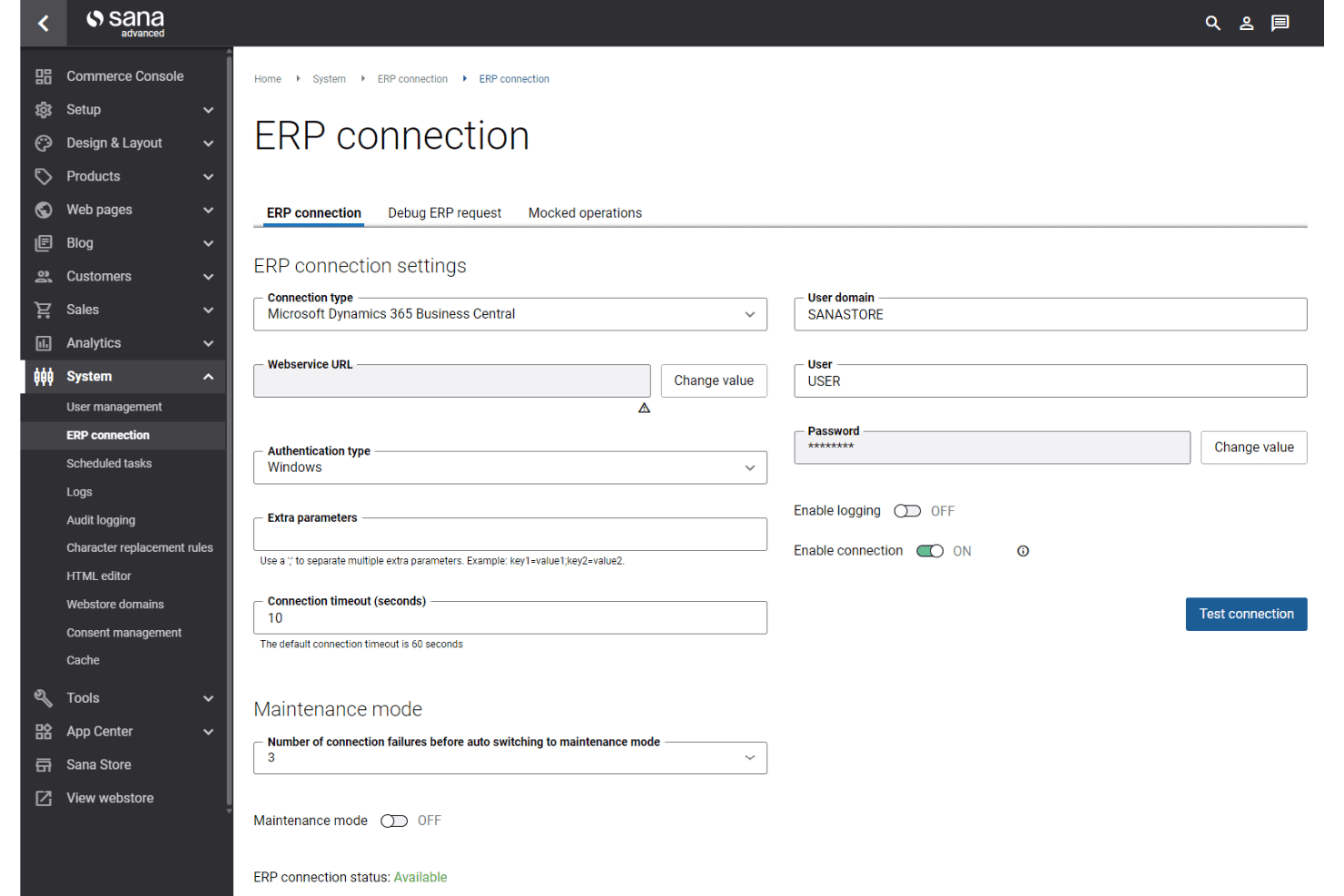
Sync your ecommerce site directly with ERP data for instant product, pricing, and inventory updates. This enables complex ordering, accurate contract pricing, and live account details.
Customer-Specific Catalogs and Pricing
Set personalized product assortments and custom pricing for each account. Users can provide negotiated rates and unique product access for every business partner.
Advanced Order Management
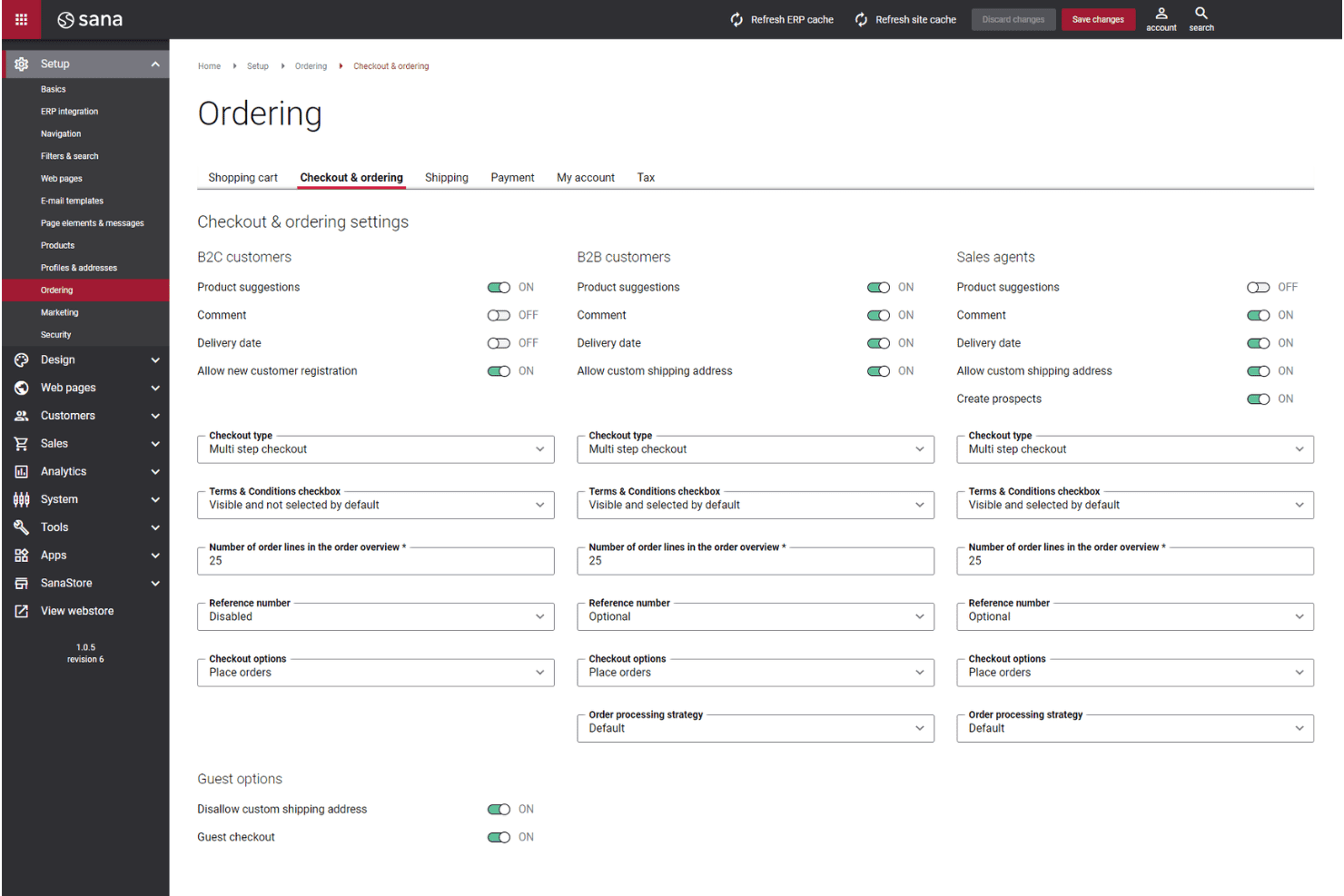
Automate quote-to-order and repeat ordering processes with rules tied directly to ERP workflows. Buyers can place, edit, or reorder complex bulk orders in minutes.
Multi-Store Management
Operate multiple branded storefronts from a single backend. Manage region, channel, or brand-specific stores without duplicating core data or processes.
Quick Order Entry and Bulk Purchasing
Support customers who already know product codes and quantities with fast input grids. This feature saves time and fits industrial or wholesale buying workflows.
B2B Self-Service Portal
Give buyers access to order history, invoices, returns, and shipment tracking. Your customers get full visibility into all transactions and live account status.
Ease of Use
Sana Commerce Cloud delivers a user experience tailored for B2B complexity—navigation is crisp, and all key actions are anchored in real-time ERP logic, so users access accurate inventory, pricing, and order status with minimal clicks.
I’ve seen praise for its customer-specific storefronts and self-service dashboards, which help teams avoid confusion and speed up large, repeat orders.
Integrations
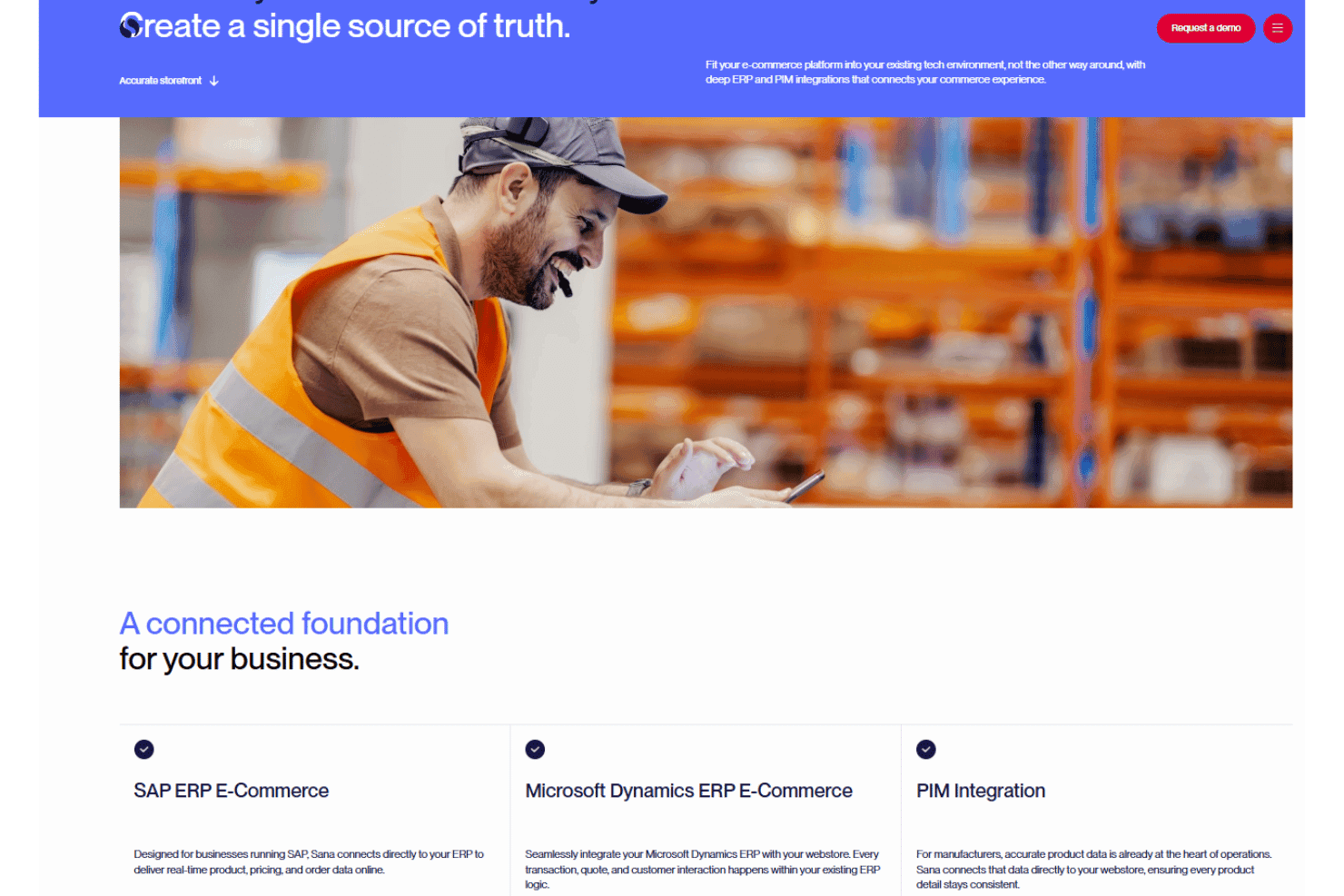
Sana Commerce Cloud integrates with Microsoft Dynamics 365 Finance & Operations, Microsoft Dynamics 365 Business Central, Microsoft Dynamics AX, Microsoft Dynamics NAV, SAP ECC, SAP S/4HANA, SAP Business One, FedEx, UPS, and Avalara, among others.
Sana Commerce Cloud also offers a robust API and supports connections with various third-party tools.
Sana Commerce Cloud Specs
- 2-Factor Authentication: Yes
- A/B Testing: No
- Analytics: Yes
- API: Yes
- BitCoin: No
- Conversion Tracking: Yes
- Dashboard: Yes
- Data Export: Yes
- Data Import: Yes
- Data Visualization: Yes
- Design Templates: Yes
- External Integrations: Yes
- Inventory Tracking: Yes
- Keyword Tracking: No
- Marketing Automation: Yes
- Multi-User: Yes
- Notifications: Yes
- Order Management: Yes
- Payment Gateway Integration: Yes
- Payment Processor: Yes
- PayPal: Yes
- Product Catalog: Yes
- Review Monitoring: No
- SAP Integration: Yes
- Scheduling: No
- Stripe: No
- Third-Party Plugins/Add-Ons: Yes


