

Reseña de Toast: ventajas, desventajas, funciones y precios explicados
Toast destaca por sus funciones enfocadas en restaurantes y su sólido hardware, pero sus precios y condiciones contractuales pueden no ser adecuados para todos los negocios. Ideal para establecimientos gastronómicos orientados al crecimiento que buscan un TPV todo en uno.

Revisamos las herramientas de forma independiente y las comisiones ayudan a financiar nuestras pruebas. Consulta nuestra política de transparencia, nuestra metodología o sugiere una herramienta.
Toast is a restaurant POS system built for food service operations, from quick-service counters to full-service dining rooms. Consider it if your team needs one platform to handle tableside ordering, kitchen display systems, online ordering, and payroll. If you're weighing it against Square, Toast goes much deeper on restaurant-specific workflows. Square works fine for simple setups, but Toast is the better fit for operators who need more than basic payment processing.
Toast Evaluation Summary
4.2/5
- From $69/month
- Free demo available
Por qué confiar en nuestras recomendaciones de software
6,700+
Reviews
20
Industry experts
16+
Evaluation factors
14
Years
Nuestro equipo lleva probando y evaluando software desde 2012. Como líderes del sector retail, sabemos lo difícil —y lo importante— que es elegir el software adecuado.
Para esta guía, evaluamos las herramientas mediante pruebas prácticas e investigación independiente, puntuando las herramientas según nuestros criterios de selección.
Nuestras reseñas reflejan nuestro criterio independiente, no un discurso de ventas.
Toast Overview
If you’re judging Toast against other POS systems, I think its restaurant-first design, built-in online ordering, and handheld hardware set it apart. The interface is intuitive for staff, and onboarding is smoother than most. Pricing can be higher, especially with add-ons, and some integrations are limited. Support is responsive, but you’ll want to review contract terms closely.
I’d suggest Toast is best for fast-casual, quick service, or multi-location restaurants that want a unified system for front and back of house. For cafes or food trucks, the mobile hardware is a real advantage.
Pros
- Toast's interface is intuitive, making it easy for your team to use.
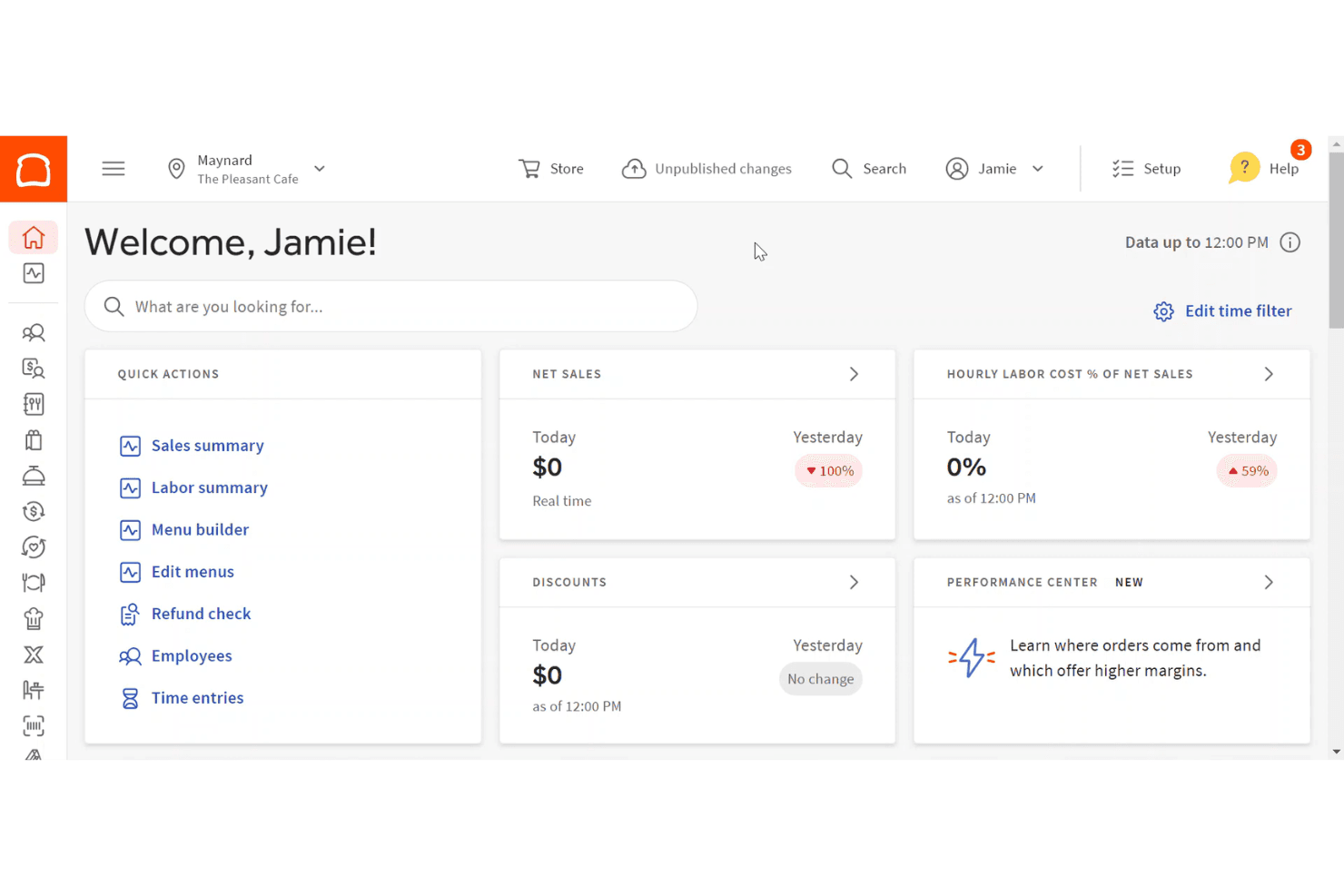
- The system's reporting tools give you valuable insights into your restaurant's performance.
- Toast's mobile ordering feature speeds up service and enhances customer satisfaction.
Cons
- The hardware options can be limited compared to other systems.
- Some users find the customization options lacking for specific needs.
- The system might require frequent updates, which can disrupt operations.
Is Toast Right For Your Needs?
Who Would be a Good Fit for Toast?
Small to medium-sized restaurants, cafes, and bars are a great fit for Toast. If you run a busy diner or a local bistro, Toast’s intuitive interface and efficient mobile ordering can transform your service speed and customer satisfaction. Its robust reporting tools help you manage inventory and analyze sales trends, making it easier to run your business smoothly. For teams that need a reliable, straightforward system, Toast provides the functionalities to handle daily operations without a hitch.
- Local CafesToast’s user-friendly interface helps your team process orders quickly, keeping your morning rush smooth.
- Busy DinersIts mobile ordering feature speeds up service, ensuring your customers get their meals promptly.
- Family RestaurantsThe reporting tools offer insights into your operations, helping you manage inventory and staff efficiently.
- Bars and PubsToast’s quick transaction capabilities keep your bar running efficiently during peak hours.
- Food TrucksThe compact hardware options make it easy to set up and operate in tight spaces.
- Quick Service RestaurantsToast’s fast processing and easy-to-use system enhance customer service during high-volume times.
Who Would be a Bad Fit for Toast?
Large chain restaurants or businesses with complex customization needs might find Toast lacking. If your operations require extensive hardware options or highly specialized features, Toast’s limited customization and hardware might not meet your expectations. Enterprises needing intricate integration with multiple third-party systems may struggle with Toast’s offerings, as it focuses more on straightforward, core functionalities rather than extensive tailor-made solutions.
- Large ChainsIf you manage a large chain, Toast’s limited hardware options might not scale well with your needs.
- Highly Customized MenusFor businesses with complex menu customizations, Toast’s capabilities might not provide the flexibility you need.
- Enterprise-Level OperationsEnterprises requiring extensive integrations might find Toast’s core-focused system too limiting.
- Multi-Location FranchisesFranchises with numerous locations might struggle with Toast’s hardware limitations and need for frequent updates.
- Specialty RestaurantsRestaurants needing highly specialized features might find Toast’s functionalities too basic.
- Tech-Savvy TeamsTeams looking for advanced tech features might find Toast’s straightforward approach too simplistic.
Nuestra Metodología de Revisión
Cómo Probamos y Puntamos Herramientas
Hemos pasado años construyendo, perfeccionando y mejorando nuestro sistema de pruebas y puntuación de software. La rúbrica está diseñada para captar los matices de la selección de software y lo que hace que una herramienta sea eficaz, enfocándose en los aspectos críticos del proceso de toma de decisiones. A continuación, puedes ver exactamente cómo funcionan nuestras pruebas y puntuaciones en siete criterios. Esto nos permite brindar una evaluación imparcial del software según la funcionalidad principal, características destacadas, facilidad de uso, incorporación, soporte al cliente, integraciones, reseñas de usuarios y relación calidad-precio.
Funcionalidad Principal (25% de la puntuación final)
El punto de partida de nuestra evaluación siempre es la funcionalidad principal de la herramienta. ¿Cuenta con las características y funciones básicas que un usuario esperaría ver? ¿Alguna de esas funcionalidades está limitada a planes de precios superiores? En esencia, esperamos que una herramienta se compare favorablemente con las capacidades básicas de sus competidores.
Características Destacadas (25% de la puntuación final)
A continuación, evaluamos las características sobresalientes poco comunes que van más allá de la funcionalidad principal que normalmente se encuentra en herramientas similares. Una alta puntuación refleja funcionalidades especializadas o únicas que hacen que el producto sea más rápido, eficiente o aporte un valor extra al usuario. También evaluamos qué tan fácil es integrar la herramienta con otras comúnmente usadas en el entorno tecnológico para ampliar la funcionalidad y utilidad del software. Las herramientas que ofrecen numerosas integraciones nativas, conexiones de terceros y acceso a API para crear integraciones personalizadas obtienen la mejor puntuación.
Facilidad de Uso (10% de la puntuación final)
Consideramos qué tan rápido y fácil es realizar las tareas definidas en la funcionalidad principal usando la herramienta. El software de alta puntuación está bien diseñado, es intuitivo, ofrece aplicaciones móviles, proporciona plantillas y hace que tareas relativamente complejas parezcan simples.
Incorporación (10% de la puntuación final)
Sabemos lo importante que es que un equipo adopte rápidamente una nueva plataforma, así que evaluamos qué tan fácil es aprender y usar la herramienta con mínima capacitación. Analizamos cuánto tiempo tarda un miembro del equipo en prepararse y comenzar a usar la herramienta sin experiencia previa. Las soluciones con alta puntuación requieren poco o ningún soporte.
Soporte al Cliente (10% de la puntuación final)
Revisamos qué tan rápido y fácil es obtener ayuda por teléfono, chat en vivo o base de conocimientos. Las herramientas y empresas que ofrecen soporte en tiempo real obtienen la mejor puntuación, mientras que los chatbots obtienen la peor.
Reseñas de Clientes (10% de la puntuación final)
Además de nuestras pruebas y evaluaciones, consideramos el puntaje neto de promotores de clientes actuales y pasados. Revisamos la probabilidad de que elijan de nuevo la herramienta para la funcionalidad principal. Un software con alta puntuación refleja un alto NPS de clientes actuales o pasados.
Relación Calidad-Precio (10% de la puntuación final)
Por último, considerando todos los demás criterios, revisamos el precio promedio de los planes de nivel básico frente a las características principales y consideramos el valor de los otros criterios de evaluación. El software que ofrece más por menos, tendrá una puntuación más alta.
Core Features
Tableside Ordering
Staff use handheld devices to take orders and process payments right at the table. This speeds up service and reduces errors.
Online Ordering
Customers place orders directly through a branded online portal that syncs with the POS. Orders flow straight to the kitchen without manual entry.
Menu Management
Easily update menus, prices, and modifiers across all devices and locations. Changes sync instantly, so staff always see the latest options.
Kitchen Display System
Digital screens in the kitchen show real-time order tickets and status updates. This helps kitchen staff prioritize and track orders efficiently.
Inventory Tracking
Monitor ingredient levels and receive alerts when stock runs low. The system automatically deducts inventory as items are sold.
Employee Management
Schedule shifts, track hours, and manage payroll from the POS dashboard. Built-in tools help reduce scheduling conflicts and labor costs.
Ease of Use
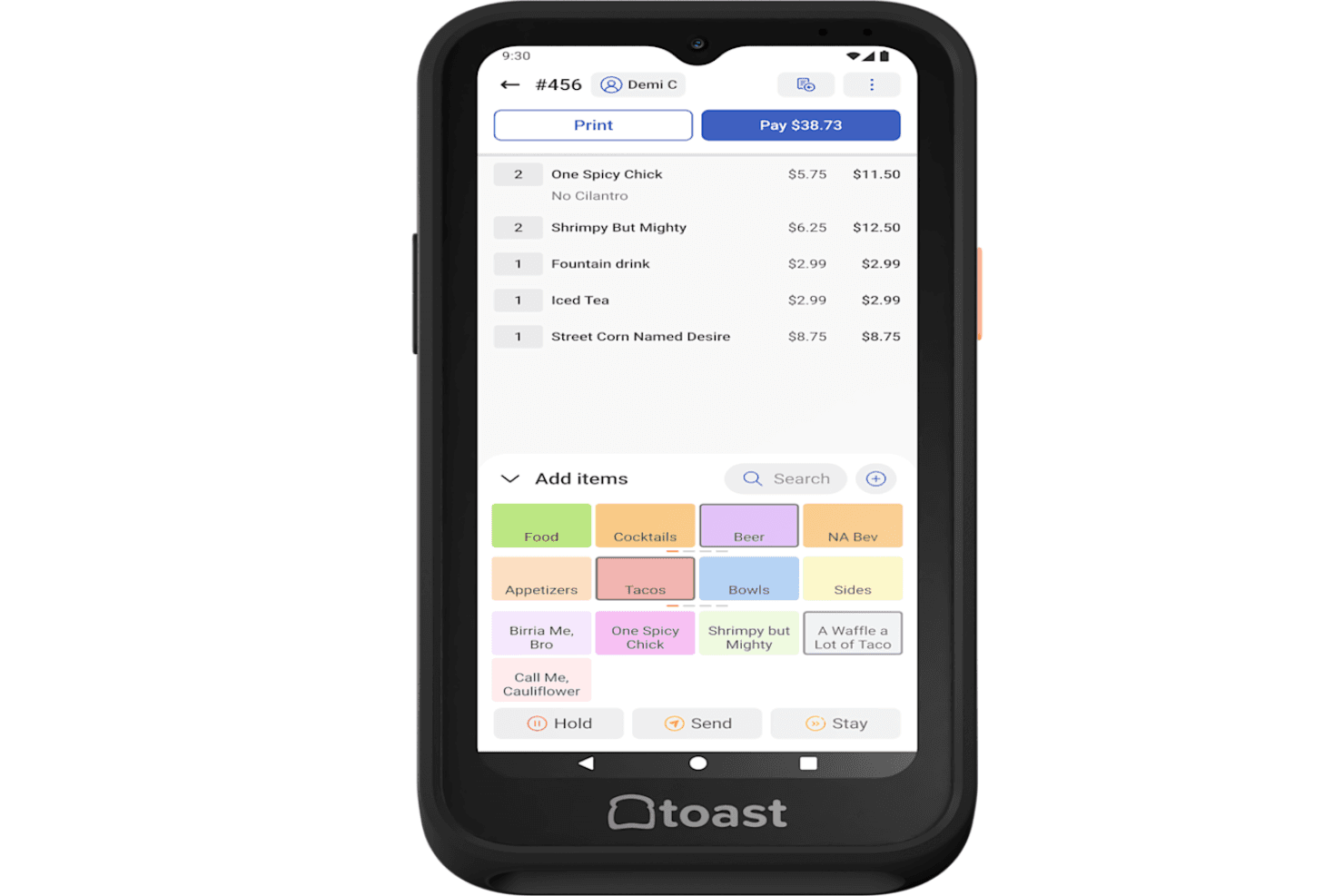
Toast is user-friendly, with a clean touchscreen interface that staff pick up quickly—even during busy shifts. The menu layout, order flow, and payment screens are intuitive, which helps reduce training time.
Many users mention that onboarding new employees is faster than with other systems. The handheld devices and kitchen display screens are easy to navigate, and real-time updates keep everyone on the same page. Overall, Toast’s design fits the fast pace of restaurant work.
Integrations
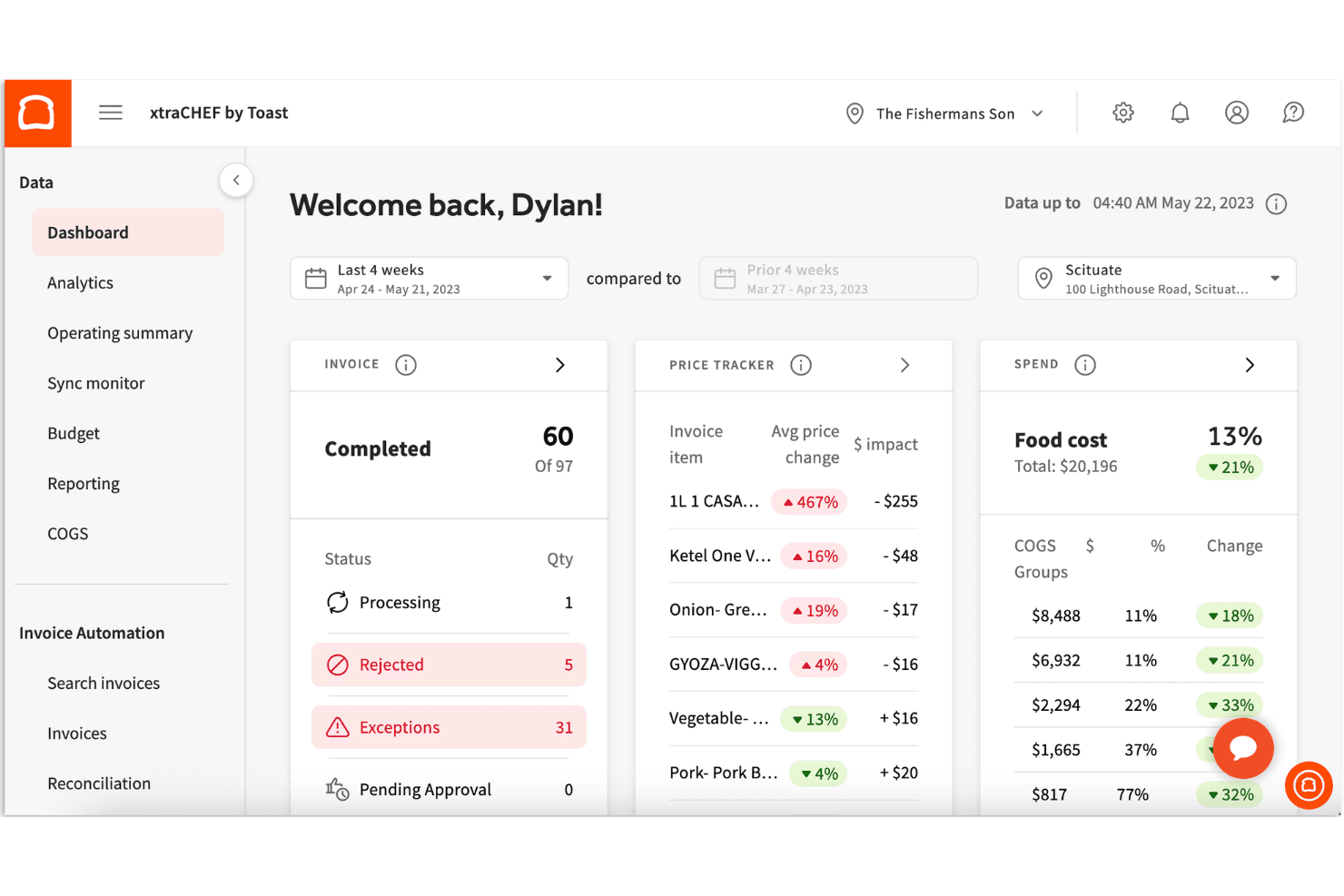
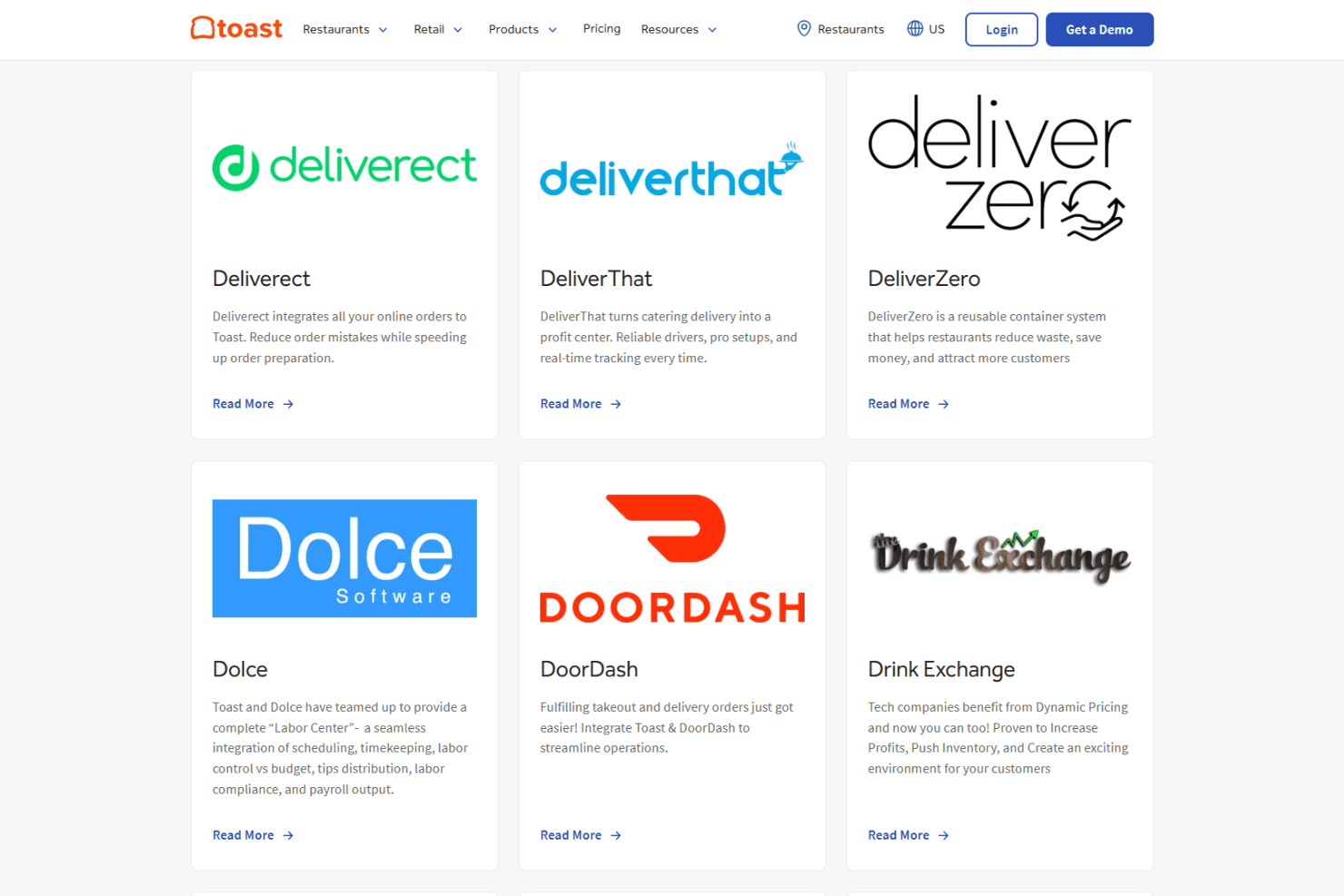
Toast integrates with 7shifts, Grubhub, DoorDash, MarketMan, xtraCHEF, Homebase, OpenTable, Restaurant365, QuickBooks, and Uber Eats, among others.
Toast also offers an API and connects with a wide range of third-party integration partners.
Toast Specs
- 2-Factor Authentication: Yes
- API: Yes
- Budgeting: No
- Contact Management: Yes
- Customer Management: Yes
- Dashboard: Yes
- Data Export: Yes
- Data Import: Yes
- Data Visualization: Yes
- Expense Tracking: Yes
- External Integrations: Yes
- Forecasting: No
- Inventory Tracking: Yes
- Multi-Currency: No
- Multi-User: Yes
- Notifications: Yes
- Payment Processor: Yes
- Supplier Management: Yes
- Tax Management: Yes
- Third-Party Plugins/Add-Ons: Yes


