
Reseña de ShipBob: ventajas, desventajas, características y precios
ShipBob integra el cumplimiento de pedidos del comercio electrónico en una sola plataforma, desde el almacenamiento del inventario y el procesamiento de pedidos hasta los envíos, el seguimiento y la gestión de almacenes para negocios en línea.

Revisamos las herramientas de forma independiente y las comisiones ayudan a financiar nuestras pruebas. Consulta nuestra política de transparencia, nuestra metodología o sugiere una herramienta.
ShipBob is an order fulfillment software for ecommerce brands that want to outsource warehousing, picking, packing, and shipping without building their own logistics infrastructure. I'd consider it over ShipMonk if your brand is scaling and needs access to a broader network of fulfillment centers across multiple regions—ShipBob's footprint makes it easier to reduce shipping zones and get orders to customers faster without managing multiple 3PL relationships.
ShipBob Evaluation Summary
3.6/5
- Pricing upon request
- Free demo available
Por qué confiar en nuestras recomendaciones de software
6,700+
Reviews
20
Industry experts
16+
Evaluation factors
14
Years
Nuestro equipo lleva probando y evaluando software desde 2012. Como líderes del sector retail, sabemos lo difícil —y lo importante— que es elegir el software adecuado.
Para esta guía, evaluamos las herramientas mediante pruebas prácticas e investigación independiente, puntuando las herramientas según nuestros criterios de selección.
Nuestras reseñas reflejan nuestro criterio independiente, no un discurso de ventas.
ShipBob Overview
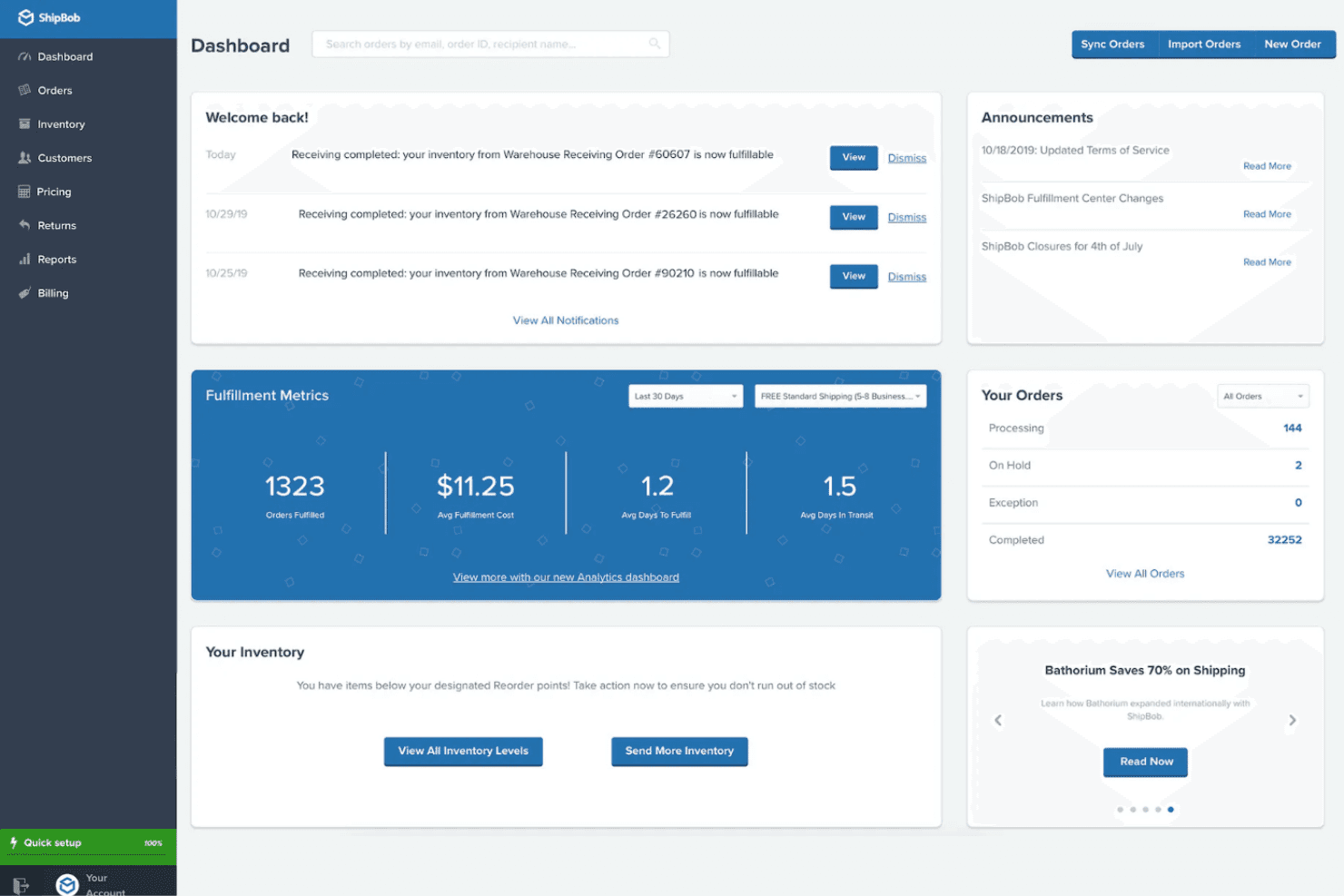
If you’re judging ShipBob against other order fulfillment software, I think its real strengths are fast onboarding, a clean dashboard, and deep integrations with major ecommerce platforms. Pricing is transparent, and support is responsive, which isn’t always the case elsewhere. I’ve found its analytics and inventory tracking more intuitive than most, though customization options can feel limited.
ShipBob is best for brands scaling quickly or managing multi-channel sales, especially if you want hands-off fulfillment without building your own warehouse network. If you need highly specialized workflows, you might find some constraints.
Pros
- You can rely on ShipBob's strong customer support to assist your team when needed.
- Its user-friendly interface makes managing your inventory and shipping straightforward.
- ShipBob simplifies your supply chain, freeing up your time to focus on business growth.
Cons
- Some users find the onboarding process a bit lengthy.
- There can be occasional delays in updating inventory data.
- The platform might lack advanced customization options for complex needs.
Is ShipBob Right For Your Needs?
Who Would be a Good Fit for ShipBob?
Small to medium-sized ecommerce businesses that need efficient logistics solutions are a great fit for ShipBob. If your team manages a fashion boutique or tech gadget store, ShipBob’s user-friendly interface and reliable customer support can simplify your shipping and inventory tasks. This software suits businesses looking to streamline operations without the need for complex customization, giving you more time to focus on sales and customer engagement.
- Ecommerce StartupsShipBob helps you focus on growth by handling logistics efficiently.
- Fashion RetailersIts intuitive platform simplifies inventory management for your team.
- Tech Product SellersShipBob’s reliable shipping ensures your gadgets get to customers quickly.
- Subscription Box CompaniesYou can easily manage recurring shipments with ShipBob’s features.
- Health and Wellness BrandsShipBob’s strong support aids in maintaining your product flow smoothly.
- Boutique StoresIts straightforward interface makes handling orders a breeze for your small team.
Who Would be a Bad Fit for ShipBob?
Large enterprises with highly complex logistics needs might find ShipBob lacking in advanced customization options. If your team requires intricate supply chain management or specialized integrations, ShipBob's straightforward approach might not meet your expectations. Businesses with unique operational requirements or those needing extensive customization might struggle to adapt ShipBob's features to their specific needs.
- Enterprise CorporationsShipBob’s limited customization won’t suit your complex logistics demands.
- Highly Specialized IndustriesIt lacks the specific integrations your niche operations require.
- Large Scale ManufacturingThe platform’s straightforward approach doesn’t handle intricate supply chains well.
- Custom Product MakersShipBob doesn’t offer the level of customization you need.
- Corporate Logistics TeamsYour team might find the system too simplistic for detailed management.
- Global Distribution NetworksShipBob may not support the extensive reach your operations demand.
Nuestra Metodología de Revisión
Cómo Probamos y Puntamos Herramientas
Hemos pasado años construyendo, perfeccionando y mejorando nuestro sistema de pruebas y puntuación de software. La rúbrica está diseñada para captar los matices de la selección de software y lo que hace que una herramienta sea eficaz, enfocándose en los aspectos críticos del proceso de toma de decisiones. A continuación, puedes ver exactamente cómo funcionan nuestras pruebas y puntuaciones en siete criterios. Esto nos permite brindar una evaluación imparcial del software según la funcionalidad principal, características destacadas, facilidad de uso, incorporación, soporte al cliente, integraciones, reseñas de usuarios y relación calidad-precio.
Funcionalidad Principal (25% de la puntuación final)
El punto de partida de nuestra evaluación siempre es la funcionalidad principal de la herramienta. ¿Cuenta con las características y funciones básicas que un usuario esperaría ver? ¿Alguna de esas funcionalidades está limitada a planes de precios superiores? En esencia, esperamos que una herramienta se compare favorablemente con las capacidades básicas de sus competidores.
Características Destacadas (25% de la puntuación final)
A continuación, evaluamos las características sobresalientes poco comunes que van más allá de la funcionalidad principal que normalmente se encuentra en herramientas similares. Una alta puntuación refleja funcionalidades especializadas o únicas que hacen que el producto sea más rápido, eficiente o aporte un valor extra al usuario. También evaluamos qué tan fácil es integrar la herramienta con otras comúnmente usadas en el entorno tecnológico para ampliar la funcionalidad y utilidad del software. Las herramientas que ofrecen numerosas integraciones nativas, conexiones de terceros y acceso a API para crear integraciones personalizadas obtienen la mejor puntuación.
Facilidad de Uso (10% de la puntuación final)
Consideramos qué tan rápido y fácil es realizar las tareas definidas en la funcionalidad principal usando la herramienta. El software de alta puntuación está bien diseñado, es intuitivo, ofrece aplicaciones móviles, proporciona plantillas y hace que tareas relativamente complejas parezcan simples.
Incorporación (10% de la puntuación final)
Sabemos lo importante que es que un equipo adopte rápidamente una nueva plataforma, así que evaluamos qué tan fácil es aprender y usar la herramienta con mínima capacitación. Analizamos cuánto tiempo tarda un miembro del equipo en prepararse y comenzar a usar la herramienta sin experiencia previa. Las soluciones con alta puntuación requieren poco o ningún soporte.
Soporte al Cliente (10% de la puntuación final)
Revisamos qué tan rápido y fácil es obtener ayuda por teléfono, chat en vivo o base de conocimientos. Las herramientas y empresas que ofrecen soporte en tiempo real obtienen la mejor puntuación, mientras que los chatbots obtienen la peor.
Reseñas de Clientes (10% de la puntuación final)
Además de nuestras pruebas y evaluaciones, consideramos el puntaje neto de promotores de clientes actuales y pasados. Revisamos la probabilidad de que elijan de nuevo la herramienta para la funcionalidad principal. Un software con alta puntuación refleja un alto NPS de clientes actuales o pasados.
Relación Calidad-Precio (10% de la puntuación final)
Por último, considerando todos los demás criterios, revisamos el precio promedio de los planes de nivel básico frente a las características principales y consideramos el valor de los otros criterios de evaluación. El software que ofrece más por menos, tendrá una puntuación más alta.
Core Features
Distributed Warehouse Network
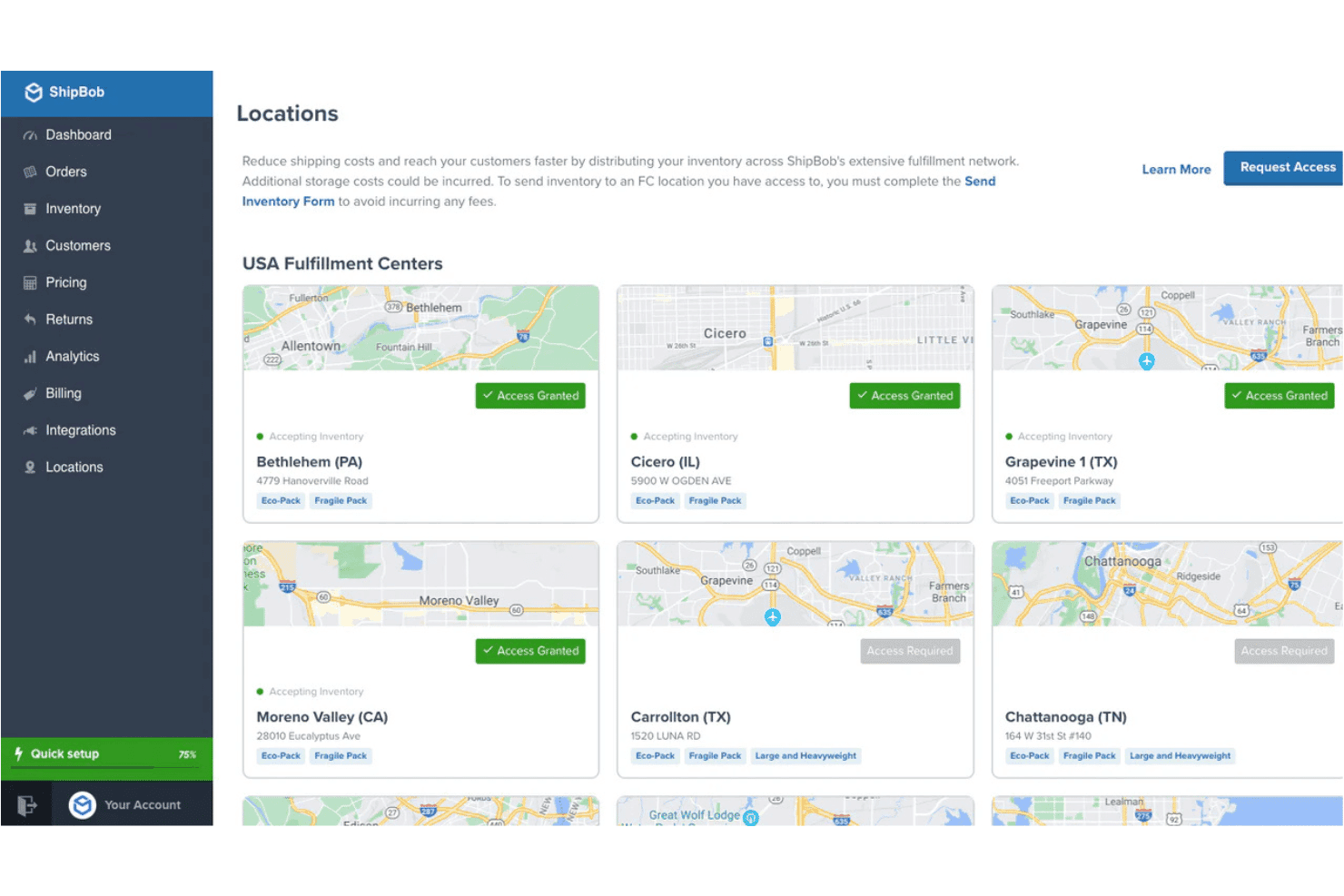
Store inventory in 60+ global fulfillment centers to reduce shipping times and costs. ShipBob automatically routes orders to the closest warehouse for faster delivery.
2-Day Shipping
Offer 2-day shipping across the continental US for all sales channels. This helps brands meet rising customer expectations for speed.
Real-Time Inventory Tracking
Monitor inventory levels across all warehouses with live updates and automated reorder alerts. This reduces stockouts and overstock issues.
Automated Order Fulfillment
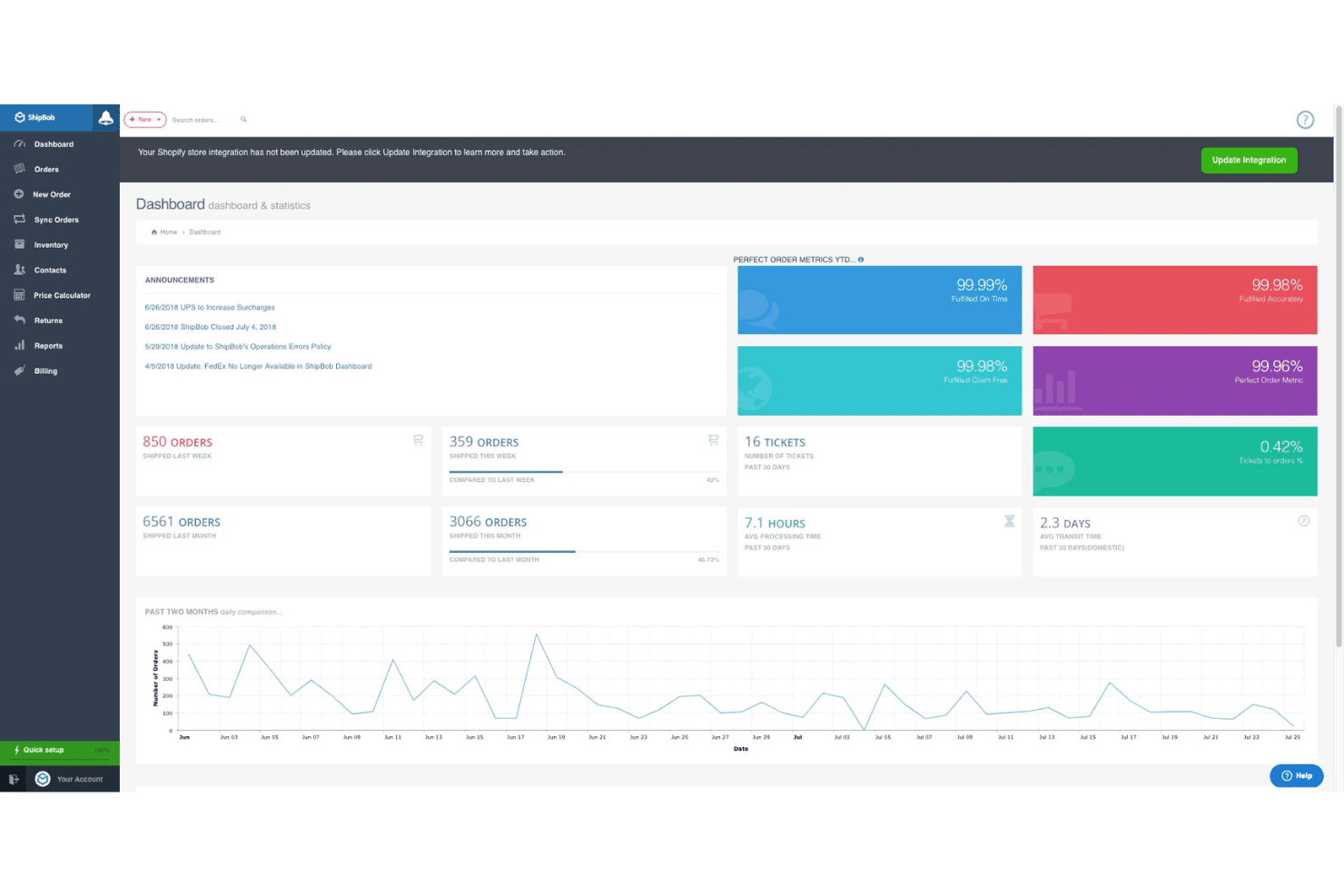
ShipBob handles picking, packing, shipping, and returns from start to finish. Orders are processed with a 99.97% accuracy rate.
Customizable Unboxing Experience
Brands can add custom packaging and inserts for a branded delivery. This feature supports unique unboxing experiences that boost customer loyalty.
International Shipping
Ship to over 250 destinations with standard and expedited options, including DDP. ShipBob helps brands expand globally without managing international logistics themselves.
Ease of Use
ShipBob stands out for its clean, intuitive dashboard and straightforward onboarding process. Most users say setup is quick, with guided steps for connecting sales channels and importing products. The platform’s real-time inventory visibility and automated order processing reduce manual work, making it easy for teams to manage fulfillment without a steep learning curve.
I think the clear navigation and responsive support make ShipBob accessible, even for teams new to outsourced fulfillment.
Integrations
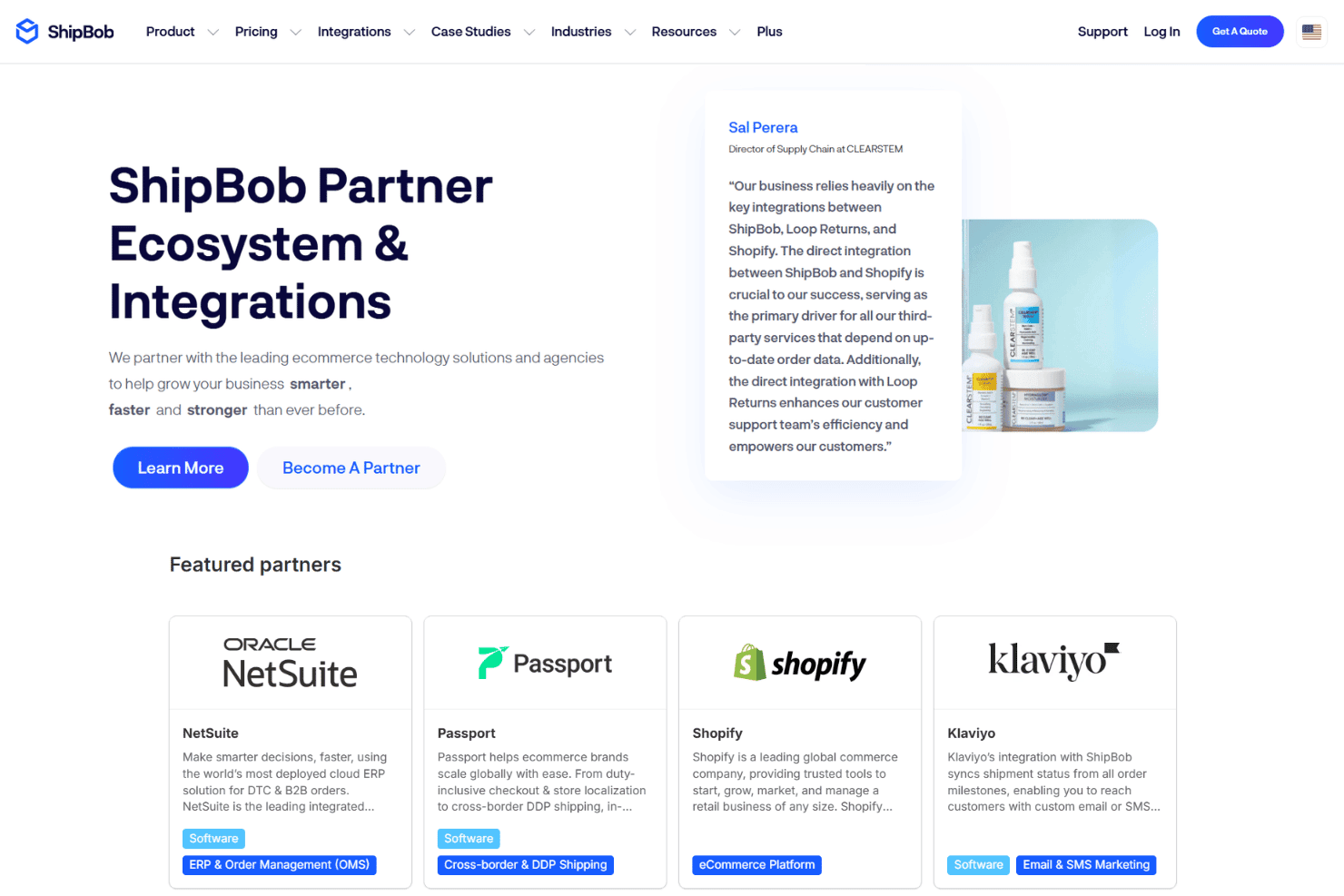
ShipBob integrates with Shopify, BigCommerce, WooCommerce, Amazon, eBay, NetSuite, Klaviyo, AfterShip, Brightpearl, and ChannelEngine, among others.
ShipBob also offers a robust API and connects with third-party integration tools for custom workflows and additional platform connections.
ShipBob Specs
- API: Yes
- Calendar Management: No
- Customer Management: No
- Dashboard: Yes
- Data Export: Yes
- Data Import: Yes
- Data Visualization: Yes
- External Integrations: Yes
- Inventory Tracking: Yes
- Multi-User: Yes
- Notifications: Yes
- Order Management: Yes
- Product Catalog: Yes
- Route Optimization: No
- Scheduling: No
- Shipping Management: Yes


