

Reseña de Payhip: ventajas, desventajas, características y precios
Payhip se distingue entre los creadores de comercio electrónico gratuitos al ofrecer una plataforma fácil de usar que admite productos digitales, suscripciones y membresías sin comisiones por transacción.

Revisamos las herramientas de forma independiente y las comisiones ayudan a financiar nuestras pruebas. Consulta nuestra política de transparencia, nuestra metodología o sugiere una herramienta.
Payhip is an ecommerce website builder built for creators and small businesses selling digital products, memberships, and online courses directly to their audience. I'd mainly consider it if you want a branded storefront with built-in checkout, digital delivery, and audience management tools—without needing a developer to set it up. If you're weighing Payhip against Gumroad, Payhip gives you more control over your storefront design and more flexibility across product types, especially if you're selling a mix of digital downloads, memberships, and courses from a single store.
Payhip Evaluation Summary
4.5/5
- From $29/month + 2% transaction fee
- Free plan available
Por qué confiar en nuestras recomendaciones de software
6,700+
Reviews
20
Industry experts
16+
Evaluation factors
14
Years
Nuestro equipo lleva probando y evaluando software desde 2012. Como líderes del sector retail, sabemos lo difícil —y lo importante— que es elegir el software adecuado.
Para esta guía, evaluamos las herramientas mediante pruebas prácticas e investigación independiente, puntuando las herramientas según nuestros criterios de selección.
Nuestras reseñas reflejan nuestro criterio independiente, no un discurso de ventas.
Payhip Overview
In my opinion, Payhip offers a solid solution for those looking to establish a free ecommerce website. It stands out for its ease of use, making it accessible for beginners. The platform provides a decent range of features without overwhelming users, and the pricing model is favorable for small businesses or solo entrepreneurs. However, the onboarding process could be more intuitive, and while customer support is available, it might not be as responsive as some competitors. Overall, Payhip is best suited for individuals or teams seeking a straightforward, cost-effective ecommerce solution without the need for extensive customization or support.
Pros
- You can easily sell digital products, memberships, and subscriptions.
- It offers a simple interface that's beginner-friendly.
- There are no transaction fees on sales.
Cons
- The design customization options are limited.
- It lacks advanced marketing tools.
- The reporting features are basic.
Is Payhip Right For Your Needs?
Who Would be a Good Fit for Payhip?
Payhip is perfect for individual creators and small businesses focusing on digital products, memberships, or subscriptions. If you're selling e-books, courses, or digital art, you'll appreciate its user-friendly platform and transaction fee-free sales. Payhip's straightforward interface lets you set up shop quickly, making it ideal for those without technical skills. Its features cater well to creators looking to monetize their content without worrying about complex setups or hidden costs.
- Digital CreatorsPayhip supports selling digital products like e-books, music, and courses with ease.
- Small BusinessesIt's a good choice for small businesses that want to sell digital products without transaction fees.
- FreelancersFreelancers can set up online stores to sell products or digital content quickly.
- AuthorsAuthors can sell ebooks directly to their audience with Payhip's simple setup.
- Online EducatorsEducators can use Payhip to offer online courses and memberships easily.
- ArtistsArtists can sell digital art and prints without dealing with complex e-commerce setups.
Who Would be a Bad Fit for Payhip?
Payhip isn't ideal for large businesses or teams needing advanced e-commerce features and extensive customization. If your team relies on sophisticated marketing tools, intricate design functionality, or detailed analytics, Payhip's basic offerings might fall short. Its limited design options and lack of advanced marketing integrations can hinder your efforts if you're aiming for a highly customized or data-driven e-commerce strategy.
- Large EnterprisesLarge enterprises may find Payhip's features too basic for their complex needs.
- Marketing TeamsMarketing teams needing advanced tools will find Payhip's offerings lacking.
- Retail ChainsRetail chains might miss the ability to deeply customize and scale their online business.
- Tech CompaniesTech companies looking for cutting-edge integrations will find Payhip's options limited.
- Data AnalystsData analysts won't get the in-depth analytics they need from Payhip.
- Custom DevelopersCustom developers will find Payhip's design flexibility too limiting for tailored solutions.
Nuestra Metodología de Revisión
Cómo Probamos y Puntamos Herramientas
Hemos pasado años construyendo, perfeccionando y mejorando nuestro sistema de pruebas y puntuación de software. La rúbrica está diseñada para captar los matices de la selección de software y lo que hace que una herramienta sea eficaz, enfocándose en los aspectos críticos del proceso de toma de decisiones. A continuación, puedes ver exactamente cómo funcionan nuestras pruebas y puntuaciones en siete criterios. Esto nos permite brindar una evaluación imparcial del software según la funcionalidad principal, características destacadas, facilidad de uso, incorporación, soporte al cliente, integraciones, reseñas de usuarios y relación calidad-precio.
Funcionalidad Principal (25% de la puntuación final)
El punto de partida de nuestra evaluación siempre es la funcionalidad principal de la herramienta. ¿Cuenta con las características y funciones básicas que un usuario esperaría ver? ¿Alguna de esas funcionalidades está limitada a planes de precios superiores? En esencia, esperamos que una herramienta se compare favorablemente con las capacidades básicas de sus competidores.
Características Destacadas (25% de la puntuación final)
A continuación, evaluamos las características sobresalientes poco comunes que van más allá de la funcionalidad principal que normalmente se encuentra en herramientas similares. Una alta puntuación refleja funcionalidades especializadas o únicas que hacen que el producto sea más rápido, eficiente o aporte un valor extra al usuario. También evaluamos qué tan fácil es integrar la herramienta con otras comúnmente usadas en el entorno tecnológico para ampliar la funcionalidad y utilidad del software. Las herramientas que ofrecen numerosas integraciones nativas, conexiones de terceros y acceso a API para crear integraciones personalizadas obtienen la mejor puntuación.
Facilidad de Uso (10% de la puntuación final)
Consideramos qué tan rápido y fácil es realizar las tareas definidas en la funcionalidad principal usando la herramienta. El software de alta puntuación está bien diseñado, es intuitivo, ofrece aplicaciones móviles, proporciona plantillas y hace que tareas relativamente complejas parezcan simples.
Incorporación (10% de la puntuación final)
Sabemos lo importante que es que un equipo adopte rápidamente una nueva plataforma, así que evaluamos qué tan fácil es aprender y usar la herramienta con mínima capacitación. Analizamos cuánto tiempo tarda un miembro del equipo en prepararse y comenzar a usar la herramienta sin experiencia previa. Las soluciones con alta puntuación requieren poco o ningún soporte.
Soporte al Cliente (10% de la puntuación final)
Revisamos qué tan rápido y fácil es obtener ayuda por teléfono, chat en vivo o base de conocimientos. Las herramientas y empresas que ofrecen soporte en tiempo real obtienen la mejor puntuación, mientras que los chatbots obtienen la peor.
Reseñas de Clientes (10% de la puntuación final)
Además de nuestras pruebas y evaluaciones, consideramos el puntaje neto de promotores de clientes actuales y pasados. Revisamos la probabilidad de que elijan de nuevo la herramienta para la funcionalidad principal. Un software con alta puntuación refleja un alto NPS de clientes actuales o pasados.
Relación Calidad-Precio (10% de la puntuación final)
Por último, considerando todos los demás criterios, revisamos el precio promedio de los planes de nivel básico frente a las características principales y consideramos el valor de los otros criterios de evaluación. El software que ofrece más por menos, tendrá una puntuación más alta.
Core Features
Digital Product Sales
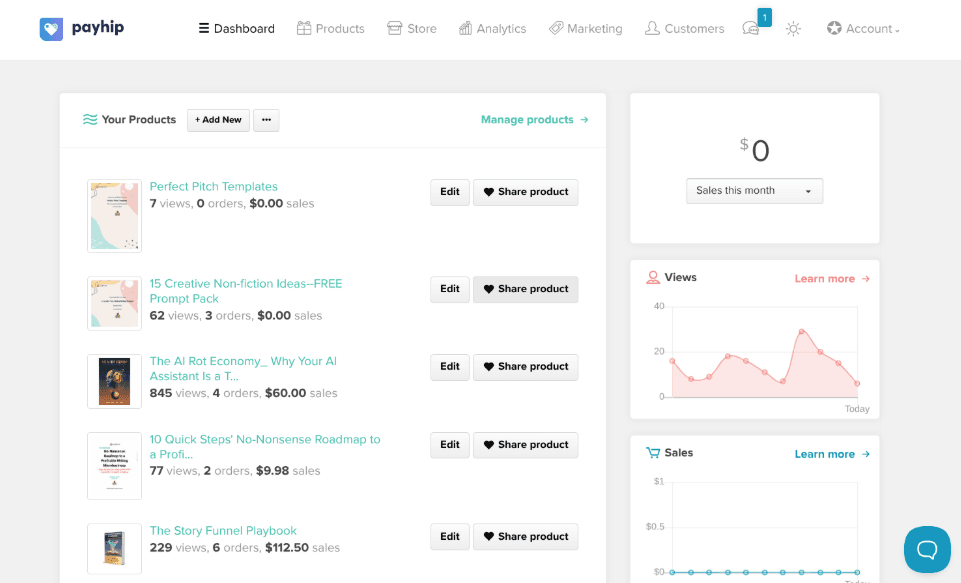
You can sell digital products like e-books and courses directly from your Payhip store. It’s easy to upload your products, and you can embed product listings to enable cross-selling.
Memberships
Payhip allows you to create and manage memberships for your content. Your team can offer exclusive content to subscribers effortlessly.
Simple Checkout
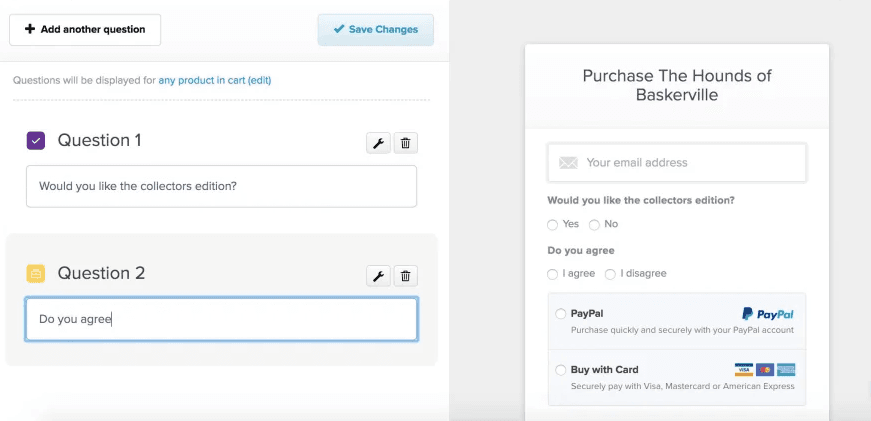
The checkout process is streamlined for users, reducing cart abandonment. Customers can buy your products with just a few clicks.
Customizable Storefront
While basic, you can still personalize your storefront and product pages to match your brand. It’s simple to set up and doesn’t require design skills.
Ease of Use
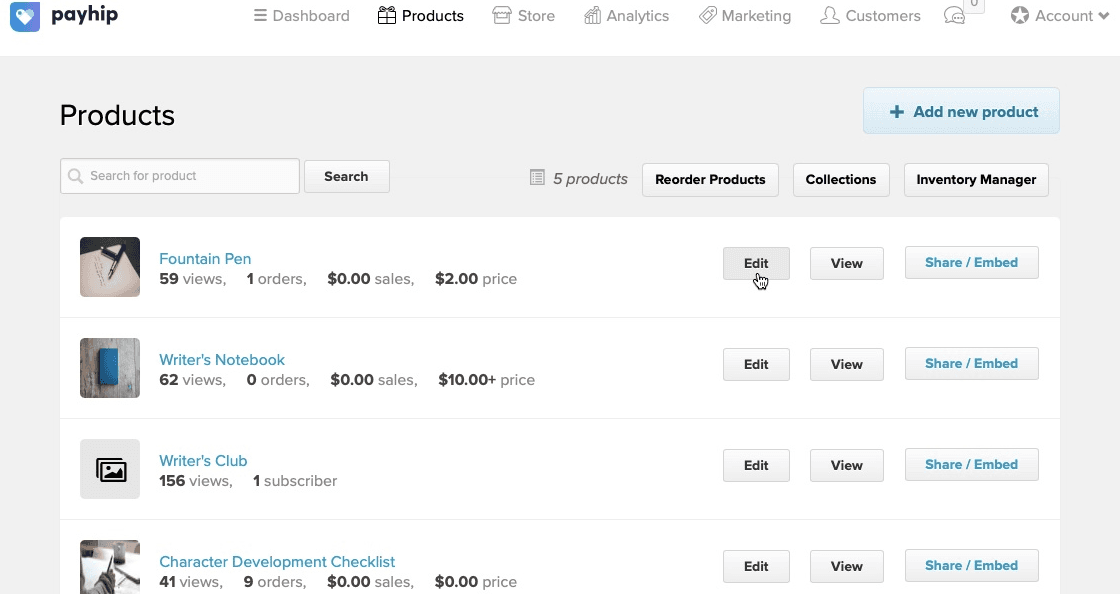
Payhip is remarkably user-friendly, making it easy for anyone to set up a store without technical skills. The interface is intuitive, with straightforward tools that let you manage digital products, subscriptions, and memberships effortlessly. Users appreciate the clean layout and simple navigation, which allows you to focus on your work rather than getting bogged down by complex features. Compared to other options, Payhip stands out for its simplicity and ease of use, making it a solid choice for beginners.
Integrations
Payhip integrates with WordPress, Squarespace, Wix, Calendly, Zoom, Zapier, Weebly, Google AdSense, Shopify, and Bookvault.
Payhip also offers an API and connects with third-party integration tools like Zapier.
Payhip Specs
- 2-Factor Authentication: No
- A/B Testing: No
- Analytics: Yes
- API: Yes
- BitCoin: No
- Conversion Tracking: No
- Dashboard: Yes
- Data Export: Yes
- Data Import: Yes
- Data Visualization: Yes
- Design Templates: Yes
- External Integrations: Yes
- Inventory Tracking: Yes
- Keyword Tracking: No
- Marketing Automation: Yes
- Multi-User: No
- Notifications: Yes
- Order Management: Yes
- Payment Gateway Integration: No
- Payment Processor: No
- PayPal: Yes
- Product Catalog: Yes
- Review Monitoring: No
- SAP Integration: No
- Scheduling: No
- Stripe: Yes
- Third-Party Plugins/Add-Ons: No


