

NetSuite-Commerce-Test: Vor- und Nachteile, Funktionen und Preise
NetSuite Commerce vereint E-Commerce und Geschäftsabläufe in einer Plattform – von der Verwaltung von Online-Shops und der Auftragsabwicklung bis hin zu Beständen, Kundendaten und der ERP-Integration.

Wir bewerten Tools unabhängig und Provisionen helfen, unsere Tests zu finanzieren. Siehe unsere transparente Richtlinie, unsere Methodik oder schlagen Sie ein Tool vor.
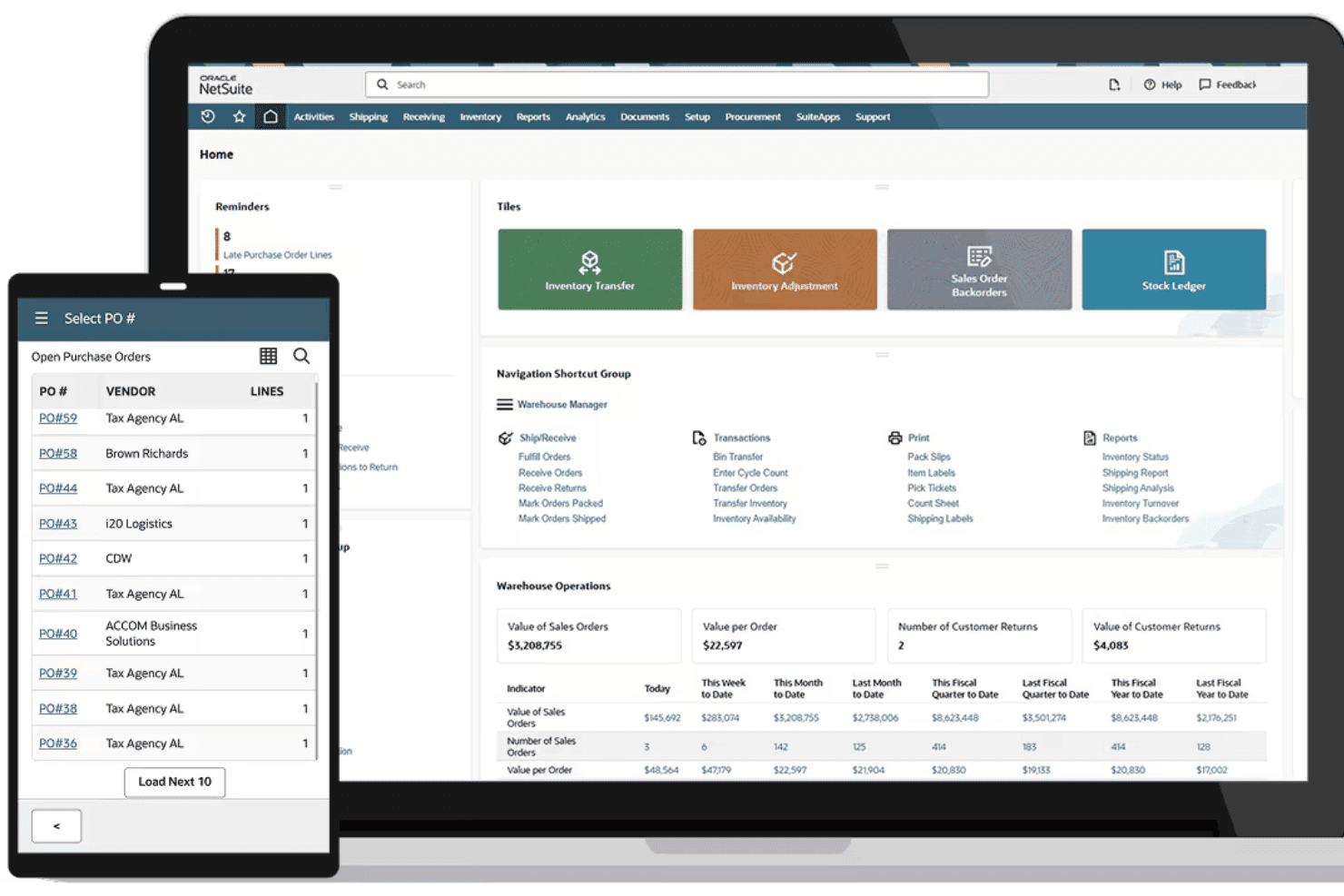
NetSuite Commerce is an ecommerce software built for businesses that run on Oracle NetSuite's ERP and want their storefront, inventory, order management, and financials connected in one system. I'd consider it most seriously if you're scaling a B2B or B2C operation and need back-office integration without relying on third-party middleware. Compared to Shopify Plus, NetSuite Commerce gives you a tighter link between your ecommerce data and your financials—so you're not stitching systems together just to get a complete view of your business.
NetSuite Commerce Evaluation Summary
4.2/5
- Pricing upon request
- Free demo available
Warum Sie unseren Software-Empfehlungen vertrauen können
6,700+
Reviews
20
Industry experts
16+
Evaluation factors
14
Years
Unser Team testet und bewertet Software seit 2012. Als Führungskräfte im Einzelhandel selbst wissen wir, wie schwierig – und wichtig – es ist, die richtige Software auszuwählen.
Für diesen Leitfaden haben wir Tools mithilfe von praktischen Tests und unabhängiger Recherche bewertet und dabei die Tools anhand unserer Bewertungskriterien bewertet.
Unsere Bewertungen spiegeln unser unabhängiges Urteilsvermögen wider – keine Verkaufsstrategie.
NetSuite Commerce Overview
If you’re judging ecommerce software on end-to-end integration, NetSuite Commerce sets itself apart with unified inventory, strong built-in analytics, and native ERP features. I think its pricing and onboarding make more sense for established retailers or fast-growing brands, as it isn’t the fastest to set up and requires more upfront investment.
Compared to others, you get deeper operational control and flexibility, but you’ll trade away ease of use and simple plug-and-play integrations. It’s especially smart for those who want a single source of truth and advanced configuration, not just a storefront.
Pros
- Connects ecommerce sales to inventory and finance in real time
- Extensive multi-location and multi-channel management features included
- Highly configurable workflows for complex retail environments
Cons
- High upfront cost compared to many ecommerce competitors
- Initial implementation can be lengthy and resource-intensive
- User interface feels dated and less intuitive for new users
Is NetSuite Commerce Right For Your Needs?
Who Would be a Good Fit for NetSuite Commerce?
Mid to large-sized retail and wholesale businesses benefit most from NetSuite Commerce due to its robust customization and real-time analytics. If your work involves managing multiple sales channels, this platform helps streamline operations by unifying them in one place.
Teams in industries that rely on data-driven decision-making will appreciate its analytics capabilities, allowing you to make informed choices quickly.
- Retail ChainsNetSuite Commerce supports complex inventory management and multi-channel sales, perfect for expansive retail operations.
- Wholesale DistributorsYour team can manage bulk orders efficiently with its integrated order processing and inventory tracking.
- B2B CompaniesIt offers personalized customer experiences and pricing, ideal for businesses focusing on B2B sales.
- Ecommerce TeamsYou can manage all online sales channels from a single platform, simplifying your ecommerce operations.
- IT DepartmentsCustomization and scalability make it easy for IT teams to tailor the platform to specific business needs.
- Marketing TeamsReal-time data analytics help your team make informed marketing decisions quickly.
Who Would be a Bad Fit for NetSuite Commerce?
Small businesses or startups with limited resources might find NetSuite Commerce overwhelming due to its complexity and cost. If your team lacks the technical expertise to handle its robust features, the platform could be more of a burden than a benefit. Industries that don’t require advanced customization or real-time analytics may not fully leverage its capabilities, making it an inefficient choice.
- Small StartupsYour team might struggle with its complexity and high cost, which aren’t ideal for limited budgets.
- Local BoutiquesSimpler ecommerce solutions would suit your needs better than NetSuite’s advanced features.
- FreelancersThe platform’s extensive functionalities are unnecessary for single-person operations.
- Non-Tech TeamsWithout IT support, managing NetSuite’s customization and updates can be challenging for your team.
- Basic Ecommerce NeedsIf your operations are straightforward, you won’t need the advanced capabilities NetSuite offers.
- Low-Volume SellersThe platform’s robust features may be excessive for your smaller sales volume.
Unsere Bewertungsmethodik
Wie Wir Tools Testen & Bewerten
Wir haben über Jahre hinweg unser System zur Softwarebewertung und -testung entwickelt, verfeinert und verbessert. Die Bewertungsmatrix ist darauf ausgelegt, die Feinheiten der Softwareauswahl und die Effektivität eines Tools einzufangen, wobei der Fokus auf entscheidende Aspekte des Auswahlprozesses liegt. Nachfolgend sehen Sie genau, wie unser Test- und Bewertungssystem anhand von sieben Kriterien funktioniert. Dies ermöglicht uns, eine unvoreingenommene Bewertung der Software basierend auf Kernfunktionen, besonderen Merkmalen, Benutzerfreundlichkeit, Einarbeitung, Kundensupport, Integrationen, Kundenrezensionen und Preis-Leistungs-Verhältnis anzubieten.
Kernfunktionen (25% der Gesamtnote)
Der Ausgangspunkt unserer Bewertung ist immer die Kernfunktionalität des Tools. Verfügt es über die grundlegenden Funktionen, die ein Nutzer erwarten würde? Sind wichtige Kernfunktionen eventuell nur in höherpreisigen Tarifen enthalten? Ein Tool sollte im Kern mindestens mit den Basisfunktionen der Wettbewerber mithalten können.
Besondere Funktionen (25% der Gesamtnote)
Anschließend bewerten wir außergewöhnliche Funktionen, die über die normalen Kernfunktionen vergleichbarer Tools hinausgehen. Ein hoher Score spiegelt spezialisierte oder einzigartige Funktionen wider, die das Produkt schneller, effizienter oder wertvoller für die Nutzer machen. Wir bewerten außerdem, wie einfach sich das Tool mit anderen Programmen, die typischerweise zum Technologie-Stack gehören, integrieren lässt, um dessen Funktionalität und Nutzwert zu erweitern. Tools mit zahlreichen nativen Integrationen, Drittanbieteranbindungen und API-Zugang für eigene Entwicklungen schneiden hier am besten ab.
Benutzerfreundlichkeit (10% der Gesamtnote)
Wir betrachten, wie schnell und einfach es ist, die Kernaufgaben mit dem Tool zu erledigen. Software, die gut gestaltet und intuitiv zu bedienen ist, mobile Apps bietet, Vorlagen zur Verfügung stellt und komplexe Aufgaben einfach erscheinen lässt, erzielt die besten Werte.
Einarbeitung (10% der Gesamtnote)
Wir wissen, wie wichtig die schnelle Einführung eines neuen Tools im Team ist. Daher evaluieren wir, wie einfach es mit minimalem Training ist, das Tool kennenzulernen. Wir ermitteln, wie schnell ein Teammitglied ohne Vorerfahrung startklar ist. Lösungen, die kaum oder gar keine Unterstützung benötigen, erhalten die höchste Punktzahl.
Kundensupport (10% der Gesamtnote)
Wir überprüfen, wie schnell und einfach man Hilfe per Telefon, Live-Chat oder Wissensdatenbank erhält. Tools und Anbieter, die Echtzeit-Support bieten, schneiden am besten ab; Chatbots liegen am unteren Ende.
Kundenrezensionen (10% der Gesamtnote)
Zusätzlich zu unseren eigenen Tests ziehen wir den Net-Promoter-Score bestehender und früherer Kunden heran. Wir überprüfen, wie wahrscheinlich sie das Tool erneut für die Kernfunktionen wählen würden. Ein hoher Score spiegelt einen hohen Net-Promoter-Score wider.
Preis-Leistungs-Verhältnis (10% der Gesamtnote)
Schließlich bewerten wir im Kontext aller anderen Kriterien den Durchschnittspreis von Einstiegsplänen im Verhältnis zu den Kernfunktionen und betrachten den Wert der übrigen Kriterien. Software, die mehr zu geringeren Kosten bietet, schneidet hier besser ab.
Core Features
Unified Commerce Management
NetSuite Commerce unifies product catalogs, inventory, and order data across all sales channels. You can oversee online, in-store, and phone orders from a single dashboard.
Real-Time Inventory Visibility
Inventory counts update instantly when a sale is made or stock arrives. This helps prevent overselling and supports accurate demand planning.
B2B and B2C Storefronts
Launch customer-facing webstores for direct consumers and dedicated portals for wholesale buyers. Both experiences support pricing tiers, quote management, and personalized catalogs.
Order Management Automation
Automate order processing, fulfillment, and returns regardless of where the sale happens. Customizable rules route orders to the best warehouse or location for fast delivery.
Promotions and Dynamic Pricing
Build and schedule discount campaigns with flexible rules and segmentation. Pricing can change based on customer groups, order value, or sales channel.
Integrated Customer Account Management
Customers manage their profiles, view order histories, and reorder from their own dashboard. Business buyers can assign roles and purchase limits for their teams.
Ease of Use
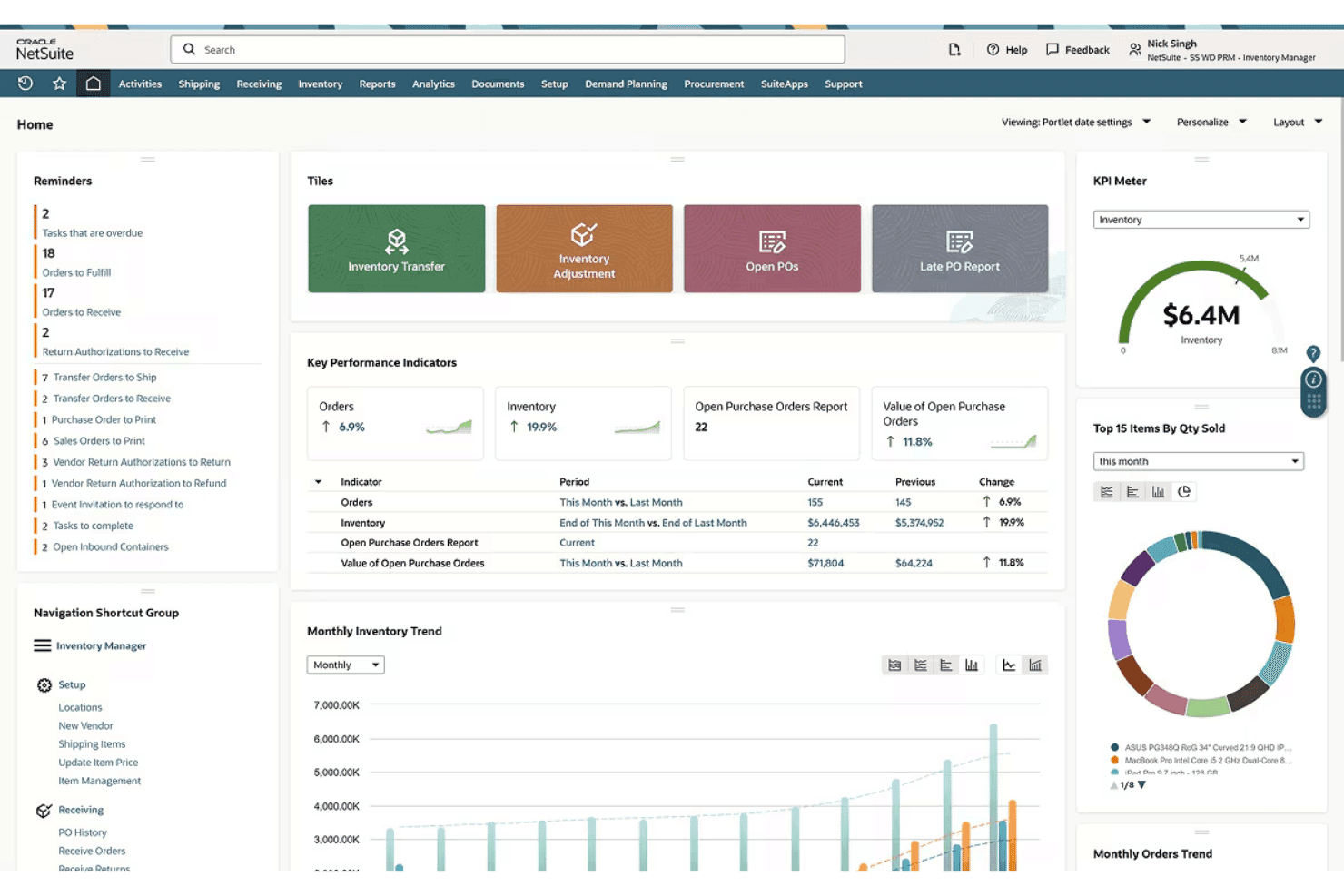
NetSuite Commerce isn’t the most intuitive ecommerce software for beginners, but experienced users value its depth and customization. You’ll find navigation menus and settings overwhelming at first, especially given its enterprise roots. However, core tasks—like product updates and order tracking—feel logical once workflows are configured to match your business.
Integrations
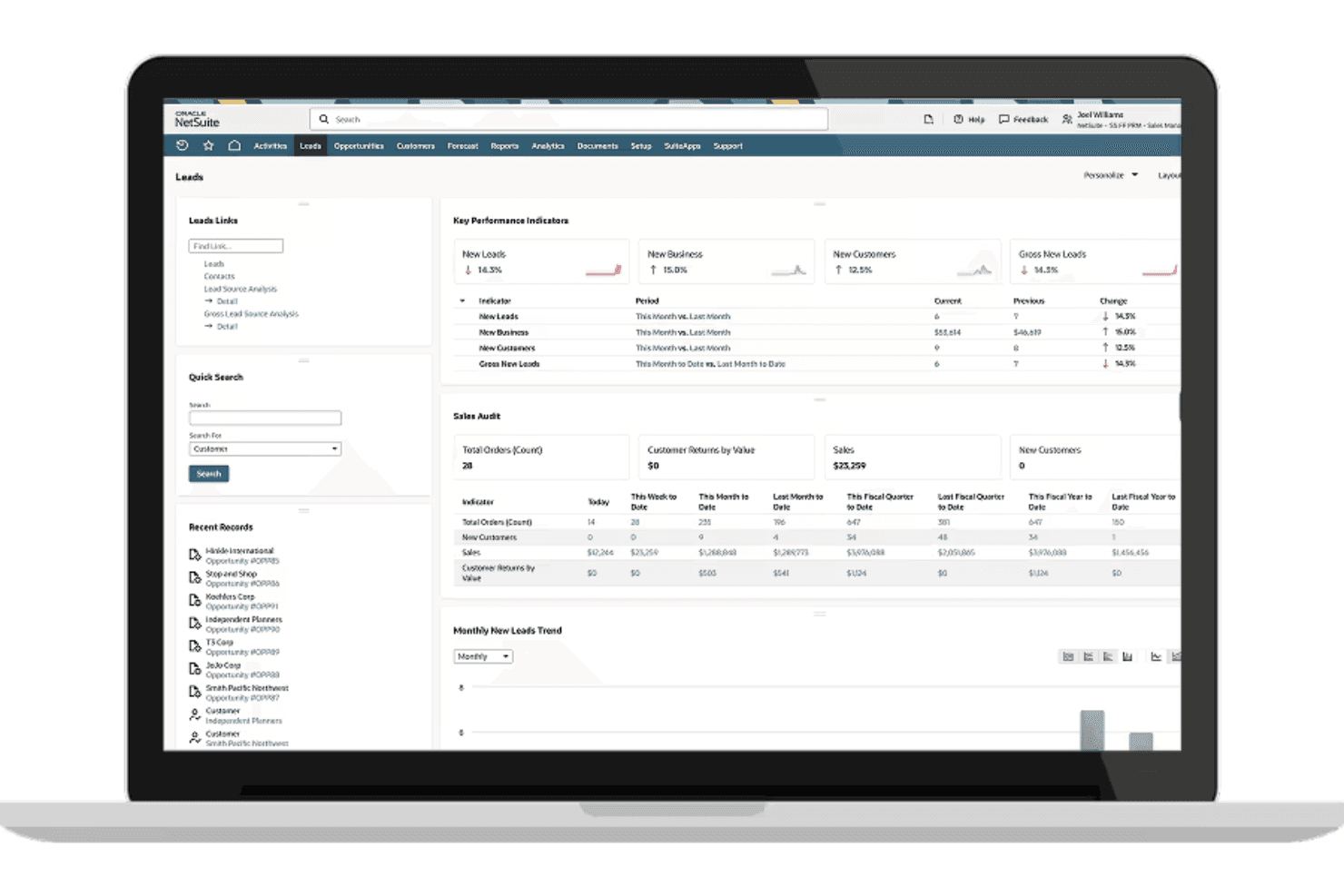
NetSuite Commerce integrates with NetSuite ERP, NetSuite CRM, SuiteTax, Advanced Order Management, NetSuite Inventory Management, SuitePromotions, SuiteBilling, SuitePeople HR, SuiteAnalytics, and NetSuite Point of Sale, among others.
NetSuite Commerce also has an open API and connects with third-party integration tools.
NetSuite Commerce Specs
- 2-Factor Authentication: Yes
- A/B Testing: No
- Analytics: Yes
- API: Yes
- BitCoin: No
- Conversion Tracking: Yes
- Dashboard: Yes
- Data Export: Yes
- Data Import: Yes
- Data Visualization: Yes
- Design Templates: Yes
- External Integrations: Yes
- Inventory Tracking: Yes
- Keyword Tracking: No
- Marketing Automation: Yes
- Multi-User: Yes
- Notifications: Yes
- Order Management: Yes
- Payment Gateway Integration: Yes
- Payment Processor: Yes
- PayPal: Yes
- Product Catalog: Yes
- Review Monitoring: No
- SAP Integration: No
- Scheduling: No
- Stripe: No
- Third-Party Plugins/Add-Ons: Yes


