

Instacart-Ladenfront-Bewertung: Vorteile, Nachteile, Funktionen und Preise
Instacart Storefront ist nicht einfach nur ein weiteres Lebensmittel-E-Commerce-Tool – ich zeige Ihnen, worin es überzeugt, wo es Schwächen hat und wie es sich in die sich entwickelnde Welt des Online-Lebensmittelhandels im Jahr 2026 einfügt.

Wir bewerten Tools unabhängig und Provisionen helfen, unsere Tests zu finanzieren. Siehe unsere transparente Richtlinie, unsere Methodik oder schlagen Sie ein Tool vor.
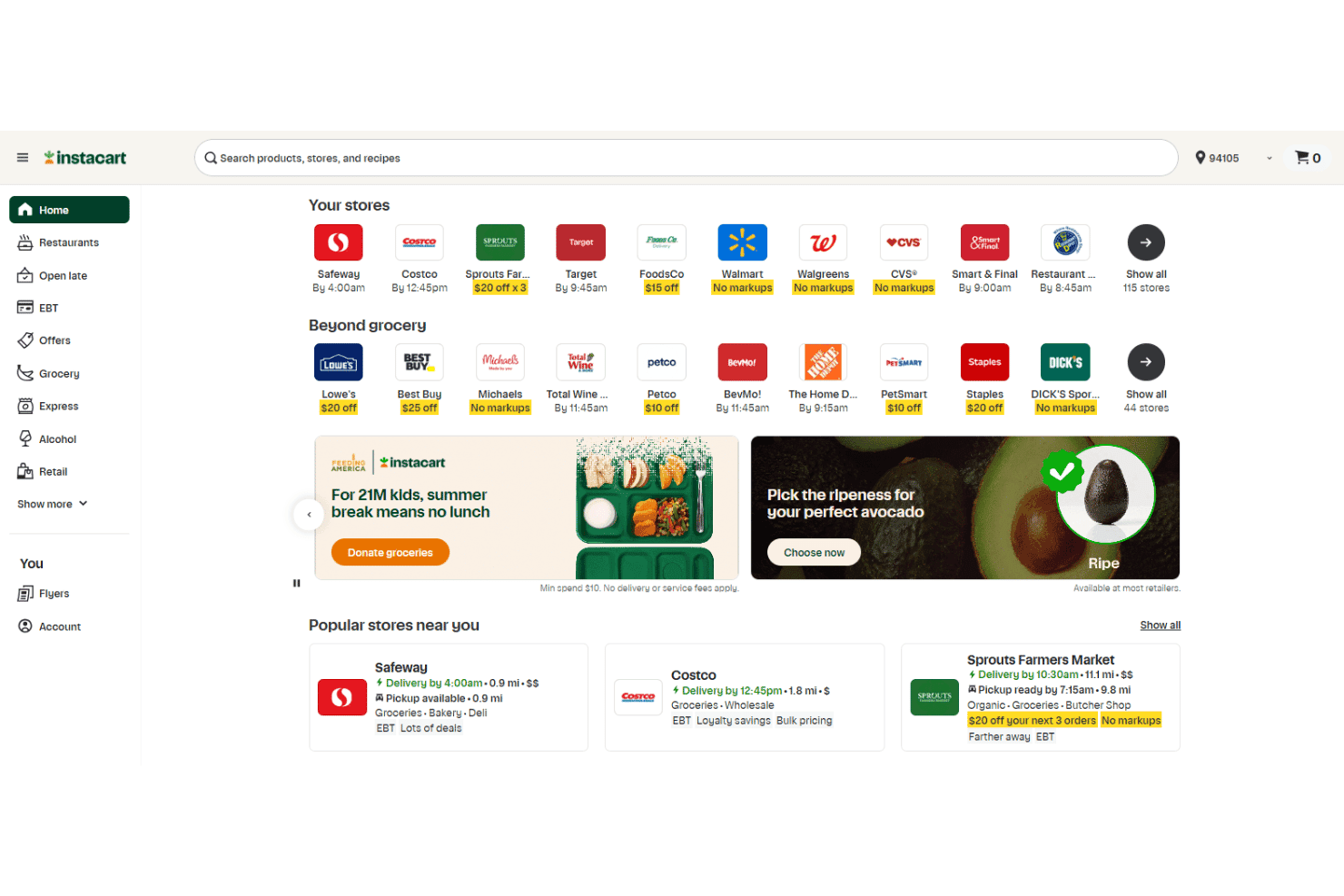
Instacart Storefront is a grocery ecommerce platform built for independent and regional grocers. It gives you a branded online store with same-day delivery and pickup already integrated. I'd consider it over a general solution like Shopify if native fulfillment is your priority. Storefront connects directly to Instacart's delivery network—something Shopify can't replicate without significant third-party configuration. This review covers its features, pricing, and where it fits for grocery operators competing online.
Instacart Storefront Evaluation Summary
4/5
- Pricing upon request
- Free demo available
Warum Sie unseren Software-Empfehlungen vertrauen können
6,700+
Reviews
20
Industry experts
16+
Evaluation factors
14
Years
Unser Team testet und bewertet Software seit 2012. Als Führungskräfte im Einzelhandel selbst wissen wir, wie schwierig – und wichtig – es ist, die richtige Software auszuwählen.
Für diesen Leitfaden haben wir Tools mithilfe von praktischen Tests und unabhängiger Recherche bewertet und dabei die Tools anhand unserer Bewertungskriterien bewertet.
Unsere Bewertungen spiegeln unser unabhängiges Urteilsvermögen wider – keine Verkaufsstrategie.
Instacart Storefront Overview
In my view, Instacart Storefront stands out for its turnkey approach, user-friendly interface, and deep fulfillment integrations—offering the speed of the Instacart Marketplace with a branded, white-label experience. Pricing can be higher than some DIY alternatives, but the tradeoff is speed, support, and access to Instacart’s advanced e-commerce solutions and ecosystem. I think it’s a smart choice for midsize and large grocers looking to improve Omnichannel service and shopper convenience. If you’re determining what matters most—rapid setup, white-label branding, or native delivery—Instacart Storefront deserves a close look.
Pros
- Fast setup with branded storefronts for grocers
- Direct integration with Instacart’s fulfillment and delivery network
- Built-in merchandising and digital marketing tools
Cons
- Limited ability to manage multiple store banners under one login
- Some fees and commissions can reduce overall margins
- Advanced analytics are less granular than competing platforms
Is Instacart Storefront Right For Your Needs?
Who Would be a Good Fit for Instacart Storefront?
Instacart Storefront is a smart fit for grocers and retail teams seeking a robust ecommerce platform without heavy IT requirements. It benefits operations teams, digital marketers, and multi-location grocery businesses with analytics, order management, and fulfillment flexibility. Both small and large grocery stores can take advantage of its features, with streamlined onboarding for independents and enterprise options for chains.
- Independent GrocersInstacart Storefront provides turnkey ecommerce, rapid launch, and support for single-location retailers without in-house developers.
- Regional Grocery ChainsPre-built omnichannel functions, centralized reporting, and marketing tools support expanded reach and brand control across locations.
- Digital MarketersMerchandising levers, promotions, email integrations, and analytics tailored for grocery ecommerce campaigns are available.
- Operations ManagersReal-time inventory sync, order management, and built-in fulfillment workflows help manage day-to-day grocery operations with less manual work.
- Enterprise RetailersCustom integration options, premium analytics, and dedicated account management scale for complex corporate needs.
- Meal Planning AppsNative integration support and food catalog data enable digital meal planners or recipe providers to connect users with real-time availability and delivery.
Who Would be a Bad Fit for Instacart Storefront?
Instacart Storefront isn’t ideal for businesses outside grocery, teams needing highly customized ecommerce, international operations, B2B commerce, or those requiring direct POS integration. Convenience stores and retailers already committed to other fulfillment solutions may also find it unsuitable.
- Non-Grocery RetailApparel, electronics, and specialty shops won’t benefit from features designed for grocery ecommerce.
- International ChainsLimited support for cross-border commerce and region-specific compliance restricts scalability for global retailers.
- Single Product StoresShops with one SKU or limited merchandise don’t need Instacart Storefront’s extensive inventory and promotion features.
- B2B WholesalersLacks B2B pricing tiers, quote management, and account-based commerce so is less relevant for wholesale buyers.
- Third-Party MarketplacesMarketplace operators or aggregators requiring vendor management and commission models won’t find those capabilities here.
- Convenience StoresSmall outlets with fast-turn, impulse-driven products and nonstandard fulfillment may require more specialized ecommerce solutions.
Unsere Bewertungsmethodik
Wie Wir Tools Testen & Bewerten
Wir haben über Jahre hinweg unser System zur Softwarebewertung und -testung entwickelt, verfeinert und verbessert. Die Bewertungsmatrix ist darauf ausgelegt, die Feinheiten der Softwareauswahl und die Effektivität eines Tools einzufangen, wobei der Fokus auf entscheidende Aspekte des Auswahlprozesses liegt. Nachfolgend sehen Sie genau, wie unser Test- und Bewertungssystem anhand von sieben Kriterien funktioniert. Dies ermöglicht uns, eine unvoreingenommene Bewertung der Software basierend auf Kernfunktionen, besonderen Merkmalen, Benutzerfreundlichkeit, Einarbeitung, Kundensupport, Integrationen, Kundenrezensionen und Preis-Leistungs-Verhältnis anzubieten.
Kernfunktionen (25% der Gesamtnote)
Der Ausgangspunkt unserer Bewertung ist immer die Kernfunktionalität des Tools. Verfügt es über die grundlegenden Funktionen, die ein Nutzer erwarten würde? Sind wichtige Kernfunktionen eventuell nur in höherpreisigen Tarifen enthalten? Ein Tool sollte im Kern mindestens mit den Basisfunktionen der Wettbewerber mithalten können.
Besondere Funktionen (25% der Gesamtnote)
Anschließend bewerten wir außergewöhnliche Funktionen, die über die normalen Kernfunktionen vergleichbarer Tools hinausgehen. Ein hoher Score spiegelt spezialisierte oder einzigartige Funktionen wider, die das Produkt schneller, effizienter oder wertvoller für die Nutzer machen. Wir bewerten außerdem, wie einfach sich das Tool mit anderen Programmen, die typischerweise zum Technologie-Stack gehören, integrieren lässt, um dessen Funktionalität und Nutzwert zu erweitern. Tools mit zahlreichen nativen Integrationen, Drittanbieteranbindungen und API-Zugang für eigene Entwicklungen schneiden hier am besten ab.
Benutzerfreundlichkeit (10% der Gesamtnote)
Wir betrachten, wie schnell und einfach es ist, die Kernaufgaben mit dem Tool zu erledigen. Software, die gut gestaltet und intuitiv zu bedienen ist, mobile Apps bietet, Vorlagen zur Verfügung stellt und komplexe Aufgaben einfach erscheinen lässt, erzielt die besten Werte.
Einarbeitung (10% der Gesamtnote)
Wir wissen, wie wichtig die schnelle Einführung eines neuen Tools im Team ist. Daher evaluieren wir, wie einfach es mit minimalem Training ist, das Tool kennenzulernen. Wir ermitteln, wie schnell ein Teammitglied ohne Vorerfahrung startklar ist. Lösungen, die kaum oder gar keine Unterstützung benötigen, erhalten die höchste Punktzahl.
Kundensupport (10% der Gesamtnote)
Wir überprüfen, wie schnell und einfach man Hilfe per Telefon, Live-Chat oder Wissensdatenbank erhält. Tools und Anbieter, die Echtzeit-Support bieten, schneiden am besten ab; Chatbots liegen am unteren Ende.
Kundenrezensionen (10% der Gesamtnote)
Zusätzlich zu unseren eigenen Tests ziehen wir den Net-Promoter-Score bestehender und früherer Kunden heran. Wir überprüfen, wie wahrscheinlich sie das Tool erneut für die Kernfunktionen wählen würden. Ein hoher Score spiegelt einen hohen Net-Promoter-Score wider.
Preis-Leistungs-Verhältnis (10% der Gesamtnote)
Schließlich bewerten wir im Kontext aller anderen Kriterien den Durchschnittspreis von Einstiegsplänen im Verhältnis zu den Kernfunktionen und betrachten den Wert der übrigen Kriterien. Software, die mehr zu geringeren Kosten bietet, schneidet hier besser ab.
Core Features
Branded Online Storefronts
Create a fully branded ecommerce site that matches your store’s look and feel. Customers shop directly from your digital shelves with familiar navigation and categories.
Real-Time Inventory and Pricing
Show live product availability and up-to-date prices across all SKUs. Shoppers only see what’s truly in stock, reducing out-of-stocks and enabling smarter substitutions when items are unavailable.
Instacart Fulfillment Integration
Route orders automatically to in-store pickers and Instacart Shopper drivers for fast, flexible fulfillment. Customers choose delivery or pickup at checkout.
Digital Merchandising Tools
Showcase promos, weekly ad deals, and featured products with built-in merchandising modules. Drive basket size with personalized recommendations tailored to each visitor.
Omnichannel Order Management
Manage delivery, pickup, and in-store orders in one dashboard for simpler operations. Orders sync with your POS for accurate tracking and service.
Self-Service Content Management
Easily add banners, product images, and seasonal updates with self-serve tooling that requires no tech support. Merchandisers can update content fast to reflect weekly offers or new items, with FoodStorm handling catering and deli ordering workflows.
Ease of Use
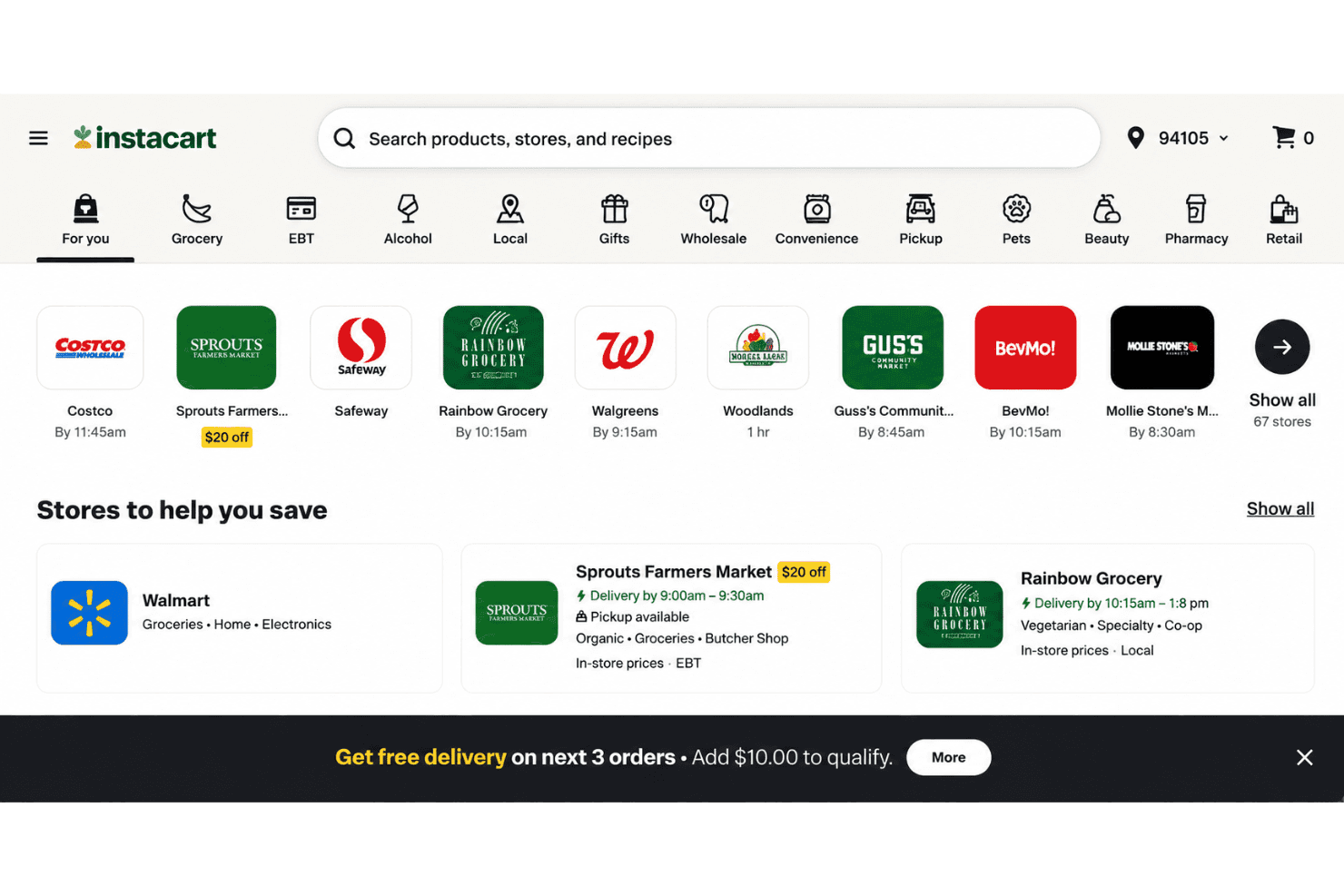
Instacart Storefront is one of the most intuitive platforms I’ve seen for grocers. The dashboard is clean, navigation mirrors an in-store flow, and onboarding takes days—not weeks. Merchandisers can update content or launch promos with just a few clicks. Real-time inventory sync and flexible order management keep things simple—and the Instacart app gives shoppers and operators a seamless mobile extension, minimizing manual work even during peak periods.
Integrations
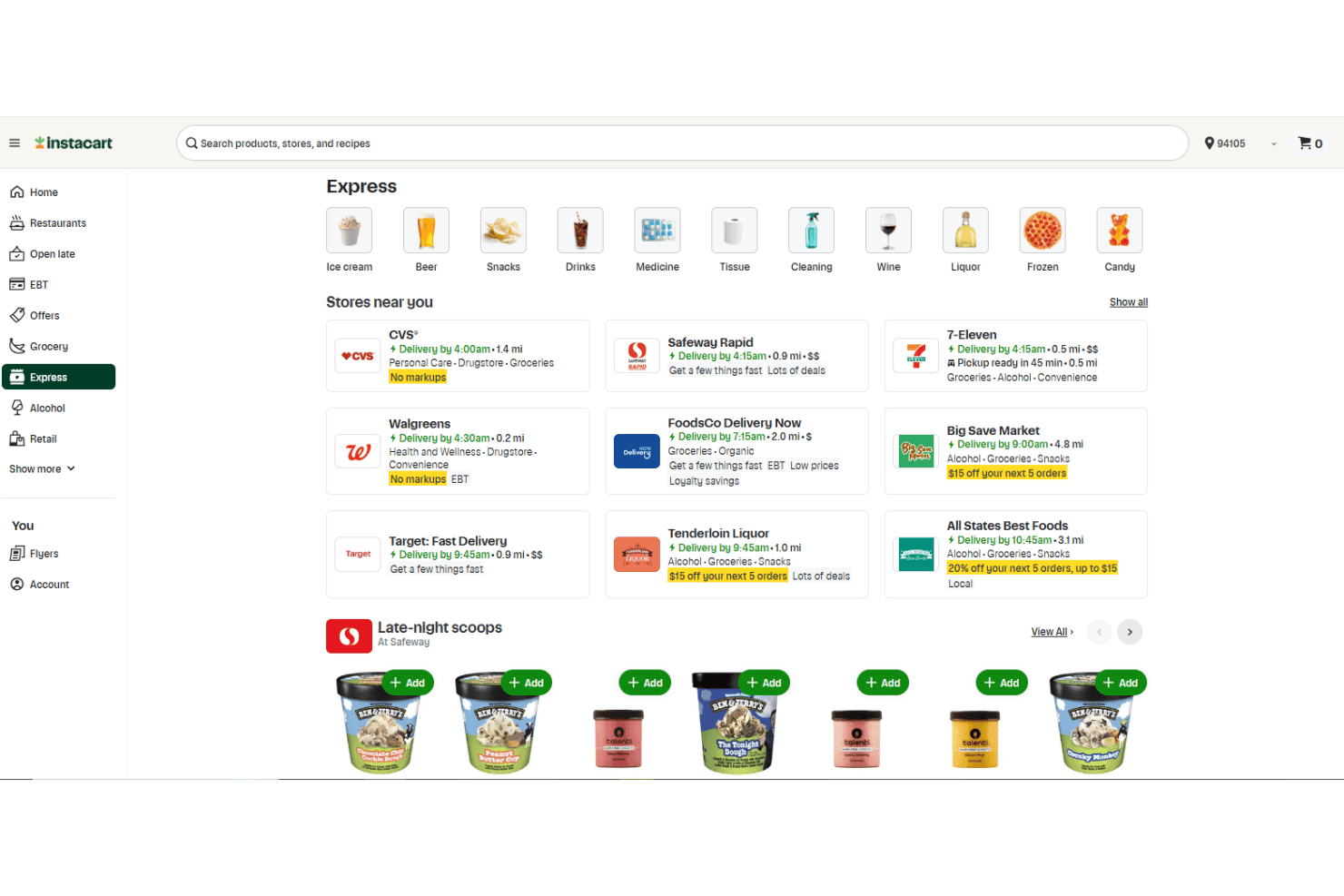
Instacart Storefront integrates with POS systems and catalogs, as well as loyalty programs such as Inmar and Birdzi.
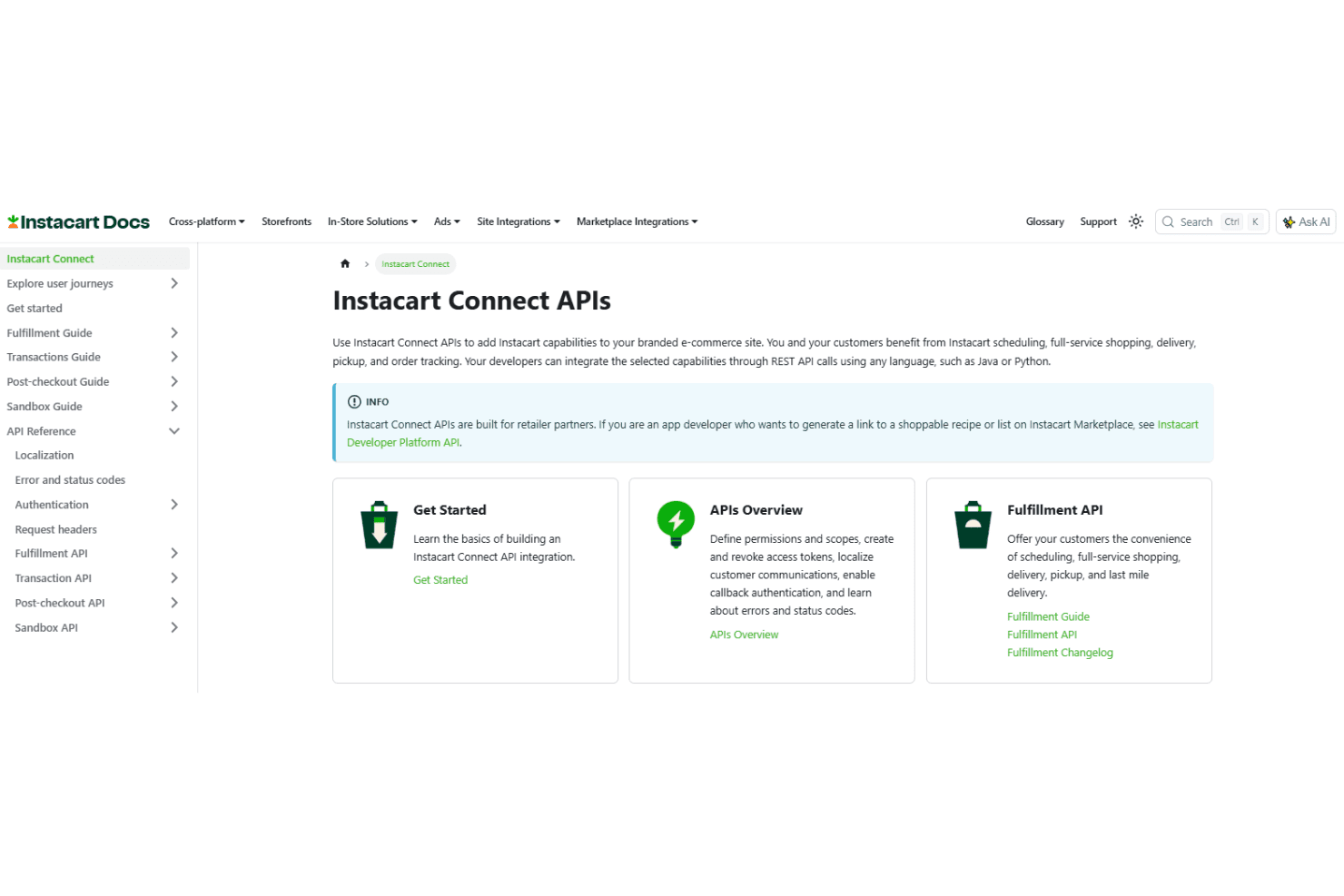
Instacart Storefront also offers robust REST APIs—including the Instacart Connect APIs and Developer Platform—and supports third-party integration for custom workflows and partner apps.
Instacart Storefront Specs
- 2-Factor Authentication: Yes
- A/B Testing: Yes
- Analytics: Yes
- API: Yes
- BitCoin: Yes
- Conversion Tracking: Yes
- Dashboard: Yes
- Data Export: Yes
- Data Import: Yes
- Data Visualization: Yes
- Design Templates: Yes
- External Integrations: Yes
- Inventory Tracking: Yes
- Keyword Tracking: Yes
- Marketing Automation: Yes
- Multi-User: Yes
- Notifications: Yes
- Order Management: Yes
- Payment Gateway Integration: Yes
- Payment Processor: Yes
- PayPal: Yes
- Product Catalog: Yes
- Review Monitoring: Yes
- SAP Integration: Yes
- Scheduling: Yes
- Stripe: Yes
- Third-Party Plugins/Add-Ons: Yes


