



QuickBooks Online vs. FreshBooks: Comparison & Expert Reviews For 2026



Every sale should feel like a win, not a bookkeeping emergency waiting to happen. When orders, invoices, expenses, and tax deadlines start piling up, the right accounting software can be the difference between smooth growth and spreadsheet chaos.
If managing your books feels overwhelming or your current system can't keep up with growth, you're not alone. Choosing between accounting tools like QuickBooks Online and FreshBooks can feel tricky, especially when you rely on ecommerce accounting software to keep your business moving.
In this article, I’ll walk you through a side-by-side comparison of both tools—including their pros and cons, best-fit use cases, pricing, security, and how easy they are to use—so you’ll know which one works best for your ecommerce business.
QuickBooks Online vs. FreshBooks: An Overview
QuickBooks Online
FreshBooks


Why Trust Our Software Recommendations
Our team has been testing and reviewing software since 2012. As retail leaders ourselves, we know how difficult—and important—it is to choose the right software.
For this guide, we evaluated tools using hands-on testing and independent research, scoring tools using our selection criteria.
Our reviews reflect our independent judgment—not a sales pitch.
QuickBooks Online vs. FreshBooks Pricing Comparison
| QuickBooks Online | FreshBooks | |
|---|---|---|
| Free Trial | Free plan + 30-day free trial available | 30-day free trial |
| Pricing | From $38/month | From $23/month |
QuickBooks Online vs. FreshBooks Pricing & Hidden Costs
QuickBooks Online offers pricing tiers based on business size and features, so you unlock more capabilities as you move up plans. FreshBooks uses a tiered subscription as well, but its plans are structured by the number of billable clients, which can lead to extra costs if your business grows quickly. Both platforms may charge additional fees for features like payroll, advanced payments, accountant access, or extra users, so real costs can creep up beyond the sticker price.
To find the best fit, dig into each platform’s pricing page and look past just the monthly plan cost. Make a list of must-have features, projected client or invoice volume, and who on your team needs access. Evaluate what’s included at each tier, consider your likely add-ons, and factor in your business growth—this will help you spot hidden costs and pick the tool that actually matches your long-term needs, not just your needs today.
QuickBooks Online vs. FreshBooks Feature Comparison
| QuickBooks Online | FreshBooks | |
|---|---|---|
| 2-Factor Authentication | ||
| API | ||
| Accounts Payable | ||
| Accounts Receivable | ||
| Balance Sheet | ||
| Billing/Invoicing | ||
| BitCoin | ||
| Budgeting | ||
| CRM Integration | ||
| Calendar Management | ||
| Contact Management | ||
| Customer Management | ||
| Dashboard | ||
| Data Export | ||
| Data Import | ||
| Data Visualization | ||
| Expense Tracking | ||
| External Integrations | ||
| Forecasting | ||
| General Account Ledger | ||
| Inventory Tracking | ||
| Multi-Currency | ||
| Multi-User | ||
| Notifications | ||
| P&L | ||
| PayPal | ||
| Payroll | ||
| SAP Integration | ||
| Stripe | ||
| Supplier Management | ||
| Tax Management |
QuickBooks Online vs. FreshBooks Integrations
| Integration | QuickBooks Online | FreshBooks |
|---|---|---|
| Shopify | ✅ | ❌ |
| WooCommerce | ✅ | ❌ |
| PayPal | ✅ | ❌ |
| Square | ✅ | ❌ |
| Stripe | ✅ | ❌ |
| Amazon | ✅ | ❌ |
| Wagepoint | ❌ | ✅ |
| HubSpot | ✅ | ✅ |
| Gusto | ❌ | ✅ |
| Mailchimp | ✅ | ❌ |
| API | ✅ | ✅ |
| Zapier | ✅ | ✅ |
QuickBooks Online is the clear winner for integrations, offering a much larger library of out-of-the-box connections across ecommerce, inventory, CRM, payment, and business applications. While both platforms provide APIs and Zapier support for building custom workflows, QuickBooks Online requires far less setup if you want to connect the tools you already use.
QuickBooks Online vs. FreshBooks Security, Compliance & Reliability
| Factor | QuickBooks Online | FreshBooks |
|---|---|---|
| Data Encryption | Uses AES256 and TLS encryption for all data at rest, and RSA encryption for data in transit. | Uses industry-standard SSL encryption to protect client data. |
| Regulatory Compliance | Complies with PCI DSS, undergoes SOC audits and reports, and is ISO 27001-certified. | Meets GDPR and PCI DSS standards for data and payment protection. |
| Access Controls | Offers customizable user permissions and audit logs for activity tracking. | Provides team permissions and role-based access controls. |
| Backup & Recovery | Runs automatic daily backups with disaster recovery protocols. | Performs regular backups and keeps redundant copies for reliability. |
| Uptime Guarantee | Reports 99.9% uptime backed by operational status dashboards. | Targets high uptime and publicly shares system status. |
Both QuickBooks Online and FreshBooks tick the main boxes for ecommerce security, but QuickBooks Online stands out with more transparent controls and established compliance for a broader range of industries. I trust QuickBooks Online for big business compliance needs, while FreshBooks feels best suited for small teams that want reliable protection without headaches.
QuickBooks Online vs. FreshBooks Ease of Use
| Factor | QuickBooks Online | FreshBooks |
|---|---|---|
| User Interface | Feature-rich dashboard with lots of information and customization. | Clean, simple design focused on clarity over complexity. |
| Onboarding | Guided setup helps new users, but the learning curve can be steep. | Quick start options and step-by-step prompts make onboarding easy. |
| Navigation | Menu-driven navigation with many advanced sections and settings. | Streamlined menus keep navigation straightforward and fast. |
| Mobile Experience | Full-featured mobile app with similar functionality to desktop. | User-friendly mobile app optimized for quick invoicing. |
| Support | Large knowledge base, community forums, and chat/call support hours. | Responsive email/chat support with easy-to-follow help docs. |
FreshBooks is the clear winner for ease of use, especially if you want simplicity right out of the box. I find QuickBooks Online better for users who want more power and don’t mind a little extra learning, while FreshBooks keeps things approachable at every step.
QuickBooks Online vs FreshBooks: Pros & Cons
QuickBooks Online
FreshBooks
Best Use Cases for QuickBooks Online and FreshBooks
QuickBooks Online
FreshBooks
Who Should Use QuickBooks Online, and Who Should Use FreshBooks?
QuickBooks Online is a smart fit for established ecommerce retailers, mid-sized teams, or anyone who needs inventory and reporting functionality, advanced integrations, or intricate accounting workflows. FreshBooks is my pick for solo sellers, freelancers, or teams prioritizing simplicity, quick invoicing, and clear client communications. If your team values feature depth and customization, lean QuickBooks Online; if ease of use and fast onboarding matter most, FreshBooks wins out.
Differences Between QuickBooks Online and FreshBooks
| QuickBooks Online | FreshBooks | |
|---|---|---|
| Automation | Robust automation for recurring invoices, expense matching, and tax prep. | Offers automated invoicing and reminders, but fewer advanced rules. |
| Inventory Management | Built-in inventory tracking for retail and product sales flows. | No native inventory feature, best for service and simple sales. |
| Pricing Model | Tiers based on features and user access, with optional add-ons. | Tiers based on number of billable clients, with a simple set of features. |
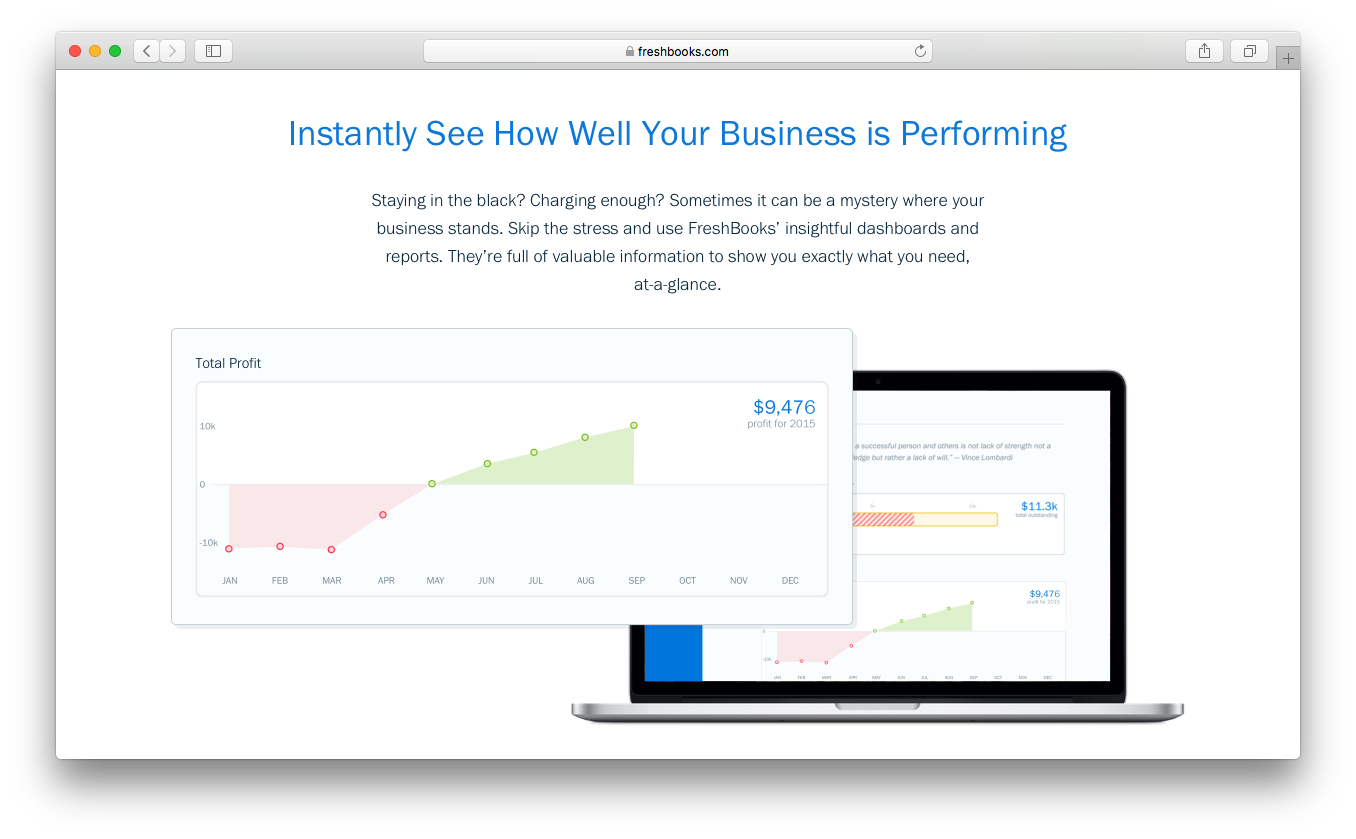
| Reporting Depth | Offers detailed, customizable financial, sales, and tax reports. | Focuses on straightforward, visual reporting for essentials. |
| User Interface | Feature-dense with advanced settings—powerful but takes more time to learn. | Clean modern interface that’s easy to learn, even for beginners. |
Similarities Between QuickBooks Online and FreshBooks
| Bookkeeping | Each platform provides core bookkeeping tools, including expense tracking, bank reconciliation, invoicing, financial reporting, and transaction categorization to keep your accounts up to date. |
|---|---|
| Cloud Access | Both are fully cloud-based so you can access financial data anywhere, with mobile apps for on-the-go management. |
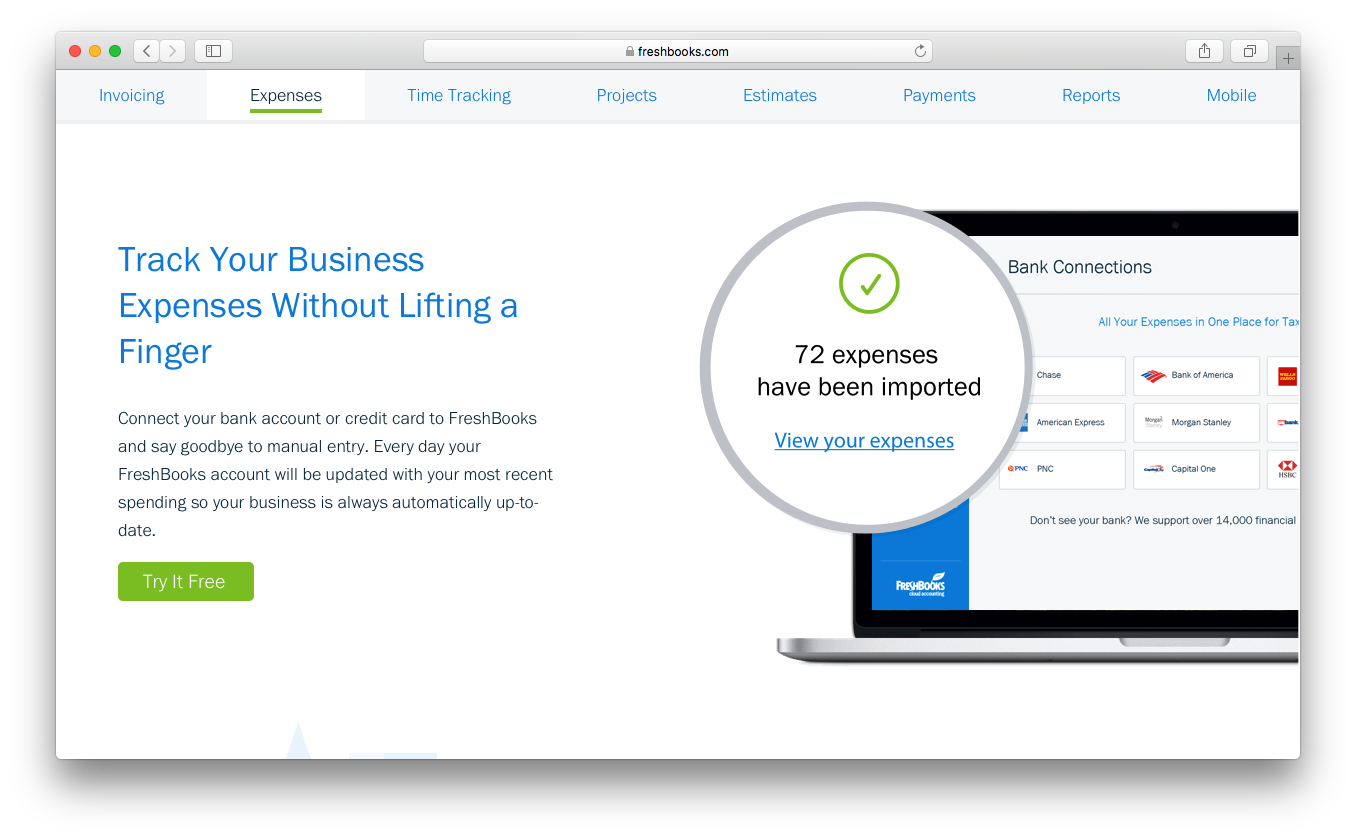
| Expense Tracking | Both track business expenses, categorize transactions, and support receipt uploads from web and mobile apps. |
| Integrations | Each connects with ecommerce platforms like Shopify and WooCommerce, plus essentials like Zapier for custom workflows. |
| Invoicing | Both let you create, customize, and send professional invoices with automation for reminders and recurrence. |