ClearSale Review: Pros, Cons, Features, and Pricing Explained
ClearSale stands out for its hands-on fraud review and high approval rates, making it ideal for businesses seeking a balance between security and customer experience.

We review tools independently, and commissions help fund our testing. See our transparency policy, our methodology, or suggest a tool.
ClearSale is an ecommerce fraud protection software that combines machine learning with human analyst review to approve or decline orders. It's built for merchants who need to cut chargebacks without sacrificing approval rates on legitimate orders. If you've looked at Signifyd, ClearSale's manual review layer gives it an edge when your order mix includes high-value or unusual transactions that a purely automated tool tends to flag incorrectly.
ClearSale Evaluation Summary
4.7/5
- Pricing upon request
- Free demo available
Why Trust Our Software Recommendations
6,700+
Reviews
20
Industry experts
16+
Evaluation factors
14
Years
Our team has been testing and reviewing software since 2012. As retail leaders ourselves, we know how difficult—and important—it is to choose the right software.
For this guide, we evaluated tools using hands-on testing and independent research, scoring tools using our selection criteria.
Our reviews reflect our independent judgment—not a sales pitch.
ClearSale Overview
When evaluating ClearSale, I thought it stood out for its blend of automated detection and manual review, which reduces false declines and helps approve more good orders. Its pricing is transparent and flexible, and the onboarding process is straightforward, making it easy for teams to get started. While its interface is less modern than some competitors and integrations may require extra setup, ClearSale’s responsive support and detailed reporting set it apart. I’d recommend ClearSale for retailers who want a hands-on approach to fraud review and value expert intervention over a purely automated system.
Pros
- Manual review team reduces false declines for legitimate orders.
- High approval rates for international and high-risk transactions.
- Responsive customer support helps resolve fraud issues quickly.
Cons
- Dashboard interface feels outdated compared to newer tools.
- Reporting features lack advanced customization options.
- Integration setup can require technical assistance for some platforms.
Is ClearSale Right For Your Needs?
Who Would be a Good Fit for ClearSale?
ClearSale is a strong choice for businesses that process high volumes of online transactions, operate internationally, or face frequent chargebacks and fraud attempts. Its manual review team and high approval rates make it especially valuable for industries where false declines can hurt customer relationships or revenue. Teams that need hands-on support and want to minimize lost sales from fraud prevention will find ClearSale’s approach well-suited to their needs.
- Luxury RetailManual review helps approve high-value orders that often trigger fraud alerts.
- Cross-Border EcommerceHigh approval rates support international transactions with complex risk profiles.
- Subscription ServicesReduces churn from false declines on recurring payments.
- Electronics RetailersProtects against high-ticket fraud and chargeback risks.
- Mid-Sized RetailersOffers expert support without requiring a large in-house fraud team.
- Direct-To-Consumer BrandsBalances fraud prevention with customer experience for growing brands.
Who Would be a Bad Fit for ClearSale?
ClearSale may not be the best option for businesses with low transaction volumes, those needing real-time automation without manual review, or companies with highly specialized fraud detection needs. Its interface and reporting may not meet the demands of teams that require advanced analytics or deep customization. Businesses with simple fraud profiles or those already using highly integrated platforms may find ClearSale’s approach less aligned with their needs.
- Small Local RetailersManual review is unnecessary for low transaction volumes.
- Digital Goods MarketplacesReal-time, automated fraud checks are often more critical.
- Large EnterprisesAdvanced reporting and customization needs may exceed ClearSale’s capabilities.
- B2B WholesalersFraud patterns differ from consumer retail, limiting ClearSale’s effectiveness.
- In-House Fraud TeamsTeams with deep fraud expertise may want more control.
- Highly Regulated IndustriesSpecialized compliance requirements may not be fully addressed by ClearSale.
Our Review Methodology
How We Test & Score Tools
We’ve spent years building, refining, and improving our software testing and scoring system. The rubric is designed to capture the nuances of software selection and what makes a tool effective, focusing on critical aspects of the decision-making process.
Below, you can see exactly how our testing and scoring works across seven criteria. It allows us to provide an unbiased evaluation of the software based on core functionality, standout features, ease of use, onboarding, customer support, integrations, customer reviews, and value for money.
Core Functionality (25% of final scoring)
The starting point of our evaluation is always the core functionality of the tool. Does it have the basic features and functions that a user would expect to see? Are any of those core features locked to higher-tiered pricing plans? At its core, we expect a tool to stand up against the baseline capabilities of its competitors.
Standout Features (25% of final scoring)
Next, we evaluate uncommon standout features that go above and beyond the core functionality typically found in tools of its kind. A high score reflects specialized or unique features that make the product faster, more efficient, or offer additional value to the user.
We also evaluate how easy it is to integrate with other tools typically found in the tech stack to expand the functionality and utility of the software. Tools offering plentiful native integrations, 3rd party connections, and API access to build custom integrations score best.
Ease of Use (10% of final scoring)
We consider how quick and easy it is to execute the tasks defined in the core functionality using the tool. High scoring software is well designed, intuitive to use, offers mobile apps, provides templates, and makes relatively complex tasks seem simple.
Onboarding (10% of final scoring)
We know how important rapid team adoption is for a new platform, so we evaluate how easy it is to learn and use a tool with minimal training. We evaluate how quickly a team member can get set up and start using the tool with no experience. High scoring solutions indicate little or no support is required.
Customer Support (10% of final scoring)
We review how quick and easy it is to get unstuck and find help by phone, live chat, or knowledge base. Tools and companies that provide real-time support score best, while chatbots score worst.
Customer Reviews (10% of final scoring)
Beyond our own testing and evaluation, we consider the net promoter score from current and past customers. We review their likelihood, given the option, to choose the tool again for the core functionality. A high scoring software reflects a high net promoter score from current or past customers.
Value for Money (10% of final scoring)
Lastly, in consideration of all the other criteria, we review the average price of entry level plans against the core features and consider the value of the other evaluation criteria. Software that delivers more, for less, will score higher.
Core Features
Automated Fraud Screening
ClearSale uses machine learning to analyze transactions for suspicious patterns. This helps quickly flag high-risk orders before they reach fulfillment.
Manual Order Review
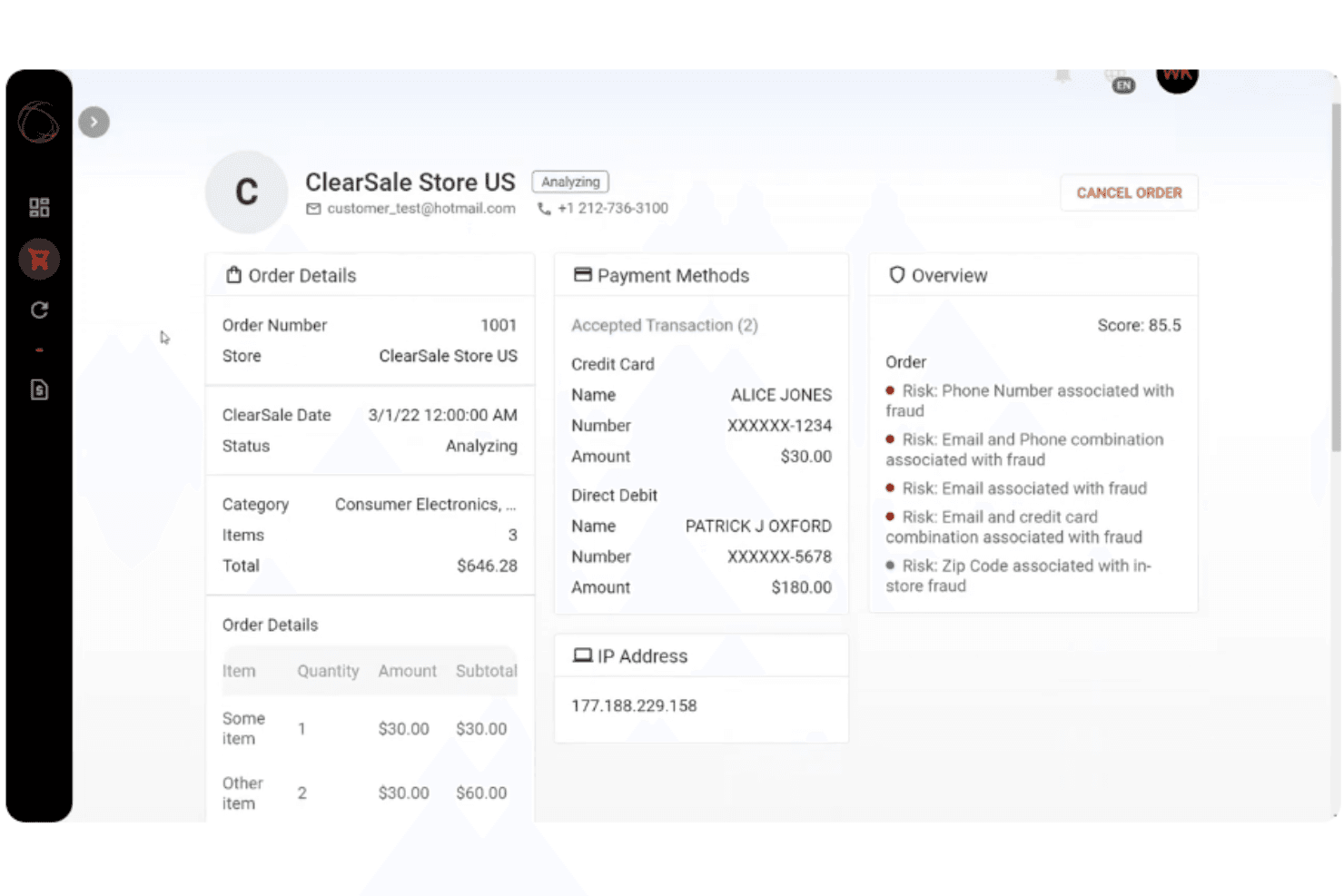
A team of fraud analysts reviews flagged transactions to reduce false declines. This hands-on approach helps approve more legitimate orders that automated systems might reject.
Chargeback Protection
ClearSale offers a chargeback guarantee, covering losses from approved fraudulent transactions. This shifts financial risk away from your business.
Real-Time Decisioning
The platform provides instant approval or rejection for most orders. This keeps checkout fast and reduces customer friction.
Customizable Rules Engine
Users can set specific fraud rules based on business needs or risk tolerance. This allows for tailored protection strategies across different product lines or regions.
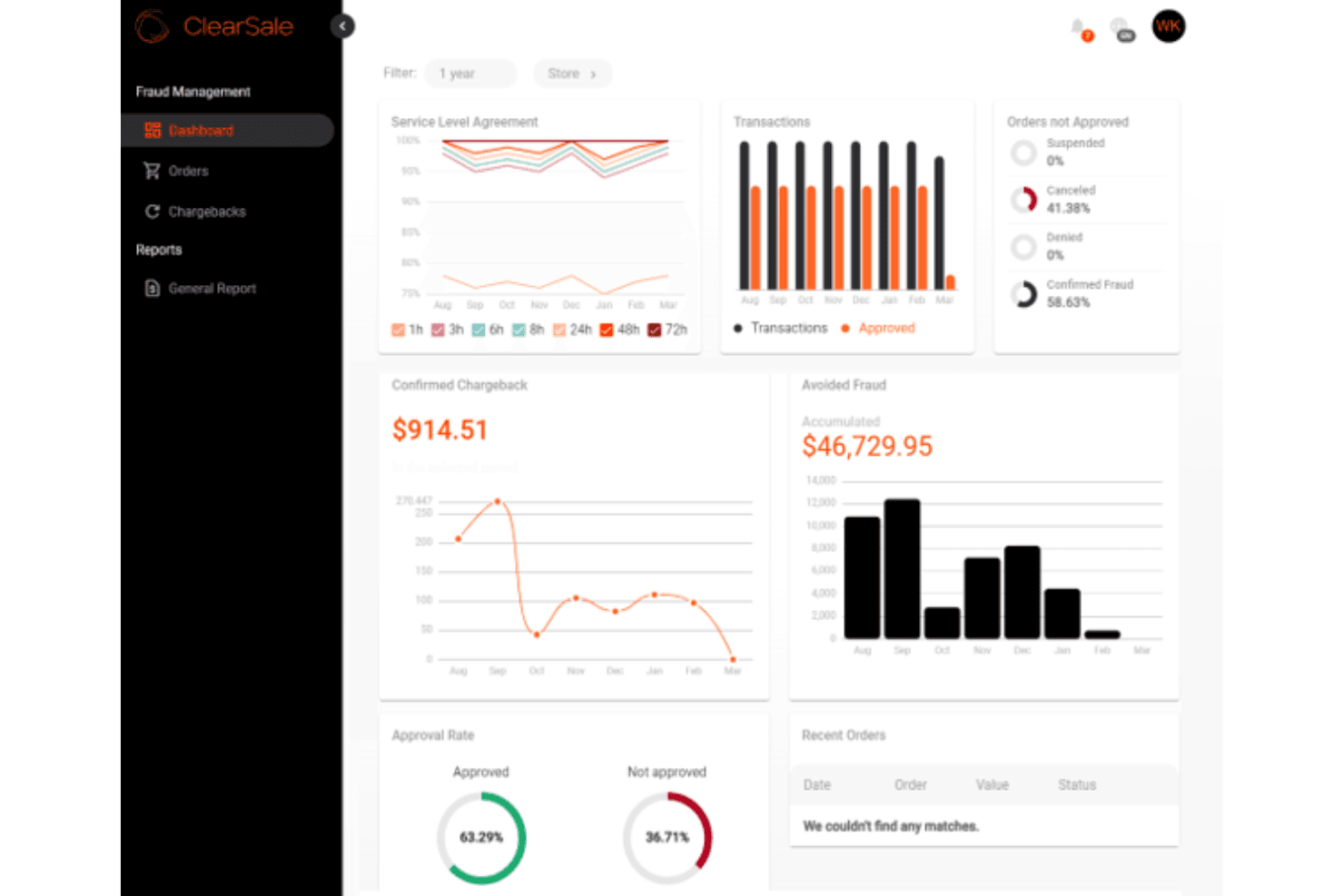
Detailed Reporting Dashboard
ClearSale’s dashboard gives insights into fraud trends, approval rates, and chargeback data. Teams can monitor performance and adjust strategies using real-time analytics.
Ease of Use
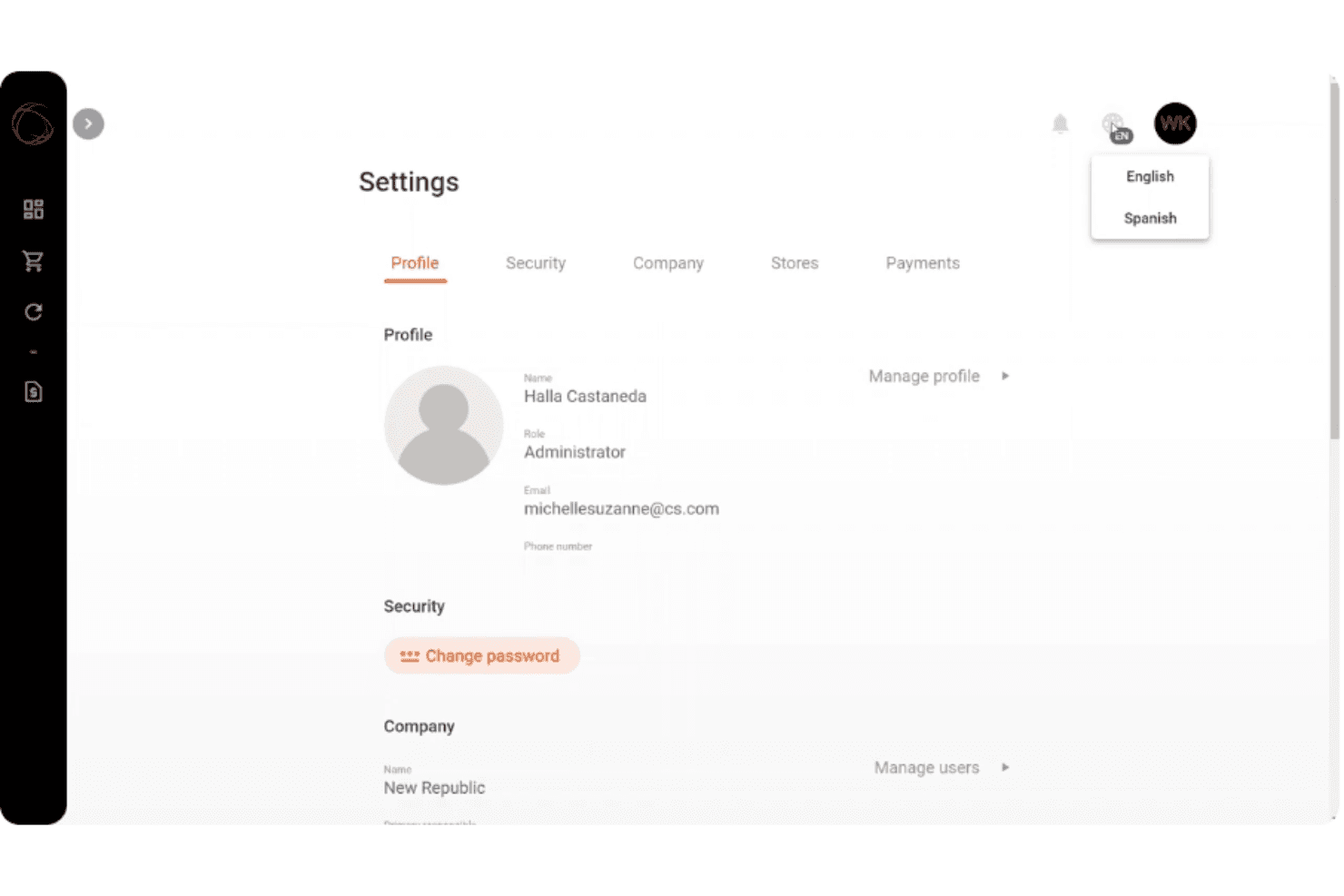
ClearSale is straightforward to set up and manage, with most users noting a smooth onboarding process and the responsive support team. The dashboard is functional but feels dated compared to newer interfaces, and some users mention that reporting tools could be more intuitive. However, the clear workflows for reviewing flagged orders and the availability of expert guidance make it accessible for teams without deep fraud expertise. Overall, it’s user-friendly but not the most visually modern option.
Integrations
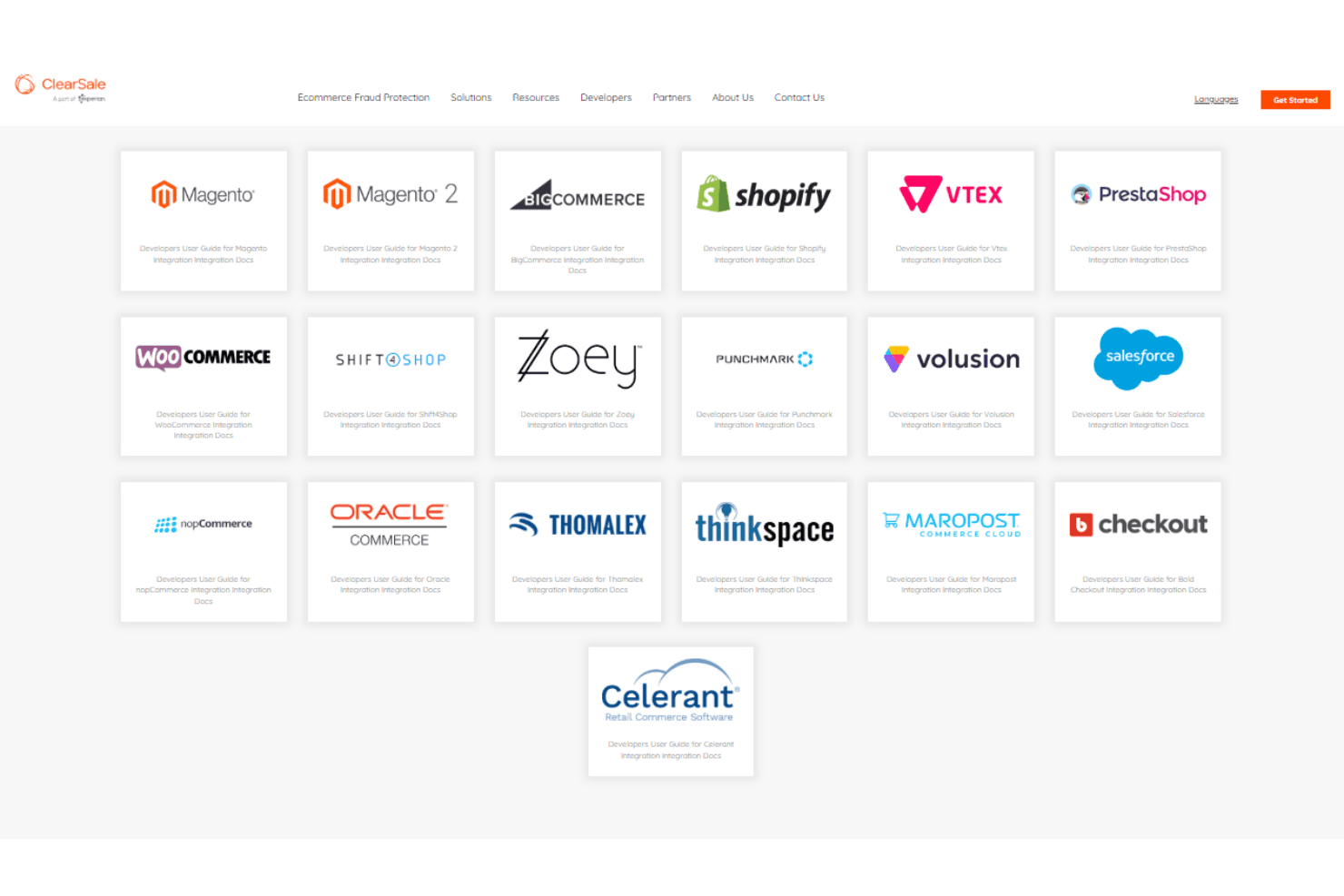
ClearSale integrates with Shopify, Magento, WooCommerce, Salesforce Commerce Cloud, BigCommerce, Oracle Commerce, and BigCommerce, among others.
ClearSale also offers an API for custom integrations and can connect with third-party integration tools.
ClearSale Specs
- 2-Factor Authentication: Yes
- API: Yes
- Billing/Invoicing: Yes
- Budgeting: Yes
- Calendar Management: Yes
- CRM Integration: Yes
- Customer Management: Yes
- Dashboard: Yes
- Data Export: Yes
- Data Import: Yes
- Data Visualization: Yes
- External Integrations: Yes
- Forecasting: Yes
- Multi-Currency: Yes
- Multi-User: Yes
- Notifications: Yes
- Password & Access Management: Yes
- Scheduling: Yes