

A strong Printful alternative gives you more control over your product range, order fulfillment, and profit margins without sacrificing reliability or ease of use. If you’re searching for Printful alternatives, you probably want faster shipping, unique products, or better pricing—often to stand out in a crowded print-on-demand market. This guide breaks down top options to help you find a solution that fits your business size, product vision, and need for scaling or specialization, so you can move forward with confidence and meet your customers’ expectations.
What Is Printful?
Printful is a print-on-demand platform that lets you design, sell, and ship custom products without holding inventory. You create your designs, add them to a wide selection of items, and connect Printful to your store. When customers buy, Printful prints and ships directly to them under your brand. This approach minimizes risk, streamlines fulfillment, and helps ecommerce teams expand product offerings with fewer operational headaches.
Printful Alternatives Comparison Table
This comparison table summarizes pricing details for my top printful alternatives selections.
| Tool | Best For | Trial Info | Price | ||
|---|---|---|---|---|---|
| 1 | Best for instant store setup | 14-day free trial | From $29/month | Website | |
| 2 | Best for unique print-on-demand home goods | Free plan available | Pricing upon request | Website | |
| 3 | Best for premium apparel embroidery and patches | Free plan available | From $3.85/item | Website | |
| 4 | Best for buyer-driven product customization | Free plan available | Pricing upon request | Website | |
| 5 | Best for creators wanting fan memberships & merch | Free plan available | From $19/month | Website | |
| 6 | Best for scaling with diverse product suppliers | Free plan available | From $39/month | Website | |
| 7 | Best for free custom storefront setup | Free plan available | Free to use | Website | |
| 8 | Best for fast global print fulfillment | Free plan available | From $29.99/month | Website | |
| 9 | Best for automated order syncing across stores | Free plan available | Pricing upon request | Website | |
| 10 | Best for branded apparel with custom labeling | Free plan available | From $30/month | Website |


Why Trust Our Software Recommendations
6,700+
Reviews
20
Industry experts
16+
Evaluation factors
14
Years
Our team has been testing and reviewing software since 2012. As retail leaders ourselves, we know how difficult—and important—it is to choose the right software.
For this guide, we evaluated tools using hands-on testing and independent research, scoring tools using our selection criteria.
Our reviews reflect our independent judgment—not a sales pitch.
Best Printful Alternatives Reviews

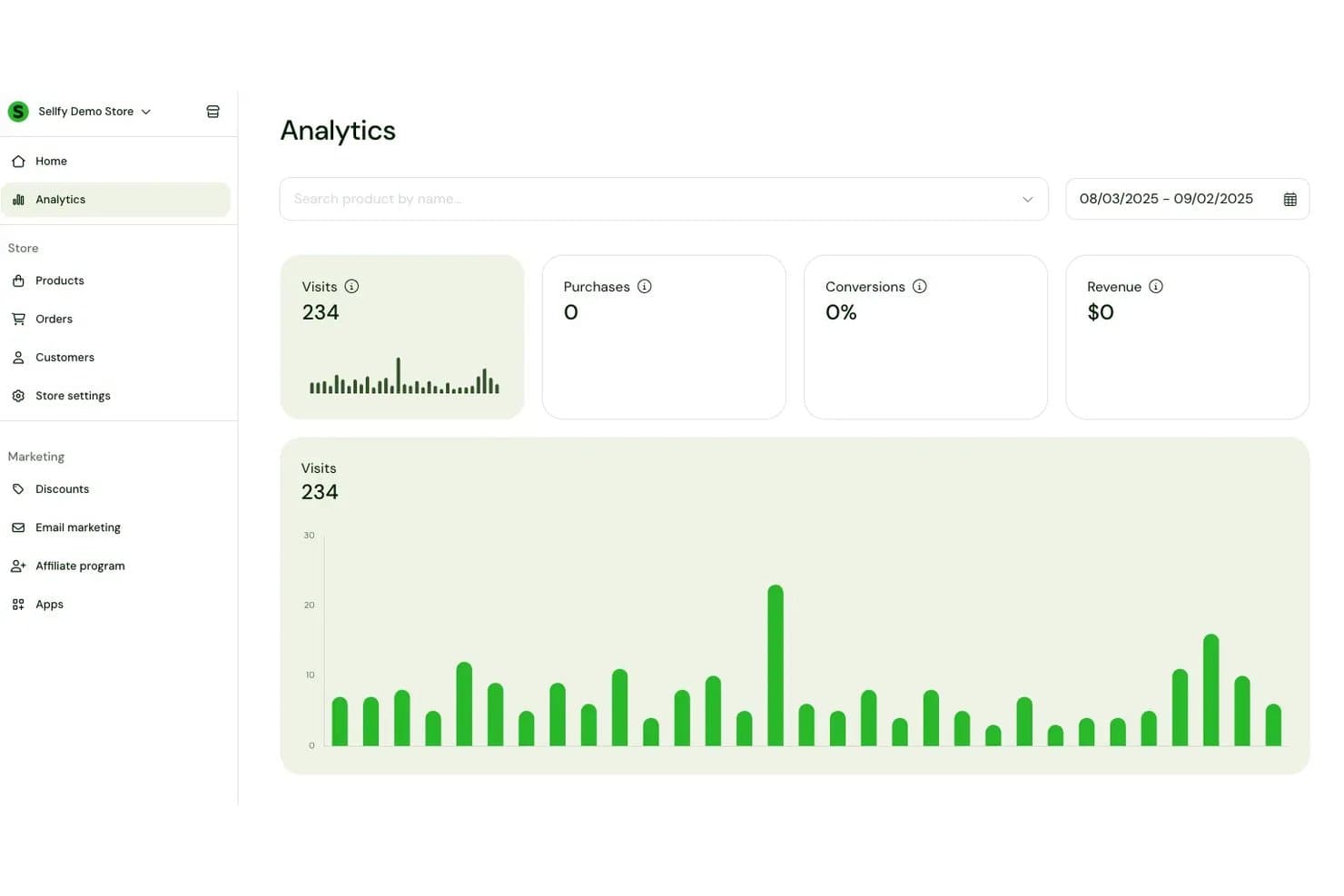
Sellfy tracks store visits, purchases, conversions, and revenue in one dashboard. Sellfy gives ecommerce businesses and creators a quick way to launch print-on-demand stores, combining digital and physical product sales with a simple management dashboard and built-in marketing tools.
Who Is Sellfy Best For?
Creators and small ecommerce teams who want to launch a store quickly without complex setup or coding.
Why Sellfy Is a Good Best Printful Alternatives
I picked Sellfy because the platform lets you launch a print-on-demand store almost instantly, with digital and physical product sales managed in one dashboard. I like the built-in marketing tools, making it easy to start selling and promoting new designs or merch lines right away without any major technical setup.
Sellfy Key Features
- Product embedding tools: Add Sellfy products directly to any website or blog using embeddable widgets.
- Mobile-friendly storefronts: Stores and checkout flows auto-optimize for mobile devices.
- Discount codes and coupons: Create custom promotions with flexible coupon management.
- Pay-what-you-want pricing option: Let buyers choose how much to pay for specific products.
Sellfy Integrations
Native integrations are not clearly documented. Sellfy provides an API for custom integrations.
Pros and Cons
Pros:
- Offers pay-what-you-want pricing option
- Sells digital and physical products together
- Launches print-on-demand store in minutes
Cons:
- Native integrations are limited and mostly custom
- Fewer print partner options than competitors
Learn more about Sellfy: Best for unique print-on-demand home goods
- Free plan available
- Pricing upon request
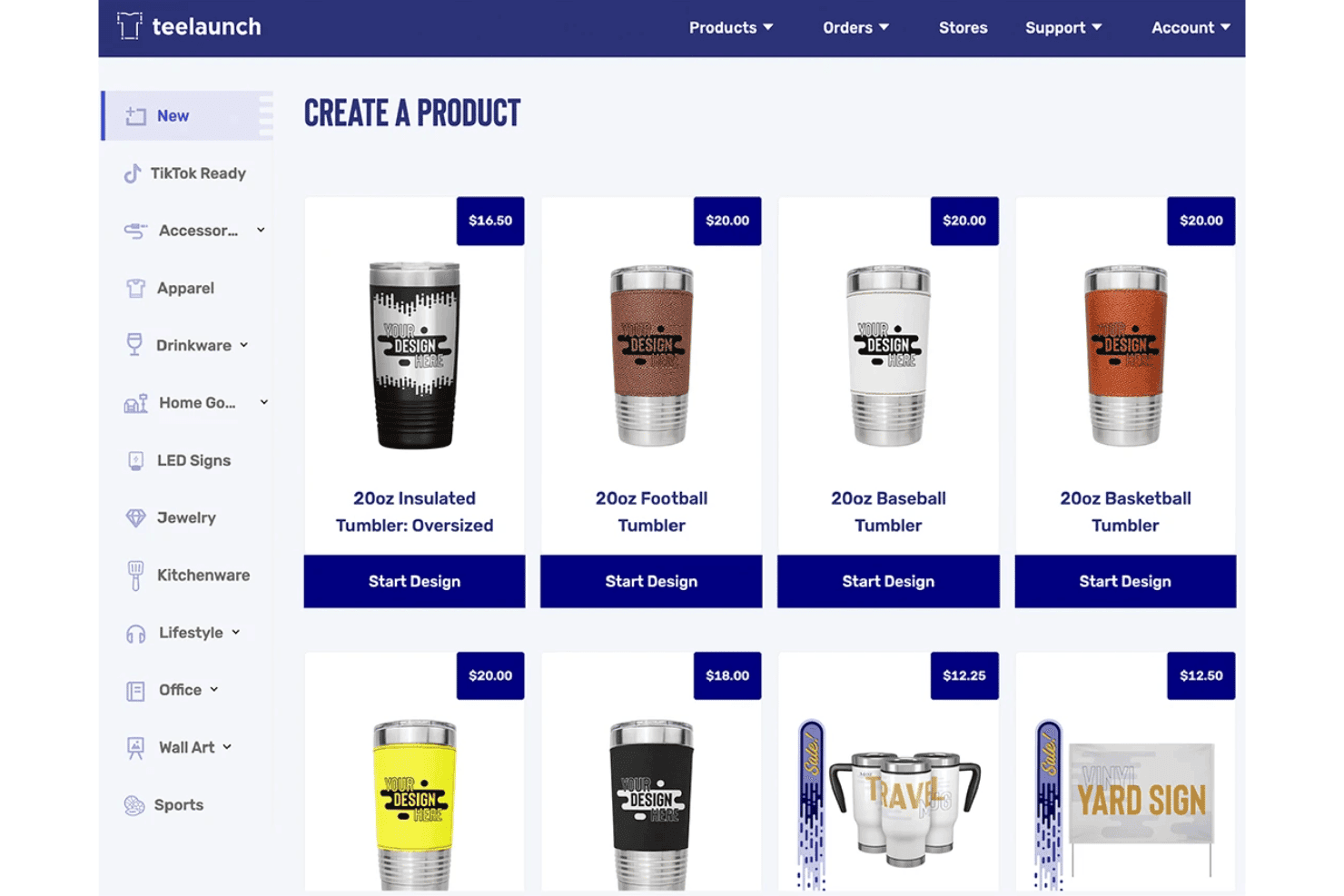
Teelaunch's product creation page displays a catalog of customizable drinkware items, including sports-themed and insulated tumblers, with base prices starting at $16.50. Teelaunch is a free-to-use print on demand fulfillment app for ecommerce sellers who want to offer a catalog that goes beyond standard apparel, with products ranging from drinkware and wall decor to laser-engraved metal signs.
Who Is Teelaunch Best For?
Teelaunch is a strong fit for Shopify sellers and independent designers who want to differentiate their store with home goods and lifestyle products that most POD platforms don't carry.
Why Teelaunch Is a Good Printful Alternative
I picked Teelaunch as one of the best Printful alternatives because of its genuinely differentiated product catalog. While Printful is strong on apparel, Teelaunch is where I go for categories like laser-engraved metal signs, jewelry, and home accessories that most POD platforms simply don't stock. The dye sublimation and laser engraving print methods open up product types that apparel-focused platforms can't replicate, so your store isn't competing on the same items as everyone else.
Teelaunch Key Features
- Shopify native integration: Connects directly with Shopify for automated product syncing and order fulfillment.
- Launchpad dashboard: Lets you track pending orders, swap variants, and manage artwork all in one place.
- Automated order processing: Orders are sent straight to production as soon as a customer purchases.
- Multiple print methods: Supports direct-to-garment, laser engraving, sublimation, and digital printing for diverse product customization.
Teelaunch Integrations
Teelaunch offers native integrations with Shopify, Etsy, WooCommerce, and TikTok Shop.
Pros and Cons
Pros:
- Multiple print methods including laser engraving
- Free to use with no monthly fees
- Unique home goods catalog beyond standard apparel
Cons:
- Limited white-label branding compared to competitors
- Inconsistent production and shipping times reported
Learn more about Teelaunch: Best for premium apparel embroidery and patches
- Free plan available
- From $3.85/item
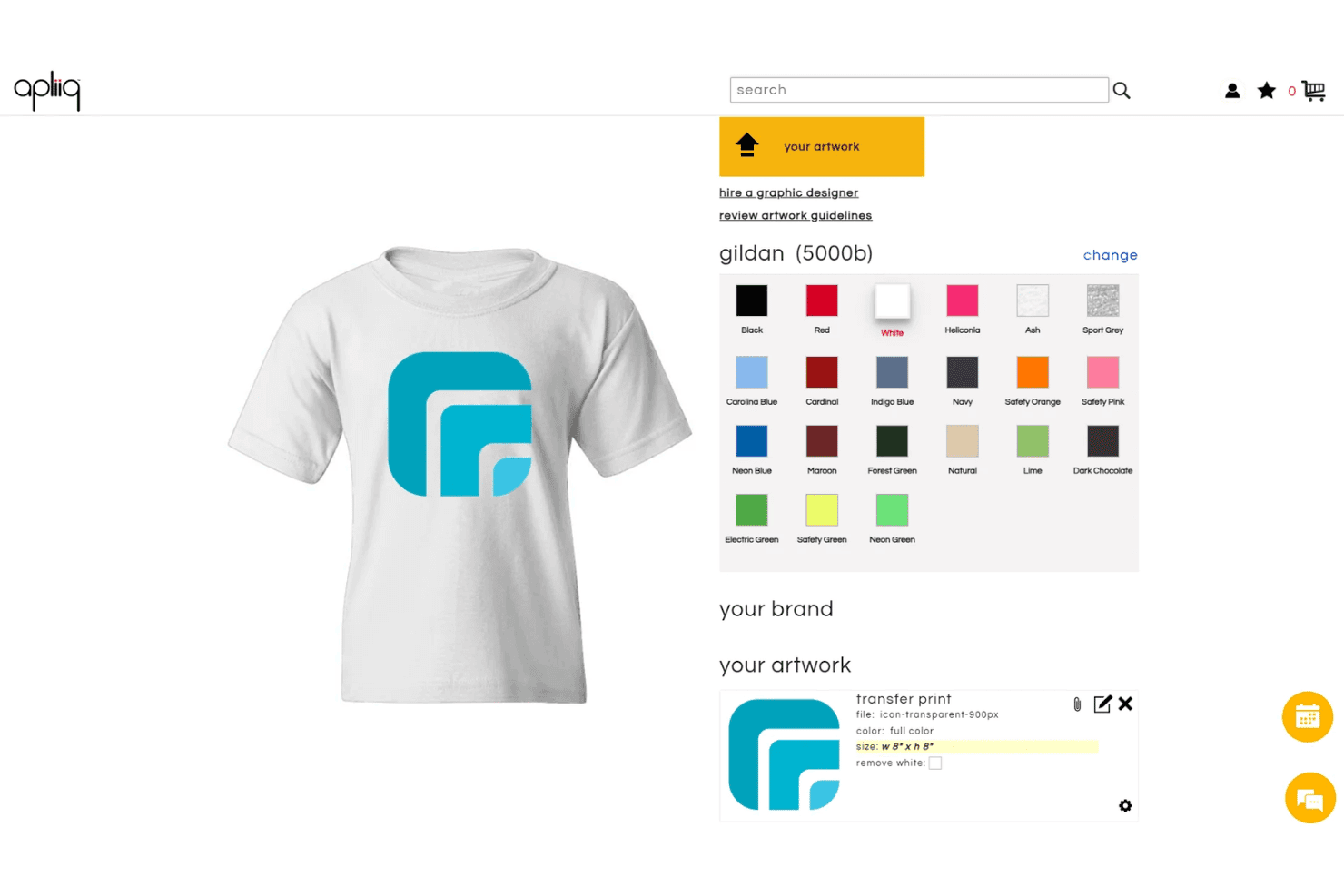
Apliiq allows users to upload custom artwork and preview it on a Gildan t-shirt with multiple color options. Apliiq is a U.S.-based print-on-demand platform built for apparel brands that want private-label finishing—think sewn-in woven labels, patches, and cut-and-sew upgrades—rather than generic fulfillment.
Who Is Apliiq Best For?
Apliiq is a strong fit for independent apparel designers and DTC brands building premium streetwear or lifestyle clothing lines who need branded, retail-ready products without bulk order minimums.
Why Apliiq Is a Good Printful Alternatives
I picked Apliiq as one of the best Printful alternatives because of how it handles apparel branding at the production level. Printful offers embroidery, but Apliiq goes further with sewn-in woven labels, custom patches, and cut-and-sew upgrades like pocket additions and hood liners built into individual POD orders. I love that you can replace all manufacturer branding with your own private label on every item shipped, without hitting a minimum order threshold.
Apliiq Key Features
- Shopify, WooCommerce, Etsy, and Wix integrations: Connect your store for automated product sync and order fulfillment.
- In-platform design editor: Create and visualize apparel designs and mockups directly on the web platform.
- Bulk order discounts: Access automatic tiered discounts that increase with total order quantity, supporting larger drops or coordinated launches.
- U.S.-based fulfillment centers: Leverage two domestic production sites for faster delivery to North American customers.
Apliiq Integrations
Apliiq offers native integrations with Shopify, WooCommerce, Etsy, and Wix, and provides a REST API for custom integrations.
Pros and Cons
Pros:
- Cut-and-sew upgrades available without minimums
- Embroidery and patch options rarely found elsewhere
- Private-label branding on individual POD orders
Cons:
- U.S.-only production slows international delivery
- Apparel-only catalog with no home goods
Learn more about Apliiq: Best for buyer-driven product customization
- Free plan available
- Pricing upon request
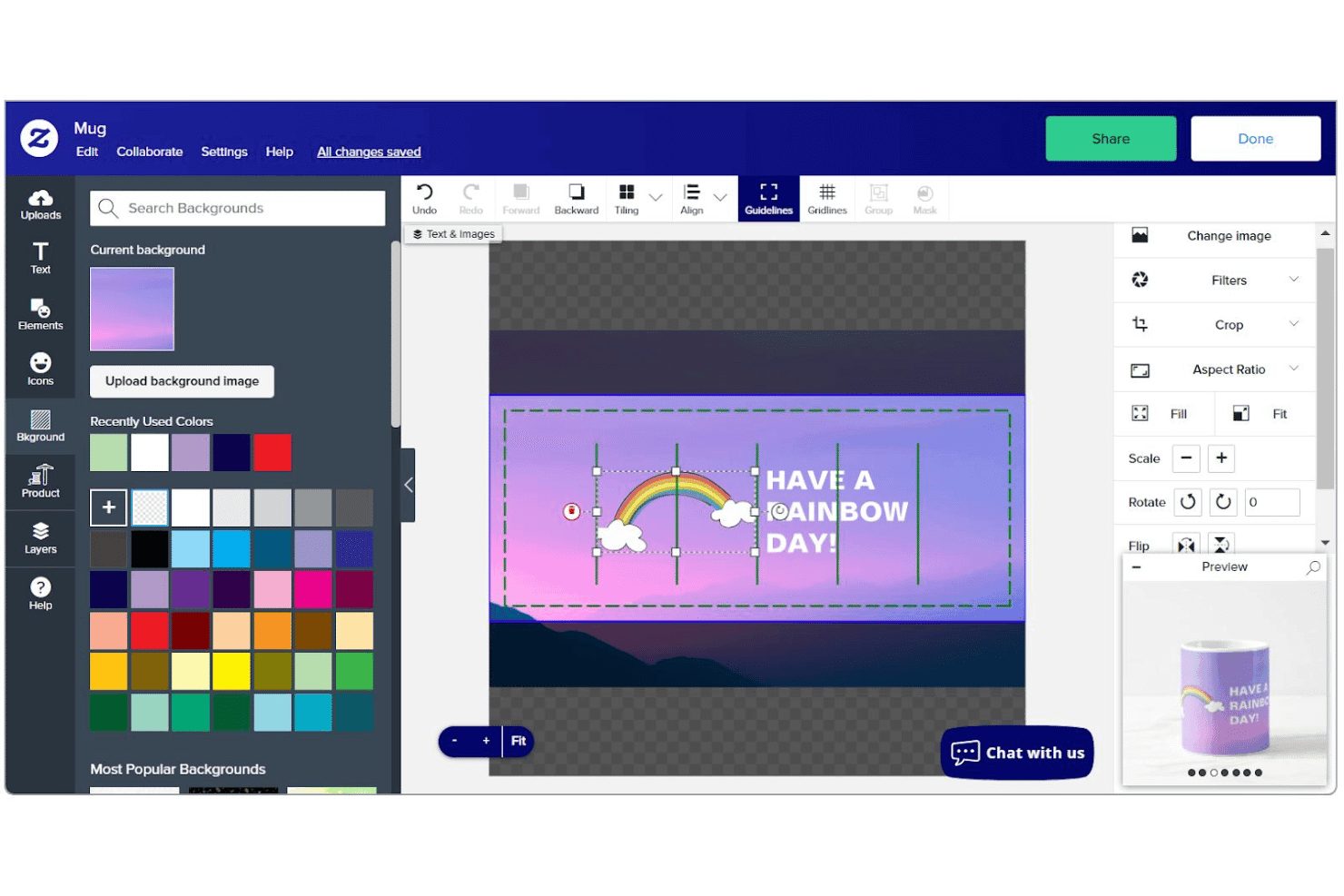
Zazzle offers a drag-and-drop mug design editor with background options, text tools, and a live product preview. Zazzle is a print-on-demand marketplace where designers upload artwork and buyers customize products themselves, making it a compelling option for creators who want passive income without managing fulfillment or inventory.
Who Is Zazzle Best For?
Zazzle suits independent graphic artists and hobbyist designers who want to monetize their artwork through a marketplace without building or managing their own ecommerce store.
Why Zazzle Is a Good Printful Alternative
I've included Zazzle in my top picks because no other POD platform puts customization directly in the buyer's hands the way Zazzle does. Shoppers can edit text, swap photos, and reposition design elements right on the product page before they check out. You can also lock specific elements to protect your original layout, which matters a lot for products like wedding invitations or branded mugs where placement is intentional.
Zazzle Key Features
- Extensive product catalog: Choose from thousands of customizable items spanning apparel, invitations, home goods, and gifts.
- Built-in storefront management: Set up a personalized shop with custom branding, banners, and curated collections within Zazzle's marketplace.
- Material and finish options: Select from a variety of paper stocks, print finishes, and product materials for different merchandise types.
- Creator earnings controls: Set your own royalty rates, manage product listings, and track earnings directly through the seller dashboard.
Zazzle Integrations
Native integrations are not clearly documented. Zazzle is a closed marketplace and does not support direct connections to external ecommerce platforms or custom APIs.
Pros and Cons
Pros:
- No upfront inventory or setup costs
- Thousands of product types available
- Buyers self-customize products before purchasing
Cons:
- Inconsistent print quality reported by sellers
- Products always ship under Zazzle's branding
Learn more about Zazzle : Best for creators wanting fan memberships & merch
- Free plan available
- From $19/month
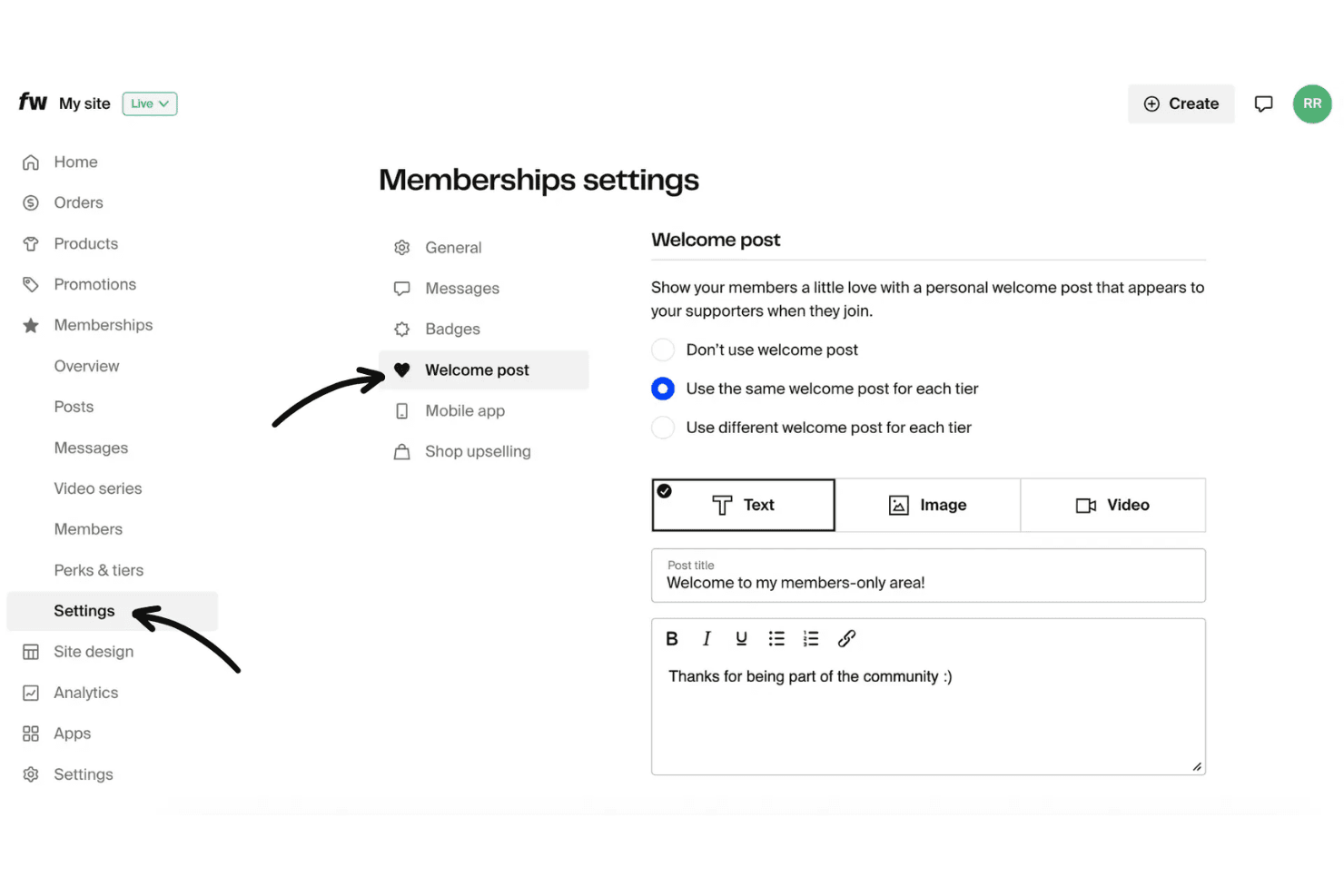
Fourthwall allows creators to set up a customizable welcome post for new members, with options for text, image, or video content. Fourthwall is an all-in-one platform for online creators who want to sell print-on-demand merch, digital products, and paid memberships from a single branded storefront—without needing a separate ecommerce platform or fulfillment provider.
Who Is Fourthwall Best For?
Fourthwall is a strong fit for content creators—YouTubers, streamers, podcasters, and musicians—who want to monetize their audience through merch and memberships without managing multiple tools.
Why Fourthwall Is a Good Printful Alternative
I picked Fourthwall as one of the best because it's the only POD option that bundles recurring fan memberships directly into the store. Unlike Printful, which is a fulfillment layer, Fourthwall lets you sell merch and gated membership perks like members-only videos and Discord roles from one place. The Twitch Product Gifting and YouTube Merch Shelf integrations put merch in front of your audience exactly where they're already watching.
Fourthwall Key Features
- Global fulfillment network: Orders are routed to multiple production partners across the US, UK, EU, Canada, Mexico, Australia, and Japan.
- No-code store designer: Drag-and-drop tools let you build fully branded online shops without coding or external ecommerce platforms.
- Custom product catalog: A wide range of merchandise options, including print-on-demand apparel, drinkware, accessories, and unique custom goods.
- Integrated digital products: Sell digital downloads with secure delivery and manage up to 100 GB of digital product storage on the Pro plan.
Fourthwall Integrations
Fourthwall offers native integrations with YouTube Product Shelf, TikTok Shop, Facebook, Instagram Shopping, Twitch Product Gifting, StreamElements, Streamlabs, Discord, Spotify, Klaviyo, Mailchimp, and Zapier. An API is also available for custom integrations.
Pros and Cons
Pros:
- No transaction fees on merchandise sales
- Sells bespoke products like plushies and pins
- Includes fan membership and subscription tools
Cons:
- Higher base product costs than Printful
- No Shopify or Etsy storefront compatibility
Learn more about Fourthwall: Best for scaling with diverse product suppliers
- Free plan available
- From $39/month
Visit WebsiteCustomer Rating:4.6/5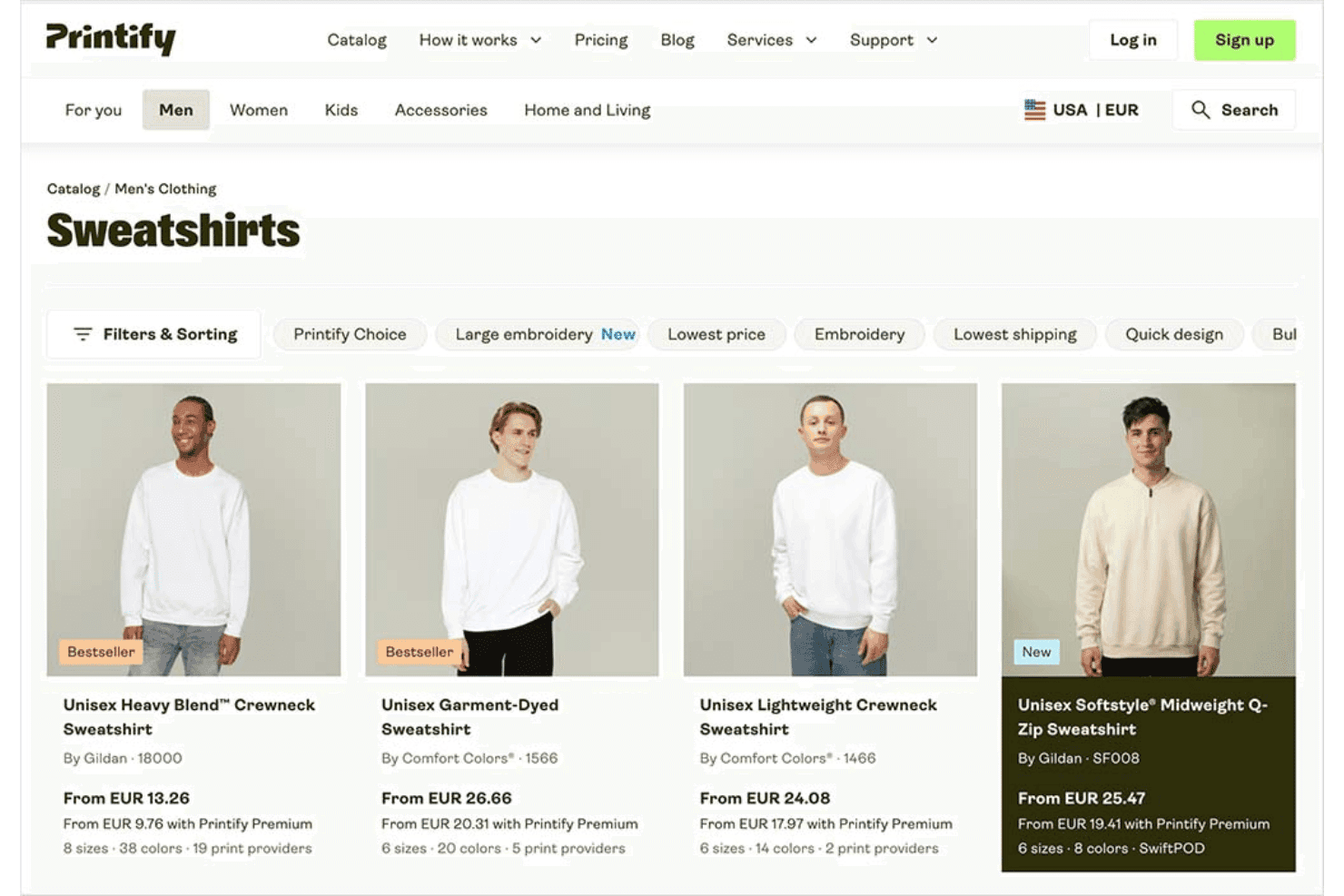
Printify offers a catalog of men's sweatshirts from brands like Gildan and Comfort Colors, with prices starting from EUR 13.26 and filtering options like Printify Choice and embroidery. Printify is a print-on-demand platform that lets ecommerce sellers, independent designers, and dropshippers launch custom merchandise across a network of 90+ print providers without holding inventory.
Who Is Printify Best For?
Printify is a strong fit for growing ecommerce businesses that want to test and scale across multiple product categories without committing to a single fulfillment partner.
Why Printify Is a Good Printful Alternative
I picked Printify as one of the best Printful alternatives because of the sheer control it gives you over your supply chain. With 90+ print providers across 140+ fulfillment facilities, I can route a hoodie order through a US-based partner for domestic speed and the same design through a European provider for international buyers. The AI Mockup generator also lets me preview products across different providers before committing, which saves a lot of back-and-forth on sample orders.
Printify Key Features
- Product personalization tool: Enable buyers to customize items with names, dates, or text directly at checkout.
- Multi-platform integration: Connect with Shopify, Etsy, WooCommerce, Amazon, Wix, and TikTok Shop from one Printify dashboard.
- Transparent per-item pricing: See real-time fulfillment costs for every product without hidden fees or minimums.
- Automated order routing: Printify automatically sends orders to the production partner closest to your customer's location.
Printify Integrations
Printify offers native integrations with Shopify, Etsy, WooCommerce, Wix, Squarespace, BigCommerce, PrestaShop, Big Cartel, eBay, Amazon, and TikTok Shop. An API is available for custom integrations.
Pros and Cons
Pros:
- No minimum order quantities required
- Largest product catalog at 2,000+ items
- 90+ print providers to choose from
Cons:
- No in-house fulfillment network
- Print quality varies across different providers
Learn more about Printify:
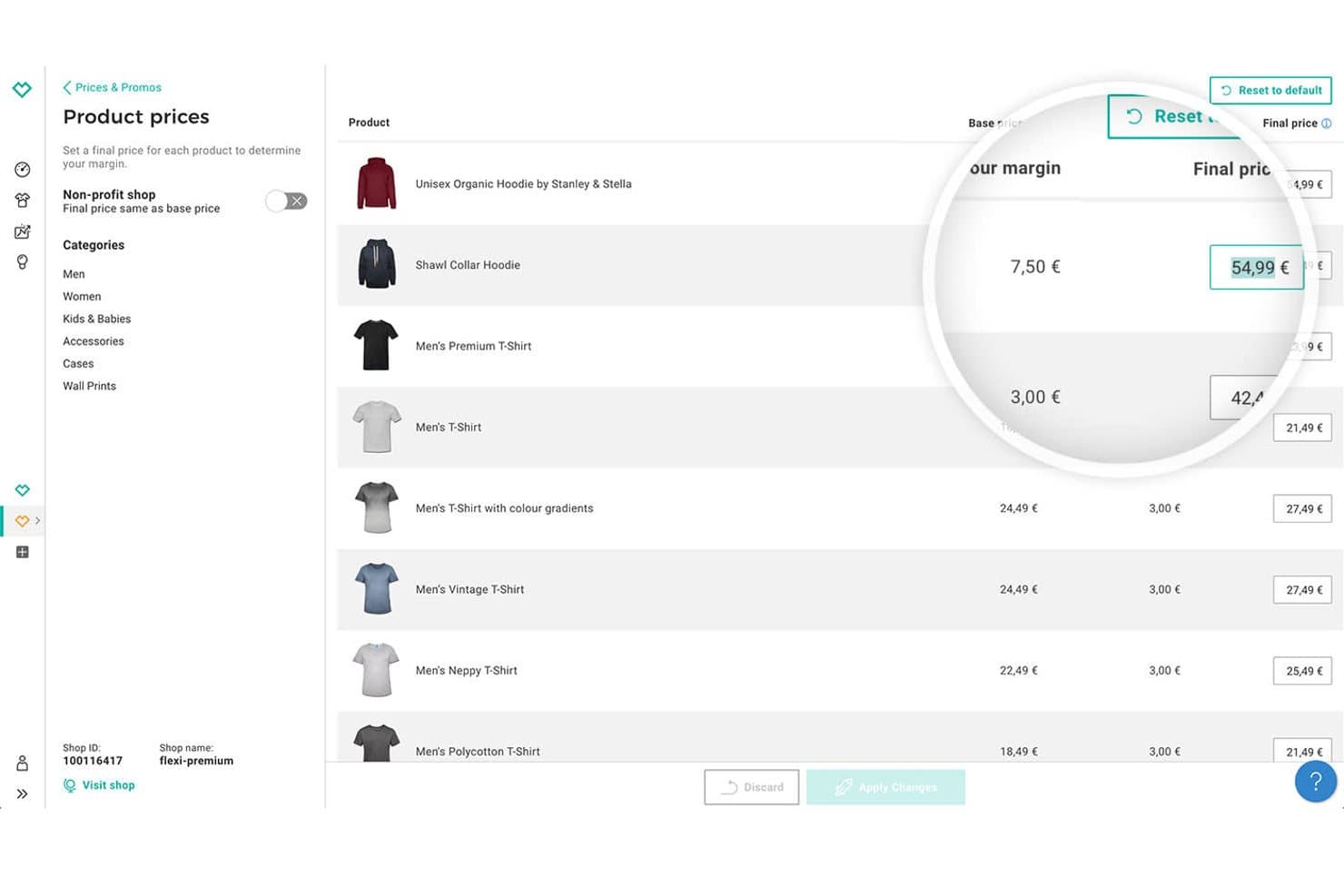
Spreadshop allows sellers to set custom final prices and margins for each product directly from a product pricing dashboard. Spreadshop is a free print-on-demand storefront platform built for creators, designers, and small brands who want to sell custom merchandise without dealing with inventory, production, or fulfillment logistics.
Who Is Spreadshop Best For?
Spreadshop suits independent creators, YouTubers, and community-driven brands that want a zero-cost merch channel without building a full ecommerce stack.
Why Spreadshop Is a Good Printful Alternative
I picked Spreadshop as one of the best because it gives you a fully hosted, branded storefront at no cost, with no subscription standing between you and your first sale. I love that you can personalize your shop with your own logo, color theme, and custom CSS, so it actually looks like your brand. On top of that, 95% of orders ship within 48 hours from owned facilities in the US and Europe, which is production speed that directly competes with Printful's fulfillment times.
Spreadshop Key Features
- Built-in design editor: Create and customize product graphics directly inside the platform without external software.
- Extensive product catalog: Access over 300 customizable items spanning apparel, accessories, and home goods.
- Global production network: Fulfillment centers in the US and Europe help ensure broad international shipping coverage.
- Volume-based commissions: Earn increased profit margins with tiered volume discounts as your sales grow.
Spreadshop Integrations
Spreadshop offers native integrations with YouTube Shopping and a WordPress plugin for site embeds. An API is available for custom integrations. For Shopify, WooCommerce, Etsy, Squarespace, and TikTok Shop, integrations are supported via the sibling product Spreadconnect.
Pros and Cons
Pros:
- 300+ products across multiple merchandise categories
- Ships 95% of orders within 48 hours
- Free storefront with zero monthly fees
Cons:
- Design editor lacks AI and 3D tools
- No custom packaging or branded inserts
Learn more about Spreadshop:
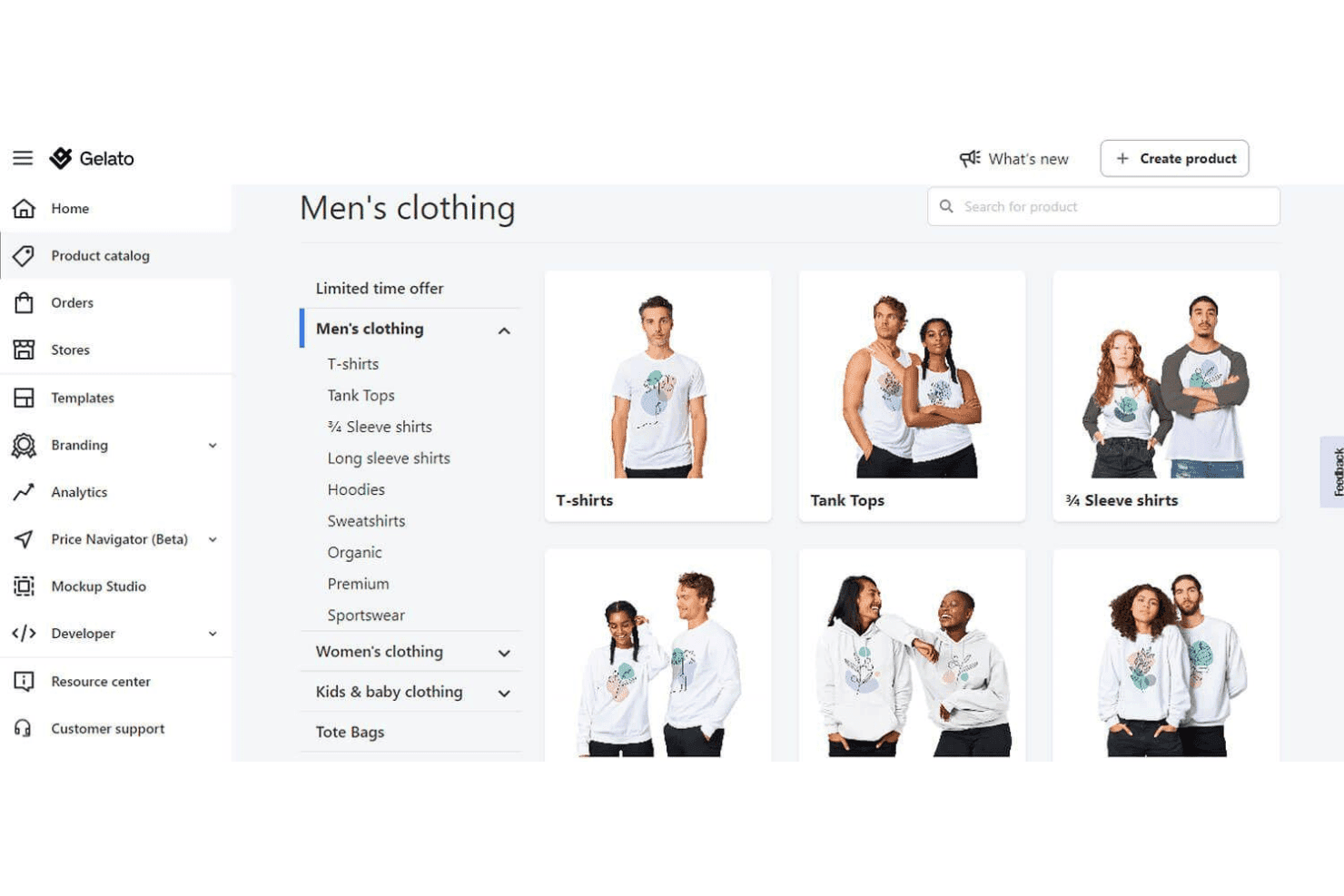
Gelato's product catalog displays a wide range of men's clothing options including T-shirts, Tank Tops, Hoodies, and Sweatshirts available for print-on-demand. Gelato is a print-on-demand platform built for ecommerce sellers who need to reach international customers quickly, producing and shipping custom products locally through a network of 140+ print partners across 32 countries.
Who Is Gelato Best For?
Gelato is a strong fit for independent designers and small ecommerce brands selling across multiple international markets from a single Shopify or Etsy storefront.
Why Gelato Is a Good Printful Alternative
I picked Gelato as one of the best Printful alternatives because its local production network changes the fulfillment math. With 140+ print partners across 32 countries, roughly 90% of orders are produced inside the destination country, cutting shipping times compared to Printful's centralized facilities. A customer in Germany or Australia receives their order in 2-5 days. The Velocity Switch tool also lets you migrate an existing Printful store catalog directly to Gelato's product range.
Gelato Key Features
- Personalization Studio: Lets customers personalize Shopify and Etsy products with text, dates, or images at checkout.
- Magic Mockups: Uses AI to create photorealistic product and lifestyle mockups for your catalog.
- Multi-store integration: Supports multiple Shopify, Etsy, or WooCommerce stores from a single Gelato account.
- Branded packaging options: Offers custom labels, inserts, and packaging for sellers aiming to strengthen their brand identity.
Gelato Integrations
Gelato offers native integrations with Shopify, Etsy, WooCommerce, Amazon, TikTok Shop, Wix, Squarespace, BigCommerce, and Order Desk. An API is available for custom integrations.
Pros and Cons
Pros:
- AI tools simplify mockup and product creation
- No minimum order quantities on products
- Local production speeds up global order fulfillment
Cons:
- Print quality inconsistent across regional partner facilities
- Smaller product catalog than Printful or Printify
Learn more about Gelato: Best for automated order syncing across stores
- Free plan available
- Pricing upon request
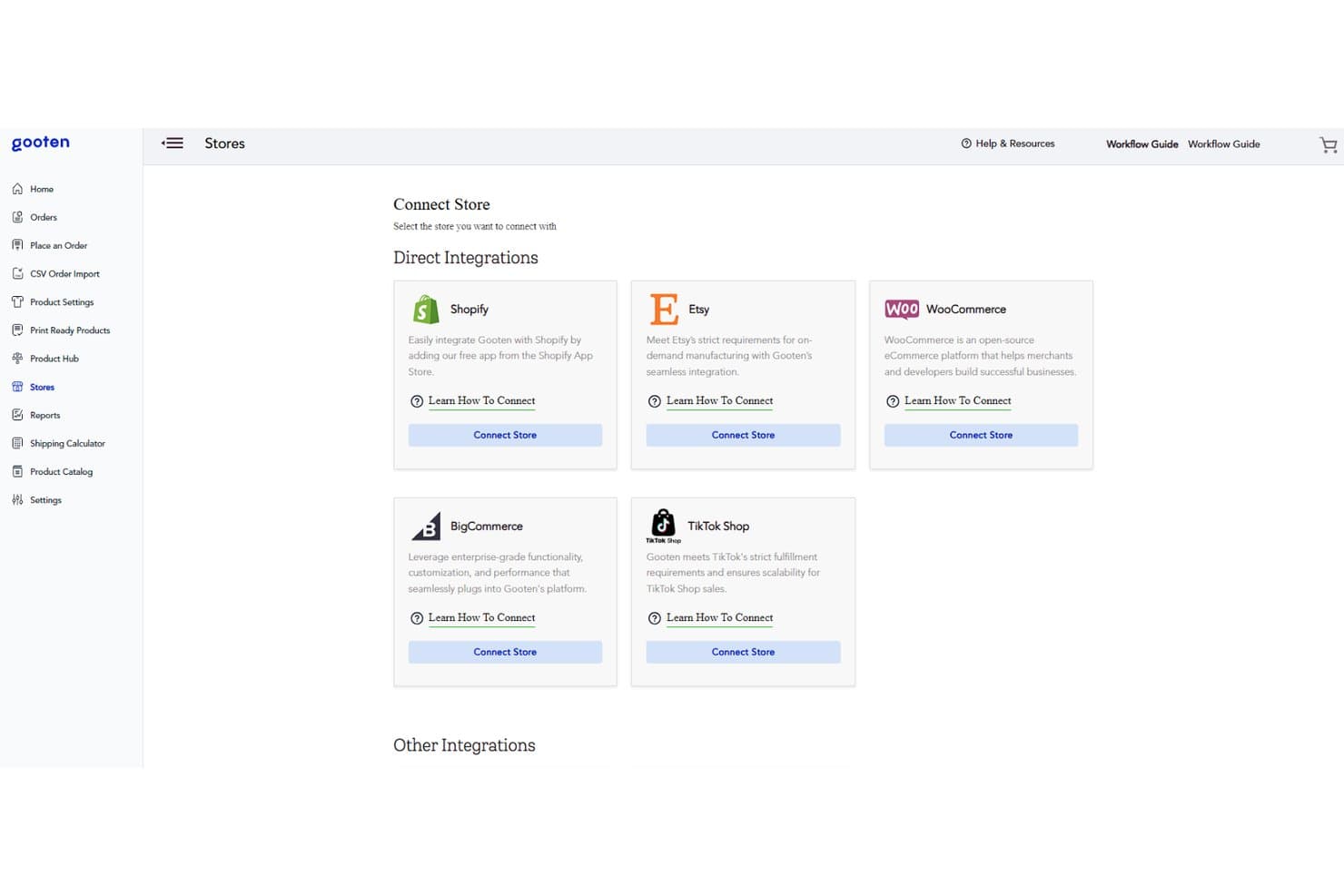
Gooten offers direct integrations with five major eCommerce platforms including Shopify, Etsy, WooCommerce, BigCommerce, and TikTok Shop via its Connect Store dashboard. Gooten is a print-on-demand fulfillment platform built for scaling ecommerce sellers who need a global manufacturer network, a 500+ product catalog, and automated order routing across multiple storefronts.
Who Is Gooten Best For?
Gooten is a strong fit for mid-to-high volume sellers who prioritize margin control and multi-store automation over built-in design tools.
Why Gooten Is a Good Printful Alternative
I've included Gooten in my top picks because its multi-store order syncing is genuinely one of the strongest in the POD space. When you're running Shopify, Etsy, and TikTok Shop simultaneously, Gooten's automated routing sends each order to the nearest of its 70+ global production facilities without any manual input. I also appreciate the open API, which lets you connect custom storefronts and build order flows that go well beyond the natively supported channels.
Gooten Key Features
- VIM loyalty program: Tiered rewards and access to faster support for high-volume sellers based on annual spend.
- 500+ product catalog: Sourcing covers apparel, home goods, accessories, wall art, and exclusive items not found with most competitors.
- Flexible order management: Supports both automated order flows and manual, one-off sample or test orders for new products.
- API for custom workflows: Connects custom-built stores or back-end tools to Gooten’s fulfillment network for advanced integrations.
Gooten Integrations
Gooten offers native integrations with Shopify, Etsy, WooCommerce, BigCommerce, and TikTok Shop, and provides an open API for custom integrations.
Pros and Cons
Pros:
- 500+ products span multiple non-apparel categories
- VIM tiers reward higher-volume sellers with discounts
- 70+ global production facilities reduce shipping times
Cons:
- Custom packaging options are notably limited
- Design editor lags behind competing platforms
Learn more about Gooten: Best for branded apparel with custom labeling
- Free plan available
- From $30/month
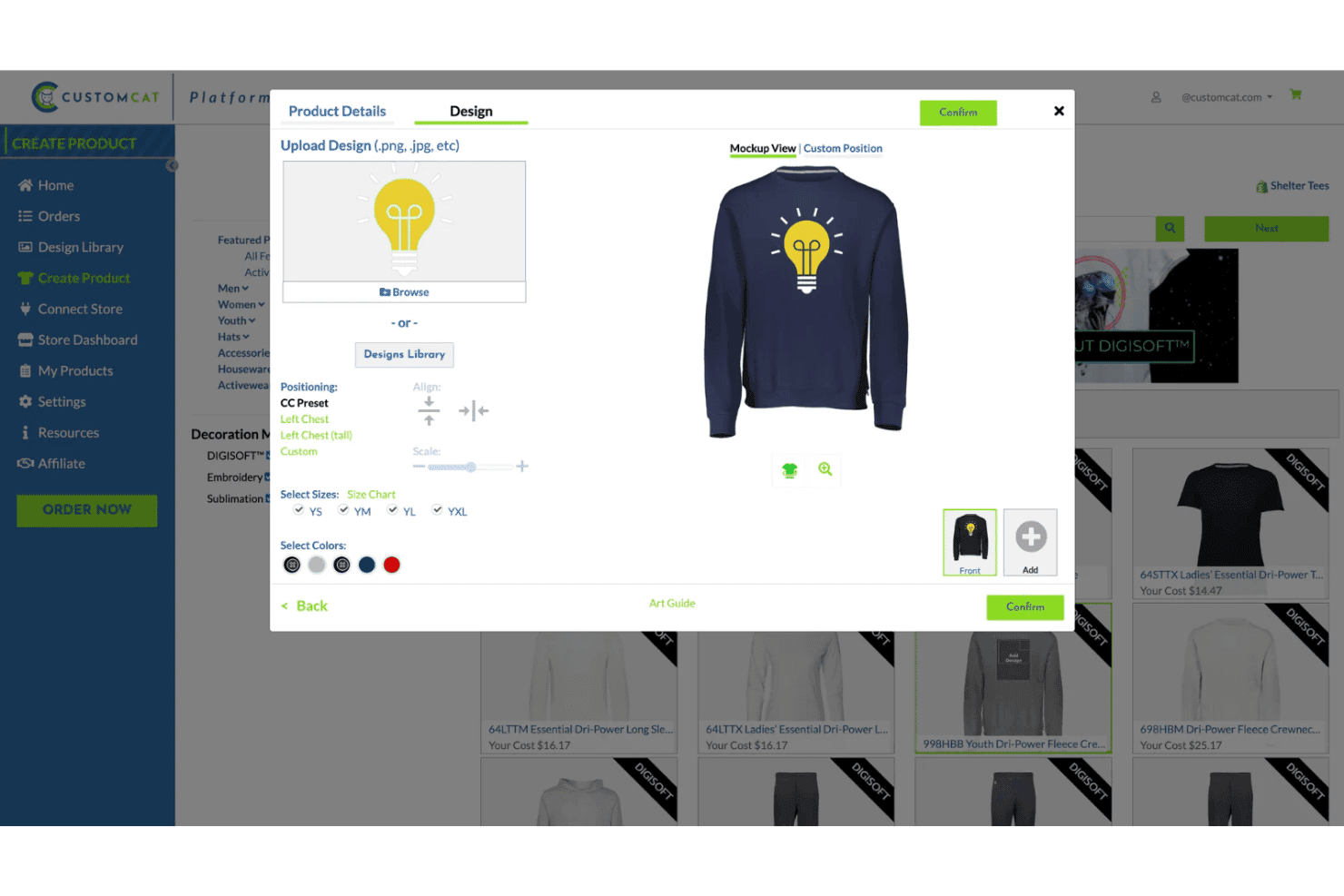
CustomCat allows users to upload custom designs and preview them on apparel products like crewneck sweatshirts with positioning and color options. CustomCat is a US-based print-on-demand platform built for ecommerce sellers who want fast domestic production, competitive base pricing, and white-label branded apparel without the overhead of managing inventory.
Who Is CustomCat Best For?
CustomCat is a strong fit for independent apparel sellers and small DTC brands running Shopify or Etsy stores who prioritize custom labeling and branded product presentation.
Why CustomCat Is a Good Printful Alternative
CustomCat earns its spot on my shortlist because of its native support for custom neck labels and branded packaging on apparel orders. When I'm building a DTC apparel brand, that means every Gildan or Bella+Canvas tee ships with my label attached, not CustomCat's branding. I also appreciate the proprietary DIGISOFT® printing technique, which produces vibrant color on fabric where standard DTG often falls flat on darker garments.
CustomCat Key Features
- DIGISOFT® printing technology: Uses proprietary printing for vivid, long-lasting prints on a wide range of apparel.
- Shopify, Etsy, WooCommerce, and BigCommerce integration: Connects directly to leading ecommerce platforms for automated order syncing and fulfillment.
- CSV bulk product upload: Lets sellers quickly add or update large batches of SKUs to their stores without manual entry.
- Fast US-based production: Orders are typically produced and shipped within 1–3 business days from CustomCat's Detroit facility.
CustomCat Integrations
CustomCat offers native integrations with Shopify, Etsy, WooCommerce, and BigCommerce. An API and CSV upload option are available for custom integrations.
Pros and Cons
Pros:
- Competitive per-item pricing on apparel
- DIGISOFT® print quality is consistently vibrant
- Fast US production, often under 24 hours
Cons:
- US-only fulfillment limits international shipping speed
- Customer support response times are slow
Learn more about CustomCat:
Other Printful Alternatives
Here are some additional Printful alternatives options that didn’t make it onto my shortlist, but are still worth checking out:
How I Evaluate Printful Alternatives
When a seller needs custom merch on Shopify and Etsy without holding stock, I first check that a platform matches Printful's core capabilities. Then I evaluate differentiators like catalog depth and fulfillment speed that set one apart.
Core Functionality (Table Stakes For This List)
When I'm selecting tools for my list, I rank each one on a scale from 0 (does not offer the functionality) to 5 (excels in this area) for each core functionality listed below. Then, I calculate the tool's total score into a percentage. Each tool needs to achieve a minimum total score of 65% to be considered for inclusion.
- On-Demand Production: I look for true single-unit fulfillment so sellers can list a new hoodie design tonight and have it printed only when an order lands.
- Ecommerce Integrations: Each platform should connect to major sales channels like Shopify, Etsy, WooCommerce, and Amazon with automated order syncing.
- Product Catalog Breadth: A strong catalog spans apparel, accessories, home goods, and wall art, giving sellers room to expand beyond t-shirts into mugs or canvas prints.
- Design & Mockup Tools: I check whether the built-in editor lets you layer graphics, adjust placement, and generate realistic mockups without jumping into Photoshop.
- Global Fulfillment Network: Facilities spread across multiple continents matter because routing an order to a nearby printer cuts both shipping costs and delivery windows.
- White-Label Branding: I evaluate options for custom neck labels, branded packing slips, and unbranded packaging so your customers see your brand, not the printer's.
Once I have a list of tools that meet the criteria, I consider what sets each platform apart.
Differentiating Factors (What Sets Vendors Apart)
Here's how I compare and contrast different vendors:
Standout Features
Product personalization tools are a big differentiator. Platforms that offer a customer-facing widget for adding names or custom text at checkout unlock higher-margin SKUs that plain catalog items can't match. I also evaluate white-label branding depth—some vendors stop at custom packing slips, while others support inside labels, neck tags, and branded inserts that make your packaging indistinguishable from a private-label operation. A true no-minimum-order model matters too, since it lets sellers test new designs risk-free before committing.
Beyond Features
Base pricing and profit margins deserve close attention. I look at whether a vendor's per-item costs leave enough room for healthy retail markups, especially on staple products like unisex tees and hoodies that drive most store revenue. Production speed and order accuracy also weigh heavily—a platform that consistently ships within two to three days and has a clear reprint policy for defects saves you from refund headaches during peak seasons. I also consider catalog quality, checking whether vendors carry brand-name blanks like Bella+Canvas or Gildan alongside their house options.
Why Look For A Printful Alternative?
While Printful is a good choice of print-on-demand platform, there are a number of reasons why some users seek out alternative solutions. You might be looking for a Printful alternative because…
- You want lower base product pricing for better margins
- You need more unique or niche product options
- You’re seeking faster average production and shipping times
- You want more branding and packaging customization
- You operate in a region with limited Printful fulfillment centers
- You need better integration with less common ecommerce platforms
If any of these sound like you, you’ve come to the right place. My list contains several printful alternatives options that are better suited for teams facing these challenges with Printful and looking for alternative solutions.
Printful Alternatives Key Features
Here are some of the key features of Printful alternatives, to help you contrast and compare what alternative solutions offer:
- On-demand production: Only print and fulfill products when a customer places an order, removing the need to hold inventory and lowering risk.
- Ecommerce platform integrations: Connect directly with major storefronts like Shopify, Etsy, WooCommerce, and Amazon for seamless, automated order syncing.
- Wide product catalog: Access a diverse range of blank products—apparel, accessories, home goods, wall art—giving you flexibility to diversify your offerings.
- Design and mockup tools: Use in-platform editors to create or preview products, generate high-quality visual mockups, and avoid costly design software.
- Global fulfillment network: Route orders to the closest available facility for faster delivery and reduced shipping costs worldwide.
- White-label branding: Ship orders in unbranded packaging with your custom labels or inserts, so the end customer only sees your brand, not the manufacturer.
- No minimum order requirement: Start small and test new products risk-free, since there’s no need for bulk purchases or minimums.
- Product personalization tools: Let end customers add names, dates, or personal messages to products at checkout for more compelling, higher-value SKUs.
- Transparent pricing: See clear per-item pricing upfront—including production, shipping, and discount tiers—which helps you calculate profit margins reliably.
- Automated order tracking: Give customers and sellers real-time updates from production through delivery, improving post-purchase experience and reducing support tickets.