

The best parcel audit software checks carrier invoices against shipment data and contract terms to flag billing errors and recover eligible refunds. For retail and ecommerce teams, the right fit depends on carrier coverage, claims handling, and whether audit findings fit existing transportation and accounts payable workflows. This list compares parcel-focused tools with platforms that also audit freight, helping you choose an option that supports shipping oversight and protects margin.
Why Trust Our Software Recommendations
6,700+
Reviews
20
Industry experts
16+
Evaluation factors
14
Years
Our team has been testing and reviewing software since 2012. As retail leaders ourselves, we know how difficult—and important—it is to choose the right software.
For this guide, we evaluated tools using hands-on testing and independent research, scoring tools using our selection criteria.
Our reviews reflect our independent judgment—not a sales pitch.
Comparison Table: Parcel Audit Software
Compare pricing and specs, side by side, for the parcel audit software that made it onto my shortlist.
| Tool | Best For | Trial Info | Price | ||
|---|---|---|---|---|---|
| 1 | Best for parcel spend analytics and contract gains | 60-day free trial | Pricing upon request | Website | |
| 2 | Best for multi-mode freight and parcel audit | 90-day free trial | Pricing upon request | Website | |
| 3 | Best for end-to-end freight contract recovery | Free demo available | Pricing upon request | Website | |
| 4 | Best for parcel and freight audit in one platform | Free demo available | Pricing upon request | Website | |
| 5 | Best for AP-ready parcel audit with GL exports | Free demo available | From $0.08 per shipment | Website | |
| 6 | Best for TMS-embedded invoice auditing | Free demo available | Pricing upon request | Website | |
| 7 | Best for multi-carrier freight invoice validation | Free demo available | Pricing upon request | Website | |
| 8 | Best for no-win, no-fee FedEx and UPS audits | Not available | From 50% of successfully disputed and credited refunds/month | Website | |
| 9 | Best for contract-to-invoice validation at scale | Free demo available | Pricing upon request | Website | |
| 10 | Best for no-contract parcel refund recovery | Not available | Pricing upon request | Website |


Parcel Audit Software Reviews
Below are my summaries of the best parcel audit software that made it onto my shortlist. My reviews cover each option’s audit capabilities, claims handling, and workflow fit to help you find the right software for your needs.
 Best for parcel spend analytics and contract gains
- 60-day free trial
- Pricing upon request
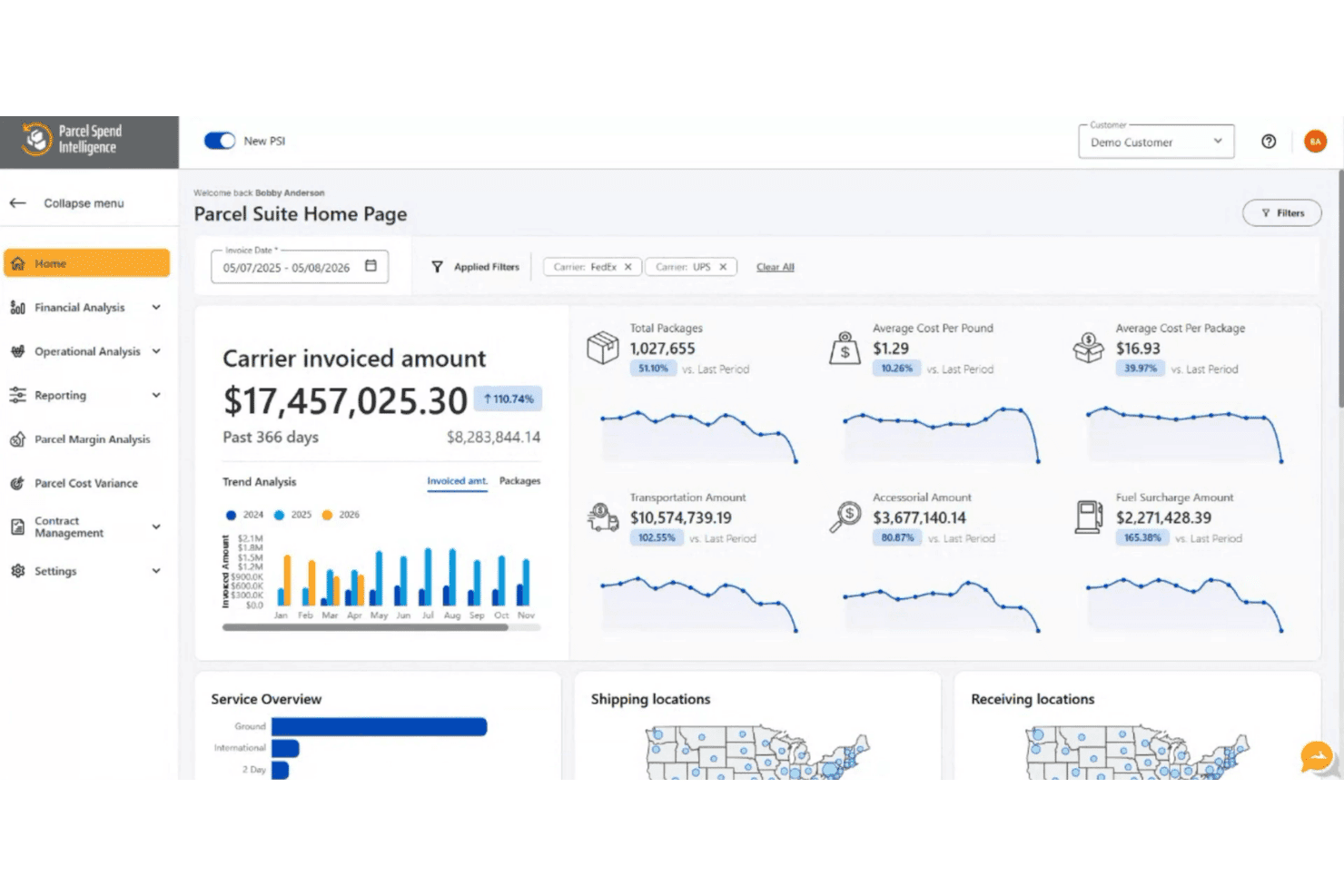
TransImpact tracks carrier spend, packages, and surcharges in one dashboard. Parcel Spend Intelligence (PSI) by TransImpact is a parcel audit platform that covers invoice auditing, rate and contract validation, refund recovery, and multi-carrier spend analytics across carriers like UPS, FedEx, DHL, and USPS.
Who Is TransImpact Best For?
TransImpact PSI is a strong fit for logistics managers and transportation directors at mid-to-large shippers who need deep parcel spend analytics alongside carrier contract strategy.
Why I Picked TransImpact
I picked TransImpact as one of the best because its parcel spend analytics go deeper than what most audit tools offer. The PSI dashboards break spend down by carrier, zone, accessorial, and service level, and the Dimensional Analysis and Accessorial Analysis reports surface the exact cost drivers that typically get buried in raw invoice data. I also think the AI agent Bolt is genuinely useful for contract strategy: it reads your billing history, flags anomalies, and identifies where negotiated discounts aren't being applied.
TransImpact Key Features
- Multi-carrier invoice auditing: PSI checks invoices across UPS, FedEx, DHL, USPS, and regional carriers, flagging duplicate charges, DIM weight errors, and missed discounts.
- Parcel Cost Variance monitoring: Compares budgeted versus actual shipping costs in real time and alerts you when unexpected fees appear or manifest data doesn't match invoices.
- Parcel Margin Analysis: Combines shipping costs, revenue, and cost of goods sold to show true margin by SKU, product group, business unit, or region.
- GL coding automation: Automatically links shipping costs to the correct general ledger codes to speed up month-end close.
TransImpact Integrations
TransImpact integrates with SAP, Oracle, and Manhattan through API, EDI, or SFTP. Carrier connections include UPS, FedEx, DHL, USPS, OnTrac, LaserShip, Canada Post, GLS, Purolator, and SpeeDee.
Pros and Cons
Pros:
- Contract monitoring checks negotiated discounts
- Bolt flags billing anomalies and missed discounts
- Detailed DIM and accessorial spend reports
Cons:
- Reviewers report limited chart customization
- Claim automation remains disputed
Learn more about Transimpact: Best for multi-mode freight and parcel audit
- 90-day free trial
- Pricing upon request
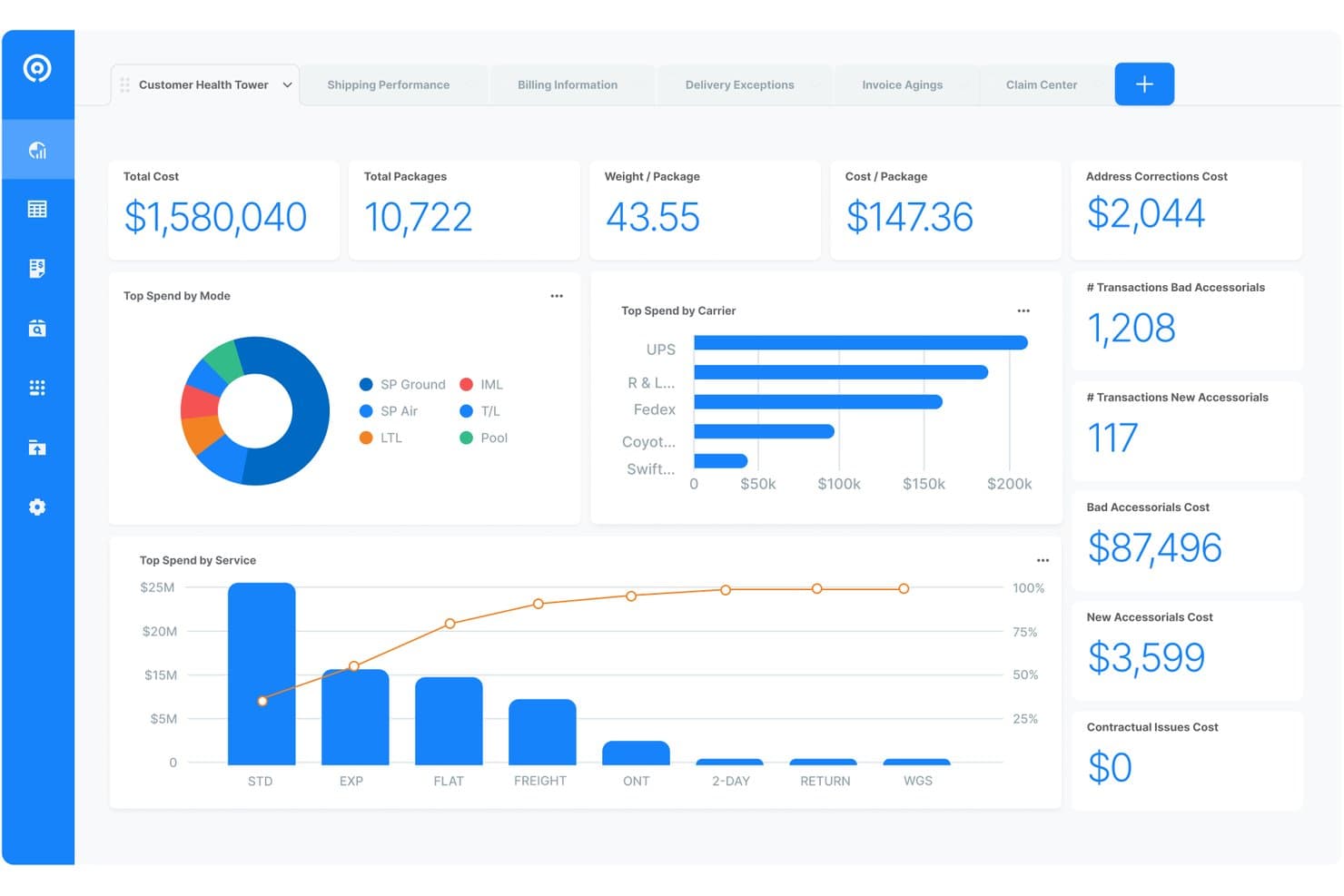
Intelligent Audit centralizes parcel spend, carrier, and accessorial cost data. Intelligent Audit is a freight and parcel audit platform that covers every transportation mode, combining invoice auditing, rate and contract validation, claims recovery, and spend analytics in one place.
Who Is Intelligent Audit Best For?
Intelligent Audit is a strong fit for logistics and transportation teams that need a single platform to audit freight and parcel spend across multiple carriers and shipping modes.
Why I Picked Intelligent Audit
Intelligent Audit earns its spot on my shortlist because it's the only platform I've found that audits parcel, LTL, truckload, ocean, air, and intermodal freight under one roof. I particularly like DeepDetectAI, a machine-learning engine that flags cost anomalies, duplicate charges, and suspected fraud in real time—it's caught schemes totaling over $1M for individual shippers. The 750+ customizable BI reports in the i360a platform also let my team break down spend by carrier, mode, and GL code without building anything from scratch.
Intelligent Audit Key Features
- Lost and damaged claims management: A fully managed service where IA's team tracks shipments, files delivery inquiries, and handles each claim through to resolution across all modes.
- Real-time visibility: Tracks shipments from all carriers in one feed using API, EDI, and file integrations, monitoring exceptions and predicting delays.
- Contract Management 2.0: Stores all carrier contracts in one place with renewal and expiration alerts and password-protected document access.
- Polly AI carrier assistant: An AI agent that reads and responds to carrier invoice and payment emails within one to three minutes.
Intelligent Audit Integrations
Intelligent Audit has four documented native Catalyst carrier integrations: UPS, USPS, FedEx, and DHL. It also connects with ERP, TMS, and accounting systems through REST APIs and file exchange, supporting API, EDI, XML, CSV, PDF, FTP, SFTP, and AS2 data transfers.
Pros and Cons
Pros:
- Audits span parcel and freight modes
- Managed claims recover substantial overcharges
- Customizable reports support spend analysis
Cons:
- Some system configurations take longer
- Entry plan excludes contract-rate auditing
Learn more about Intelligent Audit: Best for end-to-end freight contract recovery
- Free demo available
- Pricing upon request
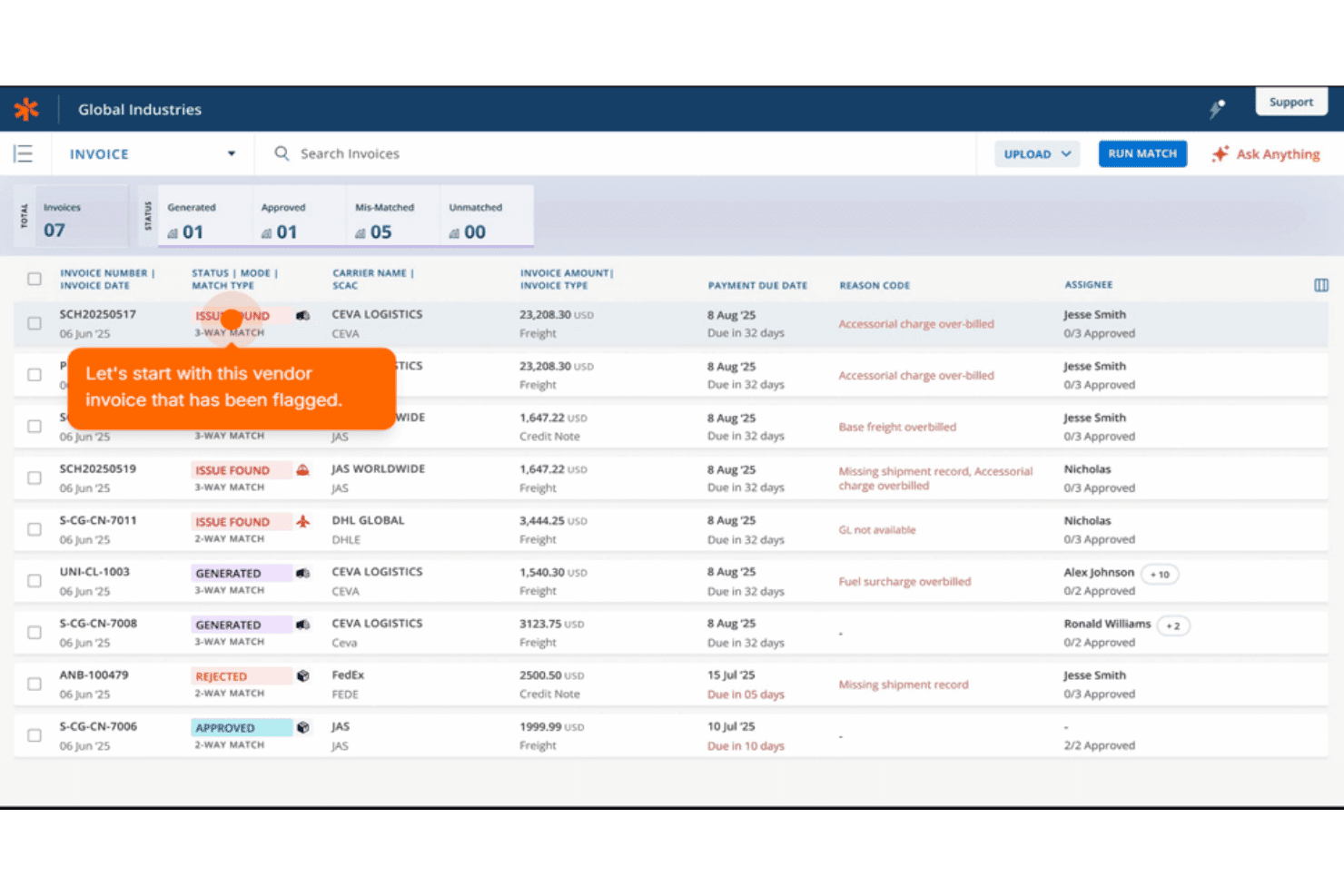
Freehand helps users manage and review flagged vendor invoices in one place. Freehand is an AI-powered freight audit platform that automates invoice auditing, rate and contract validation, claims recovery, and dispute management across parcel, LTL/FTL, ocean, and intermodal freight modes.
Who Is Freehand Best For?
Freehand is built for large enterprise shippers managing high invoice volumes across multiple freight modes who need full-cycle claims recovery, not just error flagging.
Why I Picked Freehand
I picked Freehand as one of the best because it doesn't just flag errors—it closes the loop on recovery without you having to manage the process manually. The Claims & Recovery Agent detects eligible overcharges, assembles carrier-specific evidence, files through each carrier's portal, and then verifies that settlements are actually paid. On top of that, three-way matching against SKU-level shipment data catches errors that rate-card auditing alone misses, like a 50-lb charge applied to a 0.5-lb item across 1.6M annual parcels.
Freehand Key Features
- Spend Intelligence Agent: Query your freight spend by carrier, zone, or charge type using plain-language questions, with export support to Snowflake and Databricks.
- AI anomaly detection: Maintains a statistical baseline per carrier, lane, and charge type to flag billing pattern breaks and off-contract rates within hours.
- Carrier Benchmarking Agent: Compares your contracted rates against market benchmarks from DAT, Xeneta, and FreightWaves to surface negotiation opportunities.
- Multi-mode freight coverage: Audits invoices across parcel, LTL/FTL, ocean, intermodal, and last-mile freight within a single platform.
Freehand Integrations
Documented integrations include SAP, Oracle Cloud ERP, NetSuite, Microsoft Dynamics 365, Coupa, Oracle TMS, Blue Yonder, project44, Snowflake, and Databricks. Freehand also supports API, EDI, SFTP, PDF, email, and spreadsheet data intake.
Pros and Cons
Pros:
- Audits parcel charges alongside multiple freight modes
- Matches invoices against SKU-level shipment data
- Automates claims from detection through settlement verification
Cons:
- Primarily suited to large enterprise shippers
- No independent user reviews to validate performance
Learn more about Freehand: Best for parcel and freight audit in one platform
- Free demo available
- Pricing upon request
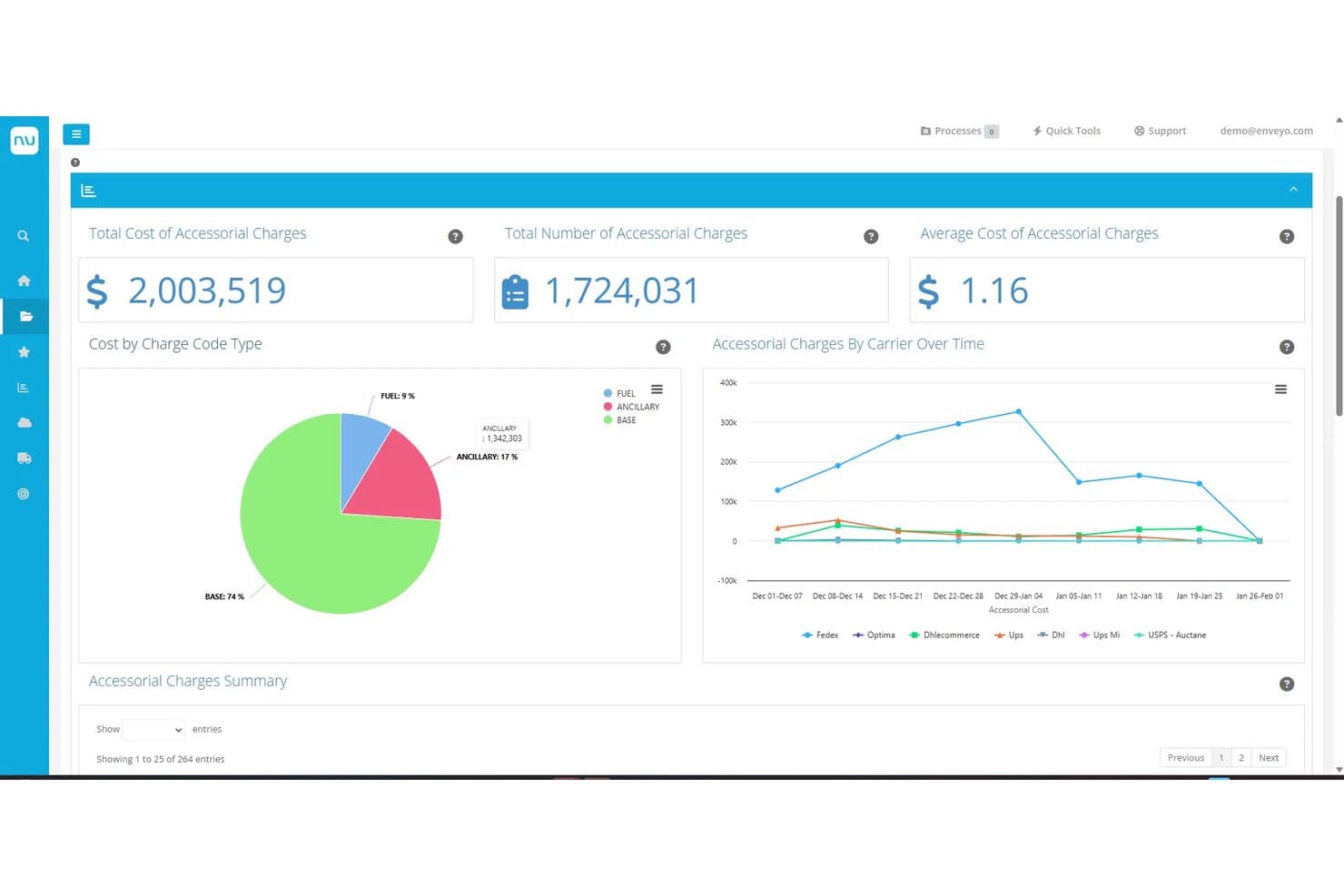
Enveyo tracks accessorial charges by carrier, type, and cost over time. Enveyo is a logistics data platform with a dedicated audit module that covers both parcel and freight invoice auditing, error detection, dispute and recovery workflows, and carrier spend analytics.
Who Is Enveyo Best For?
Enveyo is a strong fit for logistics managers and supply chain analysts at 3PLs or high-volume shippers who need parcel and freight auditing under one roof.
Why I Picked Enveyo
Enveyo earns its spot on my shortlist because it audits both parcel and freight invoices inside one platform, which is genuinely rare. I like that the Audit module automatically flags late deliveries, duplicate charges, rate variances, and incorrect accessorial fees across every carrier and invoice, while the Modeling™ tool lets you run contract negotiation scenarios using that same cleaned data. If your shipping mix includes both parcel and LTL, keeping audits in one place rather than stitching together two separate tools makes a measurable difference to how your team manages carrier spend.
Enveyo Key Features
- Modeling™ scenario tool: Run unlimited what-if scenarios to forecast the impact of contract changes, surcharge shifts, and volume moves before you negotiate with carriers.
- Multi-client billing for 3PLs: Manage billing across multiple clients with automatic markups, margin controls, and white-label dashboards built into one platform.
- Alerting™ milestone monitoring: Track shipment milestones across carriers in real time and trigger branded email or SMS alerts when delays are detected.
- Plain-language AI reporting: Build custom dashboards and charts by typing what you need in plain language, without manual report configuration.
Enveyo Integrations
Enveyo integrates with carriers including USPS, UPS, FedEx, DHL, OnTrac, GLS, Veho, and Asendia, plus SAP, Oracle, Manhattan, Blue Yonder, Shopify, and Amazon. It supports API, EDI, ODBC, CSV, and XLS connections for custom data feeds.
Pros and Cons
Pros:
- Tracks disputes with a central audit trail
- Flags duplicate charges and rate variances
- Audits parcel and freight invoices together
Cons:
- Dimensional-weight checks aren't explicitly documented
- Carrier claim filing mechanics remain unclear
Learn more about Enveyo: Best for AP-ready parcel audit with GL exports
- Free demo available
- From $0.08 per shipment
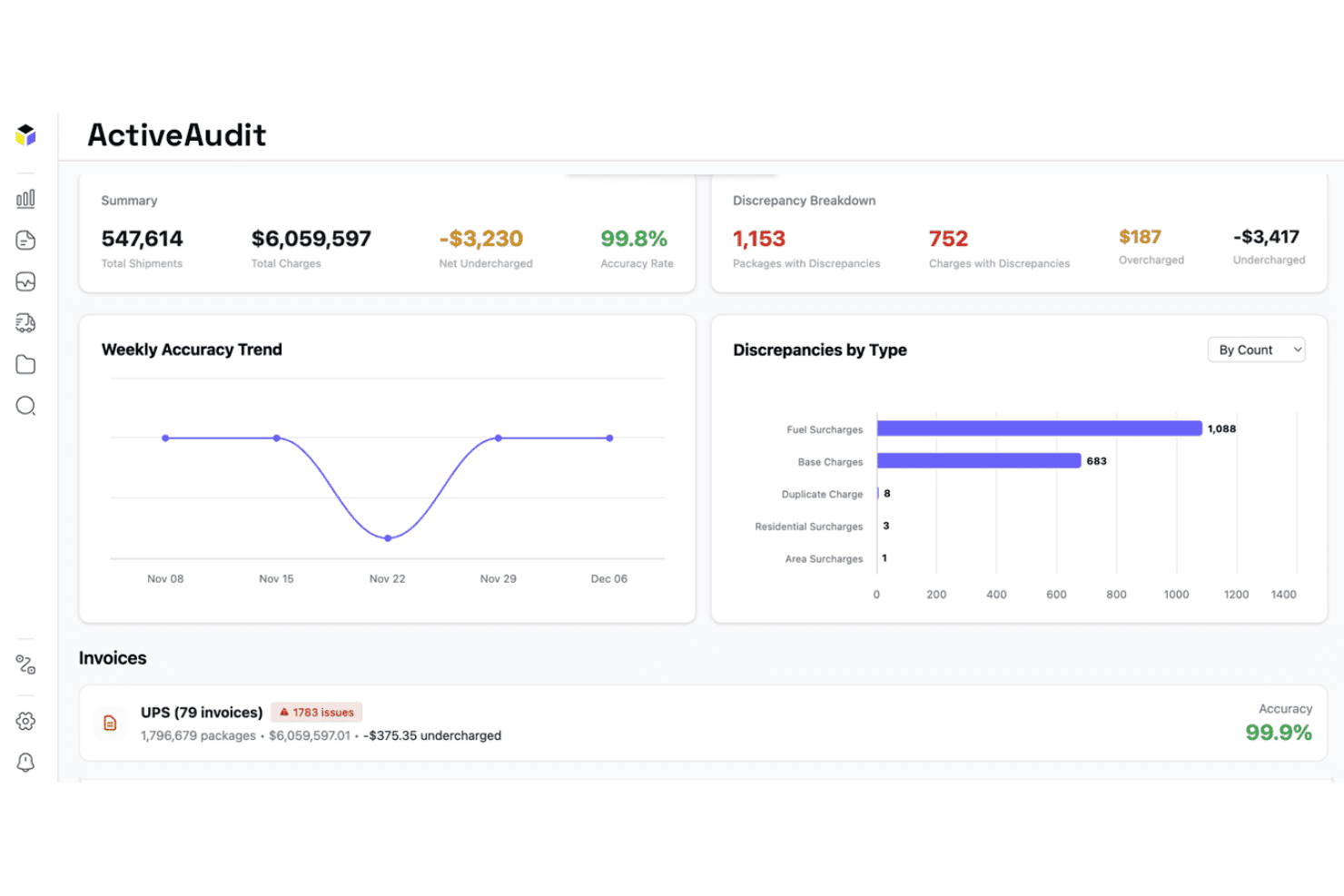
ShipScience audits shipping invoices to catch billing discrepancies automatically. ShipScience ActiveAudit is a parcel invoice audit platform that checks every invoice line against your carrier contracts, auto-files disputes, scores exceptions by recovery likelihood, and exports GL-coded data for AP reconciliation.
Who Is ShipScience Best For?
ShipScience ActiveAudit is a strong fit for logistics and AP teams at high-volume shippers who need GL-coded parcel audit data that feeds directly into month-end close.
Why I Picked ShipScience
I picked ShipScience ActiveAudit as one of the best because it's the only parcel audit tool I've seen that codes every recovered charge directly to your GL before the data ever reaches your AP team. Exception scoring ranks each flagged invoice line by recovery likelihood and dollar impact, so my team isn't chasing false positives. The automated GL exports map disputes and credits to the right cost centers, which means month-end close doesn't require manual reconciliation.
ShipScience Key Features
- Custom audit rules and alerts: Set thresholds that flag specific billing behaviors—like new account numbers appearing or dimension limits being exceeded—so your team catches issues as they happen.
- Exception scoring: Each flagged invoice line gets a score based on recovery likelihood, match confidence, and dollar impact, cutting down the number of false positives your team has to review.
- AI anomaly detection: An AI transportation analyst scans your shipment data for patterns and hidden cost drivers, then ranks issues by financial impact.
- Paid pilot program: Run a 30–90 day pilot with weekly reviews and an executive readout before committing to a full rollout.
ShipScience Integrations
ShipScience lists integrations with Shopify, Shopify Plus, BigCommerce, Magento, ShipStation, EasyPost, Extensiv, and NetSuite. It also supports carrier APIs, EDI, billing portals, SFTP, REST APIs, webhooks, and CSV/Excel exports.
Pros and Cons
Pros:
- Reviewers describe low-touch refund recovery
- Exception scoring prioritizes recoverable invoice errors
- GL-coded exports support AP month-end reconciliation
Cons:
- Some reviewers report claims false positives
- Deep audits cover UPS and FedEx
Learn more about ShipScience: Best for TMS-embedded invoice auditing
- Free demo available
- Pricing upon request
Visit WebsiteCustomer Rating:4.7/5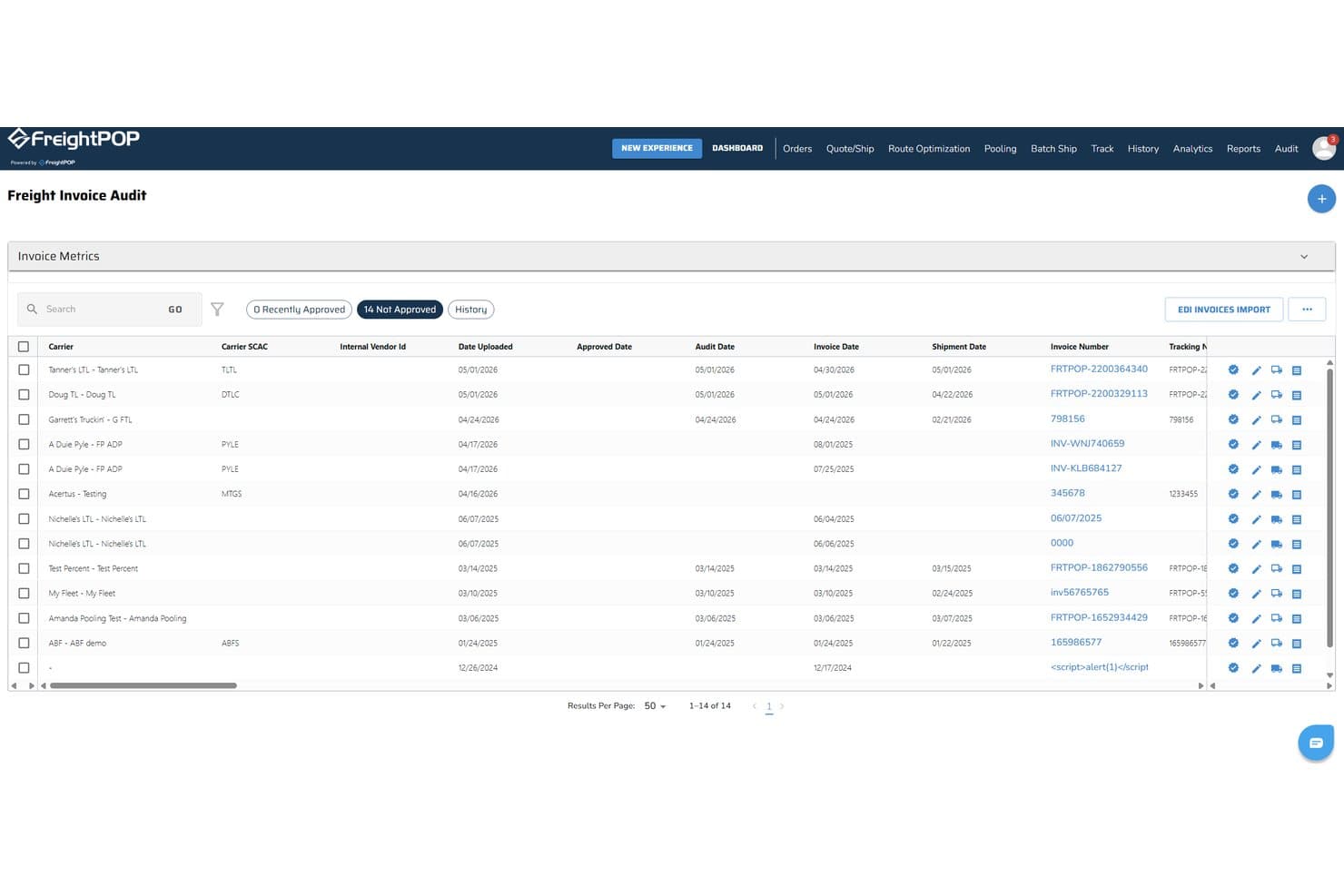
FreightPOP lets users audit and manage freight invoices in one place. FreightPOP is a multi-modal TMS platform that includes built-in freight invoice auditing, covering quote-to-invoice comparison, variance controls, duplicate detection, and accessorial charge checks across parcel, LTL, and other shipping modes.
Who Is FreightPOP Best For?
FreightPOP is a strong fit for logistics managers and supply chain teams who want freight invoice auditing built into the same platform they use to rate shop, ship, and track across carriers.
Why I Picked FreightPOP
FreightPOP earns its spot on my shortlist because the freight invoice audit module is built directly into the same TMS your team already uses to rate shop, ship, and track. I particularly like how the platform compares every carrier invoice line by line against the original shipment quote, flagging discrepancies across accessorials, surcharges, duplicate invoices, and weight variances. You can set percentage or flat-dollar thresholds at the charge-code level, so invoices within tolerance auto-approve while outliers get routed for review or returned to the carrier.
FreightPOP Key Features
- GL coding and ERP export: Apply configurable GL-code rules and export approved invoices and selected accounts payable fields directly to your ERP.
- Multi-modal invoice ingestion: Receive carrier invoices via EDI, carrier portals, or manual upload across parcel, LTL, and other shipping modes.
- Automated anomaly detection: Flag billing errors, delays, and operational inefficiencies across carrier invoices without manual review.
- Spend and carrier performance reporting: Access real-time cost-savings data, carrier performance metrics, and custom dashboards to monitor freight spend.
FreightPOP Integrations
FreightPOP supports 1,500+ integrations or connections, including NetSuite, SAP, Microsoft Dynamics 365, Acumatica, UPS, FedEx, USPS, DHL, YRC, and XPO. An open API supports custom integrations.
Pros and Cons
Pros:
- Reviewers value carrier cost comparisons
- Charge-level thresholds route invoice exceptions
- Reviews report catching quote mismatches
Cons:
- Some reviewers want built-in business intelligence
- Formal carrier claims aren’t automatically filed
Learn more about FreightPOP: Best for multi-carrier freight invoice validation
- Free demo available
- Pricing upon request
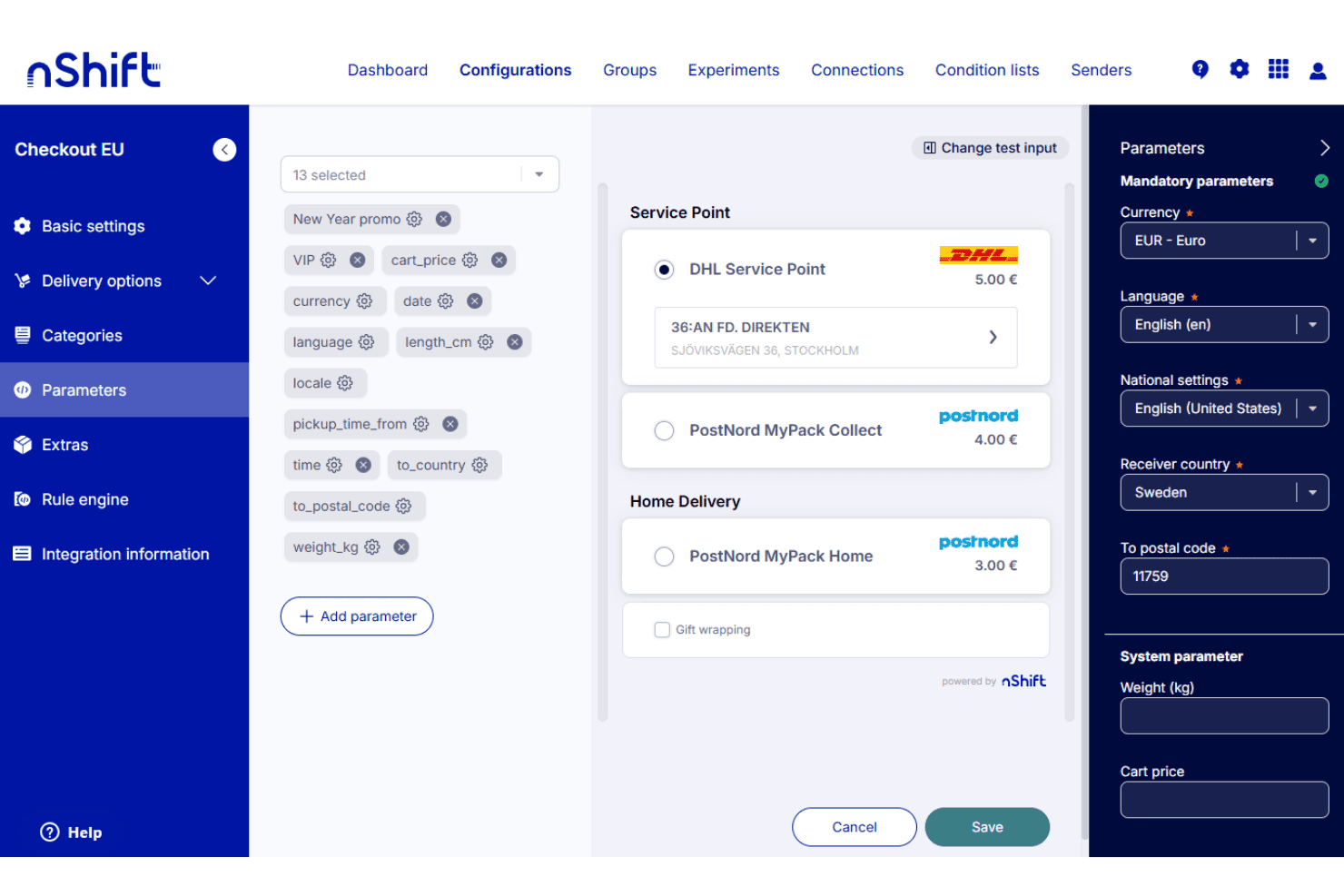
nShift lets users configure delivery options and service points for checkout. nShift Audit is a freight invoice audit tool that uses AI to read multi-carrier invoices, match each line against contracted rate cards and shipment records, and flag billing errors across duplicate charges, surcharges, weight discrepancies, and SLA misses.
Who Is nShift Best For?
nShift Audit is a strong fit for logistics managers and shipping directors at mid-to-large businesses spending at least €1.5M annually across multiple carriers.
Why I Picked nShift
I picked nShift Audit as one of the best because its three-way match approach sets it apart: every invoice line is checked against the contracted rate card, the shipment record, and the delivery event. That means it catches cancelled shipments that still get billed and surcharges for services that were never used, not just rate mismatches. I also like that it runs seven fixed checks across all carriers simultaneously, normalizing invoice data from 1,000+ carriers into one dataset without requiring carrier-specific templates.
nShift Key Features
- Configurable approval tolerances: Set monetary thresholds to auto-approve small deviations, so your team only reviews discrepancies that actually matter.
- Invoice Explorer: Drill into average cost per kg, surcharge frequency, and spend outliers across carriers and lanes to surface patterns in your freight data.
- Shipment Data API: Connect shipment records from non-nShift systems so the three-way match runs even if you book through another platform.
- Line-level dispute export: Download dispute PDFs with evidence attached for individual flagged lines while paying the undisputed portion of the invoice on time.
nShift Integrations
nShift lists 450+ integrations, including SAP, Microsoft Dynamics, Shopify, BigCommerce, Magento, Infor, Epicor, and Visma. Audit supports nShift Ship, Delivery, and Transsmart connections, plus a Shipment Data API and REST APIs with OAuth 2.0.
Pros and Cons
Pros:
- Supports evidence-backed disputes and partial payments
- Matches invoice lines against shipment and delivery records
- Flags duplicate charges, surcharges, and SLA misses
Cons:
- Image-only invoice scans aren’t supported
- Audit has no independent review history
Learn more about nShift: Best for no-win, no-fee FedEx and UPS audits
- Not available
- From 50% of successfully disputed and credited refunds/month
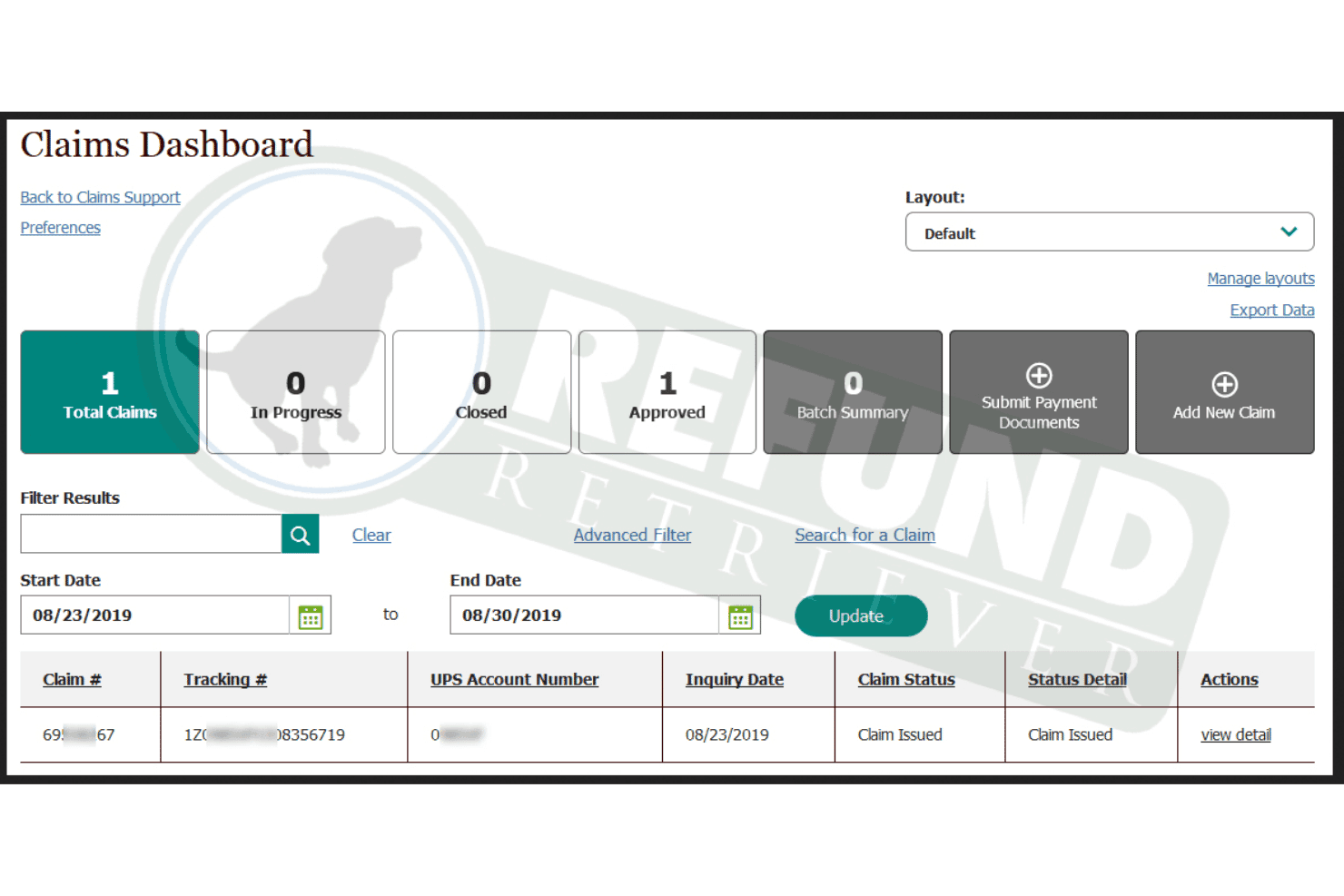
Refund Retriever lets users track and manage UPS claims in one dashboard. Refund Retriever is a parcel audit service that automatically imports FedEx and UPS invoices, flags billing errors and service failures, files refund disputes, and verifies that credits appear in your shipping account.
Who Is Refund Retriever Best For?
Refund Retriever is a strong fit for ecommerce businesses and shippers that use FedEx and UPS exclusively and want a hands-off way to recover carrier refunds without paying upfront fees.
Why I Picked Refund Retriever
I picked Refund Retriever as one of the best because its no-win, no-fee model means you only pay when money actually lands back in your FedEx or UPS account. I love that it automatically imports carrier invoices, flags issues like duplicate charges, dimensional-weight discrepancies, and residential service fees, then files disputes and follows up directly with the carrier if a credit doesn't appear. Its discount benchmarking reports also compare your service-level rates against similarly sized shippers, which gives real leverage when it's time to renegotiate your carrier contract.
Refund Retriever Key Features
- Warnings dashboard: Flags specific billing issues like third-party billing, dimensional-weight discrepancies, accessorial overcharges, and express shipments eligible for ground service.
- Discount benchmarking reports: Compares your service-level discounts against similarly sized shippers to surface gaps in your current carrier rates.
- Contract negotiation service: Analyzes your carrier agreements, accessorial fees, and shipping habits, then coaches your team through the negotiation process with savings projections and per-package breakdowns.
- Amazon FBA reimbursement: Identifies and manually files claims for lost or damaged inventory, inbound shipment discrepancies, incorrect weights or dimensions, and overcharged orders through Seller Central.
Refund Retriever Integrations
Refund Retriever lists 10 integrations or partnerships, including Shopify, BigCommerce, ChannelAdvisor, Magento, ShipWorks, SkuVault, 3dCart, Atandra T-Hub, RS Associates, and AMBC. Integration functions and API availability aren’t documented.
Pros and Cons
Pros:
- Package-level reports clarify recovered credits
- Flags invoice errors manual audits miss
- Recovers eligible late-delivery claims hands-off
Cons:
- Occasional missed claims and limited status visibility
- Parcel audits exclude DHL shipments
Learn more about Refund Retriever: Best for contract-to-invoice validation at scale
- Free demo available
- Pricing upon request
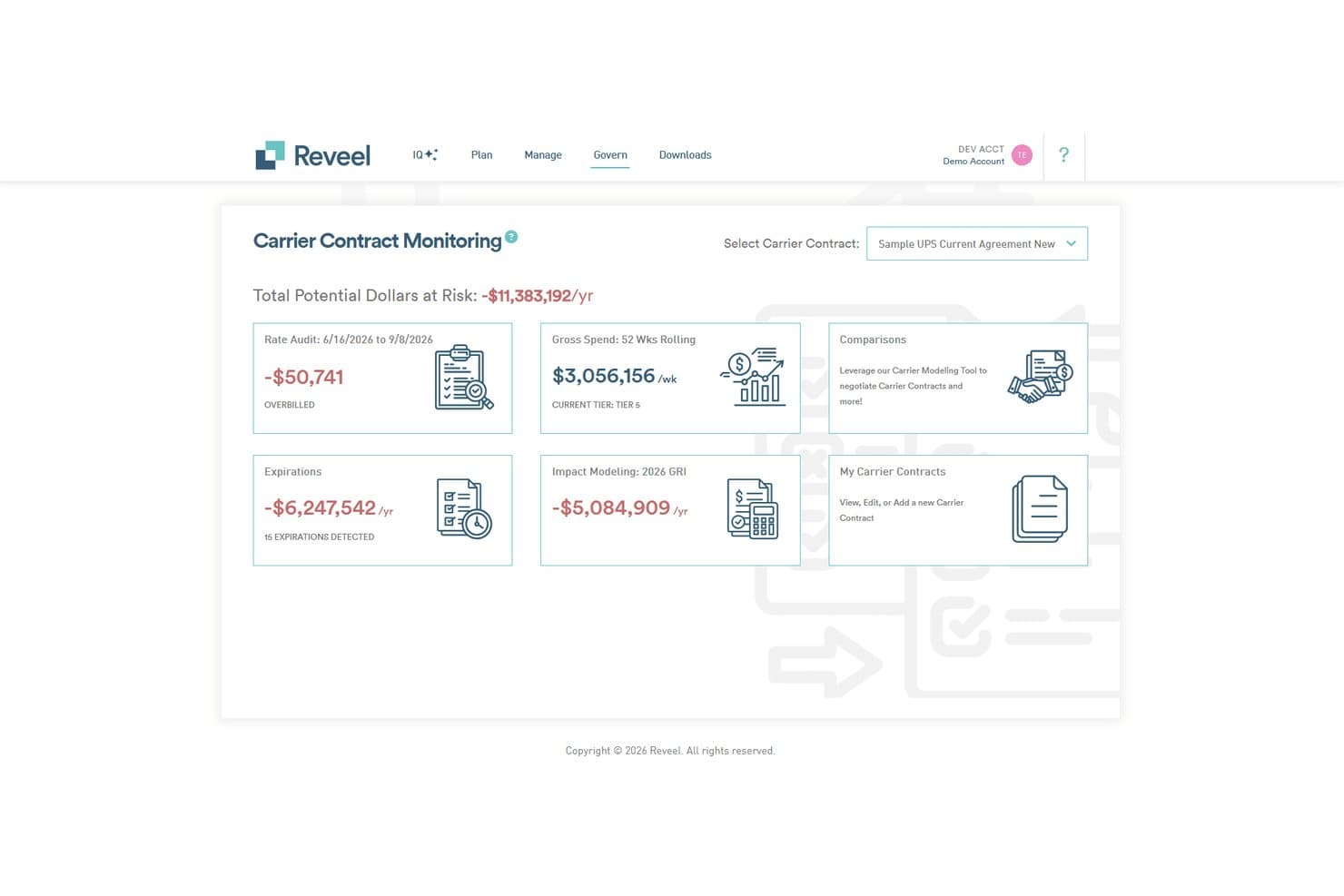
Reveel surfaces billing risks, expirations, and GRI impacts in one view. Reveel is a shipping intelligence platform that covers parcel audit and claims, carrier contract monitoring, spend analytics, and contract scenario modeling across multiple carriers and freight modes.
Who Is Reveel Best For?
Reveel is a strong fit for enterprise shippers with $3M or more in annual parcel spend who need contract-to-invoice validation across multiple carriers and freight modes.
Why I Picked Reveel
I've included Reveel in my top picks because it re-rates every single shipment against your contracted terms, including surcharge interactions, dimensional-weight divisors, and volume tiers, making it genuinely built for contract-to-invoice validation at scale. I particularly like its Carrier Contract Monitoring feature, which flags expiring discounts up to 180 days out with a dollar-impact estimate, so you're never caught off-guard by a tier drop mid-cycle. Its Billing Audit layer goes a level deeper, cross-referencing order data to catch duplicate charges and fees on packages that never actually shipped.
Reveel Key Features
- Claims automation: Automatically files lost and damaged shipment claims using carrier tracking and in-transit scan data before credit windows close.
- Reveel IQ: An AI analyst you query in plain English to run what-if scenarios, drill down to package and SKU level, and surface next-step recommendations.
- Real-time exception alerting: Flags surcharge repricing, new accessorial fees, and delivery-area reclassifications mid-cycle, with a dollar-impact estimate attached to each alert.
- Financial-grade reporting: Automates GL coding by account, channel, or location and supports accrual and landed-cost reporting with order-to-invoice matching.
Reveel Integrations
Reveel integrates with Deposco, ShipERP, RateLinx, and ProShip, plus ERP, TMS, order, warehouse, and data-warehouse systems. It supports APIs and two-way sync with a data warehouse or ERP for custom connectivity.
Pros and Cons
Pros:
- Carrier tracking supports automated loss claims
- Billing audits flag duplicates and unshipped parcels
- Contract-level re-rating catches tier errors
Cons:
- Few recent reviews independently verify performance
- Dispute escalation and claim updates remain unclear
Learn more about Reveel: Best for no-contract parcel refund recovery
- Not available
- Pricing upon request
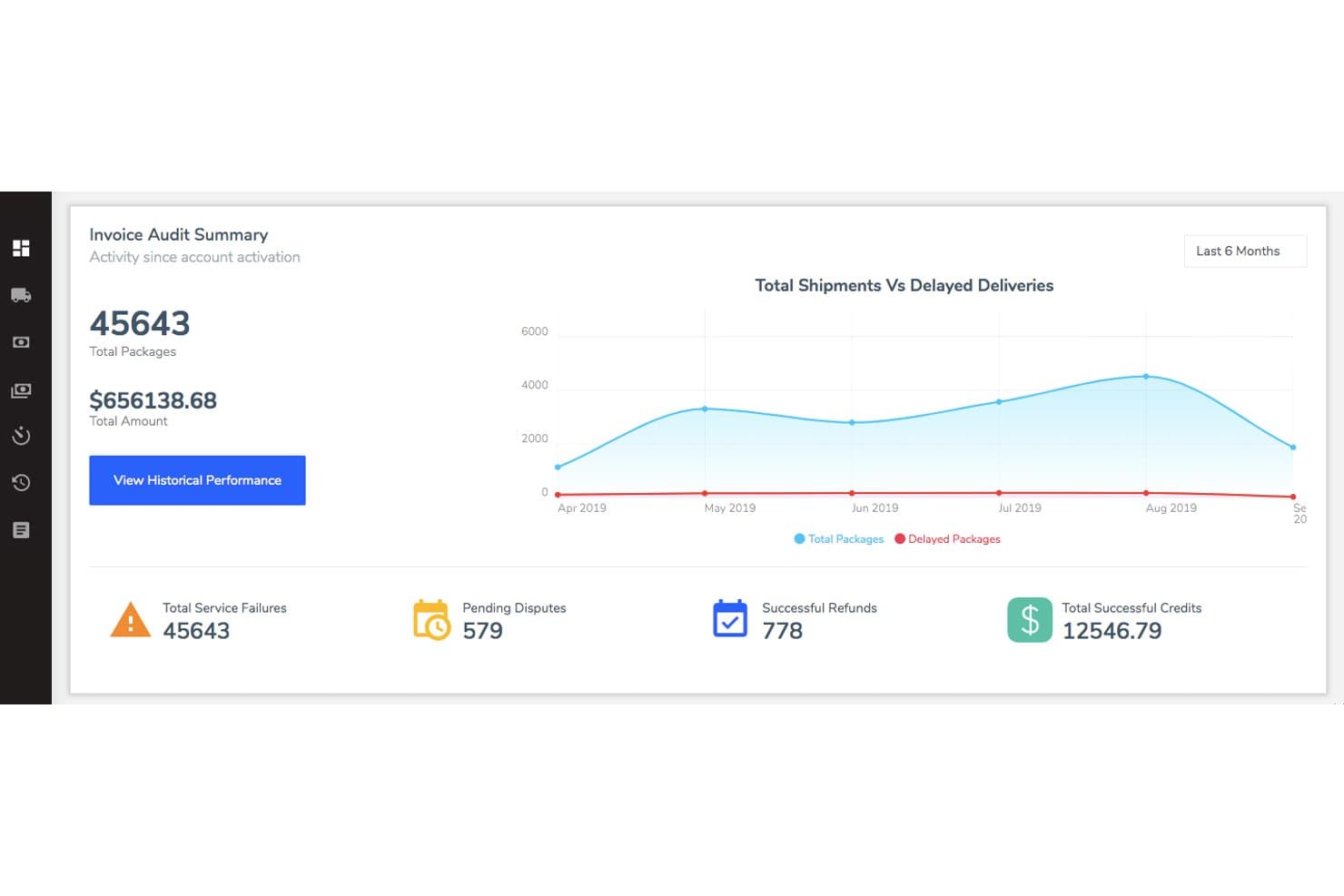
AuditShipment tracks shipments, refunds, and credits in one dashboard. AuditShipment is a fully managed parcel audit service that checks 100% of your FedEx, UPS, DHL, and Canada Post invoices against 50+ error types—including DIM weight miscalculations, duplicate charges, and wrong surcharges—then files and re-files claims automatically until credits are recovered.
Who Is AuditShipment Best For?
AuditShipment is a strong fit for transportation directors and supply chain analysts at ecommerce brands or 3PLs shipping with FedEx, UPS, DHL, or Canada Post who want refund recovery without adding work to their team.
Why I Picked AuditShipment
I've included AuditShipment in my top picks because it's the only service on this list that operates on a pure contingency basis with no contract, no setup fee, and no minimums—you pay only when refunds are actually recovered. What I like most is how it checks 100% of invoice lines against 50+ error types, including DIM weight recalculations and duplicate charges across FedEx, UPS, DHL, and Canada Post, then automatically re-files claims until credits land.
AuditShipment Key Features
- GRI and contract impact modeling: Models how general rate increases and contract changes affect your shipping spend before they take effect, giving you data to negotiate with.
- Lane benchmarking: Compares carrier and service performance by lane so you can identify where you're overpaying relative to alternatives.
- Service right-sizing analysis: Flags shipments where a slower, cheaper service would have met your delivery SLA, surfacing avoidable spend.
- Multi-carrier account support: Consolidates auditing across FedEx, UPS, DHL, Canada Post, Purolator, and other carriers into a single dashboard.
AuditShipment Integrations
AuditShipment lists integrations with HubSpot and Zoho Desk, plus CSV/API connectivity; it also mentions POS without naming vendors. API access is available on the Enterprise tier for custom integrations.
Pros and Cons
Pros:
- Reviewers praise hands-off recovery tracking
- Audits catch DIM and duplicate charges
- Claims are refiled until resolved
Cons:
- Some reviewers say the service stopped working
- Some reviewers report unanswered support requests
Learn more about AuditShipment:
Other Parcel Audit Software
Here are a few additional options that didn’t make my shortlist but are still worth checking out:
- 11Transportation InsightBest for white-glove parcel claims recovery
- 12SiftedBest for flat-fee carrier refund recovery
- 13LoopBest for carrier contract negotiation planning
- 14Lateshipment.comBest for no-fee refund recovery across claim types
- 15Refund ProsBest for Canadian carrier refund recovery
- 16LojisticBest for free-tier audit with BI tool exports
- 17ShipwareBest for carrier contract audit and negotiation
- 18Green Mountain TechnologyBest for large-volume carrier contract auditing
How I Evaluate Parcel Audit Software
I split my evaluation into three parts, giving the most weight to core functionality: flag duplicate charges and validate billed rates against contracts. Next, I look for standout features such as anomaly alerts that catch rate creep. Finally, I consider beyond-feature value, including onboarding, claims support, and pricing.
Core Functionality (Table Stakes For This List)
When I'm selecting tools for my list, I score each one on a scale from 0 (does not offer the functionality) to 5 (excels in this area) for each core functionality listed below. I then convert the total into a percentage to help assess each tool's overall fit, with extra weight on any functionalities I’ve deemed essential.
- Invoice Error Detection (Essential): I look for automated checks that catch duplicate charges, incorrect surcharges, dimensional-weight errors, and missed service commitments.
- Contract Rate Validation (Essential): I assess whether tools compare billed rates and surcharges with negotiated contract terms across carriers and services.
- Refund And Claims: I check which overcharges and service failures the tool can submit as claims, and whether it tracks them through resolution.
- Carrier Data Integration: I evaluate how the tool brings together invoice and tracking data from multiple parcel carriers, including regional providers.
- Spend Analytics: I look for reports that break down shipping costs and recovered amounts by carrier or service to inform contract discussions.
- Dispute Tracking: I assess whether teams can see claim statuses, receive progress updates, and follow unresolved disputes through to closure.
Once I have a list of tools that meet the criteria, I consider what sets each platform apart.
Differentiating Factors (What Sets Vendors Apart)
Here's how I compare and contrast different vendors:
Standout Features
I look for AI-driven anomaly detection that flags rate creep or unusual surcharge patterns a rule-based audit would miss. Real-time tracking alerts also matter—tools like Intelligent Audit and Enveyo can catch late deliveries as they happen, turning service failures into recoverable claims before the invoice even arrives. I also evaluate how well a platform connects with ERP, WMS, and ecommerce systems, since accurate audit matching depends on syncing order and fulfillment data at the shipment level.
Beyond Features
I evaluate whether a vendor's pricing model—contingency-based or flat subscription—scales reasonably as parcel volumes spike during peak seasons. A platform that processes holiday surges without latency or surprise cost jumps matters more than one that looks affordable at baseline volume. I also check for carrier relationship neutrality, since vendors with revenue-sharing arrangements may file disputes less aggressively on your behalf. Transparent claim tracking and independent advocacy build trust that recovered amounts reflect your actual exposure, not a filtered version of it.
How to Choose Parcel Audit Software
Choose parcel audit software by testing it against your carrier invoices, negotiated rates, claims rules, and accounts payable handoff—not a scripted demo.
| If your priority is: | Look for: |
|---|---|
| If your priority is:Finding billing errors | Look for:A sample reconciliation that links each flagged charge to its invoice line and shipment record |
| If your priority is:Checking contract rates | Look for:A comparison against your current carrier agreements, including services, zones, weights, and surcharges |
| If your priority is:Recovering eligible refunds | Look for:Written claim eligibility rules, filing deadlines, required evidence, and claim status records |
| If your priority is:Preparing invoices for payment | Look for:An export with your required invoice IDs, general ledger codes, adjustments, and supporting details |
How to Vet Your Shortlist
- Review an audit sample: Request a report covering 25–50 invoices, with each exception tied to its invoice line and shipment record.
- Run a defined trial: Process two to four weeks of one carrier’s invoices and compare flagged errors with your team’s manual review.
- Test contract matching: Provide five representative contract rates and request a written reconciliation showing how each rate and surcharge was checked.
- Inspect claim records: Ask for a status log covering 10 closed claims, including submission dates, supporting evidence, carrier decisions, and recovered amounts.
- Choose the fee tradeoff: Compare contingency fees with subscription pricing at average and peak parcel volumes, including any excluded claim types.
What Is Parcel Audit Software?
Parcel audit software checks carrier invoices against shipment records and contract terms to identify billing errors. It can flag duplicate charges, incorrect rates, and missed delivery commitments, then help teams track eligible refund claims. Some tools also report shipping costs and prepare invoice data for accounts payable.
Features
Here are the main features I look for in parcel audit software:
- Invoice error detection: Checks carrier invoice lines for duplicate charges, incorrect surcharges, and dimensional-weight discrepancies. Your team can review flagged exceptions before approving payment.
- Contract rate validation: Compares billed rates and surcharges with your negotiated carrier terms. This helps identify charges that don’t match the agreed services, zones, weights, or pricing.
- Shipment data matching: Links invoice charges to shipment records, tracking details, and order data. The match gives reviewers shipment-level context for checking billed services and costs.
- Claims management: Identifies eligible billing errors or missed delivery commitments and supports claim filing. Claim records can include submission details, evidence, deadlines, and outcomes.
- Dispute tracking: Records claim status and carrier decisions so your team can follow unresolved cases. Clear histories also help prevent claims from getting lost during handoffs.
- Spend analytics: Breaks shipping costs, exceptions, and recovered amounts down by carrier or service. Teams can use these reports to spot cost patterns and prepare for contract reviews.
- Accounts payable exports: Sends approved invoice details and adjustments into your payment workflow. Check that exports include the invoice IDs, accounting codes, and supporting records your team requires.
Benefits
Here are a few common benefits you can expect from parcel audit software:
- Fewer billing errors: Automated invoice checks flag duplicate charges, incorrect surcharges, and dimensional-weight discrepancies for review.
- More refund recovery: Claims tools identify eligible billing errors and missed delivery commitments, then help your team file claims and record outcomes.
- Better rate accuracy: Contract validation compares billed rates and surcharges with negotiated terms across carriers, services, zones, and weights.
- Clearer shipping costs: Spend reports break down costs, exceptions, and recovered amounts by carrier or service to inform contract reviews.
- Smoother invoice processing: Accounts payable exports can include invoice IDs, accounting codes, adjustments, and supporting details for payment workflows.
- Closer claim oversight: Dispute tracking records claim statuses and carrier decisions so your team can follow unresolved cases through closure.
Pricing
Costs depend on shipment volume, audit scope, and whether you pay a subscription or share recovered refunds. These indicative monthly ranges can help you compare parcel audit software, but many vendors use custom quotes or contingency fees.
Plan Comparison Table for Parcel Audit Software
| Plan Type | Average Price | Common Features |
|---|---|---|
| Plan TypeFree Plan | Average Price$0 | Common FeaturesLimited invoice audits, basic error detection, short data history, and self-service setup. |
| Plan TypePersonal Plan | Average Price$50–$200/month | Common FeaturesInvoice auditing, duplicate-charge checks, basic claim tracking, and standard reports. |
| Plan TypeBusiness Plan | Average Price$200–$1,000/month | Common FeaturesMulti-carrier auditing, contract rate validation, claims management, spend analytics, and accounts payable exports. |
| Plan TypeEnterprise Plan | Average Price$1,000+/month | Common FeaturesHigh-volume invoice processing, advanced contract analysis, ERP integration, custom reporting, and dedicated support. |
FAQs
Some answers to common questions about parcel audit software:
Does parcel audit software guarantee refunds?
No, parcel audit software can’t guarantee that a carrier will approve or pay every claim. It can identify charges that appear inconsistent with invoice data, contract terms, or delivery records and help prepare eligible disputes. The carrier still decides whether evidence meets its rules and deadlines. Before signing, ask how the provider defines a recoverable exception, which claim types it excludes, and whether reported recoveries mean claims filed, credits approved, or credits posted. This distinction keeps projected savings separate from cash or account credits received.
How can I verify a parcel audit provider’s reported savings?
You should reconcile reported savings against carrier credits and the provider’s fee schedule. Ask for a report that separates detected errors, submitted claims, carrier-approved claims, and credits actually applied to your account. Then compare the net amount after contingency fees or subscription costs, rather than relying on a gross recovery figure. For example, a disputed charge isn’t realized savings until the carrier approves it and issues a credit or refund. Keep invoice IDs and credit references together so finance can trace each amount during month-end close.
How often should I audit parcel invoices?
Audit invoices as they arrive or on a regular schedule that leaves time to meet carrier filing deadlines. The right cadence depends on invoice frequency, shipment volume, and how long each carrier allows disputes. A weekly or monthly review can help teams catch exceptions before they pile up, but check deadlines in each carrier agreement and claims policy. Don’t assume the software’s processing schedule extends a deadline. Ask the vendor when it receives invoice data, how quickly it flags exceptions, and who monitors filing dates.