
MAP compliance software helps your team enforce minimum advertised price policies by tracking and identifying pricing violations across digital and physical sales channels. If you’re trying to keep brand equity intact while selling through resellers, grey-market dealers, or global marketplaces, you need a system that responds as fast as pricing wars break out.
In this list, you’ll find the best MAP compliance tools for 2026—each geared to help you spot unauthorized sellers, control price erosion, and integrate compliance monitoring into your daily routines. Get the detail you need to choose a solution that matches your retail operation’s size, scope, and needs.
Why Trust Our Software Recommendations
6,700+
Reviews
20
Industry experts
16+
Evaluation factors
14
Years
Our team has been testing and reviewing software since 2012. As retail leaders ourselves, we know how difficult—and important—it is to choose the right software.
For this guide, we evaluated tools using hands-on testing and independent research, scoring tools using our selection criteria.
Our reviews reflect our independent judgment—not a sales pitch.
MAP Compliance Software Comparison Table
This comparison table summarizes pricing details for my top MAP compliance software selections:
| Tool | Best For | Trial Info | Price | ||
|---|---|---|---|---|---|
| 1 | Best for AI-driven enterprise price monitoring | Free demo available | Pricing upon request | Website | |
| 2 | Best for Buy Box-linked MAP enforcement | Free demo available | From $300/month | Website | |
| 3 | Best for multi-currency MAP with seller discovery | 14-day free trial + free demo available | From $41/month (billed annually) | Website | |
| 4 | Best for MAP monitoring with BI tool integration | Free demo available | Pricing upon request | Website | |
| 5 | Best for grey-market seller tracing and Buy Box MAP | 7-day free trial + free demo available | Pricing upon request | Website | |
| 6 | Best for geo-level MAP monitoring at DMA depth | Not available | Pricing upon request | Website | |
| 7 | Best for large-scale seller tracking and MAP reporting | Not available | Pricing upon request | Website | |
| 8 | Best for managed MAP enforcement with seller intel | Free demo available | Pricing upon request | Website | |
| 9 | Best for skip-tracing unauthorized seller discovery | Free trial + free demo available | From $200/month | Website | |
| 10 | Best for AI-verified MAP alerts with digital shelf view | Not available | Pricing upon request | Website |


MAP Compliance Software Reviews
Below are my detailed summaries of the best MAP compliance software that made it onto my shortlist. My reviews offer a detailed look at the features, best use cases, and capabilities of each platform to help you find the best one for you.
 Best for AI-driven enterprise price monitoring
- Free demo available
- Pricing upon request
Visit WebsiteCustomer Rating:4.5/5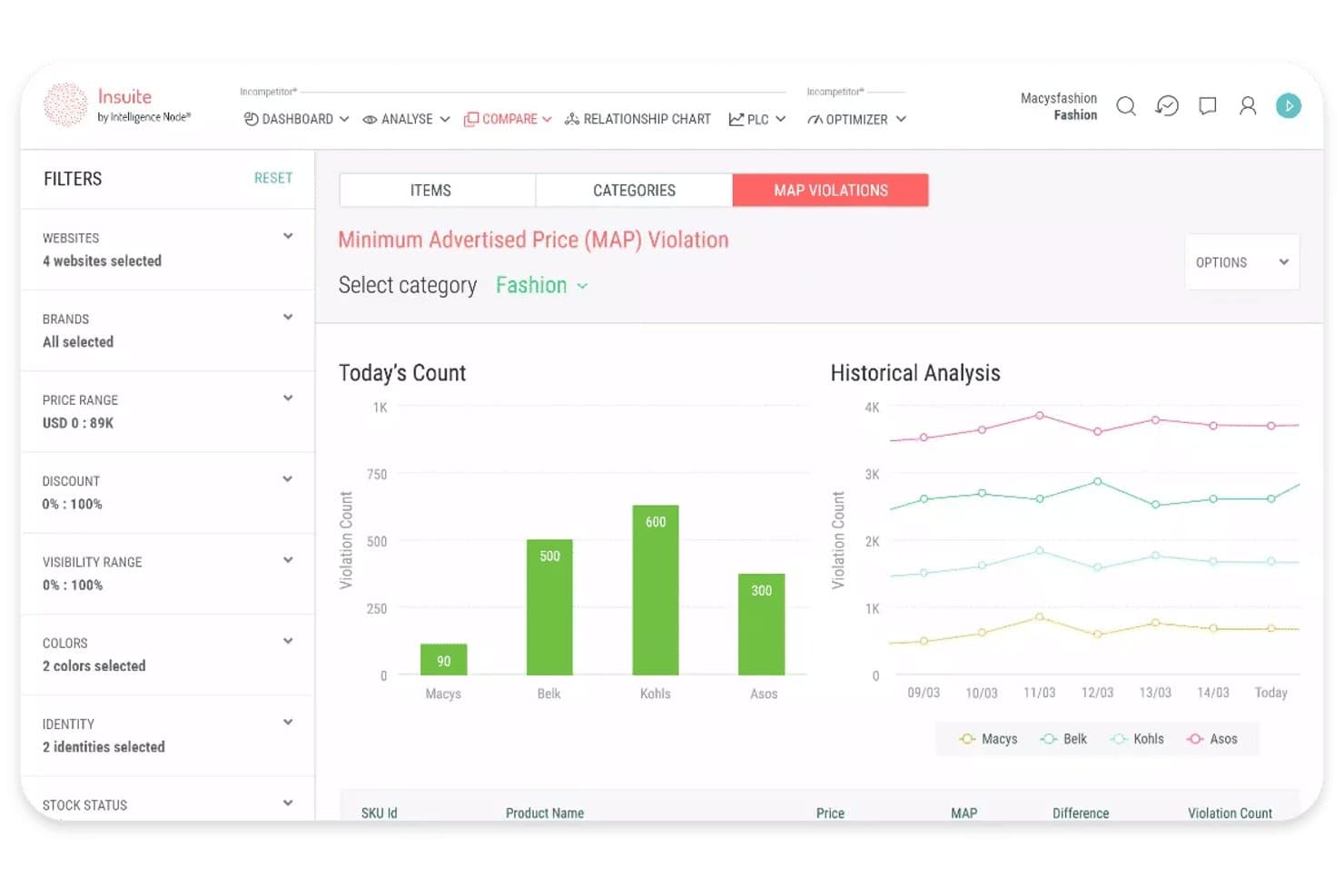
Intelligence Node tracks MAP violations across retailers with historical trend analysis. Intelligence Node is an AI-driven price monitoring platform that covers MAP violation detection, unauthorized seller identification, and real-time pricing surveillance across 30+ countries and 1.5 billion+ products.
Who Is Intelligence Node Best For?
Intelligence Node is a strong fit for enterprise brands with large product catalogues that need to monitor pricing across global markets at scale.
Why I Picked Intelligence Node
Intelligence Node earns its spot on my shortlist because of how far its AI-driven monitoring goes beyond basic price checks. I'm particularly impressed by its 10-second data refresh rates and ZIP-code-level tracking, which means I can catch a MAP violation on a specific retailer's local listing before it spreads. The 99% contractually guaranteed product matching accuracy, backed by image analytics that detect promotional banners visually, is what sets it apart for large catalogues across 30+ countries.
Intelligence Node Key Features
- Fully landed price calculation: Factors in delivery charges and taxes when comparing prices against MAP thresholds, so violations aren't missed due to fee structures.
- Configurable scan schedules: Set monitoring frequency anywhere from every 10 seconds to weekly, depending on how closely you need to watch specific SKUs or markets.
- Bulk seller outreach: Upload seller contact lists in bulk to send outreach directly from the platform when violations are identified.
- Data export formats: Download compliance data in .xls, .xlsx, .json, or .xml for reporting, analysis, or sharing with stakeholders.
Intelligence Node Integrations
Intelligence Node offers native integration with Shopify, along with six plug-and-play APIs (Price Optimization, Digital Shelf, Product Matching, Real-time Crawling, Smart Repricing, and MAP Monitoring) for custom connections to marketplaces like Amazon, Walmart, and Target. Data delivery is also supported via a SaaS portal, file transfer (.xls, .xlsx, .json, .xml), and email exports, though out-of-the-box connectors to ERP, CRM, or BI tools aren't documented.
Pros and Cons
Pros:
- Identifies visual MAP violations with AI
- Tracks unauthorized sellers who change aliases
- Allows bulk messages to sellers
Cons:
- Data volume can overwhelm smaller teams
- Limited enforcement workflows beyond bulk outreach
Learn more about Intelligence Node: Best for Buy Box-linked MAP enforcement
- Free demo available
- From $300/month
Visit WebsiteCustomer Rating:4.8/5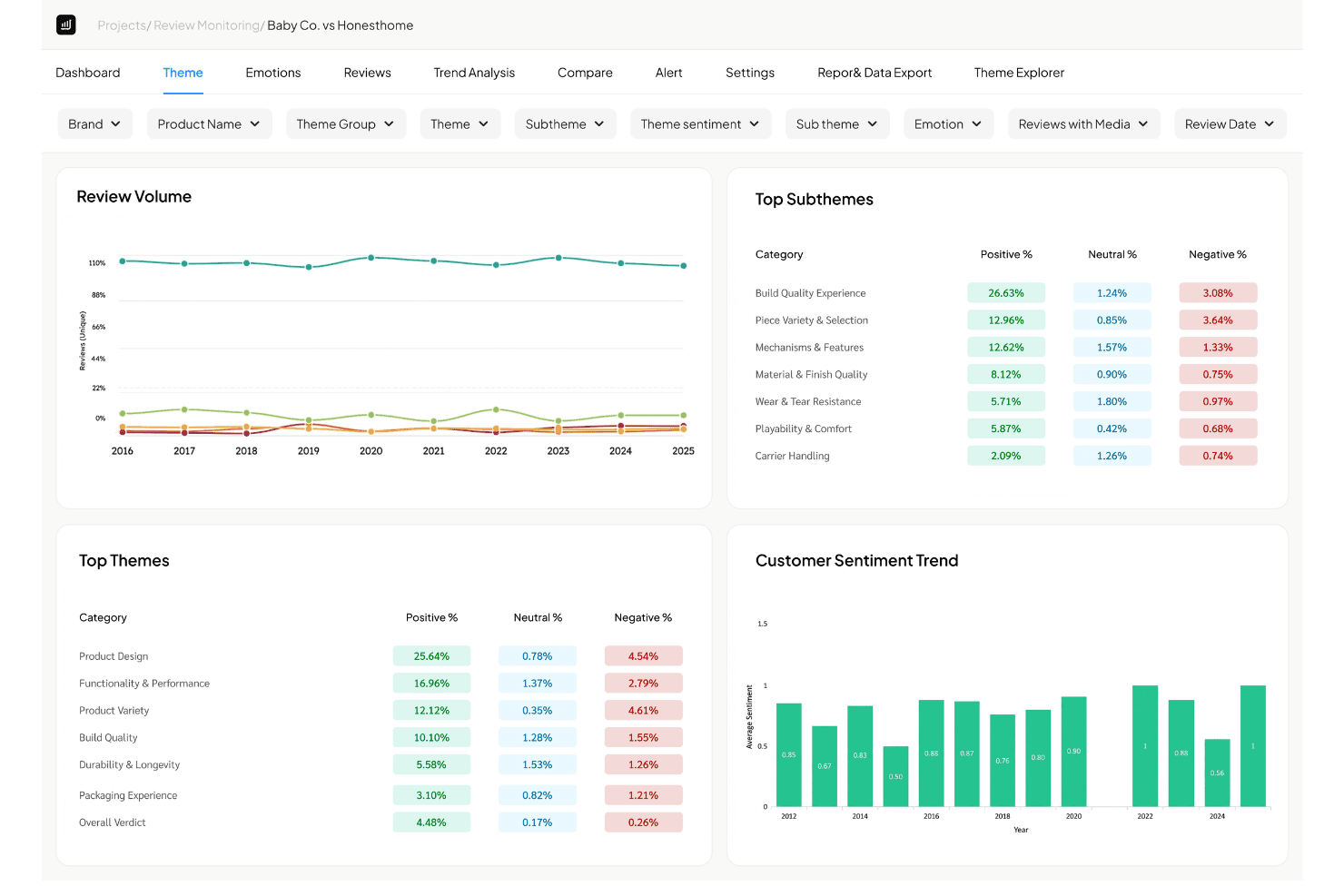
MetricsCart tracks customer sentiment trends and review themes over time. MetricsCart is a MAP compliance and digital shelf analytics platform that monitors prices across 150+ marketplaces, identifies authorized and unauthorized sellers, captures timestamped violation evidence, and automates tiered enforcement workflows from violation alerts through cease-and-desist notices.
Who Is MetricsCart Best For?
MetricsCart is a strong fit for brand protection and channel managers at mid-market to enterprise consumer goods brands selling across Amazon and other major marketplaces.
Why I Picked MetricsCart
MetricsCart earns its spot on my shortlist because of how directly it ties MAP violations to Buy Box loss. I love that the platform doesn't just flag a price drop and leave you to figure out the downstream impact. It quantifies revenue at risk when unauthorized sellers undercut MAP and trigger Buy Box rotation, which is exactly the intelligence brand protection teams need to escalate internally. MerchantDNA identifies and scores repeat offenders across 150+ platforms, and the tiered enforcement workflow sends evidence-backed notices automatically.
MetricsCart Key Features
- Cascade repricing detection: Identifies the first seller to break MAP before algorithmic repricers trigger a broader price drop across listings.
- Zip- and city-level price tracking: Monitors what consumers in specific geographic locations see, giving you granular visibility into localized pricing discrepancies.
- Tiered automated enforcement workflow: Escalates violations from initial reminders to final warnings and cease-and-desist templates, with evidence automatically attached to each notice.
- Role-based compliance dashboards: Delivers separate views for legal, finance, channel operations, and executive stakeholders, each surfacing the metrics most relevant to that team.
MetricsCart Integrations
MetricsCart references integrations with Amazon SP-API and Shopify, and mentions compatibility with ERP systems, though specific vendors are not named. An API is available for custom integrations, and automated email alerts are supported natively.
Pros and Cons
Pros:
- Identifies unauthorized sellers across 150+ marketplaces
- Links MAP violations directly to Buy Box loss
- Detects MAP violations in under 10 seconds
Cons:
- Limits historical data export formats
- Requires cloud deployment for use
Learn more about MetricsCart: Best for multi-currency MAP with seller discovery
- 14-day free trial + free demo available
- From $41/month (billed annually)
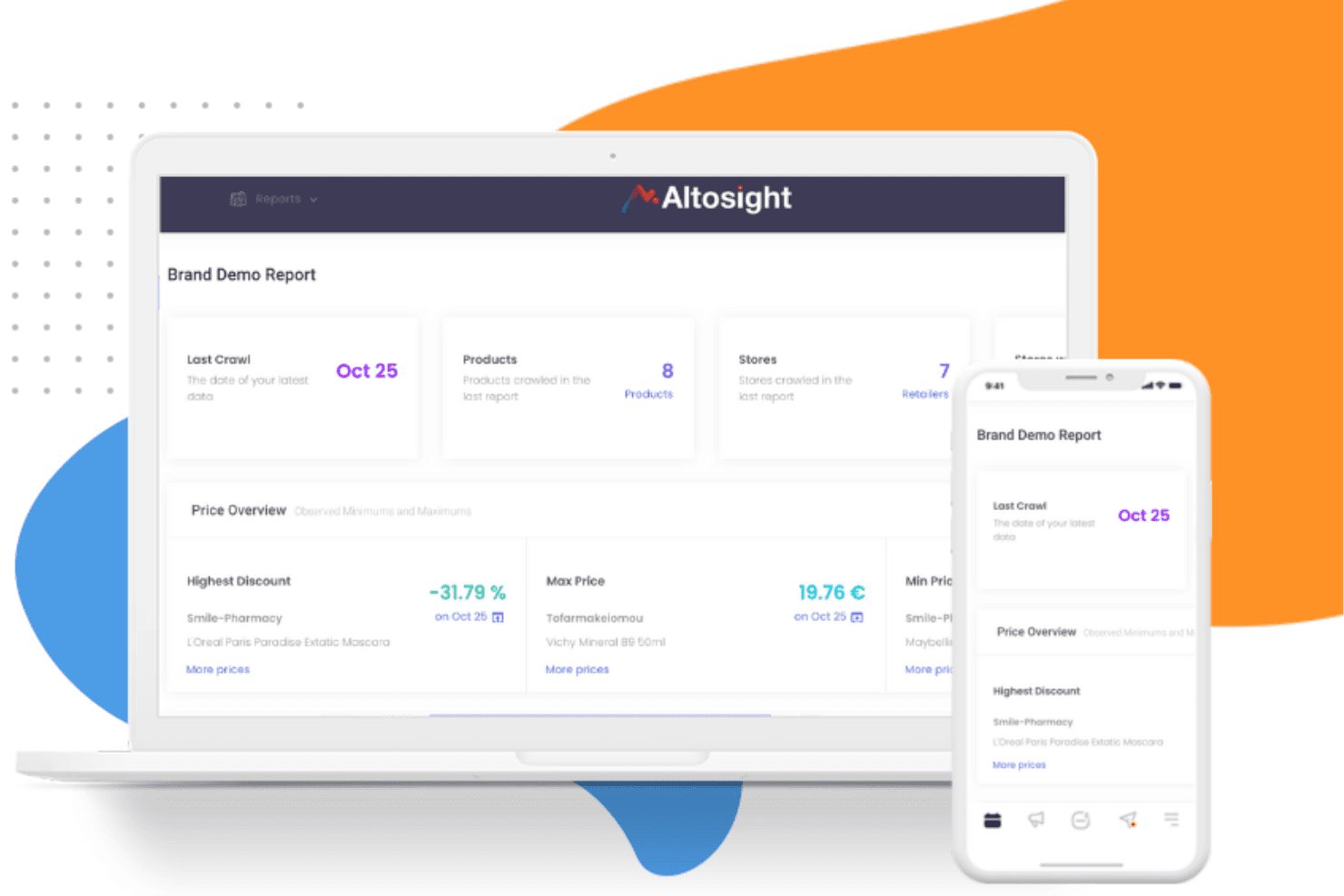
Altosight tracks highest discounts and max prices across retailers. Altosight is a MAP compliance monitoring platform that tracks advertised prices across Amazon, Walmart, eBay, Google Shopping, and direct retailer sites globally, with built-in seller discovery, unauthorized reseller classification, and automated violation enforcement workflows.
Who Is Altosight Best For?
Altosight is a strong fit for brand managers and channel teams at mid-market consumer brands that sell across multiple marketplaces and need to monitor unauthorized reseller activity alongside MAP violations.
Why I Picked Altosight
I picked Altosight as one of the best because it handles multi-currency MAP monitoring across Amazon, Walmart, eBay, and Google Shopping without requiring separate tools per region. What I find genuinely useful is the unauthorized seller discovery module, which classifies every seller as authorized, new, or unauthorized and tracks them across storefront name changes, so repeat violators can't simply rebrand to avoid enforcement. The MAP Enforcement Module then lets you send templated violation notices from your own domain with built-in escalation tracking.
Altosight Key Features
- Buy Box monitoring: Tracks Buy Box ownership and seller rotations on Amazon across all plans, so you always know who's winning the Buy Box on your listings.
- Intraday scan frequency: Configurable price checks up to 8× daily let you catch and act on violations the same day they happen.
- Automated repricing with guardrails: The built-in repricer adjusts prices automatically within user-defined minimum and maximum thresholds across connected channels.
- Configurable price history retention: Stores violation and price data for 30 to 365 days depending on your plan, with custom retention available on Enterprise.
Altosight Integrations
Altosight offers a native WooCommerce integration for auto-repricing, with a Shopify-native sync currently in development, and supports BigCommerce and Magento through its free REST API and daily Excel/CSV exports. Custom integrations with ERP systems like SAP and NetSuite, PIM platforms, and BI tools like Power BI and Tableau are available as quoted projects, and Zapier support is not clearly documented.
Pros and Cons
Pros:
- Automated MAP violation alerts with case tracking
- Multi-currency MAP enforcement in one platform
- Monitors unauthorized sellers across rebranded storefronts
Cons:
- Few third-party reviews validate vendor claims
- MAP enforcement automation requires paid add-on
Learn more about Altosight: Best for MAP monitoring with BI tool integration
- Free demo available
- Pricing upon request
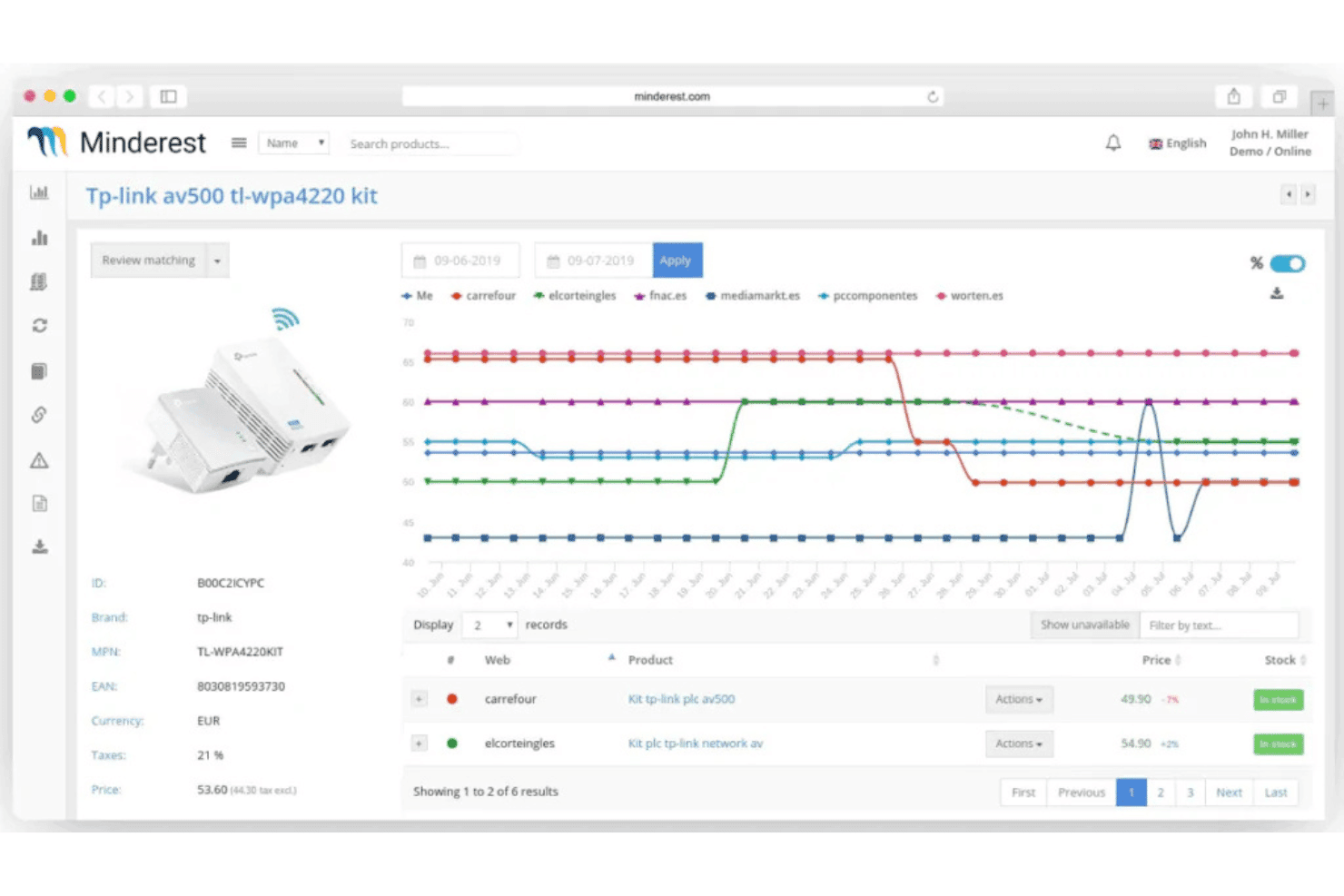
Minderest tracks competitor prices across retailers in real time. Minderest is a price intelligence platform that monitors MAP and MSRP compliance across marketplaces, price comparison engines, and reseller sites, with unauthorized seller identification and BI tool integrations for reporting.
Who Is Minderest Best For?
Minderest is a strong fit for enterprise brands and manufacturers who need to monitor MAP compliance across global markets and feed that data into existing BI tools like Power BI, Looker Studio, or Qlik.
Why I Picked Minderest
Minderest earns its spot on my shortlist because of how well it closes the gap between MAP violation detection and enterprise reporting. I love that when a reseller drops below your MAP threshold, the platform automatically captures a timestamped screenshot with price and URL metadata, giving your team concrete evidence before you even open the dashboard. What really sets it apart is the native BI integrations: you can push MAP compliance data directly into Power BI, Looker Studio, or Qlik, so your analytics team works from live violation data rather than manual exports.
Minderest Key Features
- Marketplace sellers benchmark: Identifies all sellers marketing your products on Amazon, eBay, and AliExpress, including unauthorized sellers with contact information and full catalogue visibility.
- AI-powered product matching: Matches your products across monitored channels without requiring EAN or UPC codes, reducing gaps in coverage across complex catalogues.
- Geographic price segmentation: Monitors and segments pricing data down to postcode level, letting you enforce MAP policies at a granular regional level across 40+ countries.
- Configurable violation alerts: Sends email alerts when a reseller drops below your MAP threshold, with alert parameters you set per SKU, country, currency, or channel.
Minderest Integrations
Minderest offers native integrations with business intelligence tools including Microsoft Power BI, Google Looker Studio, and Qlik, plus a browser extension (InSite™ Analytics) for Chrome and Firefox. It provides an API for custom integrations into internal databases, CRM, and ERP systems, though named connectors for specific platforms like Salesforce, SAP, or Shopify are not documented.
Pros and Cons
Pros:
- Segment MAP policies by country and channel
- Benchmarks unauthorized sellers with contact details
- Captures screenshot evidence for every MAP breach
Cons:
- No repeat-offender or legal evidence packaging
- No automated violator outreach workflows
Learn more about Minderest: Best for grey-market seller tracing and Buy Box MAP
- 7-day free trial + free demo available
- Pricing upon request
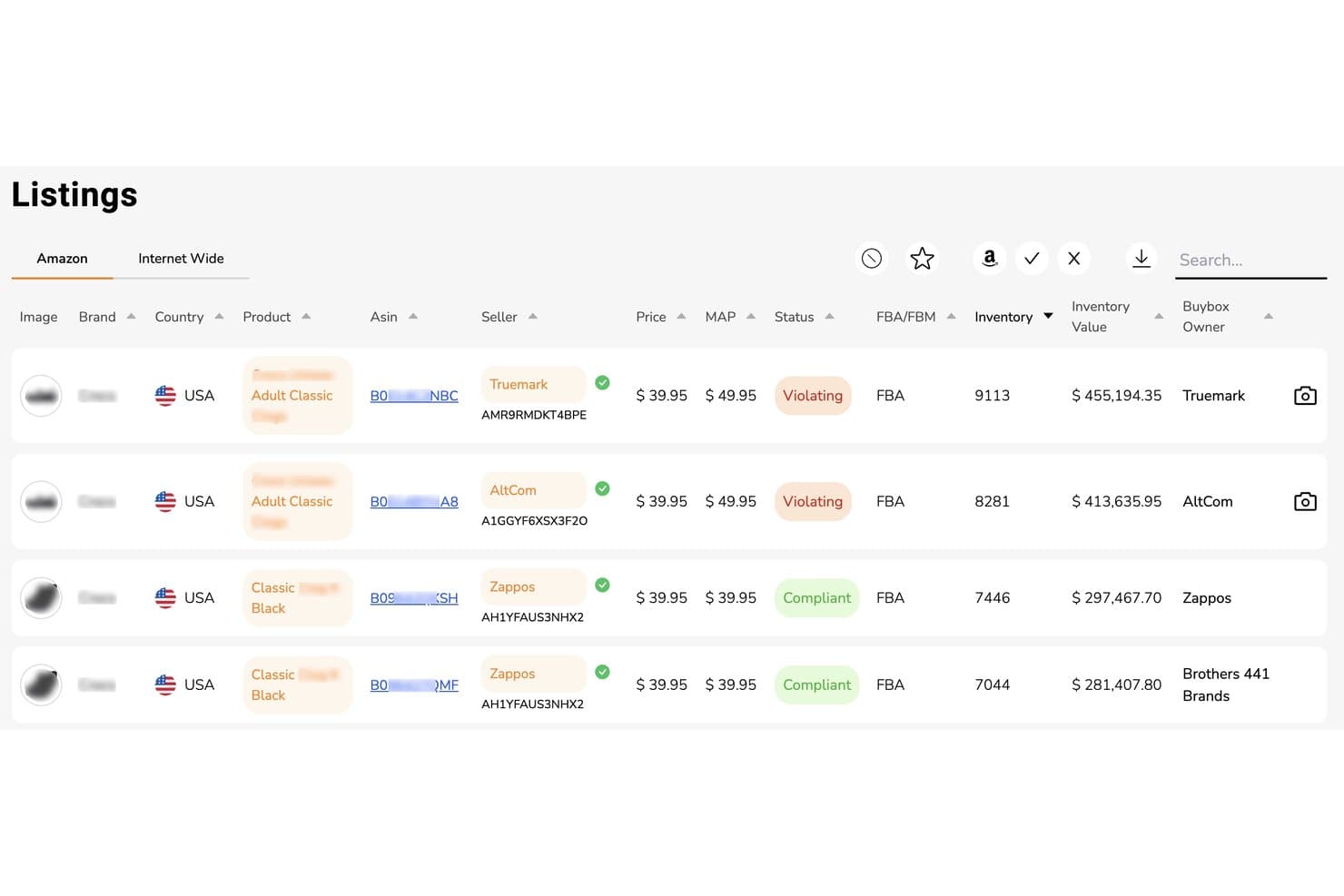
Brand Alignment tracks MAP compliance and seller inventory across Amazon listings. Brand Alignment is a MAP compliance and brand protection platform that monitors pricing across 200+ marketplaces, tracks unauthorized sellers, automates cease-and-desist workflows, and investigates grey-market supply chain diversion.
Who Is Brand Alignment Best For?
Brand Alignment is a strong fit for brand protection and channel managers at mid-to-large consumer brands dealing with unauthorized sellers and grey-market diversion across Amazon and other major marketplaces.
Why I Picked Brand Alignment
I picked Brand Alignment for its grey-market seller tracing, which goes further than any other tool I've seen in this category. When a seller pops up selling your product at below-MAP prices, Brand Alignment uses OSINT, test buys, serial number tracing, and PI databases to link that marketplace alias to a real name and address, then traces the inventory diversion back through your authorized distribution network. I also like that Buy Box monitoring is built directly into the platform, so you can see exactly when unauthorized sellers are winning the Buy Box and costing you sales.
Brand Alignment Key Features
- Managed MAP enforcement program: Brand Alignment's in-house team handles seller outreach, escalations, and removal on your behalf, from initial contact through resolution.
- Amazon Business pricing tier monitoring: The platform tracks quantity-discount tiers (5+, 10+, 25+ units) on Amazon Business for MAP compliance—a channel most tools overlook entirely.
- Cease-and-desist messaging workflow: Automated C&D letters escalate in tone across multiple attempts, with physical letter fallback when digital outreach fails.
- AI-categorized seller response tracking: All seller replies to enforcement notices are automatically tagged and flagged for follow-up or escalation in a centralized workspace.
Brand Alignment Integrations
Native integrations are not clearly documented on Brand Alignment's website, and the platform doesn't publicly list connections with ERP, PIM, CRM, or BI tools like Salesforce, NetSuite, SAP, Tableau, or Power BI. API access and Zapier support are also not documented, so data exchange happens primarily through the internal dashboard and downloadable screenshot exports.
Pros and Cons
Pros:
- Managed enforcement team handles seller outreach
- Sorts seller responses into groups
- Tracks grey-market sellers across 200+ marketplaces
Cons:
- No native connections to common BI tools
- Evidence screenshots auto-delete after 30 days
Learn more about Brand Alignment: Best for geo-level MAP monitoring at DMA depth
- Not available
- Pricing upon request
Visit WebsiteCustomer Rating:4.7/5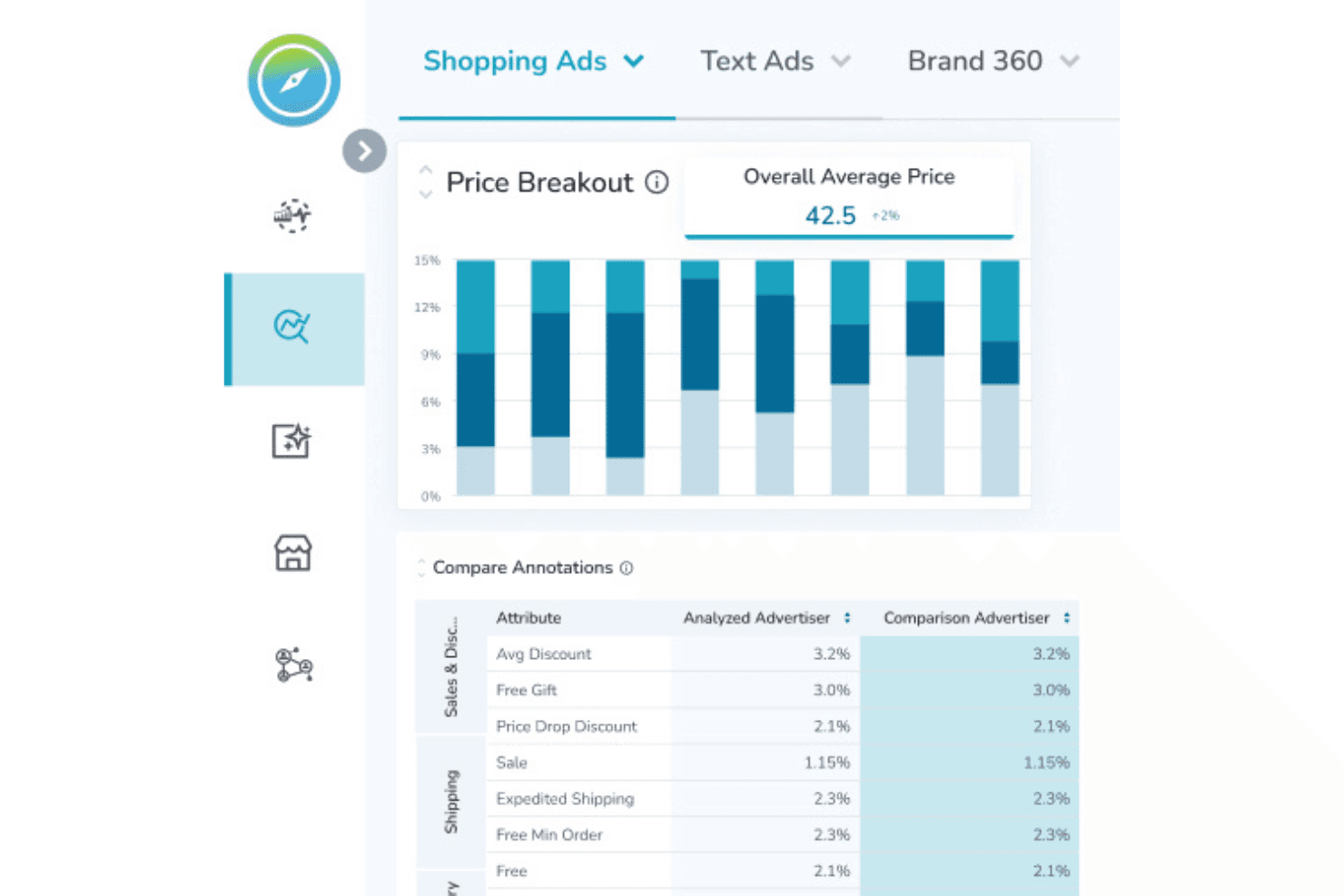
GrowByData tracks price breakout and ad annotations across competitors. GrowByData is a MAP monitoring and enforcement platform that tracks reseller pricing across 500+ marketplaces, captures timestamped violation evidence, and automates multi-stage cease-and-desist outreach at geo-level granularity down to the DMA and zip code.
Who Is GrowByData Best For?
GrowByData is a strong fit for brand and channel managers who need to track MAP violations across regional distributor networks with territory-level precision.
Why I Picked GrowByData
I picked GrowByData as one of the best because no other tool on my shortlist tracks MAP violations down to the zip code and DMA level the way it does. If you're managing a territory-based reseller network, that granularity tells you exactly which regional distributor is leaking inventory, not just that a violation exists somewhere. I also like that the platform scans 500+ marketplaces continuously (not in daily batches) and auto-generates timestamped, court-admissible screenshots the moment a violation fires.
GrowByData Key Features
- Hybrid SKU matching: Combines automated scanning with human validation to match products at the GTIN, UPC, and ASIN level, reducing false positives on variants and bundles.
- MAP holiday pricing controls: Lets you configure monitoring suspension windows for promotional events like Black Friday and Cyber Monday so compliant activity doesn't trigger violations.
- Good and problematic reseller reports: Generates separate reseller performance reports that identify chronic violators alongside sellers worth rewarding with incentives.
- Multi-stage enforcement outreach: Automates tiered follow-up sequences with differentiated email templates for authorized and unauthorized sellers, including email open tracking.
GrowByData Integrations
GrowByData offers a smaller set of documented native integrations, with DataForSEO confirmed for search and competitive intelligence data enrichment, and an API available for custom connections to BI tools, ERPs, and internal business systems. Pre-built connectors for major commerce platforms like Shopify, Salesforce, NetSuite, or SAP are not documented, and Zapier support is not clearly available.
Pros and Cons
Pros:
- Timestamped, court-admissible evidence auto-captured
- Automated cease-and-desist email workflows included
- Tracks MAP violations down to zip code
Cons:
- Limited out-of-the-box commerce platform connectors
- No in-house legal or managed enforcement
Learn more about GrowByData: Best for large-scale seller tracking and MAP reporting
- Not available
- Pricing upon request
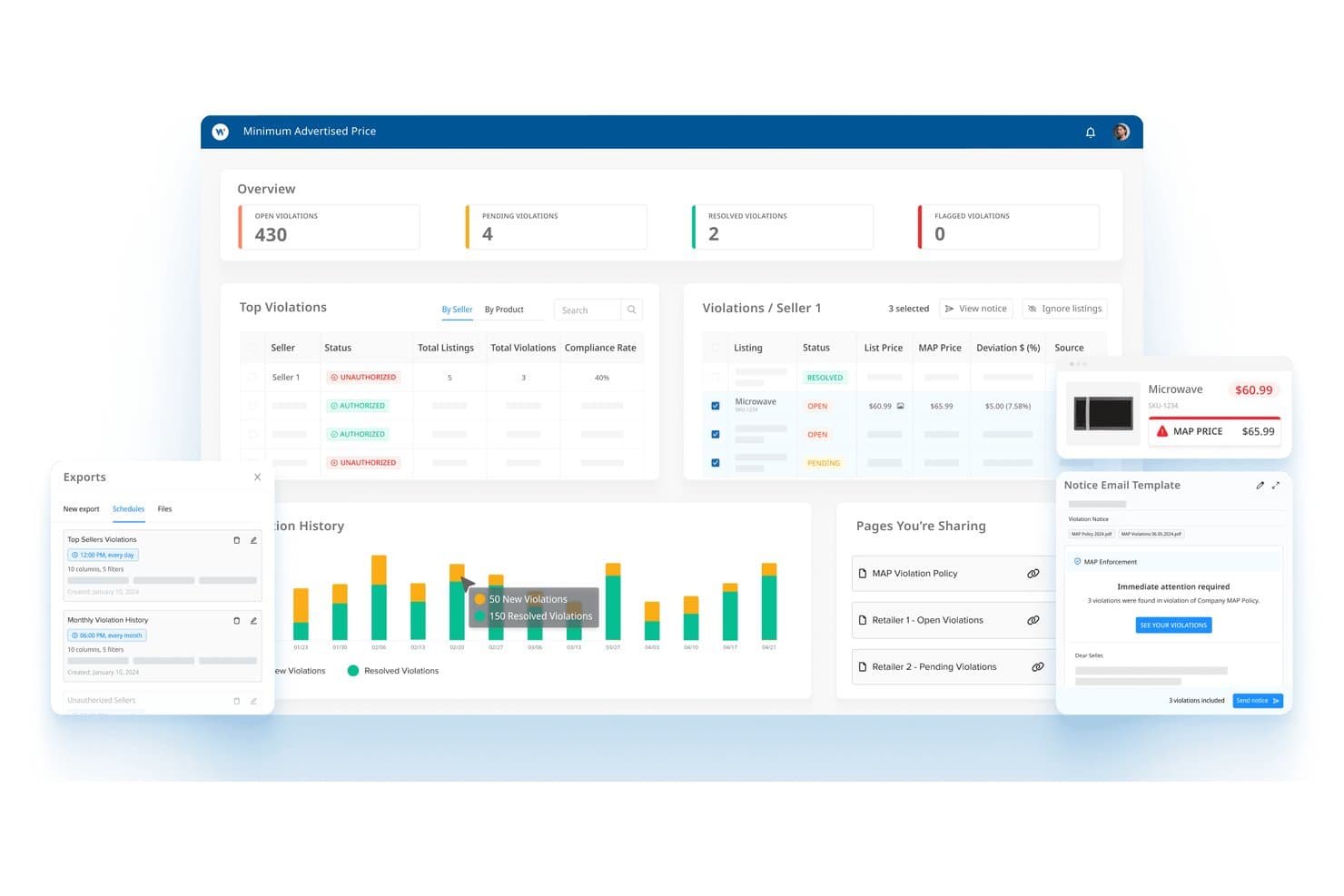
Wiser tracks MAP violations and sends automated notice emails to sellers. Wiser is a MAP compliance and pricing intelligence platform that monitors advertised prices across marketplaces and reseller sites, tracks sellers at scale, and automates violation enforcement workflows from detection through notice delivery.
Who Is Wiser Best For?
Wiser is a strong fit for enterprise brands managing large reseller networks across multiple marketplaces who need both automated violation detection and built-in enforcement workflows.
Why I Picked Wiser
I've included Wiser in my top picks because it handles seller tracking at a scale that most MAP tools simply can't match, monitoring 150,000+ sellers across marketplaces and reseller domains simultaneously. What sets it apart is full-site domain crawling, so instead of manually inputting URLs, Wiser automatically discovers new listings as they appear. I also like its built-in enforcement workflow, which includes pre-built violation notice templates and escalation tracking that move violations toward resolution without manual handoffs.
Wiser Key Features
- Promotional pricing lifecycle management: Validates promotional prices before they go live, monitors them through the active period, and checks for reversion after promotions end.
- 15-minute price refresh: Refreshes price data on priority SKUs as frequently as every 15 minutes for near-real-time visibility into advertised pricing changes.
- Repeat offender tracking: Logs seller violation history across channels so you can identify which resellers are chronic non-compliers and prioritize enforcement accordingly.
- Scheduled compliance report delivery: Automatically delivers role-specific compliance reports to sales, legal, and leadership teams on a set schedule.
Wiser Integrations
Native integrations aren't clearly documented by name on Wiser's site, but the platform supports data delivery through its Live Prices API, webhooks, and CSV exports for connecting to ERP, pricing, and BI systems like Tableau, Power BI, and Looker. A Chrome extension called Live Price Check is also available for in-browser price checks, and Zapier support isn't documented.
Pros and Cons
Pros:
- Tracks 150,000+ sellers across marketplaces
- Delivers scheduled compliance reports automatically
- Full-site crawls eliminate manual URL tracking
Cons:
- Only available after demo and sales call
- No court-ready legal documentation packaging
Learn more about Wiser: Best for managed MAP enforcement with seller intel
- Free demo available
- Pricing upon request
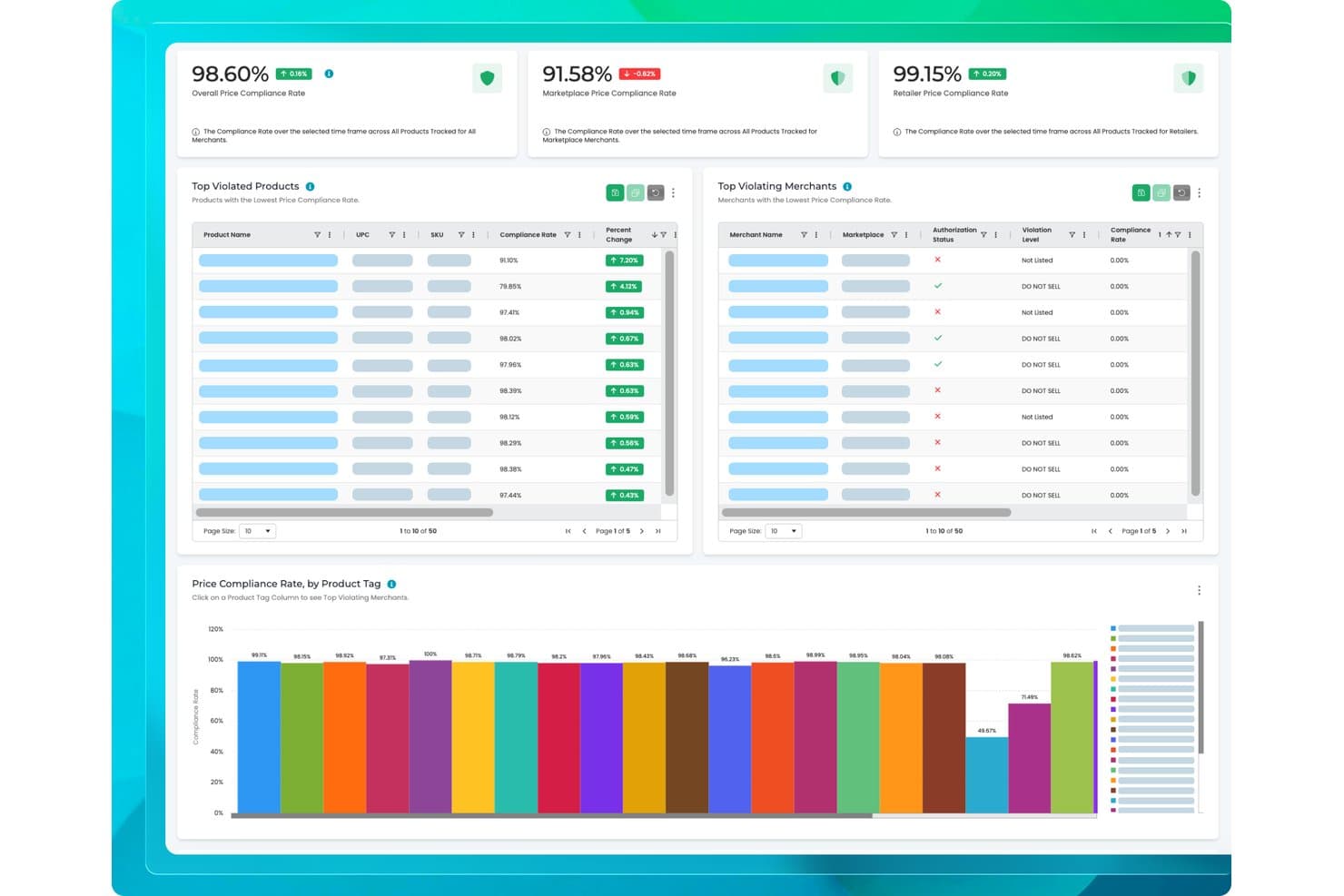
TrackStreet tracks price compliance rates across merchants and products. TrackStreet is a MAP compliance platform that monitors advertised prices across 185,000+ websites and marketplaces, identifies unauthorized sellers, automates violation enforcement workflows, and offers managed brand protection services.
Who Is TrackStreet Best For?
TrackStreet is a strong fit for brands that need a team behind them—not just software—to investigate unauthorized sellers and enforce MAP policy at scale.
Why I Picked TrackStreet
I picked TrackStreet as one of the best because it goes beyond software to give you an actual team of investigators working your enforcement cases. When a rogue seller is hiding behind a storefront alias on eBay, TrackStreet's in-house team uses court records, reverse lookups, and direct outreach to surface their real identity, claiming a 95% success rate. I also like that the platform captures in-cart pricing and hidden discounts that feed-based tools miss entirely.
TrackStreet Key Features
- Style-level enforcement: Groups product variants like sizes and colorways under a master product so violations are tracked and escalated at the line level, not just per SKU.
- Do Not Sell list management: Automatically compiles and maintains DNS lists at the merchant and UPC level, with tracked violation triggers, compliance timelines, and communication history.
- Market Impact heatmaps: Visualizes how individual seller behaviour cascades into broader price erosion across channels, tracing the source of pricing breakdowns.
- Customizable escalation workflows: Configures multi-stage enforcement sequences with threshold-based triggers for first notices, second notices, and DNS escalation.
TrackStreet Integrations
TrackStreet's native integrations are not clearly documented, though it offers a partner integration with MikMak for embedding Custom Report Builder insights into commerce analytics and supports data lake connectivity for downstream analysis. An API is referenced through the MikMak partnership, but public API documentation is not available.
Pros and Cons
Pros:
- Multi-stage escalation workflows with audit trails
- Manages lists of merchants automatically
- Maps market impact across channels
Cons:
- Product additions require contacting TrackStreet directly
- No mobile app for on-the-go use
Learn more about TrackStreet: Best for skip-tracing unauthorized seller discovery
- Free trial + free demo available
- From $200/month
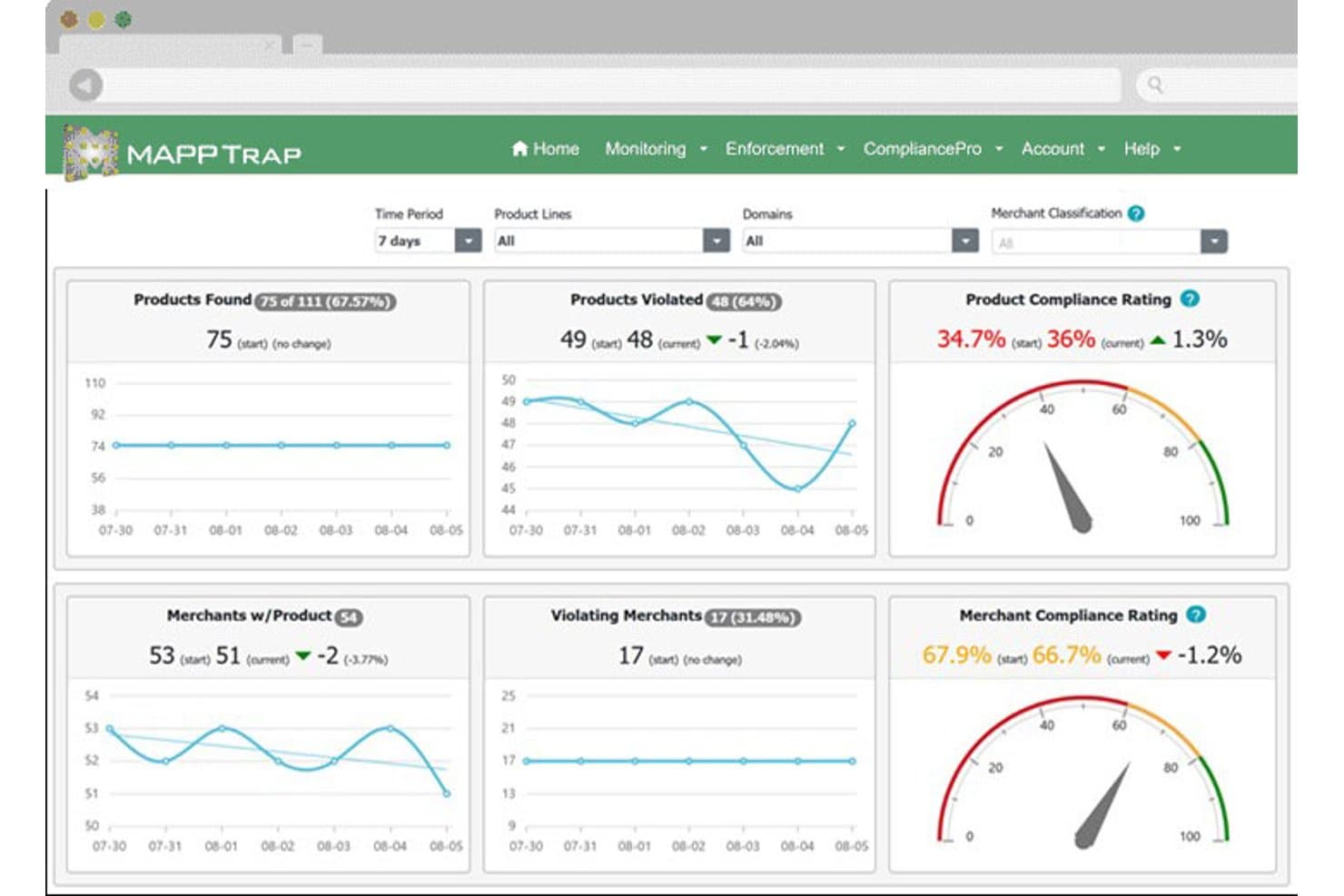
MAPP Trap tracks product compliance and merchant violations via a real-time dashboard. MAPP Trap is a MAP compliance platform built around three connected workflows—price monitoring across Amazon, eBay, Walmart, and Google Shopping; seller identification via skip-tracing; and automated enforcement with multi-step email escalation sequences.
Who Is MAPP Trap Best For?
MAPP Trap is a strong fit for brand protection and legal teams that need to identify and take action against unauthorized sellers, not just monitor prices.
Why I Picked MAPP Trap
I picked MAPP Trap as one of the best because its MerchantDNA system goes further than standard seller monitoring: trained skip-tracing investigators dig through back-end marketplace pages and the deep web to surface legal names, addresses, phone numbers, and registered domains for anonymous sellers. Once a violator is identified, I can cross-reference them against my authorized reseller list with a single upload. The Automated Enforcement Wizard then builds a multi-step email sequence with timestamped, watermarked violation screenshots already embedded in each notice.
MAPP Trap Key Features
- Noise filter: Removes one-time retail arbitrageurs from your violation list so enforcement stays focused on persistent, repeat offenders.
- EnforceWatch: A machine-learning assistant that recommends next enforcement steps, including IP abuse reporting and unauthorized seller removal.
- Keyword-based scanning: Searches listings using both product codes (ASIN, UPC, SKU) and keyword terms to catch hidden listings that code-only searches miss.
- Amazon Buy Box metrics: Tracks Buy Box status and inventory levels per product within your Amazon listings.
MAPP Trap Integrations
MAPP Trap doesn't have any native integrations documented, and data sharing with external systems like ERP, BI, or CRM tools relies on manual Excel exports from the platform. Zapier support and a public API for custom integrations are not documented.
Pros and Cons
Pros:
- Buy Box tracking for Amazon MAP monitoring
- Searches using keywords and codes
- MerchantDNA identifies anonymous marketplace sellers
Cons:
- No automated ERP or CRM data sync
- Daily scans, not real-time monitoring
Learn more about MAPP Trap:
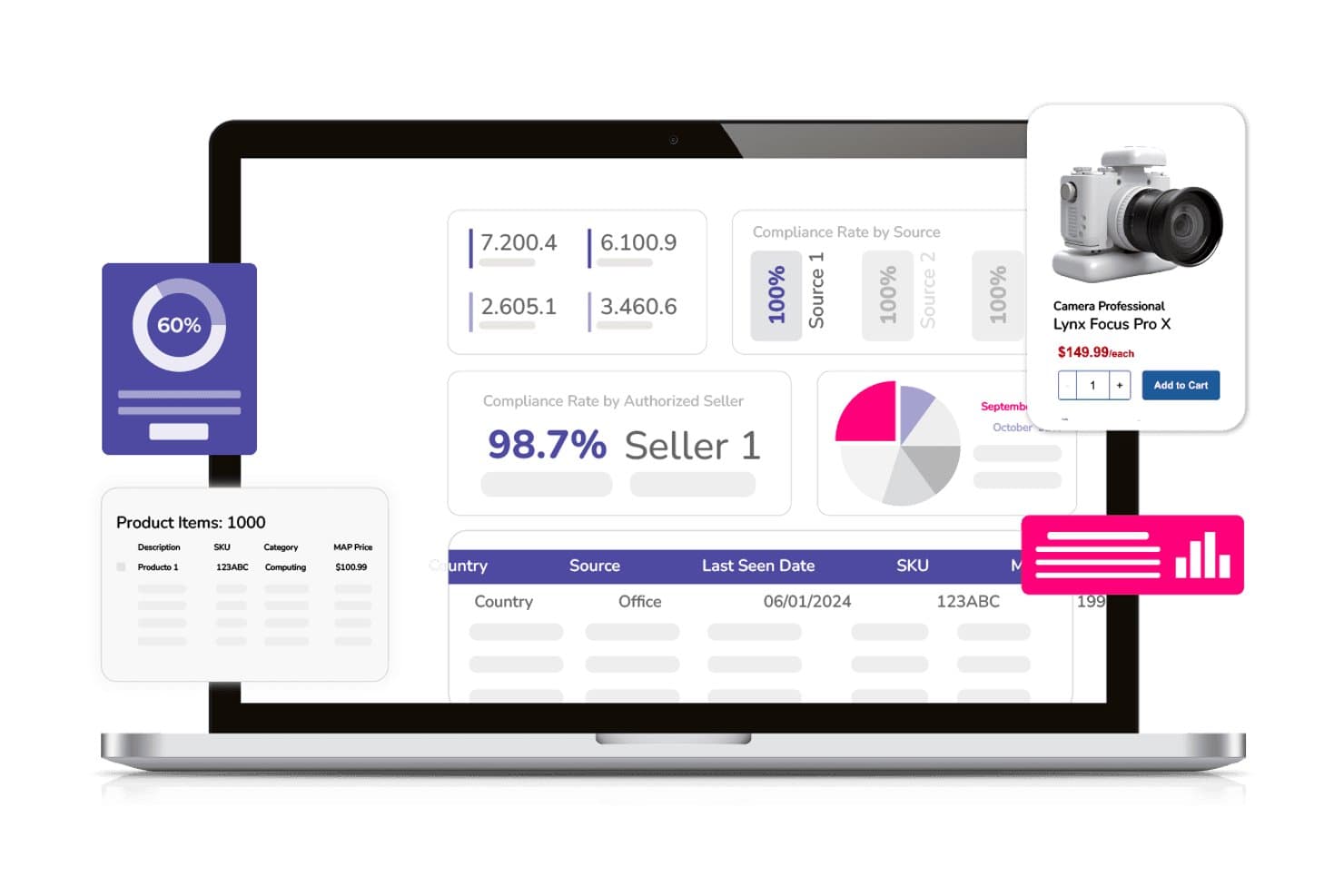
Omnitok tracks MAP compliance rates and violations by seller and source. Omnitok is a MAP compliance platform that monitors pricing across 150+ retailers and marketplaces, flags violations using AI-verified detection, tracks authorized and unauthorized sellers, and pairs MAP enforcement with digital shelf analytics.
Who Is Omnitok Best For?
Omnitok is a strong fit for brand protection and ecommerce teams at mid-market to enterprise consumer goods brands managing pricing across a large network of authorized and unauthorized resellers.
Why I Picked Omnitok
I picked Omnitok as one of the best because its AI-plus-human verification layer catches violations with 99.5% accuracy, flagging violations across 150+ retailers without drowning your team in false positives. What I really like is how MAP monitoring connects directly to digital shelf data, so when a seller drops below MAP on Amazon, you can immediately see the buy box and share of search impact alongside the timestamped, enforcement-ready evidence.
Omnitok Key Features
- Seller categorization framework: Classifies unauthorized sellers into three tiers—opportunists, gray market dealers, and bad actors—so your team can route each violation to the right enforcement response.
- All third-party offer monitoring: Tracks every seller offer on Amazon, Walmart, and eBay, not just the buy box winner, so emerging unauthorized accounts don't slip through undetected.
- Conversational AI query interface: Lets you ask natural-language questions like "Which sellers violated MAP this week?" to surface violation data, seller histories, and trend reports without building manual queries.
- QBR-ready automated reporting: Generates weekly compliance summaries and executive-ready quarterly reports, including compliance rate trends, repeat offender data, and enforcement outcomes.
Omnitok Integrations
Omnitok's native integrations are not clearly documented, and the platform's primary connectivity is retailer and marketplace data ingestion across 150+ sites, including Amazon, Walmart, eBay, Target, and TikTok Shop. Zapier support and a public API for custom integrations are not clearly documented.
Pros and Cons
Pros:
- Seller categorization enables targeted enforcement responses
- Real-time monitoring across 150+ marketplaces
- Hybrid AI and human MAP violation detection
Cons:
- Enforcement automation workflows lack documented depth
- No self-serve trial or immediate access
Learn more about Omnitok:
Other MAP Compliance Software
Here are some additional MAP compliance software options that didn’t make it onto my shortlist, but are still worth checking out:
- 11WayviaBest for AI-led MAP enforcement at enterprise scale
- 12Import.ioBest for extraction-backed MAP with intra-day scans
- 13PricevaBest for MAP tracking with competitive pricing data
- 14PricefyBest for MAP monitoring across 69 countries
- 1542SignalsBest for cross-market MAP compliance tracking
- 16Trade VitalityBest for SMB MAP monitoring with managed outreach
- 17Vorys eControlBest for MAP enforcement with in-house legal backing
- 18FrigginYeahBest for bundle-aware MAP violation tracking
- 19IPSecureBest for Amazon and Walmart brand protection
How I Evaluate MAP Compliance Software
I split my evaluation into baseline functionality—real-time scanning, violation detection, evidence capture—and the differentiators that separate a tool worth buying from one that just checks boxes.
Core Functionality (Table Stakes For This List)
When I'm selecting tools for my list, I rank each one on a scale from 0 (does not offer the functionality) to 5 (excels in this area) for each core functionality listed below. I then calculate the tool's total score as a percentage, using 65% as a benchmark to help assess its overall fit for the list.
- Automated price monitoring: I check how many marketplaces and reseller sites each tool scans, plus whether scan frequency is configurable down to intra-day intervals.
- MAP violation detection: Per-SKU policy configuration is the baseline, but I look for multi-dimensional rules that handle promos, bundles, and currency differences without manual workarounds.
- Evidence capture: Timestamped screenshots need to include the price, seller name, and product URL so your legal or compliance team can act on them immediately.
- Seller identification and tracking: I evaluate whether the tool links violations to specific sellers, flags repeat offenders, and surfaces unauthorized resellers across channels like Amazon and Walmart.
- Enforcement workflow automation: Templates and escalation rules matter here—I look for tools that automate outreach, track responses, and route unresolved cases without manual follow-up.
- Compliance reporting and dashboards: Exportable reports with compliance rates and violator trends are table stakes; I also check for role-based views and API access for downstream BI tools.
Once I have a list of tools that meet the criteria, I consider what sets each platform apart.
Differentiating Factors (What Sets Vendors Apart)
Here's how I compare and contrast different vendors:
Standout Features
Unauthorized seller discovery is the first thing I evaluate. I look for tools that trace grey-market inventory back to the distributor leak—not just flag a violator name. Buy Box and 3P monitoring matters just as much, since a MAP violation that costs you Buy Box share has a direct revenue impact most dashboards miss. I also check whether a platform supports multi-currency MAP with automatic tax normalization, which is essential for brands enforcing policies across regional marketplaces.
Beyond Features
I evaluate how deeply a tool connects to your existing retail stack. API access to BI platforms like Tableau or Power BI lets you layer MAP violation data over sell-through and margin reporting—context that raw compliance dashboards can't provide alone. Managed enforcement services matter just as much; some vendors assign dedicated analysts who handle seller outreach and platform takedowns on your behalf, which saves your team from chasing repeat offenders manually. I also check pricing model scalability, since a per-SKU license that works for 200 products can become a budget problem at 5,000.
How to Choose MAP Compliance Software
How can you quickly spot which MAP compliance software will actually help your team clamp down on pricing violations, trace unauthorized sellers, and plug revenue leaks while scaling with your brand’s growth?
| If your priority is… | Look for… |
|---|---|
| If your priority is…Identifying unauthorized or grey-market sellers fast | Look for…Advanced seller discovery using OSINT and skip-tracing |
| If your priority is…Stopping price erosion on global channels | Look for…Multi-currency MAP with regional tax support |
| If your priority is…Freeing up your team from manual monitoring | Look for…Automated outreach plus managed enforcement services |
| If your priority is…Integrating with analytics and BI stacks | Look for…API access to BI tools and exportable compliance data |
| If your priority is…Pinpointing local violations | Look for…Geographic monitoring down to DMA or region |
How to Vet Your Shortlist
- Test evidence quality: Request 3–5 sample violation reports with full timestamp, seller info, and URL screenshots.
- Validate seller unmasking: Ask the vendor to trace a real unauthorized seller on Amazon or Walmart within 7 days.
- Trial enforcement automation: Run a 2–week demo with auto-escalation templates and a test batch of MAP violations.
- Check integration depth: Get technical documentation showing example API endpoints for BI tool connections.
- Trade-off—Automation vs. Human Service: Decide if you want self-serve automation at scale or managed enforcement support from analysts—few vendors excel at both.
What Is MAP Compliance Software?
MAP compliance software is a digital tool that combines price monitoring with enforcement of minimum advertised price policies across online and offline retail channels. It helps brands and retailers identify pricing violations, unauthorized sellers, and potential threats to price integrity. By automating the detection process and providing evidence of infractions, this software supports teams responsible for protecting margins, managing reseller relationships, and maintaining consistent brand value in the marketplace.
Features of MAP Compliance Software
When selecting MAP compliance software, keep an eye out for the following key features:
- Automated price monitoring: Tracks product prices across marketplaces, ecommerce sites, and reseller channels automatically. This allows your team to spot out-of-policy listings and pricing violations without manual checks.
- MAP violation detection: Flags instances where reseller-advertised prices fall below your minimum advertised price policies. This feature ensures that price drops and policy breaches are surfaced for review.
- Evidence capture: Collects timestamped screenshots showing product prices, seller information, and URLs. These records serve as legal and internal evidence in enforcement actions.
- Seller identification and tracking: Maps pricing violations to specific sellers and tracks repeat offenders. This makes it possible to target outreach, remove unauthorized sellers, and manage reseller relationships.
- Enforcement workflow automation: Automates the process of notifying violators using customizable email templates and escalation rules. Saves time and improves follow-through on policy enforcement.
- Compliance reporting: Generates exportable reports on violation trends, compliance rates, and enforcement outcomes. These reports support internal tracking, legal needs, and executive visibility.
- Role-based dashboards: Provides tailored views for different user groups, such as compliance teams, legal, or management, ensuring everyone sees the data and actions relevant to them.
- API access for integrations: Enables your team to pull MAP monitoring data into BI tools or other retail software for deeper analysis and custom reporting.
- Marketplace and regional coverage: Supports monitoring across a wide range of online marketplaces and geographic regions, helping brands address international and multi-channel pricing policy needs.
- Configurable policy management: Lets you set MAP rules per SKU, product group, promotion, or region, giving flexibility to accommodate diverse pricing strategies and agreements.
Common MAP Compliance Software AI Features
Beyond the standard MAP compliance software features listed above, many of these solutions are incorporating AI with features like:
- AI-driven violation pattern detection: Uses machine learning to analyze historical pricing data and seller behaviour, surfacing new violation trends and tactics that manual monitoring might miss. This helps your team anticipate and address emerging threats before they escalate.
- Automated unauthorized seller identification: Leverages AI to cross-reference seller profiles, transaction histories, and marketplace data, unmasking hidden or repeat violators who use multiple aliases or accounts across channels.
- Predictive compliance risk scoring: Applies AI models to assess the likelihood of future MAP violations by analyzing seller activity, pricing fluctuations, and market signals. This lets you prioritize enforcement efforts on high-risk products or sellers.
- Natural language processing for violation evidence: Uses AI to extract and summarize key details from product listings, reviews, and seller communications, making it easier to compile actionable evidence for enforcement or legal action.
- AI-powered enforcement recommendation engines: Suggest optimal enforcement actions—such as outreach templates, escalation paths, or legal steps—based on the context of each violation and historical outcomes, helping your team respond faster and more consistently.
Benefits of MAP Compliance Software
Implementing MAP compliance software provides several benefits for your team and your business. Here are a few you can look forward to:
- Automated price monitoring: Track product prices across multiple marketplaces and reseller sites automatically to catch policy violations without manual checking.
- Quick MAP violation detection: Instantly flag out-of-policy listings when advertised prices drop below your brand's thresholds, minimizing revenue leaks.
- Reliable evidence capture: Gather timestamped screenshots, seller info, and product URLs as proof for internal compliance or legal enforcement.
- Seller identification and tracking: Map violations directly to sellers, surface unauthorized resellers, and keep an accurate history of repeat offenders.
- Enforcement workflow automation: Automate outreach with templates and escalation rules so violations are addressed promptly with less manual follow-up.
- Actionable compliance reporting: Create role-based dashboards and exportable reports to spot violation trends, compliance rates, and measure enforcement impact.
- Flexible policy management: Set MAP rules per SKU, channel, region, or promo, making it easier to manage diverse products and agreements.
Costs and Pricing of MAP Compliance Software
Selecting MAP compliance software requires an understanding of the various pricing models and plans available. Costs vary based on features, team size, add-ons, and more. The table below summarizes common plans, their average prices, and typical features included in MAP compliance software solutions:
Plan Comparison Table for MAP Compliance Software
| Plan Type | Average Price | Common Features |
|---|---|---|
| Plan TypeFree Plan | Average Price$0 | Common FeaturesBasic price monitoring, limited violation alerts, and simple reporting. |
| Plan TypePersonal Plan | Average Price$50–$150/month | Common FeaturesAutomated price monitoring, MAP violation detection, and basic evidence capture. |
| Plan TypeBusiness Plan | Average Price$300–$1,200/month | Common FeaturesMulti-channel monitoring, enforcement workflow automation, exportable compliance reporting, and team dashboards. |
| Plan TypeEnterprise Plan | Average Price$2,000–$5,000+/month | Common FeaturesCustom integrations, API access, managed enforcement services, advanced seller identification, and global marketplace coverage. |
MAP Compliance Software FAQs
Here are some answers to common questions about MAP compliance software:
How do I know if MAP compliance software supports the marketplaces my products are listed on?
Check the vendor’s marketplace coverage list or request a demo tailored to your core channels. Most MAP compliance software supports Amazon and Walmart, but not all cover niche or international marketplaces. If you sell on platforms like eBay, Target, or regional sites, ask for a breakdown by site and region. Confirm frequency of scans for each site—timely detection depends on high scan frequency.
Can MAP compliance software automatically identify unauthorized resellers?
Yes, many platforms use automated seller identification, often with AI, to connect violations to specific seller profiles. However, some only catch simple infractions. If tracing unauthorized sellers is your priority, look for features like seller unmasking, repeat offender flagging, and OSINT-backed discovery that go beyond surface-level info. Ask for real examples from the tool during your trial.
What kinds of evidence does MAP compliance software provide for violations?
MAP compliance software typically captures timestamped screenshots that include the product, violating price, seller information, and the URL. Some solutions summarize additional details or provide full page archives. This evidence supports efficient enforcement and is usually exportable for legal or internal compliance use. Always test sample reports before committing.
Is it possible to integrate MAP compliance software with my existing reporting or BI tools?
Yes, most enterprise or business-level plans offer API access or exportable data formats for integration. Some platforms provide direct connectors for tools like Tableau or Power BI. Make sure to review technical documentation and test exporting a batch of compliance data into your BI stack to confirm compatibility and data granularity.
Do these platforms support multi-currency and regional MAP enforcement?
Yes, more advanced solutions let you configure MAP policies by currency, market region, and even adjust for regional taxes. If you sell across countries, confirm that your selected software normalizes prices for tax, currency conversion, and promo variations. This avoids manual workarounds and keeps enforcement relevant everywhere you sell.
What’s the difference between self-serve MAP automation and managed enforcement services?
Self-serve automation tools give you dashboards and templates to manage violations yourself, ideal for teams with capacity and scale. Managed enforcement services go further; vendors assign analysts to handle outreach, takedowns, and follow-ups on your behalf. Choose based on your team’s workload and the complexity of your seller landscape. Some software offers both, but be sure to clarify service levels.
MAP Compliance Software FAQs
Here are some answers to common questions about MAP compliance software:
How do I know if MAP compliance software supports the marketplaces my products are listed on?
Check the vendor’s marketplace coverage list or request a demo tailored to your core channels. Most MAP compliance software supports Amazon and Walmart, but not all cover niche or international marketplaces. If you sell on platforms like eBay, Target, or regional sites, ask for a breakdown by site and region. Confirm frequency of scans for each site—timely detection depends on high scan frequency.
Can MAP compliance software automatically identify unauthorized resellers?
Yes, many platforms use automated seller identification, often with AI, to connect violations to specific seller profiles. However, some only catch simple infractions. If tracing unauthorized sellers is your priority, look for features like seller unmasking, repeat offender flagging, and OSINT-backed discovery that go beyond surface-level info. Ask for real examples from the tool during your trial.
What kinds of evidence does MAP compliance software provide for violations?
MAP compliance software typically captures timestamped screenshots that include the product, violating price, seller information, and the URL. Some solutions summarize additional details or provide full page archives. This evidence supports efficient enforcement and is usually exportable for legal or internal compliance use. Always test sample reports before committing.
Is it possible to integrate MAP compliance software with my existing reporting or BI tools?
Yes, most enterprise or business-level plans offer API access or exportable data formats for integration. Some platforms provide direct connectors for tools like Tableau or Power BI. Make sure to review technical documentation and test exporting a batch of compliance data into your BI stack to confirm compatibility and data granularity.
Do these platforms support multi-currency and regional MAP enforcement?
Yes, more advanced solutions let you configure MAP policies by currency, market region, and even adjust for regional taxes. If you sell across countries, confirm that your selected software normalizes prices for tax, currency conversion, and promo variations. This avoids manual workarounds and keeps enforcement relevant everywhere you sell.
What’s the difference between self-serve MAP automation and managed enforcement services?
Self-serve automation tools give you dashboards and templates to manage violations yourself, ideal for teams with capacity and scale. Managed enforcement services go further; vendors assign analysts to handle outreach, takedowns, and follow-ups on your behalf. Choose based on your team’s workload and the complexity of your seller landscape. Some software offers both, but be sure to clarify service levels.