

Cel mai bun agent AI pentru comerț electronic, care gestionează întrebările despre cumpărături, descoperirea produselor, asistența pentru clienți și sarcinile de după achiziție. Aceste instrumente se conectează la cataloage, platforme de comerț electronic și fluxuri de lucru pentru servicii, pentru a ghida cumpărătorii și a direcționa problemele complexe către echipa dumneavoastră.
Am evaluat opțiunile în funcție de acuratețea catalogului, asistența pentru vânzări, retururi, integrări, guvernanță și acoperirea canalelor, astfel încât să puteți alege un agent potrivit pentru operațiunile și planurile de dezvoltare ale magazinului dumneavoastră.
Why Trust Our Software Recommendations
6,700+
Reviews
20
Industry experts
16+
Evaluation factors
14
Years
Our team has been testing and reviewing software since 2012. As retail leaders ourselves, we know how difficult—and important—it is to choose the right software.
For this guide, we evaluated tools using hands-on testing and independent research, scoring tools using our selection criteria.
Our reviews reflect our independent judgment—not a sales pitch.
Tabel comparativ: agenți AI pentru comerț electronic
Comparați prețurile și specificațiile, unul lângă altul, pentru agenții AI de comerț electronic care au intrat pe lista mea scurtă.
Score legend (out of 5)
- Excellent4.5–5
- Good4–4.4
- Average3–3.9
- Below average2–2.9
- Poor1–1.9
Sorted by: Default
| Tool | Starting Price | Website | |||||||
|---|---|---|---|---|---|---|---|---|---|
Best for live catalog-grounded agent deployment | 3.7 out of 5 | 3 | 2 | 5 | 4 | 4 | 4 | $1/month Free plan + free demo available | Website |
Best for enterprise catalog-grounded AI discovery | 3.7 out of 5 | 4 | 2 | 5 | 4 | 3 | 4 | Pricing upon request 14-day free trial + free demo available | Website |
Best for product personalization at scale | 3.5 out of 5 | 3 | 2 | 4 | 5 | 4 | 3 | Pricing upon request Free demo available | Website |
Best for merchant- and shopper-facing agents | 3.7 out of 5 | 3 | 3 | 4 | 4 | 4 | 4 | Pricing upon request Free demo available | Website |
Best for conversational shopping | 3.7 out of 5 | 3 | 4 | 4 | 4 | 3 | 4 | $60,000/year Free demo available | Website |
Best for Shopify-native support and sales | 4.0 out of 5 | 5 | 4 | 4 | 3 | 4 | 4 | $40/month 7-day free trial + free demo available | Website |
Best for outcome-based AI support | 3.7 out of 5 | 5 | 4 | 4 | 3 | 2 | 4 | $19/user/month 14-day free trial + free demo available | Website |
Best for post-purchase actions | 4.2 out of 5 | 5 | 4 | 4 | 4 | 4 | 4 | $1.20/resolution Free demo + 30-day free trial available | Website |
Best for visual and conversational product discovery | 3.8 out of 5 | 3 | 3 | 5 | 4 | 4 | 4 | Pricing upon request Free demo + 14-day free trial available | Website |
Best for proactive cart recovery | 3.7 out of 5 | 4 | 4 | 4 | 3 | 3 | 4 | $10/3000 sessions/month Free demo + 14-day free trial available | Website |


Recenzii ale agenților AI pentru comerț electronic
Mai jos sunt rezumatele mele despre cei mai buni agenți AI pentru comerț electronic care au intrat pe lista mea scurtă. Aceste recenzii analizează funcțiile, capacitățile și integrările fiecărui instrument, pentru a vă ajuta să găsiți soluția potrivită.
 Best for live catalog-grounded agent deployment
- Free plan + free demo available
- From $1/month
Visit WebsiteCustomer Rating:4.6/5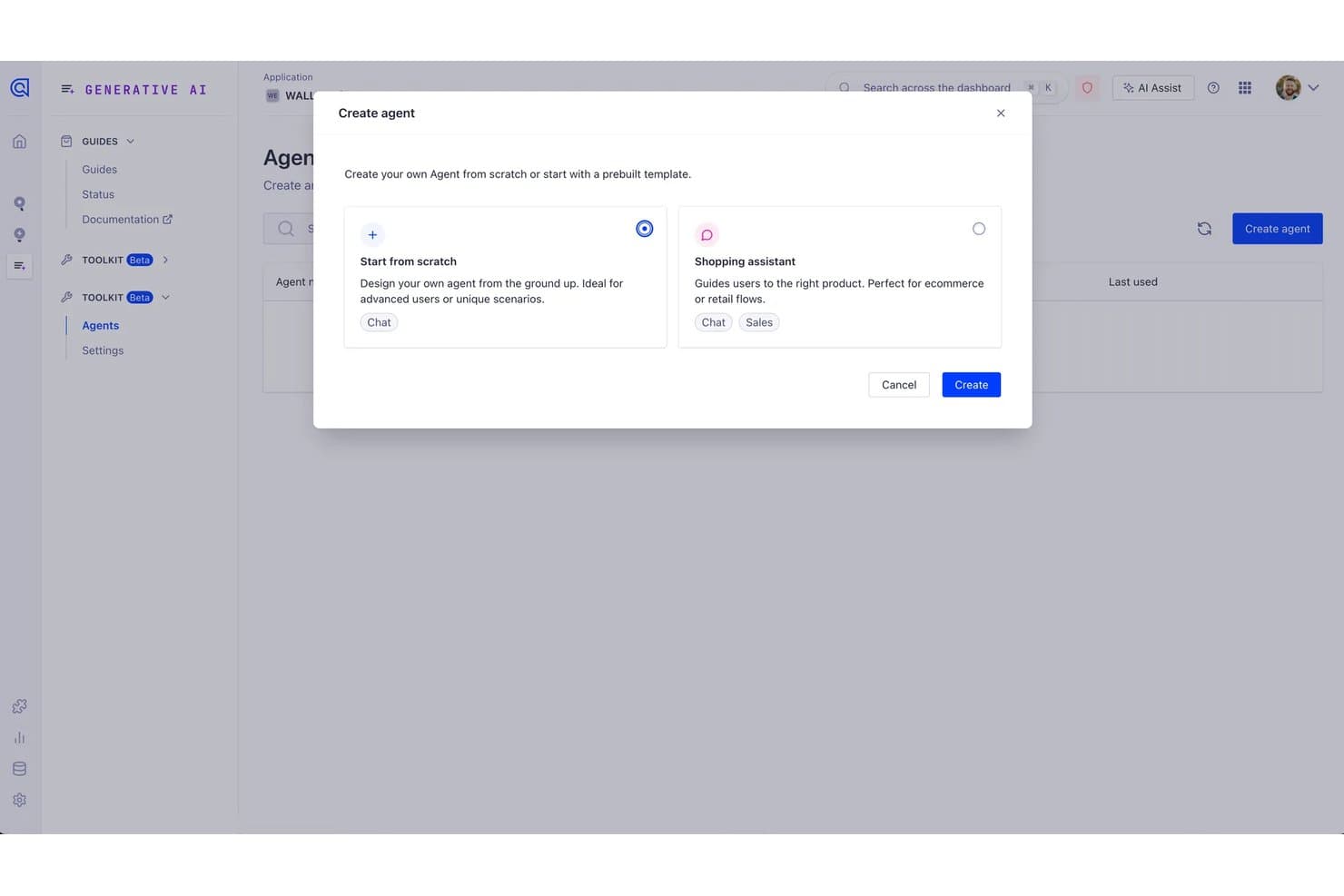
Algolia lets users build AI agents from scratch or via templates. Algolia is a search and discovery platform for ecommerce that adds conversational search, product Q&A, real-time personalization, and recommendations to storefronts.
Who Is Algolia Best For?
Algolia is a strong fit for ecommerce teams that already run search-driven storefronts and want control over how their AI agents are built.
Why I Picked Algolia
I picked Algolia because Agent Studio lets teams build their own shopping agents on top of an existing Algolia product index, which is the key reason agent answers about pricing, inventory, and compatibility stay accurate. Teams can set up an agentic search bar that suggests conversational prompts as shoppers type, or guided selling flows for compatibility and fitment questions. The MCP Server also exposes the catalog to external agents such as ChatGPT and Claude.
Algolia Key Features
- AI Recommendation models: Choose from five recommendation models—Frequently Bought Together, Related Items, Looking Similar, Trending Items, and Personalized Recommendations—each retraining on fresh interaction data.
- Merchandising Studio: Configure search ranking, campaign rules, and promote/demote logic in the dashboard without writing code.
- Bring-your-own-LLM support: Connect Agent Studio to OpenAI, Anthropic, Google Gemini, AWS Bedrock, or Azure OpenAI.
- Agent governance controls: Set input/output guardrails, token limits, per-IP request caps, conversation-depth limits, and approved-domain lists.
Algolia Integrations
Algolia offers integrations with Salesforce Commerce Cloud, Adobe Commerce, Shopify, BigCommerce, WordPress, Zendesk, and Commercetools. It also offers an API for custom connections.
Pros and Cons
Pros:
- Real-time personalization improves product discovery
- Configurable guardrails control agent responses
- Catalog-grounded answers reduce hallucinations
Cons:
- Recommendations require event tracking setup
- Agents cannot place orders
Learn more about Algolia: Best for enterprise catalog-grounded AI discovery
- 14-day free trial + free demo available
- Pricing upon request
Visit WebsiteCustomer Rating:4.7/5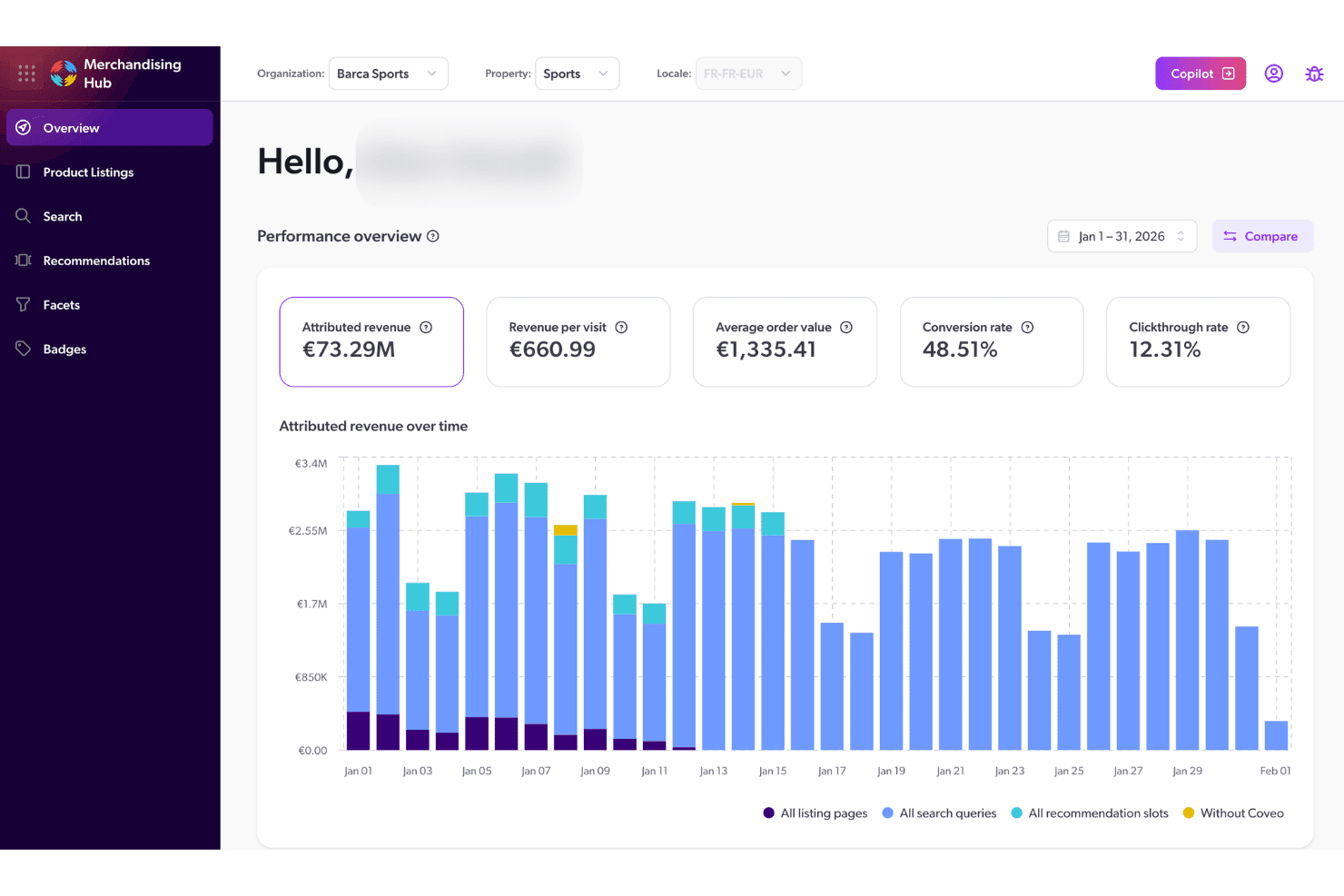
Coveo tracks attributed revenue and conversion metrics on a dashboard. Coveo is an AI search and product discovery platform that combines conversational shopping, real-time catalog indexing, personalized recommendations, and a no-code merchandising hub.
Who Is Coveo Best For?
Coveo is built for enterprise retailers and B2B distributors whose catalogs carry many SKUs and detailed product attributes.
Why I Picked Coveo
Coveo earns its spot on my shortlist because its Discovery Agent is designed for complex B2B catalogs. I'm particularly impressed by its real-time catalog indexing, which supports millions of SKUs, customer-specific pricing, and fitment data in a single unified index. Its Adaptive Canvas switches the results layout from product grids to comparison tables based on what the shopper asks.
Coveo Key Features
- Merchandising Copilot: Surfaces natural-language insights and data-backed merchandising recommendations, requiring human approval before changes go live.
- Unified content index: Combines product data with support content, manuals, and guides in one index, so shoppers can find products and usage answers in one place.
- A/B testing for search and listings: Built-in experimentation tools let you test ranking strategies, facet configurations, and recommendation placements directly within the Merchandising Hub.
- Real-time 1:1 personalization: Uses behavioral embeddings and in-session signals to rank and recommend products for each shopper, even without a login or profile.
Coveo Integrations
Coveo integrates with Shopify, Salesforce, SAP, Box, Adobe Experience Manager, Optimizely, Sitecore, and AppDirect. An API for custom integrations is also available.
Pros and Cons
Pros:
- Provides transparent search ranking controls
- Personalizes results for anonymous shoppers
- Handles complex B2B catalog structures
Cons:
- Focuses on discovery rather than transactions
- Requires technical implementation expertise
Learn more about Coveo:
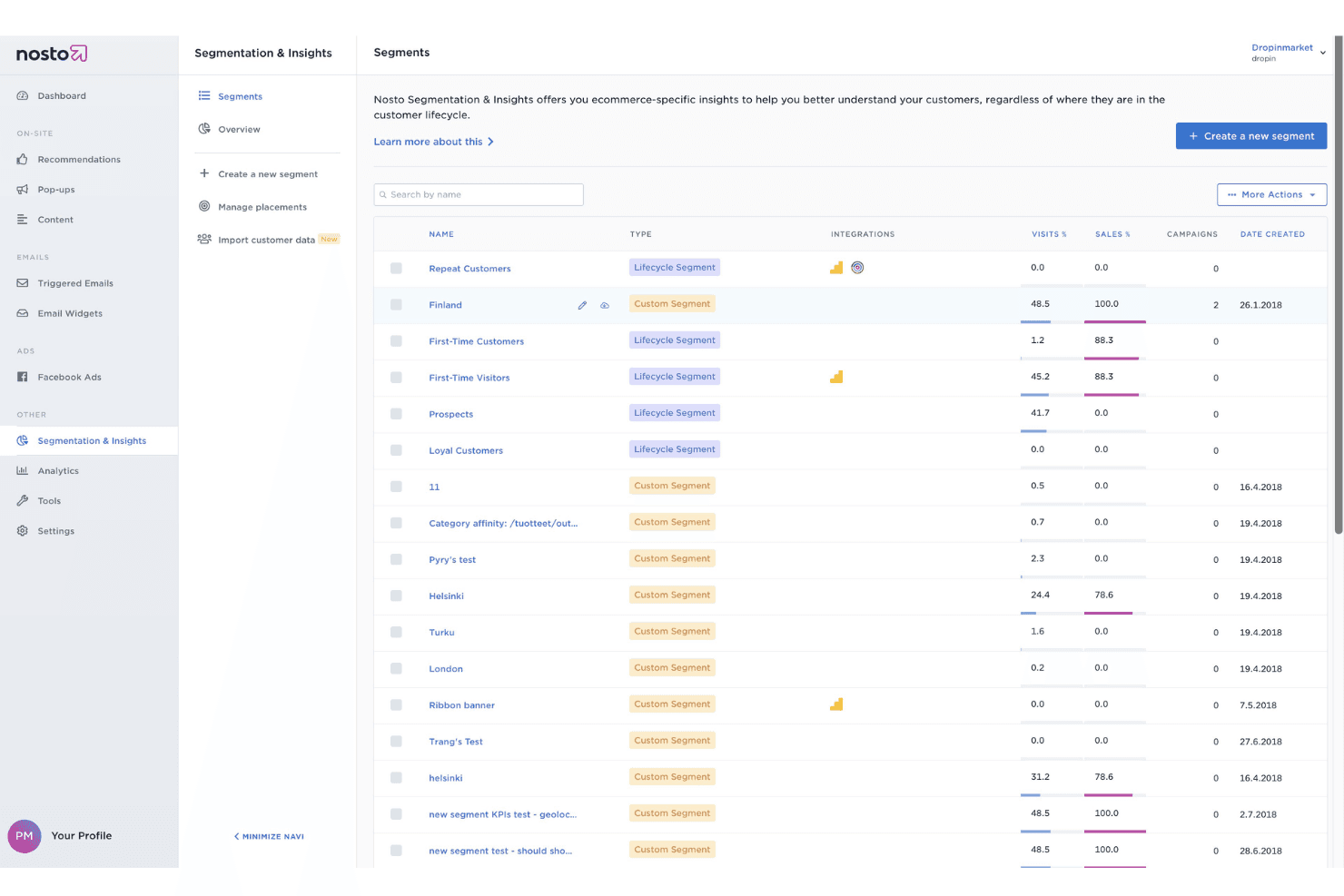
Nosto lets users segment customers by lifecycle stage and custom rules. Nosto is a commerce experience platform with an AI agent layer, Huginn, that spans personalized search, product recommendations, category merchandising, and behavioral analytics across your storefront, email, and content channels.
Who Is Nosto Best For?
Nosto is a strong fit for mid-market and enterprise ecommerce teams that rely on behavioral data to merchandise large catalogs.
Why I Picked Nosto
I've included Nosto in my top picks because its Large Intent Model, trained on billions of behavioral and transactional data points, powers real-time personalization across product recommendations and category pages. I particularly like how AI Reveals proactively surfaces untapped customer segments and intelligent product bundles without you having to ask. Its vector-based Personalized Search also factors in stock levels, profit margin, and seasonality to merchandise results automatically.
Nosto Key Features
- Ask Huginn: Allows you to query conversion trends, customer segments, and experiment ideas directly.
- Category merchandising: Ranks category pages using real-time signals like stock levels, profit margin, seasonality, and conversion rate.
- Huginn Connect: An API and MCP integration layer that links Huginn to external AI tools like Shopify Sidekick.
- Shoppable UGC: Turns user-generated content into shoppable storefronts, so shoppers can buy from customer photos and social content.
Nosto Integrations
Nosto offers integrations with Shopify, Adobe Commerce, BigCommerce, Salesforce Commerce Cloud, Shopware, VTEX, Tapcart, and Google Analytics. An API is also available for custom integrations.
Pros and Cons
Pros:
- Conversational and image search aid discovery
- Huginn supports approval-gated merchandising decisions
- Real-time personalization handles large catalogs
Cons:
- AI Search availability remains limited
- Huginn requires approval before changes launch
Learn more about Nosto: Best for merchant- and shopper-facing agents
- Free demo available
- Pricing upon request
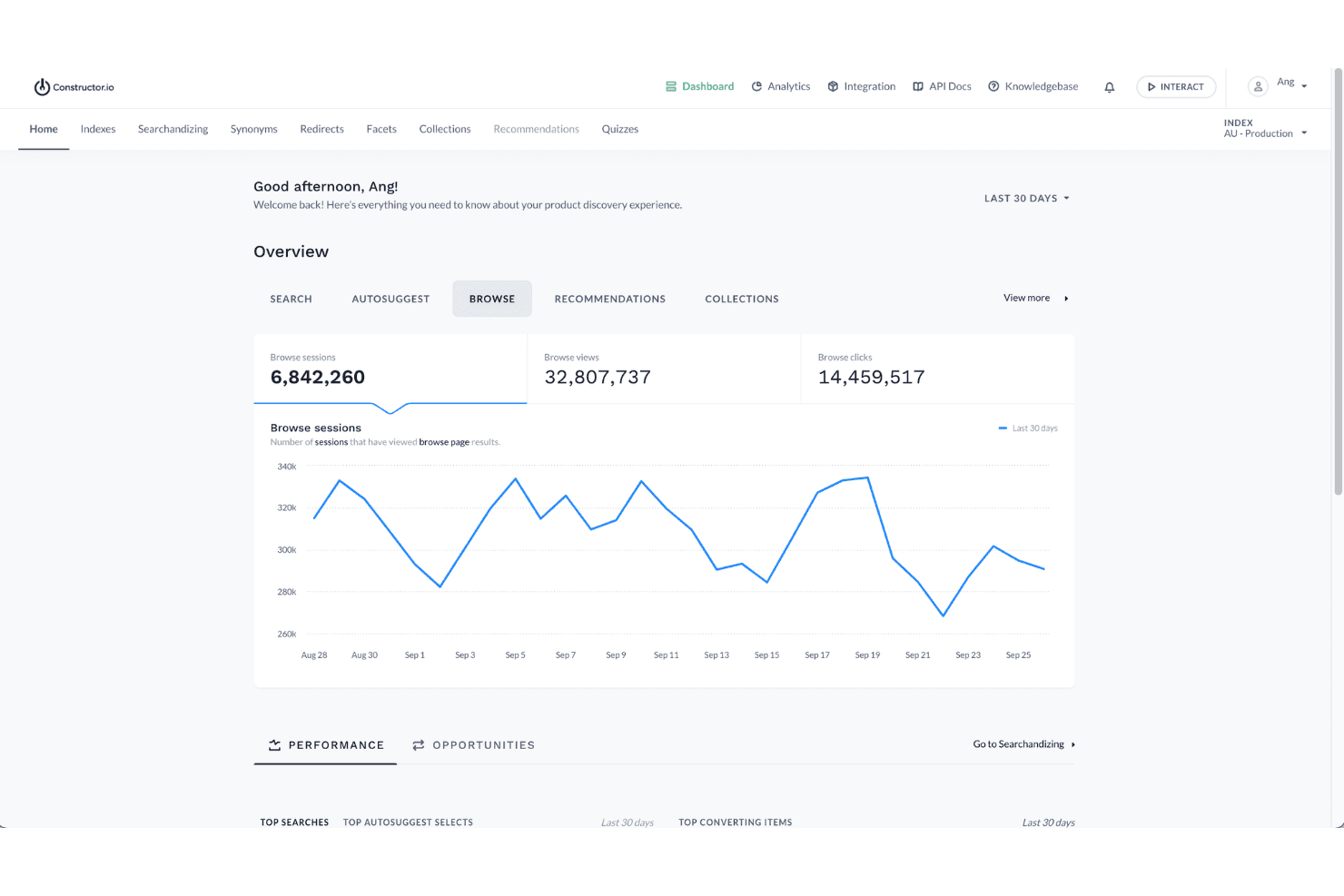
Constructor tracks browse sessions, views, and clicks in one dashboard. Constructor is an AI-native product discovery platform that powers personalized search, browse, and recommendation experiences.
Who Is Constructor Best For?
Constructor is a strong fit for enterprise retailers with dedicated merchandising teams and large product catalogs.
Why I Picked Constructor
I've included Constructor in my top picks because it runs separate AI agents for shoppers and merchandisers on one discovery engine. The AI Shopping Agent guides shoppers through natural-language discovery, while the Merchant Intelligence Agent gives merchandisers explainable, approvable control over search rankings and browse rules. What I also like is that the Product Insights Agent (PIA) answers sizing, compatibility, and returns questions on product pages, drawing on specs, reviews, and support content.
Constructor Key Features
- Personalized search and browse: Optimizes search and browse rankings based on real shopper behavior, tuning results toward conversion and revenue signals.
- Image search: Shoppers can upload a photo into the search field on the web or mobile to find visually similar products.
- Attribute enrichment: Automatically generates and corrects product attributes in your catalog, filling gaps and fixing inconsistencies without manual data entry.
- Cross-channel product recommendations: Deliver personalized product content across email, SMS, and mobile push via integrations with partners like Braze and Movable Ink.
Constructor Integrations
Constructor offers integrations with Shopify, Stripe, Movable Ink, BigCommerce, Commercetools, VTEX, Elastic Path, Fabric, and Braze. It also offers an API for custom integrations.
Pros and Cons
Pros:
- Behavioral signals refine personalized discovery
- Contextual product answers draw from multiple sources
- Shared intelligence across shopper and merchant agents
Cons:
- Agent scope excludes orders and returns support
- Merchant changes still require manual approval
Learn more about Constructor: Best for conversational shopping
- Free demo available
- From $60,000/year (billed annually)
Visit WebsiteCustomer Rating:4.7/5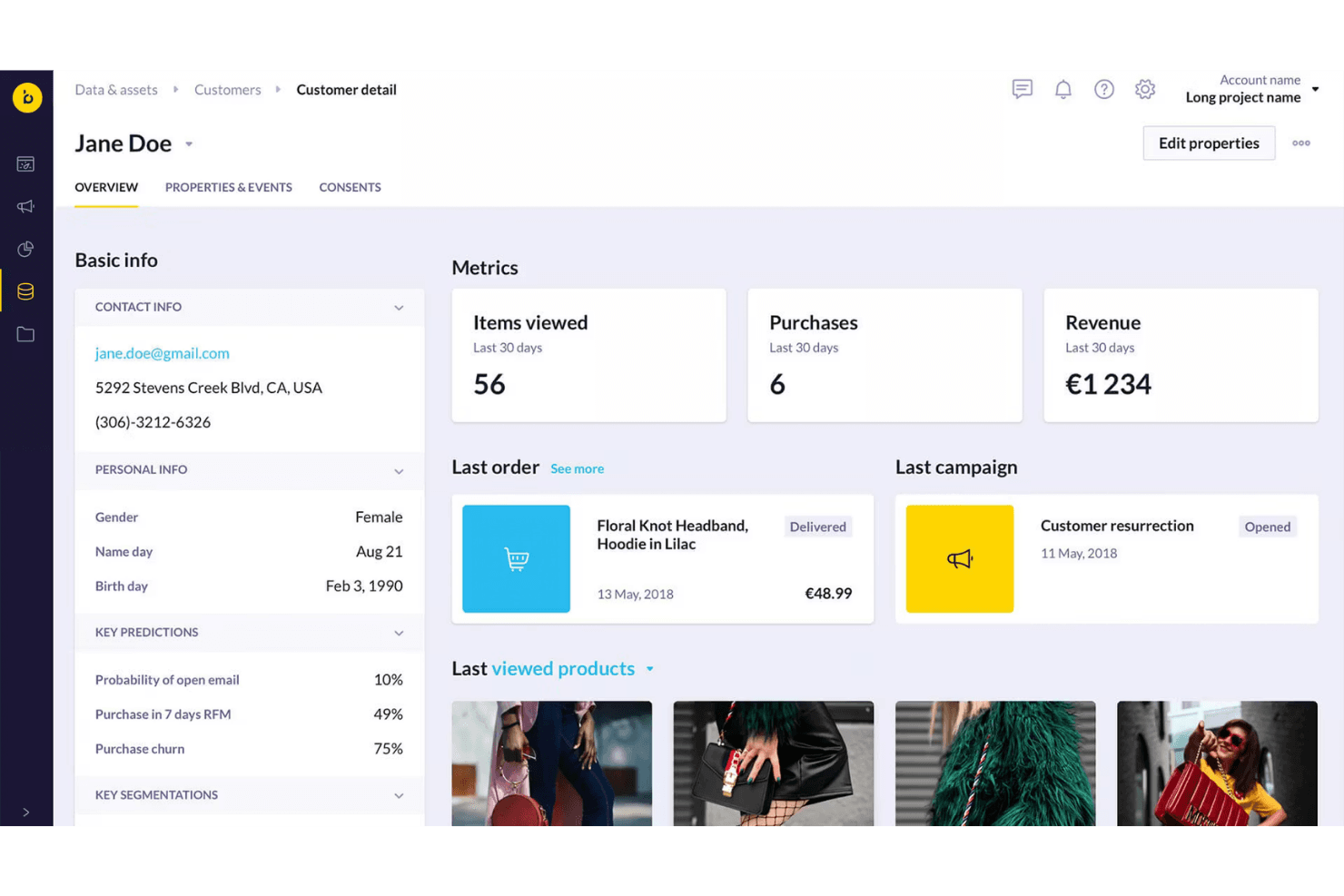
Bloomreach surfaces unified customer profiles with predictive insights. Bloomreach is an agentic personalization platform whose AI layer, Loomi, powers conversational shopping, site search, marketing automation, and product discovery.
Who Is Bloomreach Best For?
Bloomreach is a strong fit for mid-market and enterprise retailers with large catalogs and active email and SMS programs.
Why I Picked Bloomreach
I picked Bloomreach as one of the best because its Loomi Shopping Agent handles multi-constraint queries, such as "navy wool coat under $350 for NYC winters," and returns only in-stock results from the live catalog. I love that it remembers shopper preferences within a session and asks clarifying questions before recommending.
Bloomreach Key Features
- Loomi Marketing Agent: Builds an on-brand email workflow from a single plain-English prompt, then keeps optimizing it without manual intervention.
- Autonomous Search: Self-tunes site search results using real-time behavioral signals, reducing manual merchandising rules and search configuration.
- Visual search: Let shoppers upload a photo and AI extracts color, shape, and style to return visually similar, in-stock catalog products.
- Re-engagement journeys: Sends price-drop alerts, back-in-stock notifications, and abandoned-cart messages across email, SMS, WhatsApp, and push.
Bloomreach Integrations
Bloomreach offers 170+ integrations, including Shopify, BigCommerce, Snowflake, Databricks, Yotpo, and Bynder. It also offers REST APIs and MCP for custom agent workflows.
Pros and Cons
Pros:
- Connects search, marketing, and personalization context
- Scales efficiently with high sales volume
- AI answers are rooted in live inventory
Cons:
- Steep learning curve and long setup duration
- Shopping Agent limited to web
Learn more about Bloomreach: Best for Shopify-native support and sales
- 7-day free trial + free demo available
- From $40/month
Visit WebsiteCustomer Rating:4.6/5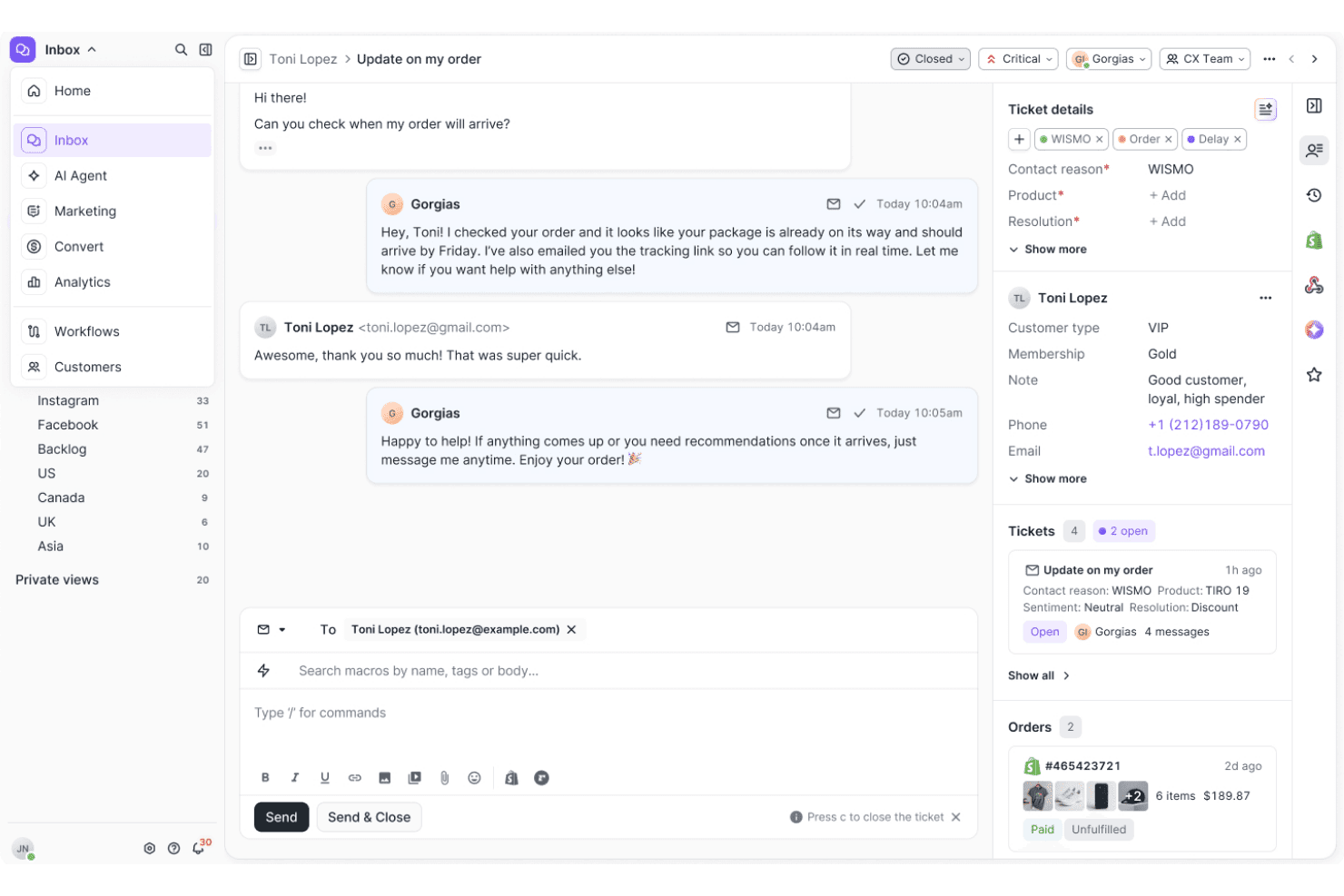
Gorgias centralizes customer conversations with full order and ticket context. Gorgias is an ecommerce helpdesk and AI agent platform that combines automated ticket resolution, a conversational Shopping Assistant, and a multichannel inbox.
Who Is Gorgias Best For?
Gorgias is a strong fit for Shopify merchants who want pre-purchase and post-purchase conversations handled in one tool.
Why I Picked Gorgias
I picked Gorgias because it connects directly to Shopify, so order data, the product catalog, and customer history appear inside every ticket. Its AI Agent handles over 130 actions, like issuing refunds, editing shipping addresses, and processing returns, while the Shopping Assistant initiates proactive conversations to recommend products and trigger discounts at high-intent moments. That dual setup means one tool covers the full customer journey.
Gorgias Key Features
- Multi-channel unified inbox: Manage conversations across email, live chat, SMS, WhatsApp, Instagram, Facebook, and voice from a single inbox.
- Sandbox mode for AI testing: Test and validate AI responses in a safe environment before deploying them to live conversations.
- Revenue attribution reporting: Track which support and AI conversations directly contribute to revenue, AOV, and conversion on Pro and Advanced plans.
- Intent-based automation controls: Set approved intents that define which ticket types the AI handles on its own and which go to a human agent.
Gorgias Integrations
Gorgias lists 150+ app integrations, including Shopify, BigCommerce, Adobe Commerce, WooCommerce, PrestaShop, Recharge, and Loop Returns. It also offers a REST API for custom connections.
Pros and Cons
Pros:
- Provides sandbox testing and confidence controls
- Combines support automation with shopping assistance
- Resolves refunds, returns, and address changes
Cons:
- Reporting depth varies by plan
- AI responses often sound robotic
Learn more about Gorgias: 7Best for outcome-based AI support
Fin
- 14-day free trial + free demo available
- From $19/user/month
Visit WebsiteCustomer Rating:4.5/5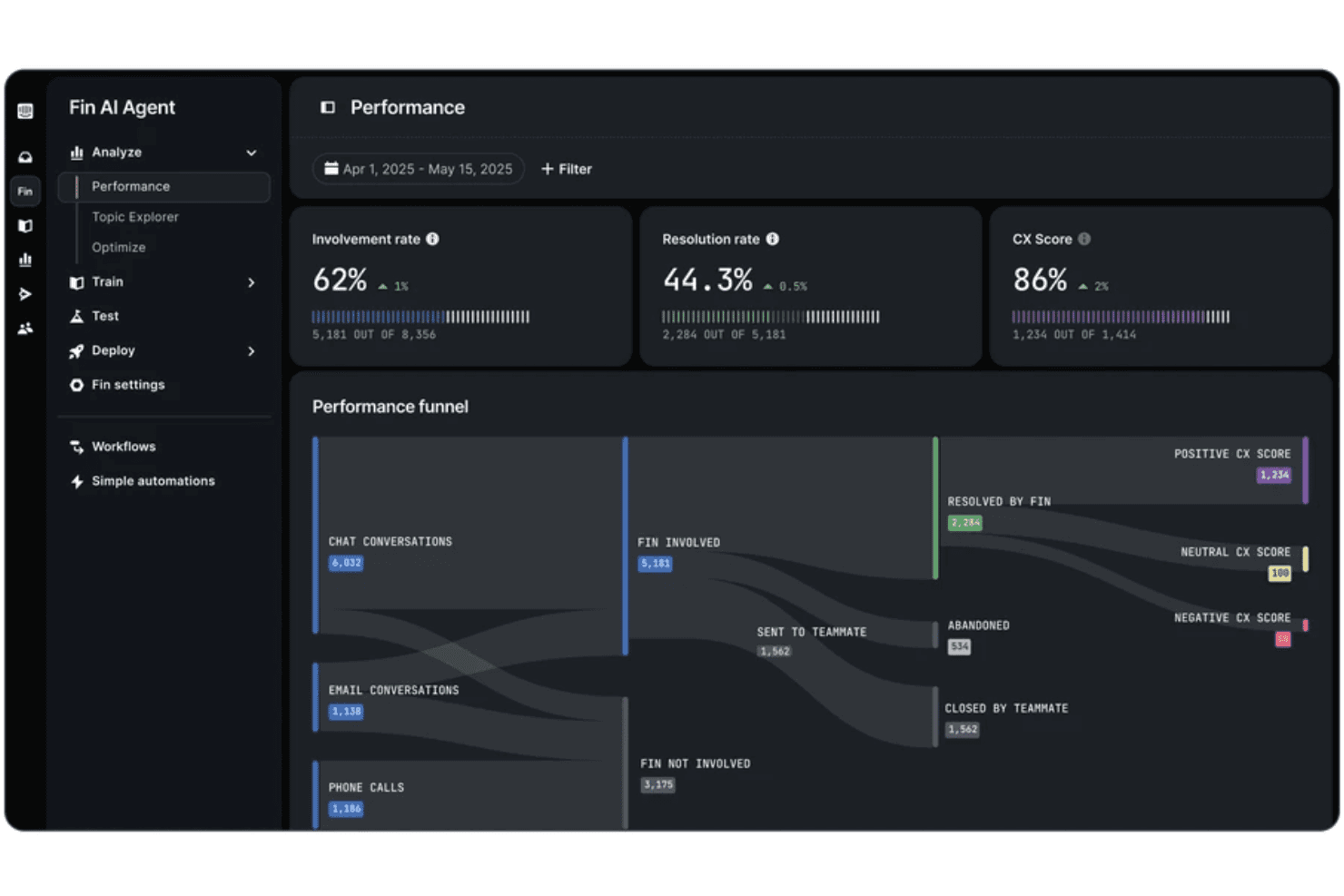
Fin automates customer support with AI-powered conversations. Fin by Salesforce is Intercom's AI customer agent. It handles product questions, order lookups, returns, exchanges, and multi-step actions like refunds and subscription changes across chat, email, voice, and social channels.
Who Is Fin Best For?
Fin is a strong fit for Shopify merchants with high volumes of repeat order and returns questions.
Why I Picked Fin
I picked Fin as one of the best because its outcome-based pricing charges only when Fin resolves a conversation, so spend scales with resolved conversations. I love that Fin pulls live order and refund status directly from Shopify, so it's acting on real data rather than scripted responses. For a Shopify merchant fielding hundreds of return requests daily, that combination of deterministic guardrails and live data access is hard to replicate.
Fin Key Features
- Fin Flywheel: A lifecycle system to train, test, deploy, and analyze Fin's performance, including one-click application of AI recommendations, without engineering support.
- Multi-channel deployment: Fin runs across chat, email, voice, WhatsApp, SMS, Instagram, Slack, Discord, and API with consistent conversation context across all channels.
- In-chat add-to-cart: Shoppers can add products to their cart from the Fin chat window without leaving the conversation.
- CX Score and Topics Explorer: Survey-free quality tracking and topic-trend analysis that surface conversation insights and flag emerging issues without manual tagging.
Fin Integrations
Fin integrates with Shopify, Stripe, Salesforce Service Cloud, HubSpot, Zendesk, Freshdesk, and Zapier. It also offers an API for custom connections.
Pros and Cons
Pros:
- Maintains context across customer channels
- Handles damaged-item claims from customer photos
- Offers multilingual support
Cons:
- Costs rise with resolution volume
- Quality depends heavily on knowledge-base structure
Learn more about Fin: 8Best for post-purchase actions
Yuma
- Free demo + 30-day free trial available
- From $1.20/resolution
Visit WebsiteCustomer Rating:3.4/5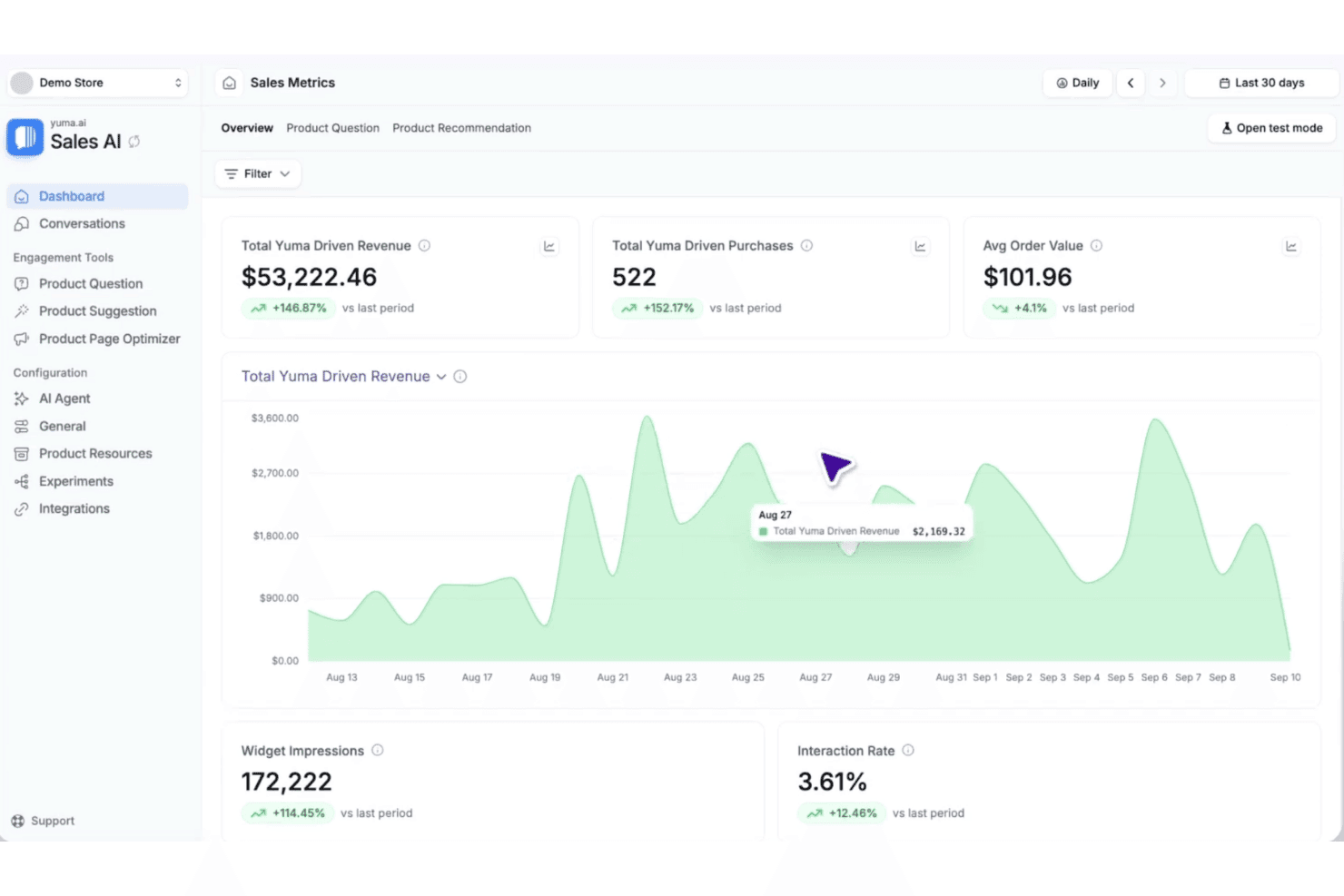
Yuma tracks AI-driven revenue, purchases, and order value over time. Yuma is an agentic AI platform for ecommerce that covers post-purchase support automation, storefront shopping assistance, social media moderation, and voice support.
Who Is Yuma Best For?
Yuma is a strong fit for Shopify store merchants handling high support volumes across many channels.
Why I Picked Yuma
I picked Yuma as one of the best because no other tool on my shortlist goes as deep on Shopify-native post-purchase actions, such as processing refunds, editing shipping addresses, pausing subscriptions, and reshipping orders, without a human in the loop. I also like its Process Builder, which lets you define multi-step order workflows in plain language, so no developer is needed to set up backend actions.
Yuma Key Features
- Multi-channel deployment: Yuma's Support AI spans 25+ channels, including email, WhatsApp, Instagram, TikTok Shop, and review platforms like Trustpilot.
- Voice AI agent: A phone-based agent that completes backend actions during the call, then confirms aloud, records, and transcribes every interaction.
- Sales AI storefront chat widget: A pre-purchase shopping agent that answers sizing, compatibility, and policy questions using live catalog data, in 180+ languages.
- Built-in A/B testing and revenue attribution: Split-tests Sales AI against a no-AI control group, with dashboards tracking conversion, revenue per session, AOV, and AI-driven purchases.
Yuma Integrations
Yuma offers 60+ standard integrations, including Shopify, Zendesk, WooCommerce, Recharge, Stripe, Loop Returns, and AfterShip. It provides an API for custom integrations.
Pros and Cons
Pros:
- Measures storefront revenue attribution directly
- Handles complex subscription changes
- Executes refunds and exchanges autonomously
Cons:
- Setup requires policy and workflow tuning
- Occasional hallucinations require output review
Learn more about Yuma: Best for visual and conversational product discovery
- Free demo + 14-day free trial available
- Pricing upon request
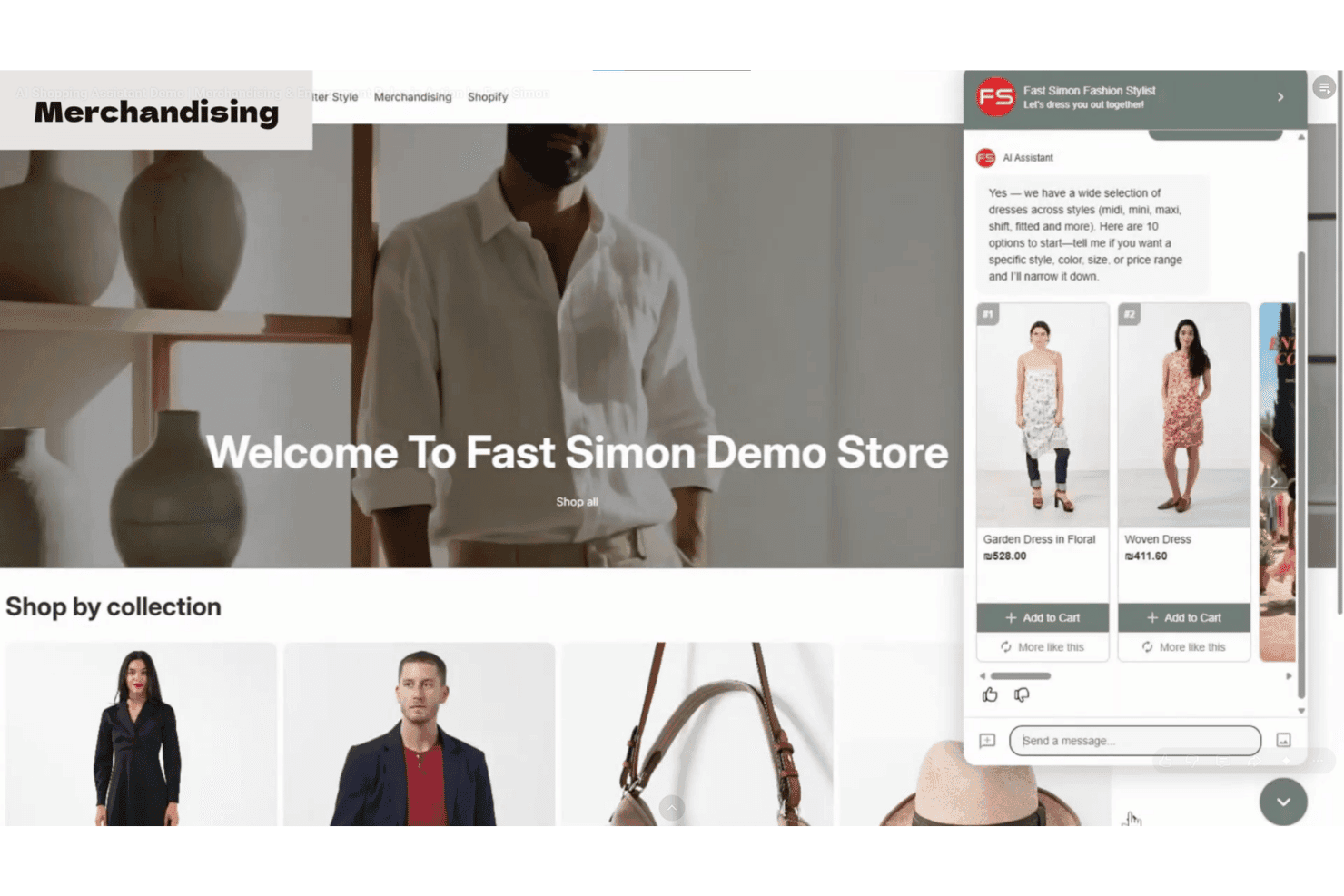
Fast Simon's AI stylist chat helps shoppers find dresses instantly. Fast Simon is an AI ecommerce search and product discovery platform that combines conversational shopping, visual search, AI merchandising, and personalization across search, collections, and recommendations.
Who Is Fast Simon Best For?
Fast Simon is a strong fit for merchandising and digital marketing teams managing large catalogs.
Why I Picked Fast Simon
Fast Simon earns its spot on my shortlist because it pairs visual search with conversational guidance. Visual Search lets shoppers upload a photo to find matching products, while Hyper Tagging enriches product data and generates shopper-friendly filters. The AI Shopping Agent adds conversational guidance on top, with recommendations grounded in live catalog data, active promotions, and your merchandising rules.
Fast Simon Key Features
- AI Merchandising Agent: Manages product assortment and display decisions, updating collection rankings and visibility based on merchant-defined goals.
- Managed Collections: Automatically generates and maintains native Shopify collections, keeping product membership current based on merchant-selected ranking strategies.
- Support deflection with live escalation: The AI Shopping Agent answers customer inquiries from merchant-approved documentation and hands off to a help desk when needed.
- Abandoned journey triggers: Detects when shoppers abandon a search or collection and sends those signals to Klaviyo or Attentive for email or SMS follow-up.
Fast Simon Integrations
Fast Simon offers native integrations with Shopify, Fuego, BigCommerce, Adobe Commerce, Zendesk, Wix, and Gladly. It also offers an API for custom connections.
Pros and Cons
Pros:
- Reviews praise responsive implementation support
- Catalog-aware answers reflect merchandising rules
- Visual discovery supports photo-led shopping
Cons:
- Agent autonomy stops short of transactions
- Page-speed complaints affect collection experiences
Learn more about Fast Simon: 10Best for proactive cart recovery
Rep AI
- Free demo + 14-day free trial available
- From $10/3000 sessions/month (billed annually)
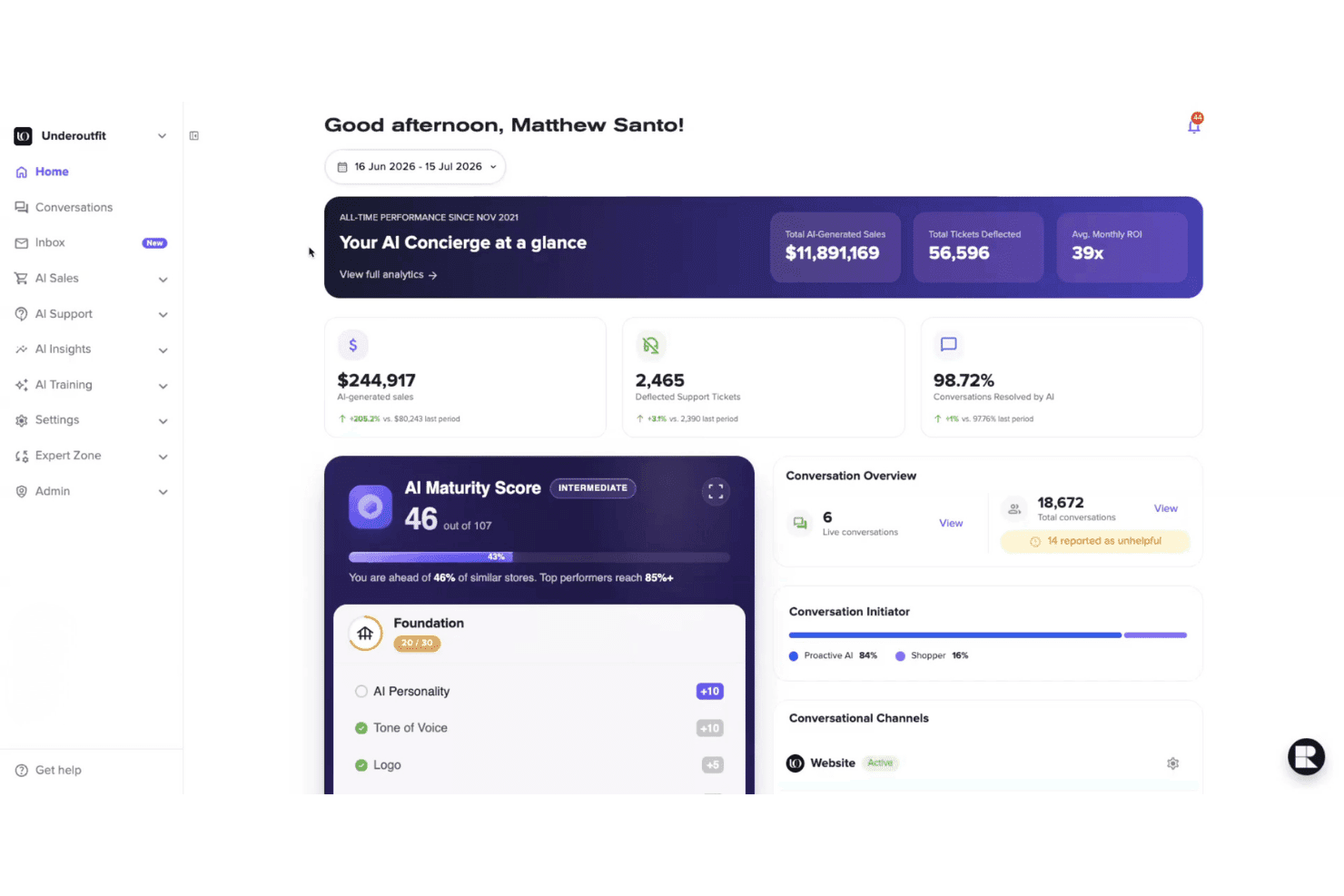
Rep AI surfaces real-time AI sales and support performance at a glance. Rep AI is an ecommerce AI agent that combines proactive sales engagement, automated support, and behavior-triggered cart recovery across web, social, and messaging channels.
Who Is Rep AI Best For?
Rep AI is a strong fit for Shopify and Shopify Plus merchants who want one agent covering sales and support.
Why I Picked Rep AI
Rep AI earns its spot on my shortlist because of how it flips the script on cart recovery. Instead of waiting for a shopper to abandon and then chasing them with an email, it monitors behavioral signals like hesitation and exit risk in real time and opens a conversation before they leave. I love that this proactive engagement is trained on a dataset of 160M+ sessions, so the triggers aren't arbitrary.
Rep AI Key Features
- Guided product discovery: Natural-language chat narrows product options, surfaces comparisons, and triggers contextual upsells with in-conversation checkout.
- Multi-channel unified inbox: Manage conversations from web chat, email, Instagram, Facebook, WhatsApp, and Tapcart in a single dashboard.
- Missing information detection: Flags questions AI couldn't answer, surfacing catalog and knowledge gaps for your team to address.
- Shopper intelligence dashboard: Tracks drop-off reasons, competitor mentions, hesitation signals, and unanswered questions to surface actionable insights.
Rep AI Integrations
Rep AI documents 25+ integrations, including Shopify, Salesforce Commerce Cloud, WooCommerce, Postscript, Omnisend, Listrak, Loop Returns, and Slack. It also offers an API for custom integrations.
Pros and Cons
Pros:
- Support handoffs preserve full conversation context
- Product discovery includes comparisons and contextual upsells
- Low-cost entry plan available
Cons:
- Implementation can take longer than promised
- AI responses occasionally become irrelevant or circular
Learn more about Rep AI:
Alți agenți AI pentru comerț electronic
Iată câteva platforme suplimentare care nu au intrat pe lista mea scurtă, dar care merită totuși verificate:
- 11TidioBest for multichannel AI support
- 12Alhena AIBest for omnichannel voice and chat commerce
- 13SyteBest for AI-enriched catalog tagging and search
- 14AttentiveBest for SMS re-engagement at scale
- 15KustomerBest for AI governance in retail CX ops
- 16SierraBest for peak-season retail agent scaling
- 17AdaBest for enterprise post-purchase support
- 18Dynamic YieldBest for enterprise catalog personalization
- 19ZowieBest for policy-driven returns and order automation
- 20SienaBest for DTC shopping and VoC in one
How I Evaluate AI Agents for Ecommerce
To make this list, a tool needs to deliver genuine AI value—whether that's guiding a shopper from discovery to checkout or autonomously resolving a return without a support ticket. I split my evaluation into core functionality every tool must cover and differentiating factors that separate the best from the rest.
Core Functionality (Table Stakes For This List)
When I'm selecting tools for my list, I score each one on a scale from 0 (does not offer the functionality) to 5 (excels in this area) for each core functionality listed below. I then convert the total into a percentage to help assess each tool's overall fit, with extra weight on any functionalities I've deemed essential.
- Autonomous Task Execution (Essential): I check whether the agent can complete multi-step workflows on its own, like resolving a return or updating an order status without a human approving each step.
- Conversational Shopping Interface (Essential): I evaluate how well the agent handles natural-language questions, follow-ups, and product comparisons during a shopping session.
- Product Catalog Integration: Real-time sync with product, pricing, and inventory data matters here. I look for agents that reflect stock changes and price updates without noticeable lag.
- Personalized Recommendations: I look at how each tool uses behavioral and purchase data to tailor suggestions, not just surface best-sellers or static rule-based picks.
- Ecommerce Platform Connectivity: Native integrations with platforms like Shopify, Magento, and BigCommerce are what I evaluate, along with how deep those connections go beyond basic read access.
- Multi-Channel Deployment: I consider whether the agent delivers a consistent experience across storefront, chat, email, and marketplace touchpoints without losing conversation context.
Once I have a list of tools that meet the criteria, I consider what sets each platform apart.
Differentiating Factors (What Sets Vendors Apart)
Here's how I compare and contrast different vendors:
Standout Features
I look for proactive cart recovery agents that detect abandoned sessions and trigger personalized outreach across chat, email, or SMS without manual setup. Rep AI and Tidio both offer versions of this, but I evaluate how well each agent tailors its messaging to the specific products left behind. Voice commerce support is another differentiator I check, since shoppers increasingly expect to search and buy through conversational voice interfaces. I also consider agent-to-agent transaction readiness, which prepares your store for AI shopping agents that negotiate and complete purchases on a buyer's behalf.
Beyond Features
I evaluate how fast a tool can go live with your actual catalog and brand voice, since pre-built connectors in platforms like Gorgias and Tidio can cut launch timelines from months to weeks. Data privacy controls matter just as much—I check how each vendor handles shopper data, opt-out flows, and compliance with regulations like GDPR. I also look for built-in analytics that tie agent actions directly to conversion and AOV, because without clear attribution, it's hard to justify ongoing spend.
Cum să alegeți un agent AI pentru comerț electronic
Alegeți un agent AI testând modul în care gestionează catalogul, politicile pentru clienți și transferurile operaționale înainte de a semna un contract.
| Dacă prioritatea dumneavoastră este | Căutați |
|---|---|
| Dacă prioritatea dumneavoastră esteMai puține răspunsuri incorecte despre produse | CăutațiUn test cu sursa catalogului, folosind 10 SKU-uri actuale |
| Dacă prioritatea dumneavoastră esteMai puține decizii manuale privind retururile | CăutațiO procedură de aprobare documentată pentru trei scenarii de retur |
| Dacă prioritatea dumneavoastră esteRăspunsuri consecvente pe toate canalele | CăutațiO comparație a transcrierilor din magazinul online, e-mail și chat |
| Dacă prioritatea dumneavoastră esteControl asupra datelor cumpărătorilor | CăutațiTermeni scriși privind păstrarea, ștergerea și renunțarea |
| Dacă prioritatea dumneavoastră esteLucrări de lansare previzibile | CăutațiUn plan de integrare a catalogului cu livrabile precizate și responsabili desemnați |
Cum să evaluați lista scurtă
- Rulați o probă cu catalogul: Oferiți fiecărui furnizor 10 SKU-uri cu variante, modificări ale stocului și restricții privind produsele, apoi analizați răspunsurile în termen de cinci zile lucrătoare.
- Testați un caz de după achiziție: Trimiteți o comandă întârziată, o solicitare de retur și o reclamație privind un produs deteriorat în timpul unei perioade de probă de 14 zile, înregistrând fiecare transfer.
- Solicitați documentul privind datele: Cereți actul adițional privind prelucrarea datelor, programul de păstrare, procesul de ștergere și fluxul de renunțare al furnizorului înainte de analiza contractului.
- Deschideți un tichet de asistență: Înregistrați un tichet pentru corectarea catalogului și solicitați confirmarea scrisă a modificării, a responsabilului acesteia și a datei preconizate pentru soluționare.
- Alegeți compromisul operațional: Decideți dacă preferați un agent cu un domeniu restrâns și o guvernanță strictă, cu controale mai ferme, sau un agent mai cuprinzător, care gestionează mai multe scenarii, dar necesită o responsabilitate mai mare pentru verificare.
Ce sunt agenții AI pentru comerț electronic?
Agenții AI pentru comerț electronic sunt platforme care utilizează inteligența artificială pentru a ghida cumpărătorii, a răspunde la întrebări și a finaliza sarcini comerciale. Aceștia se conectează la cataloage de produse, sisteme de servicii pentru clienți și platforme de comerț electronic pentru a sprijini descoperirea produselor, recomandările, actualizările comenzilor, retururile și rambursările. Unii agenți funcționează pe mai multe canale, precum magazine online, chat, e-mail și voce, transferând solicitările complexe către echipe umane.
Funcțiile agenților AI pentru comerț electronic
Atunci când selectați o platformă cu agenți AI pentru afacerea dumneavoastră de comerț electronic, urmăriți următoarele funcții esențiale:
- Executarea autonomă a sarcinilor: Agentul finalizează sarcini cu mai mulți pași pe baza regulilor, permisiunilor și solicitărilor clienților definite. Acesta poate actualiza detaliile comenzilor, iniția retururi sau escalada excepții fără a necesita aprobare manuală la fiecare pas.
- Cumpărături conversaționale: Agentul înțelege întrebările formulate în limbaj natural, întrebările suplimentare și comparațiile între produse. Cumpărătorii pot întreba despre potrivire, materiale, disponibilitate sau cazuri de utilizare fără a naviga prin mai multe pagini de produse.
- Integrarea catalogului de produse: Agentul se conectează la date despre produse, prețuri, variante și stocuri. Acesta utilizează informații actualizate din catalog pentru a răspunde la întrebări și pentru a evita recomandarea produselor indisponibile sau restricționate.
- Recomandări personalizate: Agentul utilizează activitatea de navigare, istoricul achizițiilor, preferințele și contextul conversației pentru a sugera produse relevante. Acest lucru sprijină vânzările încrucișate, vânzările suplimentare și descoperirea produselor dincolo de listele generice cu cele mai bine vândute produse.
- Asistență pentru comenzi și expedieri: Agentul preia detaliile comenzilor și oferă actualizări despre procesarea, livrarea, anularea comenzilor sau modificarea adreselor. Acesta poate urma fluxuri de lucru definite atunci când o comandă necesită verificare sau intervenție.
- Automatizarea retururilor și rambursărilor: Agentul aplică politica dvs. de retur pentru solicitări și colectează informațiile necesare pentru soluționare. În funcție de regulile dvs., acesta poate crea solicitări de retur, emite rambursări aprobate sau direcționa excepțiile către serviciul pentru clienți.
- Conectivitatea platformelor de comerț electronic: Agentul se conectează la platforme precum Shopify, Magento sau BigCommerce prin integrări native sau API-uri. Aceste conexiuni îi permit să acceseze date comerciale și să efectueze acțiuni aprobate în cadrul sistemelor dvs. operaționale.
- Implementarea pe mai multe canale: Agentul funcționează în chatul magazinului online, prin e-mail, mesagerie, canale sociale sau interfețe vocale. Contextul comun al conversației îi ajută pe clienți să primească răspunsuri consecvente atunci când schimbă canalul.
- Transferul către un operator uman și guvernanța: Agentul transferă conversațiile complexe, sensibile sau cu un nivel scăzut de încredere către membrul potrivit al echipei. Setările de permisiuni, regulile de escaladare, jurnalele conversațiilor și instrumentele de verificare ajută echipa să controleze fluxurile de lucru automatizate.
Beneficiile agenților AI pentru comerțul electronic
Agenții AI oferă mai multe beneficii pentru echipa și compania dvs. Iată câteva dintre avantajele pe care le puteți aștepta:
- Rată de conversie mai mare: Interfețele conversaționale pentru cumpărături răspund la întrebări despre produse, compară opțiuni și recomandă articole relevante în timpul procesului de achiziție.
- Volum mai mic de lucru pentru asistență: Fluxurile de lucru autonome gestionează actualizările comenzilor, solicitările de retur și rambursările aprobate fără a necesita acțiuni manuale la fiecare pas.
- Recomandări mai relevante: Datele din catalog, comportamentul de navigare, istoricul achizițiilor și contextul conversației ajută agenții să sugereze produse potrivite și vânzări încrucișate.
- Servicii pentru clienți consecvente: Implementarea pe mai multe canale menține consecvența informațiilor despre produse, a politicilor și a contextului conversației în chatul magazinului online, prin e-mail, mesagerie și voce.
- Mai puține răspunsuri incorecte despre produse: Conexiunile în timp real la date despre produse, prețuri, variante și stocuri îi ajută pe agenți să furnizeze informații actualizate din catalog.
- Escaladarea mai rapidă a problemelor: Regulile de transfer direcționează solicitările sensibile, complexe sau cu un nivel scăzut de încredere către membrul potrivit al echipei, împreună cu istoricul conversației.
- Supraveghere operațională îmbunătățită: Setările de permisiuni, jurnalele conversațiilor, analizele și controalele de guvernanță ajută echipele să verifice acțiunile agenților și să le coreleze cu rata de conversie și valoarea medie a comenzii.
Costurile și prețurile agenților AI pentru comerțul electronic
Selectarea agentului AI potrivit pentru comerțul electronic necesită înțelegerea diferitelor modele de preț și planuri disponibile. Costurile variază în funcție de funcții, dimensiunea echipei, opțiuni suplimentare, utilizare și cerințele de asistență. Tabelul de mai jos prezintă pe scurt planurile comune, prețurile medii ale acestora și funcțiile incluse de obicei.
Tabel comparativ al planurilor pentru agenții AI pentru comerțul electronic
| Tipul planului | Preț mediu | Funcții comune |
|---|---|---|
| Tipul planuluiPlan gratuit | Preț mediu$0/lună | Funcții comuneChatbot de bază, conversații limitate, întrebări frecvente despre produse și asistență din partea comunității. |
| Tipul planuluiPlan personal | Preț mediu$20-$100/utilizator/lună | Funcții comuneRăspunsuri bazate pe catalog, cumpărături conversaționale, urmărirea comenzilor și asistență prin e-mail. |
| Tipul planuluiPlan pentru companii | Preț mediu$100-$500/lună | Funcții comuneRetururi automatizate, recomandări personalizate, integrări cu platforme, implementare pe mai multe canale și analize. |
| Tipul planuluiPlan pentru întreprinderi | Preț mediu$500-$5,000+/lună | Funcții comuneFluxuri de lucru personalizate, permisiuni avansate, asistență dedicată, integrări extinse și controale de guvernanță. |
Întrebări frecvente despre agenții AI pentru comerțul electronic
Iată câteva răspunsuri la întrebările frecvente despre agenții AI pentru comerțul electronic:
Cât timp durează implementarea unui agent AI pentru comerțul electronic?
Implementarea durează adesea câteva săptămâni, în funcție de complexitatea catalogului, integrări și cerințele fluxurilor de lucru. Începeți cu un proiect pilot bine definit, cum ar fi întrebările despre produse și solicitările privind starea comenzilor. Pregătiți datele despre produse, indicațiile privind marca, regulile de escaladare și cazurile de testare înainte de începerea configurării. Solicitați furnizorului un plan de lansare cu etape, responsabili, sarcini de instruire și criterii de acceptare. Un proiect pilot mai restrâns oferă echipei dvs. o modalitate controlată de a verifica răspunsurile înainte de extinderea agentului la retururi, rambursări, recomandări sau canale suplimentare.
Cum măsoară comercianții cu amănuntul performanța agenților AI?
Comercianții cu amănuntul ar trebui să coreleze activitatea agentului cu rata de conversie, valoarea medie a comenzii, rata de soluționare automată, rata de escaladare și satisfacția clienților. Stabiliți o valoare de referință înainte de lansare, apoi comparați rezultatele pe parcursul unei perioade de raportare stabilite. Analizați transcrierile conversațiilor împreună cu valorile din tabloul de bord, deoarece o rată ridicată de soluționare automată poate ascunde răspunsuri necorespunzătoare. Întrebați furnizorii dacă rapoartele separă sesiunile automatizate de cele asistate de oameni. Testarea A/B poate ajuta la compararea instrucțiunilor, a logicii recomandărilor și a pragurilor de escaladare, menținând în același timp evaluarea corelată cu rezultate măsurabile în comerțul electronic.
Cum protejează agenții AI datele clienților din comerțul electronic?
Agenții AI păstrează în siguranță datele clienților prin controale de acces, reguli de păstrare, practici de criptare, jurnale de audit și condiții documentate privind prelucrarea datelor. Întrebați unde sunt stocate datele despre conversații și comenzi, cum le folosesc furnizorii pentru îmbunătățirea modelelor și cum le poate șterge echipa dvs. Confirmați că agentul accesează doar informațiile necesare pentru sarcinile care i-au fost atribuite. Solicitați proceduri scrise de renunțare și reguli de escaladare pentru solicitările sensibile. Echipele juridice și de securitate a informațiilor ar trebui să verifice aceste documente înainte ca agentul să gestioneze conturi de clienți sau cazuri legate de plăți.
Pot agenții AI să gestioneze perioadele de vârf ale cumpărăturilor?
Da, agenții AI pot sprijini perioadele de vârf ale cumpărăturilor atunci când furnizorul documentează planificarea capacității și angajamentele privind serviciile. Solicitați rezultatele recente ale testelor de încărcare, condițiile privind disponibilitatea, procedurile pentru incidente și o descriere a modului în care platforma gestionează creșterile bruște ale traficului. Realizați o simulare pentru o perioadă de vârf, cu întrebări despre produse, verificări ale comenzilor și solicitări de retur, înaintea unei campanii majore. Analizați întârzierile răspunsurilor, acțiunile eșuate, comportamentul cozilor și transferurile către operatori umani. Confirmați cine este responsabil pentru comunicarea incidentelor atunci când cererea depășește capacitatea planificată.