

Wave Accounting beoordeling: voordelen, nadelen, functies en prijzen
Wave Accounting onderscheidt zich met zijn gratis functies voor kleine bedrijven en biedt een kosteneffectieve oplossing binnen het landschap van boekhoudsoftware voor e-commerce.

We review tools independently, and commissions help fund our testing. See our transparency policy, our methodology, or suggest a tool.
Wave is an ecommerce accounting software built for small businesses and freelancers who need to track income, expenses, and invoices without paying a monthly subscription fee. I'd consider it most seriously if you're running a lean operation and find something like QuickBooks more feature-heavy and expensive than your business actually needs. Wave gives you core accounting and invoicing tools at no cost, which makes it a practical starting point for early-stage ecommerce sellers who aren't ready to commit to a paid platform.
Wave Evaluation Summary
4.4/5
- From $19/month
- Free plan available
Waarom u onze softwareaanbevelingen kunt vertrouwen
6,700+
Reviews
20
Industry experts
16+
Evaluation factors
14
Years
Ons team test en beoordeelt software sinds 2012. Als retailleiders weten we zelf hoe moeilijk — en belangrijk — het is om de juiste software te kiezen.
Voor deze gids hebben we tools geëvalueerd met behulp van praktijktests en onafhankelijk onderzoek, waarbij we tools beoordeelden aan de hand van onze selectiecriteria.
Onze reviews weerspiegelen ons onafhankelijke oordeel — geen verkooppraatje.
Wave Overview
In my opinion, Wave Accounting is a solid choice for small businesses and freelancers looking for a budget-friendly solution. It excels in providing essential accounting tools without the hefty price tag, making it a great value. However, its customer support could be more responsive, which might be a concern if you're new to accounting software. Compared to other solutions, Wave's free pricing model is a standout, but it might lack advanced features larger businesses need. If your team values cost-efficiency and basic functionality over extensive integrations, Wave Accounting could be the right fit for you.
Pros
- You get free invoicing and receipt scanning.
- It's easy for your team to learn and use.
- You can manage multiple businesses with one account.
Cons
- Customer support isn't always quick to respond.
- It might lack advanced features for larger businesses.
- You can't track inventory directly within the software.
Is Wave Right For Your Needs?
Who Would be a Good Fit for Wave?
Wave Accounting is perfect for freelancers and small businesses because it offers essential features without the cost. If you're a local shop owner, online seller, or service provider, you'll appreciate its easy invoicing for online payments and expense tracking. It suits teams that need simplicity and don't want to spend on unnecessary extras. With free tools for managing multiple businesses, it’s a great option if you juggle different ventures. Wave’s user-friendly interface ensures your team can hit the ground running.
- FreelancersWave lets you easily track income and expenses without the hassle of complex software.
- Small RetailersYou can manage sales transactions and receipts efficiently, ideal for your small store operations.
- ConsultantsWave’s invoicing feature helps you bill clients quickly and keep your finances organized.
- NonprofitsWith free tools, you can focus on your mission rather than spending on expensive accounting software.
- Solo EntrepreneursWave’s simple setup and free features help you manage your finances with minimal fuss.
- Local Service ProvidersYou can handle billing and receipts effectively, keeping your business running smoothly.
Who Would be a Bad Fit for Wave?
Wave Accounting isn’t ideal for large corporations or businesses needing advanced features. If your team requires detailed inventory management or complex financial reporting, Wave's basic capabilities might fall short. Industries like manufacturing with intricate supply chains or enterprises needing robust integrations will find it lacking. Wave’s limited customer support can be a hurdle if you rely heavily on assistance. For businesses that need high-level customization or scalability, you might want to consider other options.
- Large CorporationsWave's basic features won't support your complex financial needs and scalability requirements.
- Manufacturing CompaniesYou can't manage detailed inventory, which is crucial for your supply chain operations.
- EnterprisesWave lacks the advanced integrations and customizations that your large-scale business demands.
- Financial AnalystsYou need sophisticated reporting tools, which Wave doesn't provide.
- Retail ChainsManaging multiple locations is tough without robust inventory and sales tracking features.
- Tech StartupsWave doesn’t offer the advanced features and support you need for rapid growth and innovation.
Our Review Methodology
How We Test & Score Tools
We’ve spent years building, refining, and improving our software testing and scoring system. The rubric is designed to capture the nuances of software selection and what makes a tool effective, focusing on critical aspects of the decision-making process.
Below, you can see exactly how our testing and scoring works across seven criteria. It allows us to provide an unbiased evaluation of the software based on core functionality, standout features, ease of use, onboarding, customer support, integrations, customer reviews, and value for money.
Core Functionality (25% of final scoring)
The starting point of our evaluation is always the core functionality of the tool. Does it have the basic features and functions that a user would expect to see? Are any of those core features locked to higher-tiered pricing plans? At its core, we expect a tool to stand up against the baseline capabilities of its competitors.
Standout Features (25% of final scoring)
Next, we evaluate uncommon standout features that go above and beyond the core functionality typically found in tools of its kind. A high score reflects specialized or unique features that make the product faster, more efficient, or offer additional value to the user.
We also evaluate how easy it is to integrate with other tools typically found in the tech stack to expand the functionality and utility of the software. Tools offering plentiful native integrations, 3rd party connections, and API access to build custom integrations score best.
Ease of Use (10% of final scoring)
We consider how quick and easy it is to execute the tasks defined in the core functionality using the tool. High scoring software is well designed, intuitive to use, offers mobile apps, provides templates, and makes relatively complex tasks seem simple.
Onboarding (10% of final scoring)
We know how important rapid team adoption is for a new platform, so we evaluate how easy it is to learn and use a tool with minimal training. We evaluate how quickly a team member can get set up and start using the tool with no experience. High scoring solutions indicate little or no support is required.
Customer Support (10% of final scoring)
We review how quick and easy it is to get unstuck and find help by phone, live chat, or knowledge base. Tools and companies that provide real-time support score best, while chatbots score worst.
Customer Reviews (10% of final scoring)
Beyond our own testing and evaluation, we consider the net promoter score from current and past customers. We review their likelihood, given the option, to choose the tool again for the core functionality. A high scoring software reflects a high net promoter score from current or past customers.
Value for Money (10% of final scoring)
Lastly, in consideration of all the other criteria, we review the average price of entry level plans against the core features and consider the value of the other evaluation criteria. Software that delivers more, for less, will score higher.
Core Features
Invoicing
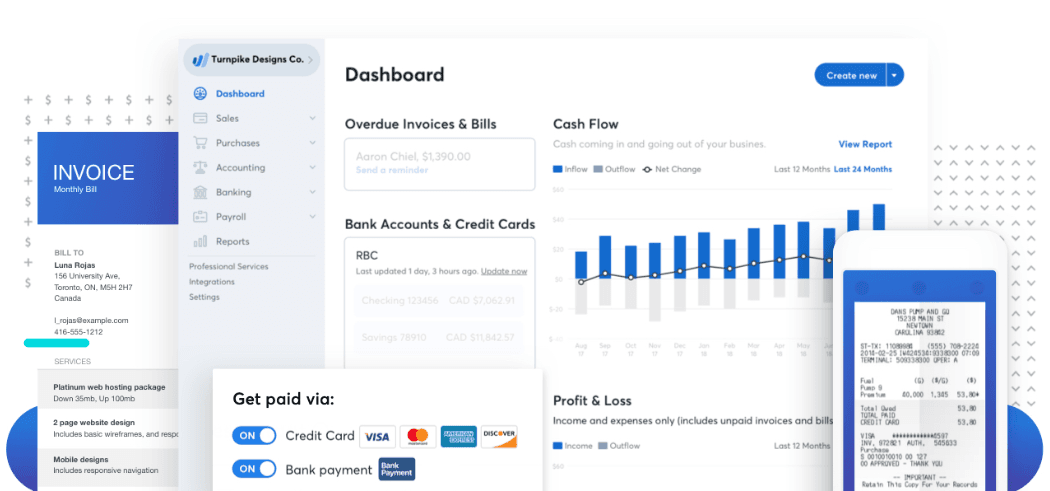
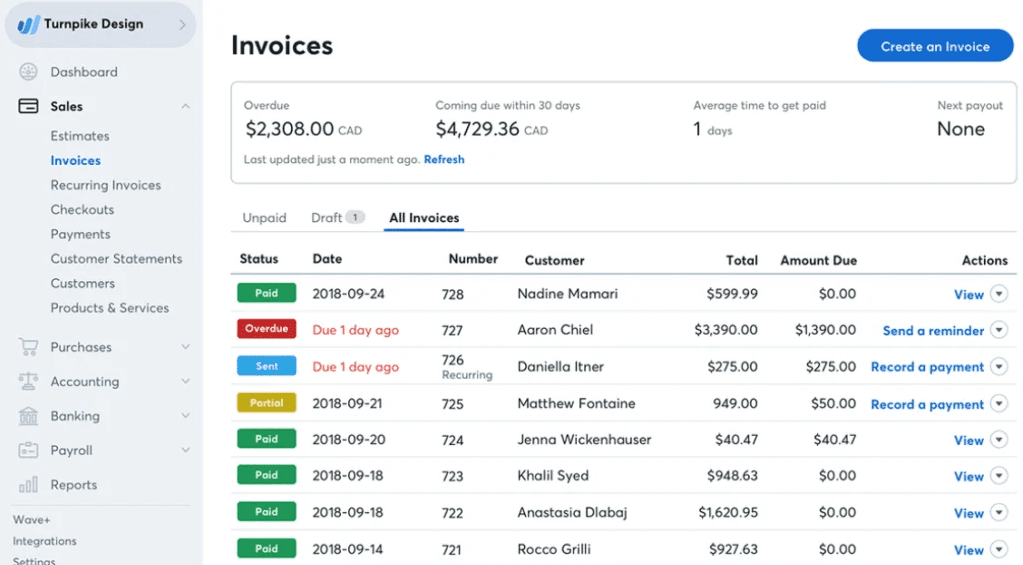
You can create professional invoices quickly, helping you get paid faster. Customize them to match your brand and track their status with ease.
Expense Tracking
Keep tabs on your expenses by scanning receipts and categorizing them. It simplifies your financial records, making tax time a breeze.
Accounting Reports
Generate essential financial reports to understand your business's health, leveraging a customizable chart of accounts. Access balance sheets and profit & loss statements without hassle.
Bank Connections
Link your bank accounts to Wave for automatic transaction updates. This saves you time and reduces manual data entry errors.
Multi-Business Management
Manage multiple businesses under one account, which is perfect if you're juggling different ventures. Switch between them easily without logging out.
Recurring Billing
Set up recurring invoices for your regular clients to automate your billing process. It ensures consistent cash flow and reduces the need for manual invoicing.
Ease of Use
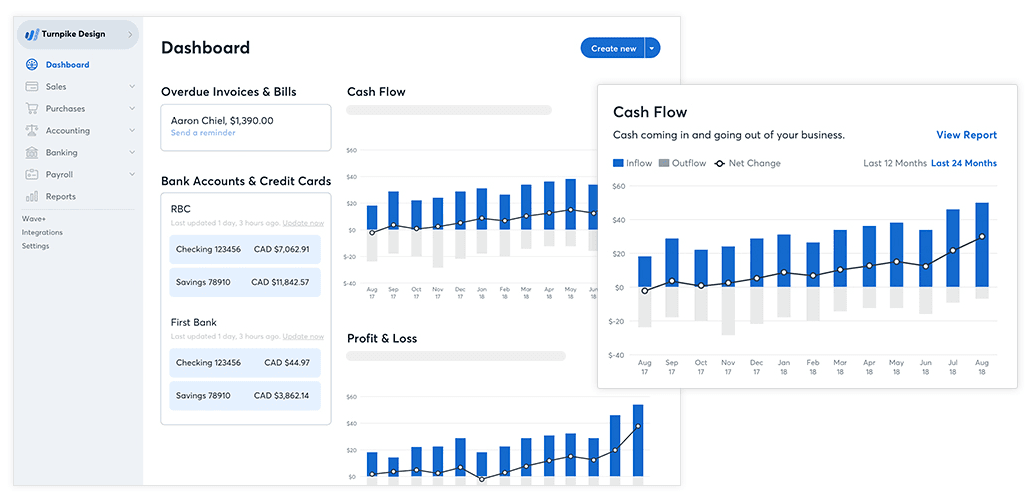
Wave Accounting is incredibly user-friendly, making it a great option for small business owners without accounting expertise. The intuitive interface lets you navigate tasks like invoicing and expense tracking with ease. You don't need extensive training, which means your team can get started quickly. Compared to other solutions, Wave simplifies accounting processes, allowing you to focus on running your business. User reviews often highlight how straightforward it is to manage financial tasks, saving you time and frustration.
Integrations
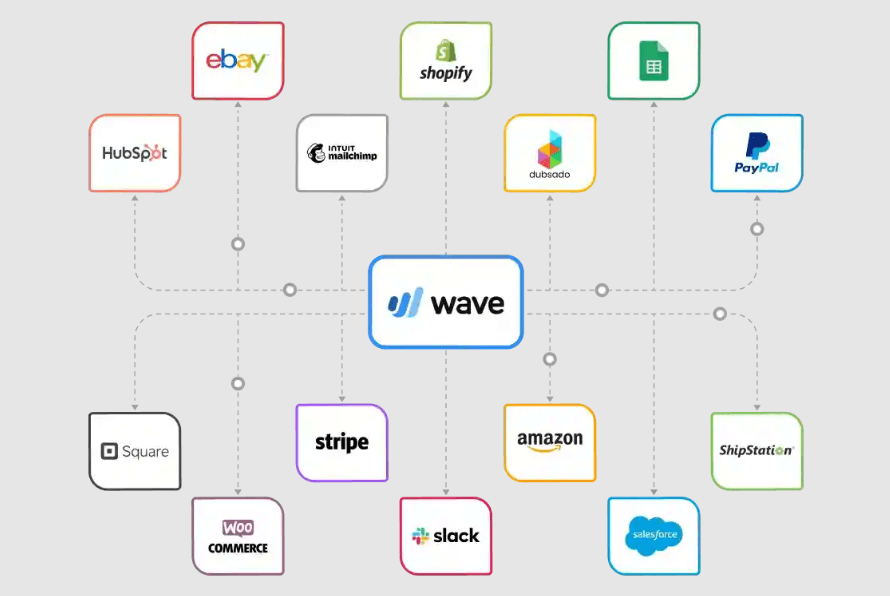
Wave Accounting doesn’t offer any native integrations but does integrate with Zapier to connect with tools like PayPal, Etsy, HubSpot, Xero, Freshbooks, Zoho, Shopify, QuickBooks Online, and Google Drive.
Wave also offers an API, allowing you to connect with third-party integration tools for more flexibility.
Wave Specs
- 2-Factor Authentication: Yes
- Accounts Payable: Yes
- Accounts Receivable: Yes
- API: No
- Balance Sheet: Yes
- Billing/Invoicing: Yes
- BitCoin: No
- Budgeting: No
- Calendar Management: No
- Contact Management: Yes
- CRM Integration: No
- Customer Management: Yes
- Dashboard: Yes
- Data Export: Yes
- Data Import: Yes
- Data Visualization: Yes
- Expense Tracking: Yes
- External Integrations: Yes
- Forecasting: No
- General Account Ledger: Yes
- Inventory Tracking: No
- Multi-Currency: Yes
- Multi-User: Yes
- Notifications: Yes
- P&L: Yes
- PayPal: No
- Payroll: Yes
- SAP Integration: No
- Stripe: No
- Supplier Management: No
- Tax Management: Yes


