

10 beste Criteo-alternatieven voor remarketingadvertenties in 2026

10 Overzicht van de beste Criteo-alternatieven


Een winkelbedrijf runnen is niet eenvoudig. Je krijgt te maken met uitdagingen zoals het bereiken van de juiste doelgroep, het beheren van advertentie-uitgaven en het bijhouden van veranderend consumentengedrag. Daar komt marketingautomatiseringssoftware goed van pas: deze helpt je om deze problemen direct aan te pakken.
Maar misschien voldoet Criteo niet aan jouw behoeften. Misschien ben je op zoek naar betere functies, meer flexibiliteit of gewoon een betere oplossing voor je team. Dan ben je hier aan het juiste adres.
Ik heb verschillende alternatieven getest en beoordeeld, met de focus op wat voor jou echt belangrijk is. In dit artikel deel ik mijn favorieten, zodat je de inzichten krijgt die je nodig hebt om een weloverwogen beslissing te nemen. Laten we de juiste oplossing voor jouw bedrijf vinden.
Wat is Criteo?
Criteo is marketingautomatiseringssoftware die bedrijven helpt de verkoop te stimuleren en de klantbetrokkenheid te vergroten. De software wordt vaak gebruikt door digitale marketeers, e-commerce managers en retailprofessionals die hun advertentiestrategieën willen optimaliseren. Functies zoals gepersonaliseerde retargeting, het dynamisch maken van advertenties en bieden in realtime helpen om de juiste doelgroep te bereiken en de efficiëntie van advertentie-uitgaven te maximaliseren. De waarde van Criteo ligt er uiteindelijk in dat het de marketinginspanningen van je team kan versterken en je rendement op investering kan verhogen.
Vergelijkingstabel van Criteo-alternatieven
Deze vergelijkingstabel vat de prijsgegevens van mijn beste geselecteerde Criteo-alternatieven samen.
| Tool | Best For | Trial Info | Price | ||
|---|---|---|---|---|---|
| 1 | Ideaal voor programmatische storytelling | Gratis demo beschikbaar | Prijzen op aanvraag | Website | |
| 2 | Beste voor contentontdekking | Niet beschikbaar | Prijzen op aanvraag | Website | |
| 3 | Ideaal voor AI-gestuurde marketing | Gratis demo beschikbaar | Prijs op aanvraag | Website | |
| 4 | Ideaal voor omnichannelcampagnes | Gratis demo beschikbaar | Prijzen op aanvraag | Website | |
| 5 | Het beste voor realtime-doelgroepmodellering | Gratis demo beschikbaar | Prijzen op aanvraag | Website | |
| 6 | Het beste voor targeting op koopintentie | Niet beschikbaar | Prijzen gebaseerd op gebruik | Website | |
| 7 | Het beste voor mediainkoop op ondernemingsschaal | Niet beschikbaar | Prijs op aanvraag | Website | |
| 8 | Beste keuze voor omnichannel-advertenties | Gratis demo beschikbaar | Prijzen op aanvraag | Website | |
| 9 | Ideaal voor gecombineerde advertenties met e-mailgegevens | Gratis demo beschikbaar | Prijzen op aanvraag | Website | |
| 10 | Best voor personalisatie op basis van diep leren | Gratis demo beschikbaar | Prijs op aanvraag | Website |
Waarom u onze softwareaanbevelingen kunt vertrouwen
Ons team test en beoordeelt software sinds 2012. Als retailleiders weten we zelf hoe moeilijk — en belangrijk — het is om de juiste software te kiezen.
Voor deze gids hebben we tools geëvalueerd met behulp van praktijktests en onafhankelijk onderzoek, waarbij we tools beoordeelden aan de hand van onze selectiecriteria.
Onze reviews weerspiegelen ons onafhankelijke oordeel — geen verkooppraatje.
Beoordelingen van de beste Criteo-alternatieven
Hieronder vind je mijn gedetailleerde samenvattingen van de beste Criteo-alternatieven die op mijn shortlist staan. In mijn beoordelingen bekijk ik de belangrijkste functies, voor- en nadelen, integraties en ideale gebruiksscenario’s van elke tool in detail, zodat je de beste optie voor jou kunt vinden.

Ideaal voor programmatische storytelling
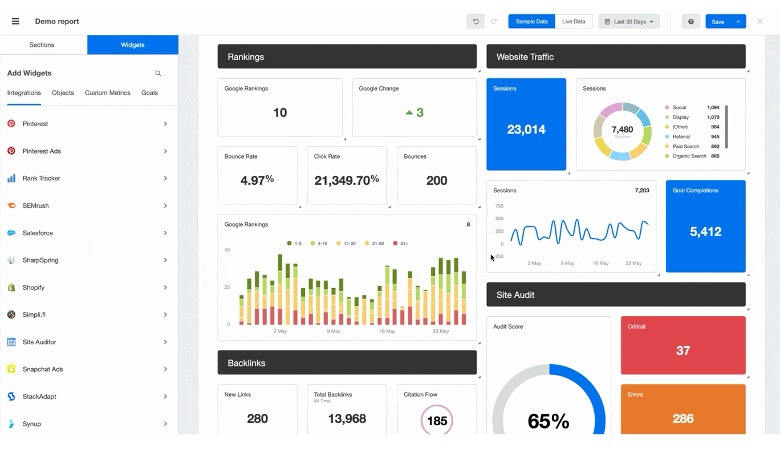
StackAdapt is een programmatisch advertentieplatform voor marketeers en adverteerders die hun digitale advertentiestrategieën willen verbeteren. Het biedt tools voor native advertising, video en verbonden tv, met de nadruk op geavanceerde targeting en datagestuurde inzichten.
Waarom het een goed alternatief voor Criteo is: StackAdapt biedt geavanceerde targetingmogelijkheden waarmee je team nauwkeurig gedefinieerde doelgroepsegmenten kan bereiken. De algoritmen voor machine learning verbeteren de targeting, zodat je campagnes effectief kunt optimaliseren. Het platform ondersteunt verschillende advertentie-indelingen, waardoor je flexibel bent in je advertentieaanpak. Daarnaast stelt de focus van StackAdapt op datagestuurde inzichten je in staat om weloverwogen beslissingen te nemen en campagneresultaten te verbeteren.
Belangrijkste functies en integraties:
Functies omvatten een gebruiksvriendelijke interface die campagnebeheer vereenvoudigt. De realtimeanalyses van het platform bieden inzicht in de prestaties, zodat je snel aanpassingen kunt doen. StackAdapt biedt ook creatieve diensten om te helpen bij het ontwerpen en ontwikkelen van advertenties.
Integraties omvatten Google Analytics, HubSpot, Salesforce, Adobe Analytics, Marketo, Shopify, Oracle, Mailchimp, Microsoft Dynamics en Facebook.
Pros and Cons
Pros:
- Nuttige niche-targeting
- Duidelijke creatieve richtlijnen
- Snelle installatie voor native advertising
Cons:
- Beperkte mogelijkheden voor bulkbewerkingen
- Nieuwe functies worden langzaam uitgerold

Taboola
Beste voor contentontdekking
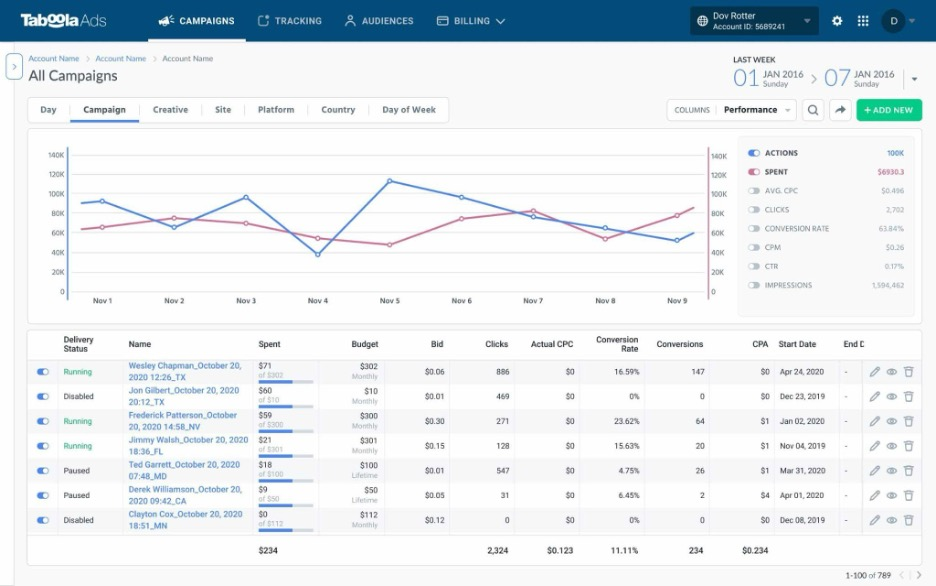
Taboola is een platform voor contentontdekking dat is ontworpen voor uitgevers en adverteerders die de betrokkenheid willen vergroten en verkeer willen genereren. Het biedt tools voor native advertising, waarmee bedrijven via gepersonaliseerde contentaanbevelingen verbinding kunnen maken met doelgroepen.
Waarom het een goed alternatief voor Criteo is: Taboola helpt adverteerders brede doelgroepen te bereiken door contentaanbevelingen op grote websites van uitgevers te plaatsen. Ik heb het gekozen omdat de plaatsingen op natuurlijke wijze opgaan in redactionele omgevingen, waardoor het nuttig is voor merken die naamsbekendheid of verkeer boven in de marketingtrechter willen stimuleren. De focus van Taboola op gepersonaliseerde contentaanbevelingen zorgt ervoor dat je marketinginspanningen aansluiten bij de interesses van je doelgroep.
Belangrijkste functies & integraties:
Functies omvatten realtimeanalyses die inzicht bieden in contentprestaties en betrokkenheid van doelgroepen. Dankzij de A/B-testmogelijkheden van het platform kun je advertentiecontent optimaliseren voor betere resultaten. Taboola biedt ook aanpasbare widgets om de gebruikerservaring en advertentieplaatsing te verbeteren.
Integraties omvatten Google Analytics, Adobe Analytics, HubSpot, Marketo, Salesforce, Oracle, Microsoft Dynamics, Mailchimp, Shopify en Facebook.
Pros and Cons
Pros:
- Groot bereik op nieuwswebsites
- Sterke impact boven in de marketingtrechter
- Flexibele artikelpromotie
Cons:
- Risico op lagere contentkwaliteit
- Klikkwaliteit varieert

AdRoll
Ideaal voor AI-gestuurde marketing
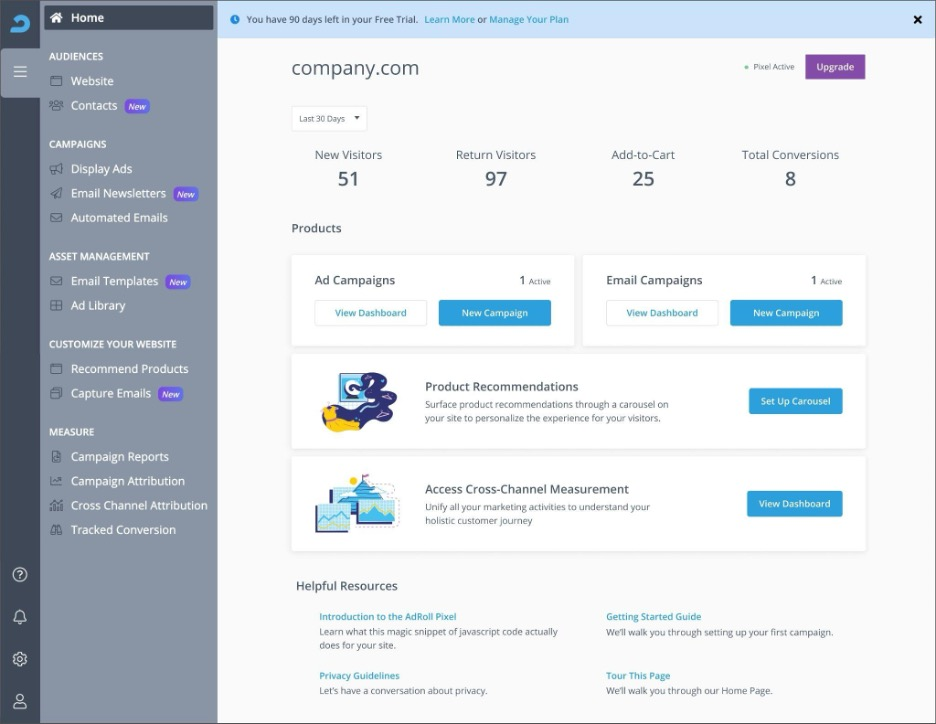
AdRoll is een platform voor digitale advertenties dat is ontworpen voor merken en bureaus die omnichannelcampagnes willen uitvoeren. Het bedient sectoren zoals retail, B2B en financiën en biedt tools voor kanaaloverschrijdende advertenties en analyses.
Waarom het een goed alternatief voor Criteo is: AdRoll is een sterke keuze voor e-commercemerken die eenvoudige, gecentraliseerde controle willen over advertentiecampagnes op web- en socialmediakanalen. Ik heb het geselecteerd omdat de ingebouwde doelgroepentools en automatisering het voor kleinere teams eenvoudig maken om campagnes voor herbenadering en klantenwerving uit te voeren zonder meerdere platforms te hoeven beheren.
Opvallende functies en integraties:
Functies omvatten doelgroepsegmentatie, waarmee je specifieke groepen effectief kunt targeten. Met mogelijkheden voor herbenadering kun je opnieuw contact leggen met potentiële klanten. Het platform biedt ook analysetools om campagneprestaties te meten en te optimaliseren.
Integraties omvatten Shopify, WooCommerce, Adobe Commerce, BigCommerce, Mailchimp, HubSpot, Marketo, Salesforce, Google Analytics en Facebook.
Pros and Cons
Pros:
- Eenvoudige focus op herbenadering
- Goede integraties met e-mail
- Helpt bij kleine catalogi
Cons:
- Klantenwerving voelt beperkt aan
- Heeft een schonere gegevensstroom nodig

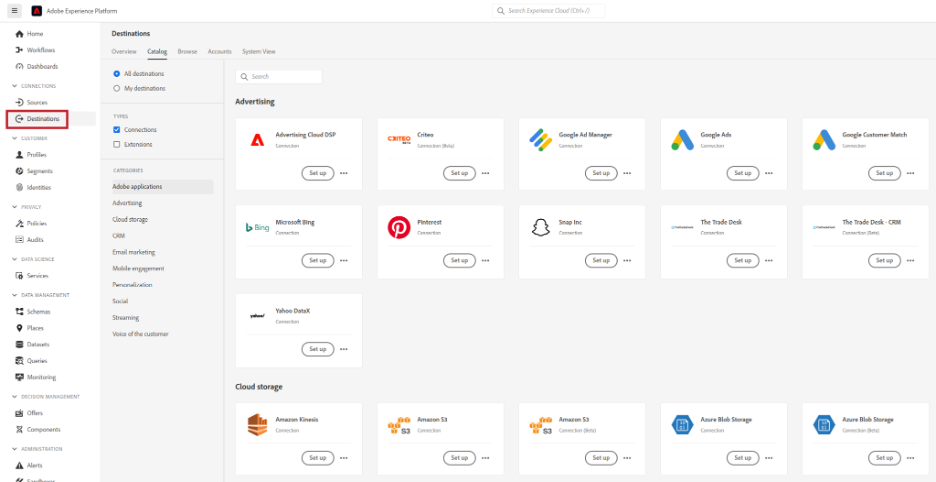
Adobe Advertising is een digitaal marketingplatform voor adverteerders en marketeers die omnichannelcampagnes willen beheren. Het biedt tools voor mediaplanning, media-inkoop en optimalisatie voor uiteenlopende sectoren.
Waarom het een goed alternatief voor Criteo is: Adobe Advertising biedt een geïntegreerde omgeving voor het beheren van media via verschillende kanalen, met behoud van consistente gegevens en meetmethoden. Ik heb het gekozen omdat de integratie met het Adobe-ecosysteem merken helpt om creatieve content, doelgroepen en optimalisatietools in één workflow op elkaar af te stemmen. Dit is ideaal voor teams die al Adobe-producten gebruiken.
Belangrijkste functies & integraties:
Functies omvatten geavanceerde targetingopties, realtime bieden en gedetailleerde analyses. Met deze functies kunt u advertenties afstemmen op specifieke doelgroepen en de prestaties optimaliseren. De integratie van het platform met Adobe Creative Cloud ondersteunt een eenvoudige ontwikkeling van creatieve content.
Integraties omvatten Adobe Analytics, Adobe Experience Manager, Adobe Creative Cloud, Google Analytics, Salesforce, Oracle, HubSpot, Marketo, SAP en Microsoft Dynamics.
Pros and Cons
Pros:
- Sterke tools voor merkbeheer
- Goede opties voor creatieve workflows
- Goed voor gelaagde campagnes
Cons:
- Trage invoering van nieuwe functies
- Het meest geschikt voor grote contentteams

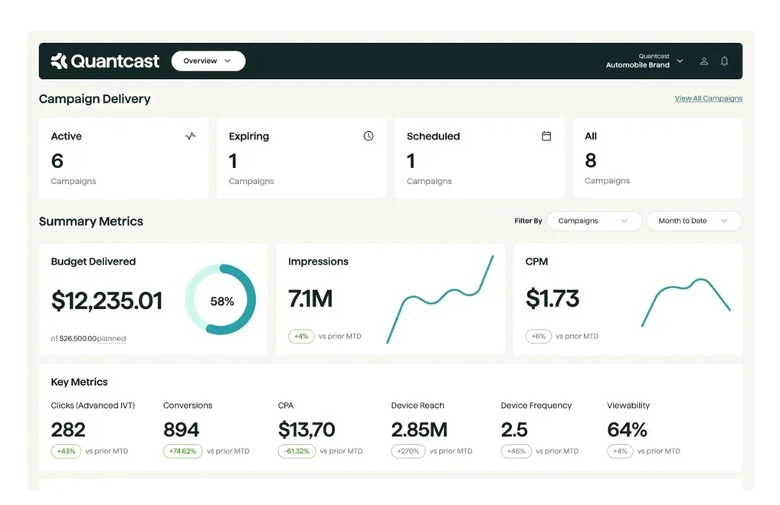
Quantcast Platform is een AI-gedreven advertentieplatform, ontworpen voor marketeers en adverteerders die hun doelgroepbenadering willen verbeteren. Het biedt tools voor realtime adverteren en inzichten, met de nadruk op het analyseren van doelgroepgedrag.
Waarom het een goed alternatief voor Criteo is: Quantcast gebruikt realtimegegevens om doelgroepen samen te stellen en prestaties te voorspellen voordat campagnes worden gelanceerd. Ik heb hiervoor gekozen omdat de voorspellende modellen adverteerders helpen inzicht te krijgen in waarschijnlijke resultaten en hun strategie vroegtijdig aan te passen, wat vooral nuttig is voor teams die zich op prestaties richten.
Opvallende functies & integraties:
Functies omvatten realtime-inzichten in doelgroepen waarmee je consumentengedrag beter kunt begrijpen. De voorspellende modellen van het platform gebruiken AI om trends te voorspellen en advertentie-uitgaven te optimaliseren. Quantcast biedt ook aanpasbare rapportagetools om inzichten af te stemmen op je behoeften.
Integraties omvatten Google Analytics, Salesforce, Adobe Analytics, HubSpot, Marketo, Oracle, Microsoft Dynamics, Mailchimp, Shopify en Facebook.
Pros and Cons
Pros:
- Sterke voorspellende modellen
- Nuttige trendherkenning
- Goede cookieloze tools
Cons:
- Beperkte aanpassingsmogelijkheden
- Zwakke ondersteuning voor meerdere markten

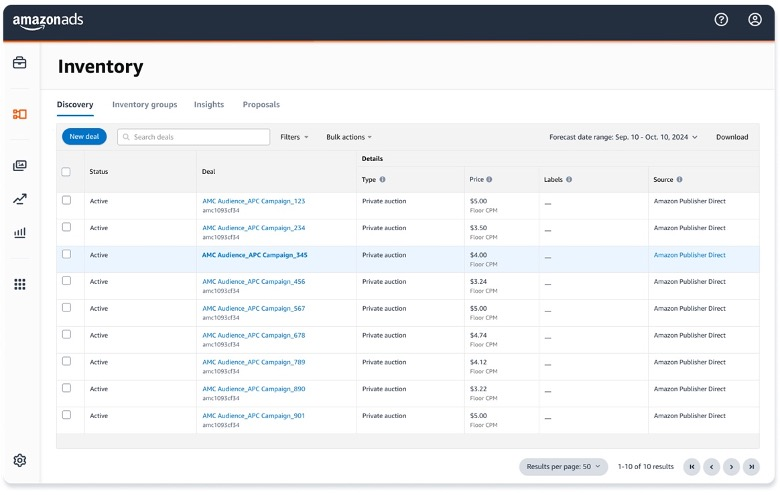
Amazon Ads is een advertentieplatform voor merken en verkopers die klanten op de marktplaats van Amazon willen bereiken. Het biedt hulpmiddelen voor advertenties voor gesponsorde producten, displayadvertenties en videoadvertenties, waarmee bedrijven hun zichtbaarheid en verkoop kunnen vergroten.
Waarom het een goed alternatief voor Criteo is: Amazon Ads geeft merken directe toegang tot winkelende consumenten met een hoge koopintentie door gebruik te maken van de winkel- en browsegegevens van Amazon. Ik heb het gekozen omdat deze gegevens uit eigen bron adverteerders een duidelijk voordeel bieden wanneer ze consumenten dichter bij het aankoopmoment willen bereiken. Dankzij de uitgebreide gegevensinzichten van Amazon kun je advertentiestrategieën optimaliseren zonder tijd te verspillen.
Opvallende functies & integraties:
Functies omvatten realtimeanalyses die inzicht geven in de prestaties van advertenties, zodat je datagestuurde beslissingen kunt nemen. Met de biedtools van het platform kun je je advertentie-uitgaven flexibel beheren. Amazon Ads biedt ook aanpasbare advertentie-indelingen die aansluiten bij de behoeften van je merk.
Integraties omvatten Amazon DSP, Amazon Attribution, Amazon Marketing Cloud, Amazon Seller Central, Amazon Vendor Central, Amazon Merch, Amazon Fire TV, Twitch en IMDb.
Pros and Cons
Pros:
- Bereikt actieve winkelende consumenten
- Realtime koopsignalen
- Goede gegevens over productintentie
Cons:
- Drukke advertentiemarkt
- Rangschikkingen veranderen vaak

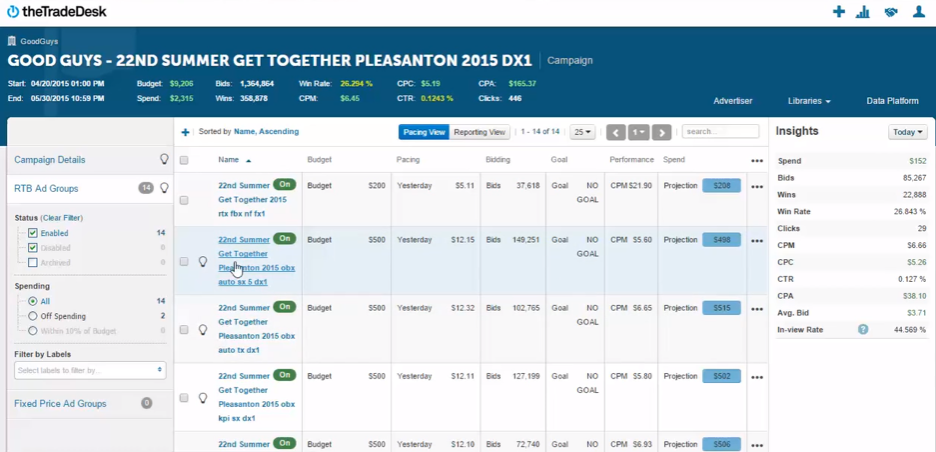
The Trade Desk is een programmatisch advertentieplatform dat is ontworpen voor marketeers en adverteerders die hun mediainkoopstrategieën willen optimaliseren. Het biedt tools voor datagestuurde targeting en campagnebeheer via meerdere kanalen.
Waarom het een goed alternatief voor Criteo is: The Trade Desk is ontworpen voor adverteerders die behoefte hebben aan diepe transparantie en flexibiliteit bij hun mediainkoop. Ik heb het gekozen omdat de aanpak met een open marktplaats en de uitgebreide gegevensopties teams meer controle geeft over hoe ze campagnes op grote schaal plannen, testen en optimaliseren.
Belangrijkste functies & integraties:
Functies omvatten geavanceerde rapportagetools die inzicht bieden in campagneprestaties. De realtime biedmogelijkheden van het platform helpen je snel weloverwogen beslissingen te nemen. Daarnaast biedt The Trade Desk een gebruiksvriendelijke interface die het beheer van complexe campagnes vereenvoudigt.
Integraties omvatten Google Analytics, Salesforce, Adobe Analytics, HubSpot, Marketo, Oracle, Microsoft Dynamics, Mailchimp, Shopify en Facebook.
Pros and Cons
Pros:
- Uitgebreide advertentievoorraad
- Topkeuze voor CTV
- Betrouwbaar wereldwijd bereik
Cons:
- Steile leercurve
- Regelmatige wijzigingen in de interface
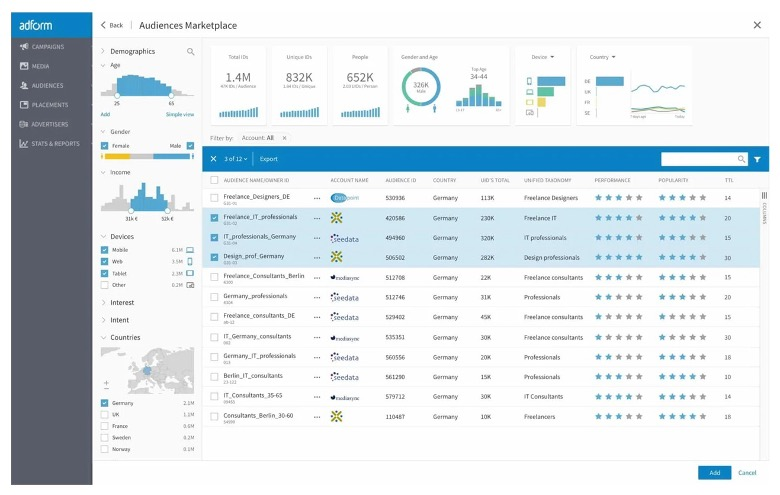
Adform is een geïntegreerd advertentieplatform dat een platform aan de vraagzijde (DSP), advertentieserver en databeheerplatform (DMP) combineert voor efficiënte media-inkoop via meerdere kanalen. De belangrijkste gebruikers zijn adverteerders en uitgevers die tools nodig hebben om campagnes te beheren en inkomsten te optimaliseren.
Waarom het een goed alternatief voor Criteo is: Adform blinkt uit in omnichannel-advertenties, waardoor je team campagnes kan beheren via display, video, mobiel en retailmedia. Het benut gegevens uit eigen bronnen om het publieksbereik te vergroten, een essentiële factor voor nauwkeurige targeting. De transparantie en onafhankelijkheid van Adform maken het een betrouwbare keuze voor wie de controle over zijn advertentiestrategieën wil behouden. Het platform legt ook de nadruk op duurzaamheid door tools aan te bieden die helpen de CO2-voetafdruk te verkleinen.
Belangrijkste functies en integraties:
Functies omvatten geavanceerd campagnebeheer, waarmee je team advertenties effectief kan uitvoeren en optimaliseren. Dankzij de mogelijkheden voor gegevensbeheer van het platform kun je gegevens uit eigen bronnen benutten om doelgroepen gerichter te bereiken. Daarnaast biedt de advertentieserver van Adform realtime analyses om prestaties te volgen en datagestuurde beslissingen te nemen.
Integraties omvatten Google Analytics, Salesforce, Adobe Analytics, SAP, Microsoft Dynamics, HubSpot, Oracle, Marketo, Mailchimp en Shopify.
Pros and Cons
Pros:
- Sterke tools voor uitgevers
- Goed voor privacy-instellingen
- Duidelijke, auditklare gegevens
Cons:
- Vereist gestructureerde teamrollen
- Mist eenvoudige voorinstellingen
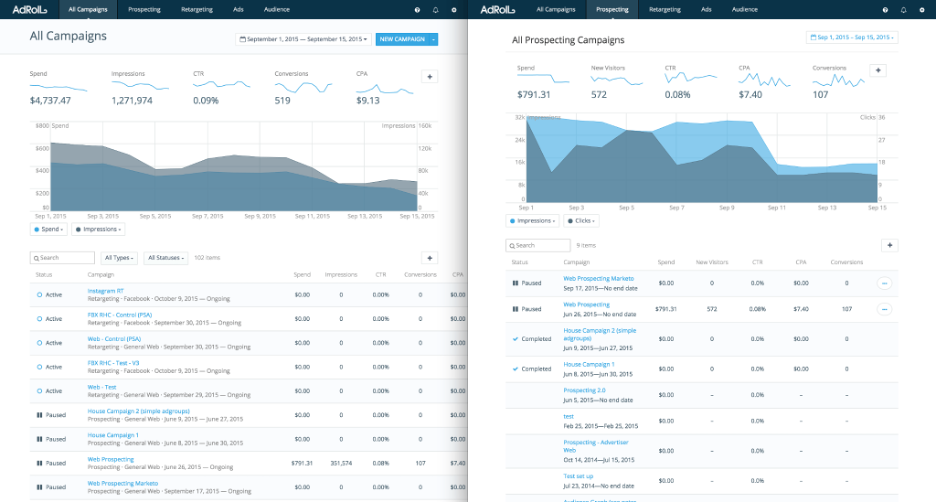
NextRoll is een marketingplatform dat AdRoll en RollWorks combineert om een diverse gebruikersgroep te bedienen, waaronder e-commercebedrijven en B2B-marketeers. Het biedt oplossingen voor retargeting, doelgroepbenadering en analyses om marketinginspanningen te verbeteren.
Waarom het een goed alternatief voor Criteo is: NextRoll brengt marketing- en verkoopgegevens samen, zodat teams gecoördineerde advertenties en benadering vanuit één omgeving kunnen uitvoeren. Ik heb het gekozen omdat deze verbinding tussen advertenties, e-mail en CRM-activiteiten merken helpt om gedurende de hele klantreis consistentere boodschappen te leveren. De focus van NextRoll op personalisatie zorgt ervoor dat je marketingstrategieën aansluiten bij de specifieke behoeften van je doelgroep.
Opvallende functies & integraties:
Functies omvatten dynamische advertenties die de inhoud aanpassen op basis van gebruikersinteracties. Dankzij de mogelijkheden voor meerdere kanalen van het platform kun je campagnes via meerdere kanalen beheren. NextRoll biedt ook uitgebreide analyses om campagnesucces te volgen en te meten.
Integraties omvatten Shopify, WooCommerce, Adobe Commerce, BigCommerce, Mailchimp, HubSpot, Marketo, Salesforce, Google Analytics en Facebook.
Pros and Cons
Pros:
- Goed inzicht voor verschillende teams
- Handige ABM-werkstromen
- Eenvoudige doelgroepopbouw
Cons:
- Complexe B2C-rapportage
- Soms zijn er eigenaardigheden bij de configuratie

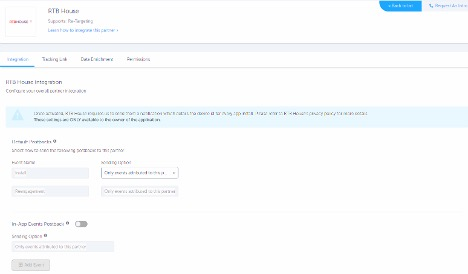
RTB House is een door AI aangedreven advertentieplatform voor merken en bureaus die hun digitale marketingstrategieën willen optimaliseren. Het biedt tools voor gepersonaliseerde advertentietargeting en realtime bieden via meerdere kanalen.
Waarom het een goed alternatief voor Criteo is: RTB House is gebouwd op modellen voor diep leren die zich aanpassen aan gebruikersgedrag, waardoor het zeer geschikt is voor prestatiecampagnes. Ik heb het gekozen omdat de personalisatiemotor vaak beter presteert dan eenvoudigere retargetingtools, vooral voor adverteerders met uitgebreide productcatalogi. Met de focus op maatwerk zorgt RTB House ervoor dat je campagnes aansluiten op specifieke marketingdoelen.
Opvallende functies & integraties:
Functies omvatten geavanceerde analyses die inzicht bieden in campagneprestaties. De tools voor creatieve optimalisatie van het platform helpen advertentie-inhoud te verfijnen voor betere betrokkenheid. RTB House biedt ook mogelijkheden voor doelgroepsegmentatie om specifieke groepen effectief te bereiken.
Integraties omvatten Google Analytics, Salesforce, Adobe Analytics, HubSpot, Marketo, Oracle, Microsoft Dynamics, Mailchimp, Shopify en Facebook.
Pros and Cons
Pros:
- Uitstekende dynamische advertentie-uitingen
- Goede aansluiting op e-commerce
- Nauwkeurige gebruikersbeoordeling
Cons:
- Sterke afhankelijkheid van data
- Over het algemeen beperkte transparantie
Andere Criteo-alternatieven
Hier zijn enkele aanvullende Criteo-alternatieven die mijn shortlist niet hebben gehaald, maar die toch de moeite waard zijn om te bekijken:
- MediaMath
Ideaal voor aanpasbare programmatische regelmogelijkheden
- Basis Technologies
Ideaal voor technologiebedrijven in een vroeg stadium
- Epsilon PeopleCloud Digital Media
Ideaal voor datagestuurde personalisatie


Hoe ik alternatieven voor Criteo beoordeel
Ik verdeel mijn beoordeling in essentiële basisvereisten, zoals dynamische retargeting van producten en attributie met gesloten lus, en de onderscheidende factoren die een echt retailmediaplatform onderscheiden van een eenvoudige DSP.
Kernfunctionaliteit (basisvereisten voor deze lijst)
Wanneer ik tools voor mijn lijst selecteer, beoordeel ik elk hulpmiddel op een schaal van 0 (biedt de functionaliteit niet aan) tot 5 (blink uit op dit gebied) voor elke hieronder vermelde kernfunctionaliteit. Vervolgens bereken ik de totaalscore van de tool als percentage. Elke tool moet een minimale totaalscore van 65% behalen om in aanmerking te komen voor opname.
- Dynamische retargeting van producten: Ik beoordeel of het platform gepersonaliseerde advertenties op SKU-niveau kan tonen aan shoppers die artikelen hebben bekeken of aan hun winkelwagen hebben toegevoegd—op verschillende apparaten, dus niet alleen via desktopdisplay.
- Gegevens over commerce-doelgroepen: Toegang tot intentie- en aankoopsignalen op shopperniveau is hierbij belangrijk, of het nu gaat om een eigen datagrafiek of om geaggregeerde segmenten van eigen gegevens van retailpartners.
- Retailmediacapaciteiten: Ik controleer op gesponsorde productplaatsingen, displayadvertenties op de website en uitbreidingen buiten de website waarmee merken binnen of naast de digitale omgevingen van een retailer kunnen adverteren.
- Programmatic advertentie-inkoop: Het platform moet realtime bieden via meerdere kanalen ondersteunen—display, social, video of CTV—in plaats van campagnes te beperken tot één inventorybron.
- AI-gestuurde optimalisatie van biedingen en advertenties: Ik zoek naar machine learning dat biedingsaanpassingen, budgetverdeling in de tijd en het automatisch samenstellen van dynamische advertenties afhandelt, in plaats van te vertrouwen op handmatige regels.
- Verkoopattributie met gesloten lus: Het koppelen van advertentievertoningen aan daadwerkelijke aankopen is essentieel. Daarom beoordeel ik of de tool rapporteert over ROAS, conversies na vertoning en idealiter ook verkoopstijgingen offline.
Zodra ik een lijst heb met tools die aan deze criteria voldoen, kijk ik naar wat elk platform onderscheidt.
Onderscheidende factoren (wat aanbieders onderscheidt)
Zo vergelijk ik verschillende aanbieders met elkaar:
Opvallende functies
Nu cookies van derden verdwijnen, let ik nauwlettend op hoe elk platform omgaat met targeting zonder cookies—of dat nu gebeurt via contextuele signalen, identiteitsgrafieken op basis van eigen gegevens of samenwerkingen met datakluizen. Het meten van incrementaliteit is een ander gebied dat ik zorgvuldig beoordeel, omdat het aantonen van een echte stijging bovenop wat organisch zou zijn gebeurd veel nuttiger is dan alleen ROAS op basis van de laatste klik. Ik kijk ook of het platform retailmediadoelgroepen uitbreidt naar CTV en DOOH, zodat merken shoppers buiten standaard display- en socialplaatsingen kunnen bereiken.
Meer dan functies alleen
De omvang van het commercenetwork van een platform heeft rechtstreeks invloed op het aantal shoppers dat je campagnes kunnen bereiken en op de mate waarin je targeting kunt verfijnen. Ik beoordeel ook de transparantie van de prijzen—of de aanbieder duidelijk onderscheid maakt tussen technologiekosten, mediamarges en vereisten voor minimale bestedingen, omdat deze sterk uiteenlopen en het budget van een merk uit het middensegment kunnen maken of breken. Integraties met e-commerce zijn eveneens belangrijk, vooral native koppelingen met platforms zoals Shopify of Adobe Commerce die productfeeds en doelgroepen gesynchroniseerd houden zonder maatwerk voor ontwikkelaars.
Waarom zoeken naar een Criteo-alternatief?
Hoewel Criteo een goede keuze is voor marketingautomatiseringssoftware, zijn er verschillende redenen waarom sommige gebruikers op zoek gaan naar alternatieve oplossingen. Misschien zoek je een Criteo-alternatief omdat…
- Je flexibelere prijsopties nodig hebt.
- Je team betere klantenondersteuning nodig heeft.
- Je op zoek bent naar uitgebreidere mogelijkheden voor doelgroeptargeting.
- Je een tool nodig hebt die geografisch breder beschikbaar is.
- Je bedrijf meer schaalbare oplossingen nodig heeft.
- Je branche gespecialiseerde functies vereist.
Als een van deze punten op jou van toepassing is, ben je hier aan het juiste adres. Mijn lijst bevat verschillende opties voor marketingautomatiseringssoftware die beter geschikt zijn voor teams die met deze uitdagingen van Criteo te maken hebben en op zoek zijn naar alternatieve oplossingen.
Belangrijkste functies van Criteo
Hier zijn enkele van de belangrijkste functies van Criteo, zodat je kunt vergelijken wat alternatieve oplossingen te bieden hebben:
- Gepersonaliseerde herbenadering: Levert advertenties die zijn afgestemd op de eerdere interacties van je klanten met je site, zodat je opnieuw effectief contact met hen kunt maken.
- Dynamische productadvertenties: Genereert automatisch advertenties met producten die je klanten waarschijnlijk het meest zullen kopen, waardoor de kans op conversie toeneemt.
- Voorspellend bieden: Gebruikt AI om biedstrategieën te optimaliseren, zodat je het beste rendement op je advertentie-uitgaven behaalt.
- Doelgroepsegmentatie: Stelt je in staat specifieke klantsegmenten te bereiken op basis van hun winkelgedrag en voorkeuren.
- Realtime rapportage: Biedt direct inzicht in de prestaties van campagnes, zodat je team datagestuurde beslissingen kan nemen.
- Apparaatoverstijgende advertenties: Zorgt voor consistente advertentie-ervaringen op meerdere apparaten, zodat je doelgroep wordt bereikt waar die zich ook bevindt.
- AI-optimalisatie: Maakt gebruik van kunstmatige intelligentie om de relevantie en effectiviteit van advertenties te verbeteren, waardoor campagnes in het algemeen succesvoller worden.
- Handelsgegevens: Benut uitgebreide handelsgegevens om de intentie van klanten beter te begrijpen en meer gepersonaliseerde marketing mogelijk te maken.