
Det bør ikke føles som å kjempe med regneark ved midnatt å administrere tilbakevendende fakturering og abonnementer. Programvare med åpen kildekode for abonnementsadministrasjon finnes for å gi deg fleksibilitet, åpenhet og kontroll – uten at du må betale i dyre dommer for overflødig SaaS-funksjonalitet eller låste prismodeller.
Etter mer enn ti år innen detaljhandel og netthandel har jeg sett hvor raskt faktureringsfeil, manglende integrasjoner og svak analyse kan ta knekken på tilbakevendende inntekter.
Enten du driver en slank oppstartsbedrift eller en kompleks virksomhet på tvers av flere kanaler, trenger du verktøy som automatiserer arbeidsflyter, støtter rapportering i sanntid og fungerer godt sammen med den eksisterende teknologistakken din.
Denne veiledningen gjør nettopp det. Jeg har valgt ut og vurdert de beste plattformene med åpen kildekode for abonnementsadministrasjon – testet for automatisering av fakturering, betalingsbehandling, fleksible API-er og det som betyr noe når du må redusere kundefrafall og skalere raskt.
Ingen fyllstoff. Ingen salgspitch. Bare praktisk innsikt på operatørnivå som hjelper deg med å finne et faktureringssystem som faktisk passer bedriftens behov – uten de vanlige hodepinene.
Why Trust Our Software Recommendations
6,700+
Reviews
20
Industry experts
16+
Evaluation factors
14
Years
Our team has been testing and reviewing software since 2012. As retail leaders ourselves, we know how difficult—and important—it is to choose the right software.
For this guide, we evaluated tools using hands-on testing and independent research, scoring tools using our selection criteria.
Our reviews reflect our independent judgment—not a sales pitch.
Sammenligningstabell for programvare med åpen kildekode for abonnementsadministrasjon
Denne sammenligningstabellen dekker priser, prøveperiodedetaljer og ideelle bruksområder for mine anbefalte programvarevalg med åpen kildekode for abonnementsadministrasjon.
| Tool | Best For | Trial Info | Price | ||
|---|---|---|---|---|---|
| 1 | Best for self-hosted recurring billing with ERP | Free plan available | Pricing upon request | Website | |
| 2 | Best for CRM-embedded subscription billing | 15-day free trial | From $19/user/month | Website | |
| 3 | Best for no-fee multi-model billing via self-hosting | Free plan + free trial + free demo available | From $99/month | Website | |
| 4 | Best for Ruby-built subscription storefronts | Free demo available | Pricing upon request | Website | |
| 5 | Best for content-driven subscription storefronts | Free demo available | Pricing upon request | Website | |
| 6 | Best for headless subscription commerce | 30-day free trial | From $4/user/month | Website | |
| 7 | Best for API-first billing integrations | Free demo available | Pricing upon request | Website | |
| 8 | Best for billing automation | Free plan available | Pricing upon request | Website | |
| 9 | Best for metered API and AI token billing | Free plan available | From $249/month | Website | |
| 10 | Best for telecom-scale subscription billing | Free demo available | Pricing upon request | Website |



De 10 beste programvarene med åpen kildekode for abonnementsadministrasjon, vurdert
Les mine grundige og direkte vurderinger nedenfor for å få et nærmere blikk på fremtredende funksjoner, fordeler og ulemper, samt hvilken type virksomhet hvert verktøy faktisk passer best for – basert på ti år innen detaljhandel og netthandel.
 Best for self-hosted recurring billing with ERP
- Free plan available
- Pricing upon request
Visit WebsiteCustomer Rating:4.2/5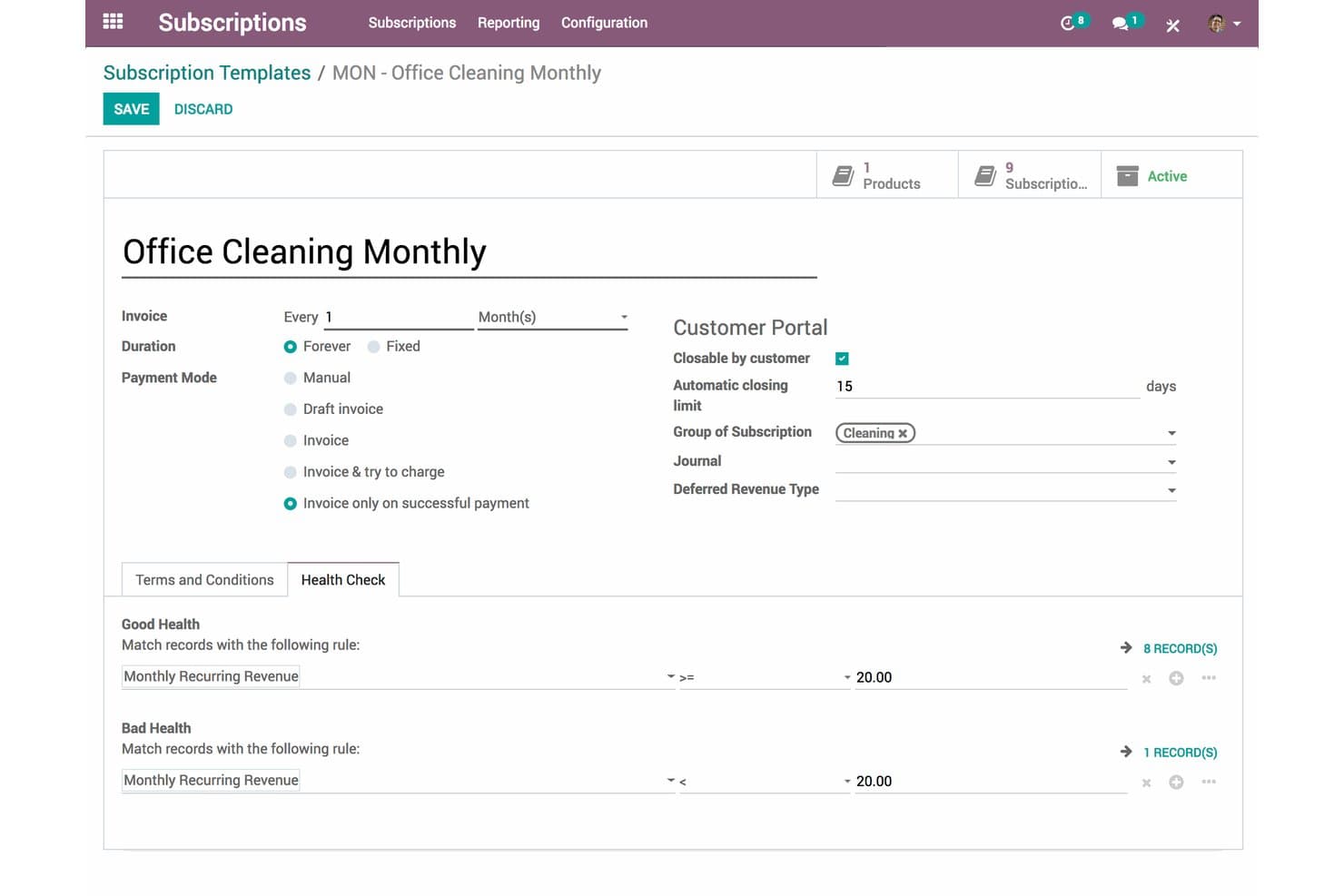
Odoo Subscriptions lets users configure billing cycles and health checks. Odoo Subscriptions is an open-core recurring billing and subscription lifecycle platform that combines automated invoicing, dunning, MRR/ARR analytics, a self-service customer portal, and 20+ payment provider integrations within a broader ERP suite.
Who Is Odoo Subscriptions Best For?
Odoo Subscriptions is a strong fit for retail and ecommerce businesses with in-house DevOps capacity that want to self-host their recurring billing and manage it within a single ERP environment.
Why I Picked Odoo Subscriptions
Odoo Subscriptions earns its spot on my shortlist because it's the only open-source-rooted platform that bundles subscription lifecycle management directly inside a full ERP, letting retail teams run billing, inventory, and POS from one system without middleware. I particularly like that self-hosted deployments on Docker or Kubernetes carry zero per-transaction fees, and that deferred revenue recognition is handled natively for GAAP/IFRS 15 compliance, which is rare at this price point.
Odoo Subscriptions Key Features
- MRR/ARR analytics dashboard: Tracks new, expansion, contraction, and churned MRR automatically from active subscription records, with ARR forecasting and cohort retention curves.
- Multi-level dunning workflows: Configurable payment follow-up sequences with custom email templates and escalation actions, from reminders to service suspension to write-off.
- 100+ country tax localization packages: Applies regional tax rules, including VAT, GST, and multi-state nexus, automatically across subscription invoices.
- Subscription health scores: Flags at-risk subscribers based on calculated health scores and triggers CRM-based retention workflows for account manager follow-up.
Odoo Subscriptions Integrations
Odoo Subscriptions offers native integrations across Odoo CRM, Accounting, Sales, eCommerce, POS, Inventory, and Helpdesk, plus 20+ payment providers including Stripe, Adyen, PayPal, and Mollie. Custom integrations use XML-RPC, JSON-RPC, or REST APIs, with external API access on the Custom plan.
Pros and Cons
Pros:
- Built-in GAAP/IFRS 15 revenue compliance
- No per-transaction SaaS fees if self-hosted
- Native ERP and POS integration for retail
Cons:
- Usage-based billing automation needs custom code
- Full subscriptions features require enterprise license
Learn more about Odoo Subscriptions: Best for CRM-embedded subscription billing
- 15-day free trial
- From $19/user/month
Visit WebsiteCustomer Rating:5/5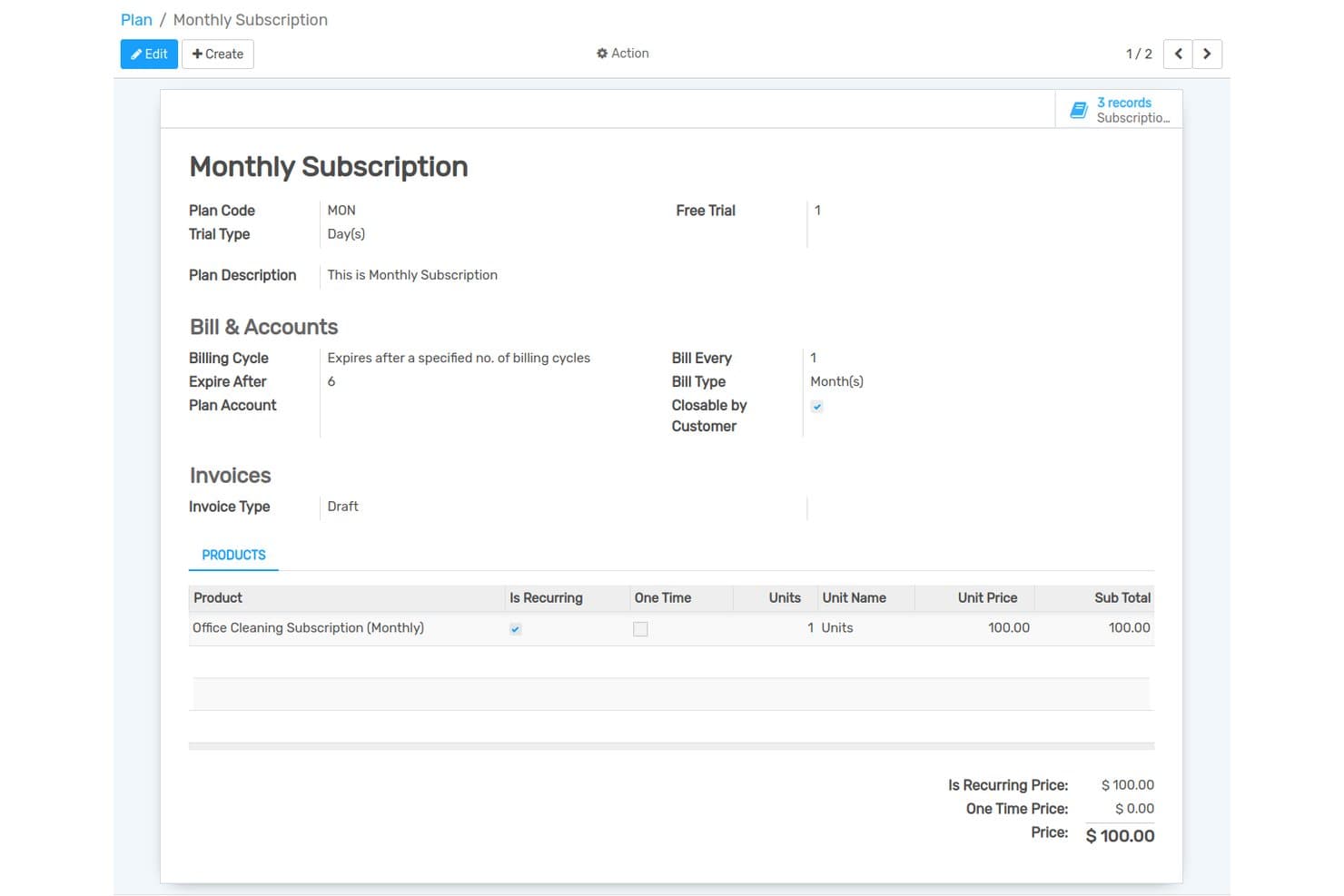
Flectra lets users configure billing cycles and pricing for subscription plans. Flectra is an open-source ERP platform with a built-in subscription management module that handles recurring billing, automated invoicing, dunning, plan management, and a self-service customer portal—all natively connected to its CRM, accounting, and ecommerce modules.
Who Is Flectra Best For?
Flectra is a strong fit for businesses that already run—or plan to run—their operations on a unified ERP stack and want subscription billing natively connected to CRM and invoicing without stitching together separate tools.
Why I Picked Flectra
Flectra earns its spot on my shortlist because subscription billing and CRM live in the same platform natively, with no connectors required. I like that when a subscriber upgrades a plan, that change surfaces immediately in the CRM pipeline alongside their full contact history and invoicing record. The self-service billing portal and automated invoicing with dunning management round out a billing engine that handles the full subscriber lifecycle without stitching together separate tools.
Flectra Key Features
- Multi-period recurring billing: Supports flexible billing cycles and frequencies with automated invoice generation and delivery to subscribers.
- 12 payment gateway integrations: Connects natively with Stripe, PayPal, Adyen, Authorize.Net, Razorpay, and eight additional providers, plus Google Pay and Apple Pay.
- Subscription plan management: Lets you create and manage multiple plan tiers with discount management and GST-compliant tax invoicing built in.
- No-Code Studio: A visual customization module that lets non-developers build and modify apps, forms, and workflows without writing code.
Flectra Integrations
Flectra offers 12 native payment integrations, including Stripe, PayPal, Adyen, Authorize.Net, Razorpay, and Mollie. Its XML-RPC external API and REST API references support custom connections.
Pros and Cons
Pros:
- Self-service portal for subscriber account management
- Offers 12 payment gateways with global coverage
- CRM and subscription billing are natively unified
Cons:
- API uses XML-RPC, not modern REST standards
- Does not connect natively to Shopify or WooCommerce
Learn more about Flectra: Best for no-fee multi-model billing via self-hosting
- Free plan + free trial + free demo available
- From $99/month
Visit WebsiteCustomer Rating:5/5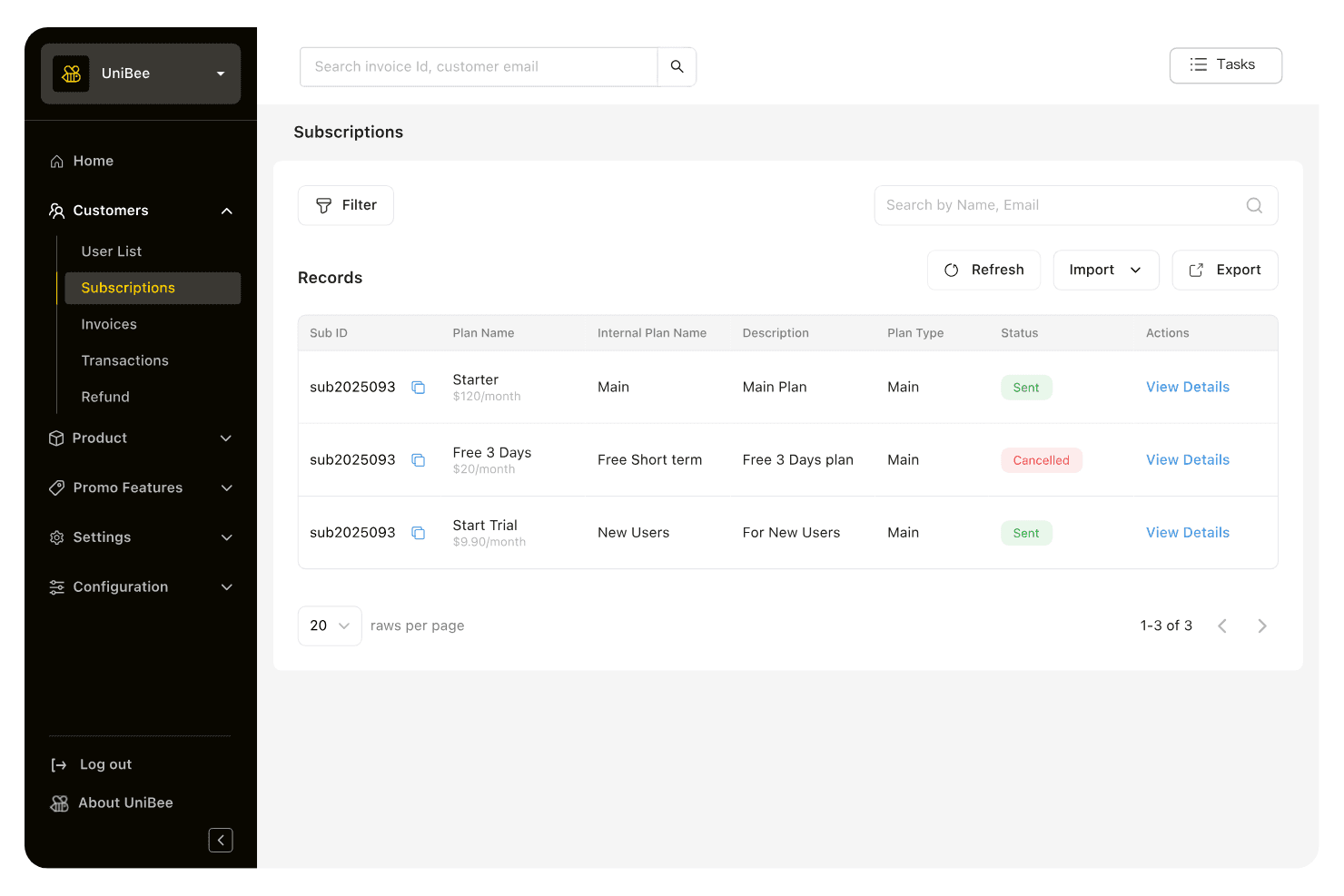
UniBee lets users track and manage customer subscriptions in one place. UniBee is an AGPLv3 open-source subscription management platform that supports recurring, usage-based, tiered, per-seat, and hybrid billing models alongside multi-gateway payment routing, smart dunning, and a developer-facing REST API.
Who Is UniBee Best For?
UniBee is a strong fit for technical teams and DevOps engineers who want full billing infrastructure control without paying per-transaction SaaS fees.
Why I Picked UniBee
I picked UniBee as one of the best because it's the only tool on my list where self-hosting completely eliminates transaction fees across every billing model. I love that you can run recurring, usage-based, tiered, and per-seat billing simultaneously under one AGPLv3 codebase, with smart dunning and multi-gateway routing built in. In practice, that means my team can recover failed payments automatically while routing transactions across Stripe, PayPal, and Alipay without paying a percentage of revenue to anyone.
UniBee Key Features
- Multi-currency pricing: Set and display prices in multiple currencies natively, supporting global subscriber bases without third-party workarounds.
- VATSense tax integration: Automates VAT and GST calculation on initial and recurring charges, with country tax rates refreshed weekly.
- Coupon and discount engine: Create percentage or fixed discounts with configurable cycle limits, expiration dates, usage caps, and plan-specific rules.
- OpenTelemetry observability hooks: Connect UniBee billing events to your existing monitoring stack for real-time infrastructure and performance visibility.
UniBee Integrations
UniBee lists 25+ native integrations, including Stripe, PayPal, QuickBooks, Xero, TaxJar, VATSense, Mixpanel, and HubSpot. Its REST API supports custom integrations, while Zapier is also available.
Pros and Cons
Pros:
- Advanced billing models supported natively
- Full control over billing infrastructure
- No per-transaction fees with self-hosting
Cons:
- AGPLv3 license may limit proprietary use
- No retail or eCommerce connectors included
Learn more about UniBee: Best for Ruby-built subscription storefronts
- Free demo available
- Pricing upon request
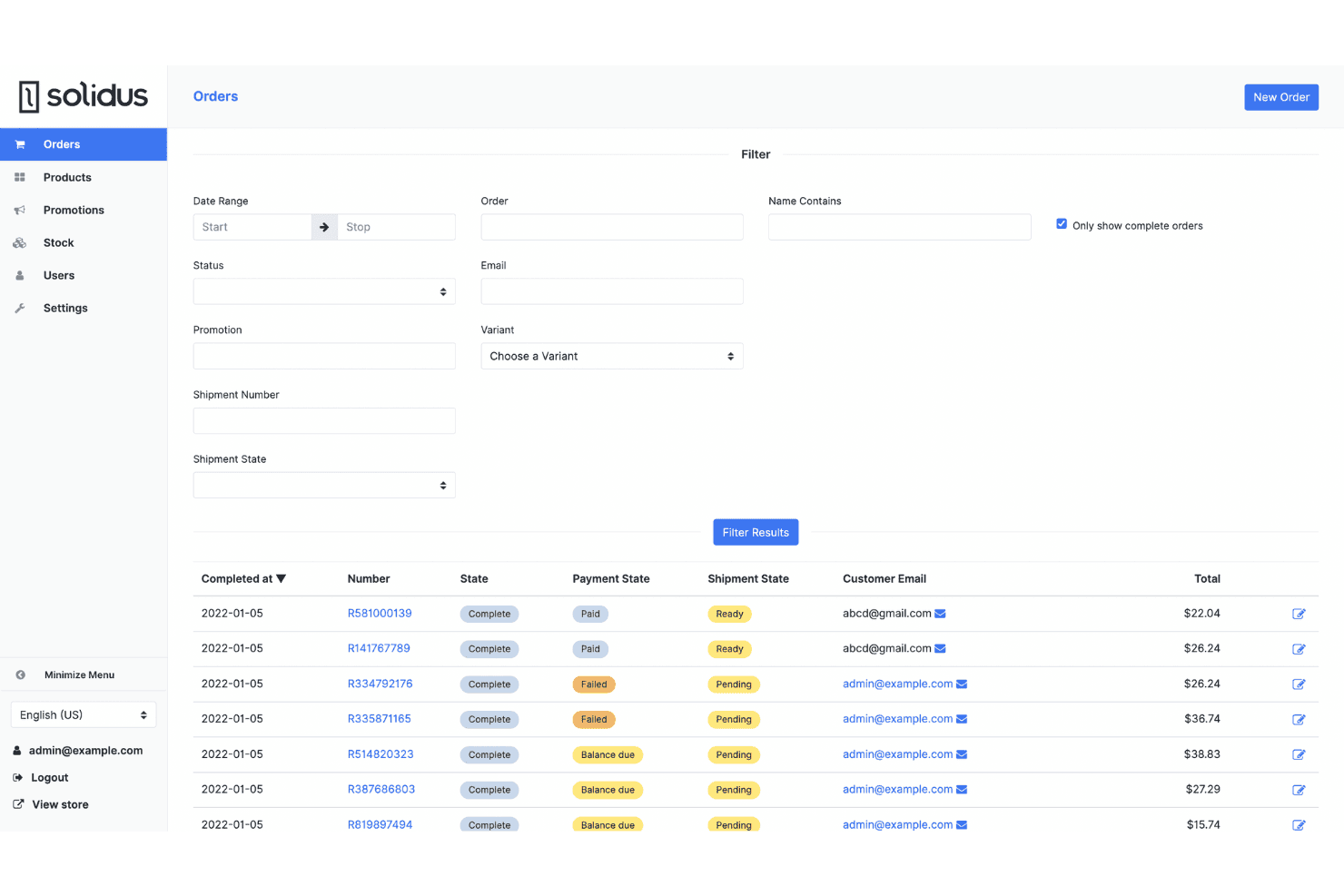
Solidus lets users filter and manage orders by status, payment, and shipment state. Solidus is a BSD-3-licensed open-source ecommerce platform built on Ruby on Rails that includes a native subscription engine supporting recurring billing, curated boxes, Build Your Own Box, and digital memberships.
Who Is Solidus Best For?
Solidus is a strong fit for DTC brands with in-house Ruby on Rails developers who want a fully self-hosted subscription storefront with no licensing fees or per-transaction costs.
Why I Picked Solidus
Solidus earns its spot on my list because it's one of the only open-source ecommerce platforms with a native subscription engine built directly into the codebase. I love that the
solidus_subscriptionsextension supports curated boxes, Build Your Own Box, and digital memberships out of the box, so Ruby on Rails teams aren't stitching together separate billing tools. Recurring billing intervals are configurable at the line-item level, meaning a store can run monthly replenishment and bimonthly curated boxes from a single checkout flow.Solidus Key Features
- BSD-3-Clause open source license: Solidus is freely self-hostable and redistributable under a permissive OSI-approved license with no per-transaction fees on any plan.
- PSP-agnostic payment gateway support: Native integrations with Stripe, Braintree, PayPal, Square, Razorpay, Affirm, Afterpay, and Klarna give merchants broad payment flexibility.
- REST and GraphQL APIs: Dual API access lets developer teams connect Solidus to headless frontends, ERPs, CRMs, and other retail tech stack components.
- Configurable dunning and retry logic: Failed subscription installments are automatically retried on each processor run, with optional Churn Buster integration for advanced payment recovery workflows.
Solidus Integrations
Solidus documents 10+ native payment gateway integrations, including Stripe, Braintree, PayPal Commerce Platform, Square, Razorpay, Klarna, and Afterpay. It also connects with Avalara, Klaviyo, EasyPost, ShipStation, Segment, and Churn Buster, with REST and GraphQL APIs for custom integrations.
Pros and Cons
Pros:
- Dual REST and GraphQL APIs available
- Native subscription engine supports curated boxes
- Truly free and open source model
Cons:
- Ruby on Rails expertise required for deployment
- No pre-built customer subscription portal
Learn more about Solidus: Best for content-driven subscription storefronts
- Free demo available
- Pricing upon request
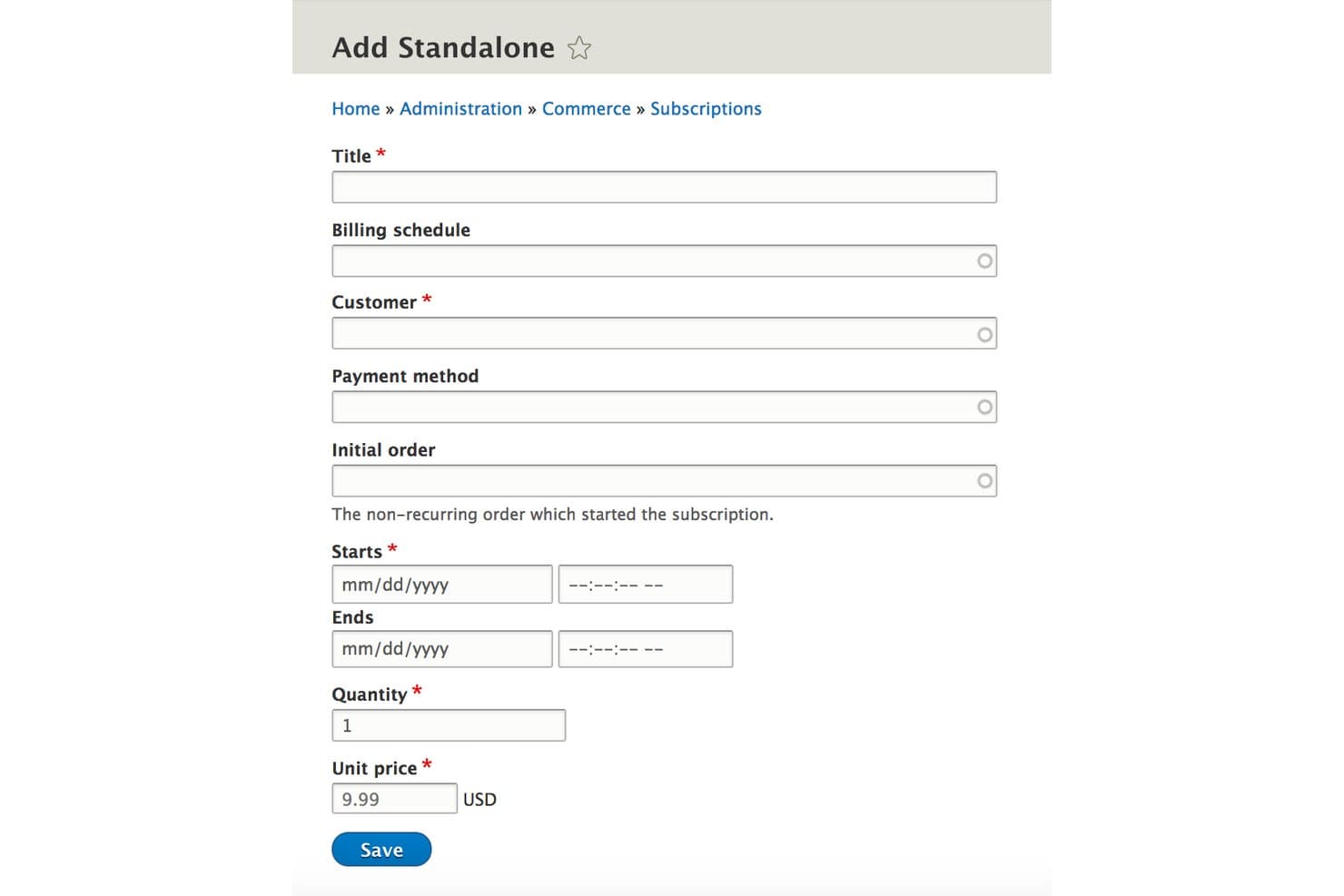
Drupal Commerce lets users manually create standalone subscriptions. Drupal Commerce is a GPL-licensed, self-hostable open-source e-commerce platform built on Drupal CMS that combines content management with recurring billing, configurable subscription types, and a 142-module payment gateway ecosystem.
Who Is Drupal Commerce Best For?
Drupal Commerce is a strong fit for development teams building content-heavy subscription storefronts where CMS and ecommerce need to live on the same platform.
Why I Picked Drupal Commerce
Drupal Commerce earns its spot on my shortlist because it's the only open-source subscription platform where content management and recurring billing share the same codebase. I love how fieldable subscription entities let you attach custom metadata directly to each subscriber record, which is genuinely useful when building content-gated membership tiers or curated box programs. The 142 contributed payment gateway modules, including GoCardless for direct debit and Stripe with Connect built in, cover recurring billing scenarios most platforms can't match without expensive add-ons.
Drupal Commerce Key Features
- Fieldable subscription entities: Attach custom fields and metadata directly to individual subscription records to support complex data models.
- Advanced Queue-powered renewal processing: Automates billing period closures and renewal jobs via Drupal Cron for reliable background processing.
- Multi-store and multi-currency support: Run multiple store entities with per-currency static pricing and CLDR-standard localization from a single installation.
- B2B customer groups: Assign shared addresses, payment methods, order history, and account-level price lists to business customer accounts.
Drupal Commerce Integrations
Drupal Commerce has a wide range of payment gateway integrations, including Stripe, PayPal, Braintree, GoCardless, Adyen, and Checkout.com, plus Avalara and ShipStation integrations. JSON:API and REST endpoints support custom connections.
Pros and Cons
Pros:
- Massive global payment gateway coverage
- Supports complex content-driven subscription storefronts
- Controls all subscription and ecommerce data
Cons:
- Subscription lifecycle upgrades require custom development
- No built-in subscriber self-service portal
Learn more about Drupal Commerce:
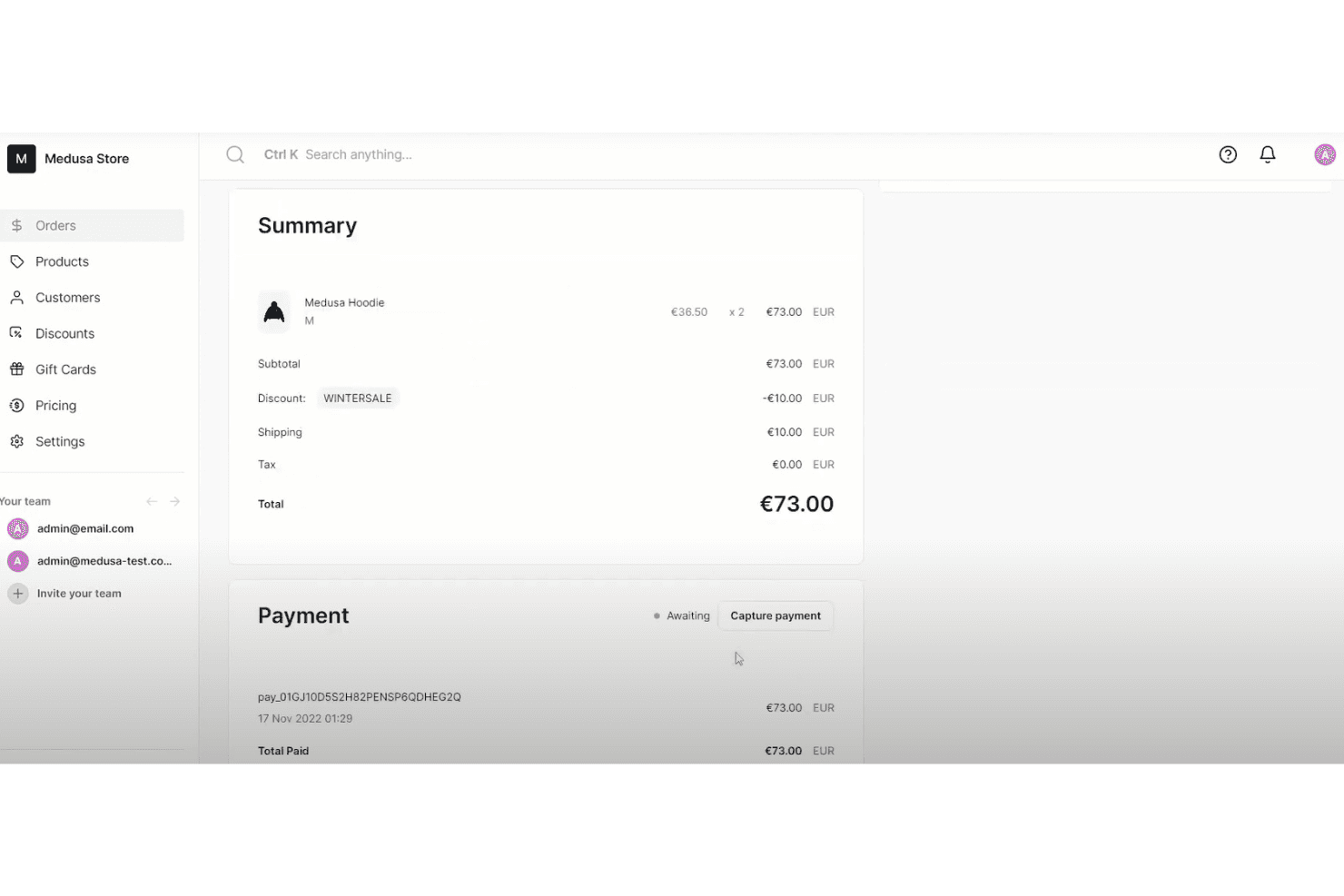
Medusa tracks order summaries, discounts, and payment capture in one view. Medusa is an open-source, headless commerce platform built on Node.js and TypeScript that covers product catalog management, multi-currency pricing, tax, payment processing, and subscription lifecycle management via its modular architecture and the MIT-licensed Reorder plugin.
Who Is Medusa Best For?
Medusa is a strong fit for engineering-led DTC brands and retail teams that want full control over their subscription stack without paying per-transaction SaaS fees.
Why I Picked Medusa
I picked Medusa as one of the best because it's the only open-source platform that lets you run a fully headless subscription commerce stack without paying per-transaction SaaS fees. The MIT-licensed Reorder plugin adds production-ready recurring billing, dunning with configurable retry intervals, and MRR/churn/LTV analytics directly inside the Medusa Admin. I also love that multi-currency pricing and tax are baked into the core, so cross-border subscription programs don't require bolted-on workarounds.
Medusa Key Features
- Self-service subscription API routes: Store-facing REST endpoints let customers skip deliveries, swap plans, and update payment methods without contacting support.
- Modular commerce architecture: Medusa's 17 independent modules let you adopt only the components you need—tax, inventory, pricing—without deploying a full monolith.
- Multi-region pricing engine: Define currency-specific prices, local tax rates, and region-scoped shipping rules natively within the open-source core.
- Scheduled workflow engine: Built-in scheduler triggers recurring jobs for renewal execution, retry logic, and subscription state transitions on configurable intervals.
Medusa Integrations
Medusa lists 100+ integrations, including Stripe, PayPal, Braintree, Authorize.net, Mollie, Odoo, ShipStation, Klaviyo, Algolia, and PostHog. Its Store and Admin REST APIs, webhooks, and Payment Module Provider SDK support custom integrations.
Pros and Cons
Pros:
- Modular architecture supports bespoke subscription logic
- Fully self-hosted with open-source license
- No GMV or per-transaction SaaS fees
Cons:
- No native GraphQL or POS integrations
- Subscription management requires plugin or custom build
Learn more about Medusa:
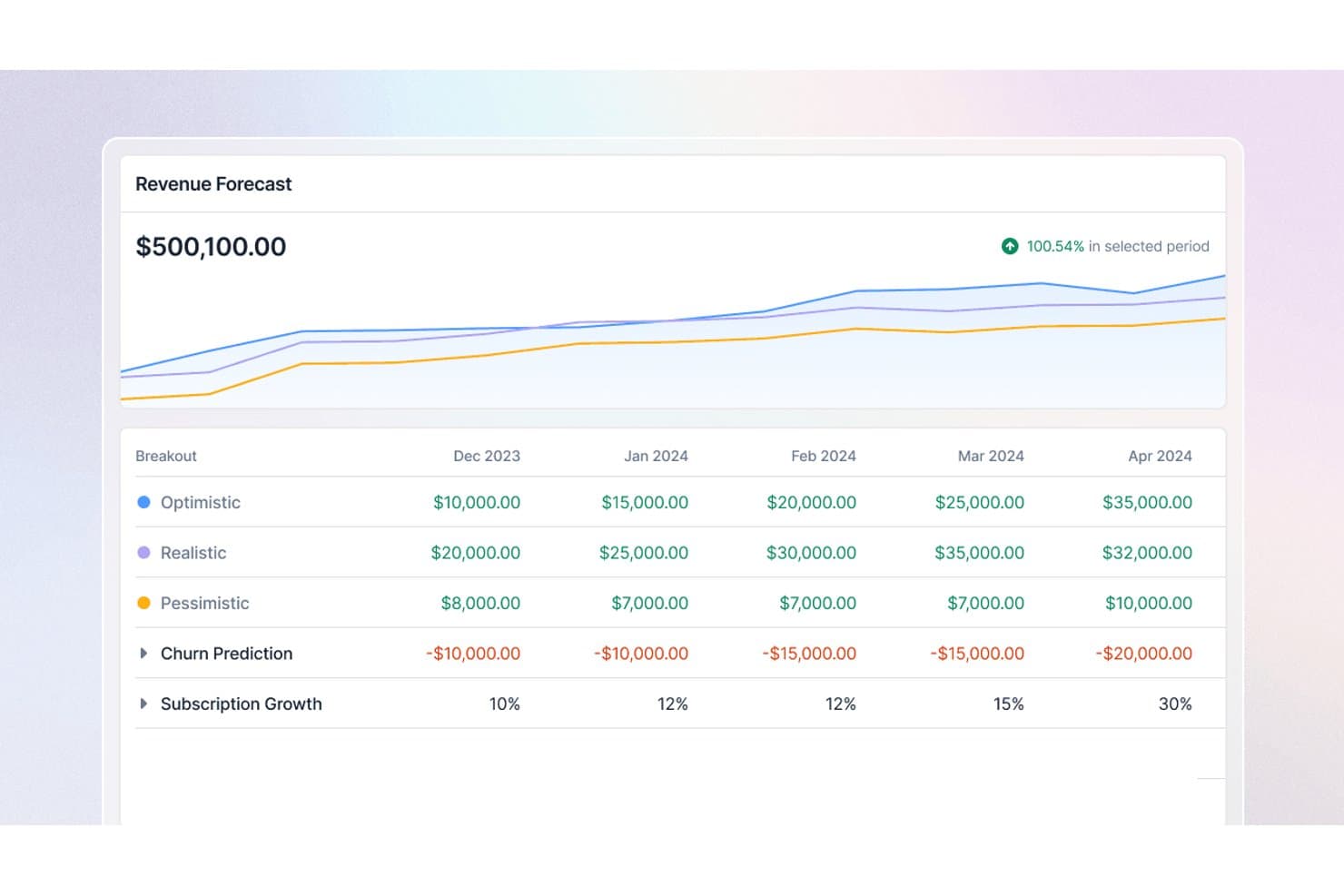
Lago forecasts subscription revenue across optimistic, realistic, and pessimistic scenarios. Lago is an open-source subscription management platform built on an API-first architecture, offering recurring billing, usage-based metering, hybrid pricing models, dunning automation, and native integrations with accounting, CRM, and payment providers.
Who Is Lago Best For?
Lago is a strong fit for engineering-led teams that need to build custom billing workflows on top of a flexible, API-first foundation they can self-host and fully control.
Why I Picked Lago
Lago earns its spot as one of the best on my shortlist because its API-first architecture is genuinely built for engineering teams that need to own their billing logic end to end. I love that it ships a full REST API with an OpenAPI spec, SDKs in four languages, signed webhooks across every billing event, and an MCP server for AI agent workflows. In practice, that means my team can pipe usage events at scale, trigger subscription changes programmatically, and wire Lago into any stack without waiting on a vendor's integration roadmap.
Lago Key Features
- Hybrid pricing model support: Lago lets you combine flat subscription fees and usage-based charges on a single invoice, across billing intervals from daily to yearly.
- Prepaid credit wallets: Customers can hold prepaid credit balances that Lago draws down automatically as usage accrues, with support for automatic top-ups.
- Multi-currency invoicing: Lago generates invoices in the customer's billed currency, supporting global billing without manual currency conversion workflows.
- Built-in revenue analytics: Lago includes dashboards covering MRR, subscription trends, cash collection, credit ledgers, and forecasted usage, all exportable via API or CSV.
Lago Integrations
Lago offers native integrations with Stripe, Adyen, GoCardless, NetSuite, Xero, QuickBooks, Salesforce, Anrok, and Avalara. Its REST API, SDKs, signed webhooks, and Zapier support custom connectivity.
Pros and Cons
Pros:
- Hybrid pricing and prepaid wallet support
- API-first with signed webhooks and SDKs
- Scales to one million events per second
Cons:
- Customer portal lacks plan management tools
- No ready-made ecommerce platform connectors
Learn more about Lago:
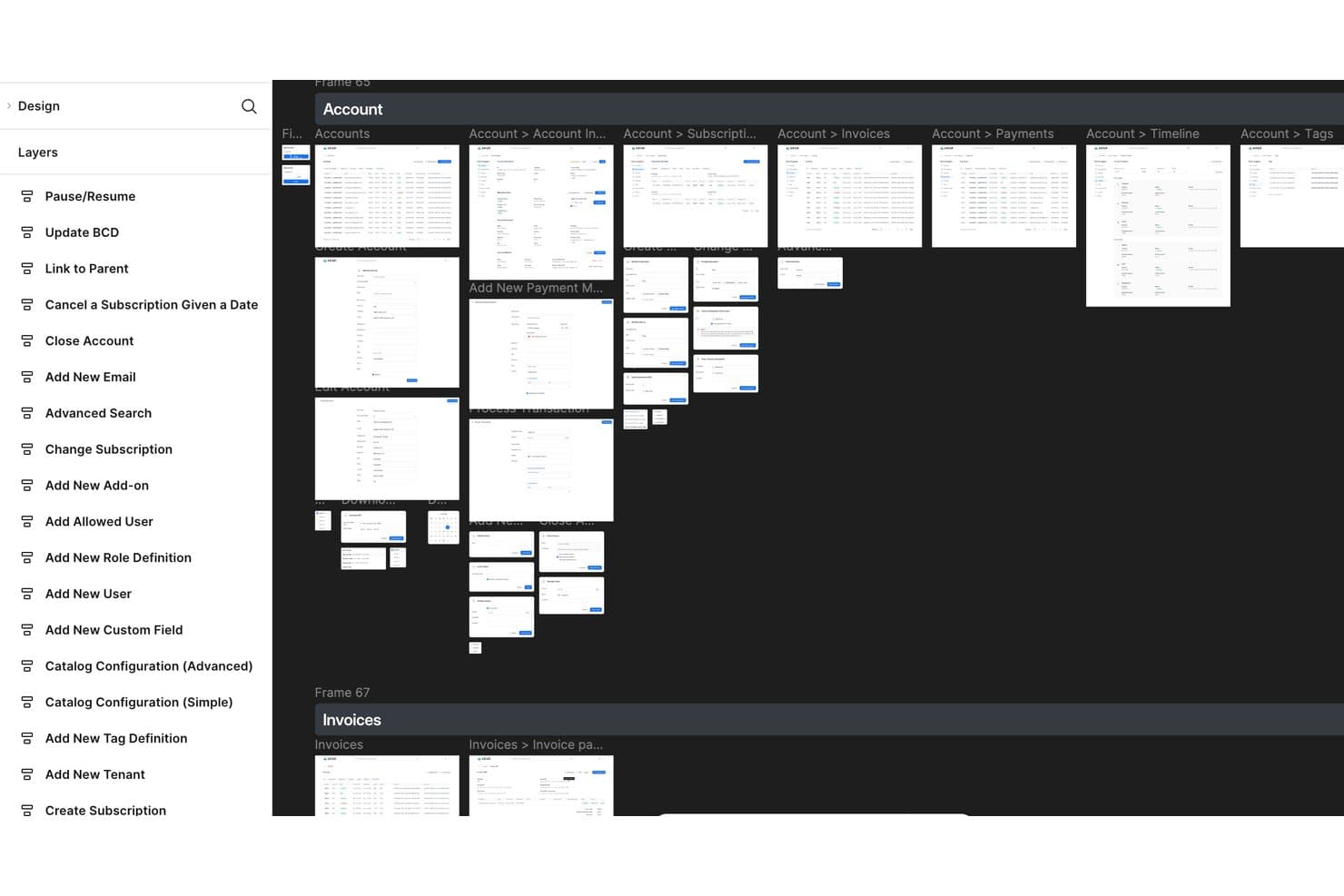
Kill Bill organizes subscription workflows across accounts, invoices, and payments. Kill Bill is an open-source subscription management and recurring billing platform built on a Java-based, API-first architecture that handles subscription lifecycle management, payment gateway integrations, dunning automation, usage-based billing, and multi-tenant catalog management.
Who Is Kill Bill Best For?
Kill Bill is best suited for engineering-led teams that need full control over their billing infrastructure without paying per-transaction SaaS fees.
Why I Picked Kill Bill
Kill Bill earns its spot on my shortlist because of how it handles billing automation at the infrastructure level. I love its dual dunning system: a configurable payment retry schedule runs alongside a separate overdue state machine that moves accounts through warning, blocked, and cancellation stages automatically. I've also used its evergreen plan configuration to handle automatic renewals without any manual intervention, which keeps revenue flowing even across complex multi-tenant deployments.
Kill Bill Key Features
- Multi-tenant catalog management: Manage separate product catalogs, pricing, and billing schedules for thousands of isolated tenants from a single deployment.
- OSGi plugin framework: Deploy, update, and roll back payment gateway or custom logic plugins independently without restarting the core billing engine.
- Usage-based billing: Ingest and rate usage events natively to support metered and consumption-based subscription models.
- Kaui admin UI: A web-based back-office interface that lets finance and operations teams manage accounts, invoices, and billing configurations without writing code.
Kill Bill Integrations
Kill Bill integrations include Stripe, Adyen, Braintree, PayPal, Authorize.Net, Qualpay, Avalara, NetSuite, SAP, QuickBooks, Salesforce, and HubSpot. The REST API supports custom Shopify, WooCommerce, POS, and ERP integrations.
Pros and Cons
Pros:
- Open source license with full data control
- Supports multi-tenant catalog management
- Offers dual dunning and overdue automation
Cons:
- Requires Java engineering for advanced customization
- No built-in customer self-service portal
Learn more about Kill Bill:
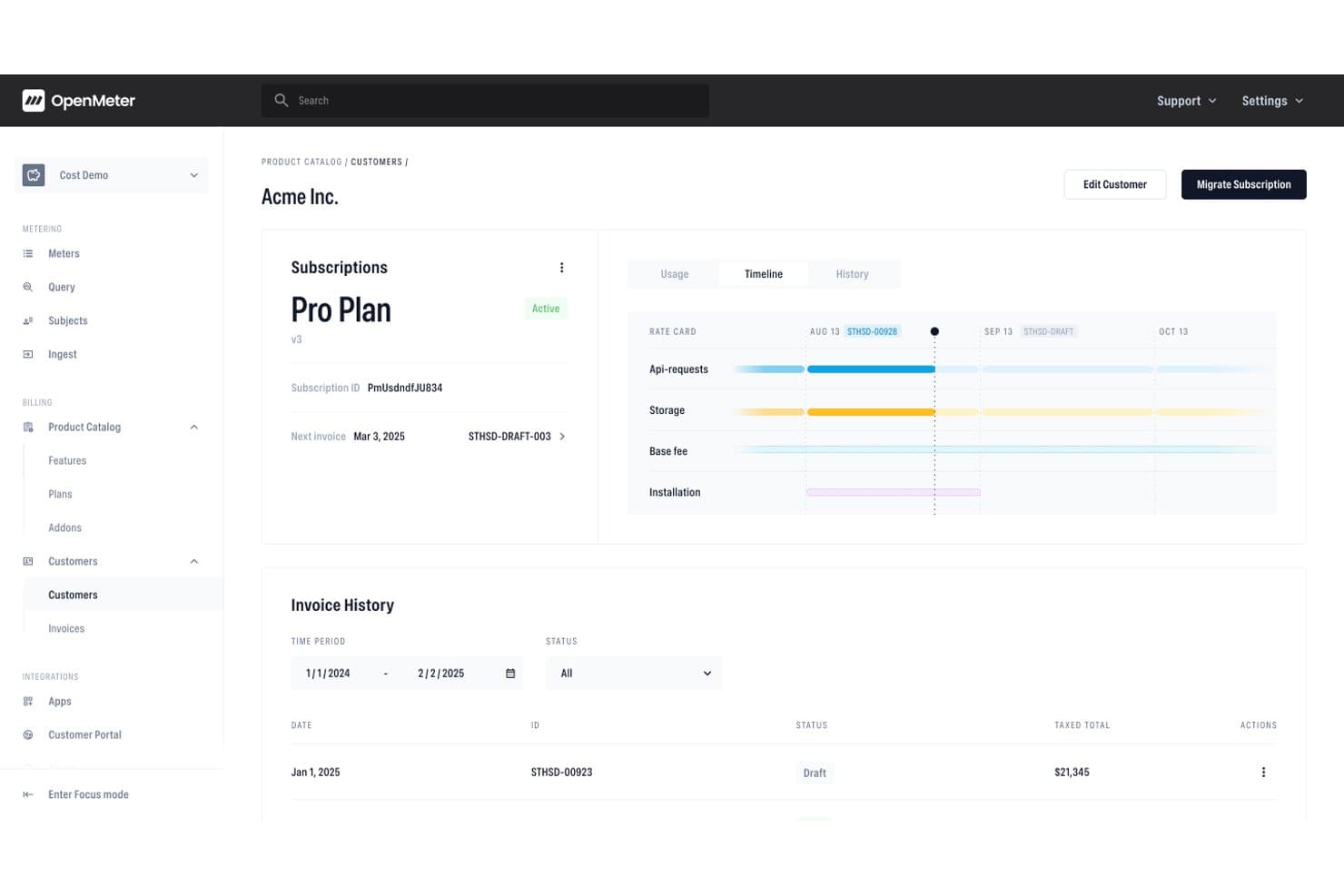
OpenMeter tracks subscription timelines, usage, and invoice history per customer. OpenMeter is an Apache 2.0 open source metering and billing platform built for usage-based pricing, offering a real-time event metering engine, a flexible product catalog, subscription lifecycle management, and entitlement tracking.
Who Is OpenMeter Best For?
OpenMeter is a strong fit for technical teams building AI or API products that need precise, high-volume usage metering and flexible billing without paying a cut of their revenue.
Why I Picked OpenMeter
I picked OpenMeter as one of the best because it's purpose-built for metered API and AI token billing in a way I haven't seen matched by other open source options. Its real-time metering engine, built on Kafka and ClickHouse, handles billions of events and supports per-unit pricing models like $0.01 per AI token, tiered graduated rates, and dynamic cost-plus pricing. I also like that it tracks entitlement and credit balances live, so teams billing for API access always know exactly where customers stand.
OpenMeter Key Features
- Apache 2.0 open source licensing: The full codebase is publicly available on GitHub with no feature-gating by license tier, so you can self-host without paying per-transaction fees.
- No-code product catalog: Business and finance teams can create and iterate on pricing plans or provision custom enterprise deals without writing any code.
- Subscription lifecycle API: Manages upgrades, downgrades, add-ons, prorations, and cancellations via API, with timing controls for immediate or next-billing-cycle changes.
- Svix-powered webhook delivery: Billing and usage events trigger webhooks through Svix, giving your team reliable, real-time event notifications for downstream workflow automation.
OpenMeter Integrations
OpenMeter offers marketplace integrations for Stripe and HubSpot, plus external invoicing support. It provides a REST API, Svix webhooks, CloudEvents, and Node.js, Python, and Go SDKs for custom integrations.
Pros and Cons
Pros:
- API-first design supports custom integrations
- No-code product catalog for pricing plans
- Real-time metering for usage-based billing
Cons:
- No built-in customer self-service portal
- Lacks native retail and ecommerce workflows
Learn more about OpenMeter: 10Best for telecom-scale subscription billing
Opencell
- Free demo available
- Pricing upon request
Visit WebsiteCustomer Rating:4.5/5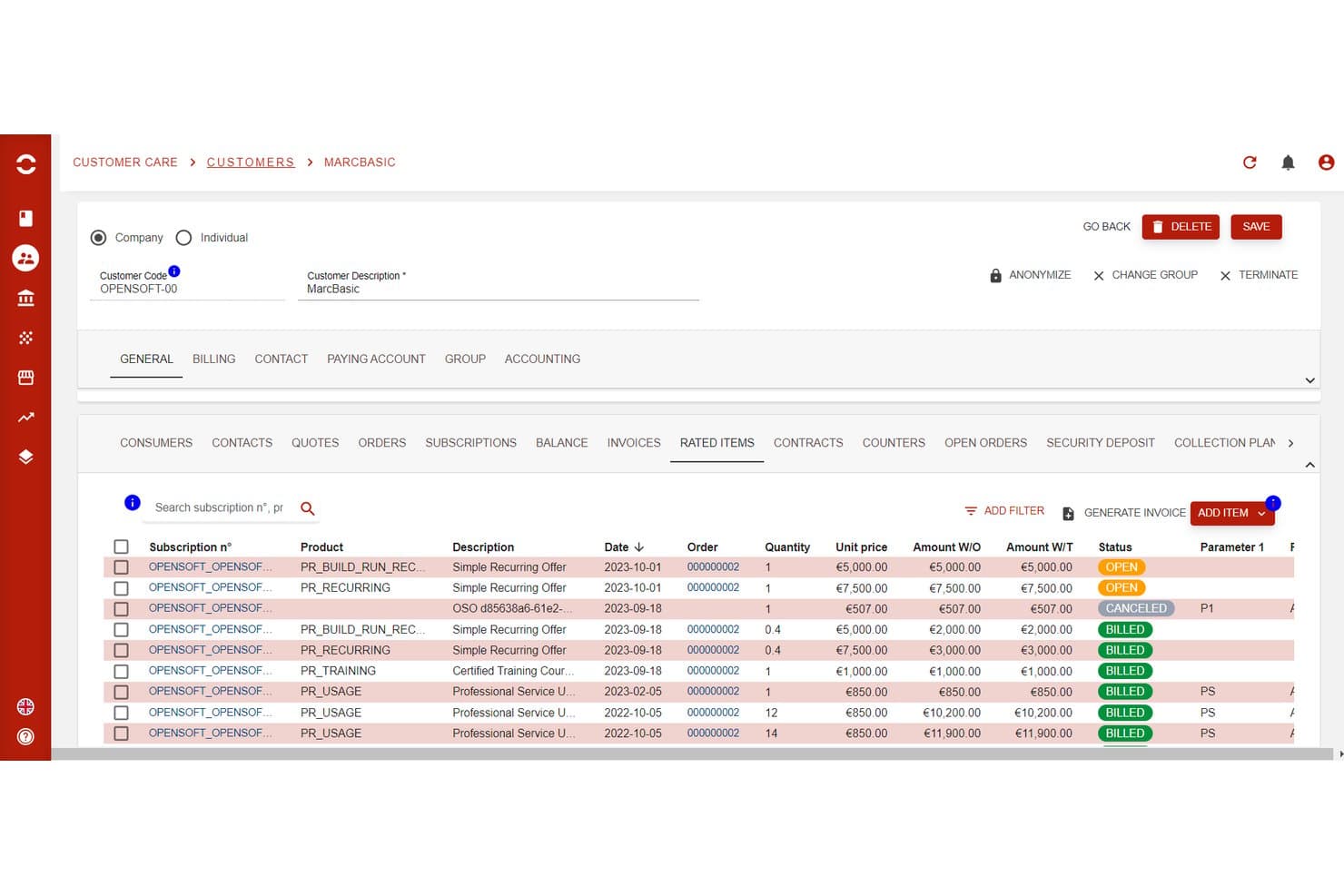
Opencell tracks rated items with billing status per subscription. Opencell is an open-source subscription billing platform built on an AGPLv3-licensed core that handles recurring billing, usage-based rating, subscription lifecycle management, dunning automation, and multi-currency invoicing across complex, high-volume environments.
Who Is Opencell Best For?
Opencell suits engineering-led teams at large enterprises that need to manage high-volume, complex subscription billing across multiple entities, currencies, or markets.
Why I Picked Opencell
Opencell earns its spot on my shortlist because its billing engine handles the kind of complexity that breaks lighter open-source tools, specifically real-time usage mediation, multi-seller environments, and granular customer hierarchies down to individual access points. I picked it for telecom-scale subscription billing because those same capabilities translate directly to high-volume, multi-entity retail deployments, like Fnac/Darty's DartyMax service with over one million subscribers. Its AGPLv3 core and 200+ REST APIs give engineering teams full code access and a complete quote-to-cash integration surface.
Opencell Key Features
- Self-care portal SDK: A React JS-based SDK lets customers manage their own subscriptions, view bills, and make payments directly from your website.
- Dynamic payment routing: Automatically selects the best payment provider based on customer location or payment method to reduce processing costs.
- Multi-seller billing environment: Supports marketplace and billing-as-a-service scenarios across multiple sellers within a single platform instance.
- Revenue analytics dashboard: Surfaces pre-calculated KPIs including MRR, ARR, churn rate, and LTV with connectors to BI tools like Microsoft Power BI.
Opencell Integrations
Native integrations include Stripe, Slimpay, Ingenico, Mangopay, PayPal, Avalara, Salesforce, Jaspersoft, and Microsoft Power BI. Opencell also provides 200+ REST APIs, webhooks, and TM Forum APIs for custom connections.
Pros and Cons
Pros:
- Supports granular automated dunning workflows
- Offers 200+ documented REST API endpoints
- Handles complex multi-entity subscription billing
Cons:
- No prebuilt Shopify or Magento connectors
- Admin portal UI not open source
Learn more about Opencell:
Annen programvare med åpen kildekode for abonnementsadministrasjon
Her er noen flere alternativer for programvare med åpen kildekode for abonnementsadministrasjon som ikke kom med på kortlisten min, men som likevel er verdt å undersøke:
- 11BoxBillingBest for AI and SaaS usage-based billing
- 12OpenCartBest for small retailers selling subscription products
- 13Invoice NinjaBest for self-hosted invoicing with subscription plans
- 14SyliusBest for MIT-licensed custom storefront subscriptions
- 15jBillingBest for telecom-grade usage billing on-premise
- 16FlexpriceBest for credit-based open-source billing
- 17MeteroidBest for open-source usage-based billing
How I Evaluate Open Source Subscription Management Software
I look for two things: baseline capabilities like self-hosted recurring billing and dunning, and differentiators that actually matter to DTC ops leads running box or replenishment programs.
Core Functionality (Table Stakes For This List)
When I'm selecting tools for my list, I rank each one on a scale from 0 (does not offer the functionality) to 5 (excels in this area) for each core functionality listed below. Then, I calculate the tool's total score into a percentage. Each tool needs to achieve a minimum total score of 55% to be considered for inclusion.
- Open Source Licensing: I check the license type (MIT, Apache 2.0, AGPL, etc.), confirm the source code is publicly accessible, and look at whether the repo is actively maintained with recent commits.
- Recurring Billing Engine: The billing engine needs to handle varied pricing models, from flat-rate replenishment plans to tiered membership pricing with mid-cycle proration on upgrades.
- Subscription Lifecycle Management: I evaluate how each tool handles real retail scenarios like a subscriber pausing a monthly snack box, downgrading a membership tier, or reactivating a lapsed account.
- Payment Gateway Integrations: Multiple gateway options matter here. I look for tokenized support across processors like Stripe, Braintree, and PayPal so teams aren't locked into a single provider.
- Dunning & Failed-Payment Recovery: Retail subscriptions live and die by recovery rates. I evaluate retry scheduling, customer notification options, and whether the tool surfaces churn data from failed payments.
- Retail & eCommerce Extensibility: I look at the API surface, webhook coverage, and prebuilt connectors for platforms like WooCommerce, Magento, or Shopify, plus any ERP or POS integration paths.
Once I have a list of tools that meet this criteria, I consider what sets each platform apart.
Differentiating Factors (What Sets Vendors Apart)
Here's how I compare and contrast different vendors:
Standout Features
A self-service customer portal is a big differentiator. I look for portals that let subscribers swap products, skip shipments, or update payment details on their own—reducing support volume for teams managing thousands of active accounts. Headless, API-first architecture also matters when your engineering team needs to embed billing logic into a custom storefront or mobile app. I evaluate multi-currency and tax engine integrations too, since cross-border retail subscriptions add compliance complexity fast.
Beyond Features
Deployment flexibility is one of the first things I check. Some teams have DevOps resources for Docker or Kubernetes self-hosting, while others need a managed cloud option—so I look at whether vendors offer both paths. Community health tells you a lot, too. An active GitHub repo with frequent commits and a responsive forum signals long-term viability. Total cost of ownership rounds out my evaluation, especially whether a platform can handle peak traffic spikes like major sale events without requiring expensive infrastructure upgrades.
Hva er programvare med åpen kildekode for abonnementsadministrasjon?
Programvare med åpen kildekode for abonnementsadministrasjon er et sett med verktøy som hjelper virksomheter med å automatisere tilbakevendende fakturering, fakturautstedelse og abonnenthåndtering – alt drevet av fritt tilgjengelig kode som du kan tilpasse.
Disse plattformene lar deg kontrollere alt fra prismodeller til betalingsbehandling i sanntid, med fleksibilitet til å tilpasse seg alle forretningsbehov eller arbeidsflyter.
De fleste team bruker løsninger med åpen kildekode for å kutte kostnader, forbedre skalerbarheten og unngå leverandørbinding. Du får direkte API-tilgang, muligheten til å bygge tilpassede integrasjoner og et dashbord som er skreddersydd for bruksbasert fakturering eller tilbakevendende inntekter.
Enten du håndterer SaaS-abonnementer, digitale produkter eller komplekse operasjoner på tvers av flere kanaler, gir alternativer med åpen kildekode deg mer kontroll over dataene og prosessene dine – uten at det går på bekostning av sikkerhet eller vekst.
Slik velger du programvare med åpen kildekode for abonnementsadministrasjon
Å velge programvare med åpen kildekode for abonnementsadministrasjon betyr å være realistisk om virksomhetens behov, integrasjonsutfordringer og realitetene ved tilbakevendende fakturering. Her er en trinnvis veiledning som hjelper deg med å holde fokus og unngå nybegynnerfeil:
| Trinn | Hva du bør vurdere | Eksperttips |
|---|---|---|
| Trinn1. Definer brukstilfellene dine | Hva du bør vurdereTar du betalt for SaaS, fysiske produkter, tjenester eller alle tre? Vurder løpende fakturering, engangsbetalinger og gratis prøveperioder. | EksperttipsJo mer spesifikke behovene dine er, desto raskere kan du luke ut løsninger som ikke passer. |
| Trinn2. Kartlegg nødvendige integrasjoner | Hva du bør vurdereLag en liste over forbindelser du må ha: betalingsløsninger (Stripe, PayPal), CRM-systemer, regnskapsverktøy, API-er og e-handelsplattformer. | EksperttipsTest integrasjonene tidlig – API-utfordringer er vanlige i åpen kildekode-prosjekter. |
| Trinn3. Vurder skalerbarhet og pålitelighet | Hva du bør vurdereKan systemet håndtere det nåværende – og fremtidige – volumet av abonnenter, transaksjoner og produkter? | EksperttipsSe etter virkelige kundehistorier eller aktivitet på GitHub. Skalerbarhet er ikke bare et moteord. |
| Trinn4. Evaluer brukeropplevelsen | Hva du bør vurdereUndersøk brukergrensesnittet, sanntidsdashbordene og rapporteringen. Hvor raskt kan teamet ditt komme i gang og feilsøke? | EksperttipsDemonstrer løsningen med faktiske arbeidsflyter. Et forvirrende dashbord vil gjøre faktureringen tregere og frustrere de ansatte. |
| Trinn5. Analyser de totale eierkostnadene | Hva du bør vurdereTa med kostnader for egen drift, tillegg, skyalternativer, støttenivåer og fremtidige oppgraderinger. | Eksperttips«Gratis» åpen kildekode kan bli dyrt. Sett en pengeverdi på tiden til teamet ditt og eventuell ekstern hjelp du trenger. |
| Trinn6. Vurder støtten og styrken i fellesskapet | Hva du bør vurdereHar programvaren aktive fora, pålitelig dokumentasjon og raske feilrettinger? | EksperttipsPrioriter prosjekter med aktive GitHub-arkiver, hyppige oppdateringer og utviklere som svarer raskt. |
| Trinn7. Kontroller sikkerhet og samsvar | Hva du bør vurdereEr dataene dine kryptert? Hjelper programvaren deg med å overholde GDPR eller PCI? | EksperttipsIkke håndter sikkerheten på egen hånd – bruk plattformer med tydelige protokoller for databeskyttelse og regelmessige oppdateringer. |
Funksjoner
Du er ikke bare ute etter en liste med moteord.
De beste plattformene med åpen kildekode for abonnementsadministrasjon gir deg byggeklossene du trenger for å automatisere fakturering, håndtere komplekse prismodeller og holde hvert abonnement i gang som et velsmurt urverk – uansett hvor raskt virksomheten din skalerer.
Dette er det som betyr noe:
- Automatisert løpende fakturering for abonnementer, medlemskap og bruksbasert prising.
- API-tilgang for å bygge tilpassede integrasjoner med e-handelsløsningen, CRM-systemet eller økonomisystemet ditt.
- Fleksible faktureringsmodeller – støtte for engangsbetalinger, løpende betalinger, målt forbruk eller hybride betalingsstrukturer.
- Integrasjoner med betalingsløsninger som Stripe, PayPal, Braintree og flere.
- Tilpassbare abonnementsplaner som kan tilpasses de nøyaktige behovene dine for produkter, priser eller kontrakter.
- Sanntidsanalyse og dashbord for å følge med på inntekter, kundefrafall og aktive abonnenter.
- Automatiserte faktura- og innkrevingsarbeidsflyter for å følge opp forsinkede betalinger og redusere kundefrafall.
- Støtte for flere valutaer og lokalisering for globalt salg og virksomheter i flere regioner.
- Brukeradministrasjon for team og roller, med detaljerte tilgangskontroller.
- Alternativer for egen drift og skybasert distribusjon som passer IT- og samsvarskravene dine.
- Markedsplass for programtillegg og utvidelser med åpen kildekode for ekstra funksjoner og rask skalering.
- Omfattende rapportering og økonomisk eksport for skatt, revisjon og økonomisk planlegging.
- Sikker datahåndtering – kryptering, støtte for samsvar og regelmessige oppdateringer.
Fordeler
Abonnementsadministrasjon med åpen kildekode handler om å få tilbake kontrollen. Med riktig system kan du automatisere mer, skalere raskere og aldri bli begrenset av en leverandørs begrensninger.
Dette er hva virksomheten din kan oppnå:
- Lavere kostnader og ingen leverandørbinding—slipp dyre lisenser og behold kontrollen over systemet ditt.
- Maksimal fleksibilitet—tilpass faktureringssystemet, dashbordene og arbeidsflytene etter virksomhetens behov.
- Skalerbarhet fra dag én—gå fra en håndfull til tusenvis av abonnenter uten å bytte plattform.
- Raskere automatisering og færre feil—automatiser alt fra fakturering til nye betalingsforsøk.
- Bedre integrasjoner—koble direkte til eksisterende verktøy, API-er og betalingsportaler.
- Handlingsrettet innsikt i sanntid—bruk innebygd analyse til å optimalisere gjentakende inntekter og redusere kundefrafall.
- Bedre kundeopplevelse—tilby flere betalingsalternativer, tydelige fakturaer og selvbetjeningsportaler.
- Fremtidssikring—få tilgang til nye tillegg, integrasjoner og innovasjoner innen åpen kildekode etter hvert som virksomheten utvikler seg.
- Forbedret sikkerhet og samsvar—eie dataene dine, administrere oppdateringer og ligge i forkant av personvernreglene.
Kostnader og priser
Verktøy for abonnementsadministrasjon med åpen kildekode er vanligvis billigere i starten, men de faktiske kostnadene avhenger av teamets størrelse, hvilke funksjoner du trenger, og hvor mye du må tilpasse.
Regn med å betale for tillegg, førsteklasses brukerstøtte eller nettskyhosting hvis du ønsker mindre vedlikehold. Slik er de fleste abonnementene bygget opp:
| Abonnementstype | Gjennomsnittspris | Vanlige funksjoner | Best for |
|---|---|---|---|
| AbonnementstypeGratisabonnement | Gjennomsnittspris$0/user/month | Vanlige funksjonerGrunnleggende fakturering, kjerneintegrasjoner, brukerstøtte fra fellesskapet, begrensede rapporter | Best forEnkeltpersonforetak, testing, utviklingsbruk |
| AbonnementstypePersonlig abonnement | Gjennomsnittspris$5–$25/user/month | Vanlige funksjonerTilpassbare abonnementer, flere valutaer, prioritert brukerstøtte, analyse | Best forFrilansere, oppstartsbedrifter i tidlig fase |
| AbonnementstypeBedriftsabonnement | Gjennomsnittspris$30–$75/user/month | Vanlige funksjonerAvansert rapportering, fullstendig API, flere betalingsportaler, brukerroller | Best forSmå og mellomstore bedrifter, team i vekstfase |
| AbonnementstypeStorbedriftsabonnement | Gjennomsnittspris$100+/user/month | Vanlige funksjonerFull tilpasning, dedikert brukerstøtte, tjenestenivåavtaler, avansert sikkerhet | Best forStore organisasjoner, kompleks fakturering |
Noen ting du bør være oppmerksom på:
- Verktøy med åpen kildekode kan ofte se gratis ut, men kostnadene kan øke på grunn av nettskyhosting, programtillegg eller tillegg fra tredjeparter.
- Ikke alle funksjoner (som sanntidsanalyse eller avansert betalingsoppfølging) er inkludert i alle nivåer—dobbeltsjekk funksjonslisten før du bestemmer deg.
- Dedikert brukerstøtte og funksjoner for samsvar kan prises separat.
Vanlige spørsmål om programvare for administrasjon av abonnementer med åpen kildekode
Her er noen svar på vanlige spørsmål om programvare med åpen kildekode for administrasjon av abonnementer:
Hva er den viktigste fordelen ved å bruke programvare med åpen kildekode for administrasjon av abonnementer?
Den største fordelen er fleksibilitet og kontroll. Du eier dataene, arbeidsflytene og integrasjonene dine – du blir ikke lenger låst til en kostbar SaaS-plattform eller må vente i månedsvis på at en funksjonsforespørsel skal bli gjennomført.
Du kan automatisere faktureringen, tilpasse deg nye betalingsmetoder og skalere opp eller ned uten å betale for overflødige funksjoner du aldri vil bruke. I tillegg får du åpenhet rundt sikkerhet og kodeoppdateringer.
Kan verktøy med åpen kildekode for administrasjon av abonnementer håndtere gjentakende fakturering for ulike forretningsmodeller?
Absolutt. De fleste ledende plattformer med åpen kildekode støtter engangsbetaling, gjentakende betaling, bruksbasert fakturering og hybride faktureringsmodeller.
Enten du driver med SaaS, abonnementer, digitale produkter eller til og med en virksomhet som selger fysiske varer, kan du tilpasse arbeidsflytene, prisnivåene og fakturaintervallene slik at de passer nøyaktig til behovene dine – særlig hvis du trenger å integrere med flere betalingsløsninger eller støtte fakturering i flere valutaer.
Hvor vanskelig er det å integrere løsninger med åpen kildekode med den eksisterende teknologiplattformen min?
Hvis du har noe teknisk kompetanse (eller har en utvikler tilgjengelig), er integrasjon enkelt med de fleste ledende verktøyene med åpen kildekode. API-ene er vanligvis godt dokumentert, og programtillegg fra fellesskapet dekker populære CRM-systemer, netthandelsplattformer og betalingsløsninger som Stripe og PayPal.
Det viktigste er å planlegge arbeidsflytene før du begynner, slik at du ikke må sette sammen nødløsninger i siste liten etter lanseringen.
Er faktureringsplattformer med åpen kildekode sikre nok til å håndtere betalinger og kundedata?
Ja – hvis du holder dem oppdatert og følger beste praksis. Programvare med åpen kildekode gir deg kontroll over sikkerhetsprotokoller, kryptering og overholdelse av standarder som GDPR eller PCI.
Følg med på fellesskapet, installer sikkerhetsoppdateringer raskt, og ikke lanser en faktureringsløsning uten en sikkerhetsgjennomgang. Kort sagt: sikkerheten din er bare så god som prosessene til teamet ditt.
Hvor mye teknisk kompetanse trenger jeg for å drifte og vedlikeholde programvare med åpen kildekode for administrasjon av abonnementer?
Du trenger noen som er komfortabel med serveroppsett, databaseadministrasjon og grunnleggende feilsøking – særlig for selvdrevne eller omfattende tilpassede løsninger.
Skybaserte alternativer med åpen kildekode kan være enklere, men ikke forvent at du kan «sette det opp og glemme det». Sett av budsjett til løpende vedlikehold, oppdateringer og sporadisk hjelp fra utviklere, særlig etter hvert som de gjentakende inntektene dine vokser.
Hvilke supportalternativer finnes for verktøy med åpen kildekode for abonnementsfakturering?
Supporten varierer. De beste prosjektene har aktive fora, chattekanaler i sanntid og detaljert dokumentasjon – i tillegg til hyppige kodeoppdateringer på GitHub.
Noen tilbyr betalt support eller rådgivning for avanserte behov. Før du bestemmer deg, bør du undersøke hvor responsivt fellesskapet er, og se om det finnes en mulighet til å eskalere problemer når faktureringssystemet trenger rask hjelp.