

Recensione di Mixpanel: vantaggi, svantaggi, funzionalità e prezzi
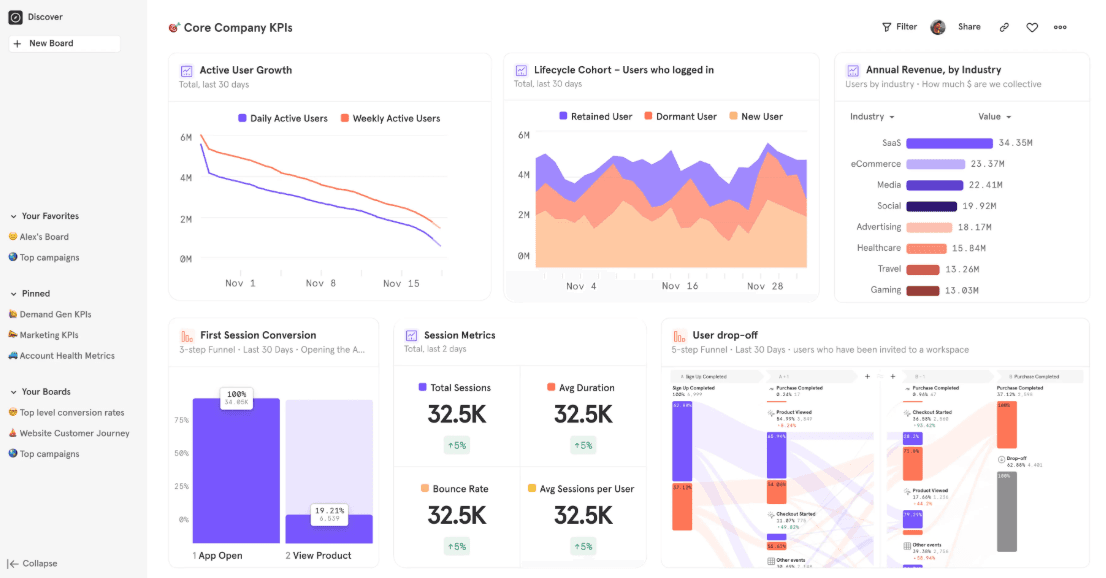
Mixpanel eccelle nell'analisi del commercio elettronico offrendo un'interfaccia intuitiva e informazioni approfondite che aiutano il tuo team a prendere decisioni efficaci basate sui dati.

Recensiamo gli strumenti in modo indipendente, e le commissioni aiutano a finanziare i nostri test. Consulta la nostra politica sulla trasparenza, la nostra metodologia o suggerisci uno strumento.
Mixpanel is an ecommerce analytics software built around event-based tracking—mapping what individual users do across your site or app, from first touch to purchase and beyond. I'd consider it if your team needs to dig into funnel drop-off, retention, and user cohort behavior with more granularity than something like Google Analytics offers. Where GA4 centers on session and traffic data, Mixpanel tracks actions at the user level, which makes it a stronger choice for teams trying to understand why conversion rates look the way they do.
Mixpanel Evaluation Summary
4.5/5
- From $120/month (billed annually)
- Free plan available
Perché fidarsi dei nostri consigli sui software
6,700+
Reviews
20
Industry experts
16+
Evaluation factors
14
Years
Il nostro team testa e recensisce software dal 2012. In quanto leader del retail noi stessi, sappiamo quanto sia difficile — e importante — scegliere il software giusto.
Per questa guida, abbiamo valutato gli strumenti attraverso test pratici e ricerche indipendenti, assegnando un punteggio agli strumenti in base ai nostri criteri di selezione.
Le nostre recensioni riflettono il nostro giudizio indipendente, non un discorso di vendita.
Mixpanel Overview
In my opinion, Mixpanel is a solid choice as an ecommerce analytics platform, especially for tech-savvy teams needing detailed insights. It excels with its user-friendly interface and powerful analytics, but onboarding and customer support could use improvement. It’s great for product managers and marketers who need actionable data. Compared to other data analytics tools like Amplitude, Mixpanel offers excellent value for money with its comprehensive features. However, teams looking for extensive support might find it lacking. Choose Mixpanel if your team values in-depth analytics and a straightforward interface.
Pros
- You get detailed user behavior insights.
- It's easy for your team to navigate and use.
- Powerful analytics tools help your team make data-driven decisions.
Cons
- Onboarding can be a bit challenging for new users.
- Customer support might not meet your expectations.
- Some users find the learning curve steep for advanced features.
Is Mixpanel Right For Your Needs?
Who Would be a Good Fit for Mixpanel?
Mixpanel is ideal for tech companies and startups where product managers and marketing teams need deep insights into user behavior. If your business thrives on data-driven decisions, Mixpanel's powerful analytics can help you understand customer journeys and improve product offerings. Its user-friendly interface makes it easy for teams to navigate and extract meaningful data. For example, if your team is focused on optimizing user engagement or conversion rates, Mixpanel’s detailed tracking and reporting features will be invaluable.
- Tech StartupsMixpanel helps your team track user engagement and improve product features with real-time data insights.
- Marketing TeamsYou can analyze customer journeys and optimize campaigns using Mixpanel's detailed analytics tools.
- Product ManagersMixpanel provides you and your product team with actionable insights to enhance product development and user experience.
- Ecommerce BusinessesMixpanel helps you track and analyze purchase behaviors to boost sales and improve customer satisfaction.
- Mobile App DevelopersYou gain insights into app usage patterns and user retention with Mixpanel’s comprehensive analytics.
- Small to Medium EnterprisesMixpanel offers you affordable, powerful tools to understand customer behavior and drive business growth.
Who Would be a Bad Fit for Mixpanel?
Mixpanel might not suit large enterprises with complex data needs or businesses requiring extensive customer support. If your team relies on a straightforward onboarding process and hands-on support, you might find Mixpanel lacking. Additionally, industries needing highly customizable dashboards may find its features limiting. For example, if your team requires deep integration with legacy systems, Mixpanel's capabilities might not meet your expectations.
- Large EnterprisesMixpanel's features may not handle your complex and diverse data needs effectively.
- Customer Support TeamsIf your work relies on extensive direct support, Mixpanel's support services might not satisfy you.
- Custom Dashboard NeedsMixpanel may not offer the customization your team requires for specific reporting needs.
- Legacy System IntegrationIf your industry relies on integrating with older systems, Mixpanel might not fit well.
- Non-Tech IndustriesMixpanel's advanced features may overwhelm teams without a tech background.
- Traditional Retail BusinessesMixpanel's focus on digital analytics might not align with your in-store data tracking needs.
La Nostra Metodologia di Recensione
Come Testiamo e Valutiamo gli Strumenti
Abbiamo trascorso anni a costruire, perfezionare e migliorare il nostro sistema di test e valutazione dei software. Il nostro schema di valutazione è progettato per cogliere le sfumature della selezione dei software e per comprendere cosa rende uno strumento efficace, concentrandosi su aspetti critici del processo decisionale. Qui sotto puoi vedere esattamente come funzionano i nostri test e valutazioni attraverso sette criteri. Questo ci permette di fornire una valutazione imparziale del software basata su funzionalità principali, caratteristiche distintive, facilità d’uso, onboarding, supporto clienti, integrazioni, recensioni dei clienti e rapporto qualità-prezzo.
Funzionalità di base (25% della valutazione finale)
Il punto di partenza della nostra valutazione è sempre la funzionalità principale dello strumento. Ha le funzioni e le caratteristiche di base che un utente si aspetterebbe? Alcune di queste funzionalità sono bloccate a piani tariffari di livello superiore? Alla base, ci aspettiamo che uno strumento regga il confronto con le capacità minime dei suoi concorrenti.
Caratteristiche distintive (25% della valutazione finale)
Successivamente valutiamo caratteristiche distintive e non comuni che vadano oltre la normale funzionalità presente in strumenti simili. Un punteggio alto riflette funzionalità specializzate o uniche che rendono il prodotto più veloce, efficiente o che offrano valore aggiunto all’utente. Valutiamo anche quanto sia facile integrare il software con altri strumenti della consueta infrastruttura tecnologica per espanderne la funzionalità e l’utilità. Gli strumenti che offrono molte integrazioni native, connessioni di terze parti e accesso API per costruire integrazioni personalizzate ottengono il punteggio più alto.
Facilità d’uso (10% della valutazione finale)
Consideriamo quanto sia rapido e semplice eseguire le attività definite nelle funzionalità di base utilizzando lo strumento. I software che ottengono un punteggio alto sono ben progettati, intuitivi, offrono app mobili, modelli pronti e rendono compiti complessi relativamente semplici.
Onboarding (10% della valutazione finale)
Sappiamo quanto sia importante una rapida adozione da parte del team per una nuova piattaforma, quindi valutiamo quanto sia facile imparare a usare uno strumento con una formazione minima. Esaminiamo quanto tempo impiega un membro del team a configurarsi e iniziare a utilizzare lo strumento senza esperienza. Le soluzioni con punteggi elevati richiedono poco o nessun supporto.
Supporto clienti (10% della valutazione finale)
Valutiamo quanto sia rapido e facile ricevere assistenza e trovare aiuto tramite telefono, live chat o base di conoscenza. Gli strumenti e le aziende che forniscono un supporto in tempo reale ottengono i punteggi migliori, mentre i chatbot hanno i punteggi più bassi.
Recensioni dei clienti (10% della valutazione finale)
Oltre ai nostri test e valutazioni, consideriamo il net promoter score dei clienti attuali e passati. Esaminiamo la loro propensione, data la possibilità, a scegliere nuovamente lo strumento per le sue funzionalità di base. Un punteggio elevato riflette un alto net promoter score da clienti attuali o passati.
Rapporto qualità-prezzo (10% della valutazione finale)
Infine, considerando tutti gli altri criteri, valutiamo il prezzo medio dei piani base rispetto alle funzionalità fondamentali e teniamo in considerazione il valore degli altri criteri di valutazione. Il software che offre di più, a meno, ottiene punteggi più alti.
Core Features
User Behavior Tracking
You can track how users interact with your site in real-time, helping your team understand customer journeys. This feature stands out for its detailed insights into user actions.
Funnels Analysis
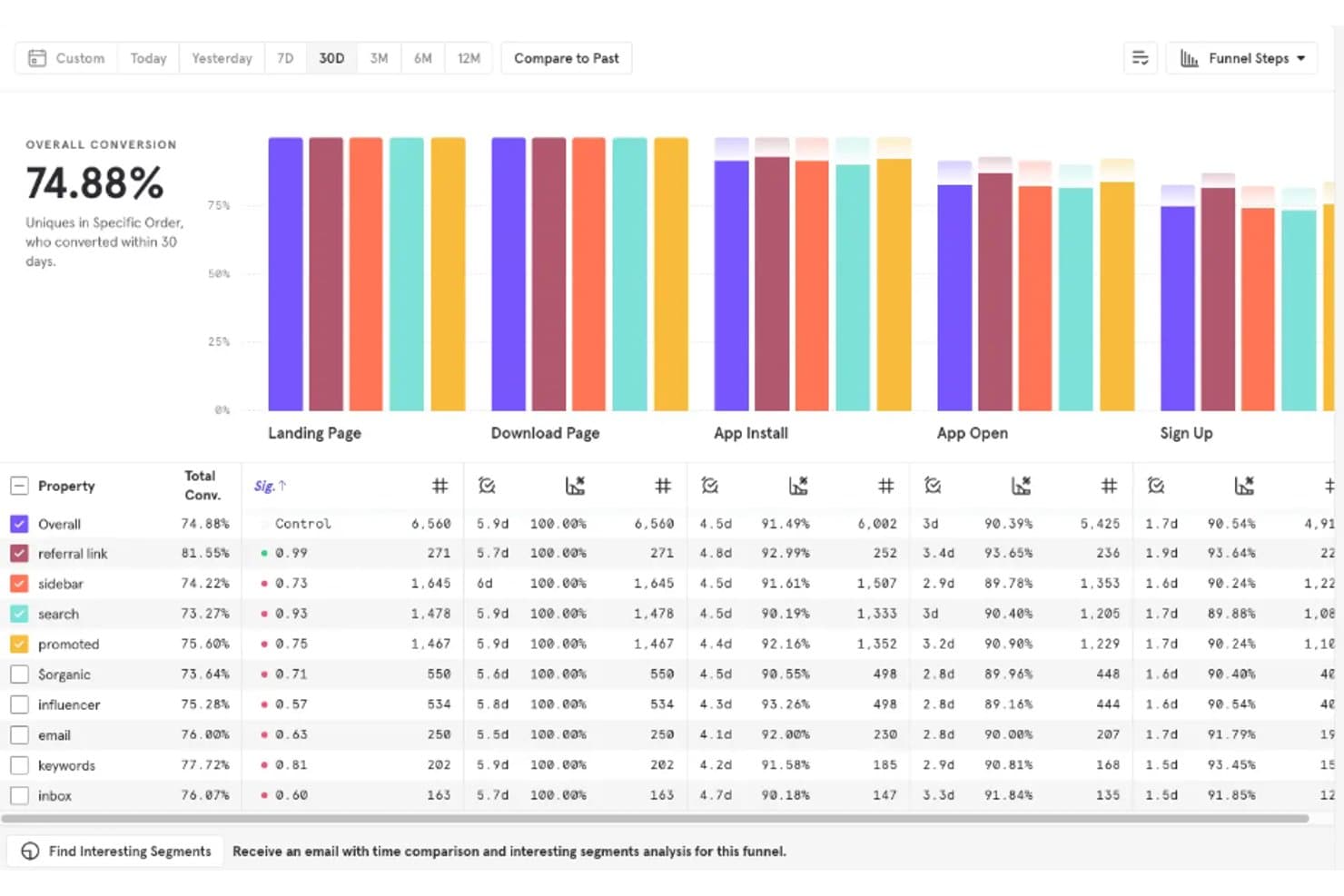
Mixpanel lets you visualize user paths and identify drop-off points in your sales funnel. Your team can use this to improve conversion rates.
Cohort Analysis
You can group users based on common behaviors or characteristics, allowing you to tailor marketing efforts effectively. This helps your team target specific user segments.
Event Tracking
Mixpanel allows you to track custom events that are crucial to your business. This feature lets your team measure specific actions users take.
Retention Reports
You can analyze how well you retain users over time, which is vital for growth. This feature gives your team insights into user loyalty.
A/B Testing
Mixpanel helps you test different versions of your site or app to see what works best. This empowers your team to make informed decisions.
Ease of Use
Mixpanel is fairly easy for your team to navigate, thanks to its intuitive interface and clear layout. While some advanced features might require a bit of a learning curve, the overall design ensures that you can quickly access key analytics. User reviews often praise the simplicity in setup and daily use, making it a reliable choice for teams focused on data-driven decisions. You'll appreciate how straightforward it is to track and analyze user behavior.
Integrations
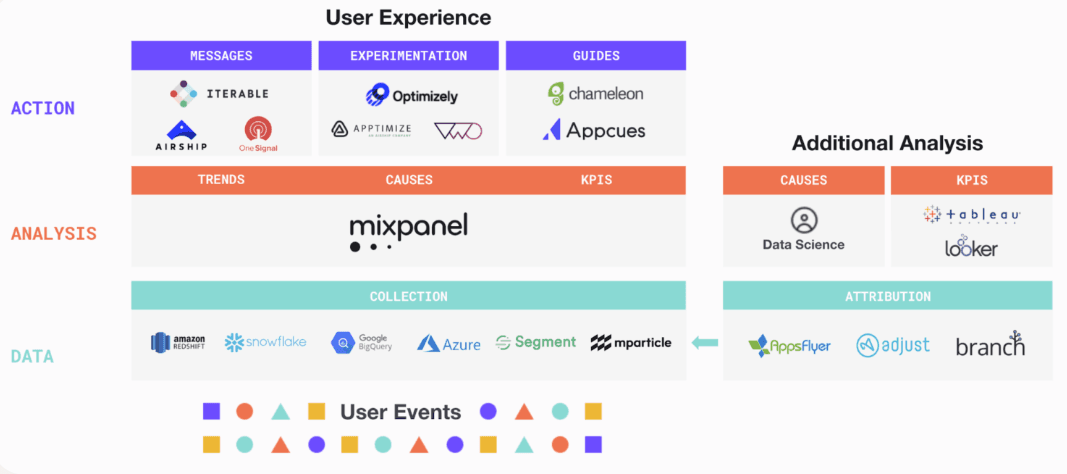
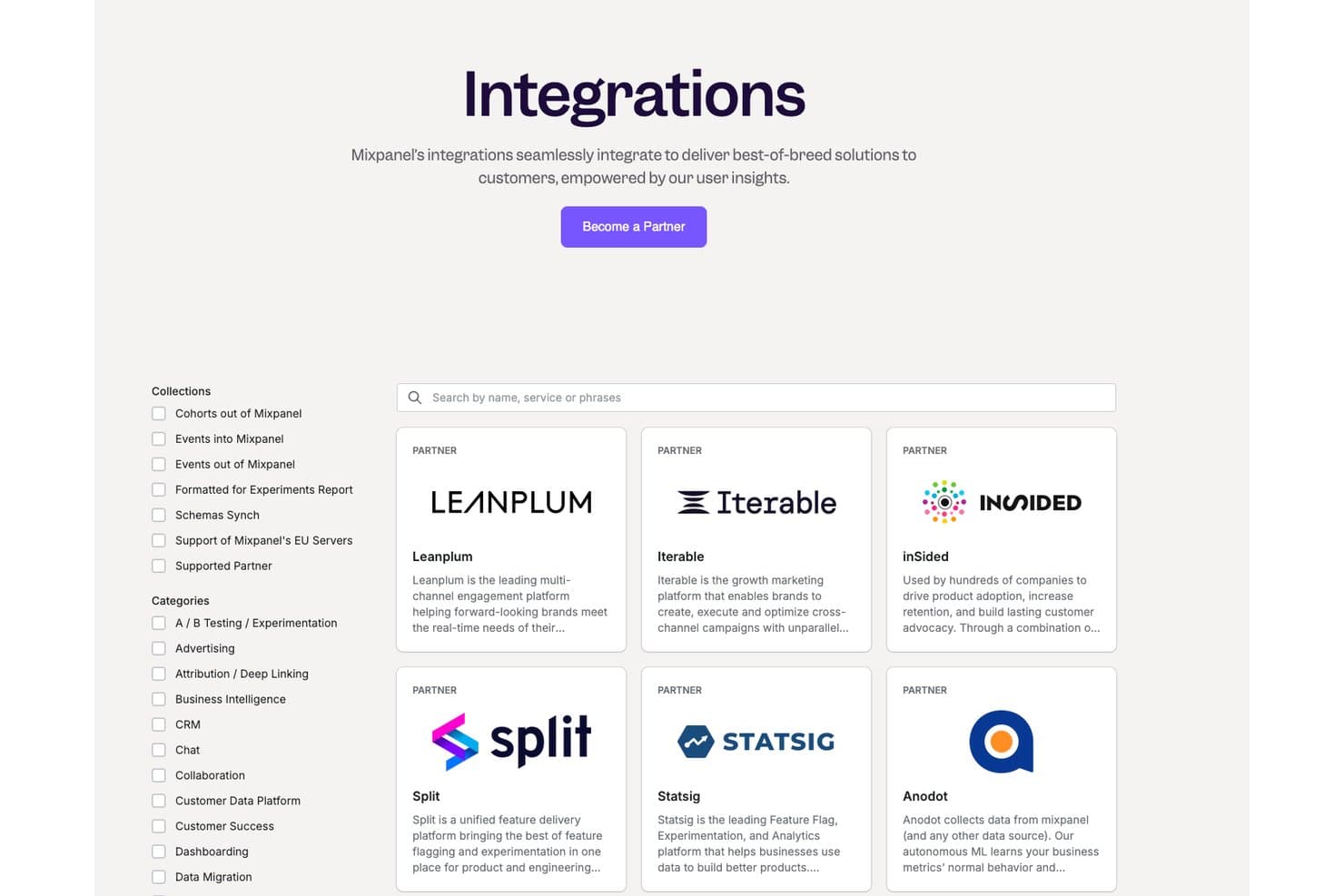
Mixpanel generally integrates with popular platforms like Salesforce, Slack, HubSpot, Segment, Google Analytics, Zendesk, Shopify, Marketo, WordPress, and Mailchimp.
Mixpanel also offers an API and connects with third-party integration tools to enhance its functionality.
Mixpanel Specs
- A/B Testing: Yes
- AI Integration: Yes
- Analytics: Yes
- API: Yes
- Comparative Reporting: Yes
- Conversion Tracking: Yes
- Custom Reports: Yes
- Dashboard: Yes
- Dashboards: Yes
- Data Export: Yes
- Data Import: Yes
- Data Mining: Yes
- Data Visualization: Yes
- External Integrations: Yes
- Feedback Management: Yes
- Forecasting: Yes
- Historical Data Analysis: Yes
- Keyword Tracking: Yes
- Link Tracking: Yes
- Multi-Site: Yes
- Multi-User: Yes
- Notifications: Yes
- Process Reporting: Yes
- Real-time Alerts: Yes
- Referral Tracking: Yes
- Reports: Yes
- Scenario Planning: Yes
- SEO: Yes
- Time Series Modeling: Yes
- Visualization: Yes
- Workflow Management: Yes


