

I 10 migliori software di ricerca per l’e-commerce classificati per il 2026

I 10 migliori software di ricerca per siti ecommerce tra cui scegliere


Il software di ricerca per ecommerce è fondamentale per assicurarsi che i clienti trovino esattamente ciò che stanno cercando, e velocemente.
Ti è mai capitato che un acquirente arrivasse sul tuo sito, digitasse esattamente ciò che desiderava e ottenesse... niente? Nessun risultato, nessun suggerimento utile, solo frustrazione. Quando succede, se ne va e tu perdi una vendita. Un'esperienza di ricerca scadente è uno dei più grandi fattori nascosti che riducono i ricavi nell'ecommerce.
Se i clienti non riescono a trovare ciò di cui hanno bisogno in pochi secondi, abbandonano il sito o, peggio ancora, pensano che tu non venda nemmeno quel prodotto.
Ecco perché scegliere il software di ricerca per ecommerce giusto è importante. Le migliori soluzioni non si limitano a migliorare la ricerca: aumentano le conversioni, incrementano il valore medio degli ordini e incoraggiano gli acquisti ripetuti.
I migliori strumenti di oggi comprendono l'intento dell'utente, correggono gli errori di battitura e personalizzano i risultati per mantenere coinvolti gli acquirenti.
Per aiutarti, ho testato e confrontato i principali software di ricerca per ecommerce, così potrai trovare quello perfetto per il tuo negozio.
Perché fidarsi dei nostri consigli sui software
Il nostro team testa e recensisce software dal 2012. In quanto leader del retail noi stessi, sappiamo quanto sia difficile — e importante — scegliere il software giusto.
Per questa guida, abbiamo valutato gli strumenti attraverso test pratici e ricerche indipendenti, assegnando un punteggio agli strumenti in base ai nostri criteri di selezione.
Le nostre recensioni riflettono il nostro giudizio indipendente, non un discorso di vendita.
Confronto diretto tra i migliori software di ricerca per ecommerce
Vuoi la versione breve? Ecco una rapida panoramica dei migliori strumenti di ricerca per ecommerce, dei relativi prezzi e del loro utilizzo ideale, così potrai evitare di tirare a indovinare e trovare rapidamente quello più adatto.
| Tool | Best For | Trial Info | Price | ||
|---|---|---|---|---|---|
| 1 | Ideale per un'esperienza di commercio unificata | Nessuna prova gratuita disponibile | Prezzo su richiesta | Website | |
| 2 | Ideale per strumenti di merchandising | Demo gratuita disponibile | A partire da $599/mese | Website | |
| 3 | Ideale per una configurazione semplice | Prova gratuita di 14 giorni | Da $29/mese | Website | |
| 4 | Ideale per negozi Shopify | Prova gratuita di 14 giorni | Da $19/mese | Website | |
| 5 | Ideale per la ricerca interna del sito | Demo gratuita disponibile | Da $79/mese | Website | |
| 6 | Ideale per le piccole imprese | Demo gratuita disponibile | Da $149/mese | Website | |
| 7 | Ideale per grandi cataloghi | Demo gratuita disponibile | Da $389/mese | Website | |
| 8 | Ideale per la personalizzazione | Demo gratuita disponibile | Prezzo su richiesta | Website | |
| 9 | Ideale per siti WordPress | Nessuna prova gratuita disponibile | Da $99/anno (fatturato annualmente) | Website | |
| 10 | Ideale per la ricerca visiva | Demo gratuita disponibile | Da $599/mese | Website |
Il miglior software di ricerca per ecommerce per una CX migliore, recensito
Passiamo ora al punto centrale dell’articolo: le recensioni. Qui, per ogni strumento di ricerca per siti ecommerce, troverai un’analisi dettagliata delle funzionalità principali, dei pro e dei contro, delle integrazioni e dei casi d’uso ideali, per aiutarti a trovare quello più adatto a te.

Coveo
Ideale per un'esperienza di commercio unificata

Coveo è una piattaforma di ricerca e-commerce potenziata dall'intelligenza artificiale che combina scoperta dei prodotti, raccomandazioni personalizzate, ricerca conversazionale e controlli di merchandising per store B2B e B2C.
Per chi è ideale Coveo?
Coveo è particolarmente adatto a rivenditori di livello medio e enterprise che gestiscono cataloghi di prodotti complessi su molteplici touchpoint digitali.
Perché ho scelto Coveo
Ho scelto Coveo come uno dei migliori perché gestisce l'intero percorso d'acquisto del cliente su ogni punto di contatto in un'unica piattaforma. Ciò che lo distingue è il suo indice unificato, che centralizza i dati su canali di commercio, assistenza e sito web, così che la ricerca prodotti, i contenuti di supporto e l'esperienza post-acquisto si basano sulla stessa fonte. Apprezzo anche che i suoi modelli di intelligenza artificiale personalizzino i risultati in tempo reale, anche per clienti anonimi o alla loro prima visita e per prodotti 'cold-start'—un problema davvero difficile che la maggior parte degli strumenti di ricerca non risolve.
Funzionalità principali di Coveo
- Commerce Merchandising Hub: Un'interfaccia no-code per creare regole di ricerca, fissare prodotti, dare priorità ai risultati e nascondere quelli meno performanti all'interno delle liste.
- Faceting dinamico: Genera e ordina automaticamente i filtri basandosi sugli attributi del catalogo e il comportamento degli utenti all'interno di un determinato contesto di ricerca.
- Dashboard di analisi delle ricerche: Monitora metriche per query come click-through rate, conversione e ricavo per visita, facendo emergere le ricerche meno efficaci.
- Ricerca conversazionale: Permette agli utenti di trovare prodotti usando richieste in linguaggio naturale, compreso il contesto di ricerca successivo, direttamente nell'esperienza di ricerca.
Integrazioni di Coveo
Coveo offre oltre 30 connettori e integrazioni native con piattaforme come Salesforce, SAP, Shopify, Adobe, Sitecore, ServiceNow, Zendesk, Optimizely, Slack e Jira, oltre a connettori universali tramite REST, Push e GraphQL API per integrazioni personalizzate. È inoltre disponibile su Zapier.
Pros and Cons
Pros:
- La rilevanza dell'AI migliora automaticamente nel tempo
- Indicizza contenuti da più fonti di catalogo
- Analisi dettagliata delle ricerche e reportistica sulle query
Cons:
- L'implementazione iniziale richiede un notevole sforzo tecnico
- Il costo totale di proprietà aumenta nel tempo

Ideale per strumenti di merchandising

Searchspring è una piattaforma di ricerca e merchandising per l'ecommerce progettata per i rivenditori che desiderano migliorare la scoperta e la presentazione dei prodotti nei loro negozi online. Si rivolge alle aziende che vogliono ottimizzare le strategie di merchandising e incrementare le performance di vendita.
Perché ho scelto Searchspring: Searchspring offre strumenti di merchandising avanzati che lo distinguono per i rivenditori focalizzati sulla presentazione dei prodotti. Fornisce funzionalità di merchandising drag-and-drop, permettendo di disporre facilmente i prodotti per mettere in evidenza i bestseller o le promozioni. La piattaforma supporta il merchandising basato su regole, aiutando ad automatizzare il posizionamento dei prodotti secondo criteri specifici. Inoltre, le sue capacità di ricerca personalizzata assicurano che i clienti visualizzino prodotti adatti alle loro preferenze, aumentando il coinvolgimento.
Funzionalità e integrazioni principali:
Le funzionalità includono strumenti di reportistica completi che forniscono approfondimenti sulle performance di ricerca e merchandising. La piattaforma offre anche A/B testing per ottimizzare le varie strategie di merchandising. La navigazione dinamica con filtri permette agli utenti di affinare in modo efficiente i risultati di ricerca, migliorando l’esperienza d’acquisto.
Le integrazioni includono Shopify, Magento, BigCommerce, WooCommerce, Salesforce Commerce Cloud, SAP Commerce Cloud, Oracle Commerce Cloud, PrestaShop, OpenCart e Demandware.
Pros and Cons
Pros:
- Strumenti di merchandising avanzati
- Disposizione dei prodotti con drag-and-drop
- Merchandising basato su regole
- Funzionalità di ricerca personalizzata
Cons:
- La configurazione iniziale può essere complessa
- Richiede una gestione continua
- Può richiedere competenze tecniche

Ideale per una configurazione semplice
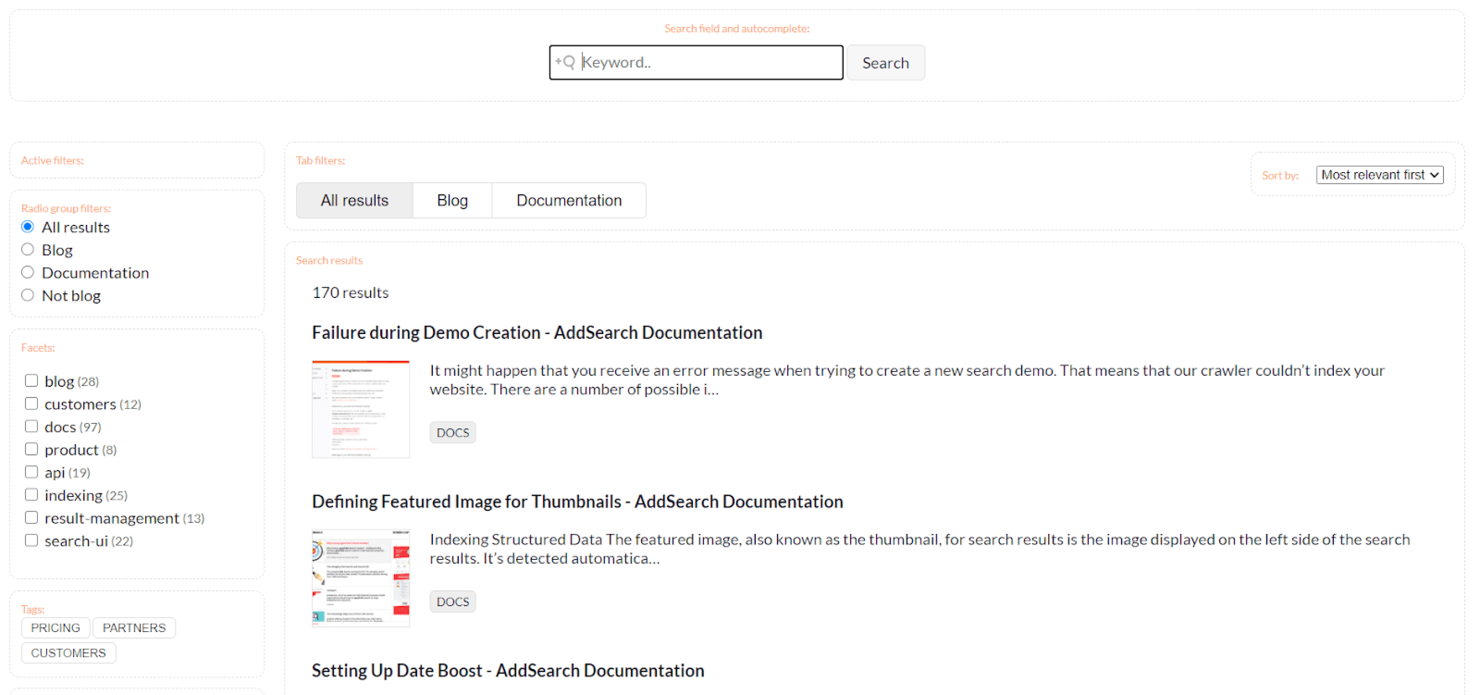
AddSearch è una soluzione di ricerca per siti ecommerce progettata per le aziende che necessitano di un modo rapido ed efficiente per implementare la funzionalità di ricerca. È ideale per i team che desiderano un'implementazione senza complicazioni e una gestione semplice delle funzionalità di ricerca.
Perché ho scelto AddSearch: AddSearch è noto per la sua facilità di configurazione, il che significa che è possibile attivarlo senza una grande esperienza tecnica. Offre funzionalità come i risultati di ricerca istantanei, che migliorano l'esperienza utente fornendo risposte rapide. Inoltre, permette di personalizzare l'aspetto delle pagine dei risultati di ricerca per adattarle al tuo brand. Con la sua dashboard intuitiva, gestire e analizzare i dati di ricerca diventa un gioco da ragazzi, rendendolo una scelta preferita per chi dà valore alla semplicità.
Funzionalità e integrazioni principali:
Le funzionalità includono la capacità di gestire la ricerca full-text su tutto il tuo sito, assicurando risultati completi. Puoi anche utilizzare le sue analisi per comprendere cosa cercano gli utenti e adeguare di conseguenza le tue offerte. AddSearch supporta la reattività mobile, assicurando che la ricerca funzioni senza problemi su tutti i dispositivi.
Le integrazioni includono WordPress, Shopify, Magento, Squarespace, Joomla, Drupal, WooCommerce, Wix, BigCommerce e Weebly.
Pros and Cons
Pros:
- Implementazione rapida
- Layout di ricerca personalizzabile
- Responsive su dispositivi mobili
- Risultati di ricerca istantanei
Cons:
- Funzionalità avanzate limitate
- Opzioni di personalizzazione di base
- Nessun supporto multilingua

Ideale per negozi Shopify

Searchanise è una soluzione di ricerca per ecommerce pensata per i negozi Shopify, che offre capacità di ricerca avanzate per migliorare l'esperienza utente. È progettata per le aziende che desiderano ottimizzare la funzionalità di ricerca del proprio negozio online e aumentare il coinvolgimento dei clienti.
Perché ho scelto Searchanise: Searchanise è ideale per i negozi Shopify, offrendo funzionalità che migliorano la scoperta dei prodotti. Fornisce risultati di ricerca istantanei, aiutando i clienti a trovare i prodotti rapidamente ed efficacemente. Lo strumento supporta la correzione automatica degli errori di ortografia, riducendo la frustrazione degli utenti causata da query digitate erroneamente. Inoltre, la sua capacità di generare suggerimenti di ricerca migliora la navigazione e mantiene il coinvolgimento dei clienti.
Funzionalità principali & integrazioni:
Le funzionalità includono strumenti di merchandising dei prodotti che permettono di dare priorità a prodotti specifici nei risultati di ricerca. Offre anche analisi per monitorare le prestazioni della ricerca, aiutandoti a comprendere meglio il comportamento dei clienti. I widget personalizzabili dello strumento ti consentono di adattare l'interfaccia di ricerca al branding del tuo negozio.
Le integrazioni includono Shopify, BigCommerce, WooCommerce, Magento, PrestaShop, OpenCart, Squarespace, Wix, Weebly ed Ecwid.
Pros and Cons
Pros:
- Risultati di ricerca istantanei
- Correzione ortografica automatica
- Genera suggerimenti di ricerca
- Widget di ricerca personalizzabili
Cons:
- Funzionalità avanzate limitate
- Capacità di reporting limitate
- Può essere esigente in termini di risorse

Swiftype
Ideale per la ricerca interna del sito

Swiftype è una soluzione di ricerca interna progettata per le aziende che necessitano di funzionalità di ricerca efficienti e personalizzabili per i loro siti ecommerce. È ideale per i team che desiderano migliorare l'esperienza utente e ottimizzare la scoperta dei contenuti.
Perché ho scelto Swiftype: Swiftype si distingue nella ricerca interna per ecommerce, offrendo funzionalità che lo rendono uno strumento versatile per le aziende. Fornisce pagine dei risultati di ricerca personalizzabili, consentendo di adattare l'esperienza utente. L'indicizzazione in tempo reale garantisce che i contenuti del tuo sito siano sempre aggiornati. Inoltre, Swiftype offre analisi dettagliate per aiutarti a comprendere il comportamento degli utenti e migliorare la rilevanza dei risultati di ricerca.
Funzionalità e integrazioni principali:
Le funzionalità includono la gestione dei sinonimi, che permette di creare sinonimi personalizzati per migliorare i risultati delle ricerche. Supporta anche l'ottimizzazione avanzata delle query, offrendoti controllo su rilevanza e ranking dei risultati. Lo strumento propone la ricerca con filtri, consentendo agli utenti di filtrare i risultati per categorie e attributi.
Le integrazioni includono WordPress, Drupal, Magento, Shopify, Salesforce, Zendesk, HubSpot, Marketo, Squarespace e BigCommerce.
Pros and Cons
Pros:
- Pagine dei risultati di ricerca personalizzabili
- Indicizzazione in tempo reale
- Supporta la gestione dei sinonimi
- Consente ottimizzazioni avanzate delle query
Cons:
- Richiede competenze tecniche
- Può necessitare di frequenti ottimizzazioni
- Può richiedere molte risorse


Sparq è un software di ricerca per ecommerce progettato principalmente per le piccole imprese, offrendo una soluzione di ricerca semplificata che si adatta alle loro esigenze specifiche. Aiuta a migliorare la funzionalità di ricerca e migliora l'esperienza di acquisto online per gli utenti.
Perché ho scelto Sparq: Sparq è pensato su misura per le piccole imprese, rendendolo una scelta ideale se rientri in questa categoria. La sua interfaccia intuitiva e la configurazione semplice ti permettono di iniziare rapidamente senza la necessità di conoscenze tecniche approfondite. Puoi personalizzare i risultati di ricerca in base al comportamento degli utenti, il che aiuta a migliorare i tassi di conversione. Sparq offre anche analisi in tempo reale, fornendo informazioni su come gli utenti interagiscono con la funzione di ricerca.
Funzionalità principali & integrazioni:
Le funzionalità includono raccomandazioni di prodotti basate sul comportamento degli utenti, filtri di ricerca personalizzabili e un avanzato sistema di ranking dei risultati di ricerca. Puoi inoltre sfruttare i suoi strumenti di analisi per comprendere i modelli di ricerca e ottimizzare la visibilità dei prodotti. Sparq supporta aggiornamenti in tempo reale, assicurando che le tue inserzioni prodotto siano sempre aggiornate.
Le integrazioni includono Shopify, WooCommerce, Magento, BigCommerce, Wix, Volusion, PrestaShop, Squarespace, OpenCart e Weebly.
Pros and Cons
Pros:
- Filtri di ricerca personalizzabili
- Analisi in tempo reale
- Supporta più piattaforme
- Fornisce raccomandazioni di prodotti
Cons:
- Funzionalità avanzate limitate
- Personalizzazione grafica basilare
- Orari di supporto limitati

Ideale per grandi cataloghi

Prefixbox è uno strumento di ricerca per ecommerce progettato per le aziende con ampi cataloghi di prodotti. È ideale per le imprese che necessitano di capacità di ricerca efficienti per gestire e presentare efficacemente una vasta gamma di prodotti.
Perché ho scelto Prefixbox: Prefixbox è pensato per i grandi cataloghi, rendendolo una scelta solida se la tua azienda gestisce molti prodotti. Offre funzionalità come l'indicizzazione dei dati in tempo reale, garantendo che le informazioni sui tuoi prodotti siano sempre aggiornate. Lo strumento supporta opzioni di filtraggio avanzate, consentendo agli utenti di restringere i risultati della ricerca con precisione. Inoltre, Prefixbox offre esperienze di ricerca personalizzate analizzando le interazioni e le preferenze degli utenti.
Caratteristiche e integrazioni principali:
Le funzionalità includono la tolleranza agli errori di digitazione, che aiuta gli utenti a trovare i prodotti giusti anche in caso di termini di ricerca errati. Offre inoltre una ricerca dinamica a faccette, consentendo agli utenti di affinare le ricerche tramite molteplici filtri. Inoltre, Prefixbox fornisce analisi dettagliate per aiutarti a comprendere le tendenze di ricerca e migliorare la visibilità dei prodotti.
Le integrazioni includono Magento, WooCommerce, Shopify, BigCommerce, PrestaShop, OpenCart, SAP Hybris, Oracle Commerce Cloud, Demandware e Salesforce Commerce Cloud.
Pros and Cons
Pros:
- Gestisce grandi cataloghi di prodotti
- Indicizzazione dei dati prodotto in tempo reale
- Supporta la tolleranza agli errori di digitazione
- Ricerca dinamica a faccette
Cons:
- Richiede competenze tecniche
- Opzioni di personalizzazione limitate
- Può richiedere molte risorse


Nosto è una soluzione di ricerca per l'ecommerce focalizzata sulla personalizzazione dell'esperienza di acquisto per gli utenti. È progettata per le aziende che desiderano aumentare il coinvolgimento dei clienti offrendo raccomandazioni di prodotti su misura.
Perché ho scelto Nosto: Nosto eccelle nel fornire esperienze personalizzate, rendendolo una delle scelte migliori se vuoi adattare l'esperienza di shopping per i tuoi clienti. Fornisce raccomandazioni di prodotto personalizzate in base al comportamento e alle preferenze degli utenti. Lo strumento offre inoltre una personalizzazione dinamica dei contenuti, assicurando che ogni visitatore veda contenuti pertinenti per sé. La capacità di Nosto di analizzare i dati dei clienti aiuta a migliorare la precisione delle sue raccomandazioni, portando a tassi di conversione più elevati.
Caratteristiche principali & integrazioni:
Caratteristiche includono funzionalità di A/B testing che ti permettono di ottimizzare diversi elementi del tuo sito ecommerce. Lo strumento supporta anche la segmentazione dei clienti, consentendoti di indirizzare gruppi specifici con offerte personalizzate. Inoltre, le funzioni di cross-selling e upselling di Nosto aiutano ad aumentare il valore medio degli ordini suggerendo prodotti complementari.
Integrazioni includono Shopify, Magento, BigCommerce, WooCommerce, Salesforce Commerce Cloud, PrestaShop, Shopware, SAP Commerce Cloud, OpenCart e Wix.
Pros and Cons
Pros:
- Ottime capacità di personalizzazione
- Supporta la segmentazione dei clienti
- Offre A/B testing
- Funzioni di cross-selling e upselling
Cons:
- Richiede una gestione continua
- Opzioni di personalizzazione limitate
- Può richiedere molte risorse


SearchWP è un plugin di ricerca pensato per i siti WordPress, che offre funzionalità di ricerca avanzate per migliorare la scoperta dei contenuti. È stato ideato per i proprietari di siti che desiderano ottimizzare la funzionalità di ricerca senza interventi di personalizzazione complessi.
Perché ho scelto SearchWP: SearchWP è perfetto per i siti WordPress, fornendo funzionalità che aumentano la precisione e la pertinenza della ricerca. Indicizza campi personalizzati e tipi di contenuti, garantendo risultati di ricerca completi. Lo strumento permette di controllare gli algoritmi di ricerca, offrendoti la flessibilità di dare priorità a contenuti specifici. Inoltre, SearchWP supporta la derivazione delle parole chiave, aiutando gli utenti a trovare contenuti correlati anche con termini di ricerca diversi.
Funzionalità e integrazioni principali:
Le funzionalità includono la possibilità di cercare nei contenuti PDF, ampliando la gamma di materiali ricercabili sul tuo sito. Lo strumento supporta anche più motori di ricerca, consentendo di impostare ricerche personalizzate per diverse sezioni del sito. Inoltre, SearchWP fornisce approfondimenti dettagliati sulle ricerche, aiutandoti a capire il comportamento degli utenti e a migliorare le prestazioni della ricerca.
Le integrazioni includono WooCommerce, Easy Digital Downloads, bbPress, WP Job Manager, Advanced Custom Fields, Gravity Forms, WPML, Polylang, MemberPress e BuddyPress.
Pros and Cons
Pros:
- Indicizzazione completa dei contenuti
- Algoritmi di ricerca personalizzabili
- Supporta la ricerca in contenuti PDF
- Offre più motori di ricerca
Cons:
- Richiede configurazione per funzionalità avanzate
- Limitato ai siti WordPress
- Può essere oneroso per le risorse


Syte AI è un software di ricerca visiva progettato per le aziende di ecommerce, con l'obiettivo di migliorare l'esperienza di acquisto attraverso funzionalità di ricerca basate sulle immagini. È ideale per le aziende che vogliono sfruttare la scoperta visiva per coinvolgere i clienti e incrementare le vendite.
Perché ho scelto Syte AI: Syte AI è specializzato nella ricerca visiva, rendendolo una scelta eccellente se il tuo obiettivo è la scoperta di prodotti basata sulle immagini. Offre funzionalità come il riconoscimento delle immagini, che consente ai clienti di cercare prodotti utilizzando foto. Lo strumento fornisce raccomandazioni personalizzate basate su indizi visivi, aumentando il coinvolgimento dei clienti. Syte AI supporta anche la realtà aumentata, permettendo agli utenti di visualizzare i prodotti in ambienti reali.
Funzionalità e integrazioni principali:
Funzionalità includono motori di raccomandazione visiva che suggeriscono articoli simili in base alle preferenze dei clienti. Offre inoltre una funzione Instagram acquistabile, trasformando le immagini sui social media in prodotti acquistabili. Le capacità di realtà aumentata dello strumento consentono ai clienti di vedere come appaiono i prodotti nel proprio ambiente prima dell'acquisto.
Integrazioni includono Shopify, Magento, Salesforce Commerce Cloud, WooCommerce, BigCommerce, SAP Commerce Cloud, Oracle ATG, Prestashop, Wix e Demandware.
Pros and Cons
Pros:
- Funzionalità avanzate di ricerca visiva
- Supporta la realtà aumentata
- Funzione Instagram acquistabile
- Raccomandazioni visive personalizzate
Cons:
- Opzioni di ricerca testuale limitate
- Può essere complesso da implementare
- Potrebbe richiedere formazione aggiuntiva
Altri software di ricerca per ecommerce
Ecco alcune opzioni aggiuntive di software di ricerca per ecommerce che non sono entrate nella mia selezione, ma che vale comunque la pena prendere in considerazione:
- Netcore Unbxd
Ideale per la ricerca dei prodotti
- FACT-Finder
Ideale per la ricerca basata sull'intelligenza artificiale
- Wizzy
Ideale per le analisi in tempo reale


Come valuto i software di ricerca per il commercio elettronico
Valuto questi strumenti su due livelli: le funzionalità fondamentali che ogni piattaforma deve offrire, come l'indicizzazione del catalogo in tempo reale e i controlli di merchandising, e gli elementi distintivi che separano le migliori opzioni dalle altre.
Funzionalità fondamentali (requisiti indispensabili per questo elenco)
Quando seleziono gli strumenti per il mio elenco, assegno a ciascuno un punteggio su una scala da 0 (non offre la funzionalità) a 5 (eccelle in quest'area) per ogni funzionalità fondamentale indicata di seguito. Poi converto il punteggio totale dello strumento in una percentuale. Ogni strumento deve raggiungere un punteggio totale minimo del 65% per essere preso in considerazione.
- Indicizzazione del catalogo prodotti: verifico come ogni strumento acquisisce e sincronizza i dati dei prodotti, comprese varianti, prezzi e disponibilità, soprattutto per cataloghi con decine di migliaia di SKU.
- Motore di rilevanza e classificazione: un buon motore di classificazione gestisce errori di battitura, sinonimi e forme plurali fin dall'inizio, quindi valuto quanto sia configurabile l'ordine dei risultati per le query comuni.
- Ricerca basata sull'IA e semantica: valuto se lo strumento comprende l'intento dell'acquirente oltre le parole chiave esatte, ad esempio mostrando scarpe da corsa quando qualcuno cerca "scarpe per fare jogging".
- Controlli di merchandising: i responsabili del merchandising devono poter fissare, promuovere e retrocedere i prodotti per campagne e iniziative stagionali, quindi esamino i generatori di regole e gli editor visivi disponibili a questo scopo.
- Personalizzazione della ricerca: osservo come i risultati si adattano ai singoli acquirenti in base alla cronologia di navigazione, agli acquisti precedenti o ai dati del segmento durante una sessione attiva.
- Ricerca per faccette e filtri: le faccette dinamiche che si adattano alla query corrente sono molto importanti, quindi valuto la qualità del completamento automatico, la logica dei filtri e la reattività su dispositivi mobili.
Una volta ottenuto un elenco di strumenti che soddisfano questi criteri, considero ciò che distingue ogni piattaforma.
Fattori distintivi (ciò che differenzia i fornitori)
Ecco come confronto i diversi fornitori:
Funzionalità di spicco
Le analisi avanzate della ricerca sono molto importanti in questo caso. Cerco dashboard che mettano in evidenza le query senza risultati e i dati relativi ai ricavi per ricerca, così che i responsabili del merchandising possano intervenire rapidamente sulle lacune. Un motore unificato per i consigli è un altro elemento distintivo: alimenta i blocchi di vendita incrociata e di vendita aggiuntiva utilizzando lo stesso modello di personalizzazione impiegato nella ricerca. Valuto inoltre se una piattaforma offre un'architettura senza interfaccia, basata sulle API, elemento fondamentale per i team che gestiscono vetrine personalizzate o architetture di commercio componibile.
Oltre le funzionalità
Le integrazioni con le piattaforme di commercio elettronico sono tra le prime cose che verifico. I connettori nativi per piattaforme come Shopify, Magento e commercetools consentono una sincronizzazione più rapida del catalogo e riducono il lavoro di sviluppo personalizzato. Anche la scalabilità è importante: valuto i tempi di risposta delle query e la capacità dello strumento di gestire i picchi di traffico durante eventi di vendita di punta come il Black Friday. L'implementazione e il tempo necessario per ottenere valore completano la mia valutazione; cerco componenti dell'interfaccia utente predefiniti, ambienti sandbox e un supporto dedicato all'avvio che aiutino i team a diventare operativi più rapidamente.
Che cos'è il software di ricerca per ecommerce?
Il software di ricerca per ecommerce è uno strumento specializzato che alimenta la funzionalità di ricerca nei negozi online, facilitando ai clienti la scoperta rapida e accurata dei prodotti.
A differenza delle barre di ricerca di base, questo software utilizza funzionalità avanzate come il riconoscimento dell'intento, la correzione degli errori di battitura e i suggerimenti personalizzati per fornire risultati pertinenti. Molte soluzioni moderne offrono anche personalizzazione basata sull'IA, ricerca vocale e funzionalità di ricerca visiva.
I rivenditori e le aziende ecommerce si affidano al software di ricerca per ecommerce per migliorare l'esperienza di acquisto, ridurre la frustrazione dei clienti e aumentare i tassi di conversione, incrementando così le vendite e favorendo la fidelizzazione dei clienti in un mercato digitale altamente competitivo.
Come scegliere il miglior software di ricerca per ecommerce
È facile perdersi tra elenchi infiniti di funzionalità e piani tariffari confusi. Invece di lasciarti sommergere dai dettagli, concentrati sugli elementi essenziali che influiscono davvero sulle prestazioni della ricerca del tuo negozio. Ecco cosa tenere a mente quando scegli lo strumento giusto:
| Fattore | Cosa considerare |
|---|---|
| Scalabilità | È in grado di gestire un traffico in crescita e un catalogo prodotti più ampio senza problemi di prestazioni? |
| Integrazioni | Funziona perfettamente con la tua piattaforma ecommerce (Shopify, WooCommerce, Magento, ecc.) e con gli altri strumenti? |
| Personalizzazione | Puoi adattare i risultati di ricerca, i filtri e le classifiche alle esigenze del tuo brand? |
| Facilità d'uso | L'interfaccia è intuitiva e facile da imparare per il tuo team senza una formazione approfondita? |
| Budget | Ci sono costi nascosti? Offre una prova gratuita o piani tariffari flessibili? |
| Misure di sicurezza | Protegge i dati dei clienti, rispetta gli standard di conformità e previene le vulnerabilità? |
| Assistenza | È disponibile un'assistenza clienti affidabile tramite chat dal vivo, telefono o email? È presente una solida base di conoscenze? |
| Analisi | Fornisce informazioni dettagliate sulle tendenze di ricerca, sul comportamento degli utenti e sulle opportunità di conversione? |
Dare priorità a questi fattori ti aiuterà a evitare il rimorso dell'acquirente e a scegliere uno strumento di ricerca che generi davvero conversioni.
Le principali tendenze nei software di ricerca ecommerce
La ricerca ecommerce non riguarda più soltanto le parole chiave: si sta evolvendo rapidamente. Abbiamo analizzato gli aggiornamenti dei prodotti, le roadmap dei fornitori e le tendenze del settore per evidenziare i cambiamenti nella tecnologia di ricerca.
Ecco cosa sta plasmando il futuro.
- La ricerca vocale sta prendendo piede. Sempre più acquirenti utilizzano comandi vocali per trovare prodotti, soprattutto su dispositivi mobili e intelligenti. Piattaforme come Wizzy migliorano la precisione del riconoscimento vocale per aiutare i clienti a fare acquisti a mani libere.
- La ricerca visiva sta diventando indispensabile. I clienti non conoscono sempre le parole esatte per ciò che desiderano, ma hanno un'immagine. Strumenti come Syte AI permettono agli acquirenti di caricare immagini e trovare istantaneamente prodotti simili, rappresentando una svolta per i brand della moda e dell'arredamento.
- La personalizzazione della ricerca basata sull'intelligenza artificiale sta favorendo le conversioni. Gli acquirenti si aspettano esperienze su misura e l'intelligenza artificiale lo rende possibile. FACT-Finder e strumenti simili analizzano il comportamento degli utenti per personalizzare i risultati di ricerca, aumentando il coinvolgimento e le vendite.
- Le analisi avanzate stanno rivelando informazioni sui clienti. I rivenditori hanno bisogno di più dei semplici report di ricerca. Gli strumenti di ricerca più recenti offrono dashboard dettagliate che mostrano le tendenze di ricerca, i tassi di conversione e le opportunità perse, aiutando i brand a perfezionare le proprie strategie in tempo reale.
- La realtà aumentata (AR) sta migliorando la scoperta dei prodotti. Alcuni strumenti di ricerca integrano funzionalità di AR, consentendo agli utenti di vedere i prodotti nel proprio ambiente prima di acquistarli. È particolarmente utile per i rivenditori di mobili e articoli per la casa che vogliono colmare il divario tra le esperienze online e in negozio.
Poiché queste tendenze stanno trasformando l'ecommerce, investire nel software di ricerca giusto può mantenere il tuo negozio all'avanguardia rispetto alla concorrenza, soddisfacendo le aspettative dei clienti prima ancora che si rendano conto di averle.
Funzionalità principali dei software di ricerca ecommerce
Non tutti gli strumenti di ricerca sono uguali. I migliori non si limitano a mostrare i risultati: perfezionano, personalizzano e migliorano l'intera esperienza di acquisto.
Ecco le funzionalità principali da cercare.
- Ricerca vocale. Permette ai clienti di trovare prodotti utilizzando comandi vocali, rendendo gli acquisti più semplici su dispositivi mobili e intelligenti.
- Ricerca visiva. Consente agli acquirenti di caricare immagini e scoprire prodotti simili, risultando particolarmente utile nella moda e nell'arredamento.
- Personalizzazione basata sull'intelligenza artificiale. Adatta i risultati di ricerca in base alla cronologia di navigazione, agli acquisti precedenti e al comportamento degli utenti.
- Analisi in tempo reale. Fornisce informazioni su ciò che i clienti stanno cercando, aiutandoti a ottimizzare i risultati e a individuare le tendenze.
- Navigazione dinamica. Consente di filtrare e ordinare i risultati di ricerca per perfezionarli e migliorare la reperibilità dei prodotti.
- Ricerca automatica tollerante agli errori. Corregge gli errori di ortografia e le varianti, così i clienti trovano comunque ciò che stanno cercando.
- Filtri di ricerca personalizzabili. Ti consente di adattare le opzioni di filtro al tuo catalogo prodotti e alle esigenze dei clienti.
- Vendita incrociata e vendita di prodotti più costosi. Consiglia prodotti correlati per aumentare il valore medio degli ordini e incrementare i ricavi.
- Integrazione della realtà aumentata. Permette agli acquirenti di visualizzare i prodotti nel proprio ambiente prima dell'acquisto, risultando ideale per articoli per la casa e mobili.
Scegliere uno strumento con queste funzionalità indispensabili garantisce che la tua esperienza di ricerca non sia solo funzionale, ma anche capace di generare ricavi.
Vantaggi dei software di ricerca ecommerce
Un'ottima esperienza di ricerca non aiuta soltanto i clienti: migliora anche i tuoi profitti. Ecco come il software di ricerca ecommerce giusto può trasformare il tuo negozio.
- Esperienza cliente migliorata. Gli strumenti di ricerca intelligenti aiutano gli acquirenti a trovare rapidamente ciò di cui hanno bisogno, riducendo frustrazione e abbandono del carrello.
- Tassi di conversione aumentati. I consigli personalizzati e i risultati di ricerca accurati portano a un maggior numero di acquisti completati.
- Informazioni più approfondite. Le analisi in tempo reale rivelano il comportamento dei clienti, aiutandoti a perfezionare le strategie di ricerca e presentazione dei prodotti.
- Scoperta dei prodotti migliorata. Funzionalità come la ricerca vocale e visiva facilitano l’esplorazione e il coinvolgimento dei clienti con il tuo catalogo.
- Risparmio di tempo per i team. Il filtraggio automatizzato, la correzione degli errori di battitura e la navigazione dinamica riducono la necessità di interventi manuali.
- Maggiore fidelizzazione dei clienti. Quando la ricerca funziona bene, è più probabile che i clienti tornino, aumentando il valore del cliente nel tempo.
Investire nel software di ricerca giusto non significa solo migliorare la ricerca: significa rendere l’intera esperienza di acquisto più fluida, intelligente e redditizia.
Costi e prezzi del software di ricerca per l’e-commerce
I prezzi dei software di ricerca per l’e-commerce variano notevolmente in base alle funzionalità, ai limiti di elaborazione dei dati e alla scalabilità. Alcuni strumenti offrono piani gratuiti di base, mentre le soluzioni aziendali possono arrivare a costare centinaia (o migliaia) al mese, a seconda della complessità.
Tabella comparativa dei piani per il software di ricerca per l’e-commerce
Ecco una panoramica dei livelli di prezzo tipici, di ciò che includono e del tipo di utente per cui ciascuno è più adatto.
| Tipo di piano | Prezzo medio | Funzionalità comuni | Ideale per |
|---|---|---|---|
| Piano gratuito | $0 | Ricerca di base per parole chiave, risultati limitati, personalizzazione minima. | Piccole startup che testano le funzionalità di base. |
| Piano personale | $10–$30/utente/ mese | Migliore tolleranza agli errori di battitura, filtraggio semplice, analisi di base. | Lavoratori autonomi e piccoli negozi con budget limitato. |
| Piano aziendale | $50–$100/utente/ mese | Consigli basati sull’intelligenza artificiale, analisi in tempo reale, filtraggio avanzato. | Marchi in crescita che desiderano un maggiore controllo sull’esperienza di ricerca. |
| Piano per grandi aziende | $150–$300+/utente/mese | Personalizzazione completa, ricerca vocale e visiva, assistenza prioritaria. | Grandi siti di e-commerce con un volume elevato di ricerche ed esigenze complesse. |
Ulteriori considerazioni sui prezzi
- Limiti delle query di ricerca. Alcune piattaforme applicano costi in base al numero di query di ricerca mensili: assicurati di verificare gli eventuali limiti.
- Accesso API e integrazioni. Se hai bisogno di integrazioni approfondite con la tua piattaforma di e-commerce o il tuo ERP, potrebbero essere necessari piani premium.
- Costi di personalizzazione. Alcune funzionalità avanzate (come la presentazione dei prodotti basata sull’intelligenza artificiale) richiedono costi di configurazione aggiuntivi.
- Livelli di assistenza. I piani gratuiti e quelli di livello inferiore spesso includono assistenza esclusivamente via e-mail, mentre i piani per grandi aziende comprendono account manager dedicati.
- Fatturazione annuale o mensile. Molti fornitori offrono sconti per gli impegni annuali, quindi pianifica in anticipo se vuoi risparmiare.
Il piano giusto dipende dalle dimensioni del tuo negozio, dalla complessità della ricerca e dai tuoi obiettivi di crescita: valuta quindi attentamente le opzioni prima di sottoscrivere un piano a lungo termine.
Qual è il prossimo passo:
Se stai cercando un software di ricerca per e-commerce, contatta gratuitamente un consulente SoftwareSelect per ricevere consigli personalizzati.