

10 software di monitoraggio dei prezzi MAP selezionati per il 2026

Elenco ristretto dei software per il monitoraggio dei prezzi MAP


I software per il monitoraggio dei prezzi MAP tracciano e fanno rispettare le politiche relative al prezzo minimo pubblicizzato (MAP) presso i rivenditori online e i marketplace. Se cerchi modi per proteggere il valore del tuo marchio, individuare sconti non autorizzati o tenere sotto controllo i rivenditori, lo strumento giusto per il monitoraggio dei prezzi MAP può fare una differenza significativa.
Questo elenco ti aiuterà a confrontare le migliori soluzioni per il 2026, così potrai scegliere un software adatto al tuo catalogo prodotti, alle tue esigenze di reportistica e ai tuoi obiettivi di conformità.
Perché fidarsi dei nostri consigli sui software
Il nostro team testa e recensisce software dal 2012. In quanto leader del retail noi stessi, sappiamo quanto sia difficile — e importante — scegliere il software giusto.
Per questa guida, abbiamo valutato gli strumenti attraverso test pratici e ricerche indipendenti, assegnando un punteggio agli strumenti in base ai nostri criteri di selezione.
Le nostre recensioni riflettono il nostro giudizio indipendente, non un discorso di vendita.
Riepilogo dei migliori software per il monitoraggio dei prezzi MAP
Questa tabella comparativa riassume i dettagli dei prezzi delle mie migliori selezioni di software per il monitoraggio dei prezzi MAP, per aiutarti a trovare quello più adatto al tuo budget e alle esigenze della tua azienda.
| Tool | Best For | Trial Info | Price | ||
|---|---|---|---|---|---|
| 1 | Ideale per monitoraggio prezzi multicanale | Prova gratuita di 14 giorni | Da $99/mese | Website | |
| 2 | Ideale per cataloghi di prodotti su larga scala | Demo gratuita disponibile | Prezzo su richiesta | Website | |
| 3 | Ideale per il monitoraggio multilingue | Demo gratuita disponibile | Prezzo su richiesta | Website | |
| 4 | Ideale per opzioni di reportistica personalizzabile | Demo gratuita disponibile | Prezzo su richiesta | Website | |
| 5 | Ideale per approfondimenti sui prezzi guidati dall'IA | Demo gratuita disponibile | Prezzi su richiesta | Website | |
| 6 | Ideale per aggiornamenti dati in tempo reale | Demo gratuita disponibile | Da $49/mese | Website | |
| 7 | Ideale per monitorare i prezzi nei mercati globali | Demo gratuita disponibile | Prezzo su richiesta | Website | |
| 8 | Ideale per avvisi automatizzati sulle violazioni | Piano gratuito + prova gratuita disponibile | A partire da $49/mese | Website | |
| 9 | Ideale per dashboard di analisi avanzata | Demo gratuita disponibile | Prezzo su richiesta | Website | |
| 10 | Ideale per la conformità nella protezione del marchio | Demo gratuita disponibile | Prezzo su richiesta | Website |
Recensioni dei software per il monitoraggio dei prezzi MAP
Di seguito trovi i miei riepiloghi dettagliati dei software per il monitoraggio dei prezzi MAP inclusi nel mio elenco ristretto. Le mie recensioni offrono una panoramica dettagliata delle funzionalità, dei casi d’uso migliori e delle integrazioni di ogni piattaforma, per aiutarti a trovare quella più adatta a te.

Prisync
Ideale per monitoraggio prezzi multicanale
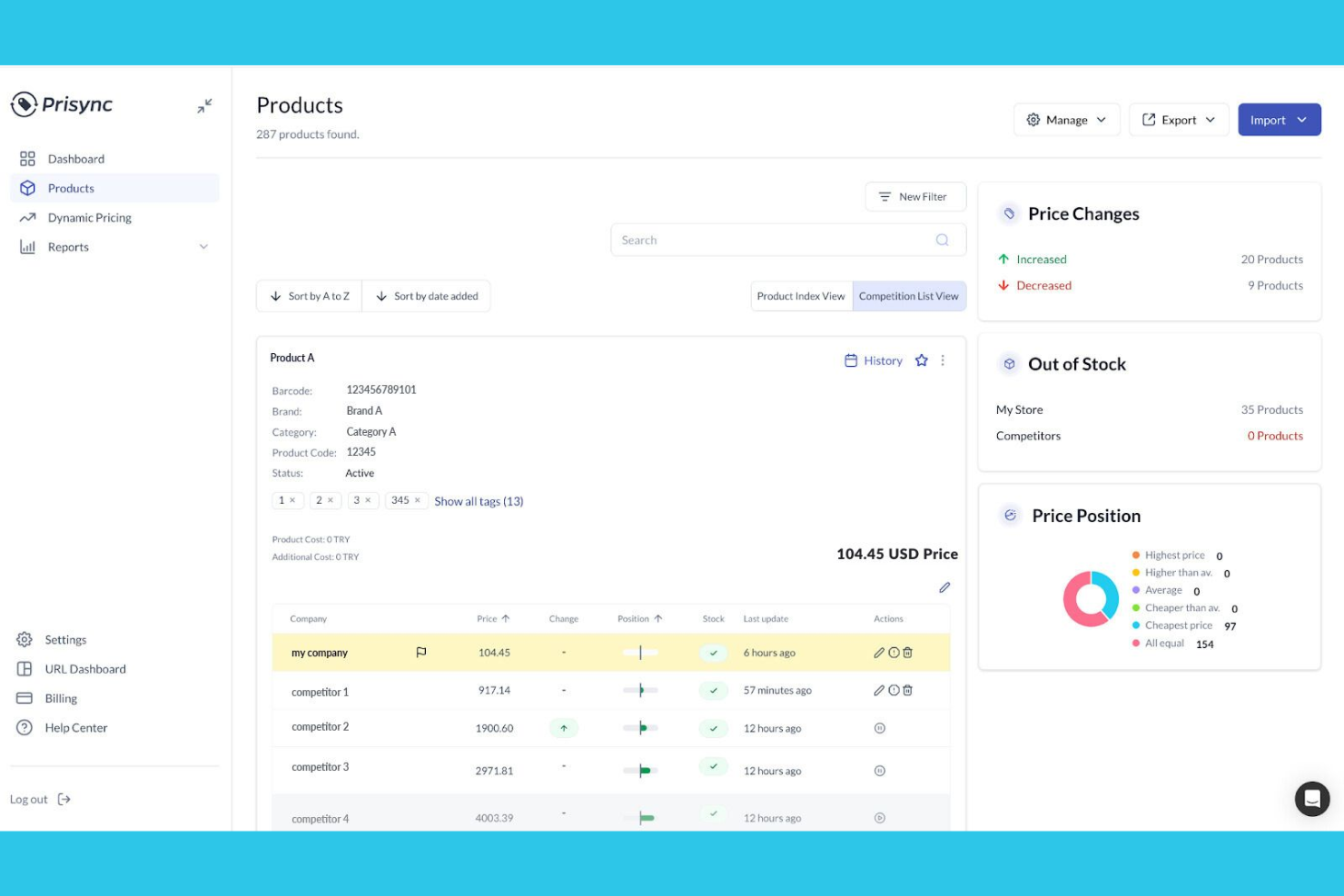
Prisync è progettato per rivenditori e marchi che hanno bisogno di monitorare i prezzi su più canali di vendita e marketplace. La piattaforma è particolarmente utile per i team ecommerce che gestiscono cataloghi di prodotti complessi e frequenti variazioni di prezzo. Il monitoraggio multicanale di Prisync ti aiuta a mantenere la conformità MAP rimanendo competitivo nei mercati online dinamici.
Perché ho scelto Prisync
Ciò che distingue Prisync è la sua capacità di monitorare i prezzi su un’ampia gamma di canali online e marketplace. Ho scelto Prisync perché ti offre una visuale unificata dei prezzi dei concorrenti, che tu venda sul tuo sito, su Amazon o su altre piattaforme di terze parti.
Lo strumento raccoglie e aggiorna automaticamente i dati sui prezzi da più fonti, aiutandoti a individuare le violazioni MAP ovunque si verifichino. Per le aziende che gestiscono diversi canali di vendita, il monitoraggio multicanale di Prisync mantiene la tua strategia di pricing coerente e conforme.
Caratteristiche principali di Prisync
Altre funzionalità che rendono Prisync utile per il monitoraggio MAP includono:
- Motore di repricing automatico: Regola automaticamente i tuoi prezzi in base ai dati dei concorrenti e alle tue regole di pricing.
- Importazione massiva di prodotti: Ti consente di caricare e gestire grandi cataloghi di prodotti tramite file CSV.
- Avvisi di violazione MAP: Ti avvisa istantaneamente quando un concorrente viola il tuo prezzo minimo pubblicizzato.
- Report dettagliati sullo storico prezzi: Fornisce accesso ai dati storici sui prezzi per l’analisi delle tendenze e il monitoraggio della conformità.
Integrazioni di Prisync
Le integrazioni includono Shopify, WooCommerce, Google Shopping, Amazon e integrazione API per flussi di lavoro personalizzati.
Pros and Cons
Pros:
- Importazione massiva di prodotti per grandi cataloghi
- Notifiche email istantanee per violazioni MAP
- Report dettagliati sulle variazioni storiche dei prezzi
Cons:
- Nessuna app mobile per monitoraggio in mobilità
- Monitoraggio prezzi limitato per rivenditori offline

Ideale per cataloghi di prodotti su larga scala
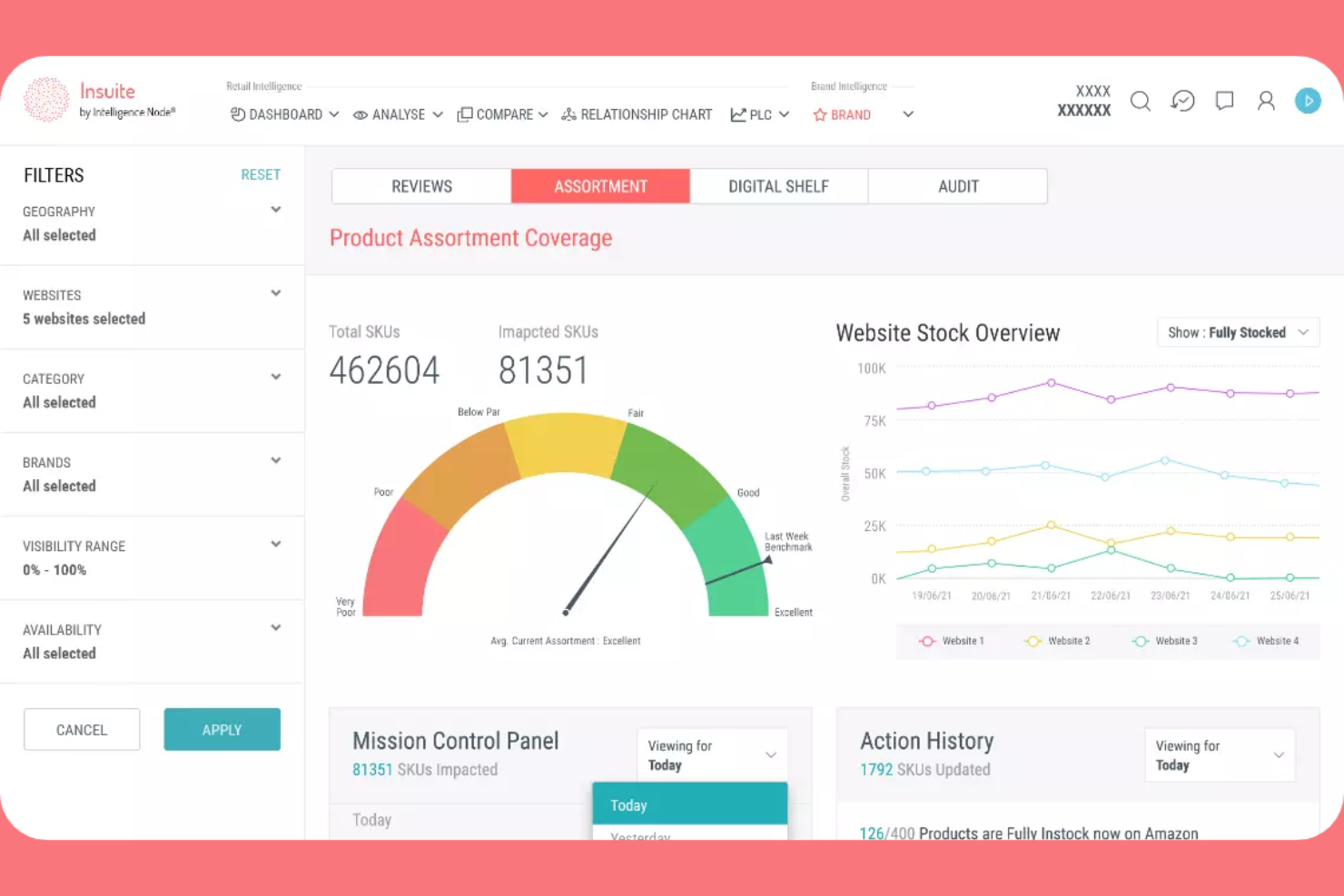
Intelligence Node è progettato per gestire il monitoraggio MAP su larga scala se gestisci un catalogo di prodotti ampio o complesso. La piattaforma è pensata per marchi e rivenditori enterprise che devono tracciare la conformità ai prezzi su migliaia di SKU e su più canali. L’abbinamento automatizzato dei prodotti e la copertura dei dati in tempo reale di Intelligence Node ti aiutano a stare al passo con assortimenti ad alto volume e in continua evoluzione.
Perché ho scelto Intelligence Node
Per i marchi con migliaia di SKU, Intelligence Node offre un monitoraggio MAP pensato appositamente per la scalabilità. Ho scelto Intelligence Node perché utilizza un abbinamento dei prodotti guidato dall’IA per tracciare con precisione i prezzi anche in cataloghi molto ampi, anche quando le inserzioni variano per regione o venditore.
La raccolta dati in tempo reale della piattaforma copre una vasta gamma di rivenditori e marketplace online, così puoi individuare rapidamente le violazioni. Se la tua azienda necessita di monitorare la conformità MAP per un assortimento ampio e in continua evoluzione, l'automazione e l’ampiezza di Intelligence Node la rendono una scelta ideale.
Caratteristiche principali di Intelligence Node
Altre funzionalità che rendono Intelligence Node utile per il monitoraggio MAP includono:
- Avvisi automatici di violazione: Notifica al tuo team quando vengono rilevate violazioni MAP sui canali monitorati.
- Dashboard personalizzabili: Ti permette di visualizzare dati sui prezzi e tendenze di conformità in formati adatti al tuo flusso di lavoro.
- Onboarding di prodotti in blocco: Supporta l’importazione e la gestione di ampie liste di prodotti per il monitoraggio su larga scala.
- Analisi storica dei prezzi: Fornisce accesso ai dati passati sui prezzi per analisi delle tendenze e report di conformità.
Integrazioni di Intelligence Node
Le integrazioni native non sono attualmente elencate.
Pros and Cons
Pros:
- Abbinamento prodotti tramite IA per cataloghi estesi
- Monitoraggio in tempo reale su marketplace globali
- Dashboard personalizzabili per il monitoraggio della conformità
Cons:
- Nessuna integrazione nativa pubblica elencata
- I prezzi partono da budget per aziende di livello enterprise

Ideale per il monitoraggio multilingue

Se la tua azienda ha bisogno di monitorare i prezzi MAP in più lingue e mercati, NetRivals è progettato per questa sfida. La piattaforma aiuta brand e rivenditori a tracciare prezzi e conformità su scala globale, supportando decine di lingue e valute. NetRivals è particolarmente utile per i team che gestiscono cataloghi internazionali e necessitano di dati precisi e localizzati sull’intelligenza dei prezzi.
Perché ho scelto NetRivals
NetRivals si distingue per la sua capacità di monitorare i prezzi MAP su un’ampia gamma di lingue e regioni. Ho scelto NetRivals perché supporta la raccolta di dati localizzata, permettendoti di tracciare prezzi e conformità MAP nella lingua e valuta locale di ciascun mercato.
Il motore di matching dei prodotti della piattaforma è progettato per gestire cataloghi internazionali, così puoi confrontare accuratamente SKU e offerte oltre i confini. Per le aziende che operano in più paesi, NetRivals consente di mantenere gli standard MAP senza barriere linguistiche o di localizzazione.
Funzionalità principali di NetRivals
Ho anche trovato diverse altre funzionalità che supportano il monitoraggio dei prezzi MAP con NetRivals:
- Avvisi automatici sulle violazioni MAP: Invia notifiche quando il prezzo di un rivenditore scende sotto la soglia MAP da te impostata.
- Strumenti di reportistica personalizzabili: Ti permettono di generare e programmare report dettagliati su prezzi e conformità.
- Copertura marketplace e rivenditori diretti: Monitora sia i marketplace online sia i siti dei singoli rivenditori per i dati sui prezzi.
- Grafici visuali della cronologia dei prezzi: Mostra l’andamento storico dei prezzi di ciascun prodotto in un formato di facile consultazione.
Integrazioni di NetRivals
Le integrazioni includono Shopify, Akeneo PIM, PrestaShop, Shopware, WooCommerce, Google Analytics, NetAmplify, NetMarkets e un’API per integrazioni personalizzate.
Pros and Cons
Pros:
- Offre la cronologia visuale dei prezzi per ogni SKU
- Reportistica personalizzabile per audit di conformità MAP
- Si integra nativamente con le principali piattaforme ecommerce
Cons:
- Alcune integrazioni richiedono configurazione tecnica
- Nessuna app mobile dedicata per gli avvisi
Dealavo
Ideale per opzioni di reportistica personalizzabile
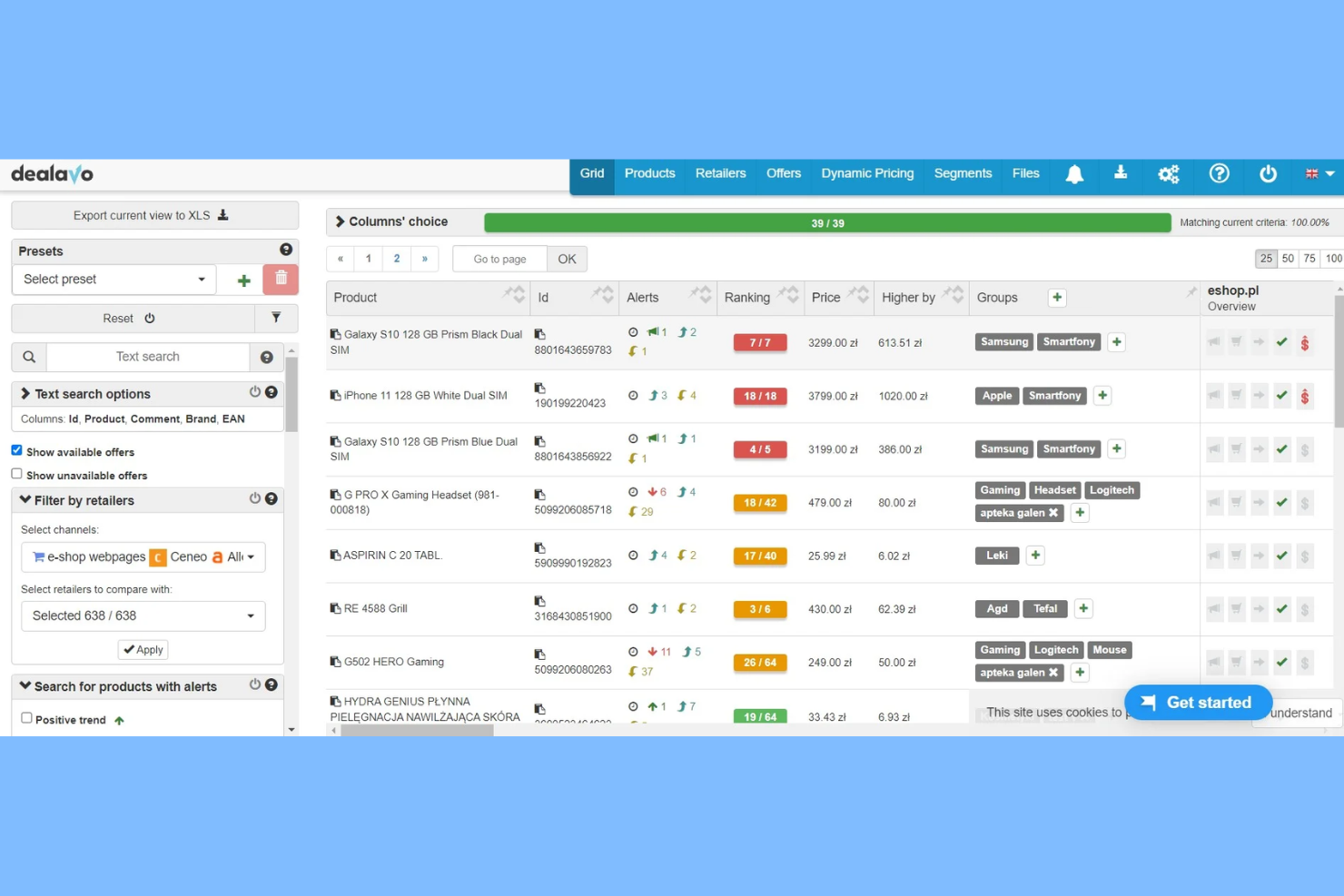
Dealavo offre a rivenditori e marchi strumenti flessibili per monitorare il rispetto delle regole MAP e i prezzi di mercato su più canali. La piattaforma è particolarmente adatta a responsabili ecommerce e analisti che necessitano di report personalizzabili per approfondire le tendenze dei prezzi e l'attività dei concorrenti. Dealavo si distingue per le sue opzioni avanzate di filtraggio e reportistica, aiutandoti a personalizzare le analisi in base alle esigenze uniche della tua strategia di prezzo.
Perché ho scelto Dealavo
Le opzioni di reportistica personalizzabile rendono Dealavo una scelta eccellente per il monitoraggio dei prezzi MAP. Ho scelto Dealavo perché consente di creare dashboard e report su misura, in modo da potersi concentrare sui dati più rilevanti per il proprio business.
La piattaforma supporta filtri avanzati, permettendo di segmentare i dati sui prezzi per canale, prodotto o concorrente. Per i team che devono analizzare la conformità MAP da diverse prospettive, i suoi strumenti di reportistica flessibili consentono di ottenere velocemente informazioni utili.
Caratteristiche principali di Dealavo
Altre funzionalità che rendono Dealavo utile per il monitoraggio MAP includono:
- Monitoraggio dinamico dei prezzi: Monitora in tempo reale le variazioni di prezzo presso diversi rivenditori online.
- Avvisi di violazione MAP: Invio di notifiche quando il prezzo di un prodotto scende sotto la soglia impostata.
- Analisi storica dei prezzi: Permette di esaminare e confrontare l'evoluzione dei prezzi nel tempo.
- Monitoraggio dell'assortimento: Tiene traccia della disponibilità dei prodotti e delle variazioni di assortimento sui vari canali.
Integrazioni Dealavo
Le integrazioni includono WooCommerce, Shopware, Shopify, Adobe Commerce, eBay, GA4, JTL, Amazon Marketplace, Google Shopping e integrazione tramite API.
Pros and Cons
Pros:
- Report personalizzabili per la conformità MAP
- Monitoraggio in tempo reale dei prezzi su più canali
- Dati storici sui prezzi per l'analisi delle tendenze
Cons:
- Capacità di monitoraggio limitate per rivenditori offline
- L'interfaccia può risultare affollata con cataloghi molto grandi

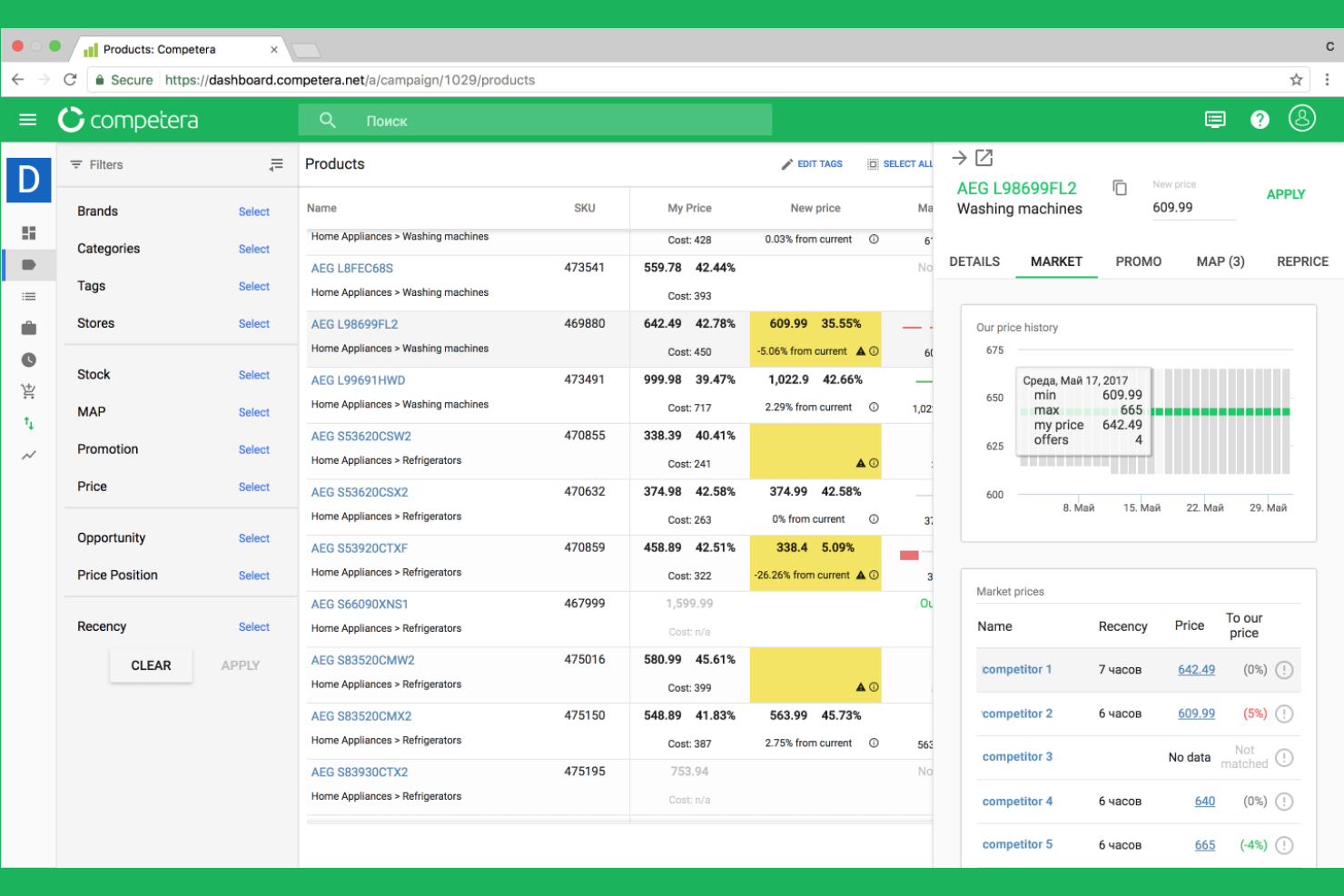
Competera merita un attento esame se stai cercando un monitoraggio dei prezzi MAP che utilizzi l'IA per fornire informazioni utili e azionabili. La piattaforma è progettata per rivenditori e marchi che desiderano perfezionare le decisioni sui prezzi tramite machine learning e analisi avanzata. L'approccio basato sull'IA di Competera ti aiuta a identificare lacune nei prezzi, monitorare la conformità e adattarti ai cambiamenti di mercato con raccomandazioni basate sui dati.
Perché ho scelto Competera
Ciò che distingue Competera è l'uso dell'IA per offrire approfondimenti approfonditi sui prezzi che vanno oltre il semplice monitoraggio MAP. Ho scelto Competera perché analizza grandi volumi di dati sui prezzi e segnali di mercato per raccomandare i prezzi ottimali e segnalare le violazioni MAP.
I modelli di machine learning della piattaforma ti aiutano a comprendere le tendenze dei prezzi e le mosse dei concorrenti in tempo reale. Per i team che vogliono passare da un'applicazione reattiva ad una proattiva delle norme MAP, l'analisi guidata dall'IA di Competera offre un chiaro vantaggio.
Caratteristiche principali di Competera
Altre funzionalità che rendono Competera utile per il monitoraggio dei prezzi MAP includono:
- Motore di pricing dinamico: Regolazioni automatiche dei prezzi basate su dati di mercato in tempo reale e regole aziendali.
- Sistema di allerta basato su regole: Ti avvisa quando si verificano violazioni MAP o anomalie nei prezzi.
- Dashboard personalizzabili: Ti permette di visualizzare prezzi, conformità e dati di mercato nei formati che meglio si adattano al tuo flusso di lavoro.
- Importazione di prodotti in blocco: Ti consente di caricare e gestire ampi cataloghi di prodotti per il monitoraggio.
Integrazioni con Competera
Le integrazioni includono Shopify, Adobe Commerce, SAP, Salesforce, Amazon e altro ancora.
Pros and Cons
Pros:
- Raccomandazioni sui prezzi basate sull'IA per il rispetto delle norme MAP
- Dashboard visivi per la conformità e le tendenze dei prezzi
- Monitoraggio di prodotti in blocco per ampi assortimenti
Cons:
- Richiede onboarding per funzionalità avanzate di IA
- Documentazione limitata per la configurazione tecnica

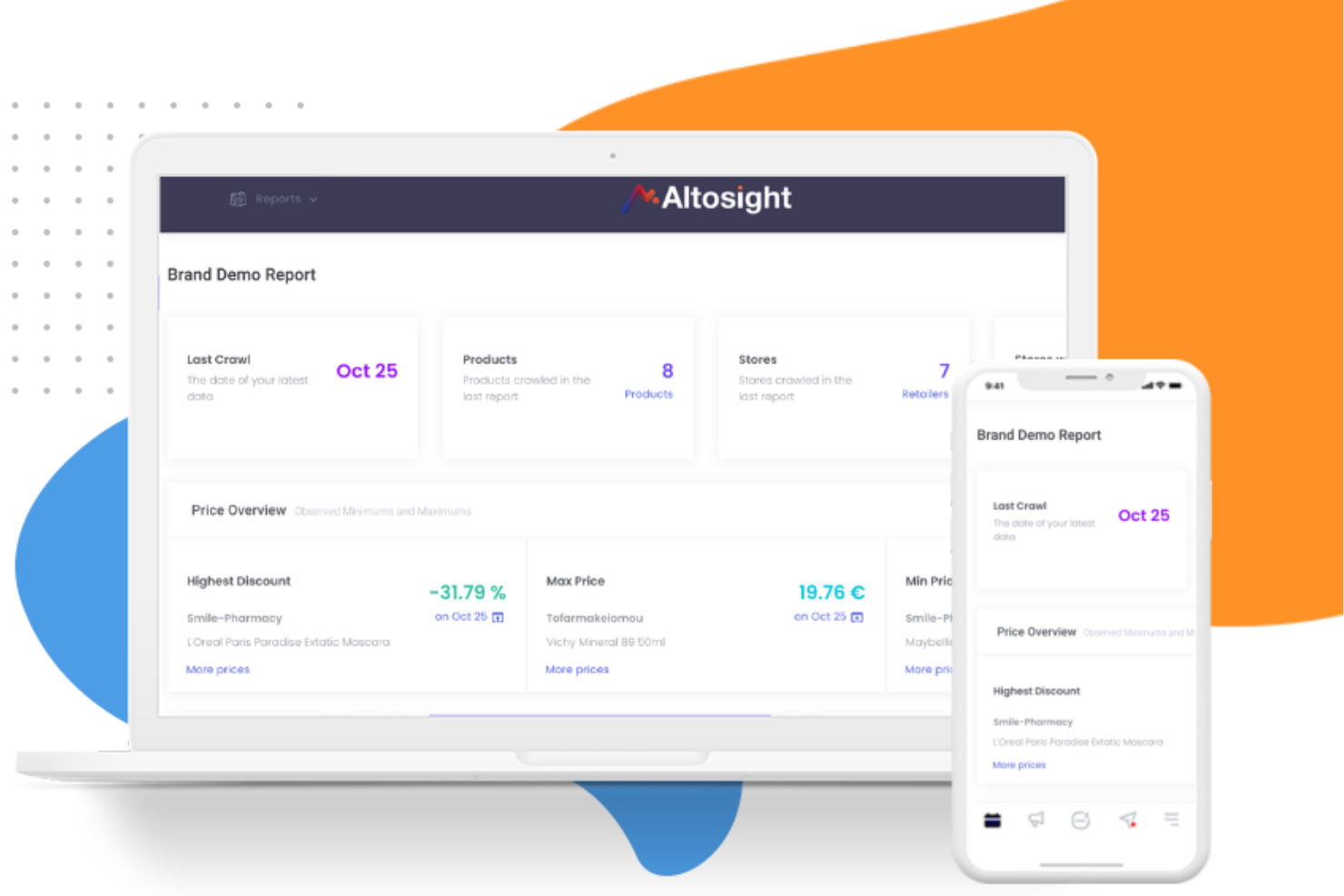
Altosight si distingue per i marchi e i rivenditori che hanno bisogno di un monitoraggio dei prezzi MAP costantemente aggiornato nei negozi online. La piattaforma è pensata per team che non possono permettersi di perdere rapidi cambiamenti di prezzo o violazioni MAP, specialmente in categorie ecommerce dinamiche. Grazie agli aggiornamenti dei dati in tempo reale, Altosight ti aiuta a individuare i problemi di prezzo man mano che si verificano e a reagire rapidamente.
Perché ho scelto Altosight
Gli aggiornamenti dei dati in tempo reale di Altosight lo rendono una scelta efficace per i marchi che devono reagire prontamente alle violazioni MAP. Ho scelto Altosight perché monitora continuamente i rivenditori online e aggiorna i dati sui prezzi non appena avvengono delle modifiche, così non rimani mai all’oscuro di improvvisi cali di prezzo.
Il sistema di allerta istantanea della piattaforma ti avvisa immediatamente non appena si verifica una violazione MAP, permettendo così un intervento immediato. Per i team che gestiscono linee di prodotto ad alta velocità o accordi sui prezzi sensibili, il monitoraggio in tempo reale di Altosight è un vantaggio fondamentale.
Funzionalità principali di Altosight
Altre funzionalità che rendono Altosight prezioso per il monitoraggio MAP includono:
- Dashboard di report personalizzabile: consente di adattare la visualizzazione dei dati e dei report alle esigenze del tuo team.
- Monitoraggio prodotti in massa: controlla migliaia di SKU su più rivenditori online contemporaneamente.
- Confronto prezzi con la concorrenza: mostra a confronto i prezzi dei tuoi prodotti e di quelli dei concorrenti.
- Esportazione automatica dei dati: programma esportazioni regolari dei dati sui prezzi nei formati o sistemi di tua preferenza.
Integrazioni Altosight
Le integrazioni includono Google Looker Studio e integrazione API per flussi di lavoro personalizzati.
Pros and Cons
Pros:
- Aggiornamenti dei prezzi in tempo reale per avvisi MAP immediati
- Dashboard di report personalizzabile per analisi su misura
- Monitoraggio in massa degli SKU per grandi cataloghi prodotti
Cons:
- Nessuna app mobile per il monitoraggio da remoto
- L'accesso API richiede configurazione e supporto tecnico

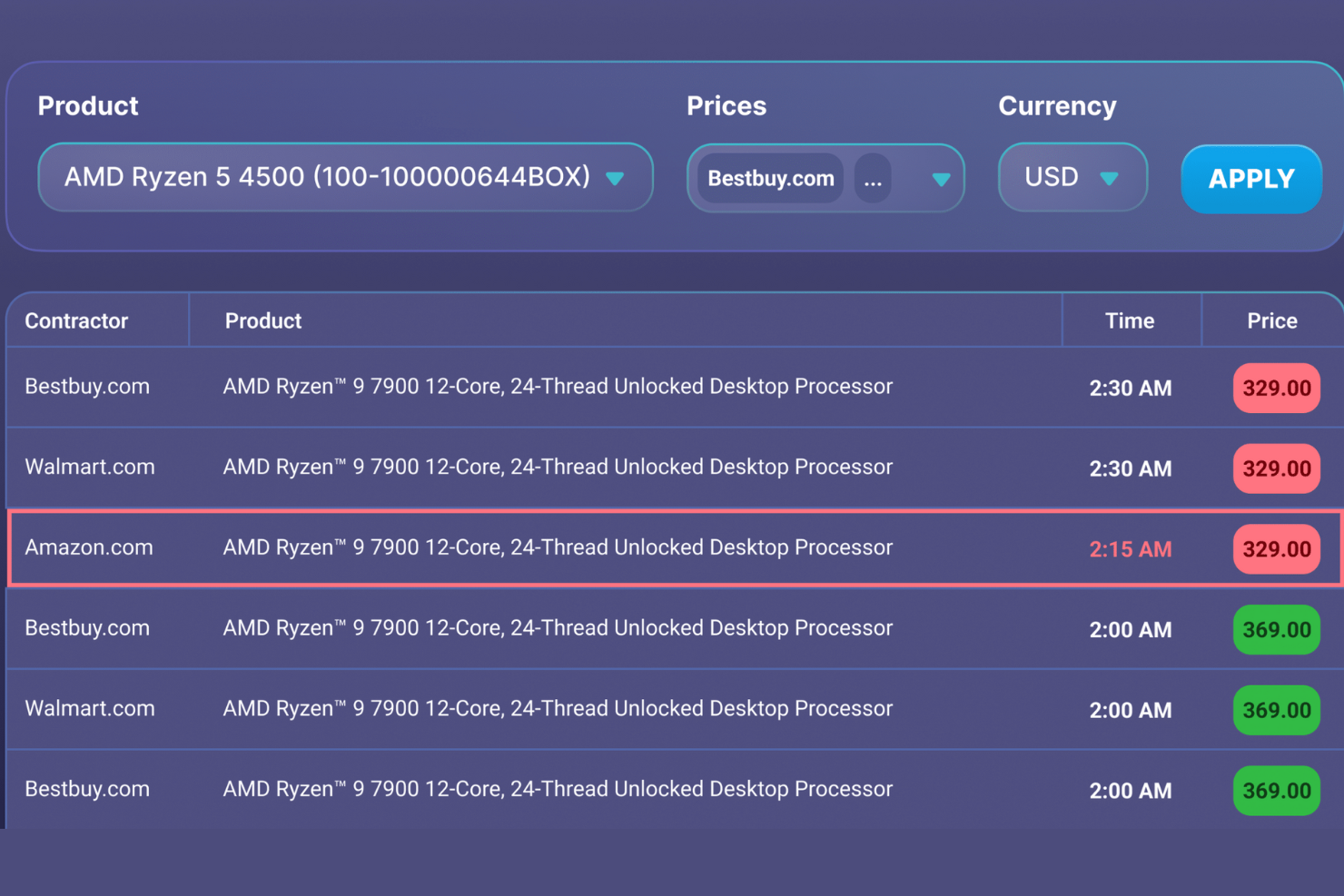
Pricer24 offre una soluzione mirata se hai bisogno di monitorare i prezzi dei prodotti in diversi paesi e valute. La piattaforma è progettata per marchi e produttori che gestiscono la distribuzione globale e politiche di prezzo complesse. Pricer24 ti aiuta a monitorare la conformità alle politiche MAP e a identificare problemi di prezzo nei mercati internazionali.
Perché ho scelto Pricer24
Ho scelto Pricer24 perché è specializzato nel monitoraggio dei prezzi sui mercati globali, fondamentale per i brand con distribuzione internazionale. La piattaforma supporta il monitoraggio in più valute e ti permette di confrontare i prezzi dello stesso prodotto in paesi diversi. Mi piace che
Pricer24 offra avvisi dettagliati sulle violazioni MAP e reportistica specifica per regione, così puoi individuare e risolvere rapidamente i problemi di prezzo ovunque si verifichino. Questa attenzione alla copertura globale lo rende ideale per le aziende che gestiscono la conformità MAP su scala internazionale.
Funzionalità principali di Pricer24
Altre funzionalità di Pricer24 che si distinguono per il monitoraggio dei prezzi MAP includono:
- Monitoraggio dinamico delle variazioni di prezzo: Monitora e registra ogni variazione di prezzo dei tuoi prodotti su tutti i canali controllati.
- Acquisizione automatica di screenshot: Acquisisce e archivia screenshot delle schede prodotto per fornire prove visive delle violazioni MAP.
- Analisi dell’assortimento dei concorrenti: Confronta il tuo assortimento di prodotti con quello dei concorrenti per individuare lacune o sovrapposizioni nella copertura del mercato.
- Strumenti di reportistica personalizzabili: Ti consentono di creare e pianificare report su misura per soddisfare le specifiche esigenze di monitoraggio e conformità del tuo team.
Integrazioni Pricer24
Le integrazioni native al momento non sono elencate.
Pros and Cons
Pros:
- Elevata precisione nell'abbinamento dei prodotti
- Avvisi in tempo reale sulle violazioni MAP
- Supporta il monitoraggio in più paesi e valute
Cons:
- Nessuna integrazione nativa pubblica elencata
- Le informazioni sui prezzi non sono trasparenti

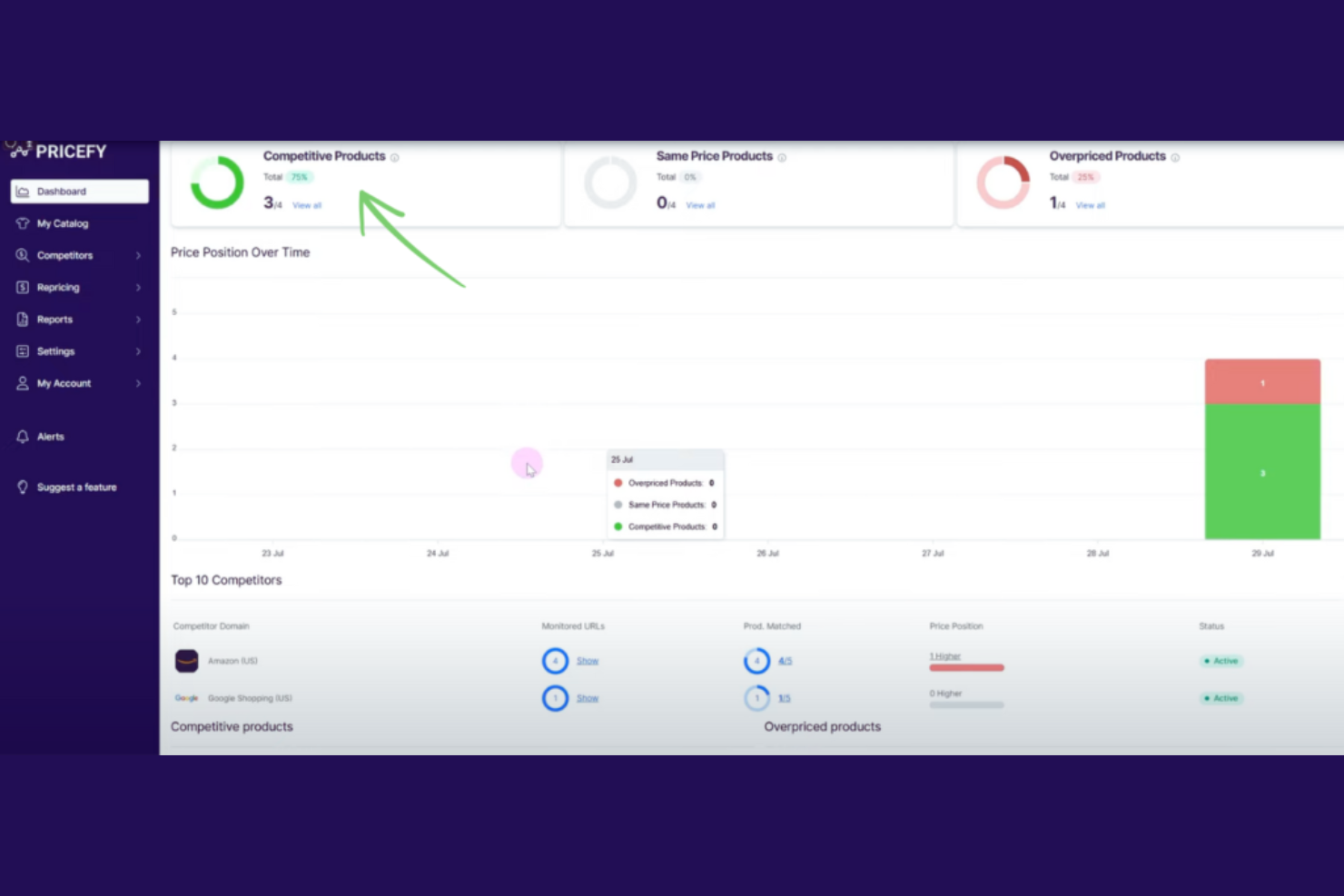
Pricefy offre un approccio altamente automatizzato per marchi e produttori che necessitano di avvisi immediati sulle violazioni del MAP. La piattaforma è pensata per i team che vogliono individuare rapidamente riduzioni di prezzo non autorizzate e agire prima che incidano sui rapporti con i canali di vendita. Il sistema di monitoraggio e notifica in tempo reale di Pricefy ti permette di restare sempre aggiornato sulle questioni di conformità senza sforzo manuale.
Perché ho scelto Pricefy
Ciò che distingue Pricefy è il suo focus sulla consegna automatica di avvisi di violazione, fondamentale per i marchi che devono rispondere rapidamente alle violazioni del MAP. La piattaforma monitora continuamente rivenditori online e marketplace, inviando avvisi immediati quando rileva riduzioni di prezzo non autorizzate.
Apprezzo il fatto che Pricefy consenta di personalizzare le soglie di allerta e i canali di notifica, così la tua squadra può dare priorità alle questioni più urgenti. Questo livello di automazione ti aiuta a mantenere la conformità sui prezzi senza controlli manuali costanti.
Caratteristiche principali di Pricefy
Oltre agli avvisi automatizzati sulle violazioni, Pricefy offre diverse altre funzionalità pensate per il monitoraggio dei prezzi MAP:
- Importazione prodotti in blocco: consente di caricare ampi cataloghi di prodotti da monitorare tramite file CSV.
- Gestione delle regole MAP e MSRP: permette di impostare e gestire diverse regole di prezzo per ciascun prodotto o marchio.
- Tracciamento storico dei prezzi: archivia e mostra le variazioni di prezzo passate di ciascun prodotto monitorato.
- Dashboard personalizzabile: offre un'interfaccia configurabile per organizzare e visualizzare i dati di monitoraggio più importanti.
Integrazioni di Pricefy
Le integrazioni includono Shopify, WooCommerce, Adobe Commerce, BigCommerce, PrestaShop, Wix e altro ancora.
Pros and Cons
Pros:
- Avvisi automatizzati di violazione MAP via email
- Importazione prodotti in blocco con supporto CSV
- Tracciamento storico dei prezzi per tutti i prodotti
Cons:
- Pochi strumenti avanzati di analisi o reportistica
- Le opzioni di personalizzazione degli avvisi sono piuttosto limitate

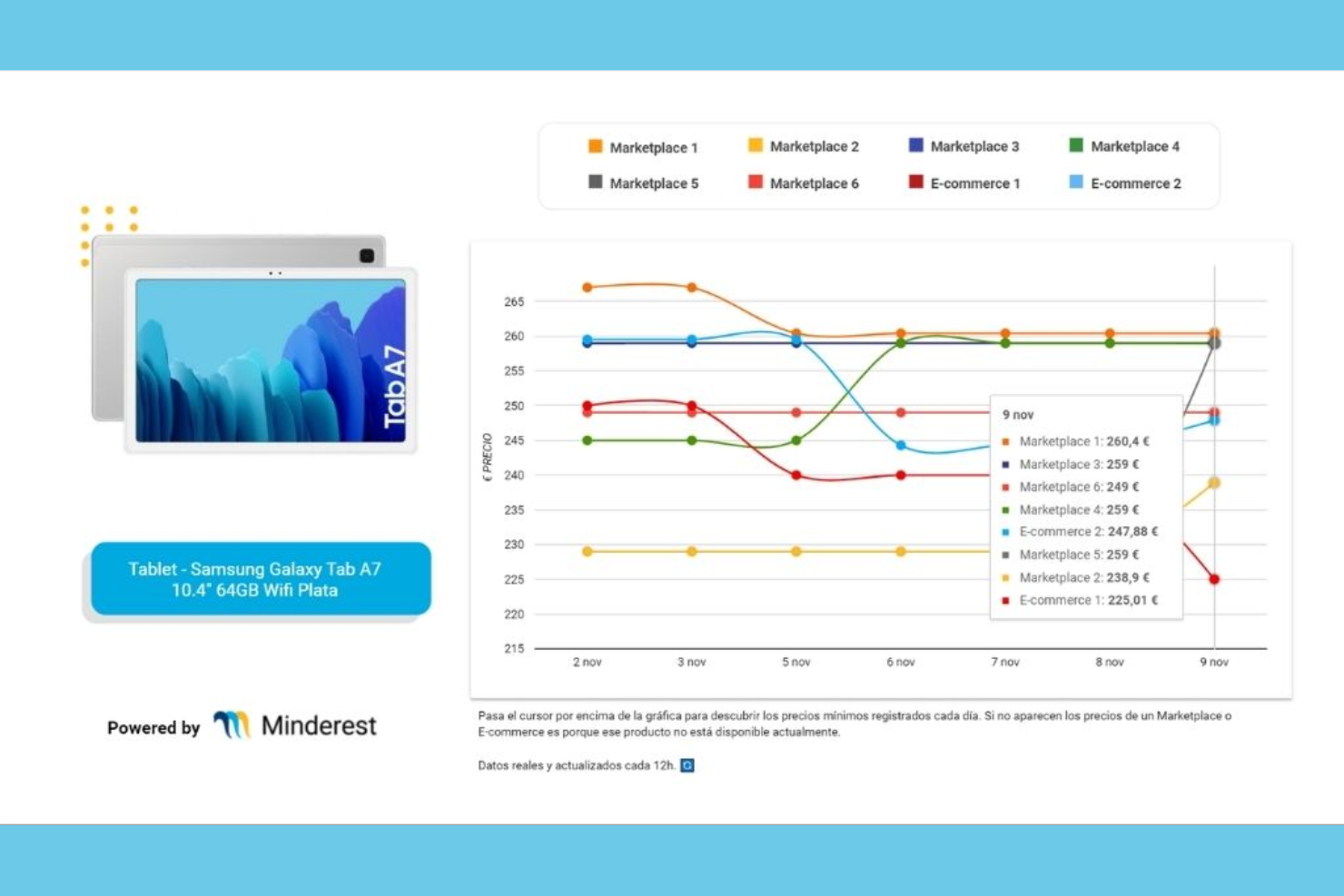
Minderest offre dashboard di analisi avanzate personalizzate per il monitoraggio dei prezzi MAP, fornendo ai team retail ed ecommerce una visibilità approfondita sulle tendenze dei prezzi. La piattaforma è progettata per brand e rivenditori che desiderano analizzare i prezzi dei concorrenti, monitorare le violazioni MAP e visualizzare i dati sui prezzi in dettaglio. Minderest ti aiuta a trasformare informazioni complesse sui prezzi in insight azionabili per la conformità e la strategia di pricing.
Perché ho scelto Minderest
Ciò che distingue Minderest è l'attenzione alle dashboard di analisi avanzate che offrono una visione dettagliata della conformità MAP e delle tendenze di prezzo. Ho scelto Minderest perché permette di visualizzare i dati sui prezzi con dashboard personalizzabili e strumenti di reportistica dettagliati, facilitando l'individuazione di violazioni e cambiamenti nel mercato.
La piattaforma supporta un'analisi approfondita dei concorrenti, così puoi confrontare i tuoi prezzi e monitorare come i tuoi prodotti sono posizionati nei diversi canali. Per i team che vogliono andare oltre il monitoraggio di base e sfruttare insight basati sui dati, Minderest offre una profondità di analisi che molti altri strumenti di monitoraggio dei prezzi MAP non hanno.
Caratteristiche principali di Minderest
Altre funzionalità di Minderest che supportano il monitoraggio dei prezzi MAP includono:
- Avvisi automatici di violazione MAP: Invia notifiche quando vengono rilevate violazioni dei prezzi nei canali monitorati.
- Motore di regole di prezzo dinamico: Ti consente di impostare regole personalizzate per il prezzo e l'applicazione delle MAP.
- Tracciamento storico dei prezzi: Memorizza e mostra i dati sui prezzi passati per l'analisi delle tendenze e la documentazione di conformità.
- Supporto multivaluta e internazionale: Monitora prezzi e conformità MAP in diversi paesi e valute.
Integrazioni Minderest
Le integrazioni includono Power BI, Tableau, Looker Studio, Adobe Commerce (Magento), PrestaShop, Shopify e un'API per integrazioni personalizzate.
Pros and Cons
Pros:
- Dashboard avanzate visualizzano le tendenze di conformità MAP
- Supporta monitoraggio multivaluta e internazionale
- Motore di regole dinamiche per l'applicazione delle MAP
Cons:
- Nessun dettaglio pubblico sui prezzi disponibile
- L'interfaccia può risultare complessa per i nuovi utenti

Trade Vitality è pensato per i marchi che devono far rispettare le politiche MAP e proteggere la propria reputazione sui canali online. La piattaforma è rivolta a brand manager e team legali che desiderano un rilevamento automatico delle violazioni MAP e flussi di lavoro per la conformità semplificati. Trade Vitality si distingue per la sua attenzione alla protezione del marchio, aiutandoti a identificare rapidamente i venditori non autorizzati e a documentare le violazioni per prendere provvedimenti.
Perché ho scelto Trade Vitality
Ciò che distingue Trade Vitality è la sua forte attenzione alla conformità alla protezione del marchio, essenziale per le aziende che devono far rispettare le politiche MAP presso diversi rivenditori online. Ho scelto Trade Vitality perché automatizza il rilevamento delle violazioni MAP e offre strumenti per documentare e gestire le azioni correttive.
La piattaforma ti permette di tracciare i venditori non autorizzati e generare report di conformità, facilitando la costruzione di un caso per l'applicazione delle regole. Per i brand che danno priorità alla protezione della reputazione e all'integrità dei prezzi, Trade Vitality offre funzionalità mirate che supportano una strategia di conformità proattiva.
Funzionalità di Trade Vitality
Altre funzionalità che rendono Trade Vitality utile per il monitoraggio MAP includono:
- Caricamento massivo dei prodotti: Consente di aggiungere ampi cataloghi di prodotti da monitorare in un'unica operazione.
- Cattura automatica degli screenshot: Acquisisce e conserva screenshot delle violazioni MAP per la documentazione.
- Soglie di violazione personalizzabili: Permette di impostare regole MAP specifiche per diversi prodotti o rivenditori.
- Sistema di notifiche email: Invia avvisi al tuo team quando vengono rilevate nuove violazioni MAP.
Integrazioni di Trade Vitality
Le integrazioni native non sono attualmente elencate.
Pros and Cons
Pros:
- Documentazione automatica delle violazioni MAP tramite screenshot
- Caricamento massivo di prodotti per grandi cataloghi
- Regole MAP personalizzabili per rivenditore
Cons:
- Nessuna app mobile per il monitoraggio in mobilità
- Nessuna documentazione API pubblica per flussi di lavoro personalizzati
Altri software per il monitoraggio dei prezzi MAP
Ecco alcune ulteriori opzioni di software per il monitoraggio dei prezzi MAP che non sono state incluse nel mio elenco ristretto, ma che vale comunque la pena valutare:


Come Valuto il Software di Monitoraggio dei Prezzi MAP
Divido la valutazione in due livelli: le capacità di base di rilevamento e monitoraggio MAP che uno strumento deve possedere, e i fattori differenzianti che dimostrano quali piattaforme sono effettivamente pensate per l’applicazione del brand.
Funzionalità Principali (Requisiti Minimi per Questa Lista)
Quando seleziono gli strumenti per la mia lista, valuto ognuno su una scala da 0 (non offre la funzionalità) a 5 (eccelle in quest’area) per ciascuna delle funzionalità principali elencate di seguito. Successivamente, calcolo il punteggio totale dello strumento come percentuale. Ogni strumento deve raggiungere un punteggio totale minimo del 65% per essere considerato per l’inclusione.
- Rilevamento Violazioni MAP: Controllo se lo strumento può segnalare automaticamente le inserzioni che scendono sotto le soglie MAP impostate, incluse le violazioni più insidiose come le riduzioni di prezzo applicate dopo coupon o nel carrello.
- Monitoraggio Prezzi Multi-Canale: La copertura è fondamentale qui—verifico su quanti marketplace, siti di rivenditori e canali di vendita ogni strumento monitora e con quale frequenza aggiorna i dati sui prezzi.
- Identificazione e Mappatura dei Venditori: Valuto quanto bene la piattaforma colleghi venditori attraverso alias e vetrine diverse, dato che chi viola ripetutamente su Amazon o eBay raramente usa due volte lo stesso nome.
- Avvisi Automatici di Violazione: Il sistema di alert dovrebbe permettere l’instradamento delle notifiche per gravità, brand o linea di prodotto così che i responsabili della conformità vedano solo le informazioni rilevanti.
- Strumenti di Workflow per l’Applicazione: Cerco funzioni di registrazione delle violazioni con prove datate, modelli per le comunicazioni e tracciamento dei casi che diano al vostro team una documentazione chiara per ogni incidente.
- Reportistica e Analisi: Le dashboard dovrebbero evidenziare le tendenze delle violazioni e i tassi di conformità dei venditori nel tempo, così da poter misurare l’efficacia del vostro programma MAP.
Una volta ottenuta una lista di strumenti che soddisfano questi criteri, considero cosa distingue ogni piattaforma.
Fattori Differenzianti (Cosa Distingue i Fornitori)
Ecco come confronto i diversi fornitori:
Funzionalità Distintive
Il monitoraggio della "Buy Box" di Amazon è un importante elemento distintivo—cerco strumenti che tengano traccia di quali venditori detengono la Buy Box e come variano i prezzi in quella sezione, poiché è lì che avviene la maggior parte degli acquisti. Anche l’automazione delle prove tramite screenshot è importante perché fornisce al team legale o di conformità prove datate senza acquisizioni manuali. Valuto se le piattaforme utilizzano un sistema di abbinamento venditori basato su AI per collegare alias tra marketplace, aiutando a scoprire lo stesso violatore che opera con nomi diversi su Amazon ed eBay.
Oltre le Funzionalità
La precisione dei dati e la frequenza di aggiornamento sono le prime cose che verifico—uno strumento che effettua controlli solo una volta al giorno può perdere flash sale o codici coupon a durata limitata che violano la politica MAP. Valuto anche come una piattaforma gestisce cataloghi SKU molto ampi, soprattutto per brand che gestiscono migliaia di prodotti in molteplici categorie. Anche l’integrazione con il vostro stack esistente è fondamentale; inviare i dati delle violazioni a Salesforce o a un tool di BI come Tableau permette al vostro team commerciale di agire sulle informazioni senza dover cambiare piattaforma.
Come scegliere un software per il monitoraggio dei prezzi MAP
È facile perdersi in lunghi elenchi di funzionalità e strutture tariffarie complesse. Per aiutarti a mantenere la concentrazione mentre affronti il tuo specifico processo di selezione del software, ecco un elenco dei fattori da tenere presenti:
| Fattore | Cosa considerare |
|---|---|
| Scalabilità | Il software è in grado di gestire il volume attuale e previsto di SKU, il numero di canali e le modifiche al catalogo? |
| Integrazioni | Si collega nativamente alle tue piattaforme di commercio elettronico, ERP o analisi, oppure saranno necessarie soluzioni alternative personalizzate? |
| Personalizzazione | Puoi adattare dashboard, avvisi e reportistica ai flussi di lavoro e alle politiche di conformità del tuo team? |
| Facilità d'uso | Il tuo team sarà in grado di consultare i dati e intervenire senza una formazione approfondita o un supporto tecnico? |
| Implementazione e avviamento | Quanto tempo occorrerà per rendere operativo il sistema e quali risorse o supporto fornirà il fornitore durante la configurazione? |
| Costo | I livelli tariffari sono trasparenti e sono in linea con i tuoi modelli di utilizzo e i vincoli di budget? |
| Misure di sicurezza | Il fornitore offre la crittografia dei dati, controlli degli accessi e conformità agli standard pertinenti in materia di privacy? |
| Disponibilità del supporto | Quali canali di supporto sono disponibili e i tempi di risposta e il livello di competenza sono sufficienti per le esigenze della tua azienda? |
Che cos'è un software per il monitoraggio dei prezzi MAP?
Il software per il monitoraggio dei prezzi MAP è uno strumento che traccia e analizza i prezzi dei prodotti online per garantire che i rivenditori rispettino le politiche relative al prezzo minimo pubblicizzato (MAP) stabilite dai marchi o dai produttori.
Queste piattaforme analizzano automaticamente siti web, marketplace e canali digitali, segnalando le violazioni e fornendo report affinché le aziende possano proteggere il valore del marchio, mantenere una concorrenza leale e reagire rapidamente ai problemi di prezzo.
Funzionalità
Quando selezioni un software per il monitoraggio dei prezzi MAP, presta attenzione alle seguenti funzionalità principali:
- Monitoraggio automatizzato dei prezzi: Esegue scansioni continue dei negozi online e dei marketplace per acquisire i prezzi correnti dei prodotti del tuo catalogo.
- Avvisi sulle violazioni MAP: Notifica al tuo team quando un rivenditore pubblicizza un prodotto a un prezzo inferiore rispetto alla tua politica di prezzo minimo pubblicizzato.
- Report personalizzabili: Ti consente di generare e pianificare report dettagliati sulle tendenze dei prezzi, sulle violazioni e sulla cronologia della conformità.
- Gestione massiva dei prodotti: Consente di caricare, organizzare e monitorare in modo efficiente elenchi di prodotti molto estesi.
- Dati storici sui prezzi: Memorizza le informazioni sui prezzi passati, consentendoti di analizzare le tendenze e identificare i problemi ricorrenti.
- Monitoraggio multicanale: Tiene traccia dei prezzi su diversi canali online, inclusi i siti diretti dei rivenditori e i marketplace di terze parti.
- Controlli degli accessi degli utenti: Ti consentono di impostare autorizzazioni e ruoli per i diversi membri del team che gestiscono la conformità MAP.
- Dati esportabili: Offre opzioni per scaricare i dati sui prezzi e sulle violazioni in formati come CSV o Excel, per ulteriori analisi o per la condivisione.
- Dashboard della conformità: Offre panoramiche visive dello stato di conformità MAP, delle violazioni e delle tendenze, per prendere decisioni rapidamente.
Funzionalità comuni di intelligenza artificiale dei software per il monitoraggio dei prezzi MAP
Oltre alle funzionalità standard dei software per il monitoraggio dei prezzi MAP elencate sopra, molte di queste soluzioni stanno integrando l'intelligenza artificiale con funzionalità come:
- Abbinamento dei prodotti basato sull'intelligenza artificiale: Utilizza l'apprendimento automatico per identificare e abbinare con precisione i prodotti tra diversi rivenditori, anche quando i titoli, le immagini o le descrizioni dei prodotti variano.
- Rilevamento predittivo delle violazioni: Analizza i prezzi storici e il comportamento dei venditori per prevedere quali prodotti o rivenditori hanno maggiori probabilità di violare le politiche MAP in futuro.
- Rilevamento automatizzato delle anomalie: Segnala schemi di prezzo insoliti o attività sospette che potrebbero indicare venditori non autorizzati o violazioni MAP nascoste.
- Analisi dinamica comparativa dei concorrenti: Apprende continuamente dai dati di mercato per fornire informazioni in tempo reale su come i tuoi prezzi si confrontano con quelli dei concorrenti, adeguando le raccomandazioni in base ai cambiamenti del mercato.
- Elaborazione del linguaggio naturale per il monitoraggio delle politiche: Analizza e interpreta gli elenchi e le descrizioni dei prodotti per rilevare violazioni MAP sottili che potrebbero non essere evidenti basandosi soltanto sul prezzo.
Vantaggi
L'implementazione di un software per il monitoraggio dei prezzi MAP offre diversi vantaggi al tuo team e alla tua azienda. Ecco alcuni dei risultati che puoi aspettarti:
- Rilevamento più rapido delle violazioni MAP: Il monitoraggio automatizzato e gli avvisi in tempo reale aiutano il tuo team a individuare e risolvere i problemi relativi ai prezzi prima che si aggravino.
- Maggiore protezione del marchio: L'applicazione coerente delle politiche MAP su tutti i canali preserva il valore e la reputazione del tuo marchio sul mercato.
- Maggiore trasparenza dei prezzi: Le dashboard centralizzate e i report personalizzabili offrono una visione chiara delle tendenze dei prezzi e della conformità presso tutti i rivenditori.
- Gestione efficiente su larga scala: L'inserimento massivo dei prodotti e il monitoraggio multicanale rendono pratico supervisionare migliaia di SKU senza interventi manuali.
- Processo decisionale basato sui dati: L'accesso ai dati storici sui prezzi e agli strumenti di analisi supporta strategie di applicazione più efficaci e la pianificazione a lungo termine.
- Riduzione del carico di lavoro manuale: Il monitoraggio automatizzato, la reportistica e l'abbinamento dei prodotti basato sull'intelligenza artificiale riducono al minimo la necessità di controlli manuali che richiedono molto tempo.
- Collaborazione migliorata: I controlli degli accessi degli utenti e i dati esportabili facilitano la condivisione delle informazioni e il coordinamento degli sforzi del team per la conformità MAP.
Costi e prezzi
La scelta di un software per il monitoraggio dei prezzi MAP richiede la comprensione dei diversi modelli e piani tariffari disponibili. I costi variano in base alle funzionalità, alle dimensioni del team, ai componenti aggiuntivi e ad altri fattori. La tabella seguente riassume i piani più comuni, i relativi prezzi medi e le funzionalità tipicamente incluse nelle soluzioni software per il monitoraggio dei prezzi MAP:
Tabella comparativa dei piani dei software per il monitoraggio dei prezzi MAP
| Tipo di piano | Prezzo medio | Funzionalità comuni |
|---|---|---|
| Piano gratuito | $0 | Monitoraggio di base dei prezzi per un numero limitato di SKU, semplici avvisi sulle violazioni e reportistica di base. |
| Piano personale | $50-$150/mese | Monitoraggio dei prezzi per un catalogo ridotto, avvisi standard sulle violazioni, dashboard di base e supporto via e-mail. |
| Piano aziendale | $200-$600/mese | Monitoraggio multicanale, gestione dei prodotti in blocco, reportistica avanzata, controlli degli accessi degli utenti e integrazioni. |
| Piano per grandi aziende | $1,000+/mese | SKU illimitati, dashboard personalizzate, accesso API, gestione dedicata dell'account e strumenti avanzati per la conformità. |
Domande frequenti sul software di monitoraggio dei prezzi MAP
Ecco alcune risposte alle domande più comuni sul software di monitoraggio dei prezzi MAP:
Come rileva le violazioni MAP il software di monitoraggio dei prezzi MAP?
Il software di monitoraggio dei prezzi MAP analizza i negozi online e i marketplace, confrontando i prezzi indicati con la tua politica sul prezzo minimo pubblicizzato. Quando rileva un prodotto pubblicizzato al di sotto della soglia impostata, segnala la violazione e informa il tuo team, consentendoti di intervenire.
Il software di monitoraggio dei prezzi MAP può monitorare i prezzi su più marketplace?
Sì, la maggior parte dei software di monitoraggio dei prezzi MAP può monitorare i prezzi su più marketplace, comprese piattaforme importanti come Amazon, Walmart ed eBay. Questo ti aiuta a mantenere la conformità MAP indipendentemente dal canale online in cui vengono venduti i tuoi prodotti.
Quali misure di sicurezza dei dati dovrei cercare in un software di monitoraggio dei prezzi MAP?
Cerca un software che offra la crittografia dei dati, l’autenticazione sicura degli utenti e la conformità agli standard sulla privacy come il GDPR. Queste misure di protezione aiutano a tutelare i tuoi dati sui prezzi e le informazioni aziendali sensibili dagli accessi non autorizzati.
Quanto tempo occorre per implementare un software di monitoraggio dei prezzi MAP?
I tempi di implementazione variano, ma molte soluzioni offrono strumenti di onboarding, modelli per l’importazione dei prodotti e risorse di supporto per aiutarti a iniziare in pochi giorni o settimane. Le tempistiche dipendono dalle dimensioni del catalogo, dalle esigenze di integrazione e dalle risorse interne.
Posso personalizzare gli avvisi e i report nel software di monitoraggio dei prezzi MAP?
Sì, la maggior parte delle soluzioni consente di personalizzare le soglie degli avvisi, i canali di notifica e i formati dei report. Questa flessibilità garantisce che il tuo team riceva informazioni pertinenti in un modo adatto ai flussi di lavoro e ai processi di conformità.
Cosa fare ora:
Se stai cercando un software di monitoraggio dei prezzi MAP, contatta gratuitamente un consulente SoftwareSelect per ricevere consigli.
Compili un modulo e svolgi una breve conversazione durante la quale il consulente approfondirà le tue esigenze specifiche. Dopodiché riceverai una selezione ristretta di software da valutare. Ti supporterà persino durante l'intero processo di acquisto, comprese le negoziazioni sul prezzo.