
Unbounce-arvostelu: hyvät ja huonot puolet, ominaisuudet ja hinnoittelu
Unbounce loistaa muokattavilla laskeutumissivuilla ja tarjoaa ainutlaatuiset A/B-testausominaisuudet tiimisi markkinointitoimien tehostamiseen.

We review tools independently, and commissions help fund our testing. See our transparency policy, our methodology, or suggest a tool.
Unbounce is a landing page builder built for marketers who need to create, test, and optimize conversion-focused pages without leaning on developers. It's worth a close look if you want more than Leadpages gives you—particularly if AI-powered traffic routing and built-in A/B testing matter to your campaigns. Unbounce's Smart Traffic feature automatically sends visitors to the variant most likely to convert, which makes it a stronger tool when you're serious about squeezing more from paid traffic.
Unbounce Evaluation Summary
4.4/5
- From $22/month (billed annually)
- 14-day free trial
Miksi luottaa ohjelmistosuosituksiimme
6,700+
Reviews
20
Industry experts
16+
Evaluation factors
14
Years
Tiimimme on testannut ja arvioinut ohjelmistoja vuodesta 2012 lähtien. Julkaisijoina ja mediatoimijoina tiedämme itse, kuinka vaikeaa — ja tärkeää — oikean ohjelmiston valitseminen on.
Tätä opasta varten arvioimme työkaluja käytännön testauksen ja itsenäisen tutkimuksen avulla, pisteyttäen työkalut valintakriteeriemme perusteella.
Arvostelumme perustuvat inhimilliseen toimitukselliseen harkintaamme, eivät myyntipuheeseen.
Unbounce Overview
In my opinion, Unbounce is a solid choice for creating landing pages, particularly for marketing teams and digital agencies. It stands out with customizable templates and A/B testing, but its pricing might be high for small businesses. Compared to other landing page tools like Instapage and Leadpages, it excels in user interface, core functionality, and support, though onboarding could be more intuitive. If you're determining the best tool for fast-paced marketing environments, Unbounce's features and support make it a worthy contender. However, if budget constraints are a concern, you might want to consider alternatives.
Pros
- You can easily customize landing pages with its intuitive drag-and-drop builder.
- A/B testing helps your team optimize campaigns for better conversion rates.
- It offers a wide range of templates that fit different business needs.
Cons
- The learning curve can be steep for beginners.
- Your team might find the mobile editor less intuitive than the desktop version.
- It lacks some advanced design features found in other builders.
Is Unbounce Right For Your Needs?
Who Would be a Good Fit for Unbounce?
Unbounce is a great fit for marketing teams and digital agencies focused on creating high-converting landing pages. If your team needs to quickly launch campaigns with customizable templates and A/B testing, Unbounce delivers. Its intuitive drag-and-drop builder allows you to make changes without a developer. E-commerce businesses benefit from its ability to optimize pages for better sales, while agencies can manage multiple clients with ease. If your work involves frequent campaign adjustments, Unbounce's flexibility is invaluable.
- E-commerce BusinessesUnbounce helps boost sales by allowing you to test and optimize landing pages for higher conversion rates.
- Digital AgenciesManage multiple client campaigns efficiently with Unbounce's customizable templates and client management features.
- Marketing TeamsQuickly launch and test campaigns using Unbounce's A/B testing and drag-and-drop editor to enhance your marketing efforts.
- StartupsUnbounce enables rapid landing page creation, essential for startups looking to make a quick impact.
- Freelance MarketersFreelancers can easily handle diverse client needs with Unbounce's wide range of templates and intuitive interface.
- Event PlannersCreate eye-catching event landing pages quickly with Unbounce's easy-to-use design tools and templates.
Who Would be a Bad Fit for Unbounce?
Unbounce may not suit small businesses or solo entrepreneurs with limited budgets, as its pricing can be steep. If your team needs advanced design capabilities or complex integrations, Unbounce's features might not meet your expectations. Organizations that require intricate backend customization or those heavily reliant on mobile editing might find Unbounce's tools lacking. If your work involves intricate design projects, you could find its capabilities restrictive.
- Small BusinessesUnbounce's pricing might strain your budget, especially if you have limited marketing funds.
- Advanced DesignersIf you need intricate design features, Unbounce might fall short in providing the advanced tools you require.
- Mobile-First TeamsTeams focused on mobile design might find Unbounce's mobile editor less intuitive compared to desktop.
- Large EnterprisesIf you need extensive backend customization, Unbounce might not offer the flexibility your organization requires.
- Non-ProfitsBudget-conscious non-profits might find Unbounce's costs prohibitive for their limited resources.
- Tech-Heavy IndustriesIndustries needing complex integrations might find Unbounce's capabilities insufficient for their technical needs.
Our Review Methodology
How We Test & Score Tools
We’ve spent years building, refining, and improving our software testing and scoring system. The rubric is designed to capture the nuances of software selection and what makes a tool effective, focusing on critical aspects of the decision-making process.
Below, you can see exactly how our testing and scoring works across seven criteria. It allows us to provide an unbiased evaluation of the software based on core functionality, standout features, ease of use, onboarding, customer support, integrations, customer reviews, and value for money.
Core Functionality (25% of final scoring)
The starting point of our evaluation is always the core functionality of the tool. Does it have the basic features and functions that a user would expect to see? Are any of those core features locked to higher-tiered pricing plans? At its core, we expect a tool to stand up against the baseline capabilities of its competitors.
Standout Features (25% of final scoring)
Next, we evaluate uncommon standout features that go above and beyond the core functionality typically found in tools of its kind. A high score reflects specialized or unique features that make the product faster, more efficient, or offer additional value to the user.
We also evaluate how easy it is to integrate with other tools typically found in the tech stack to expand the functionality and utility of the software. Tools offering plentiful native integrations, 3rd party connections, and API access to build custom integrations score best.
Ease of Use (10% of final scoring)
We consider how quick and easy it is to execute the tasks defined in the core functionality using the tool. High scoring software is well designed, intuitive to use, offers mobile apps, provides templates, and makes relatively complex tasks seem simple.
Onboarding (10% of final scoring)
We know how important rapid team adoption is for a new platform, so we evaluate how easy it is to learn and use a tool with minimal training. We evaluate how quickly a team member can get set up and start using the tool with no experience. High scoring solutions indicate little or no support is required.
Customer Support (10% of final scoring)
We review how quick and easy it is to get unstuck and find help by phone, live chat, or knowledge base. Tools and companies that provide real-time support score best, while chatbots score worst.
Customer Reviews (10% of final scoring)
Beyond our own testing and evaluation, we consider the net promoter score from current and past customers. We review their likelihood, given the option, to choose the tool again for the core functionality. A high scoring software reflects a high net promoter score from current or past customers.
Value for Money (10% of final scoring)
Lastly, in consideration of all the other criteria, we review the average price of entry level plans against the core features and consider the value of the other evaluation criteria. Software that delivers more, for less, will score higher.
Core Features
Drag-and-Drop Builder
You can easily create landing pages without coding by dragging elements to where you want them on the page. This tool helps your team quickly build pages that match your brand's look.
A/B Testing
Test two versions of a page to see which performs better. This feature helps your team make data-driven decisions to boost conversion rates.
Customizable Templates
Choose from a wide range of templates tailored for different industries. These templates allow you to start with a design that fits your specific needs.
Mobile Responsiveness
Ensure your pages look great on any device. This feature automatically adjusts your design to fit different screen sizes.
Form Builder
Easily add and customize forms to capture leads directly on your landing pages. This tool supports your lead generation efforts by making it simple to gather essential customer information.
Ease of Use
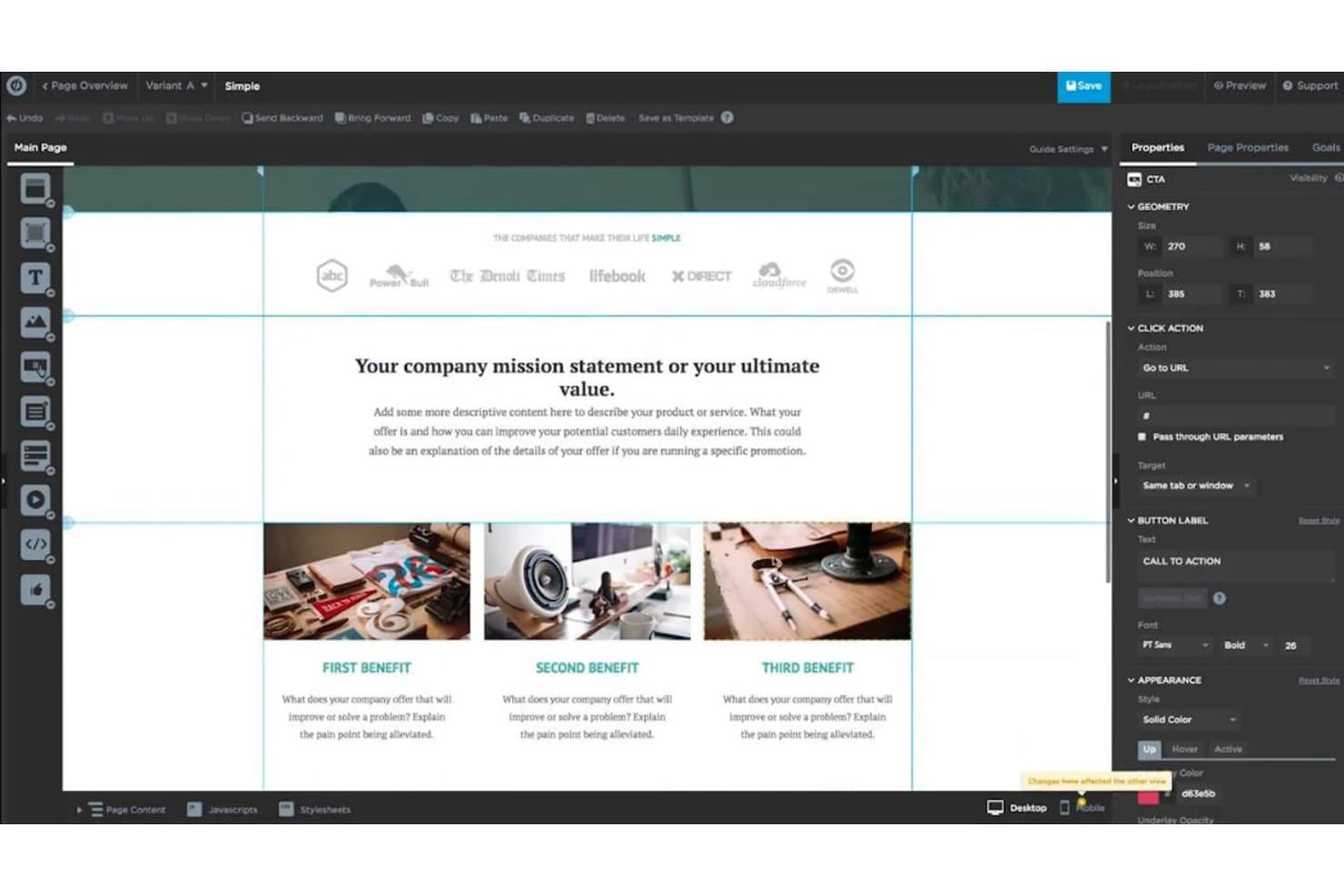
Unbounce offers a user-friendly experience with its intuitive drag-and-drop builder, making it accessible for most users. However, some beginners might find the initial learning curve a bit steep. Once you get the hang of it, creating and testing landing pages becomes straightforward. The real-time editing feature is a plus, allowing your team to see changes instantly. While mobile editing could be more intuitive, the overall usability is solid for those focused on desktop design.
Integrations
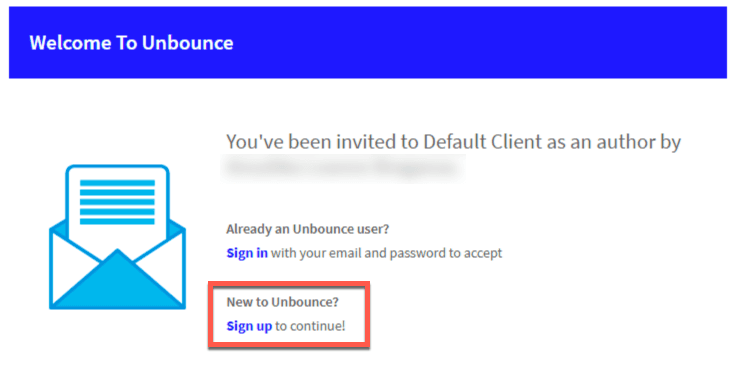
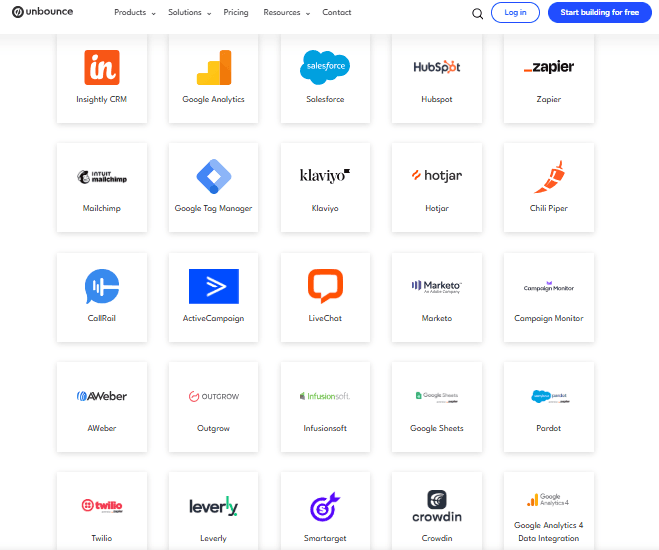
Unbounce integrates with Salesforce, Mailchimp, HubSpot, Google Analytics, Zapier, Marketo, Campaign Monitor, AWeber, Twilio, and Hotjar.
Unbounce also offers an API and connects with third-party integration tools like Zapier and WebHooks.
Unbounce Specs
- A/B Testing: Yes
- AI Integration: Yes
- Analytics: Yes
- API: Yes
- Automated Testing: No
- Bug Tracking: No
- Campaign Management: Yes
- Conversion Tracking: Yes
- Custom Reports: Yes
- Dashboards: No
- Data Export: Yes
- Data Import: No
- Data Visualization: Yes
- Design Templates: Yes
- External Integrations: Yes
- Feedback Management: No
- Form Builder: Yes
- History/Version Control: No
- Multi-Site: Yes
- Multi-User: Yes
- Notifications: No
- Performance Testing: No
- Referral Tracking: No
- Regression Testing: No
- Release Management: No
- Reports: No
- Scenario Planning: No
- SEO: Yes
- Test Management: No
- Visualization: No
- Workflow Management: Yes


