

Odoo-arvostelu: hyvät puolet, huonot puolet, ominaisuudet ja hinnoittelu
Odoo loistaa tarjoamalla vähittäiskaupan toimintoihin modulaarisen ja kustannustehokkaan ratkaisun, jonka joustavuus ja integroitavuus erottavat sen edukseen.

We review tools independently, and commissions help fund our testing. See our transparency policy, our methodology, or suggest a tool.
Odoo is a retail ops software built around a modular suite that connects inventory, purchasing, point of sale, and ecommerce in one platform. It's worth a close look if your team needs cross-functional visibility without locking into a rigid enterprise system. Compared to something like NetSuite, Odoo gives you more control over which modules you deploy and how the system grows with your operation—without the overhead of a full enterprise rollout.
Odoo Evaluation Summary
4.2/5
- From $8.95/user/month (billed annually)
- Free plan available
Miksi luottaa ohjelmistosuosituksiimme
6,700+
Reviews
20
Industry experts
16+
Evaluation factors
14
Years
Tiimimme on testannut ja arvioinut ohjelmistoja vuodesta 2012 lähtien. Julkaisijoina ja mediatoimijoina tiedämme itse, kuinka vaikeaa — ja tärkeää — oikean ohjelmiston valitseminen on.
Tätä opasta varten arvioimme työkaluja käytännön testauksen ja itsenäisen tutkimuksen avulla, pisteyttäen työkalut valintakriteeriemme perusteella.
Arvostelumme perustuvat inhimilliseen toimitukselliseen harkintaamme, eivät myyntipuheeseen.
Odoo Overview
In my opinion, Odoo shines as a retail operations software with its modular design and cost-effectiveness. It’s great for small to medium-sized businesses that want an integrated approach without breaking the bank. While it excels in flexibility and customizability, onboarding can be a bit challenging without dedicated support. Compared to other software, Odoo offers a wider range of features at a competitive price, though its interface may not be as intuitive as some alternatives. It’s perfect for businesses looking to integrate multiple departments like sales, inventory, and accounting under one platform, helping streamline and centralize core business operations in a single system. If you’re deciding whether to choose Odoo, consider its strong value for money, advanced features, and extensive functionalities that can adapt to your growing needs.
Pros
- You can customize modules to fit your specific needs.
- It offers a wide range of features for different business functions.
- Your team can benefit from its flexibility and adaptability.
Cons
- The interface can be less intuitive compared to other software.
- Onboarding can take time without dedicated support.
- You may find customer support response times slower than expected.
Is Odoo Right For Your Needs?
Who Would be a Good Fit for Odoo?
Odoo suits small to medium-sized businesses in retail, manufacturing, and e-commerce sectors. Your team can benefit from its flexibility and modular design, allowing you to customize the software to fit specific needs. For example, a boutique shop can manage inventory and sales seamlessly, while an online retailer can integrate various business functions under one platform. Odoo’s extensive feature set makes it ideal for businesses looking to consolidate operations without high costs.
- Boutique ShopsOdoo helps you manage inventory and sales with its customizable modules.
- Online RetailersYour team can integrate multiple business functions like sales and accounting.
- Manufacturing SMEsYou can streamline production and inventory processes with Odoo’s flexible features.
- E-commerce StartupsYour startup benefits from cost-effective, modular solutions to manage growth.
- Sales DepartmentsUse Odoo to track sales and customer interactions efficiently.
- Accounting TeamsOdoo offers tools to manage financial transactions and reporting in one place.
Who Would be a Bad Fit for Odoo?
Odoo might not suit large enterprises with complex, highly customized processes. If your team relies on specialized software with unique integrations, Odoo’s interface and onboarding challenges could slow you down. For example, a corporation with extensive legacy systems may find the transition to Odoo cumbersome. Additionally, businesses needing rapid customer support might struggle with Odoo’s slower response times, affecting your workflow efficiency.
- Large EnterprisesYour complex processes might not align with Odoo’s modular approach.
- Highly Regulated IndustriesOdoo may lack the specific compliance features you need.
- Specialized Software UsersIf you need unique integrations, Odoo might not fit your requirements.
- Rapid Support NeedsOdoo’s slower customer support could hinder your team’s efficiency.
- Legacy System UsersTransitioning from extensive legacy systems could be cumbersome with Odoo.
- Highly Customized WorkflowsYour unique processes might not mesh well with Odoo’s structure.
Our Review Methodology
How We Test & Score Tools
We’ve spent years building, refining, and improving our software testing and scoring system. The rubric is designed to capture the nuances of software selection and what makes a tool effective, focusing on critical aspects of the decision-making process.
Below, you can see exactly how our testing and scoring works across seven criteria. It allows us to provide an unbiased evaluation of the software based on core functionality, standout features, ease of use, onboarding, customer support, integrations, customer reviews, and value for money.
Core Functionality (25% of final scoring)
The starting point of our evaluation is always the core functionality of the tool. Does it have the basic features and functions that a user would expect to see? Are any of those core features locked to higher-tiered pricing plans? At its core, we expect a tool to stand up against the baseline capabilities of its competitors.
Standout Features (25% of final scoring)
Next, we evaluate uncommon standout features that go above and beyond the core functionality typically found in tools of its kind. A high score reflects specialized or unique features that make the product faster, more efficient, or offer additional value to the user.
We also evaluate how easy it is to integrate with other tools typically found in the tech stack to expand the functionality and utility of the software. Tools offering plentiful native integrations, 3rd party connections, and API access to build custom integrations score best.
Ease of Use (10% of final scoring)
We consider how quick and easy it is to execute the tasks defined in the core functionality using the tool. High scoring software is well designed, intuitive to use, offers mobile apps, provides templates, and makes relatively complex tasks seem simple.
Onboarding (10% of final scoring)
We know how important rapid team adoption is for a new platform, so we evaluate how easy it is to learn and use a tool with minimal training. We evaluate how quickly a team member can get set up and start using the tool with no experience. High scoring solutions indicate little or no support is required.
Customer Support (10% of final scoring)
We review how quick and easy it is to get unstuck and find help by phone, live chat, or knowledge base. Tools and companies that provide real-time support score best, while chatbots score worst.
Customer Reviews (10% of final scoring)
Beyond our own testing and evaluation, we consider the net promoter score from current and past customers. We review their likelihood, given the option, to choose the tool again for the core functionality. A high scoring software reflects a high net promoter score from current or past customers.
Value for Money (10% of final scoring)
Lastly, in consideration of all the other criteria, we review the average price of entry level plans against the core features and consider the value of the other evaluation criteria. Software that delivers more, for less, will score higher.
Core Features
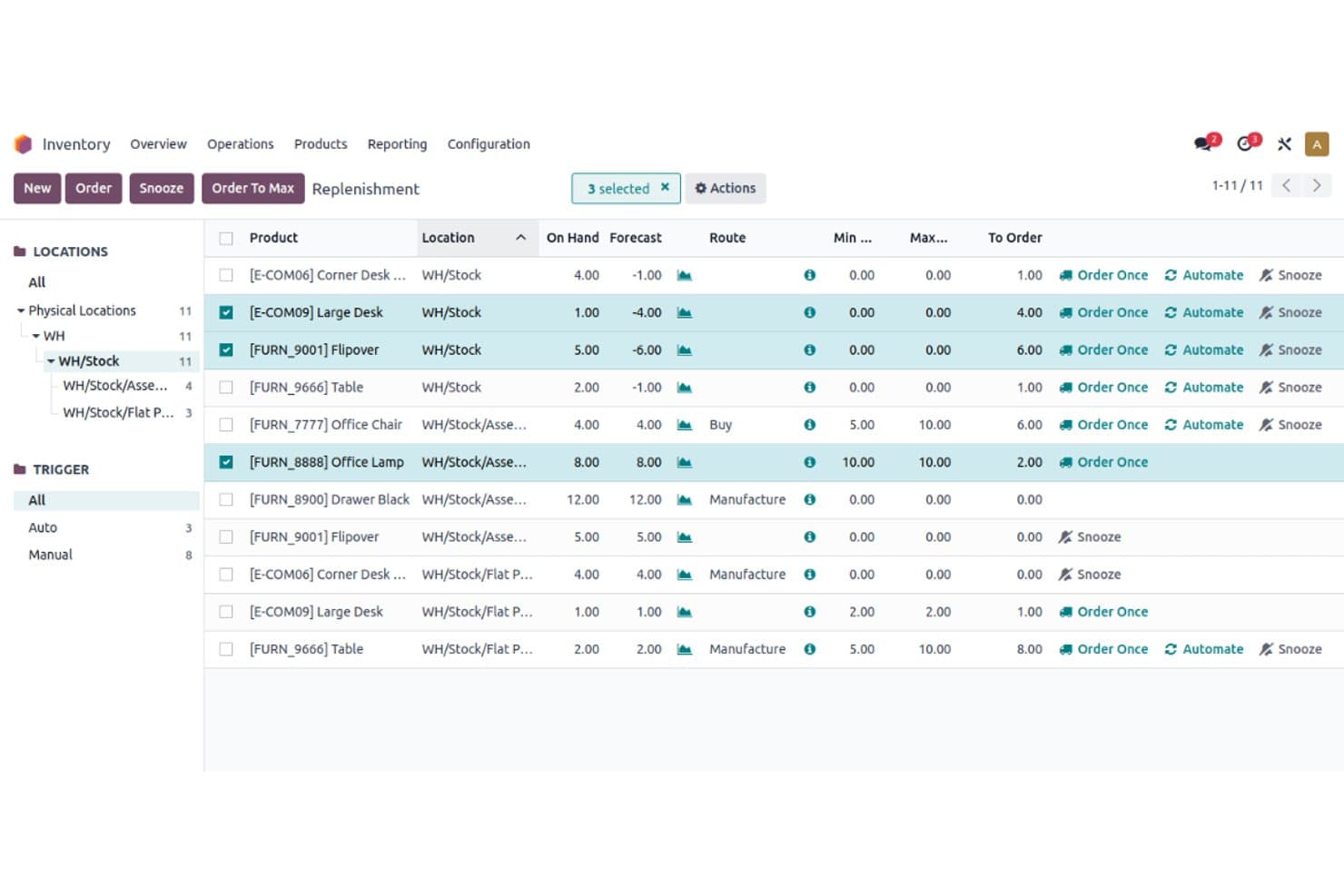
Inventory Management
Odoo helps you track stock levels, manage reordering, and handle multiple warehouses. Its real-time updates keep your inventory accurate and efficient.
Sales Management
You can manage sales orders, invoices, follow-ups, and customer relationships in one place. The feature streamlines your sales process and improves customer interactions.
Purchase Management
Your team can automate procurement processes and manage supply chain information easily. It simplifies purchasing decisions with clear insights.
Point of Sale (POS)
Odoo’s POS system works online and offline, letting you handle transactions without interruptions. It’s perfect for retail settings with fluctuating internet access.
Accounting
You can manage financial transactions, invoicing, and reporting in one integrated system. This feature keeps your financial data organized and accessible.
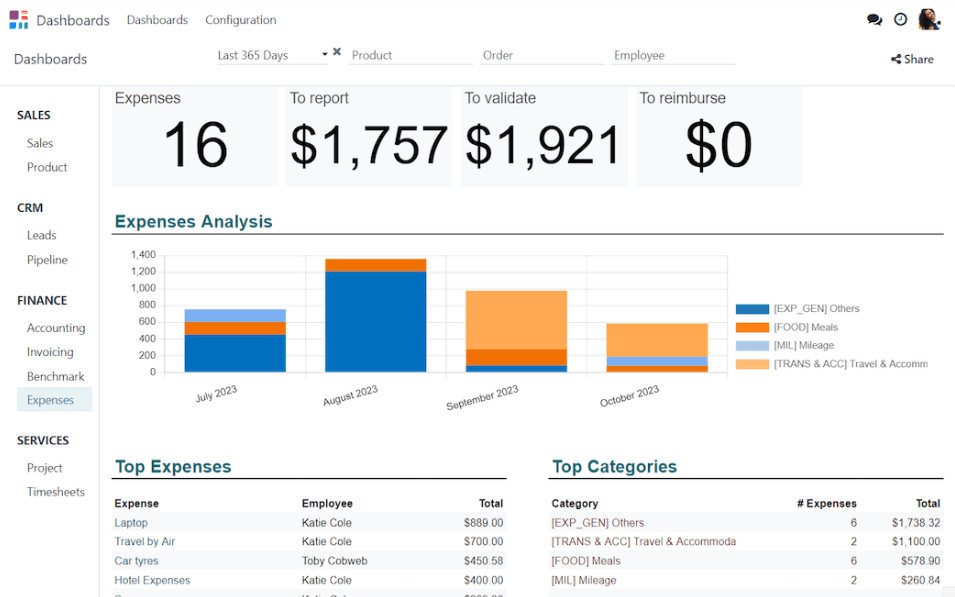
Reporting and Analytics
Odoo offers customizable reports and dashboards to help you analyze business performance. It empowers your team with actionable insights.
Ease of Use
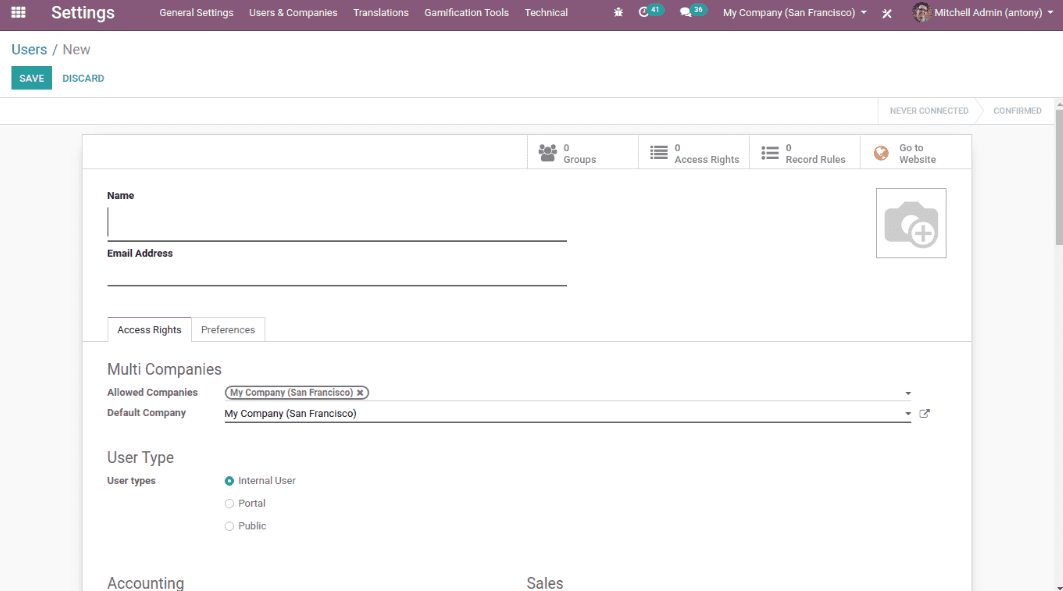
Odoo's user interface can feel less intuitive, especially if you're used to more straightforward software. While its modular design offers flexibility, it may require a learning curve for your team to navigate the various features effectively. Users often mention that onboarding could be smoother, but once you get the hang of it, the customization options make it a powerful tool. If you're willing to invest time in learning, Odoo can become an invaluable asset to your operations.
Integrations
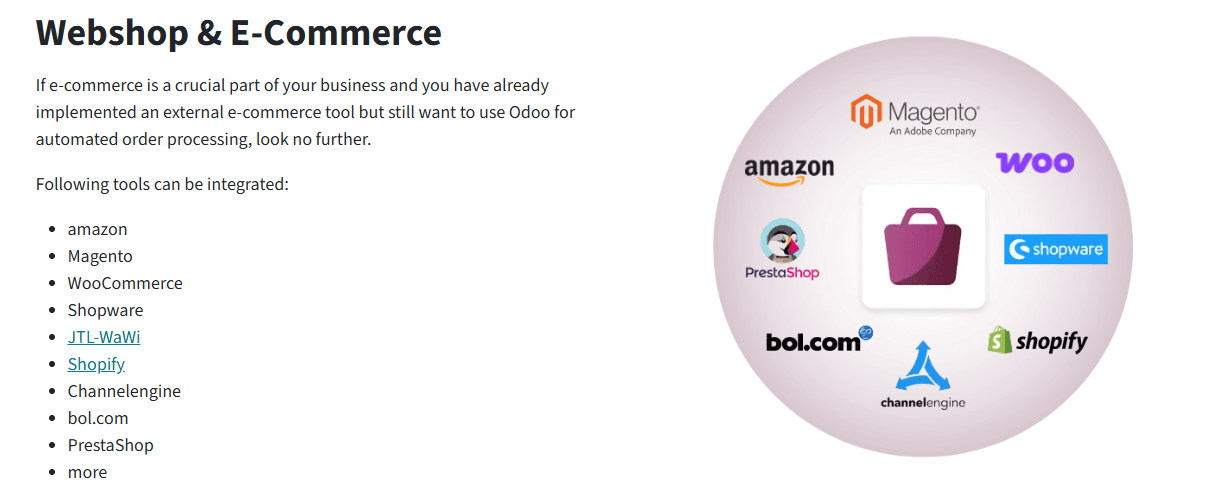
Odoo integrates with ecommerce platforms such as Shopify, WooCommerce, Amazon, Magento, and PrestaShop through official and third-party connectors available in the Odoo Apps marketplace. It also supports integrations with tools like QuickBooks and HubSpot via partner-built modules.
Odoo provides robust APIs for custom integrations and connects with external systems through third-party integration tools and connectors.
Odoo Specs
- 360 Degree Feedback: Yes
- API: Yes
- Attendance Tracking: Yes
- Batch Permissions & Access: Yes
- Budgeting: Yes
- Calendar Management: Yes
- Dashboard: Yes
- Data Export: Yes
- Data Import: Yes
- Data Visualization: Yes
- Employee Database: Yes
- Employee Engagement: Yes
- Employee Incentive Management: Yes
- Employee Onboarding: Yes
- Expense Tracking: Yes
- External Integrations: Yes
- Feedback Management: Yes
- Forecasting: Yes
- Multi-Currency: Yes
- Multi-User: Yes
- Notifications: Yes
- Scheduling: Yes
- Timesheets: Yes
- Travel Management: Yes
- Vacation & Absence Calendar: Yes

