
Reseña de Odoo: ventajas, desventajas, funciones y precios
Odoo destaca por ofrecer una solución modular y rentable para las operaciones minoristas, proporcionando flexibilidad e integración que lo diferencian.

Revisamos las herramientas de forma independiente y las comisiones ayudan a financiar nuestras pruebas. Consulta nuestra política de transparencia, nuestra metodología o sugiere una herramienta.
Odoo is a retail ops software built around a modular suite that connects inventory, purchasing, point of sale, and ecommerce in one platform. It's worth a close look if your team needs cross-functional visibility without locking into a rigid enterprise system. Compared to something like NetSuite, Odoo gives you more control over which modules you deploy and how the system grows with your operation—without the overhead of a full enterprise rollout.
Odoo Evaluation Summary
4.2/5
- From $8.95/user/month (billed annually)
- Free plan available
Por qué confiar en nuestras recomendaciones de software
6,700+
Reviews
20
Industry experts
16+
Evaluation factors
14
Years
Nuestro equipo lleva probando y evaluando software desde 2012. Como líderes del sector retail, sabemos lo difícil —y lo importante— que es elegir el software adecuado.
Para esta guía, evaluamos las herramientas mediante pruebas prácticas e investigación independiente, puntuando las herramientas según nuestros criterios de selección.
Nuestras reseñas reflejan nuestro criterio independiente, no un discurso de ventas.
Odoo Overview
In my opinion, Odoo shines as a retail operations software with its modular design and cost-effectiveness. It’s great for small to medium-sized businesses that want an integrated approach without breaking the bank. While it excels in flexibility and customizability, onboarding can be a bit challenging without dedicated support. Compared to other software, Odoo offers a wider range of features at a competitive price, though its interface may not be as intuitive as some alternatives. It’s perfect for businesses looking to integrate multiple departments like sales, inventory, and accounting under one platform, helping streamline and centralize core business operations in a single system. If you’re deciding whether to choose Odoo, consider its strong value for money, advanced features, and extensive functionalities that can adapt to your growing needs.
Pros
- You can customize modules to fit your specific needs.
- It offers a wide range of features for different business functions.
- Your team can benefit from its flexibility and adaptability.
Cons
- The interface can be less intuitive compared to other software.
- Onboarding can take time without dedicated support.
- You may find customer support response times slower than expected.
Is Odoo Right For Your Needs?
Who Would be a Good Fit for Odoo?
Odoo suits small to medium-sized businesses in retail, manufacturing, and e-commerce sectors. Your team can benefit from its flexibility and modular design, allowing you to customize the software to fit specific needs. For example, a boutique shop can manage inventory and sales seamlessly, while an online retailer can integrate various business functions under one platform. Odoo’s extensive feature set makes it ideal for businesses looking to consolidate operations without high costs.
- Boutique ShopsOdoo helps you manage inventory and sales with its customizable modules.
- Online RetailersYour team can integrate multiple business functions like sales and accounting.
- Manufacturing SMEsYou can streamline production and inventory processes with Odoo’s flexible features.
- E-commerce StartupsYour startup benefits from cost-effective, modular solutions to manage growth.
- Sales DepartmentsUse Odoo to track sales and customer interactions efficiently.
- Accounting TeamsOdoo offers tools to manage financial transactions and reporting in one place.
Who Would be a Bad Fit for Odoo?
Odoo might not suit large enterprises with complex, highly customized processes. If your team relies on specialized software with unique integrations, Odoo’s interface and onboarding challenges could slow you down. For example, a corporation with extensive legacy systems may find the transition to Odoo cumbersome. Additionally, businesses needing rapid customer support might struggle with Odoo’s slower response times, affecting your workflow efficiency.
- Large EnterprisesYour complex processes might not align with Odoo’s modular approach.
- Highly Regulated IndustriesOdoo may lack the specific compliance features you need.
- Specialized Software UsersIf you need unique integrations, Odoo might not fit your requirements.
- Rapid Support NeedsOdoo’s slower customer support could hinder your team’s efficiency.
- Legacy System UsersTransitioning from extensive legacy systems could be cumbersome with Odoo.
- Highly Customized WorkflowsYour unique processes might not mesh well with Odoo’s structure.
Nuestra Metodología de Revisión
Cómo Probamos y Puntamos Herramientas
Hemos pasado años construyendo, perfeccionando y mejorando nuestro sistema de pruebas y puntuación de software. La rúbrica está diseñada para captar los matices de la selección de software y lo que hace que una herramienta sea eficaz, enfocándose en los aspectos críticos del proceso de toma de decisiones. A continuación, puedes ver exactamente cómo funcionan nuestras pruebas y puntuaciones en siete criterios. Esto nos permite brindar una evaluación imparcial del software según la funcionalidad principal, características destacadas, facilidad de uso, incorporación, soporte al cliente, integraciones, reseñas de usuarios y relación calidad-precio.
Funcionalidad Principal (25% de la puntuación final)
El punto de partida de nuestra evaluación siempre es la funcionalidad principal de la herramienta. ¿Cuenta con las características y funciones básicas que un usuario esperaría ver? ¿Alguna de esas funcionalidades está limitada a planes de precios superiores? En esencia, esperamos que una herramienta se compare favorablemente con las capacidades básicas de sus competidores.
Características Destacadas (25% de la puntuación final)
A continuación, evaluamos las características sobresalientes poco comunes que van más allá de la funcionalidad principal que normalmente se encuentra en herramientas similares. Una alta puntuación refleja funcionalidades especializadas o únicas que hacen que el producto sea más rápido, eficiente o aporte un valor extra al usuario. También evaluamos qué tan fácil es integrar la herramienta con otras comúnmente usadas en el entorno tecnológico para ampliar la funcionalidad y utilidad del software. Las herramientas que ofrecen numerosas integraciones nativas, conexiones de terceros y acceso a API para crear integraciones personalizadas obtienen la mejor puntuación.
Facilidad de Uso (10% de la puntuación final)
Consideramos qué tan rápido y fácil es realizar las tareas definidas en la funcionalidad principal usando la herramienta. El software de alta puntuación está bien diseñado, es intuitivo, ofrece aplicaciones móviles, proporciona plantillas y hace que tareas relativamente complejas parezcan simples.
Incorporación (10% de la puntuación final)
Sabemos lo importante que es que un equipo adopte rápidamente una nueva plataforma, así que evaluamos qué tan fácil es aprender y usar la herramienta con mínima capacitación. Analizamos cuánto tiempo tarda un miembro del equipo en prepararse y comenzar a usar la herramienta sin experiencia previa. Las soluciones con alta puntuación requieren poco o ningún soporte.
Soporte al Cliente (10% de la puntuación final)
Revisamos qué tan rápido y fácil es obtener ayuda por teléfono, chat en vivo o base de conocimientos. Las herramientas y empresas que ofrecen soporte en tiempo real obtienen la mejor puntuación, mientras que los chatbots obtienen la peor.
Reseñas de Clientes (10% de la puntuación final)
Además de nuestras pruebas y evaluaciones, consideramos el puntaje neto de promotores de clientes actuales y pasados. Revisamos la probabilidad de que elijan de nuevo la herramienta para la funcionalidad principal. Un software con alta puntuación refleja un alto NPS de clientes actuales o pasados.
Relación Calidad-Precio (10% de la puntuación final)
Por último, considerando todos los demás criterios, revisamos el precio promedio de los planes de nivel básico frente a las características principales y consideramos el valor de los otros criterios de evaluación. El software que ofrece más por menos, tendrá una puntuación más alta.
Core Features
Inventory Management
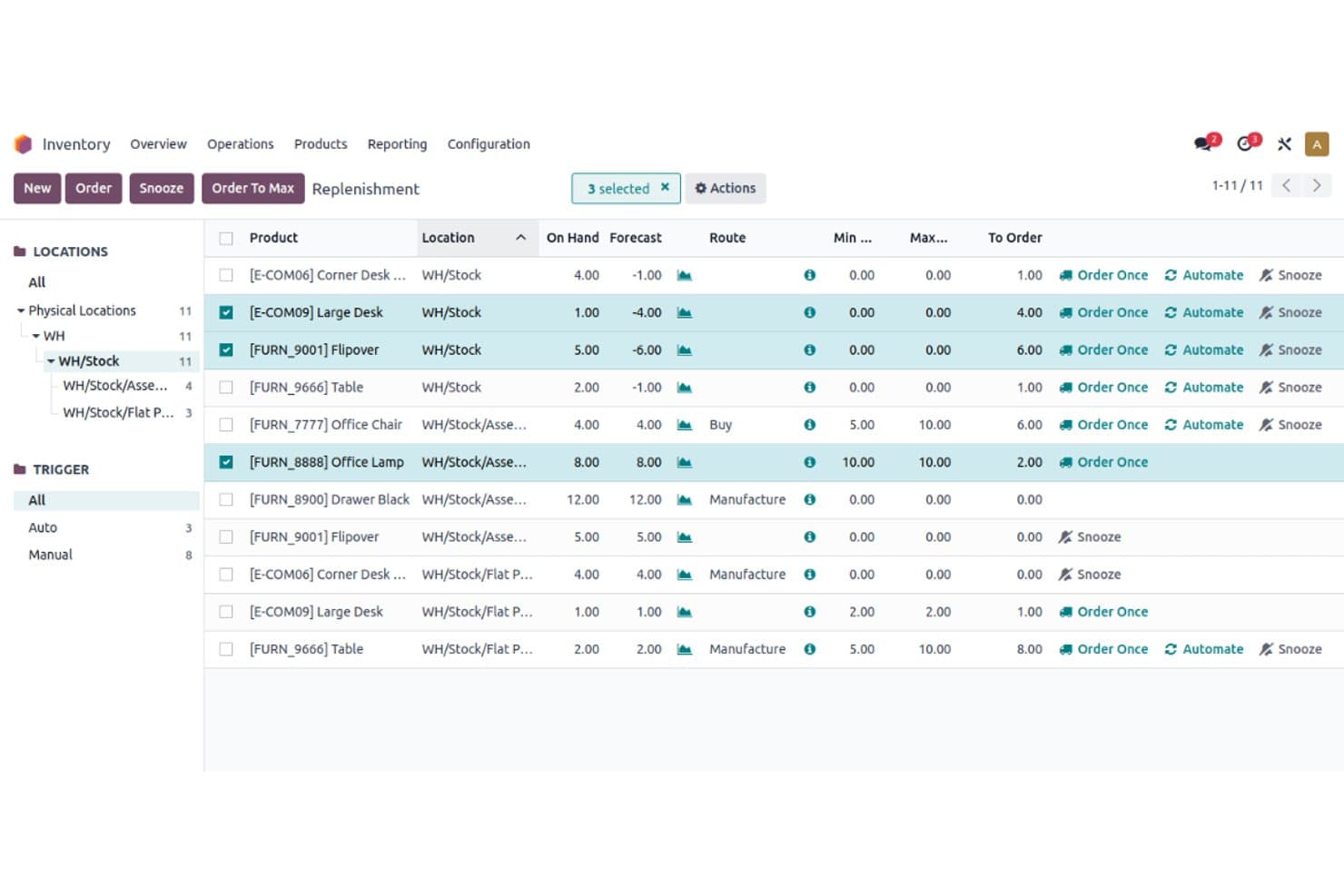
Odoo helps you track stock levels, manage reordering, and handle multiple warehouses. Its real-time updates keep your inventory accurate and efficient.
Sales Management
You can manage sales orders, invoices, follow-ups, and customer relationships in one place. The feature streamlines your sales process and improves customer interactions.
Purchase Management
Your team can automate procurement processes and manage supply chain information easily. It simplifies purchasing decisions with clear insights.
Point of Sale (POS)
Odoo’s POS system works online and offline, letting you handle transactions without interruptions. It’s perfect for retail settings with fluctuating internet access.
Accounting
You can manage financial transactions, invoicing, and reporting in one integrated system. This feature keeps your financial data organized and accessible.
Reporting and Analytics
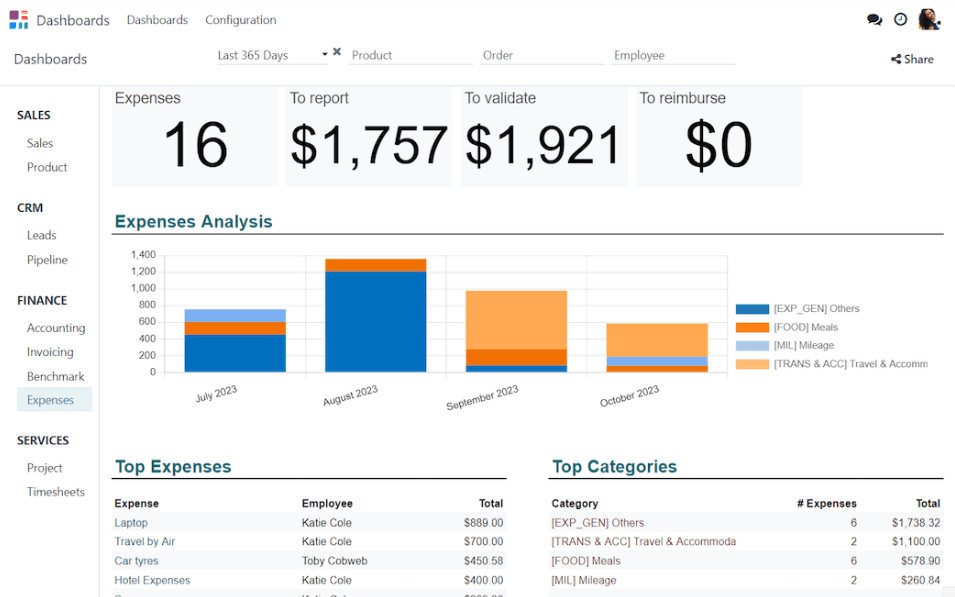
Odoo offers customizable reports and dashboards to help you analyze business performance. It empowers your team with actionable insights.
Ease of Use
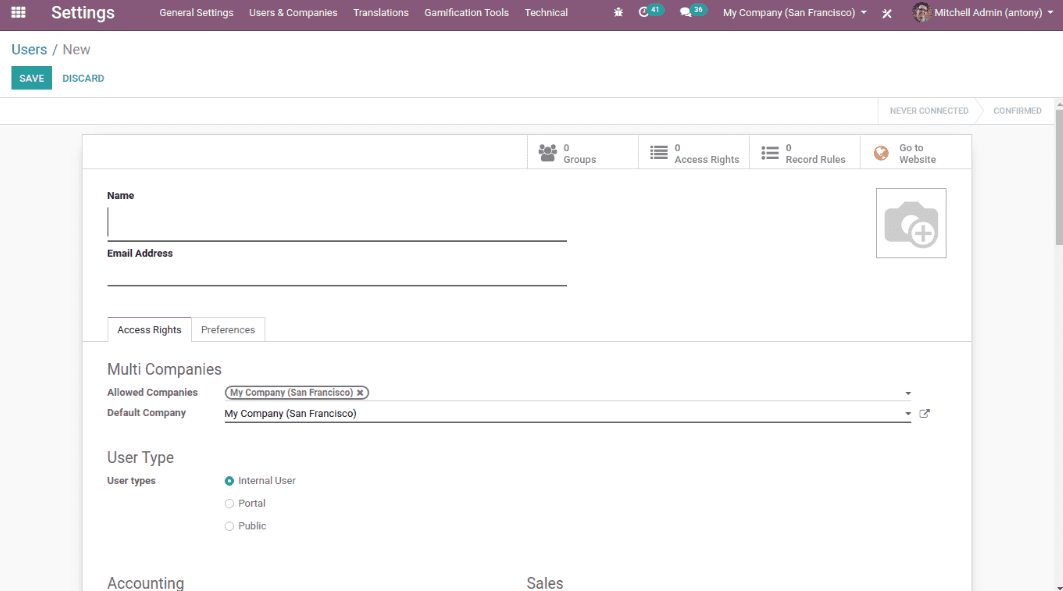
Odoo's user interface can feel less intuitive, especially if you're used to more straightforward software. While its modular design offers flexibility, it may require a learning curve for your team to navigate the various features effectively. Users often mention that onboarding could be smoother, but once you get the hang of it, the customization options make it a powerful tool. If you're willing to invest time in learning, Odoo can become an invaluable asset to your operations.
Integrations
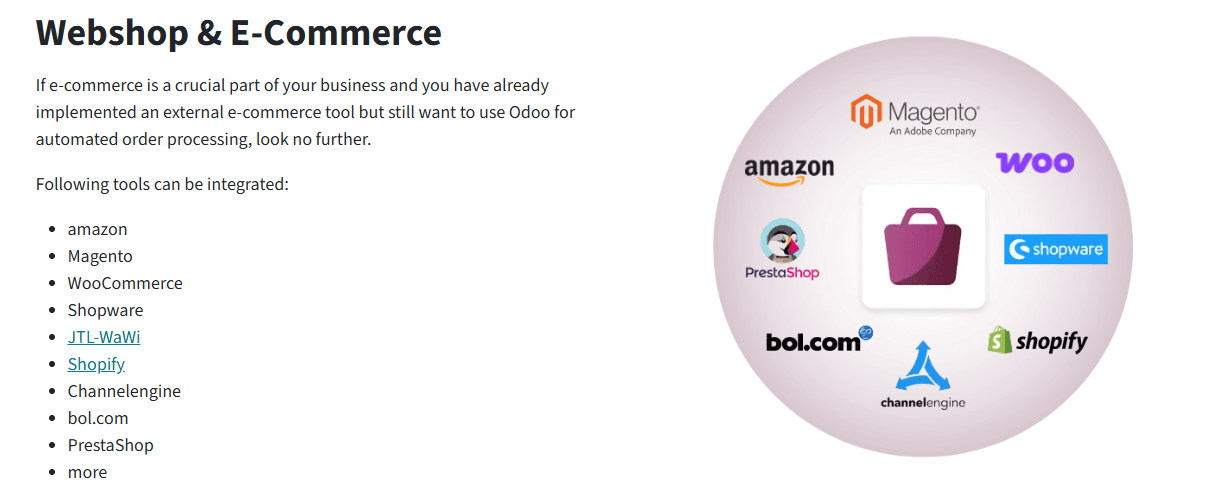
Odoo integrates with ecommerce platforms such as Shopify, WooCommerce, Amazon, Magento, and PrestaShop through official and third-party connectors available in the Odoo Apps marketplace. It also supports integrations with tools like QuickBooks and HubSpot via partner-built modules.
Odoo provides robust APIs for custom integrations and connects with external systems through third-party integration tools and connectors.
Odoo Specs
- 360 Degree Feedback: Yes
- API: Yes
- Attendance Tracking: Yes
- Batch Permissions & Access: Yes
- Budgeting: Yes
- Calendar Management: Yes
- Dashboard: Yes
- Data Export: Yes
- Data Import: Yes
- Data Visualization: Yes
- Employee Database: Yes
- Employee Engagement: Yes
- Employee Incentive Management: Yes
- Employee Onboarding: Yes
- Expense Tracking: Yes
- External Integrations: Yes
- Feedback Management: Yes
- Forecasting: Yes
- Multi-Currency: Yes
- Multi-User: Yes
- Notifications: Yes
- Scheduling: Yes
- Timesheets: Yes
- Travel Management: Yes
- Vacation & Absence Calendar: Yes

