
Reseña de NetSuite Commerce: ventajas, desventajas, funciones y precios
NetSuite Commerce integra el comercio electrónico y las operaciones empresariales en una sola plataforma, desde la gestión de tiendas en línea y el procesamiento de pedidos hasta el inventario, los datos de clientes y la integración con sistemas de planificación de recursos empresariales.

Revisamos las herramientas de forma independiente y las comisiones ayudan a financiar nuestras pruebas. Consulta nuestra política de transparencia, nuestra metodología o sugiere una herramienta.
NetSuite Commerce is an ecommerce software built for businesses that run on Oracle NetSuite's ERP and want their storefront, inventory, order management, and financials connected in one system. I'd consider it most seriously if you're scaling a B2B or B2C operation and need back-office integration without relying on third-party middleware. Compared to Shopify Plus, NetSuite Commerce gives you a tighter link between your ecommerce data and your financials—so you're not stitching systems together just to get a complete view of your business.
NetSuite Commerce Evaluation Summary
4.2/5
- Pricing upon request
- Free demo available
Por qué confiar en nuestras recomendaciones de software
6,700+
Reviews
20
Industry experts
16+
Evaluation factors
14
Years
Nuestro equipo lleva probando y evaluando software desde 2012. Como líderes del sector retail, sabemos lo difícil —y lo importante— que es elegir el software adecuado.
Para esta guía, evaluamos las herramientas mediante pruebas prácticas e investigación independiente, puntuando las herramientas según nuestros criterios de selección.
Nuestras reseñas reflejan nuestro criterio independiente, no un discurso de ventas.
NetSuite Commerce Overview
If you’re judging ecommerce software on end-to-end integration, NetSuite Commerce sets itself apart with unified inventory, strong built-in analytics, and native ERP features. I think its pricing and onboarding make more sense for established retailers or fast-growing brands, as it isn’t the fastest to set up and requires more upfront investment.
Compared to others, you get deeper operational control and flexibility, but you’ll trade away ease of use and simple plug-and-play integrations. It’s especially smart for those who want a single source of truth and advanced configuration, not just a storefront.
Pros
- Connects ecommerce sales to inventory and finance in real time
- Extensive multi-location and multi-channel management features included
- Highly configurable workflows for complex retail environments
Cons
- High upfront cost compared to many ecommerce competitors
- Initial implementation can be lengthy and resource-intensive
- User interface feels dated and less intuitive for new users
Is NetSuite Commerce Right For Your Needs?
Who Would be a Good Fit for NetSuite Commerce?
Mid to large-sized retail and wholesale businesses benefit most from NetSuite Commerce due to its robust customization and real-time analytics. If your work involves managing multiple sales channels, this platform helps streamline operations by unifying them in one place.
Teams in industries that rely on data-driven decision-making will appreciate its analytics capabilities, allowing you to make informed choices quickly.
- Retail ChainsNetSuite Commerce supports complex inventory management and multi-channel sales, perfect for expansive retail operations.
- Wholesale DistributorsYour team can manage bulk orders efficiently with its integrated order processing and inventory tracking.
- B2B CompaniesIt offers personalized customer experiences and pricing, ideal for businesses focusing on B2B sales.
- Ecommerce TeamsYou can manage all online sales channels from a single platform, simplifying your ecommerce operations.
- IT DepartmentsCustomization and scalability make it easy for IT teams to tailor the platform to specific business needs.
- Marketing TeamsReal-time data analytics help your team make informed marketing decisions quickly.
Who Would be a Bad Fit for NetSuite Commerce?
Small businesses or startups with limited resources might find NetSuite Commerce overwhelming due to its complexity and cost. If your team lacks the technical expertise to handle its robust features, the platform could be more of a burden than a benefit. Industries that don’t require advanced customization or real-time analytics may not fully leverage its capabilities, making it an inefficient choice.
- Small StartupsYour team might struggle with its complexity and high cost, which aren’t ideal for limited budgets.
- Local BoutiquesSimpler ecommerce solutions would suit your needs better than NetSuite’s advanced features.
- FreelancersThe platform’s extensive functionalities are unnecessary for single-person operations.
- Non-Tech TeamsWithout IT support, managing NetSuite’s customization and updates can be challenging for your team.
- Basic Ecommerce NeedsIf your operations are straightforward, you won’t need the advanced capabilities NetSuite offers.
- Low-Volume SellersThe platform’s robust features may be excessive for your smaller sales volume.
Nuestra Metodología de Revisión
Cómo Probamos y Puntamos Herramientas
Hemos pasado años construyendo, perfeccionando y mejorando nuestro sistema de pruebas y puntuación de software. La rúbrica está diseñada para captar los matices de la selección de software y lo que hace que una herramienta sea eficaz, enfocándose en los aspectos críticos del proceso de toma de decisiones. A continuación, puedes ver exactamente cómo funcionan nuestras pruebas y puntuaciones en siete criterios. Esto nos permite brindar una evaluación imparcial del software según la funcionalidad principal, características destacadas, facilidad de uso, incorporación, soporte al cliente, integraciones, reseñas de usuarios y relación calidad-precio.
Funcionalidad Principal (25% de la puntuación final)
El punto de partida de nuestra evaluación siempre es la funcionalidad principal de la herramienta. ¿Cuenta con las características y funciones básicas que un usuario esperaría ver? ¿Alguna de esas funcionalidades está limitada a planes de precios superiores? En esencia, esperamos que una herramienta se compare favorablemente con las capacidades básicas de sus competidores.
Características Destacadas (25% de la puntuación final)
A continuación, evaluamos las características sobresalientes poco comunes que van más allá de la funcionalidad principal que normalmente se encuentra en herramientas similares. Una alta puntuación refleja funcionalidades especializadas o únicas que hacen que el producto sea más rápido, eficiente o aporte un valor extra al usuario. También evaluamos qué tan fácil es integrar la herramienta con otras comúnmente usadas en el entorno tecnológico para ampliar la funcionalidad y utilidad del software. Las herramientas que ofrecen numerosas integraciones nativas, conexiones de terceros y acceso a API para crear integraciones personalizadas obtienen la mejor puntuación.
Facilidad de Uso (10% de la puntuación final)
Consideramos qué tan rápido y fácil es realizar las tareas definidas en la funcionalidad principal usando la herramienta. El software de alta puntuación está bien diseñado, es intuitivo, ofrece aplicaciones móviles, proporciona plantillas y hace que tareas relativamente complejas parezcan simples.
Incorporación (10% de la puntuación final)
Sabemos lo importante que es que un equipo adopte rápidamente una nueva plataforma, así que evaluamos qué tan fácil es aprender y usar la herramienta con mínima capacitación. Analizamos cuánto tiempo tarda un miembro del equipo en prepararse y comenzar a usar la herramienta sin experiencia previa. Las soluciones con alta puntuación requieren poco o ningún soporte.
Soporte al Cliente (10% de la puntuación final)
Revisamos qué tan rápido y fácil es obtener ayuda por teléfono, chat en vivo o base de conocimientos. Las herramientas y empresas que ofrecen soporte en tiempo real obtienen la mejor puntuación, mientras que los chatbots obtienen la peor.
Reseñas de Clientes (10% de la puntuación final)
Además de nuestras pruebas y evaluaciones, consideramos el puntaje neto de promotores de clientes actuales y pasados. Revisamos la probabilidad de que elijan de nuevo la herramienta para la funcionalidad principal. Un software con alta puntuación refleja un alto NPS de clientes actuales o pasados.
Relación Calidad-Precio (10% de la puntuación final)
Por último, considerando todos los demás criterios, revisamos el precio promedio de los planes de nivel básico frente a las características principales y consideramos el valor de los otros criterios de evaluación. El software que ofrece más por menos, tendrá una puntuación más alta.
Core Features
Unified Commerce Management
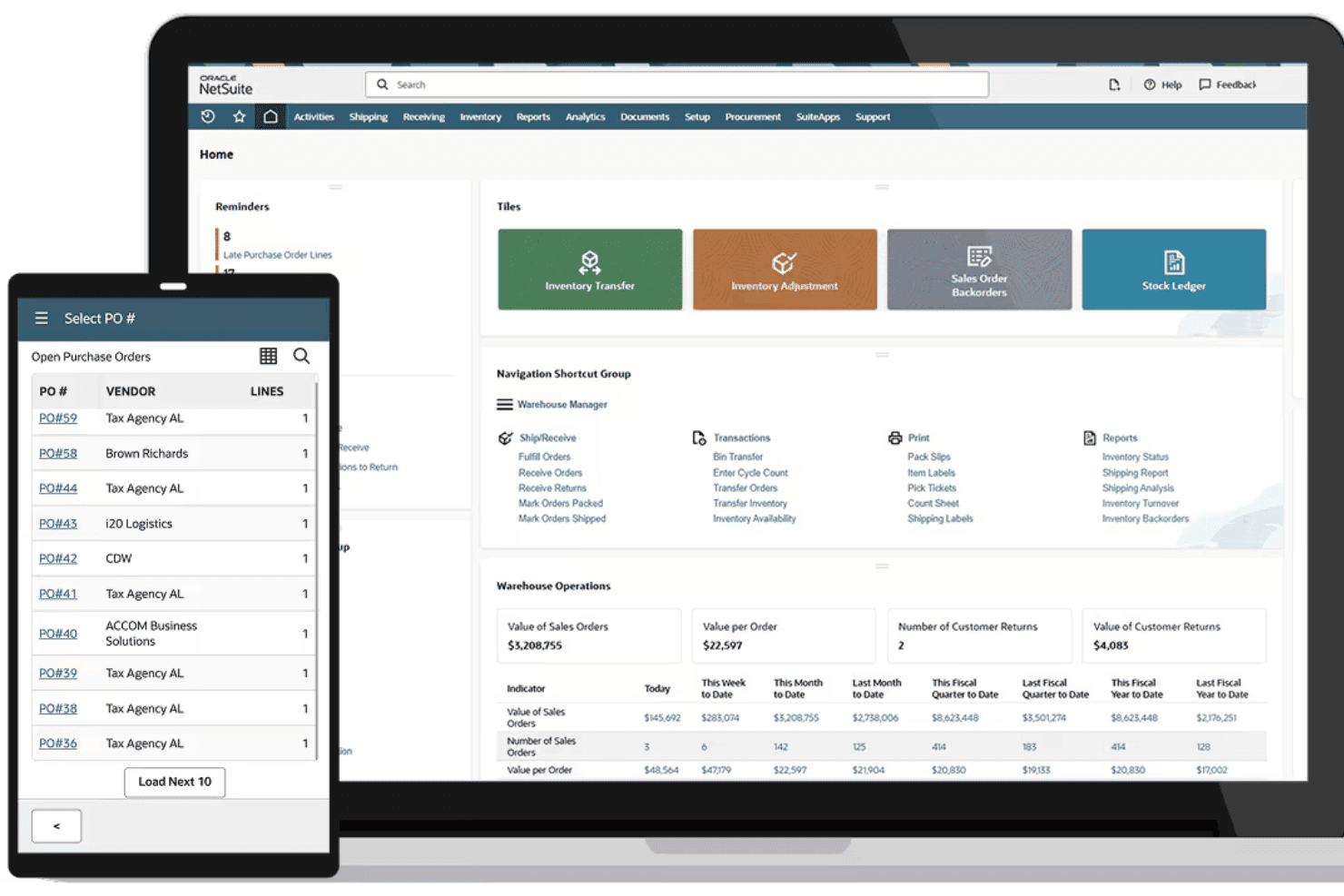
NetSuite Commerce unifies product catalogs, inventory, and order data across all sales channels. You can oversee online, in-store, and phone orders from a single dashboard.
Real-Time Inventory Visibility
Inventory counts update instantly when a sale is made or stock arrives. This helps prevent overselling and supports accurate demand planning.
B2B and B2C Storefronts
Launch customer-facing webstores for direct consumers and dedicated portals for wholesale buyers. Both experiences support pricing tiers, quote management, and personalized catalogs.
Order Management Automation
Automate order processing, fulfillment, and returns regardless of where the sale happens. Customizable rules route orders to the best warehouse or location for fast delivery.
Promotions and Dynamic Pricing
Build and schedule discount campaigns with flexible rules and segmentation. Pricing can change based on customer groups, order value, or sales channel.
Integrated Customer Account Management
Customers manage their profiles, view order histories, and reorder from their own dashboard. Business buyers can assign roles and purchase limits for their teams.
Ease of Use
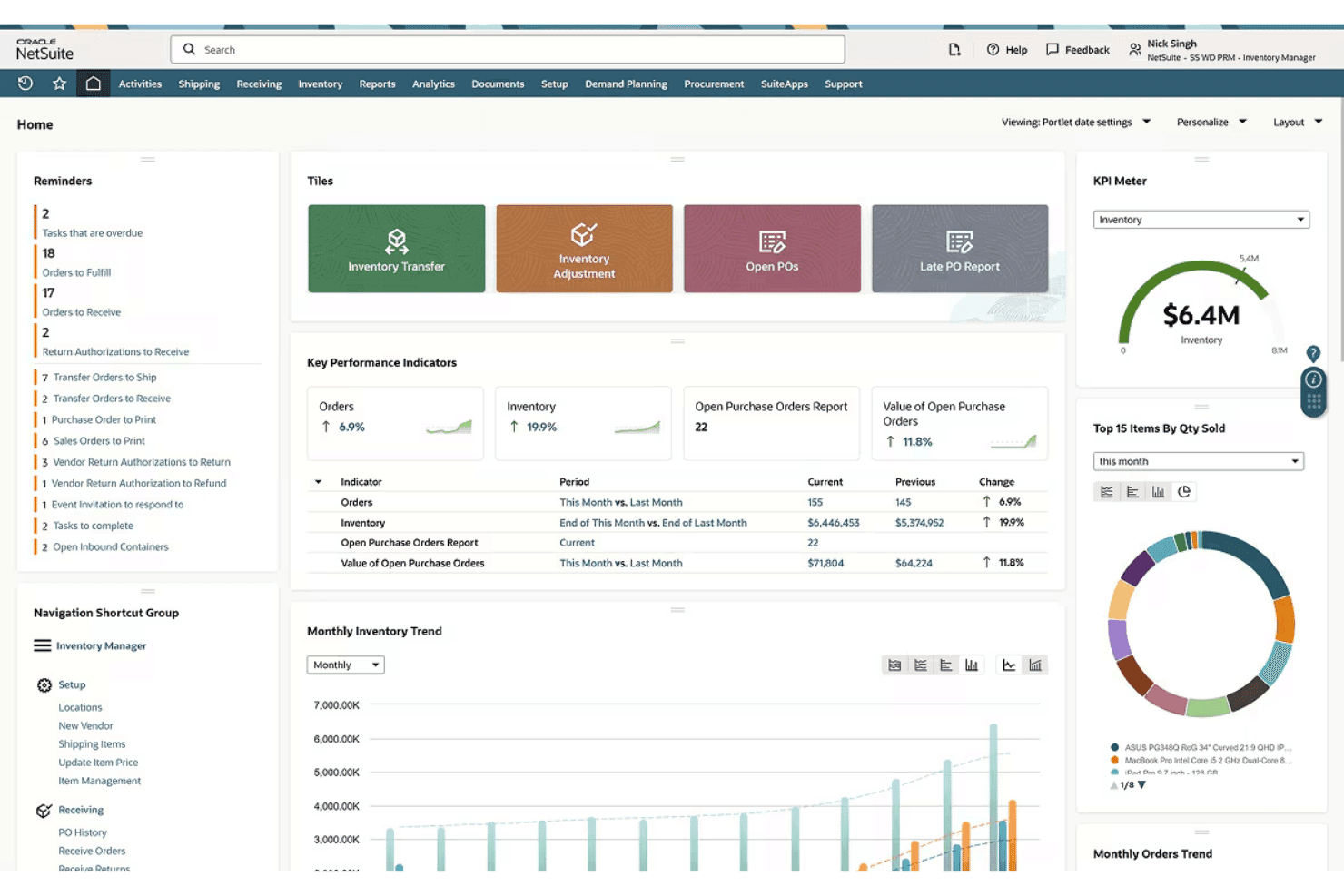
NetSuite Commerce isn’t the most intuitive ecommerce software for beginners, but experienced users value its depth and customization. You’ll find navigation menus and settings overwhelming at first, especially given its enterprise roots. However, core tasks—like product updates and order tracking—feel logical once workflows are configured to match your business.
Integrations
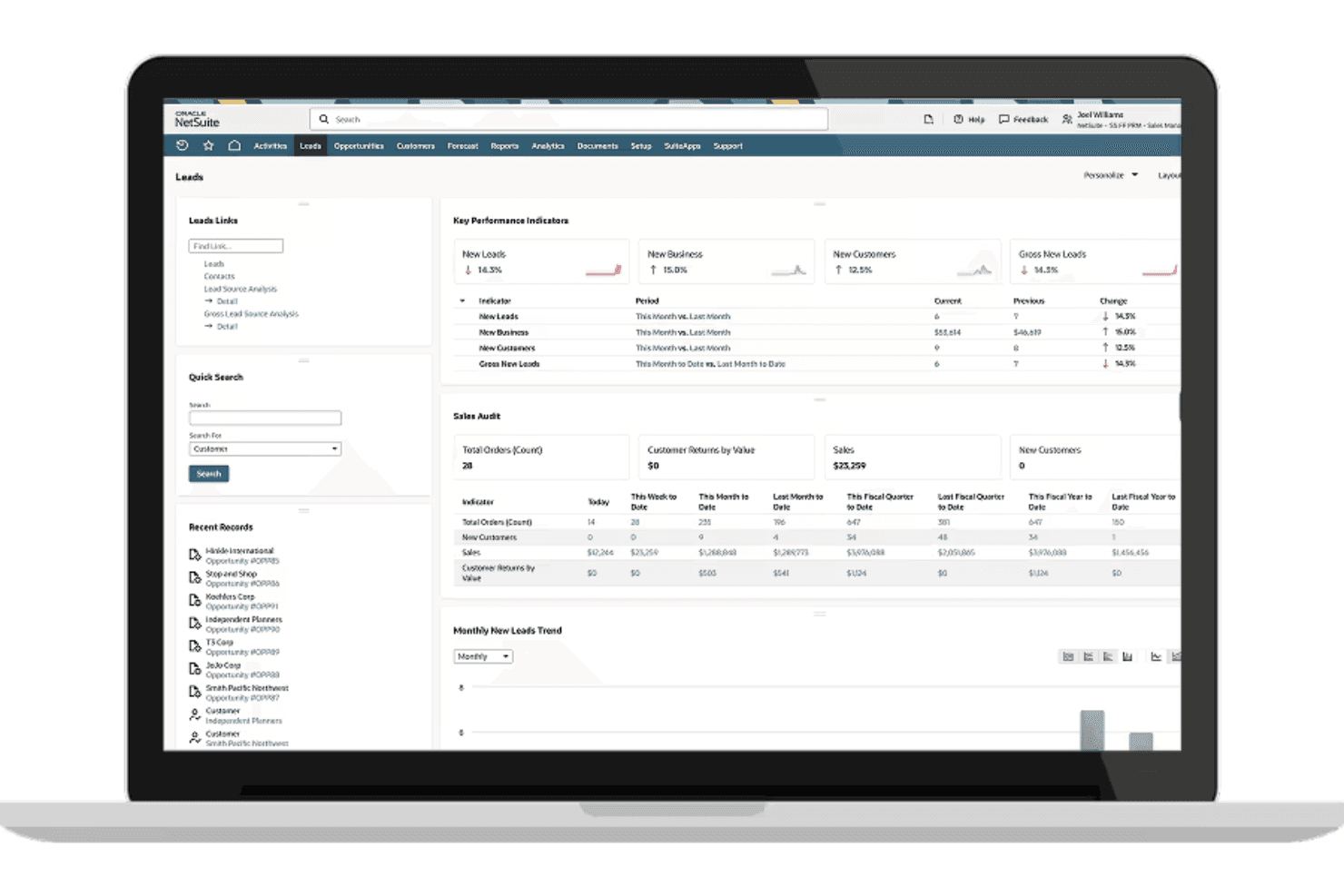
NetSuite Commerce integrates with NetSuite ERP, NetSuite CRM, SuiteTax, Advanced Order Management, NetSuite Inventory Management, SuitePromotions, SuiteBilling, SuitePeople HR, SuiteAnalytics, and NetSuite Point of Sale, among others.
NetSuite Commerce also has an open API and connects with third-party integration tools.
NetSuite Commerce Specs
- 2-Factor Authentication: Yes
- A/B Testing: No
- Analytics: Yes
- API: Yes
- BitCoin: No
- Conversion Tracking: Yes
- Dashboard: Yes
- Data Export: Yes
- Data Import: Yes
- Data Visualization: Yes
- Design Templates: Yes
- External Integrations: Yes
- Inventory Tracking: Yes
- Keyword Tracking: No
- Marketing Automation: Yes
- Multi-User: Yes
- Notifications: Yes
- Order Management: Yes
- Payment Gateway Integration: Yes
- Payment Processor: Yes
- PayPal: Yes
- Product Catalog: Yes
- Review Monitoring: No
- SAP Integration: No
- Scheduling: No
- Stripe: No
- Third-Party Plugins/Add-Ons: Yes


