

Splitit-Bewertung: Vor- und Nachteile, Funktionen und Preise
Splitit verfolgt einen einzigartigen Ansatz, indem Sie Ihr bestehendes Kreditlimit nutzen können, was den Dienst zu einer flexiblen Option unter den „Jetzt kaufen, später bezahlen“-Angeboten macht.

Wir bewerten Tools unabhängig und Provisionen helfen, unsere Tests zu finanzieren. Siehe unsere transparente Richtlinie, unsere Methodik oder schlagen Sie ein Tool vor.
Splitit is a BNPL platform that lets shoppers split purchases into installments using their existing credit cards—no new credit applications and no interest added at checkout. It's worth considering if your business wants to offer installment options without asking customers to open a new financing account mid-purchase. Compared to Klarna, Splitit is a stronger fit for merchants who want to reduce checkout friction, since customers pay through cards they already carry rather than going through a third-party approval process.
Splitit Evaluation Summary
4.5/5
- Pricing upon request
- Free demo available
Warum Sie unseren Software-Empfehlungen vertrauen können
6,700+
Reviews
20
Industry experts
16+
Evaluation factors
14
Years
Unser Team testet und bewertet Software seit 2012. Als Führungskräfte im Einzelhandel selbst wissen wir, wie schwierig – und wichtig – es ist, die richtige Software auszuwählen.
Für diesen Leitfaden haben wir Tools mithilfe von praktischen Tests und unabhängiger Recherche bewertet und dabei die Tools anhand unserer Bewertungskriterien bewertet.
Unsere Bewertungen spiegeln unser unabhängiges Urteilsvermögen wider – keine Verkaufsstrategie.
Splitit Overview
In my opinion, Splitit is a solid choice for businesses looking to offer flexible payment solutions without interest. It excels in allowing customers to use existing credit limits, which can lead to higher conversion rates. However, it might not be the easiest to set up, and support could be more responsive. It’s best suited for e-commerce stores in industries like fashion and electronics where customers appreciate payment flexibility. If you’re deciding between buy now pay later options, consider Splitit for its unique credit-based model, though be prepared for a learning curve during onboarding.
Pros
- You let customers use their existing credit limits for purchases.
- Your sales might increase with flexible, interest-free installment options.
- Customers appreciate not having additional credit checks.
Cons
- You might find the onboarding process a bit challenging.
- Your team may experience less responsive customer support.
- The interface can be less intuitive compared to other platforms.
Is Splitit Right For Your Needs?
Who Would be a Good Fit for Splitit?
Splitit is a great fit for online retailers and e-commerce businesses in industries like fashion, electronics, and home goods. If your work involves offering flexible payment options to increase sales, Splitit’s interest-free installments using existing credit limits can be beneficial. It’s particularly useful if you want to avoid additional credit checks for your customers. Teams looking to enhance customer satisfaction with simple payment solutions will find Splitit appealing.
- Online RetailersSplitit lets you offer interest-free payments, boosting sales and customer satisfaction.
- Small E-commerce BusinessesYour team can increase conversion rates with Splitit's credit-based payment plans.
- Fashion IndustryCustomers love using their existing credit for purchases, making Splitit ideal for fashion sales.
- Electronics StoresYou can attract tech-savvy buyers with flexible payment options.
- Home Goods RetailSplitit helps you offer hassle-free installment plans for big-ticket items.
- Sales DepartmentsYour sales team can benefit from increased conversion rates and customer loyalty with flexible payments.
Who Would be a Bad Fit for Splitit?
Splitit might not be suitable for businesses that require quick and seamless onboarding or those with limited technical support resources. If your team relies heavily on prompt customer support and an intuitive interface, Splitit’s less responsive support and more complex setup could be challenging. Industries that need fast-paced operations, like food services or logistics, might find the learning curve too steep and the interface less efficient for their needs.
- Food ServicesThe need for quick setup and intuitive systems makes Splitit less ideal for your fast-paced environment.
- Logistics CompaniesYour team might struggle with Splitit's complex onboarding and less responsive support in high-pressure situations.
- StartupsLimited resources can make the learning curve and setup time a hurdle for your team.
- Healthcare ProvidersImmediate and efficient systems are necessary, which Splitit doesn’t always provide with its interface and support.
- Local Retail ShopsIf you need quick and simple setups, Splitit's onboarding process might be a barrier.
- Event ManagementYour work requires fast and flexible solutions, where Splitit's setup time and support might not meet your needs.
Unsere Bewertungsmethodik
Wie Wir Tools Testen & Bewerten
Wir haben über Jahre hinweg unser System zur Softwarebewertung und -testung entwickelt, verfeinert und verbessert. Die Bewertungsmatrix ist darauf ausgelegt, die Feinheiten der Softwareauswahl und die Effektivität eines Tools einzufangen, wobei der Fokus auf entscheidende Aspekte des Auswahlprozesses liegt. Nachfolgend sehen Sie genau, wie unser Test- und Bewertungssystem anhand von sieben Kriterien funktioniert. Dies ermöglicht uns, eine unvoreingenommene Bewertung der Software basierend auf Kernfunktionen, besonderen Merkmalen, Benutzerfreundlichkeit, Einarbeitung, Kundensupport, Integrationen, Kundenrezensionen und Preis-Leistungs-Verhältnis anzubieten.
Kernfunktionen (25% der Gesamtnote)
Der Ausgangspunkt unserer Bewertung ist immer die Kernfunktionalität des Tools. Verfügt es über die grundlegenden Funktionen, die ein Nutzer erwarten würde? Sind wichtige Kernfunktionen eventuell nur in höherpreisigen Tarifen enthalten? Ein Tool sollte im Kern mindestens mit den Basisfunktionen der Wettbewerber mithalten können.
Besondere Funktionen (25% der Gesamtnote)
Anschließend bewerten wir außergewöhnliche Funktionen, die über die normalen Kernfunktionen vergleichbarer Tools hinausgehen. Ein hoher Score spiegelt spezialisierte oder einzigartige Funktionen wider, die das Produkt schneller, effizienter oder wertvoller für die Nutzer machen. Wir bewerten außerdem, wie einfach sich das Tool mit anderen Programmen, die typischerweise zum Technologie-Stack gehören, integrieren lässt, um dessen Funktionalität und Nutzwert zu erweitern. Tools mit zahlreichen nativen Integrationen, Drittanbieteranbindungen und API-Zugang für eigene Entwicklungen schneiden hier am besten ab.
Benutzerfreundlichkeit (10% der Gesamtnote)
Wir betrachten, wie schnell und einfach es ist, die Kernaufgaben mit dem Tool zu erledigen. Software, die gut gestaltet und intuitiv zu bedienen ist, mobile Apps bietet, Vorlagen zur Verfügung stellt und komplexe Aufgaben einfach erscheinen lässt, erzielt die besten Werte.
Einarbeitung (10% der Gesamtnote)
Wir wissen, wie wichtig die schnelle Einführung eines neuen Tools im Team ist. Daher evaluieren wir, wie einfach es mit minimalem Training ist, das Tool kennenzulernen. Wir ermitteln, wie schnell ein Teammitglied ohne Vorerfahrung startklar ist. Lösungen, die kaum oder gar keine Unterstützung benötigen, erhalten die höchste Punktzahl.
Kundensupport (10% der Gesamtnote)
Wir überprüfen, wie schnell und einfach man Hilfe per Telefon, Live-Chat oder Wissensdatenbank erhält. Tools und Anbieter, die Echtzeit-Support bieten, schneiden am besten ab; Chatbots liegen am unteren Ende.
Kundenrezensionen (10% der Gesamtnote)
Zusätzlich zu unseren eigenen Tests ziehen wir den Net-Promoter-Score bestehender und früherer Kunden heran. Wir überprüfen, wie wahrscheinlich sie das Tool erneut für die Kernfunktionen wählen würden. Ein hoher Score spiegelt einen hohen Net-Promoter-Score wider.
Preis-Leistungs-Verhältnis (10% der Gesamtnote)
Schließlich bewerten wir im Kontext aller anderen Kriterien den Durchschnittspreis von Einstiegsplänen im Verhältnis zu den Kernfunktionen und betrachten den Wert der übrigen Kriterien. Software, die mehr zu geringeren Kosten bietet, schneidet hier besser ab.
Core Features
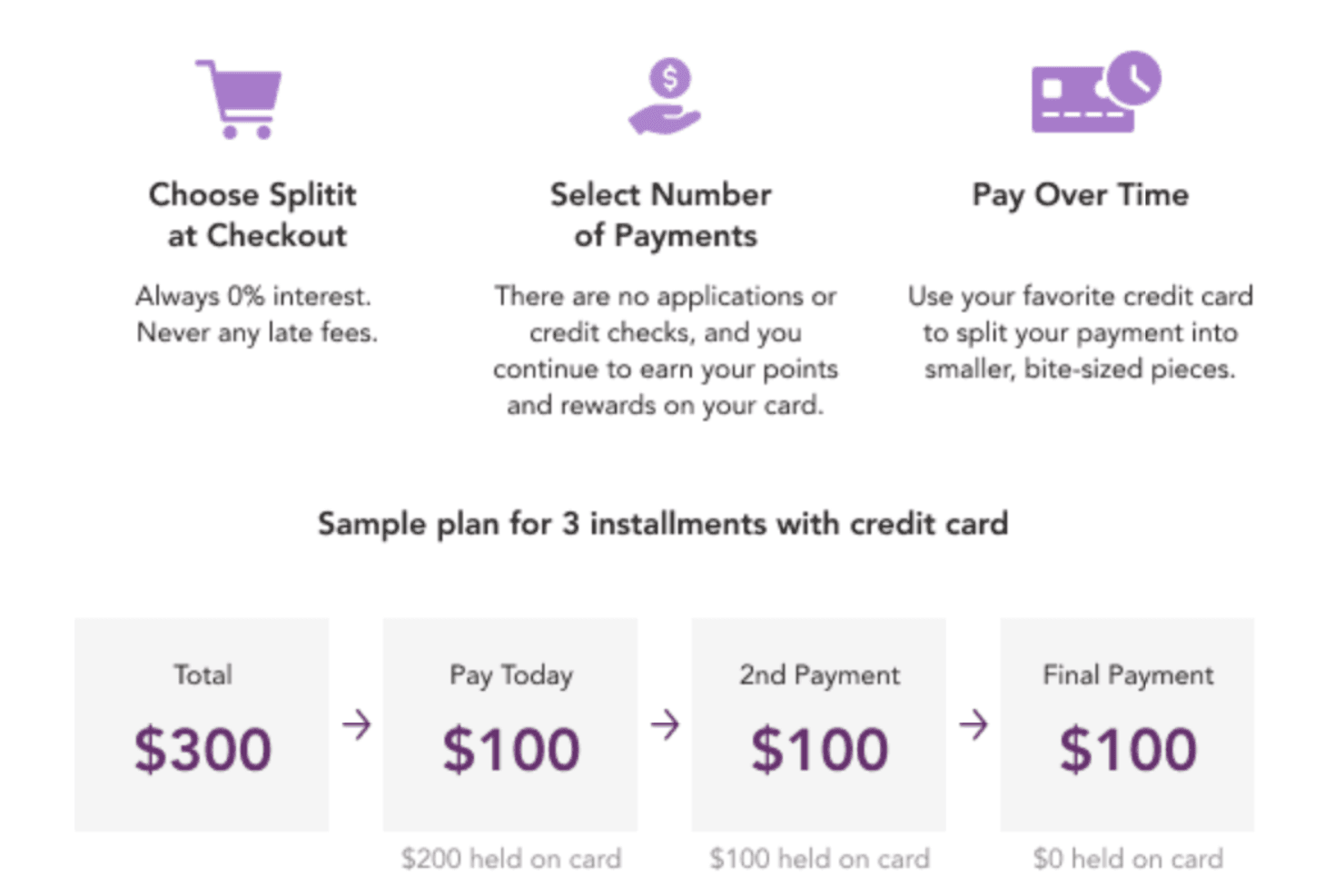
Interest-Free Installments: Splitit lets your customers pay in interest-free monthly installments, using their existing credit lines without additional fees. This can boost your sales and customer satisfaction.
No Credit Checks: Your team can offer monthly payment plans without conducting additional credit checks, simplifying the process for your customers.
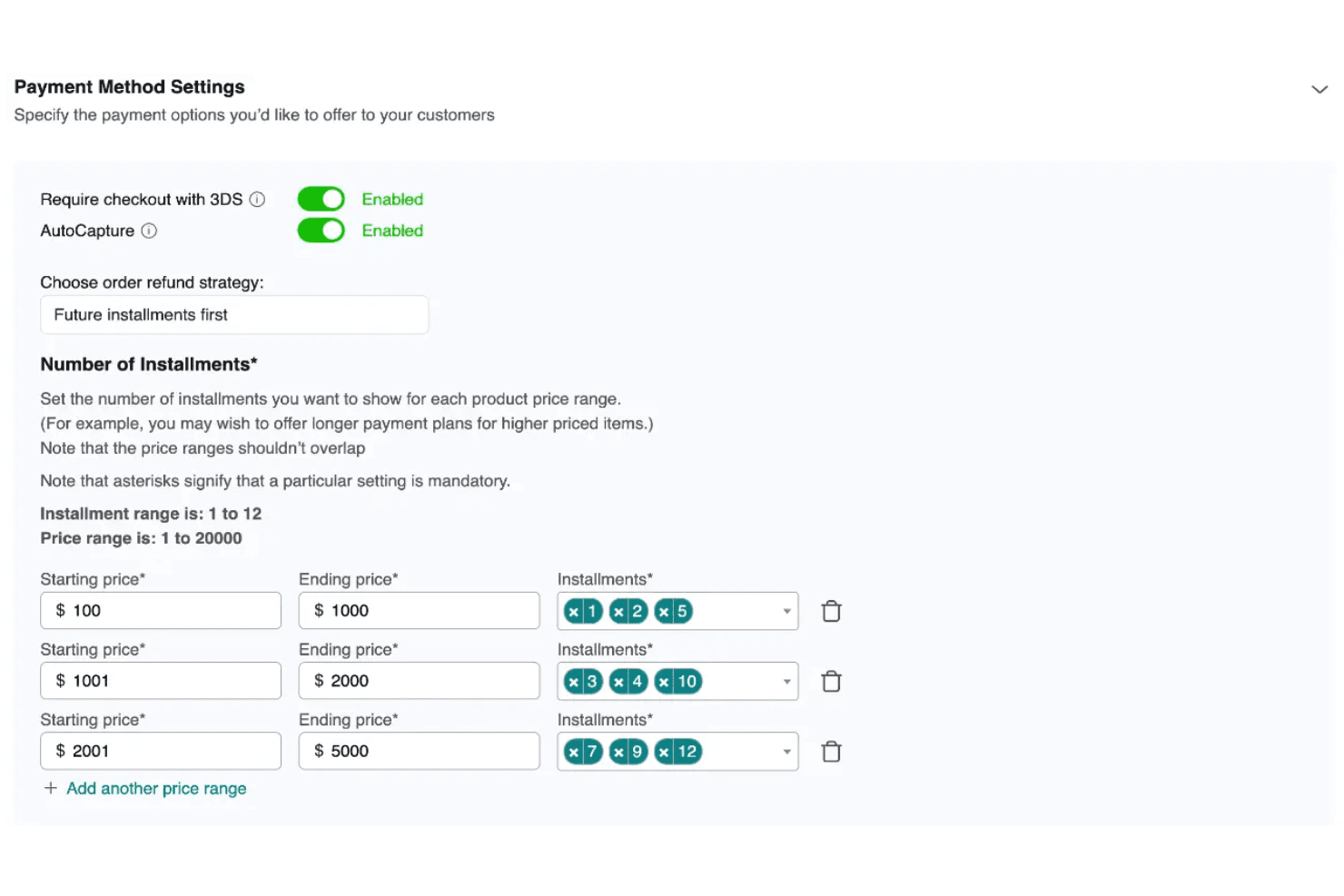
Flexible Payment Plans: You can set up customizable payment schedules that fit your business needs and customer preferences, enhancing your service offerings.
Real-Time Approval: Splitit provides instant approval for installment plans, allowing your customers to enjoy a seamless purchasing experience.
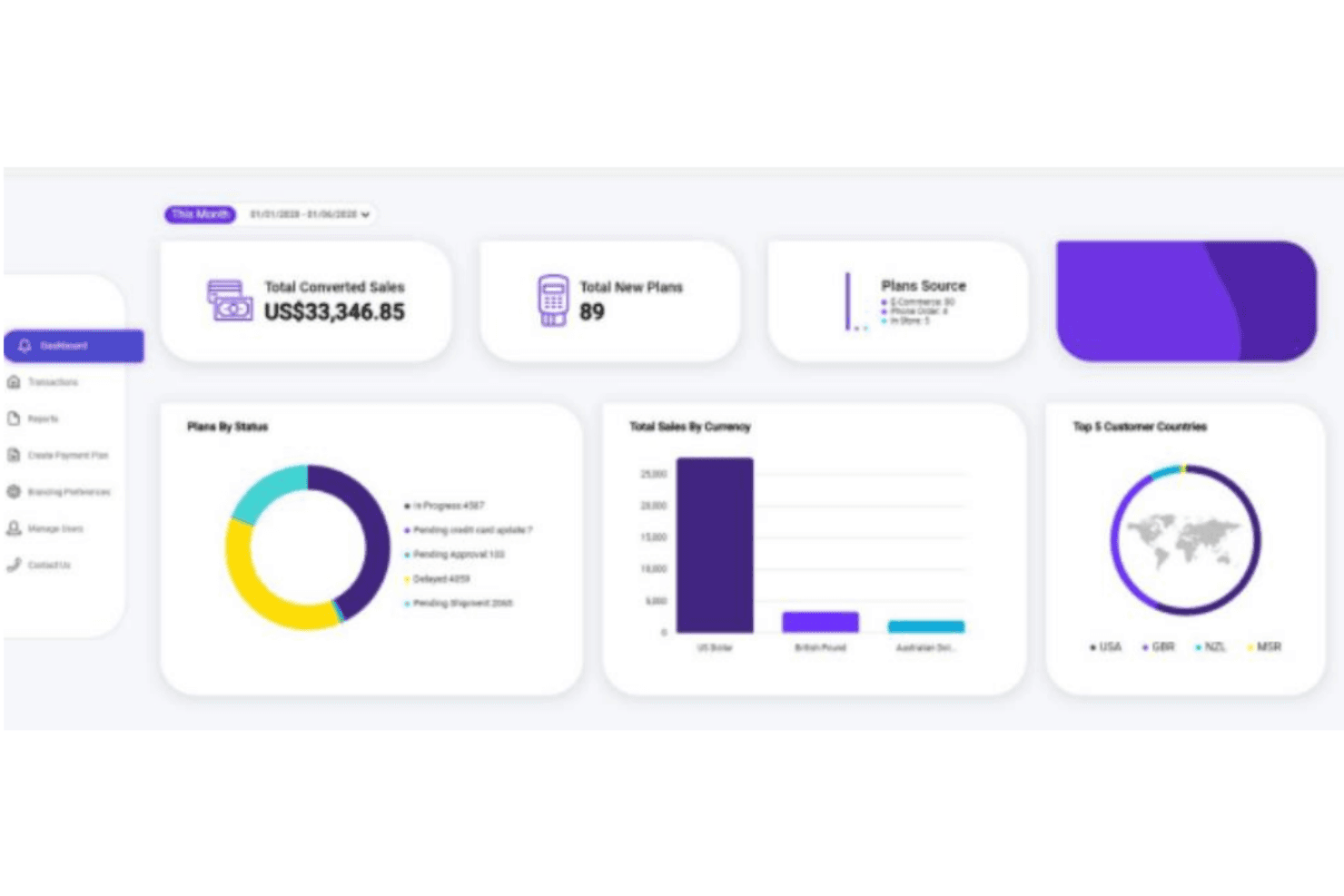
Payment Management Dashboard: Your team can monitor and manage all transactions through an easy-to-use dashboard, improving operational efficiency.
Multi-Currency Support: Splitit supports multiple currencies, enabling you to cater to an international customer base with ease.
Ease of Use
Splitit’s ease of use can be a mixed bag. While it offers a straightforward payment process for customers, your team might find the setup and navigation a bit challenging compared to other platforms. The interface isn't as intuitive as it could be, which might slow down your work initially. However, once you get the hang of it, managing payment plans and transactions becomes manageable, especially with the detailed dashboard available.
Integrations
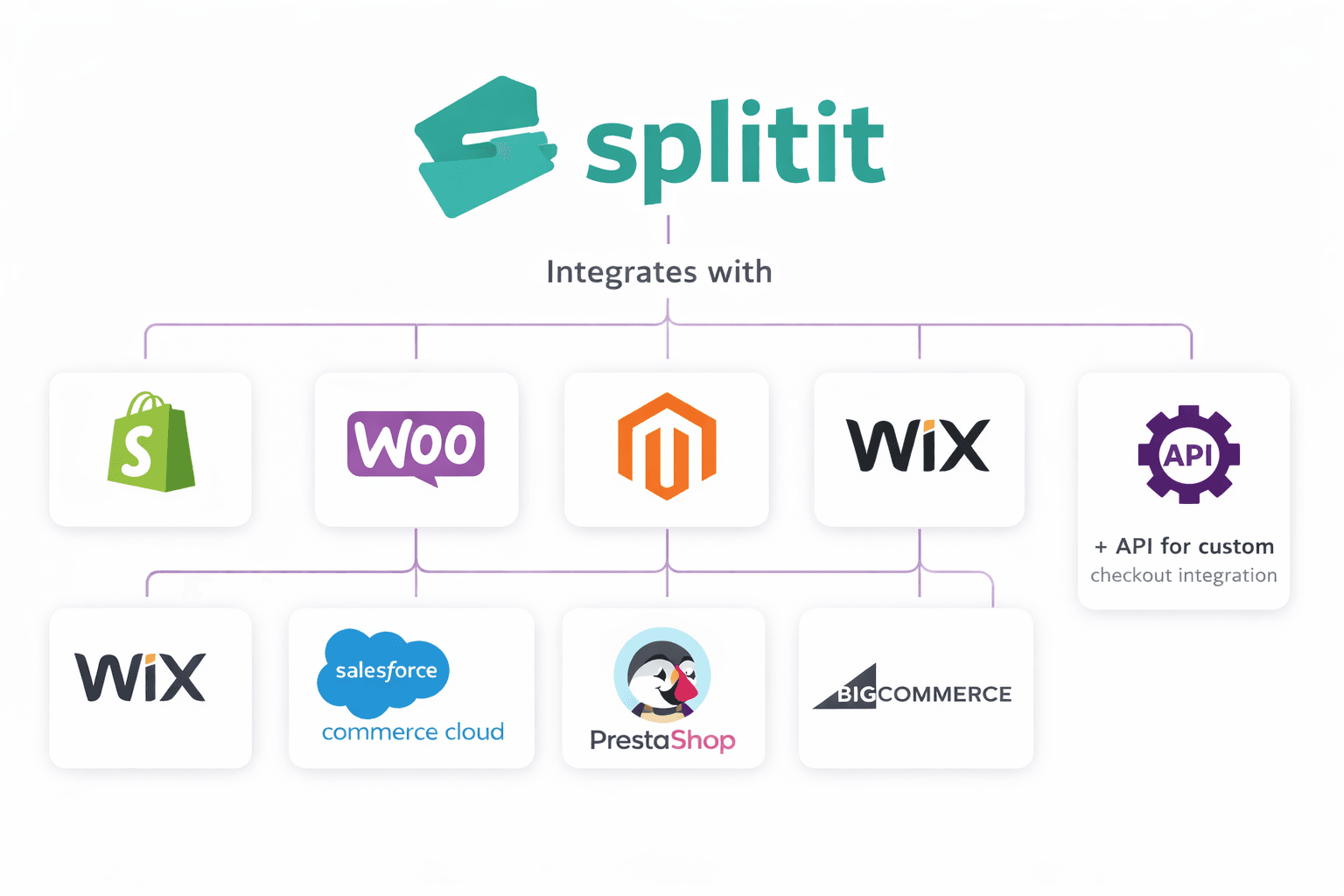
Splitit integrates natively with Shopify, WooCommerce, Magento, Wix, Salesforce Commerce Cloud, PrestaShop, and BigCommerce.
It also offers an API for custom checkout integrations, but doesn’t have official Zapier support.
Splitit Specs
- 2-Factor Authentication: No
- A/B Testing: No
- Analytics: Yes
- API: Yes
- BitCoin: No
- Conversion Tracking: No
- Dashboard: Yes
- Data Export: Yes
- Data Import: No
- Data Visualization: No
- Design Templates: No
- External Integrations: Yes
- Inventory Tracking: No
- Keyword Tracking: No
- Marketing Automation: No
- Multi-User: No
- Notifications: No
- Order Management: Yes
- Payment Gateway Integration: No
- Payment Processor: Yes
- PayPal: No
- Product Catalog: No
- Review Monitoring: No
- SAP Integration: No
- Scheduling: No
- Stripe: No
- Third-Party Plugins/Add-Ons: No


